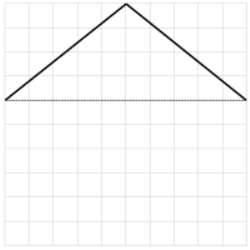
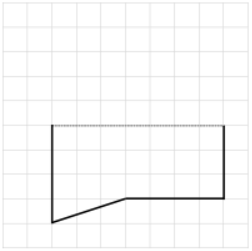
Eureka Math Kindergarten Module 3 Lesson 8 Answer Key

Engage NY Eureka Math Kindergarten Module 3 Lesson 8 Answer Key

Eureka Math Kindergarten Module 3 Lesson 8 Problem Set Answer Key

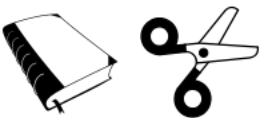
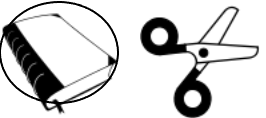
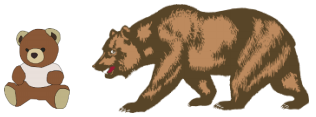
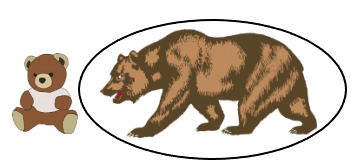
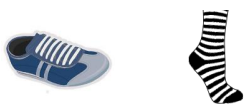
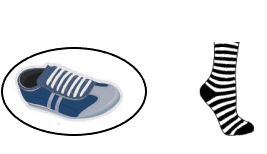
Which is heavier? Circle the object that is heavier than the other.

Question 1.
Eureka Math Kindergarten Module 3 Lesson 8 Problem Set Answer Key 1
Answer:

Explanation:
I circled book because it is heavier than a scissors.

Question 2.
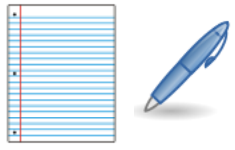
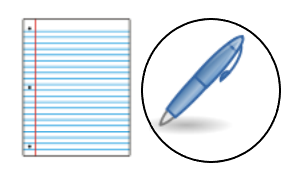
Eureka Math Kindergarten Module 3 Lesson 8 Problem Set Answer Key 2
Answer:

Explanation:
I circled pen because it is heavier than a paper.

Question 3.
Eureka Math Kindergarten Module 3 Lesson 8 Problem Set Answer Key 3
Answer:

Explanation:
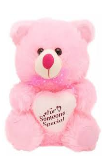
I circled bear because it is heavier than a teddybear.

Question 4.
Eureka Math Kindergarten Module 3 Lesson 8 Problem Set Answer Key 4
Answer:

Explanation:
I circled shoe because it is heavier than a socks.

Question 5.
Eureka Math Kindergarten Module 3 Lesson 8 Problem Set Answer Key 5
Answer:

Explanation:
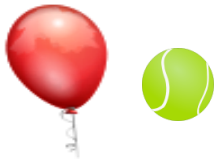
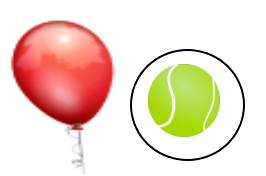
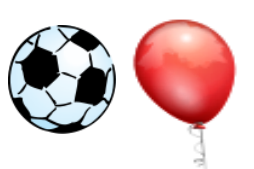
I circled ball because it is heavier than a balloon.

Question 6.
Eureka Math Kindergarten Module 3 Lesson 8 Problem Set Answer Key 6
Answer:

Explanation:
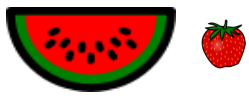
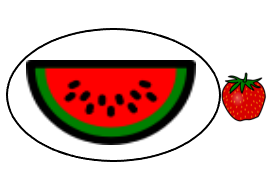
I circled watermelon because it is heavier than an apple.

Eureka Math Kindergarten Module 3 Lesson 8 Homework Answer Key

Draw an object that would be lighter than the one in the picture.

Question 1.
Eureka Math Kindergarten Module 3 Lesson 8 Homework Answer Key 7
Answer:

Explanation:
A balloon will be lighter than a ball.So, i drew a balloon.

Question 2.
Eureka Math Kindergarten Module 3 Lesson 8 Homework Answer Key 8
Answer:

Explanation:
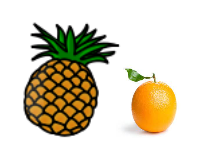
An orange will be lighter than a pineapple.So, i drew an orange.

Question 3.
Eureka Math Kindergarten Module 3 Lesson 8 Homework Answer Key 9
Answer:

Explanation:
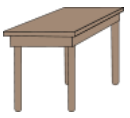
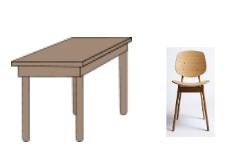
A chair will be lighter than a table.So, i drew a chair.

Question 4.
Eureka Math Kindergarten Module 3 Lesson 8 Homework Answer Key 10
Answer:

Explanation:
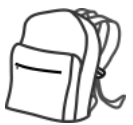
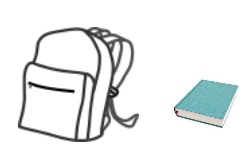
A book will be lighter than a bag.So, i drew a book.

Eureka Math Kindergarten Module 3 Lesson 7 Answer Key

Engage NY Eureka Math Kindergarten Module 3 Lesson 7 Answer Key

Eureka Math Kindergarten Module 3 Lesson 7 Problem Set Answer Key

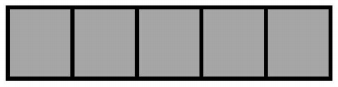
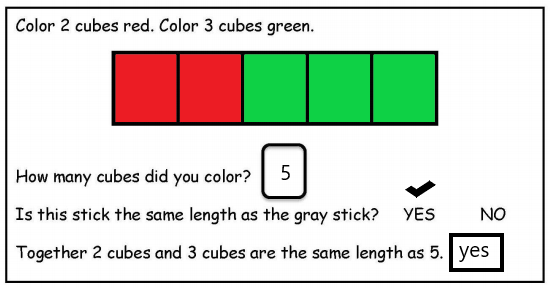
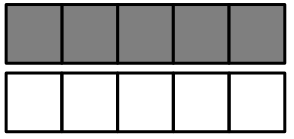
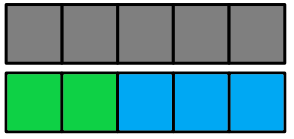
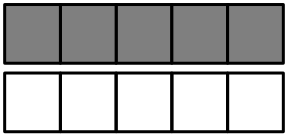
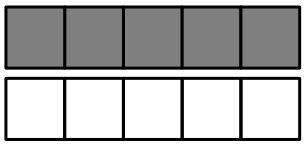
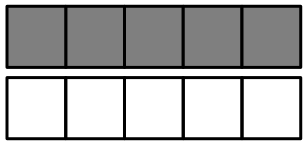
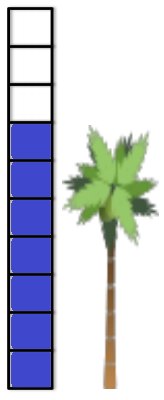
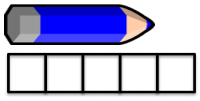
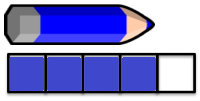
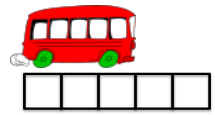
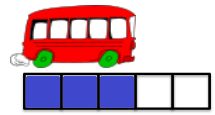
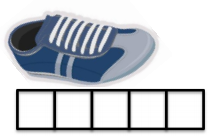
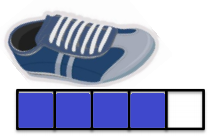
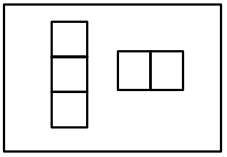
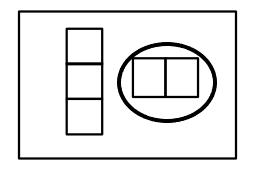
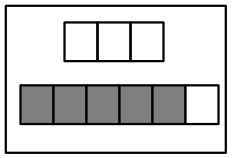
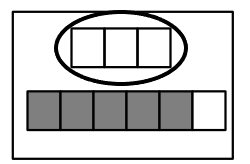
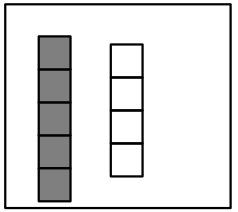
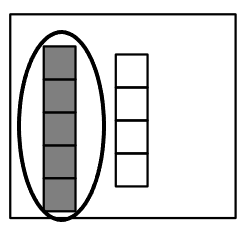
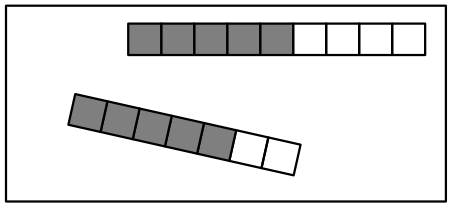
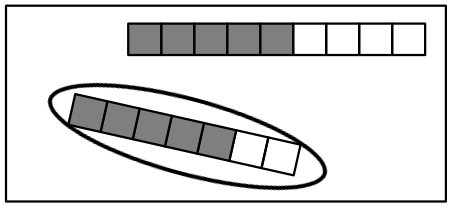
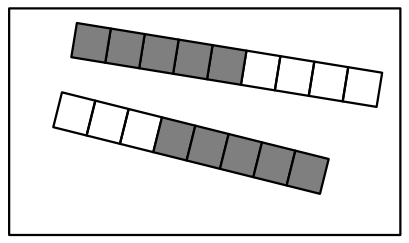
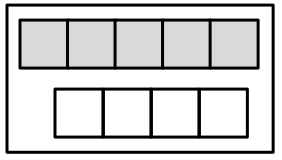
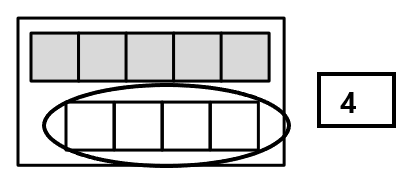
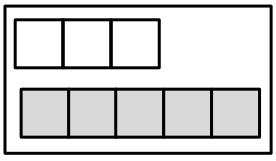
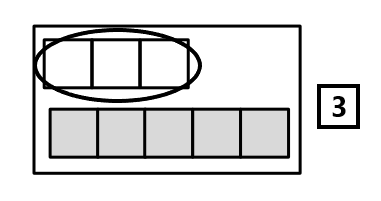
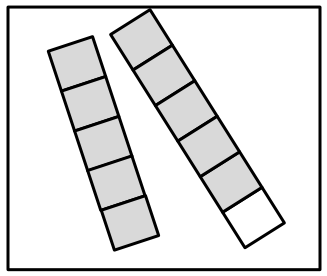
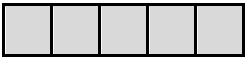
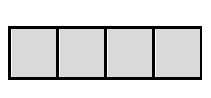
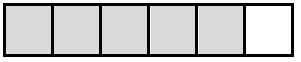
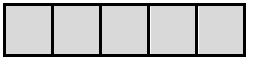
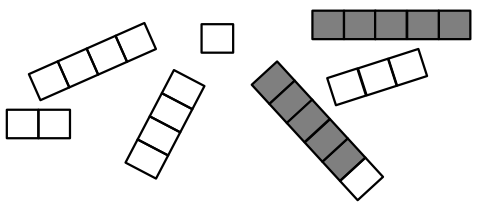
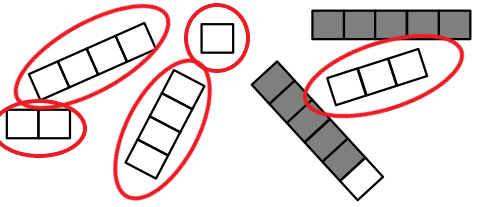
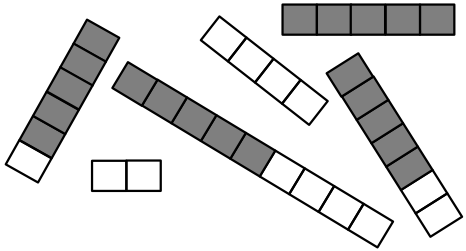
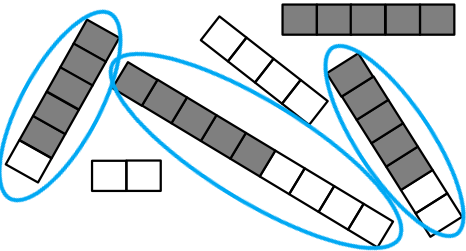
These boxes represent cubes.
Eureka Math Kindergarten Module 3 Lesson 7 Problem Set Answer Key 1

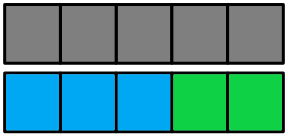
Question 1.
Eureka Math Kindergarten Module 3 Lesson 7 Problem Set Answer Key 2
Answer:

Explanation:
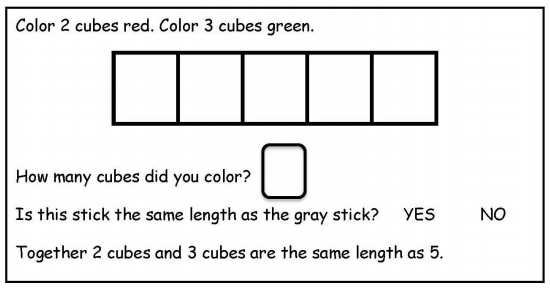
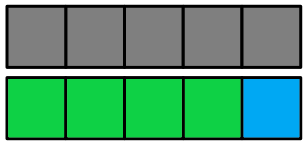
I colored 2 cubes red and 3 cubes green.There are 5 color cubes.

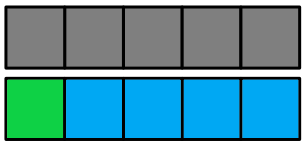
Question 2.
Eureka Math Kindergarten Module 3 Lesson 7 Problem Set Answer Key 3
Answer:

Explanation:
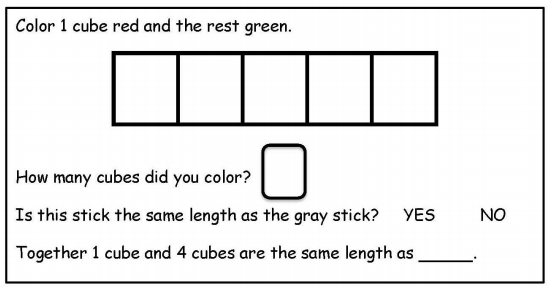
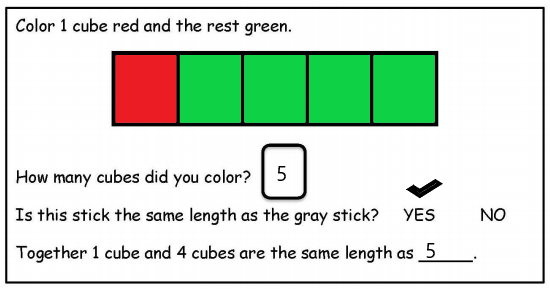
I colored 1 cube red and 4 cubes green.There are 5 color cubes.

Question 1.
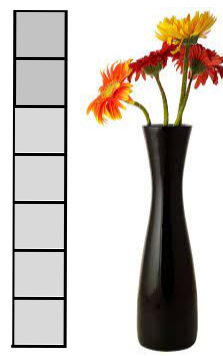
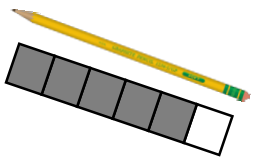
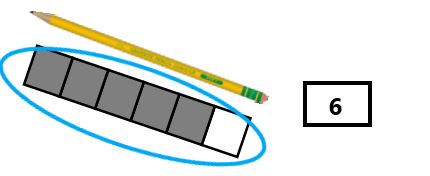
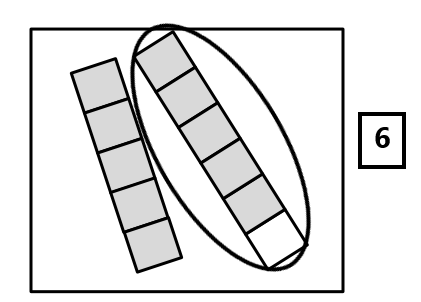
Trace a 6-stick. Find something the same length as your 6-stick.
Draw a picture of it here.
Answer:

Explanation:
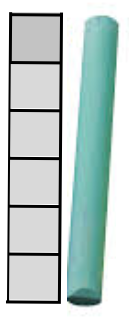
I drew a 6-stick and drew a chalkpiece which is same length as 6-stick.

Question 2.
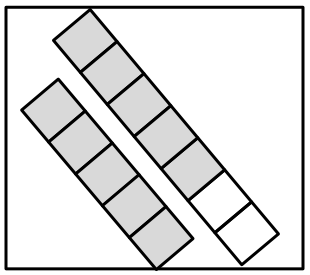
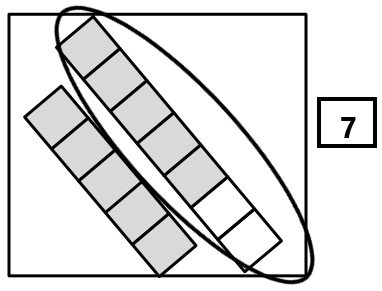
Trace a 7-stick. Find something the same length as your 7-stick.
Draw a picture of it here.
Answer:

Explanation:
I drew a 7-stick and drew a cflowervase which is same length as 7-stick.

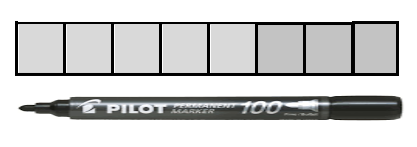
Question 3.
Trace an 8-stick. Find something the same length as your 8-stick.
Draw a picture of it here.
Answer:

Explanation:
I drew a 8-stick and drew a marker which is same length as 8-stick.

Eureka Math Kindergarten Module 3 Lesson 7 Homework Answer Key

These boxes represent cubes.

Question 1.
Eureka Math Kindergarten Module 3 Lesson 7 Homework Answer Key 4
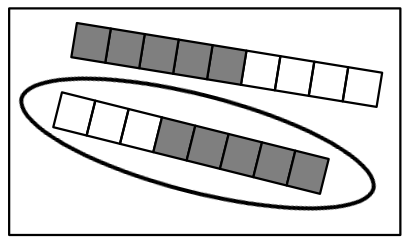
Color 2 cubes green. Color 3 cubes blue.
Together, my green 2-stick and blue 3-stick are the same length as 5 cubes.
Answer:

Explanation:
I colored 2 cubes green, 3 cubes blue.
Together, my green 2-stick and blue 3-stick are the same length as 5 cubes.

Question 2.
Eureka Math Kindergarten Module 3 Lesson 7 Homework Answer Key 5
Color 3 cubes blue. Color 2 cubes green.
Together, my blue 3-stick and green 2-stick are the same length as ___ cubes.
Answer:

Explanation:
I colored 3 cubes blue and 2 cubes green.
Together, my blue 3-stick and green 2-stick are the same length as 5 cubes.

Question 3.
Eureka Math Kindergarten Module 3 Lesson 7 Homework Answer Key 6
Color 1 cube green. Color 4 cubes blue.
How many did you color? ________
Answer:

Explanation:
I colored 1 cube green and 4 cubes blue.
Altogether i colored 5 cubes.

Question 4.
Eureka Math Kindergarten Module 3 Lesson 7 Homework Answer Key 7
Color 4 cubes green. Color 1 cube blue.
How many did you color? ________
Answer:

Explanation:
I colored 4 cubes green and 1 cube blue.
Altogether i colored 5 cubes.

Question 5.
Eureka Math Kindergarten Module 3 Lesson 7 Homework Answer Key 8
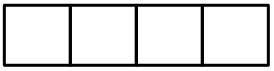
Color 2 cubes yellow. Color 2 cubes blue.
Together, my 2 yellow and 2 blue are the same as _____.
Answer:

Explanation:
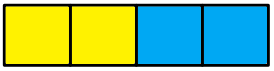
I colored 2 cubes yellow, 2 cubes blue.
Together, my 2 yellow and 2 blue are the same as 4 cubes.

Eureka Math Kindergarten Module 3 Lesson 6 Answer Key

Engage NY Eureka Math Kindergarten Module 3 Lesson 6 Answer Key

Eureka Math Kindergarten Module 3 Lesson 6 Problem Set Answer Key

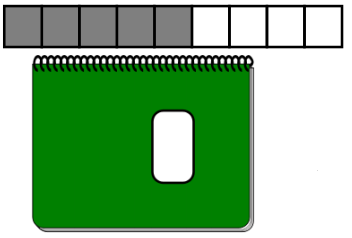
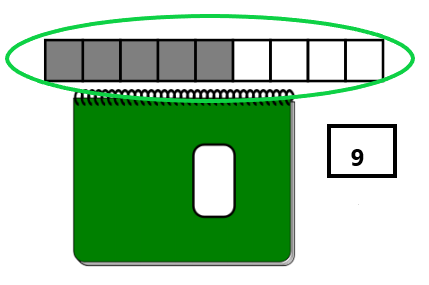
In the box, write the number of cubes there are in the pictured stick. Draw a green circle around the stick if it is longer than the object. Draw a blue circle around the stick if it is shorter than the object.

Question 1.
Eureka Math Kindergarten Module 3 Lesson 6 Problem Set Answer Key 1
Answer:

Explanation:
There are 6 cubes in the above cube.I circled the cube with blue as the stick is shorter tahn the object.

Question 2.
Eureka Math Kindergarten Module 3 Lesson 6 Problem Set Answer Key 2
Answer:

Explanation:
There are 9 cubes in the above stick.I circled it green as the stick is longer than the object.

Question 1.
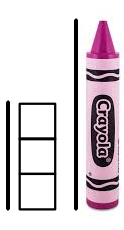
Make a 3-stick. In your classroom, select a crayon, and see if your crayon is longer than or shorter than your stick.
Trace your 3-stick and your crayon to compare their lengths.
Answer:

Explanation:
I drew a 3-stick and a crayon.I traced them to compare the lengths.The crayon is longer than the 3-stick.

Question 2.
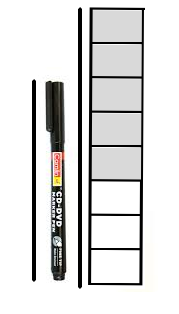
In your classroom, find a marker, and make a stick that is longer than your marker.
Trace your stick and your marker to compare their lengths.
Answer:

Explanation:
I drew a marker and a stick longer than the marker.I traced them to comapre their lengths.The stick is longer than the marker.

Question 3.
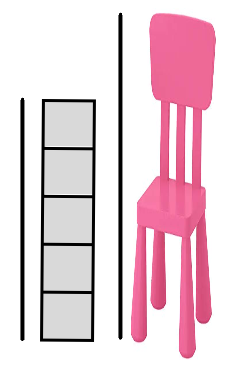
Make a 5-stick. Find something in the classroom that is longer than your 5-stick.
Trace your 5-stick and the object to compare their lengths.
Answer:

Explanation:
I drew a 5-stick and a chair from my classroom.I traced them to compare their lengths.The chair is longer than the 5-stick.

Eureka Math Kindergarten Module 3 Lesson 6 Homework Answer Key

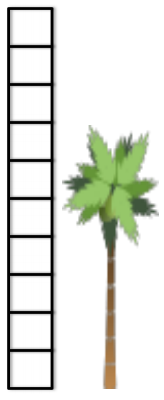
Color the cubes to show the length of the object.

Question 1.
Eureka Math Kindergarten Module 3 Lesson 6 Homework Answer Key 3
Answer:

Explanation:
I colored the stick upto 7cubes as the object is 7-stick long.

Question 2.
Eureka Math Kindergarten Module 3 Lesson 6 Homework Answer Key 4
Answer:

Explanation:
I colored the stick upto 4 cubes as the object is 4-stick long.

Question 3.
Eureka Math Kindergarten Module 3 Lesson 6 Homework Answer Key 5
Answer:

Explanation:
I colored the stick upto 3 cubes as the object is 3-stick long.

Question 4.
Eureka Math Kindergarten Module 3 Lesson 6 Homework Answer Key 6


Answer:

Explanation:
I colored the ctick upto 4 cubes as the object is 4-stick long.

Eureka Math Kindergarten Module 3 Lesson 5 Answer Key

Engage NY Eureka Math Kindergarten Module 3 Lesson 5 Answer Key

Eureka Math Kindergarten Module 3 Lesson 5 Problem Set Answer Key

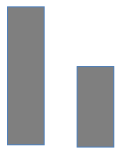
Circle the stick that is shorter than the other.

Question 1.
Eureka Math Kindergarten Module 3 Lesson 5 Problem Set Answer Key 1
Answer:

Explanation:
I circled the  shorter stick in the above picture.

Question 2.
Eureka Math Kindergarten Module 3 Lesson 5 Problem Set Answer Key 2
Answer:

Explanation:
I circled the shorter stick in the above picture.

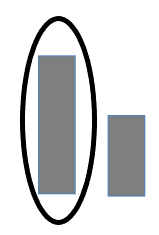
Circle the stick that is longer than the other.
Eureka Math Kindergarten Module 3 Lesson 5 Problem Set Answer Key 3

Answer:

Explanation:
I circled the longer stick in the above picture.

My _____ -stick is longer than my _____ -stick.
Answer:
My 5 -stick is longer than my 4 -stick.

My _____ -stick is shorter than my ____ -stick.
Answer:
My 4-stick is shorter than my 5-stick.

Circle the stick that is shorter than the other stick.
Eureka Math Kindergarten Module 3 Lesson 5 Problem Set Answer Key 4

Answer:

Explanation:
I circled the shorter stick in the above picture.

My _____ -stick is longer than my _____ -stick.
Answer:
My 9-stick is longer than my 7-stick.

My _____ -stick is shorter than my _____ -stick.
Answer:
My 7-stick is shorter than my  9-stick.

Eureka Math Kindergarten Module 3 Lesson 5 Homework Answer Key

Circle the stick that is shorter than the other.
Eureka Math Kindergarten Module 3 Lesson 5 Homework Answer Key 5

Answer:

Explanation:
I circled the shorter stick in the above picture.

My _____ -stick is shorter than my _____ -stick.
Answer:
My 8-stick is shorter than my 9-stick.

My _____ -stick is longer than my _____ -stick.
Answer:
My 9-stick is longer than my 8-stick.

Eureka Math Kindergarten Module 3 Lesson 3 Answer Key

Engage NY Eureka Math Kindergarten Module 3 Lesson 3 Answer Key

Eureka Math Kindergarten Module 3 Lesson 3 Homework Answer Key

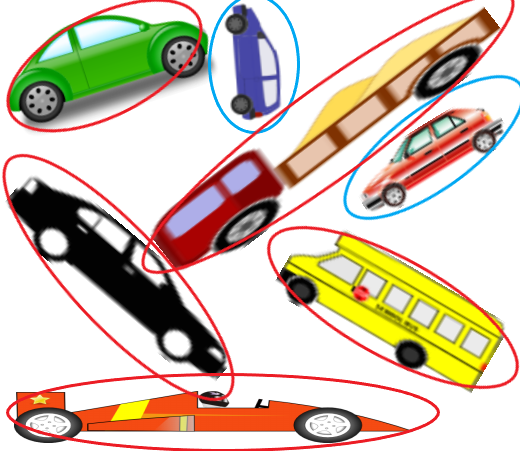
Take out a new crayon. Circle objects with lengths shorter than the crayon blue. Circle objects with lengths longer than the crayon red.
Eureka Math Kindergarten Module 3 Lesson 3 Homework Answer Key 1
Answer:

Explanation:
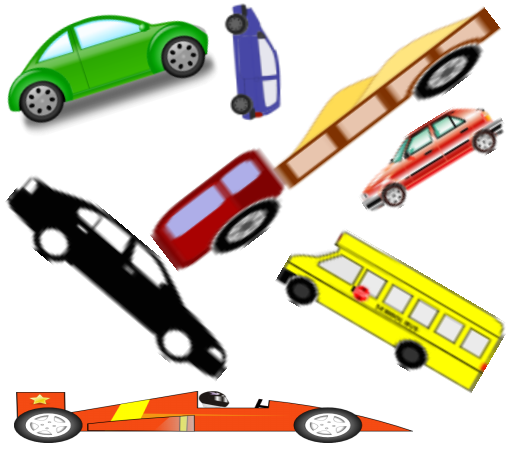
I circled the cars with red that are longer than a cayon and circled the cars with blue that are shorter than a crayon.

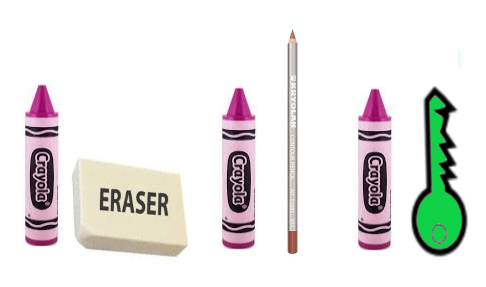
On the back of your paper, draw some things shorter than the crayon and longer than the crayon. Draw something that is the same length as the crayon.
Answer:

Explanation:
An eraser is shorter than a crayon, pencil is longer than a crayon and key is same length of crayon.

Eureka Math Kindergarten Module 3 Lesson 4 Answer Key

Engage NY Eureka Math Kindergarten Module 3 Lesson 4 Answer Key

Eureka Math Kindergarten Module 3 Lesson 4 Problem Set Answer Key

Circle the shorter stick.

Question 1.
Eureka Math Kindergarten Module 3 Lesson 4 Problem Set Answer Key 1
How many linking cubes are in the shorter stick? Write the number in the box.
Answer:

Explanation:
I circled the shorter stick and it has 4 cubes in it.

Question 2.
Eureka Math Kindergarten Module 3 Lesson 4 Problem Set Answer Key 2
How many linking cubes are in the shorter stick? Write the number in the box.
Answer:

Explanation:
I circled the shorter stick and it has 3 cubes in it.

Circle the longer stick.

Question 1.
Eureka Math Kindergarten Module 3 Lesson 4 Problem Set Answer Key 3
How many linking cubes are in the longer stick? Write the number in the box.
Answer:

Explanation:
I circled the longer stick and it has 6 cubes in it.

Question 2.
Eureka Math Kindergarten Module 3 Lesson 4 Problem Set Answer Key 4
How many linking cubes are in the longer stick? Write the number in the box.
Answer:

Explanation:
I circled the longer stick and it has 7 cubes in it.

Draw a stick shorter than my 5-stick.
Eureka Math Kindergarten Module 3 Lesson 4 Problem Set Answer Key 5
Answer:

Explanation:
I drew a 4 cube stick which is shorter than the 5 cube stick that is given in the above picture.

Draw a stick longer than mine.
Eureka Math Kindergarten Module 3 Lesson 4 Problem Set Answer Key 6
Answer:

Explanation:
I drew a 8 cube stick which is longer than the stick given in the above picture.

Draw a stick shorter than mine.
Eureka Math Kindergarten Module 3 Lesson 4 Problem Set Answer Key 7
Answer:

Explanation:
I drew a 5 cube stick which is shorter than the stick given in the picture.

Eureka Math Kindergarten Module 3 Lesson 4 Homework Answer Key

Use a red crayon to circle the sticks that are shorter than the 5-stick.
Eureka Math Kindergarten Module 3 Lesson 4 Homework Answer Key 8
Answer:

Explanation:
I circled the sticks that are shorter than the 5-stick with a red crayon.

Use a blue crayon to circle the sticks that are longer than the 5-stick.
Eureka Math Kindergarten Module 3 Lesson 4 Homework Answer Key 9
Answer:

Explanation:
I circled the sticks that are longer than the 5-stick with a blue crayon.

Eureka Math Kindergarten Module 3 Lesson 2 Answer Key

Engage NY Eureka Math Kindergarten Module 3 Lesson 2 Answer Key

Eureka Math Kindergarten Module 3 Lesson 2 Problem Set Answer Key

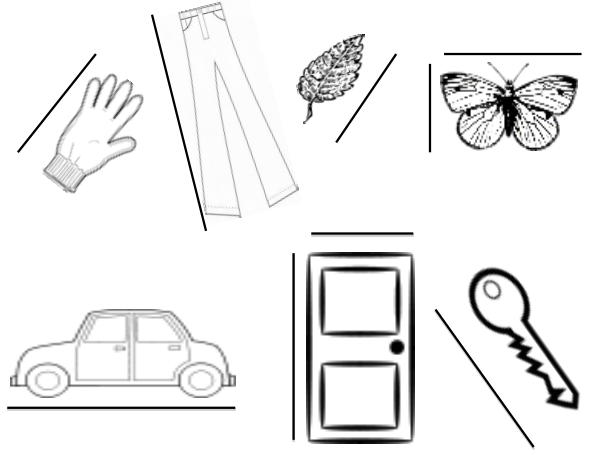
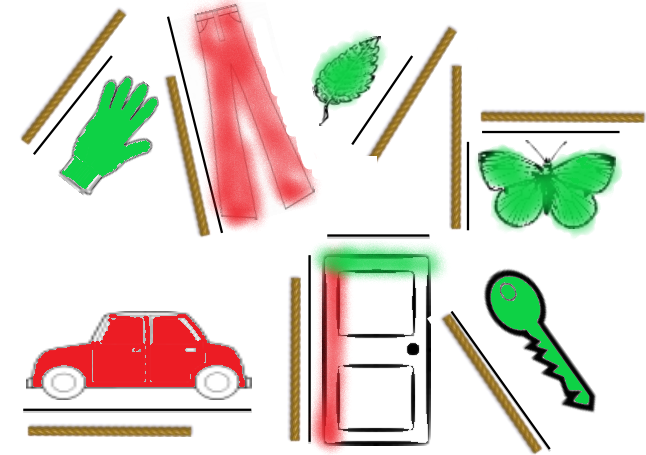
Cut out the picture of the string at the bottom of the page. Compare the string with each object to see which is longer. Use the line next to each object to help you compare. Color objects shorter than the string green. Color objects longer than the string orange.
Eureka Math Kindergarten Module 3 Lesson 2 Problem Set Answer Key 1
Answer:

Explanation:
In the above picture I colored the objects shorter than the string green and the objects longer than the string red.

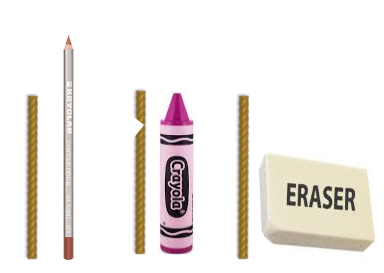
On the back of your paper, draw something longer than, shorter than, and the same length as the picture of the string. Color objects shorter than the string green. Color objects longer than the string orange.
Eureka Math Kindergarten Module 3 Lesson 2 Problem Set Answer Key 2
Answer:

Explanation:
I drew a pencil longer than a string, a crayon same length of string and a eraser shorter than the string.

Eureka Math Kindergarten Module 3 Lesson 2 Homework Answer Key

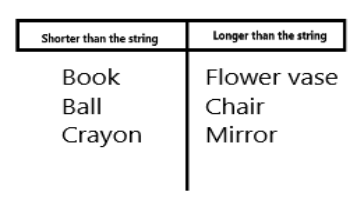
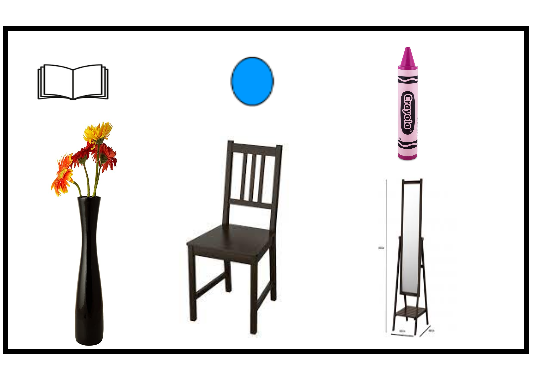
Using the piece of string from class, find three items at home that are shorter than your piece of string and three items that are longer than your piece of string. Draw a picture of those objects on the chart. Try to find at least one thing that is about the same length as your string, and draw a picture of it on the back.

Shorter than the stringLonger than the string


Answer:

Explanation:A book, ball and crayon are shorter than the string and a floervase, chair and mirror are longer than the string.

Explanation:
A teddybear is of same length of the string.

Eureka Math Kindergarten Module 3 Lesson 1 Answer Key

Engage NY Eureka Math Kindergarten Module 3 Lesson 1 Answer Key

Eureka Math Kindergarten Module 3 Lesson 1 Problem Set Answer Key

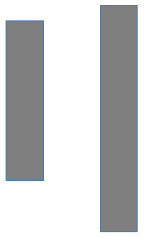
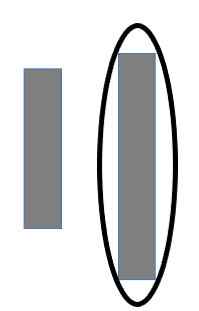
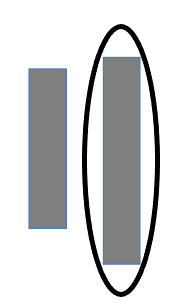
For each pair, circle the longer one. Imagine the paper strips are lying flat on a table.

Question 1.
Eureka Math Kindergarten Module 3 Lesson 1 Problem Set Answer Key 1
Answer:

Explanation:
I circled the longer one.

Question 2.
Eureka Math Kindergarten Module 3 Lesson 1 Problem Set Answer Key 2
Answer:

Explanation:
I circled the longer one.

Question 3.
Eureka Math Kindergarten Module 3 Lesson 1 Problem Set Answer Key 3
Answer:

Explanation:
I circled the longer one.

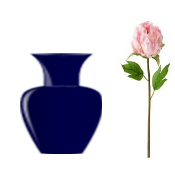
Draw a flower that is taller than the vase.
Eureka Math Kindergarten Module 3 Lesson 1 Problem Set Answer Key 4
Answer:

Explanation:
I drew a flower taller than the vase.

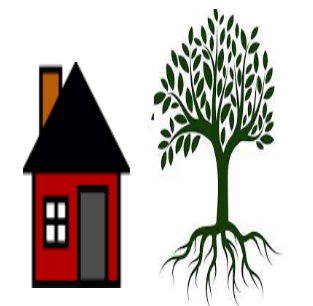
Draw a tree that is taller than the house.
Eureka Math Kindergarten Module 3 Lesson 1 Problem Set Answer Key 5
Answer:

Explanation:
I drew a tree taller than the house.

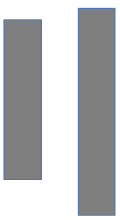
For each pair, circle the shorter one.

Question 1.
Eureka Math Kindergarten Module 3 Lesson 1 Problem Set Answer Key 6
Answer:

Explanation:
I circled the shorter one.

Question 2.
Eureka Math Kindergarten Module 3 Lesson 1 Problem Set Answer Key 7
Answer:

Explanation:
I circled the shorter one.

Question 3.
Eureka Math Kindergarten Module 3 Lesson 1 Problem Set Answer Key 8
Answer:

Explanation:
I circled the shoorter one.

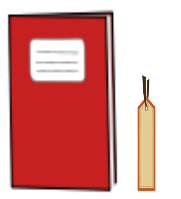
Draw a bookmark that is shorter than this book.
Eureka Math Kindergarten Module 3 Lesson 1 Problem Set Answer Key 9
Answer:

Explanation:
I drew a bookmark shorter than the book.

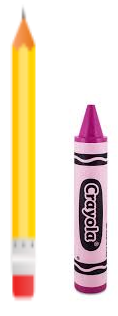
Draw a crayon that is shorter than this pencil.
Eureka Math Kindergarten Module 3 Lesson 1 Problem Set Answer Key 10
Answer:

Explanation:
I drew a crayon shorter than the pencil.

Eureka Math Kindergarten Module 3 Lesson 1 Homework Answer Key

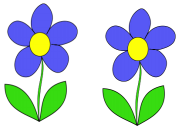
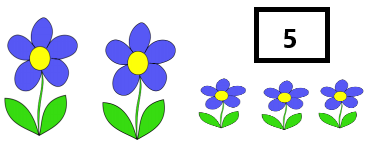
Draw 3 more flowers that are shorter than these flowers. Count how many flowers you have now. Write the number in the box.
Eureka Math Kindergarten Module 3 Lesson 1 Homework Answer Key 11
Answer:

Explanation:
There are already 2 flowers and i drew 3 more shorter flowers.Now there are 2+3=5 flowers in all.
Therefore there are 4 flowers in all.

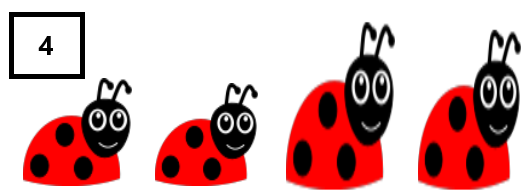
Draw 2 more ladybugs that are taller than these ladybugs. Count how many ladybugs you have now. Write the number in the box.
Eureka Math Kindergarten Module 3 Lesson 1 Homework Answer Key 12
Answer:

Explanation:
There are already 2 ladybugs and i drew 2 more taller ladybugs.Now there are 2+2=4 ladybugs in all.
Therefore there are 4 ladybugs in all.

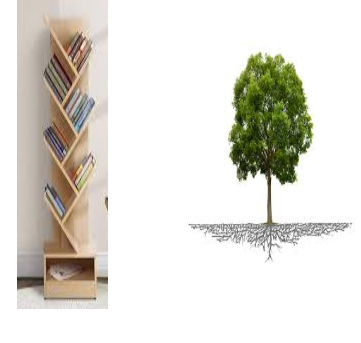
On the back of your paper, draw something that is taller than you. Draw something that is shorter than a flagpole.
Answer:

Explanation:
The book shelf is taller than me and the tree is shorter than a flagpole.

Eureka Math Grade 4 Module 4 Lesson 16 Answer Key

Engage NY Eureka Math 4th Grade Module 4 Lesson 16 Answer Key

Eureka Math Grade 4 Module 4 Lesson 16 Problem Set Answer Key

Question 1.
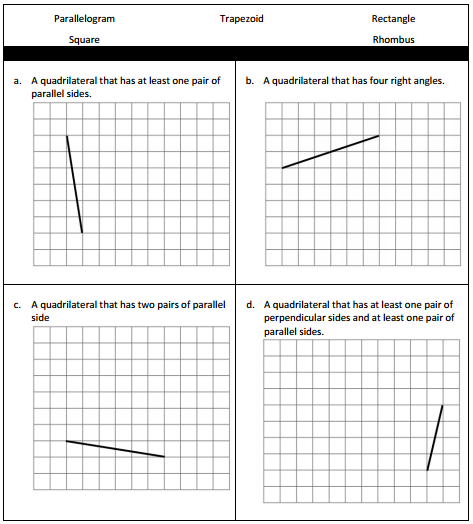
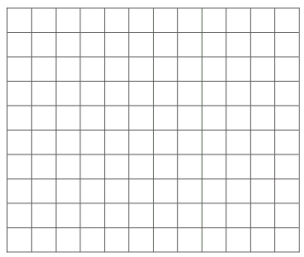
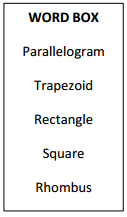
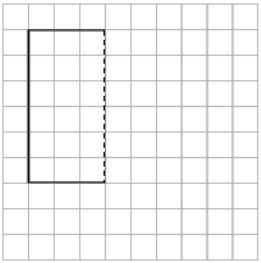
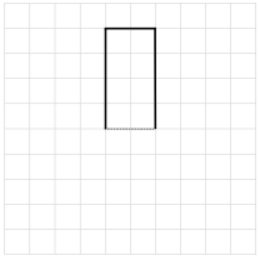
On the grid paper, draw at least one quadrilateral to fit the description. Use the given segment as one segment of the quadrilateral. Name the figure you drew using one of the terms below.
Eureka Math Grade 4 Module 4 Lesson 16 Problem Set Answer Key 1
Answer:

Question 2.
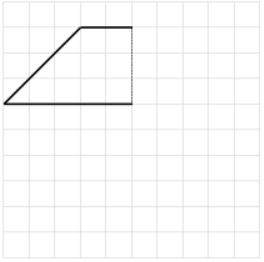
On the grid paper, draw at least one quadrilateral to fit the description. Use the given segment as one segment of the quadrilateral. Name the figure you drew using one of the terms below.
Eureka Math Grade 4 Module 4 Lesson 16 Problem Set Answer Key 2
Answer:

Question 3.
Explain the attributes that make a rhombus different from a rectangle.
Answer:

Question 4.
Explain the attribute that makes a square different from a rhombus.
Answer:

Eureka Math Grade 4 Module 4 Lesson 16 Exit Ticket Answer Key

Question 1.
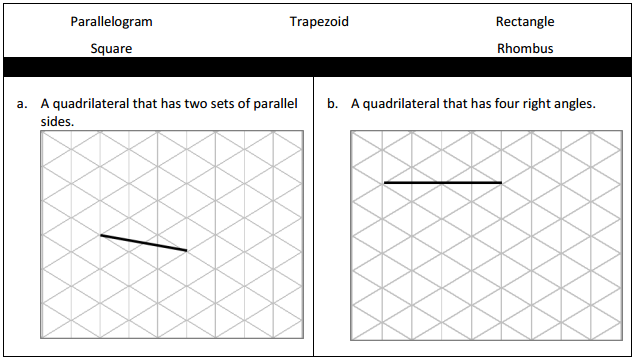
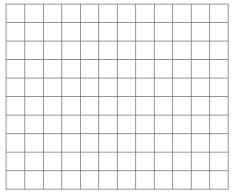
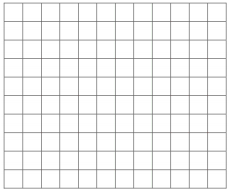
Construct a parallelogram that does not have any right angles on a rectangular grid.
Eureka Math Grade 4 Module 4 Lesson 16 Exit Ticket Answer Key 3
Answer:

Question 2.
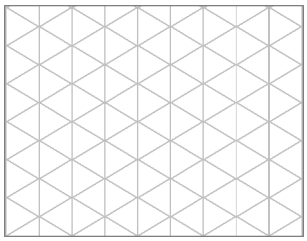
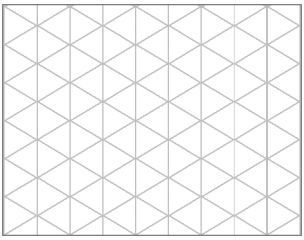
Construct a rectangle on a triangular grid.
Eureka Math Grade 4 Module 4 Lesson 16 Exit Ticket Answer Key 4
Answer:

Eureka Math Grade 4 Module 4 Lesson 16 Homework Answer Key

Use the grid to construct the following. Name the figure you drew using one of the terms in the word box.
Eureka Math Grade 4 Module 4 Lesson 16 Homework Answer Key 5

Question 1.
Construct a quadrilateral with only one set of parallel sides. Which shape did you create?
Eureka Math Grade 4 Module 4 Lesson 16 Homework Answer Key 6
Answer:

Question 2.
Construct a quadrilateral with one set of parallel sides and two right angles. Which shape did you create?
Eureka Math Grade 4 Module 4 Lesson 16 Homework Answer Key 7
Answer:

Question 3.
Construct a quadrilateral with two sets of parallel sides. Which shape did you create?
Eureka Math Grade 4 Module 4 Lesson 16 Homework Answer Key 8
Answer:

Question 4.
Construct a quadrilateral with all sides of equal length. Which shape did you create?
Eureka Math Grade 4 Module 4 Lesson 16 Homework Answer Key 9
Answer:

Question 5.
Construct a rectangle with all sides of equal length. Which shape did you create?
Eureka Math Grade 4 Module 4 Lesson 16 Homework Answer Key 10
Answer:

Eureka Math Grade 4 Module 4 Lesson 15 Answer Key

Engage NY Eureka Math 4th Grade Module 4 Lesson 15 Answer Key

Eureka Math Grade 4 Module 4 Lesson 15 Problem Set Answer Key

Construct the figures with the given attributes. Name the shape you created. Be as specific as possible. Use extra blank paper as needed.

Question 1.
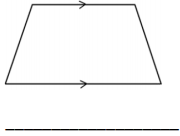
Construct quadrilaterals with at least one set of parallel sides.
Answer:

Question 2.
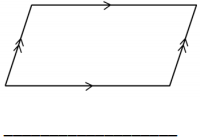
Construct a quadrilateral with two sets of parallel sides.
Answer:

Question 3.
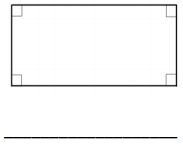
Construct a parallelogram with four right angles.
Answer:

Question 4.
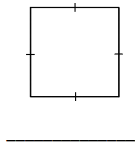
Construct a rectangle with all sides the same length.
Answer:

Question 5.
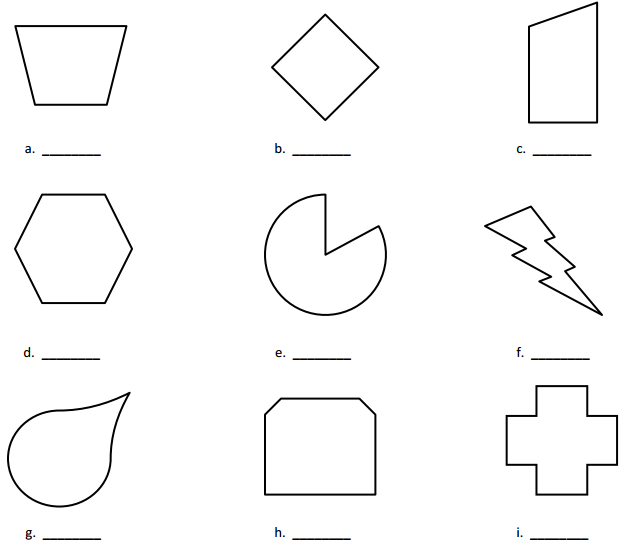
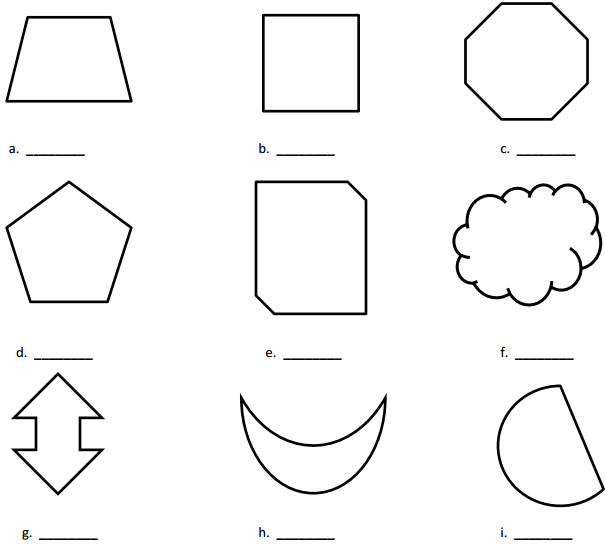
Use the word bank to name each shape, being as specific as possible.
Eureka Math Grade 4 Module 4 Lesson 15 Problem Set Answer Key 1

a.
Eureka Math Grade 4 Module 4 Lesson 15 Problem Set Answer Key 2
Answer:

b.
Eureka Math Grade 4 Module 4 Lesson 15 Problem Set Answer Key 3
Answer:

c.
Eureka Math Grade 4 Module 4 Lesson 15 Problem Set Answer Key 4
Answer:

d.
Eureka Math Grade 4 Module 4 Lesson 15 Problem Set Answer Key 5
Answer:

Question 6.
Explain the attribute that makes a square a special rectangle.
Answer:

Question 7.
Explain the attribute that makes a rectangle a special parallelogram.
Answer:

Question 8.
Explain the attribute that makes a parallelogram a special trapezoid.
Answer:

Eureka Math Grade 4 Module 4 Lesson 15 Exit Ticket Answer Key

Question 1.
In the space below, draw a parallelogram.
Answer:

Question 2.
Explain why a rectangle is a special parallelogram.
Answer:

Eureka Math Grade 4 Module 4 Lesson 15 Homework Answer Key

Question 1.
Use the word bank to name each shape, being as specific as possible.
Eureka Math Grade 4 Module 4 Lesson 15 Homework Answer Key 6

a.
Eureka Math Grade 4 Module 4 Lesson 15 Homework Answer Key 7
Answer:

b.
Eureka Math Grade 4 Module 4 Lesson 15 Homework Answer Key 8
Answer:

c.
Eureka Math Grade 4 Module 4 Lesson 15 Homework Answer Key 9
Answer:

d.
Eureka Math Grade 4 Module 4 Lesson 15 Homework Answer Key 10
Answer:

Question 2.
Explain the attribute that makes a square a special rectangle.
Answer:

Question 3.
Explain the attribute that makes a rectangle a special parallelogram.
Answer:

Question 4.
Explain the attribute that makes a parallelogram a special trapezoid.
Answer:

Question 5.
Construct the following figures based on the given attributes. Give a name to each figure you construct. Be as specific as possible.

a. A quadrilateral with four sides the same length and four right angles.
Answer:

b. A quadrilateral with two sets of parallel sides.
Answer:

c. A quadrilateral with only one set of parallel sides.
Answer:

d. A parallelogram with four right angles.
Answer:

Eureka Math Grade 4 Module 4 Lesson 14 Answer Key

Engage NY Eureka Math 4th Grade Module 4 Lesson 14 Answer Key

Eureka Math Grade 4 Module 4 Lesson 14 Problem Set Answer Key

1. Draw triangles that fit the following classifications. Use a ruler and protractor. Label the side lengths and angles.
Question a.
Right and isosceles
Answer:

Question b.
Obtuse and scalene
Answer:

Question c.
Acute and scalene
Answer:

Question d.
Acute and isosceles
Answer:

Question 2.
Draw all possible lines of symmetry in the triangles above. Explain why some of the triangles do not have lines of symmetry.
Answer:

Are the following statements true or false? Explain using pictures or words.

Question 3.
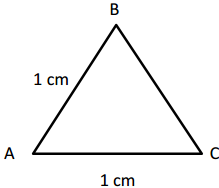
If ABC is an equilateral triangle, \(\overline{B C}\) must be 2 cm. True or False?
Eureka Math Grade 4 Module 4 Lesson 14 Problem Set Answer Key 1
Answer:

Question 4.
A triangle cannot have one obtuse angle and one right angle. True or False?
Answer:

Question 5.
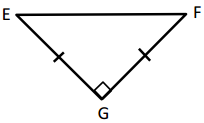
∆ EFG can be described as a right triangle and an isosceles triangle. True or False?
Eureka Math Grade 4 Module 4 Lesson 14 Problem Set Answer Key 2
Answer:

Question 6.
An equilateral triangle is isosceles. True or False?
Answer:

Extension:
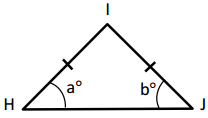
In ∆ HIJ, a = b. True or False?
Eureka Math Grade 4 Module 4 Lesson 14 Problem Set Answer Key 3
Answer:

Eureka Math Grade 4 Module 4 Lesson 14 Exit Ticket Answer Key

Question 1.
Draw an obtuse isosceles triangle, and then draw any lines of symmetry if they exist.
Answer:

Question 2.
Draw a right scalene triangle, and then draw any lines of symmetry if they exist.
Answer:

Question 3.
Every triangle has at least ____ acute angles.
Answer:

Eureka Math Grade 4 Module 4 Lesson 14 Homework Answer Key

Question 1.
Draw triangles that fit the following classifications. Use a ruler and protractor. Label the side lengths and angles.

a. Right and isosceles
Answer:

b. Right and scalene
Answer:

c. Obtuse and isosceles
Answer:

d. Acute and scalene
Answer:

Question 2.
Draw all possible lines of symmetry in the triangles above. Explain why some of the triangles do not have lines of symmetry.

Are the following statements true or false? Explain.

Question 3.
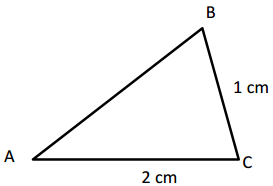
∆ ABC is an isosceles triangle. \(\overline{A B}\) must be 2 cm. True or False?
Eureka Math Grade 4 Module 4 Lesson 14 Homework Answer Key 4
Answer:

Question 4.
A triangle cannot have both an acute angle and a right angle. True or False?
Answer:

Question 5.
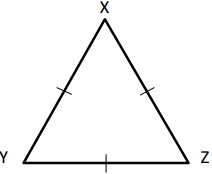
∆ XYZ can be described as both equilateral and acute. True or False?
Eureka Math Grade 4 Module 4 Lesson 14 Homework Answer Key 5
Answer:

Question 6.
A right triangle is always scalene. True or False?
Answer:

Extension:
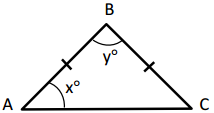
In ∆ ABC, x = y. True or False?
Eureka Math Grade 4 Module 4 Lesson 14 Homework Answer Key 6
Answer:

Eureka Math Grade 4 Module 4 Lesson 13 Answer Key

Engage NY Eureka Math 4th Grade Module 4 Lesson 13 Answer Key

Eureka Math Grade 4 Module 4 Lesson 13 Practice Sheet Answer Key

Question 1.
Eureka Math Grade 4 Module 4 Lesson 13 Practice Sheet Answer Key 1
Answer:

Eureka Math Grade 4 Module 4 Lesson 13 Problem Set Answer Key

Question 1.
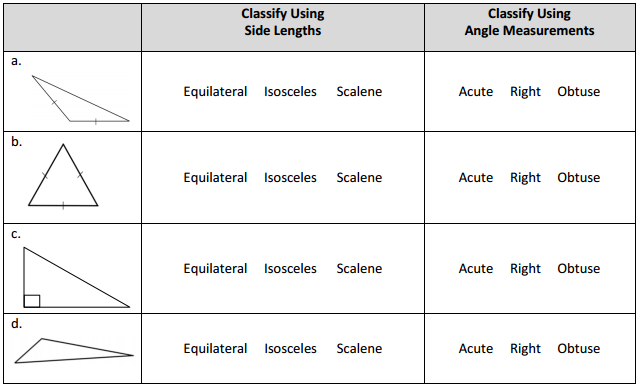
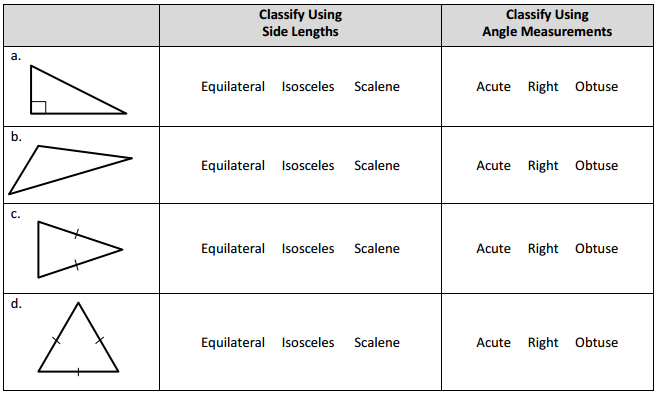
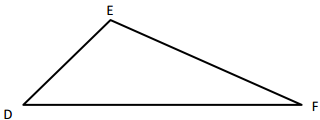
Classify each triangle by its side lengths and angle measurements. Circle the correct names.
Eureka Math Grade 4 Module 4 Lesson 13 Problem Set Answer Key 2
Answer:

Question 2.
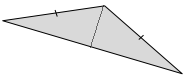
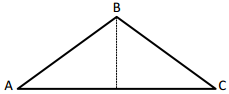
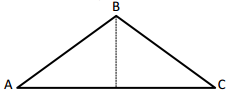
∆ ABC has one line of symmetry as shown. What does this tell you about the measures of ∠A and ∠C?
Eureka Math Grade 4 Module 4 Lesson 13 Problem Set Answer Key 3
Answer:

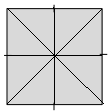
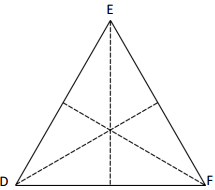
3. ∆ DEF has three lines of symmetry as shown.
Eureka Math Grade 4 Module 4 Lesson 13 Problem Set Answer Key 4
Question a.
How can the lines of symmetry help you to figure out which angles are equal?

Question b.
∆ DEF has a perimeter of 30 cm. Label the side lengths.
Answer:

Question 4.
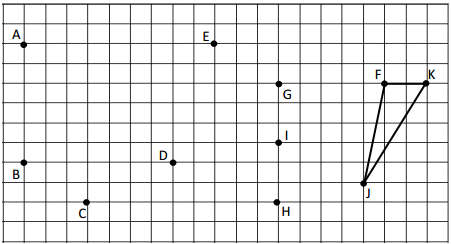
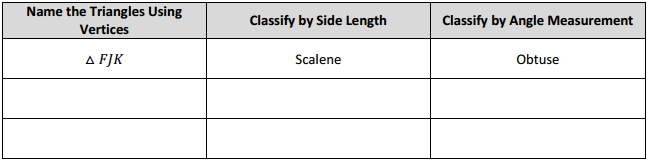
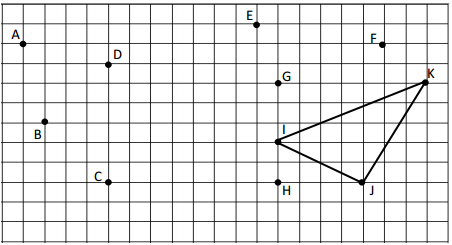
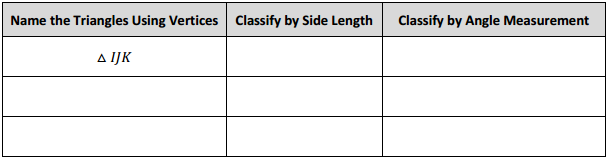
Use a ruler to connect points to form two other triangles. Use each point only once. None of the triangles may overlap. One or two points will be unused. Name and classify the three triangles below. The first one has been done for you.
Eureka Math Grade 4 Module 4 Lesson 13 Problem Set Answer Key 5

Eureka Math Grade 4 Module 4 Lesson 13 Problem Set Answer Key 6
Answer:

Question 5a.
List three points from the grid above that, when connected by segments, do not result in a triangle.
Answer:

Question 5b.
Why didn’t the three points you listed result in a triangle when connected by segments?
Answer:

Question 6.
Can a triangle have two right angles? Explain.
Answer:

Eureka Math Grade 4 Module 4 Lesson 13 Exit Ticket Answer Key

Use appropriate tools to solve the following problems:

Question 1.
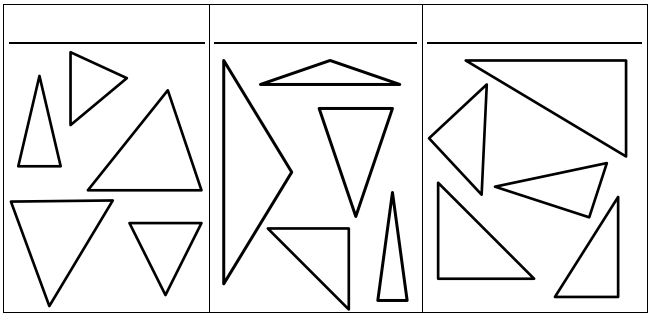
The triangles below have been classified by shared attributes (side length or angle type). Use the words acute, right, obtuse, scalene, isosceles, or equilateral to label the headings to identify the way the triangles have been sorted.
Eureka Math Grade 4 Module 4 Lesson 13 Exit Ticket Answer Key 7
Answer:

Question 2.
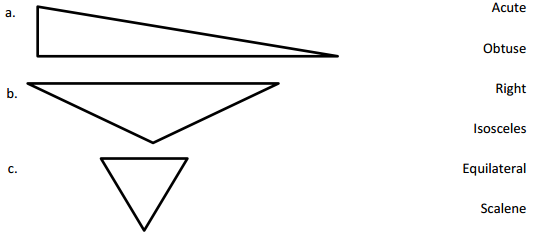
Draw lines to identify each triangle according to angle type and side length.
Eureka Math Grade 4 Module 4 Lesson 13 Exit Ticket Answer Key 8
Answer:

Question 3.
Identify and draw any lines of symmetry in the triangles in Problem 2.
Answer:

Eureka Math Grade 4 Module 4 Lesson 13 Homework Answer Key

Question 1.
Classify each triangle by its side lengths and angle measurements. Circle the correct names.
Eureka Math Grade 4 Module 4 Lesson 13 Homework Answer Key 9
Answer:

Question 2a.
∆ ABC has one line of symmetry as shown. Is the measure of ∠A greater tyhan, less than or equal to ∠C?
Eureka Math Grade 4 Module 4 Lesson 13 Homework Answer Key 10
Answer:

Question 2b.
∆ DEF is scalene. What do you observe about its angles? Explain.
Eureka Math Grade 4 Module 4 Lesson 13 Homework Answer Key 11
Answer:

Question 3.
Use a ruler to connect points to form two other triangles. Use each point only once. None of the triangles may overlap. Two points will be unused. Name and classify the three triangles below.
Eureka Math Grade 4 Module 4 Lesson 13 Homework Answer Key 12

Eureka Math Grade 4 Module 4 Lesson 13 Homework Answer Key 13
Answer:

Question 4.
If the perimeter of an equilateral triangle is 15 cm, what is the length of each side?
Answer:

Question 5.
Can a triangle have more than one obtuse angle? Explain.
Answer:

Question 6.
Can a triangle have one obtuse angle and one right angle? Explain.
Answer:

Eureka Math Grade 4 Module 4 Lesson 8 Answer Key

Engage NY Eureka Math 4th Grade Module 4 Lesson 8 Answer Key

Eureka Math Grade 4 Module 4 Lesson 8 Problem Set Answer Key

Question 1.
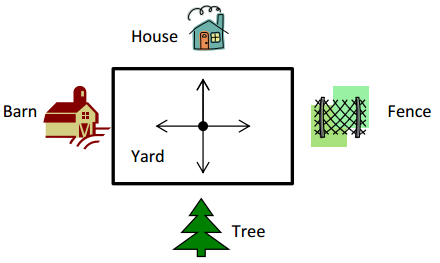
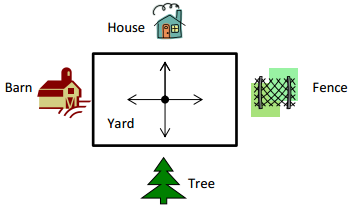
Joe, Steve, and Bob stood in the middle of the yard and faced the house. Joe turned 90° to the right. Steve turned 180° to the right. Bob turned 270° to the right. Name the object that each boy is now facing.
Joe ____________________
Steve __________________
Bob ___________________
Eureka Math Grade 4 Module 4 Lesson 8 Problem Set Answer Key 1
Answer:
The object that Joe is now facing is the fence.
The object that Steve is now facing is the tree.
The object that Bob is now facing is the barn.

Explanation:
As Joe, Steve, and Bob stood in the middle of the yard and faced the house then Joe turned 90° to the right and Steve turned 180° to the right and Bob turned 270° to the right. So the object that Joe is now facing is the fence and the object that Steve is now facing is the tree and the object that Bob is now facing is the barn.

Question 2.
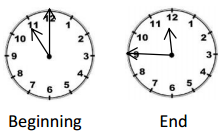
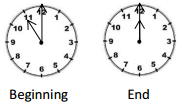
Monique looked at the clock at the beginning of class and at the end of class. How many degrees did the minute hand turn from the beginning of class until the end?
Eureka Math Grade 4 Module 4 Lesson 8 Problem Set Answer Key 2
Answer:
The minute hand-turned 270°.

Explanation:
Here, Monique looked at the clock at the beginning of class and at the end of class, and the number of degrees did the minute hand turn from the beginning of class until the end is 270°.

Question 3.
The skater jumped into the air and did a 360. What does that mean?
Answer:
He jumped into the car and turned around the complete circle.

Explanation:
As the skater jumped into the air and did a 360 which means that he jumped into the car and turned around the complete circle and now he is facing the way he started.

Question 4.
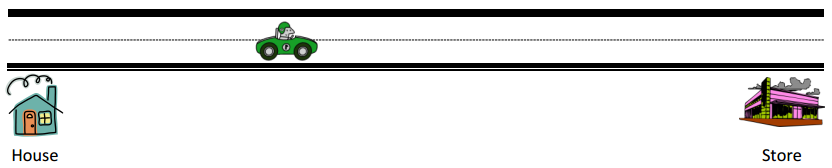
Mr. Martin drove away from his house without his wallet. He did a 180. Where is he heading now?
Eureka Math Grade 4 Module 4 Lesson 8 Problem Set Answer Key 3
Answer:
Mr. Martin now is heading to his house.

Explanation:
As Mr. Martin drove away from his house without his wallet and then he did a 180, so Mr. Martin now is heading to his house.

Question 5.
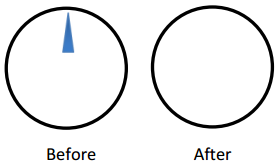
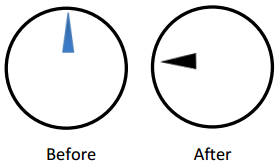
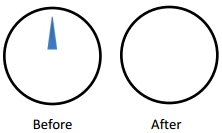
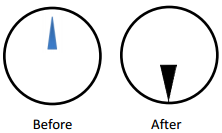
John turned the knob of the shower 270° to the right. Draw a picture showing the position of the knob after he turned it.
Eureka Math Grade 4 Module 4 Lesson 8 Problem Set Answer Key 4
Answer:
As John turned the knob of the shower 270° to the right, so the position of the knob after John turned is shown below.
Eureka-Math-Grade-4-Module-4-Lesson-8-Problem-Set-Answer-Key-4

Question 6.
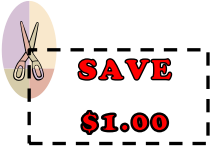
Barb used her scissors to cut out a coupon from the newspaper. How many quarter-turns does she need to turn the paper in order to stay on the lines?
Eureka Math Grade 4 Module 4 Lesson 8 Problem Set Answer Key 5
Answer:
The number of quarter-turns does Barb needs to turn the paper in order to stay on the lines is four quarter turns.

Explanation:
As Barb used her scissors to cut out a coupon from the newspaper, so the number of quarter-turns does Barb needs to turn the paper in order to stay on the lines is four quarter turns.

Question 7.
How many quarter-turns does the picture need to be rotated in order for it to be upright?
Eureka Math Grade 4 Module 4 Lesson 8 Problem Set Answer Key 6
Answer:
We need to rotate the picture one quarter turn to the left or three quarter turns to the right.

Explanation:
Here, we need to rotate the picture one quarter turn to the left or three quarter turns to the right then the picture will be upright.

Question 8.
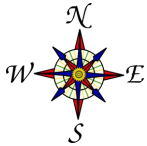
Meredith faced north. She turned 90° to the right, and then 180° more. In which direction is she now facing?
Eureka Math Grade 4 Module 4 Lesson 8 Problem Set Answer Key 7
Answer:
the Meredith is now facing West.

Explanation:
As Meredith faced north and then she turned 90° to the right, and then 180° more. So the Meredith is now facing West.

Eureka Math Grade 4 Module 4 Lesson 8 Exit Ticket Answer Key

Question 1.
Marty was doing a handstand. Describe how many degrees his body will turn to be upright again.
Eureka Math Grade 4 Module 4 Lesson 8 Exit Ticket Answer Key 8
Answer:
The number of degrees his body will turn to be upright again is 90°.

Explanation:
As Marty was doing a handstand and the number of degrees his body will turn to be upright again is 90°.

Question 2.
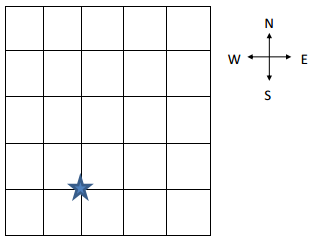
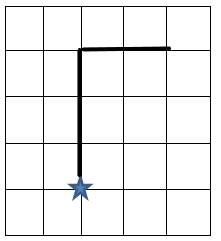
Jeffrey started riding his bike at the Eureka Math Grade 4 Module 4 Lesson 8 Exit Ticket Answer Key 9. He travelled north for 3 blocks, then turned 90° to the right and rode for 2 blocks. In which direction was he headed? Sketch his route on the grid below. Each square unit represents 1 block.
Eureka Math Grade 4 Module 4 Lesson 8 Exit Ticket Answer Key 10
Answer:
Jeffery will head in the East direction.

Explanation:
As Jeffrey started riding his bike at Eureka Math Grade 4 Module 4 Lesson 8 Exit Ticket Answer Key 9and he traveled north for 3 blocks, then turned 90° to the right and rode for 2 blocks. So Jeffery will head in the East direction.
Eureka-Math-Grade-4-Module-4-Lesson-8-Exit-Ticket-Answer-Key-10

Eureka Math Grade 4 Module 4 Lesson 8 Homework Answer Key

Question 1.
Jill, Shyan, and Barb stood in the middle of the yard and faced the barn. Jill turned 900 to the right. Shyan turned 180° to the left. Barb turned 270° to the left. Name the object that each girl is now facing.
Jill ____________________
Shyan __________________
Barb ___________________
Eureka Math Grade 4 Module 4 Lesson 8 Homework Answer Key 11
Answer:
The object that Jill is now facing is the house.
The object that Shyan is now facing is the fence.
the object that Barb is now facing is the house.

Explanation:
Jill, Shyan, and Barb stood in the middle of the yard and faced the barn and Jill turned 900 to the right and Shyan turned 180° to the left and Barb turned 270° to the left. So the object that Jill is now facing is the house and the object that Shyan is now facing the fence and the object that Barb is now facing is the house.

Question 2.
Allison looked at the clock at the beginning of class and at the end of class. How many degrees did the minute hand turn from the beginning of class until the end?
Eureka Math Grade 4 Module 4 Lesson 8 Homework Answer Key 12
Answer:
The minute had turned 360 degrees.

Explanation:
As Allison looked at the clock at the beginning of class and at the end of class, so the number of degrees did the minute hand turn from the beginning of the class until the end is 360 degrees.

Question 3.
The snowboarder went off a jump and did a 180. In which direction was the snowboarder facing when he landed? How do you know?
Answer:
The direction in which the snowboarder facing will be backwards.

Explanation:
As the snowboarder went off a jump and did a 180 degree, so the direction in which the snowboarder facing will be backwards. We came to know that as he did a jump of 180 degree by turning back.

Question 4.
As she drove down the icy road, Mrs. Campbell slammed on her brakes. Her car did a 360. Explain what happened to Mrs. Campbell’s car.
Answer:
Mrs. Campbell’s car did a complete turn and ended up facing the down the icy road

Explanation:
As she drove down the icy road, Mrs. Campbell slammed on her brakes so her car did a 360. Here Mrs. Campbell’s car did a complete turn and ended up facing the down the icy road and the same direction she started in.

Question 5.
Jonah turned the knob of the stove two quarter-turns. Draw a picture showing the position of the knob after he turned it.
Eureka Math Grade 4 Module 4 Lesson 8 Homework Answer Key 13
Answer:
The image will be as shown below.

Explanation:
As Jonah turned the knob of the stove two quarter-turns, so the image will be as shown below.
Eureka-Math-Grade-4-Module-4-Lesson-8-Homework-Answer-Key-13

Question 6.
Betsy used her scissors to cut out a coupon from the newspaper. How many total quarter-turns will she need to rotate the paper in order to cut out the entire coupon?
Eureka Math Grade 4 Module 4 Lesson 8 Homework Answer Key 14
Answer:
The number of total quarter-turns will she need to rotate the paper in order to cut out the entire coupon is three quarter turns.

Explanation:
As Betsy used her scissors to cut out a coupon from the newspaper. So the number of total quarter-turns will she need to rotate the paper in order to cut out the entire coupon is three quarter turns.

Question 7.
How many quarter-turns does the picture need to be rotated in order for it to be upright?
Eureka Math Grade 4 Module 4 Lesson 8 Homework Answer Key 15
Answer:
The picture needs to rotate two quarter turns which will be 180 degrees.

Question 8.
David faced north. He turned 180° to the right, and then 270° to the left. In which direction is he now facing?
Eureka Math Grade 4 Module 4 Lesson 8 Homework Answer Key 16
Answer:
The direction of David now facing will be West.

Explanation:
As David faced north and he turned 180° to the right, and then 270° to the left. So the direction of David now facing will be West.

Eureka Math Grade 4 Module 4 Lesson 12 Answer Key

Engage NY Eureka Math 4th Grade Module 4 Lesson 12 Answer Key

Eureka Math Grade 4 Module 4 Lesson 12 Problem Set Answer Key

Question 1.
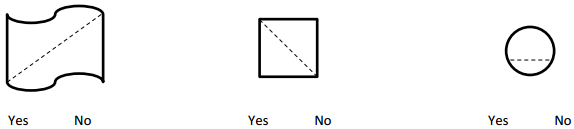
Circle the figures that have a correct line of symmetry drawn.
Eureka Math Grade 4 Module 4 Lesson 12 Problem Set Answer Key 1
Answer:

Question 2.
Find and draw all lines of symmetry for the following figures. Write the number of lines of symmetry that you found in the blank underneath the shape.
Eureka Math Grade 4 Module 4 Lesson 12 Problem Set Answer Key 2
Answer:

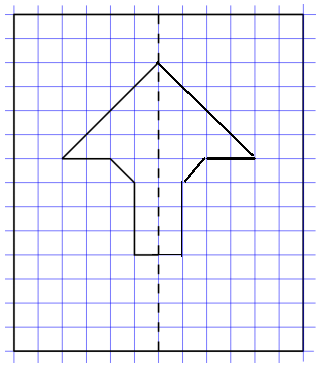
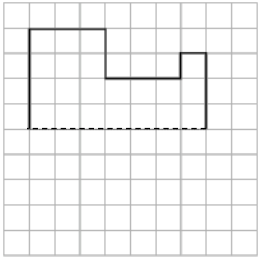
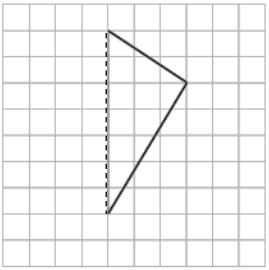
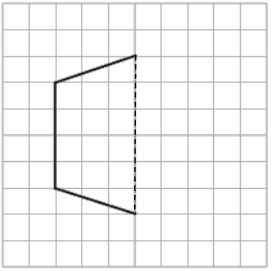
3. Half of each figure below has been drawn. Use the line of symmetry, represented by the dashed line, to complete each figure.

Question a.
Eureka Math Grade 4 Module 4 Lesson 12 Problem Set Answer Key 3
Answer:

Question b.
Eureka Math Grade 4 Module 4 Lesson 12 Problem Set Answer Key 4
Answer:

Question c.
Eureka Math Grade 4 Module 4 Lesson 12 Problem Set Answer Key 5
Answer:

Question d.
Eureka Math Grade 4 Module 4 Lesson 12 Problem Set Answer Key 6
Answer:

Question 4.
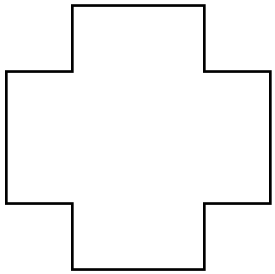
The figure below is a circle. How many lines of symmetry does the figure have? Explain.
Eureka Math Grade 4 Module 4 Lesson 12 Problem Set Answer Key 7
Answer:

Eureka Math Grade 4 Module 4 Lesson 12 Exit Ticket Answer Key

Question 1.
Is the line drawn a line of symmetry? Circle your choice:
Eureka Math Grade 4 Module 4 Lesson 12 Problem Set Answer Key 8
Answer:

Question 2.
Draw as many lines of symmetry as you can find in the figure below.
Eureka Math Grade 4 Module 4 Lesson 12 Exit Ticket Answer Key 9
Answer:

Eureka Math Grade 4 Module 4 Lesson 12 Homework Answer Key

Question 1.
Circle the figures that have a correct line of symmetry drawn.
Eureka Math Grade 4 Module 4 Lesson 12 Homework Answer Key 10
Answer:

Question 2.
Find and draw all lines of symmetry for the following figures. Write the number of lines of symmetry that you found in the blank underneath the shape.
Eureka Math Grade 4 Module 4 Lesson 12 Homework Answer Key 11
Answer:

3.
Half of each figure below has been drawn. Use the line of symmetry, represented by the dashed line, to complete each figure.

Question a.
Eureka Math Grade 4 Module 4 Lesson 12 Homework Answer Key 12
Answer:

Question b.
Eureka Math Grade 4 Module 4 Lesson 12 Homework Answer Key 13
Answer:

Question c.
Eureka Math Grade 4 Module 4 Lesson 12 Homework Answer Key 14
Answer:

Question d.
Eureka Math Grade 4 Module 4 Lesson 12 Homework Answer Key 15
Answer:

Question 4.
Is there another shape that has the same number of lines of symmetry as a circle? Explain.
Eureka Math Grade 4 Module 4 Lesson 12 Homework Answer Key 16
Answer:

Eureka Math Grade 4 Module 4 End of Module Assessment Answer Key

Engage NY Eureka Math 4th Grade Module 4 End of Module Assessment Answer Key

Eureka Math Grade 4 Module 4 End of Module Assessment Answer Key

Question 1.
Find and draw all lines of symmetry in the following figures. If there are none, write “none.”
a.
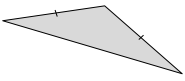
Eureka Math Grade 4 Module 4 End of Module Assessment Answer Key 1
Answer:
Eureka-Math-Grade-4-Module-4-End-of-Module-Assessment-Answer-Key-1
One line of symmetry in the above diagram.

Explanation:

A line of symmetry means it is an imaginary line which can divide an object into two identical halves. By observing the diagram the line can divide into 2 parts. So it has one line of symmetry.

b.
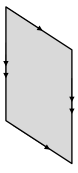
Eureka Math Grade 4 Module 4 End of Module Assessment Answer Key 2
Answer:
There are none.

Explanation:

For the diagram given above, there are no symmetry lines.

c.
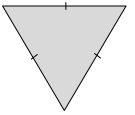
Eureka Math Grade 4 Module 4 End of Module Assessment Answer Key 3
Answer:
There are three lines of symmetry lines.
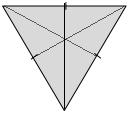
Eureka-Math-Grade-4-Module-4-End-of-Module-Assessment-Answer-Key-3

Explanation:
As we know about the line of symmetry from the above diagram we can identify 3 lines of symmetry.

d.
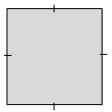
Eureka Math Grade 4 Module 4 End of Module Assessment Answer Key 4
Answer:
Eureka-Math-Grade-4-Module-4-End-of-Module-Assessment-Answer-Key-4
For square, we have 4 lines of symmetrical lines.

Explanation:
By observing the above diagram we can divide the parts into 4 symmetrical lines. Hence square has 4 lines of symmetry.

e.
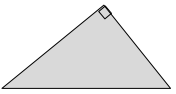
Eureka Math Grade 4 Module 4 End of Module Assessment Answer Key 5
Answer:
There are no symmetrical lines.

Explanation:
By observing the above diagram we know that the object cannot divide into two identical halves. Hence it has no symmetrical lines.

f.
Eureka Math Grade 4 Module 4 End of Module Assessment Answer Key 6
Answer:
Eureka-Math-Grade-4-Module-4-End-of-Module-Assessment-Answer-Key-6
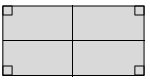
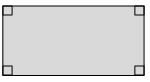
As per the rectangle, we have 2 lines of symmetry.

Explanation:
By applying the rules of symmetry the object can be divided into 2 parts. So by observing the diagram we know that the rectangle has 2 lines of symmetrical lines as it can be folded in half horizontally or vertically.

g. For each triangle listed below, state whether it is acute, obtuse, or right and whether it is isosceles, equilateral, or scalene.
Triangle a: _________________________ _________________________
Triangle c: _________________________ _________________________
Triangle e: _________________________ _________________________
Answer:
Triangle a: Obtuse, Isosceles
Traingle c: Acute, Equilateral
Triangle e: Right, Scalene

Explanation:
Triangle a is an obtuse angle that has more than 90° and the triangle is an isosceles triangle, therefore, has both two equal sides and two equal angles.
Triangle c is an acute angle that has less than 90° and here the triangle is an equilateral triangle where all the sides and angles are equal.
Triangle e is right angles triangle i.e is exactly 90° therefore no side is equal to one another.

h. How many lines of symmetry does a circle have? What point do all lines of symmetry for a given circle have in common?
Eureka Math Grade 4 Module 4 End of Module Assessment Answer Key 1
Answer:
As the circle has an infinite amount of lines of symmetry. All lines of symmetry for a circle pass through the center point.

Explanation:
In a circle, each diameter gives an axis of symmetry to the circle. Since an infinite number of diameters can be drawn in a circle; so a circle has infinite lines of symmetry. But, all the symmetries are look-alike, so a circle has only one symmetry of infinite orientations.

Question 2.
In the following figure, QRST is a rectangle. Without using a protractor, determine the measure of ∠RQS Write an equation that could be used to solve the problem.
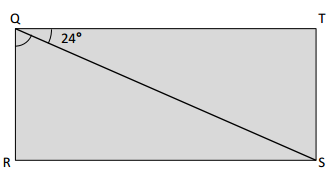
Eureka Math Grade 4 Module 4 End of Module Assessment Answer Key 8
Let us assume ∠Q as W°
The equation that could be solved the problem is
24° + W° = 90°
W° = 90°-24° = 66°
∠RQS = 66°

Explanation:
To determine the ∠RQS we need to write an equation to solve. By observing the diagram we could write the equation as 24° + W° = 90°.
Hence we can determine the value of ∠RQS.

For each part below, explain how the measure of the unknown angle can be found without using a protractor.
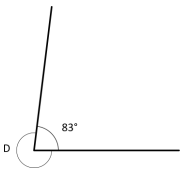
a. Find the measure of ∠D.
Eureka Math Grade 4 Module 4 End of Module Assessment Answer Key 9
Answer:
To measure the angle we have to subtract 360° from 83° because a circle measures 360°.
so 83°+ ∠D = 360°
∠D=360° – 83°
∠D=277°

Explanation:
A complete trip around the edge of a circle is 360 degrees. So to measure the angle D we need to subtract 360° from 83°. Hence the ∠D=360° – 83°
∠D=277°.

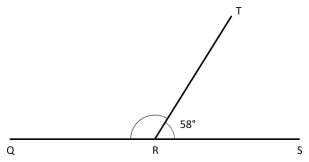
b. In this figure, Q, R, and S lie on a line. Find the measure of ∠QRT
Eureka Math Grade 4 Module 4 End of Module Assessment Answer Key 10
Answer:
To measure the ∠QRT
58°+ ∠QRT = 180°
∠QRT = 180°-58°
∠QRT = 122°

Explanation:
As we know that the line measures 180°, so we need to add 58° with ∠QRT and hence subtract the resultant with 180°.

c. In this figure, Q, R, and S lie on a line, as do P, R, and T. Find the measure of ∠PRS
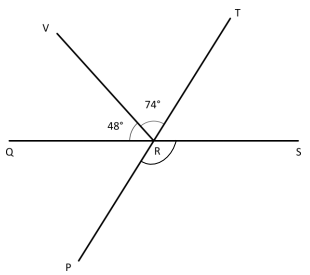
Eureka Math Grade 4 Module 4 End of Module Assessment Answer Key 11
Answer:
First we need to measure ∠TRS
∠VRQ+∠VRT+∠TRS = 180°
48°+74°+∠TRS = 180°
∠TRS = 180°-48°-74°
∠TRS = 180° – 122°
∠TRS = 58°
∠TRS + ∠PRS =180°
58°+ ∠PRS =180°
∠PRS = 180°-58°
∠PRS = 122°

Explanation:
First, to calculate ∠PRS we need to measure ∠TRS. Since Q, R, and S lie on the same line. As we know 48°+74°+∠TRS = 180°. That means we get ∠TRS = 58°.
Also, P, R, and T line on the same line, as we know ∠TRS + ∠PRS = 180°. That means ∠PRS is 122°

Question 3.
Mike drew some two-dimensional figures.
Sketch the figures, and answer each part about the figures that Mike drew.

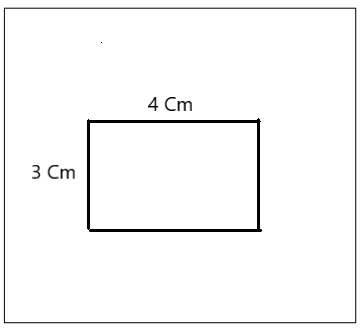
a. He drew a four-sided figure with four right angles. It is 4 cm long and 3 cm wide.
What type of quadrilateral did Mike draw?
How many lines of symmetry does it have?
Answer:
Mike drew a four-sided figure with four right angles that have 4 cm long and 3 cm wide.
The type of quadrilateral mike drew is a rectangle.
The rectangle has 2 lines of symmetry.
Eureka-Math-Grade-4-Module-4-Mid-Module-Assessment-Answer-Key-4

Explanation:
As mentioned in the above question mike drew a four-sided figure with four right angles that have 4 cm long and 3 cm wide. A rectangle has two pairs of opposite sides parallel, and four right angles. So the figure mike drew is a rectangle and it has 2 lines of symmetry.

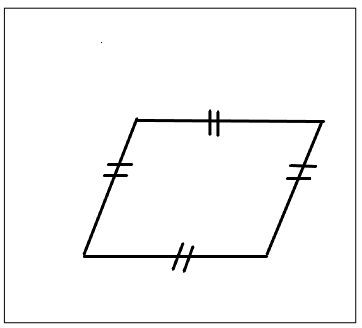
b. He drew a quadrilateral with four equal sides and no right angles.
What type of quadrilateral did Mike draw?
How many lines of symmetry does it have?
Answer:
Eureka-Math-Grade-4-Module-4-Mid-Module-Assessment-Answer-Key-1
The type of quadrilateral that mike drew is Rhombus.
There are 2 lines of symmetry that the rhombus has.
Explanation:
As the rhombus has four equal-length sides and opposite sides parallel to each other. Hence by observing the diagram we can know that it is a rhombus that has 2 lines of symmetry.

c. He drew a triangle with one right angle and sides that measure 6 cm, 8 cm, and 10 cm.
Classify the type of triangle Mike drew based on side length and angle measure.
How many lines of symmetry does it have?
Answer:
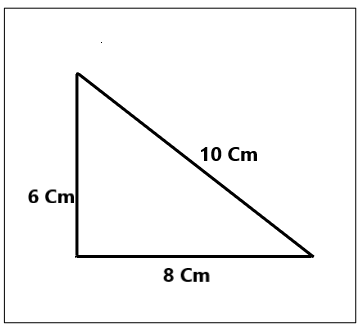
The type of triangle that mike drew is a right-angle triangle. And by observing the dimensions, one can clearly name it as a scalene triangle as all sides have different dimensions.
Explanation:
As the triangle is right angles i.e it has 90°. Hence the triangle mike drew is a right-angled triangle. As the triangle has different dimensions therefore we can name the triangle as a scalene triangle.

d. Using the dimensions given, draw the same shape that Mike drew in Part (c).
Answer:
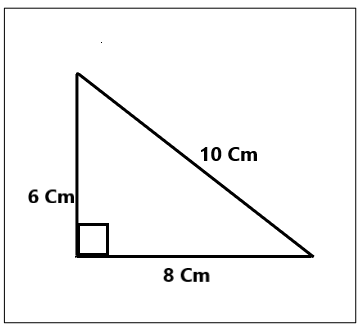
Eureka-Math-Grade-4-Module-4-Mid-Module-Assessment-Answer-Key-3

Explanation:
By using the given dimensions mike drew the shape of the right-angled triangle.

e. Mike drew this figure. Without using a protractor, find the sum of ∠FJK, ∠KJH, and ∠HJG.
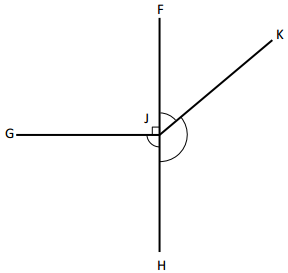
Eureka Math Grade 4 Module 4 End of Module Assessment Answer Key 12
Answer:
360°- 90° = 270°
∠FJK+∠KJH +∠HJG =270°

Explanation:
Here we need to find the sum of ∠FJK, ∠KJH, and ∠HJG. As we already know that the complete trip around the edge of a circle is 360 degrees. Now we need to subtract 360° from 90° to get a sum of other angles. By doing so we get the sum of angles as 270°.

f. Points F, J, and H lie on a line. What is the measure of ∠KJH if ∠FJK measures 45°? Write an equation that could be used to determine the measure of ∠KJH.
Answer:
The equation to measure ∠KJH is
45°+∠KJH =180°
∠KJH = 180°-45°
∠KJH = 135°

Explanation:
We have ∠FJK and points F, J, and H lie on the same line. So to measure ∠KJH we need to write down an equation that is 45°+∠KJH=180°. Hence ∠KJH is 135°.

g.
Mike used a protractor to measure ∠ABC as shown below and said the result was exactly 130° Do you agree or disagree? Explain your thinking.
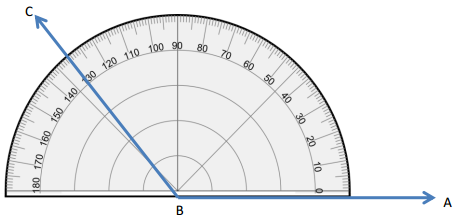
Eureka Math Grade 4 Module 4 End of Module Assessment Answer Key 13
Answer:
I disagree. Because mike didn’t use the protractor properly. The 0° should match up with BA but it doesn’t match up.

Explanation:
We can completely disagree with mike’s statement because he doesn’t measure the exact result as he didn’t use the protractor properly. In the diagram, mike lined up the bottom of the protractor with BA instead.

h. Below is half of a line-symmetric figure and its line of symmetry. Use a ruler to complete Mike’s drawing.
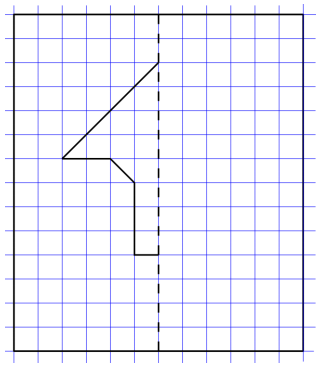
Eureka Math Grade 4 Module 4 End of Module Assessment Answer Key 14
Answer:
Eureka-Math-Grade-4-Module-4-End-of-Module-Assessment-Answer-Key-14
Explanation:
As mentioned in the question we have completed mike’s half of a line-symmetric figure and its line of symmetry using the ruler.