Eureka Math Grade 4 Module 4 Mid Module Assessment Answer Key

Engage NY Eureka Math 4th Grade Module 4 Mid Module Assessment Answer Key

Eureka Math Grade 4 Module 4 Mid Module Assessment Answer Key

Question 1.
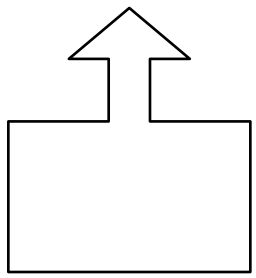
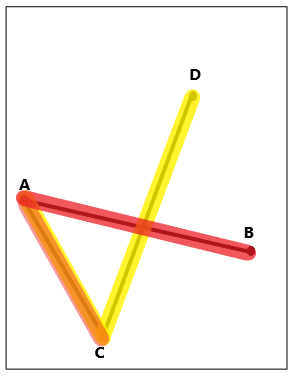
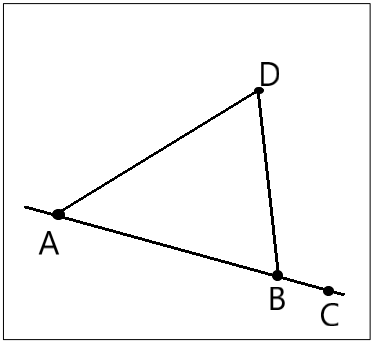
Follow the directions below to draw a figure in the box below. Use a straightedge.
a. Draw 2 points, A and B.
b. Draw Eureka Math Grade 4 Module 4 Mid Module Assessment Answer Key 1.
c. Draw point D that is not on Eureka Math Grade 4 Module 4 Mid Module Assessment Answer Key 1.
d. Draw \(\overrightarrow{B D}\).
e. Draw \(\overline{A D}\).
f. Name an acute angle.
__________________________
g. Name an obtuse angle. You may have to draw and label another point.
____________________
Eureka-Math-Grade-4-Module-4-Mid-Module-Assessment-Answer-Key-2
Answer:
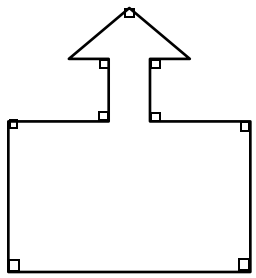
The acute angle is <BAD.
Here we labeled C as another point. So the obtuse angle is <DBC

Explanation:
Here, we have to draw two points and then labeled them as A and B.
And use a straight line to draw AB.
Now we have to draw a new point that is not on AB and we label it as D.
Then we will Join BD with a line to get an acute angle BAD.
Use a straight line to join AD.
And for an obtuse angle, we need to label another point as C.
We will use these points and we will label with one angle as <BAD/<DBC

Question 2.
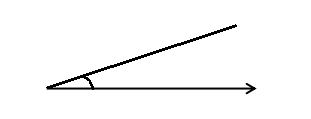
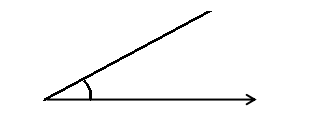
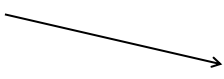
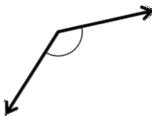
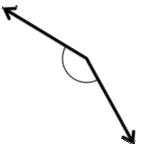
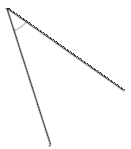
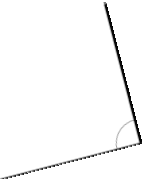
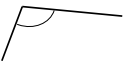
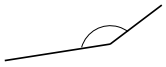
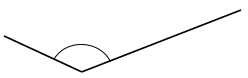
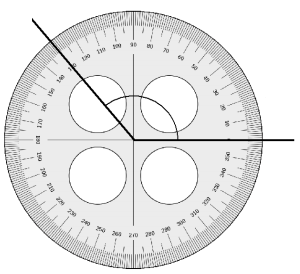
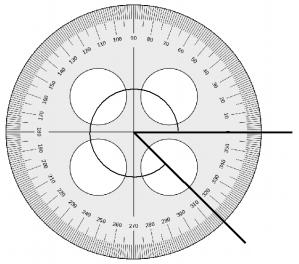
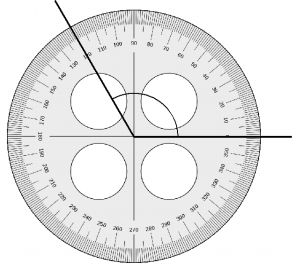
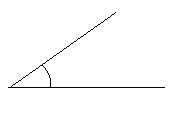
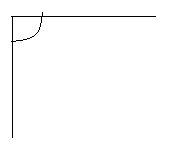
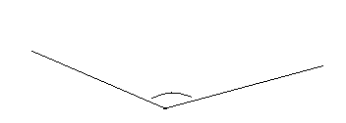
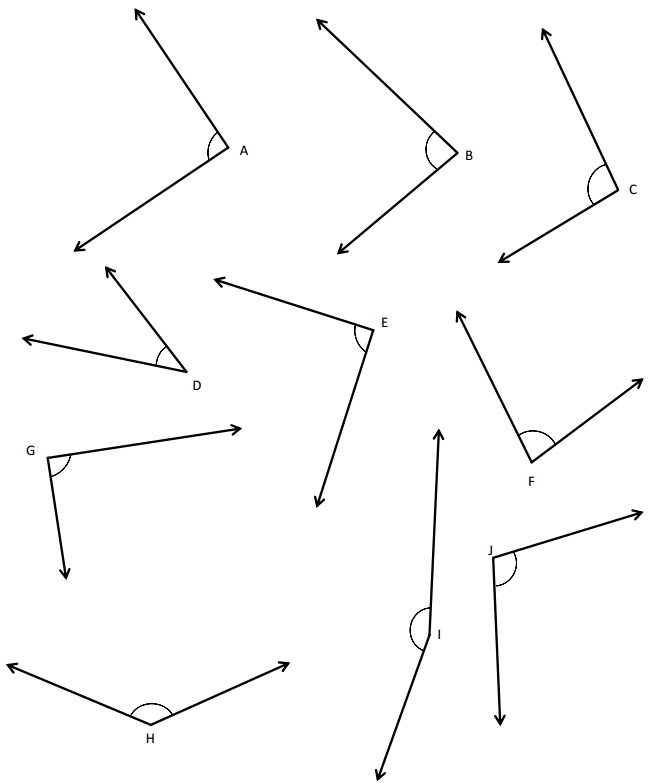
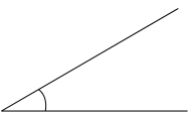
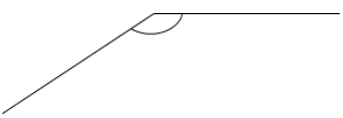
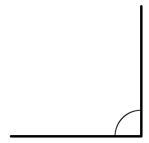
Use your protractor to measure the angle indicated by the arc. Classify each angle as right, acute, or obtuse. Explain how you know each angle’s classification.
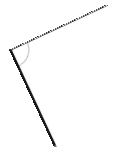
a.
Eureka Math Grade 4 Module 4 Mid Module Assessment Answer Key 3
Answer:
The angle indicated by the arc is 30° which is an acute angle.

Explanation:
Here the angle we measured is an acute angle because it indicates 30° which is less than the right angle i.e 90° 


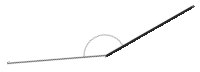
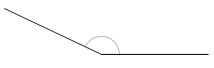
b.
Eureka Math Grade 4 Module 4 Mid Module Assessment Answer Key 4
Answer:
The answer is 147° which is an obtuse angle.

Explanation:
Here it is an obtuse angle as it measures 147° which is greater than a right angle and less than 180°

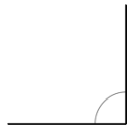
c.
Eureka Math Grade 4 Module 4 Mid Module Assessment Answer Key 5
Answer:
The angle indicated by the arc is 90° which is a right-angled triangle.

Explanation:
This is a right-angled triangle as it exactly measures 90°.

Question 3.
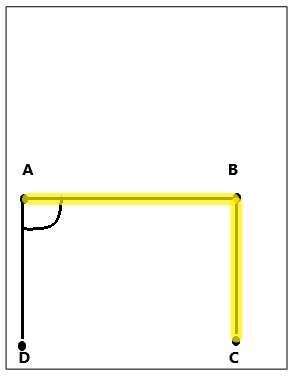
Use the following instructions to draw a figure in the box below.

  • Using a straightedge, draw a line. Label it Eureka Math Grade 4 Module 4 Mid Module Assessment Answer Key 6.
  • Label a point A on Eureka Math Grade 4 Module 4 Mid Module Assessment Answer Key 6.
  • Using your protractor and ruler, draw a line perpendicular to Eureka Math Grade 4 Module 4 Mid Module Assessment Answer Key 6 through point A.
  • Label the perpendicular line Eureka Math Grade 4 Module 4 Mid Module Assessment Answer Key 13.
  • Label a point B on Eureka Math Grade 4 Module 4 Mid Module Assessment Answer Key 13, other than point A.
  • Using your protractor and straightedge, draw a line, Eureka Math Grade 4 Module 4 Mid Module Assessment Answer Key 14, perpendicular to Eureka Math Grade 4 Module 4 Mid Module Assessment Answer Key 13 through point B.
  • Which lines are parallel in your drawing? Explain why.
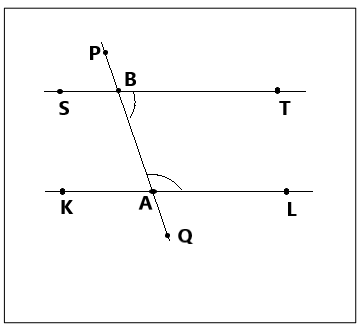
Eureka-Math-Grade-4-Module-4-Mid-Module-Assessment-Answer-Key-7
Answer:
ST||KL
Here ST is parallel to KL because both of them are perpendicular to PQ. It shows us the sides of a rectangle.

Explanation:
By using a straight edge draw a line and label them as KL.
Now label a point on the line of KL and name the point as A.
Next, draw a perpendicular line by using the protractor and ruler through point A to KL.
And label the perpendicular line as PQ.
Name point B on PQ other than point A.
Next is to draw a line ST by using the protractor and straightedge perpendicular to PQ through point B.
Now the answer to the above-mentioned questioned in our drawing is ST is parallel to KL as both of them are perpendicular to PQ.

Question 4.
Use the clock to answer the following:
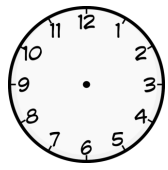
Eureka Math Grade 4 Module 4 Mid Module Assessment Answer Key 8
a. Use a straightedge to draw the hands as they would appear at 3:00.
Answer:
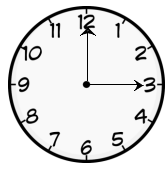
Eureka-Math-Grade-4-Module-4-Mid-Module-Assessment-Answer-Key-8

Explanation:
Given in the above diagram draw a line at minutes hand which is 3:00

b. What kind of angle is formed by the clock hands at 3:00?
Answer:
A right angle.

Explanation:
By observing keenly in the above diagram we get a right angle formed by the clock hands at 3:00

c. What time will it be when the minute hand has turned 180°?
Answer:
It will be at 3.30.

Explanation:
By turning the minute hand to 180° the time we get is 3.30

d. How many 90° turns will the minute hand make between 3:00 and 4:00?
Answer:
The minute’s hand will make four 90 turns between 3:00 and 4:00

Explanation:
By observing in the diagram when the clock is rotating in a clockwise direction the minute hand make four 90° turns i.e at 3:00, 3:15, 3:30, 3:45, 4:00

Question 5.
Use the compass rose to answer the following:
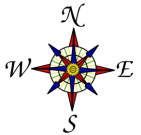
Eureka Math Grade 4 Module 4 Mid Module Assessment Answer Key 9
a. Maddy faced East. She turned to her right until she was facing North. How many degrees did she turn?
Answer:
Maddy turned 270°.

Explanation:
Maddy is facing the east side as she turned to her right means she is moving towards the south which is 90. As mentioned in the question Maddy turns right until she reaches north
So to reach north she as to make a move of 90°. Now from East to North she has made 270° i.e ( 90°+90°+90°).

b. Quanisha was facing North. She turned toward her right until she faced East. Alisha was facing South. She turned toward her right until she faced West. What fraction of a full turn did each girl complete? Through how many degrees did each girl turn?
Answer:
Here each girl completed 1/4th of a full turn.
And each girl turned 90°.

Explanation:

As Quanisha was facing north she turned towards the right until she reaches her destination which is East that she needs to face. Another girl Alisha was facing south and turned toward her right until she faces west. So by observing the direction through the compass given above here each girl completed their turn is 1/4th. And also each girl turned 90° while moving to their destination.

Question 6.
The town of Seaford has a large rectangular park with a biking path around its perimeter and two straight-line biking paths that cut across it as shown in the diagram below.
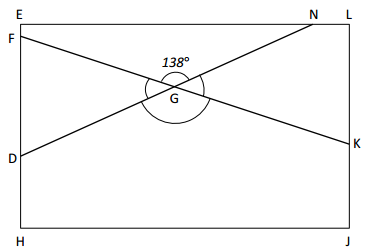
Eureka Math Grade 4 Module 4 Mid Module Assessment Answer Key 10
a. Find the measure of the following angles using a protractor.
∠FGD:
∠GDK:
∠KGN:
Answer:
By using a protractor, here the measuring angle of ∠FGD is 42° ( 180° -138° = 42°)
By doing the same above process the measuring angle of ∠GDK is 138°
The measuring angle of ∠KGN is 42° ( 180° -138° = 42°)

Explanation:
To measure an angle FGD, we place the midpoint of the protractor on the vertex G of the angle. The marking on the inner circle of the protractor is 0° to 180°. Now take the difference of the protractor as 180 and 138° we will get 42°. Repeat the same process to measure the other angles.

b. In the space below, use a protractor to draw an angle with the same measure as ∠DGK.
Answer:
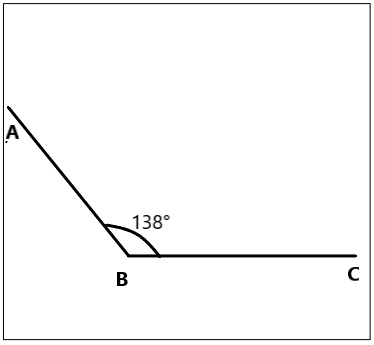
Eureka-Math-Grade-4-Module-4-Mid-Module-Assessment-Answer-Key-2-1

Explanation:
Here the same measure as ∠DGK is 138°. Now, take the protractor to draw an angle 138° and mention the angle as ∠ABC.

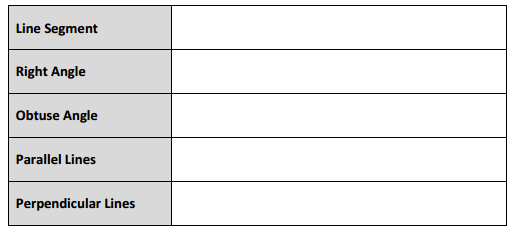
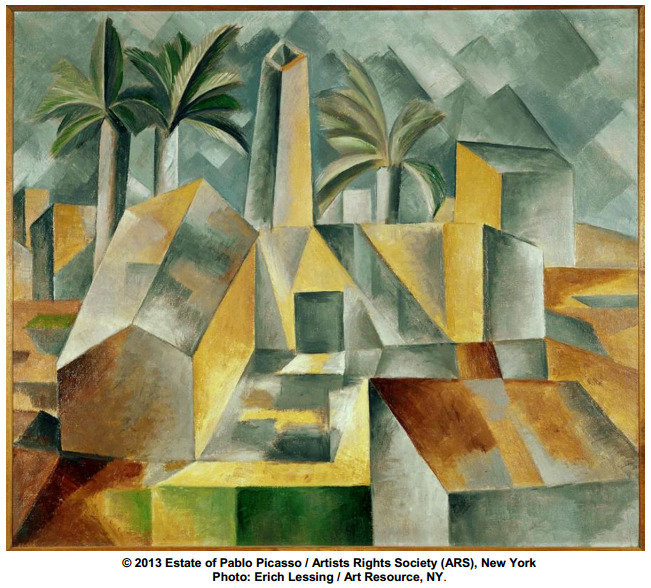
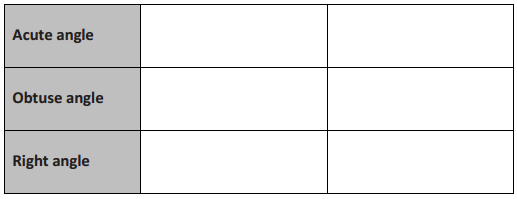
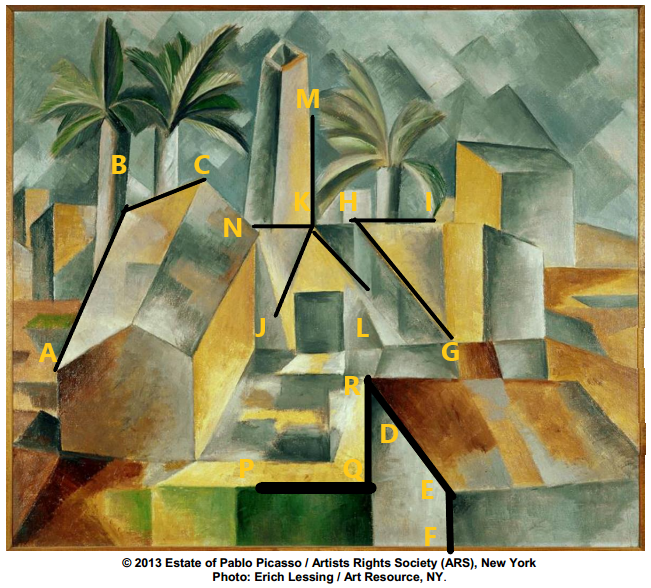
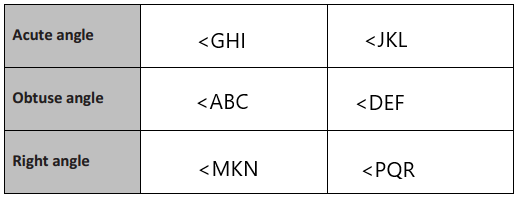
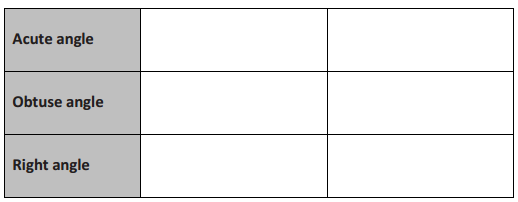
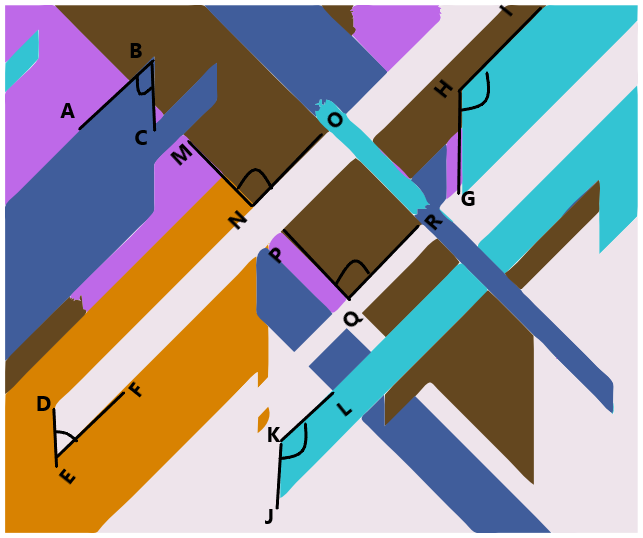
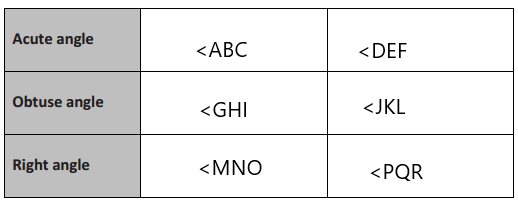
c. Below is a sign that bikers may encounter while riding in the park. Using the points in the figure below, identify a line segment, a right angle, an obtuse angle, a set of parallel lines, and a set of perpendicular lines. Write them in the table below.
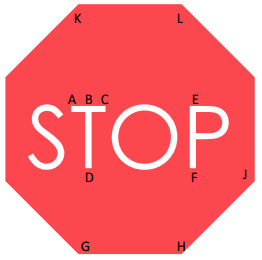
Eureka Math Grade 4 Module 4 Mid Module Assessment Answer Key 11
Eureka Math Grade 4 Module 4 Mid Module Assessment Answer Key 12

Answer:

Line segment: EF
Right Angle: ∠ABD
Obtuse angle: ∠GHJ
Parallel Lines: KL||GH
Perpendicular lines: AC BD

Explanation:
Line Segment: A-line that is bounded by two endpoints are in the above diagram are EF.
Right Angle: A right angle is an angle of exactly 90°. So by observing the above diagram we can identify the ∠ABD is a right angle.
Parallel Lines: The two straight lines in a plane that do not meet at any point are called to be parallel lines. By observing the diagram we got to know that KL is parallel to the GH.
Perpendicular Lines: Any two distinct lines meeting each other at 90° or a right angle are perpendicular lines. By keenly observing the diagram AC is perpendicular to BD.
 

Eureka Math Grade 4 Module 4 Lesson 11 Answer Key

Engage NY Eureka Math 4th Grade Module 4 Lesson 11 Answer Key

Eureka Math Grade 4 Module 4 Lesson 11 Problem Set Answer Key

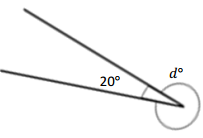
Write an equation, and solve for the unknown angle measurements numerically.
Question 1.
Eureka Math Grade 4 Module 4 Lesson 11 Problem Set Answer Key 1
______° + 20° = 30°
d° = ______°

Answer:
The value of d° is 10°.
Explanation:
Given that the value of the angle acute angle is 30° and the value of the other angle is 20° and the value of another angle is d°. So the equation will be
d° + 20°= 30°
so the value of d° is 30° – 20°
= 10°.

Question 2.
Eureka Math Grade 4 Module 4 Lesson 11 Problem Set Answer Key 2
______° + ______°= 360°
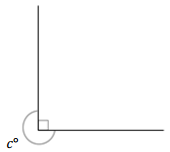
c° = ______°

Answer:
The value of c° is 270°.

Explanation:
Here, in the above image, we can see that an arc that represents a complete rotation which means 360°, and the other angle 90°. So the equation will be c°+90°= 360° and the value of c° is
c°= 360°-90°
= 270°.

Question 3.
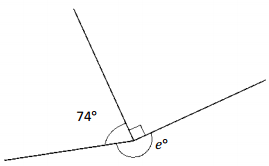
Eureka Math Grade 4 Module 4 Lesson 11 Problem Set Answer Key 3
______° + ______° + ______° = ______°
e° = ______°

Answer:
The value of e° is 196°.

Explanation:
Here we will measure the angles using a protractor and the values of the angles will be 90° and 196°. So the equation will be 74°+90°+e°= 360° and the value of e is
e° = 360°- 164°
= 196°.
So the value of e° is 196°.

Question 4.
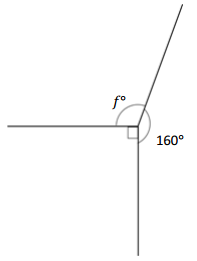
Eureka Math Grade 4 Module 4 Lesson 11 Problem Set Answer Key 4
______° + ______° + ______° = ______°
f° = ______°

Answer:
The value of f° is 110°.

Explanation:
Here we will measure the angles using a protractor and the values of the angles will be 90° and 160°. So the equation will be 90°+160°+f°= 360° and the value of f is
f° = 360°- 250°
= 110°.
So the value of f° is 110°.

Write an equation, and solve for the unknown angles numerically.

Question 5.
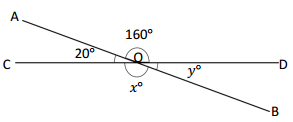
O is the intersection of \(\overline{A B}\) and \(\overline{C D}\). ∠DOA is 160°, and ∠AOC is 20°.
Eureka Math Grade 4 Module 4 Lesson 11 Problem Set Answer Key 5
x° = ______°      y° = ______°

Answer:
The value of x° is 160°.
The value of y° is 20°.

Explanation:
In the above image, we can see that the angle COD is 180° and <DOA is 160° and <AOC is 20°. So the equation will be 160° + y°= 180° and the value of y°= 180° – 160°
y°= 20°.
So the value of y° is 20°.
And the other equation will be 20° + x°= 180°
x°= 180° – 20°
= 160°.
So the value of the x°is 160°.

Question 6.
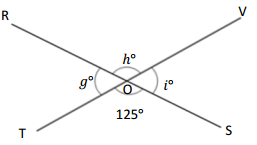
O is the intersection of \(\overline{R S}\) and \(\overline{T V}\). ∠TOS is 125°.
Eureka Math Grade 4 Module 4 Lesson 11 Problem Set Answer Key 6
g° = ______°     h° = ______°       t° = ______°

Answer:
The value of i° is 55°.
The value of h° is 125°.
The value of g° is 55°.

Explanation:
In the above image, we can see that the angle TOV is 180° and angle SOR is 180° and <TOS is 125°. So the equation will be 125° + i°= 180° and the value of i°= 180° – 125°
i°= 55°.
So the value of i° is 55°.
And the other equation will be 55° + h°= 180°
h°= 180° – 55°
= 125°.
So the value of the h°is 125°.
And the other equation will be 125° + g°= 180°
g°= 180° – 125°
= 55°.
So the value of the g°is 55°.

Question 7.
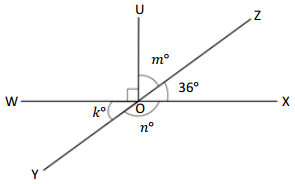
O is the intersection of \(\overline{W X}\), \(\overline{Y Z}\), and \(\overline{U O}\) ∠XOZ is 36°
k° = ______°     m° = ______°     n° = ______°
Eureka Math Grade 4 Module 4 Lesson 11 Problem Set Answer Key 7
Answer:
The value of m° is 54°.
The value of k° is 36°.
The value of n° is 144°.

Explanation:
In the above image, we can see that the angle WOX is 180° and angle XOZ is 36°, and the value of angle UOX is 90°. So the equation will be 90°+m+ 36°= 180° and the value of m°= 180° – 126°
m°= 54°.
So the value of m° is 54°.
And the other equation will be 54° +90°+k°= 180°
k°= 180° – 144°
= 36°.
So the value of the k°is 36°.
And the other equation will be 36° +n°= 180°
n°= 180° – 36°
= 144°.
So the value of the n°is 144°.

Eureka Math Grade 4 Module 4 Lesson 11 Exit Ticket Answer Key

Write equations using variables to represent the unknown angle measurements. Find the unknown angle measurements numerically.

Eureka Math Grade 4 Module 4 Lesson 11 Problem Set Answer Key 8

Question 1.
x° =
Answer:
The value of x° is 24°.

Explanation:
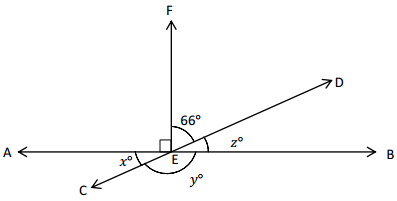
In the above image, we can see that the angle AEB is 180° and angle AEF is 90°. So the equation will be 90°+x+66= 180° and the value of m°= 180° – 156°
x°= 24°.
So the value of x° is 24°.

Question 2.
y° =
Answer:
The value of y° is 156°.

Explanation:
In the above image, we can see that the angle AEB is 180° and angle AEF is 90°. So the equation will be 24°+y= 180° and the value of y°= 180° – 24°
y°= 156°.
So the value of y° is 156°.

Question 3.
z° =
Answer:
The value of z° is 24°.

Explanation:
In the above image, we can see that the angle AEB is 180° and angle FEB is 90°. So the equation will be 90°+z+66= 180° and the value of m°= 180° – 156°
z°= 24°.
So the value of z° is 24°.

Eureka Math Grade 4 Module 4 Lesson 11 Homework Answer Key

Write an equation, and solve for the unknown angle measurements numerically.

Question 1.
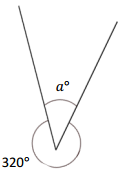
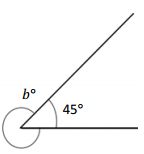
Eureka Math Grade 4 Module 4 Lesson 11 Homework Answer Key 9
__________° + 320° = 360°
a° = ________ °
Answer:
The value of a° is 40°.

Explanation:
Given that the value of the angle is complete rotation which 360° and the value of the other angle is 320° and the value of another angle is a°. So the equation will be
a° + 320°= 360°
so the value of a° is 360° – 320°
= 40°.

Question 2.
Eureka Math Grade 4 Module 4 Lesson 11 Homework Answer Key 10
_____________ ° + ____________ ° = 360°
b° = __________ °
Answer:
The value of b° is 315°.

Explanation:
Given that the value of the angle is complete rotation which 360° and the value of the other angle is 45° and the value of another angle is b°. So the equation will be
b° + 45°= 360°
so the value of b° is 360° – 45°
=315°

Question 3.
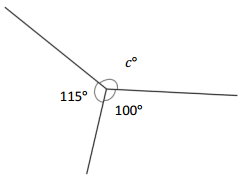
Eureka Math Grade 4 Module 4 Lesson 11 Homework Answer Key 11
_____________ ° + _____________ ° + _____________ ° = _____________ °
c° = _____________ °
Answer:
The value of c° is 145°.

Explanation:
Given that the value of the angle is complete rotation which 360° and the value of the other angle is 115° and the value of another angle is 100° and the value of another angle is c°. So the equation will be c°+115°+100°= 360°.
c° + 215°= 360°
so the value of c° is 360° – 215°
=145°.

Question 4.
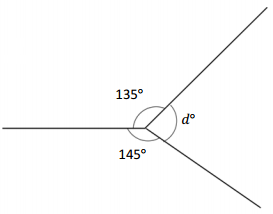
Eureka Math Grade 4 Module 4 Lesson 11 Homework Answer Key 12
_____________ ° + _____________ ° + _____________ ° = _____________ °
d° = _____________ °
Answer:
The value of d° is 80°.

Explanation:
Given that the value of the angle is complete rotation which 360° and the value of the other angle is 135° and the value of another angle is 145° and the value of another angle is d°. So the equation will be d°+135°+145°= 360°.
d° + 280°= 360°
so the value of c° is 360° – 280°
=80°.

Write an equation, and solve for the unknown angles numerically.

Question 5.
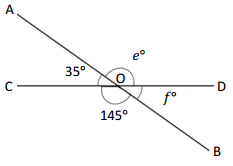
O is the intersection of \(\overline{A B}\) and \(\overline{C D}\). ∠COB is 145°, and ∠AOC is 35°
Eureka Math Grade 4 Module 4 Lesson 11 Homework Answer Key 13
e° = _____________ °        f° = _____________ °
Answer:
The value of e° is 145°.
The value of y° is 35°.

Explanation:
In the above image, we can see that the angle COD is 180° and <COB is 145° and <AOC is 35°. So the equation will be 35° + e°= 180° and the value of e°= 180° – 35°
e°= 145°.
So the value of e° is 145°.
And the other equation will be 145° + f°= 180°
x°= 180° – 145°
= 35°.

Question 6.
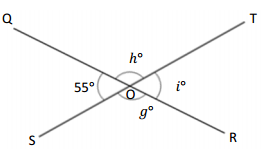
O is the intersection of \(\overline{Q R}\) and \(\overline{S T}\). ∠QOS is 55°
Eureka Math Grade 4 Module 4 Lesson 11 Homework Answer Key 14
g° = _____________ °         h° = _____________ °        i° = _____________ °
Answer:
The value of g° is 125°.
The value of h° is 125°.
The value of i° is 55°.

Explanation:
In the above image, we can see that the angle SOT is 180° and angle QOR is 180° and <QOS is 55°. So the equation will be 55° + g°= 180° and the value of g°= 180° – 55°
g°= 125°.
So the value of g° is 125°.
And the other equation will be 55° + h°= 180°
h°= 180° – 55°
= 125°.
So the value of the h°is 125°.
And the other equation will be 125° +g°= 180°
g°= 180° – 125°
= 55°.
So the value of the g°is 55°.

Question 7.
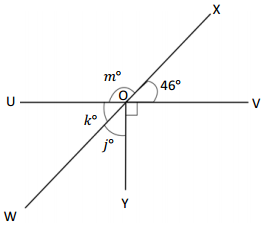
O is the intersection of \(\overline{U V}\), \(\overline{W X}\), and \(\overline{Y O}\). ∠VOX is 46°
Eureka Math Grade 4 Module 4 Lesson 11 Homework Answer Key 15
J° = _____________ °         K° = _____________ °         m° = _____________ °
Answer:
The value of j° is 44°.
The value of k° is 46°.
The value of m° is 134°.

Explanation:
In the above image, we can see that the angle WOX is 180° and angle UOV is 180° and <VOX is 46°. So the equation will be 46° +90°+ j°= 180° and the value of j°= 180° – 136°
j°= 44°.
So the value of j° is 44°.
And the other equation will be 44° +90°+ k°= 180°
k°= 180° – 134°
= 46°.
So the value of the k°is 46°.
And the other equation will be 46° +m°= 180°
m°= 180° – 46°
= 134°.
So the value of the m°is 134°.

Eureka Math Grade 4 Module 4 Lesson 10 Answer Key

Engage NY Eureka Math 4th Grade Module 4 Lesson 10 Answer Key

Eureka Math Grade 4 Module 4 Lesson 10 Problem Set Answer Key

Write an equation, and solve for the measure of ∠x. Verify the measurement using a protractor.

Question 1.
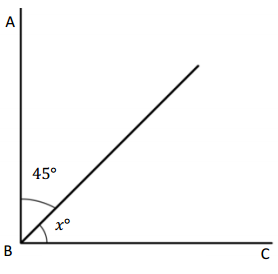
∠CBA is a right angle.
Eureka Math Grade 4 Module 4 Lesson 10 Problem Set Answer Key 1
45° + ________ = 90°
x° = __________
Answer:
The value of x is 45°.

Explanation:
Given that <CBA is a right angle and angle B is 45°, so the angle CBA= 90° which is 45°+x= 90°, so the value of x is
x°= 90° – 45°
= 45°
So the value of x° is 45°.

Question 2.
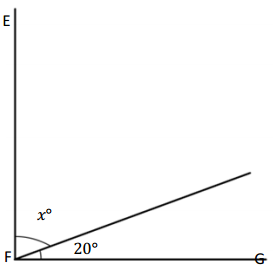
∠GFE is a right angle.
Eureka Math Grade 4 Module 4 Lesson 10 Problem Set Answer Key 2
_______ + ________ = _________
x° = __________
Answer:
The value of x is 70°.

Explanation:
Given that <GFE is a right angle which is 90° and another angle is 20°, so the angle GFE= 90° which is 20°+x= 90°, so the value of x is x°= 90° – 20°
= 70°.
So the value of x° is 70°.

Question 3.
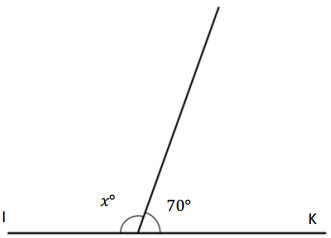
∠IJK is a straight angle
Eureka Math Grade 4 Module 4 Lesson 10 Problem Set Answer Key 3
___________ + 70° = 180°
x° = ____________
Answer:
The value of x is 110°

Explanation:
Given that <IJK is a straight angle which is 180° and another angle is 70°, so the angle IJK= 180° which is 70°+x= 180°, so the value of x is
x°= 180° – 70°
= 110°.
So the value of x° is 110°.

Question 4.
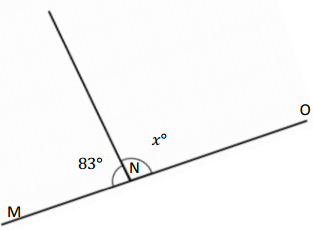
∠MNO is a straight angle
Eureka Math Grade 4 Module 4 Lesson 10 Problem Set Answer Key 4
_________ + _________ = __________
x° = ___________
Answer:
The value of x is 97°

Explanation:
Given that <MNO is a straight angle which is 180° and another angle is 83°, so the angle MNO= 180° which is 83°+x= 180°, so the value of x is
x°= 180° – 83°
= 97°.
So the value of x° is 97°.

Solve for the unknown angle measurements. Write an equation to solve.

Question 5.
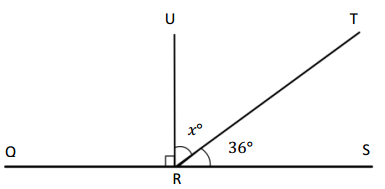
Solve for the measurement of ∠TRU. ∠QRS is a straight angle.
Eureka Math Grade 4 Module 4 Lesson 10 Problem Set Answer Key 5
Answer:
The value of <TRU is 144°.

Explanation:
Given that <QRS is a straight angle which is 180° and another angle is 36°, so the angle MNO= 180° which is 36°+x= 180°, so the value of x is
x°= 180° – 36°
= 144°.
So the value of <TRU is 144°.

Question 6.
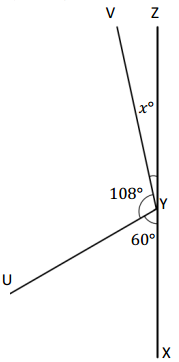
Solve for the measurement of ∠ZYV. ∠XYZ is a straight angle.
Eureka Math Grade 4 Module 4 Lesson 10 Problem Set Answer Key 6
Answer:
The value of <ZYV is 12°.

Explanation:
Given that <XYZ is a straight angle which is 180° and another two angle is 108°+60° which is 168°, so the angle XYZ= 180° which is 168°+x= 180°, so the value of x is
x°= 180° – 168°
= 12°.
So the angle ZYV is 12°.

Question 7.
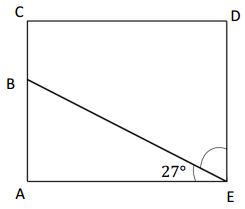
In the following figure, ACDE ¡s a rectangle. Without using a protractor, determine the measurement of ∠DEB. Write an equation that could be used to solve the problem.
Eureka Math Grade 4 Module 4 Lesson 10 Problem Set Answer Key 7
Answer:
The value of x° is 63°.

Explanation:
Here, in the above image we can see that a rectangle where every angle is a right angle, so let’s take one angle as 90° and then we should find out the other angle and the other angle be x. So the equation will be 90°= 27°+x° and the value of x is
x= 90° – 27°
= 63°.
So the value of x° is 63°.

Question 8.
Complete the following directions in the space to the right.
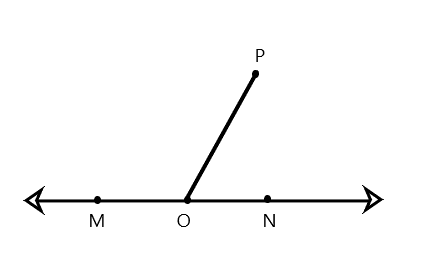
a. Draw 2 points: M and N. Using a straightedge, draw Eureka Math Grade 4 Module 4 Lesson 10 Problem Set Answer Key 8.
b. Plot a point O somewhere between points M and N.
c. Plot a point P, which is not on Eureka Math Grade 4 Module 4 Lesson 10 Problem Set Answer Key 8.
d. Draw \(\overline{O P}\).
e. Find the measure of ∠MOP and ∠NOP.
f. Write an equation to show that the angles add to the measure of a straight angle.
Answer:
The equation of the angles add to the measure of a straight angle is <MOP+<PON= 180°.

Explanation:
Here, we have plotted 2 points which are M and N using a straightedge, and have constructed Eureka Math Grade 4 Module 4 Lesson 10 Problem Set Answer Key 8.
Then we plotted a point O somewhere between points M and N.
Then we need to plot a point P, which is not on Eureka Math Grade 4 Module 4 Lesson 10 Problem Set Answer Key 8.
And now we will construct \(\overline{O P}\).
So, now we need to find the measure of ∠MOP and ∠NOP.
As we have plotted a straight line which is <MON is 180°, which is <MOP+<PON= 180°.
So the equation of the angles add to the measure of a straight angle is <MOP+<PON= 180°.
Eureka-Math-Grade-4-Module-4-Lesson-9-Homework-Answer-Key-8-5

Eureka Math Grade 4 Module 4 Lesson 10 Exit Ticket Answer Key

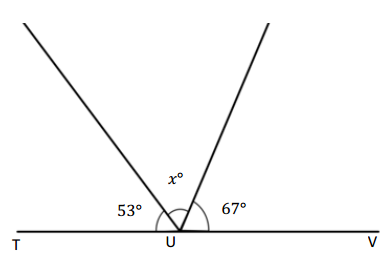
Write an equation, and solve for x. ∠TUV is a straight angle.
Eureka Math Grade 4 Module 4 Lesson 10 Exit Ticket Answer Key 9
Equation = ______________
x° = ______________
Answer:
The value of x is 60°.

Explanation:
Given that <TUV is a straight angle which is 180° and another two angle is 53°+67° which is 120°, as the angle TUV= 180° which is 168°+x= 180°, so the value of x is
x°= 180° – 120°
= 60°.
So the angle x is 60°.

Write an equation, and solve for the measurement of ∠x. Verify the measurement using a protractor
Question 1.
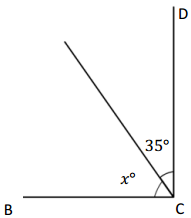
∠DCB is a right angle
Eureka Math Grade 4 Module 4 Lesson 10 Homework Answer Key 10
___________ + 35° = 90°
x° = ___________
Answer:
The value of x° is 55°.

Explanation:
Given that <DCB is a right angle and other angle is 35°, so the angle DCB is 90° which is 35°+x= 90°, so the value of x is
x°= 90° – 35°
= 55°
So the value of x° is 55°.

Question 2.
∠HGF is a right angle
Eureka Math Grade 4 Module 4 Lesson 10 Homework Answer Key 11
___________ + ___________ = ___________
x° = ___________

Answer:
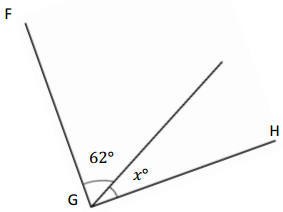
The value of x° is 28°.

Explanation:
Given that <HGF is a right angle and other angle is 62°, so the angle HGF is 90° which is 62°+x= 90°, so the value of x is
x°= 90° – 62°
= 28°
So the value of x° is 28°.

Question 3.
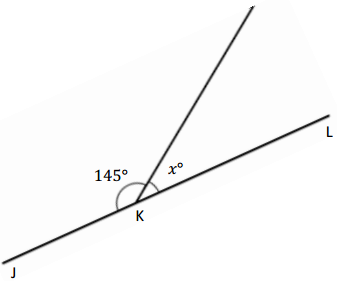
∠JKL is a straight angle.
Eureka Math Grade 4 Module 4 Lesson 10 Homework Answer Key 12
145° + ___________ = 180°
x° = ___________
Answer:
The value of x is 35°.

Explanation:
Given that <JKL is a straight angle which is 180° and another angle is 145° and the angle JKL is 180° which is 145°+ x= 180°, so the value of x is
x°= 180° – 145°
= 35°.
So the angle x is 35°.

Question 4.
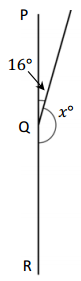
∠PQR is a straight angle.
Eureka Math Grade 4 Module 4 Lesson 10 Homework Answer Key 13
___________ + ___________ = ___________
x° = ___________
Answer:
The value of x is 164°.

Explanation:
Given that <PQR is a straight angle which is 180° and another angle is 16° as the angle PQR is 180° which is 16°+x= 180°, so the value of x is
x°= 180° – 16°
= 164°.
So the angle x is 164°.

Write an equation, and solve for the unknown angle measurements.

Question 5.
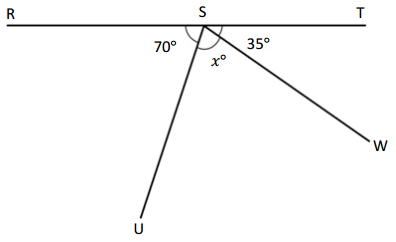
Solve for the measurement of ∠USW. ∠RST is a straight angle.
Eureka Math Grade 4 Module 4 Lesson 10 Homework Answer Key 14
Answer:
The value of x is 75°.

Explanation:
Given that <RST is a straight angle which is 180° and another two angle is 70°+35° which is 105°, as the angle RST= 180° and the equation is 105°+x= 180°, so the value of x is
x°= 180° – 105°
= 75°.
So the angle x is 75°.

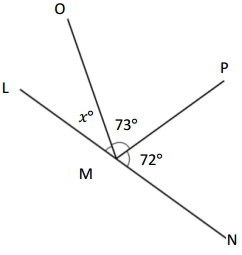
Question 6.
Solve for the measurement of ∠OML. ∠LMN is a straight angle.
Eureka Math Grade 4 Module 4 Lesson 10 Homework Answer Key 15
Answer:
The value of <OML is 35°.

Explanation:
Given that <LMN is a straight angle which is 180° and another two angle is 72°+73° which is 145°, as the angle LMN= 180° and the equation is 145°+x= 180°, so the value of x is
x°= 180° – 145°
= 35°.
So the angle <OML is 35°.

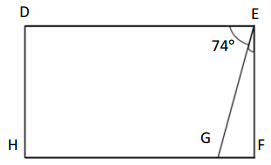
Question 7.
In the following figure, DEFH is a rectangle. Without using a protractor, determine the measurement of ∠GEF Write an equation that could be used to solve the problem.
Eureka Math Grade 4 Module 4 Lesson 10 Homework Answer Key 16
Answer:
The value of x° is 16° and the equation is 90°= 74°+x°.

Explanation:
Here, in the above image we can see that a rectangle where every angle is a right angle, so let’s take one angle as 90° and then we should find out the other angle and the other angle be x. So the equation will be 90°= 74°+x° and the value of x is
x= 90° – 74°
= 16°.
So the value of x° is 16° and the equation is 90°= 74°+x°.

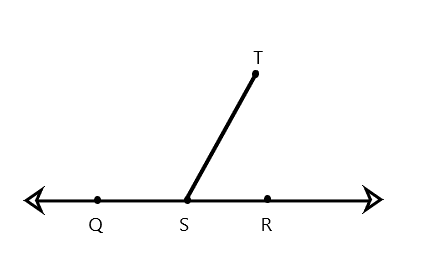
Question 8.
Complete the following directions in the space to the right.
a. Draw 2 points: Q and R. Using a straightedge, draw Eureka Math Grade 4 Module 4 Lesson 10 Homework Answer Key 17.
b. Plot a point S somewhere between points Q and R.
c. Plot a point T, which is not on Eureka Math Grade 4 Module 4 Lesson 10 Homework Answer Key 17
d. Draw \(\overline{T S}\).
e. Find the measure of ∠QST and ∠RST.
f. Write an equation to show that the angles add to the measure of a straight angle.
Answer:
The equation of the angles add to the measure of a straight angle is <QST+<STR= 180°.

Explanation:
Here, we need to draw 2 points which is Q and R using a straightedge and then we need to construct Eureka Math Grade 4 Module 4 Lesson 10 Homework Answer Key 17.
Then we need to plot a point S somewhere between points Q and R.
And then we need to plot a point T, which is not on Eureka Math Grade 4 Module 4 Lesson 10 Homework Answer Key 17
Then we will construct \(\overline{T S}\).
Then we need to find the measure of ∠QST and ∠RST.
As we have plotted a straight line which is <QSR is 180°, which is <QST+<STR= 180°.
So the equation of the angles add to the measure of a straight angle is <QST+<STR= 180°.
Eureka-Math-Grade-4-Module-4-Lesson-9-Homework-Answer-Key-8-6

Eureka Math Grade 4 Module 4 Lesson 9 Answer Key

Engage NY Eureka Math 4th Grade Module 4 Lesson 9 Answer Key

Eureka Math Grade 4 Module 4 Lesson 9 Problem Set Answer Key

Question 1.
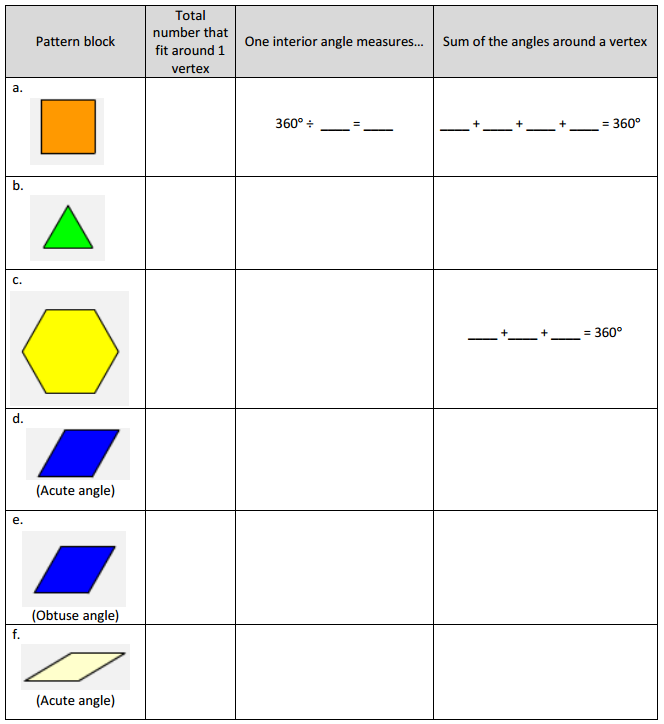
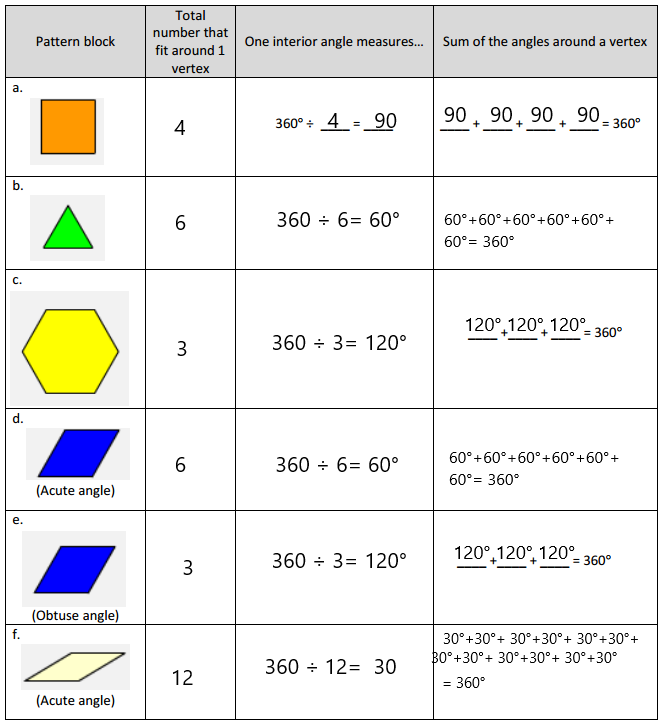
Complete the table.
Eureka Math Grade 4 Module 4 Lesson 9 Problem Set Answer Key 1
Answer:
Refer to the below table.

Explanation:
Eureka-Math-Grade-4-Module-4-Lesson-9-Problem-Set-Answer-Key-1
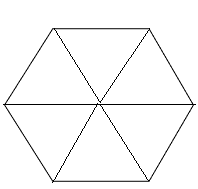
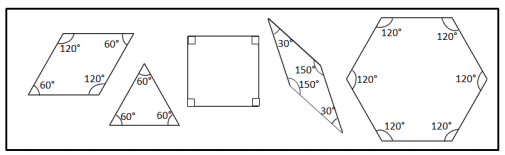
In pattern block A, the total number that fit around one vertex is 4 and the interior angle measurement is 360° ÷ 4 which is 90° and the sum of the angles around the vertex is 90°+90°+90°+90°= 360°.
In pattern block B, the total number that fit around one vertex is 6 and the interior angle measurement is 360° ÷ 6 which is 60° and the sum of the angles around the vertex is 60°+60°+60°+60°+60°+60°= 360°.
In pattern block C, the total number that fit around one vertex is 3 and the interior angle measurement is 360° ÷ 3 which is 120° and the sum of the angles around the vertex is 120°+120°+120°= 360°.
In pattern block D, the total number that fit around one vertex is 6 and the interior angle measurement is 360° ÷ 6 which is 60° and the sum of the angles around the vertex is 60°+60°+60°+60°+60°+60°= 360°.
In pattern block E, the total number that fit around one vertex is 3 and the interior angle measurement is 360° ÷ 3 which is 120° and the sum of the angles around the vertex is 120°+120°+120°= 360°.
In pattern block F, the total number that fit around one vertex is 12 and the interior angle measurement is 360° ÷ 12 which is 30° and the sum of the angles around the vertex is 30°+30°+30°+30°+30°+30°+30°+30°+30°+30°+30°+30°= 360°.

Question 2.
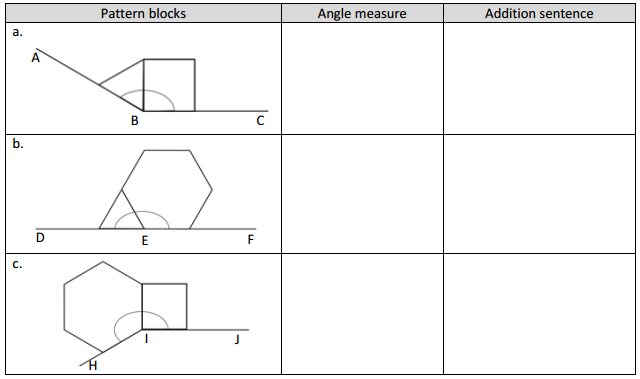
Find the measurements of the angles indicated by the arcs.
Eureka Math Grade 4 Module 4 Lesson 9 Problem Set Answer Key 2
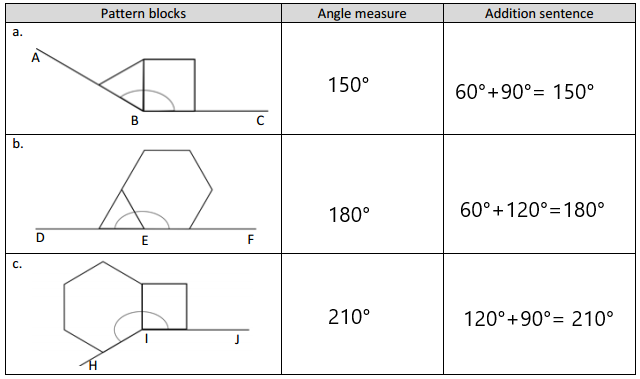
Answer:
Refer to the below table.

Explanation:
Eureka-Math-Grade-4-Module-4-Lesson-9-Problem-Set-Answer-Key-2
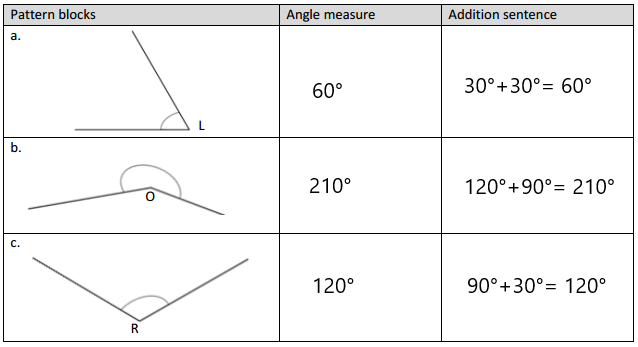
In pattern block A, the total number angle measurement which 150° and the sum of the angles around the vertex is 60°+90° which is 150°.
In pattern block B, the total number angle measurement which 180° and the sum of the angles around the vertex is 60°+120° which is 180°.
In pattern block C, the total number angle measurement which 210°, and the sum of the angles around the vertex is 120°+90° which is 210°.

Question 3.
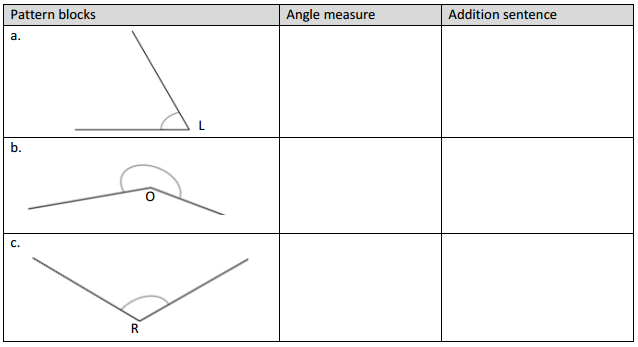
Use two or more pattern blocks to figure out the measurements of the angles indicated by the arcs.
Eureka Math Grade 4 Module 4 Lesson 9 Problem Set Answer Key 3
Answer:
Refer to the below table.

Explanation:
Eureka-Math-Grade-4-Module-4-Lesson-9-Problem-Set-Answer-Key-3
In pattern block A, the total number angle measurement which 60°, and the sum of the angles around the vertex is 30°+30° which is 60°.
In pattern block B, the total number angle measurement which 210°, and the sum of the angles around the vertex is 120°+90° which is 210°.
In pattern block C, the total number angle measurement which 120°, and the sum of the angles around the vertex is 90°+30° which is 120°.

Eureka Math Grade 4 Module 4 Lesson 9 Exit Ticket Answer Key

Question 1.
Describe and sketch two combinations of the blue rhombus pattern block that create a straight angle.
Answer:
Refer to the below image.

Explanation:
Eureka-Math-Grade-4-Module-4-Lesson-9-Homework-Answer-Key-8-1
Here, we have constructed two combinations of the blue rhombus pattern block that create a straight angle.

Question 2.
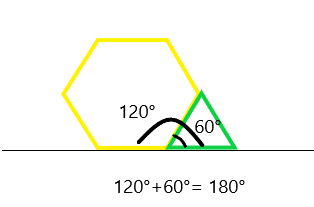
Describe and sketch two combinations of the green triangle and yellow hexagon pattern block that create a straight angle.
Answer:
Refer to the below image.

Explanation:
Eureka-Math-Grade-4-Module-4-Lesson-9-Homework-Answer-Key-8-2
Here, we have constructed two combinations of the green triangle and yellow hexagon pattern block that create a straight angle.

Eureka Math Grade 4 Module 4 Lesson 9 Homework Answer Key

Sketch two different ways to compose the given angles using two or more pattern blocks. Write an addition sentence to show how you composed the given angle.
Eureka Math Grade 4 Module 4 Lesson 9 Homework Answer Key 4

Question 1.
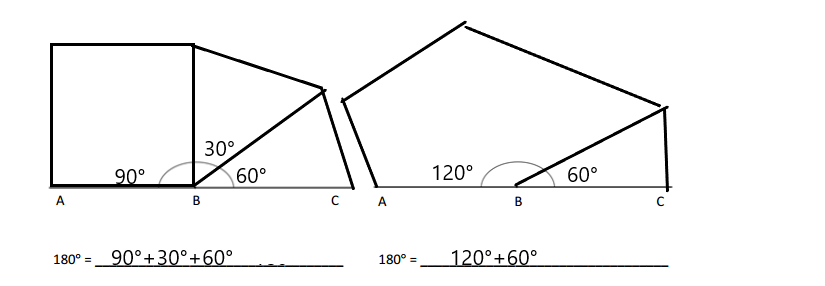
point A, B, and C form a straight line.
Eureka Math Grade 4 Module 4 Lesson 9 Homework Answer Key 5
Answer:
Refer to the below image.

Explanation:
Eureka-Math-Grade-4-Module-4-Lesson-9-Homework-Answer-Key-5
Here,  we have constructed three points A, B, C, and formed a straight line, and formed two different ways to compose the given angles using two or more pattern blocks. In the first image, we have divided 180° angle as 90°+30°+60°, so the addition sentence is 90°+30°+60°= 180°. And in the second image, we have constructed three points A, B, C, and formed a straight line we have divided 180° angle as 120°+60°, so the addition sentence is 120°+60°= 180°.

Question 2.
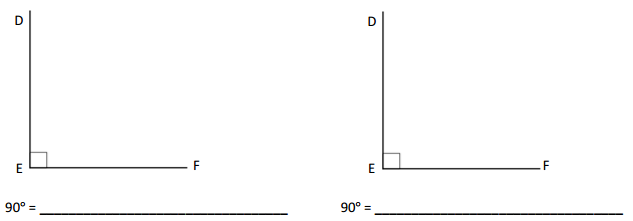
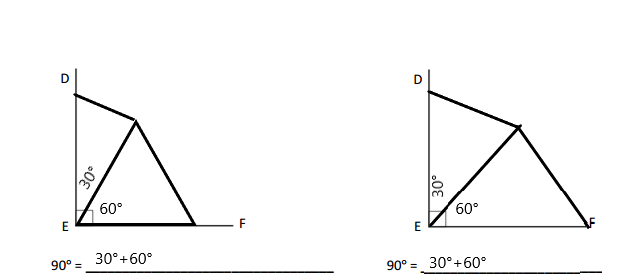
∠DEF = 90°
Eureka Math Grade 4 Module 4 Lesson 9 Homework Answer Key 6
Answer:
The addition sentence is 30°+60°= 90°.

Explanation:
Eureka-Math-Grade-4-Module-4-Lesson-9-Homework-Answer-Key-6

Here,  we have constructed <DEF a and formed two different ways to compose the given angles using two or more pattern blocks. In the first image, we have divided 90° angle as 30°+60°, so the addition sentence is 30°+60°= 90°. And in the second image, we have constructed <DEF and we have divided 90° angle as 30°+60°, so the addition sentence is 30°+60°= 90°.

Question 3.
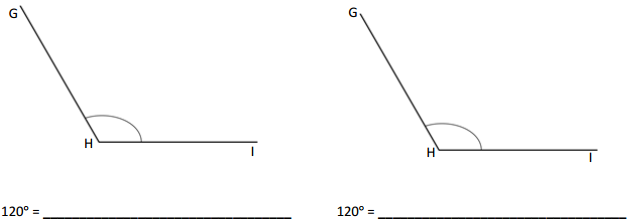
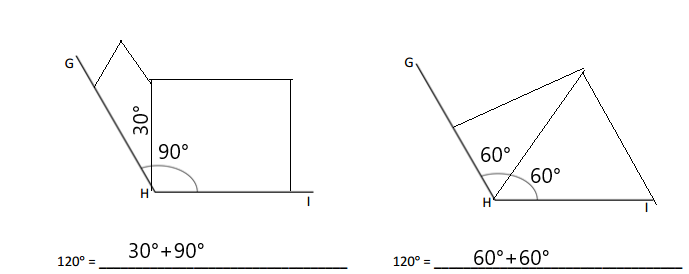
∠GHI = 120°
Eureka Math Grade 4 Module 4 Lesson 9 Homework Answer Key 7
Answer:
The addition sentence for the <GHI is 30°+90°= 120°.
The addition sentence for the <GHI is 30°+90°= 120°

Explanation:
Eureka-Math-Grade-4-Module-4-Lesson-9-Homework-Answer-Key-7

Here,  we have constructed <GHI a and formed two different ways to compose the given angles using two or more pattern blocks. In the first image, we have divided 120° angle as 30°+90°, so the addition sentence is 30°+90°= 120°. And in the second image, we have constructed <GHI and we have divided 90° angle as 60°+60°, so the addition sentence is 60°+60°= 120°.

Question 4.
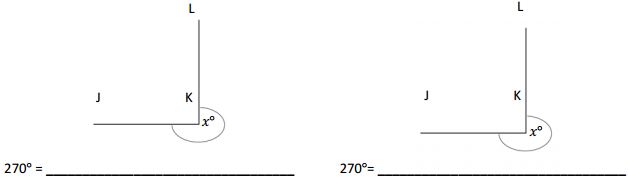
x° = 270°
Eureka Math Grade 4 Module 4 Lesson 9 Homework Answer Key 9
Answer:
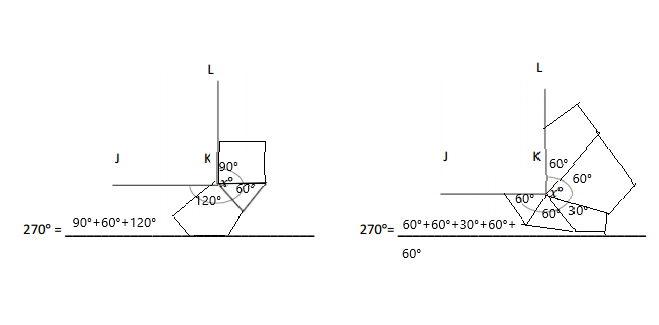
The addition sentence for the first image is 60°+90°+120°= 270°.
The addition sentence for the second image is 60°+60°+30°+60°+60°= 270°.

Explanation:
Eureka-Math-Grade-4-Module-4-Lesson-9-Homework-Answer-Key-8
Here,  we have constructed <LKJ a and formed two different ways to compose the given angles using two or more pattern blocks. In the first image, we have divided 270° angle as 60°+90°+120°, so the addition sentence is 60°+90°+120°= 270°. And in the second image, we have constructed <LKJ and we have divided 270° angle as 60°+60°+30°+60°+60°, so the addition sentence is 60°+60°+30°+60°+60°= 270°.

Question 5.
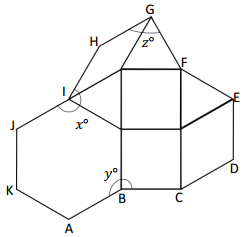
Micah built the following shape with his pattern blocks. Write an addition sentence for each angle indicated by an arc and solve. The first one is done for you.
Eureka Math Grade 4 Module 4 Lesson 9 Homework Answer Key 9
a. y° = 120° + 90°
y° = 210°
Answer:

b. z° = _____________
z° = _____________
Answer:
z° = 60°+30°
z° = 90°

Explanation:
Here, the value of z is 60°+30° which is 90°

c. x° = _____________
x° = _____________
Answer:
x° = 120°+60°+30°
x° = 210°.

Explanation:
Here, the value of x° is 120°+60°+30° which is 210°.

Eureka Math Grade 4 Module 4 Lesson 7 Answer Key

Engage NY Eureka Math 4th Grade Module 4 Lesson 7 Answer Key

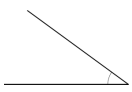
Eureka Math Grade 4 Module 4 Lesson 7 Practice Sheet Answer Key

Figure 1
Eureka Math Grade 4 Module 4 Lesson 7 Practice Sheet Answer Key 1
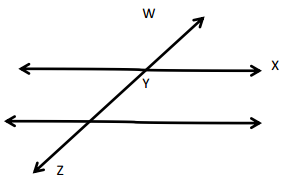
Answer:
The angle WYX would be 60° or above but less 90° and the angle is called an acute angle.

Explanation:
Here, the angle <WYX would be an acute angle. As In the above image, we can see that the angle is less than 90°. So the angle would be 60° or above but less 90° and the angle is called an acute angle.

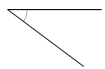
Figure 2
Eureka Math Grade 4 Module 4 Lesson 7 Practice Sheet Answer Key 2
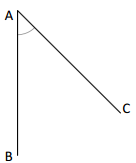
Answer:
The angle CAB would be 60° or above but less 90° and the angle is called an acute angle.

Explanation:
Here, the angle <CAB would be an acute angle. As In the above image, we can see that the angle is less than 90°. So the angle would be 60° or above but less 90° and the angle is called an acute angle.

Figure 3
Eureka Math Grade 4 Module 4 Lesson 7 Practice Sheet Answer Key 3
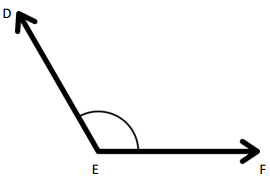
Answer:
The above angle DEF is 120°.

Explanation:
By measuring the angle DEF with a protractor we will get the angle as 120° and it is an obtuse angle as the angle is greater than 90°.

Figure 4
Eureka Math Grade 4 Module 4 Lesson 7 Practice Sheet Answer Key 4
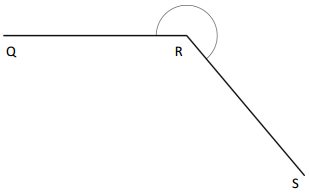
Answer:
The above angle QRS is 120°.

Explanation:
By measuring the angle QRS with a protractor we will get the angle as 120° and it is an obtuse angle as the angle is greater than 90°.

Eureka Math Grade 4 Module 4 Lesson 7 Problem Set Answer Key

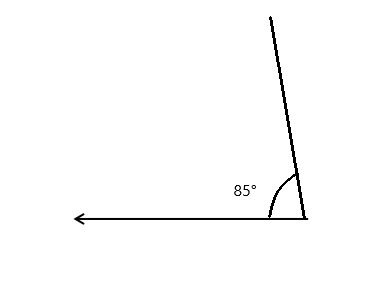
Construct angles that measure the given number of degrees. For Problems 1–4, use the ray shown as one of the rays of the angle with its endpoint as the vertex of the angle. Draw an arc to indicate the angle that was measured.

Question 1.
30°
Eureka Math Grade 4 Module 4 Lesson 7 Problem Set Answer Key 5
Answer:
The 30° angle is an acute angle.

Explanation:
Here, we have constructed a 30° angle using a protractor and it is an acute angle as the angle is less than 90°. The below image represents the 30° angle.
Eureka-Math-Grade-4-Module-4-Lesson-7-Problem-Set-Answer-Key-5

Question 2.
65°
Eureka Math Grade 4 Module 4 Lesson 7 Problem Set Answer Key 6
Answer:
The 65° angle is an acute angle.

Explanation:
Here, we have constructed a 65° angle using a protractor and it is an acute angle as the angle is less than 90°. The below image represents the 65° angle.

Eureka-Math-Grade-4-Module-4-Lesson-7-Problem-Set-Answer-Key-5-1


Question 3.
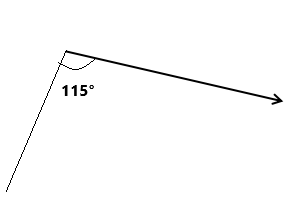
115°
Eureka Math Grade 4 Module 4 Lesson 7 Problem Set Answer Key 7
Answer:
The 115° angle is an obtuse angle.

Explanation:
Here, we have constructed a 115° angle using a protractor and it is an obtuse angle as the angle is greater than 90°. The below image represents the 115° angle.
Eureka-Math-Grade-4-Module-4-Lesson-7-Problem-Set-Answer-Key-7

Question 4.
135°
Eureka Math Grade 4 Module 4 Lesson 7 Problem Set Answer Key 8
Answer:
The 135° angle is an obtuse angle.

Explanation:
Here, we have constructed a 135° angle using a protractor and it is an obtuse angle as the angle is greater than 90°. The below image represents the 135° angle.

Eureka-Math-Grade-4-Module-4-Lesson-7-Problem-Set-Answer-Key-8

Question 5.

Answer:
The 5° angle is an acute angle.

Explanation:
Here, we have constructed a 5° angle using a protractor and it is an acute angle as the angle is less than 90°. The below image represents the 5° angle.

Eureka-Math-Grade-4-Module-4-Lesson-7-Problem-Set-Answer-Key-5

Question 6.
175°
Answer:
The 175° angle is an obtuse angle.

Explanation:
Here, we have constructed a 175° angle using a protractor and it is an obtuse angle as the angle is greater than 90°. The below image represents the 175° angle.

Eureka-Math-Grade-4-Module-4-Lesson-7-Problem-Set-Answer-Key-5-2

Question 7.
27°
Answer:
The 5° angle is an acute angle.

Explanation:
Here, we have constructed a 5° angle using a protractor and it is an acute angle as the angle is less than 90°. The below image represents the 5° angle.
Eureka-Math-Grade-4-Module-4-Lesson-7-Problem-Set-Answer-Key-5-4

Question 8.
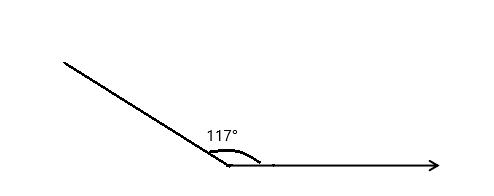
117°
Answer:
The 117° angle is an obtuse angle.

Explanation:
Here, we have constructed a 117° angle using a protractor and it is an obtuse angle as the angle is greater than 90°. The below image represents the 117° angle.

Eureka-Math-Grade-4-Module-4-Lesson-7-Problem-Set-Answer-Key-5-5

Question 9.
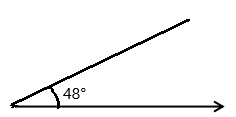
48°
Answer:
The 48° angle is an acute angle.

Explanation:
Here, we have constructed a 48° angle using a protractor and it is an acute angle as the angle is less than 90°. The below image represents the 48° angle.

Eureka-Math-Grade-4-Module-4-Lesson-7-Problem-Set-Answer-Key-5-6

Question 10.
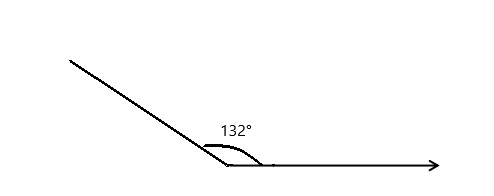
132°
Answer:
The 132° angle is an obtuse angle.

Explanation:
Here, we have constructed a 132° angle using a protractor and it is an obtuse angle as the angle is greater than 90°. The below image represents the 132° angle.
Eureka-Math-Grade-4-Module-4-Lesson-7-Problem-Set-Answer-Key-5-6

Eureka Math Grade 4 Module 4 Lesson 7 Exit Ticket Answer Key

Construct angles that measure the given number of degrees. Draw an arc to indicate the angle that was measured.

Question 1.
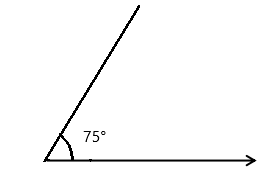
75°
Answer:
The 75° angle is an acute angle.

Explanation:
Here, we have constructed a 75° angle using a protractor and it is an acute angle as the angle is less than 90°. The below image represents the 75° angle.

Eureka-Math-Grade-4-Module-4-Lesson-7-Problem-Set-Answer-Key-5-7

Question 2.
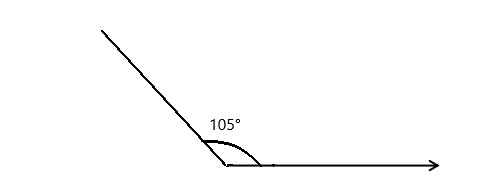
105°
Answer:
The 105° angle is an obtuse angle.

Explanation:
Here, we have constructed a 105° angle using a protractor and it is an obtuse angle as the angle is greater than 90°. The below image represents the 105° angle.

Eureka-Math-Grade-4-Module-4-Lesson-7-Problem-Set-Answer-Key-5-8

Question 3.
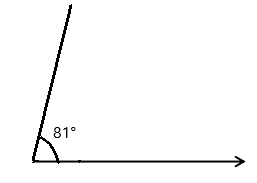
81°
Answer:
The 81° angle is an acute angle.

Explanation:
Here, we have constructed a 81° angle using a protractor and it is an acute angle as the angle is less than 90°. The below image represents the 81° angle.

Eureka-Math-Grade-4-Module-4-Lesson-7-Problem-Set-Answer-Key-5-9

Question 4.
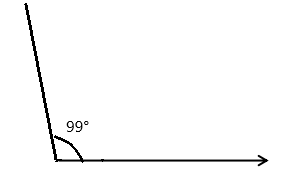
99°
Answer:
The 99° angle is an obtuse angle.

Explanation:
Here, we have constructed a 99° angle using a protractor and it is an obtuse angle as the angle is greater than 90°. The below image represents the 99° angle.

Eureka-Math-Grade-4-Module-4-Lesson-7-Problem-Set-Answer-Key-5-10

Eureka Math Grade 4 Module 4 Lesson 7 Homework Answer Key

Construct angles that measure the given number of degrees. For Problems 1–4, use the ray shown as one of the rays of the angle with its endpoint as the vertex of the angle. Draw an arc to indicate the angle that was measured.

Question 1.
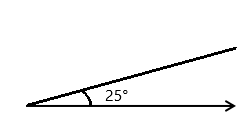
25°
Eureka Math Grade 4 Module 4 Lesson 7 Homework Answer Key 9
Answer:
The 25° angle is an acute angle.

Explanation:
Here, we have constructed a 25° angle using a protractor and it is an acute angle as the angle is less than 90°. The below image represents the 25° angle.
Eureka-Math-Grade-4-Module-4-Lesson-7-Homework-Answer-Key-9

Question 2.
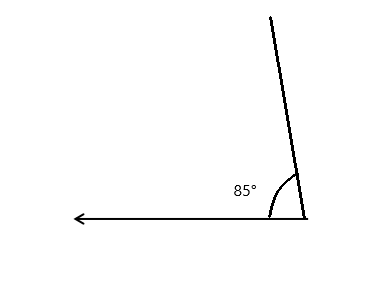
85°
Eureka Math Grade 4 Module 4 Lesson 7 Homework Answer Key 10
Answer:
The 85° angle is an acute angle.

Explanation:
Here, we have constructed a 85° angle using a protractor and it is an acute angle as the angle is less than 90°. The below image represents the 85° angle.

Eureka-Math-Grade-4-Module-4-Lesson-7-Homework-Answer-Key-10

Question 3.
140°
Eureka Math Grade 4 Module 4 Lesson 7 Homework Answer Key 11
Answer:
The 140° angle is an obtuse angle.

Explanation:
Here, we have constructed a 140° angle using a protractor and it is an obtuse angle as the angle is greater than 90°. The below image represents the 140° angle.

Eureka-Math-Grade-4-Module-4-Lesson-7-Homework-Answer-Key-10

Question 4.
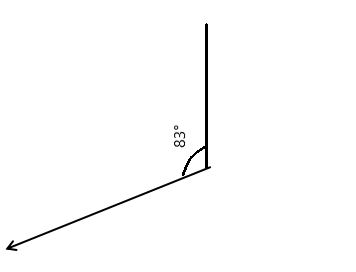
83°
Eureka Math Grade 4 Module 4 Lesson 7 Homework Answer Key 12
Answer:
The 83° angle is an acute angle.

Explanation:
Here, we have constructed a 83° angle using a protractor and it is an acute angle as the angle is less than 90°. The below image represents the 83° angle.

Eureka-Math-Grade-4-Module-4-Lesson-7-Homework-Answer-Key-12

Question 5.
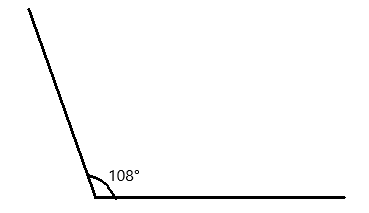
108°
Answer:
The 108° angle is an obtuse angle.

Explanation:
Here, we have constructed a 108° angle using a protractor and it is an obtuse angle as the angle is greater than 90°. The below image represents the 108° angle.

Eureka-Math-Grade-4-Module-4-Lesson-7-Homework-Answer-Key-9-1

Question 6.
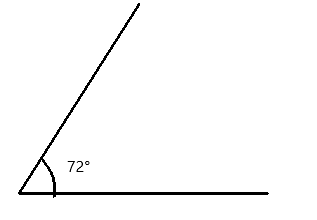
72°
Answer:
The 72° angle is an acute angle.

Explanation:
Here, we have constructed a 72° angle using a protractor and it is an acute angle as the angle is less than 90°. The below image represents the 72° angle.

Eureka-Math-Grade-4-Module-4-Lesson-7-Homework-Answer-Key-9-2

Question 7.
25°
Answer:
The 25° angle is an acute angle.

Explanation:
Here, we have constructed a 25° angle using a protractor and it is an acute angle as the angle is less than 90°. The below image represents the 25° angle.

Eureka-Math-Grade-4-Module-4-Lesson-7-Homework-Answer-Key-9

Question 8.
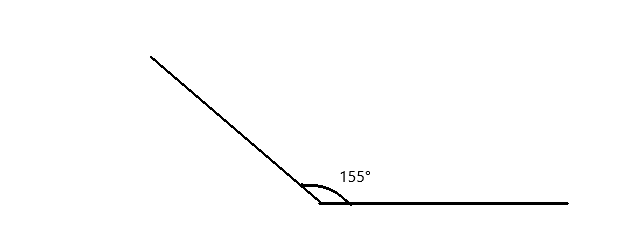
155°
Answer:
The 155° angle is an obtuse angle.

Explanation:
Here, we have constructed a 155° angle using a protractor and it is an obtuse angle as the angle is greater than 90°. The below image represents the 155° angle.

Eureka-Math-Grade-4-Module-4-Lesson-7-Homework-Answer-Key-9-3

Question 9.
45°
Answer:
The 45° angle is an acute angle.

Explanation:
Here, we have constructed a 45° angle using a protractor and it is an acute angle as the angle is less than 90°. The below image represents the 45° angle.

Eureka-Math-Grade-4-Module-4-Lesson-7-Homework-Answer-Key-9-4

Question 10.
135°
Answer:
The 135° angle is an obtuse angle.

Explanation:
Here, we have constructed a 135° angle using a protractor and it is an obtuse angle as the angle is greater than 90°. The below image represents the 135° angle.

Eureka-Math-Grade-4-Module-4-Lesson-7-Homework-Answer-Key-9-5

Eureka Math Grade 4 Module 4 Lesson 4 Answer Key

Engage NY Eureka Math 4th Grade Module 4 Lesson 4 Answer Key

Eureka Math Grade 4 Module 4 Lesson 4 Problem Set Answer Key

Question 1.
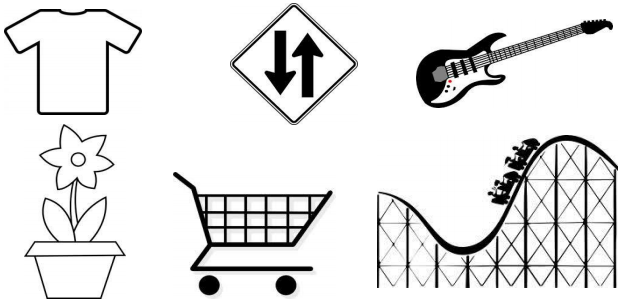
On each object, trace at least one pair of lines that appear to be parallel.
Eureka Math Grade 4 Module 4 Lesson 4 Problem Set Answer Key 1
Answer:
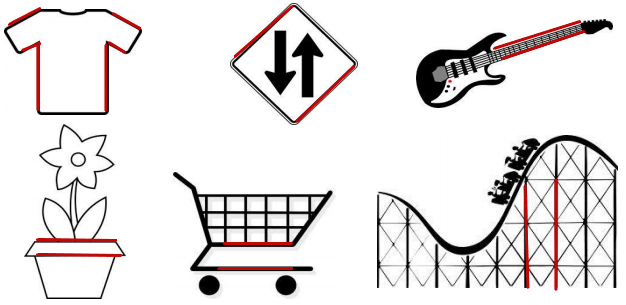
As the parallel lines are defined as the set of two lines that are on the same plane are equal at some distance but never meet each other.

Explanation:
Eureka-Math-Grade-4-Module-4-Lesson-4-Problem-Set-Answer-Key-1
The parallel lines are defined as the set of two lines that are on the same plane are equal at some distance but never meet each other. These parallel lines are seen in our real-life are zebra crossing, railway tracks, staircases, etc. So in the above image, we have traced the parallel lines to all the images.

Question 2.
How do you know if two lines are parallel?
Answer:
To know the lines are parallel or not, we will see that which are on the same plane are equal at some distance but never meet each other. These parallel lines are seen in our real-life are zebra crossing, railway tracks, staircases, etc. So in the above image, we have traced the parallel lines to all the images.

Question 3.
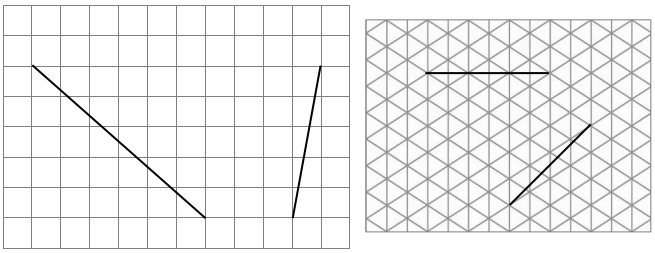
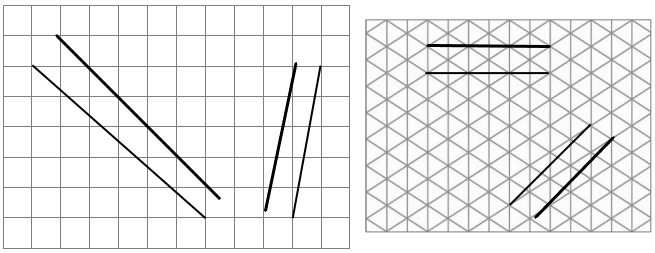
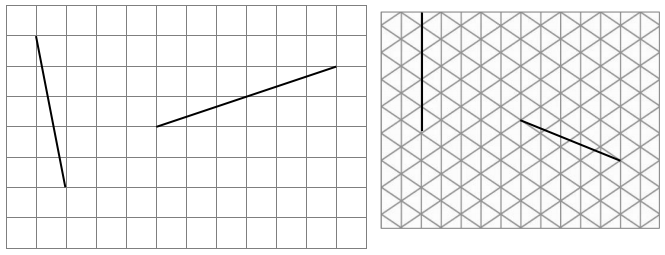
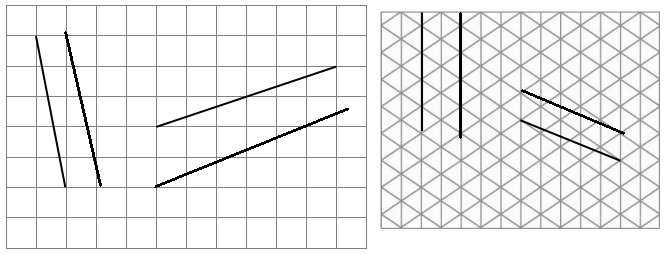
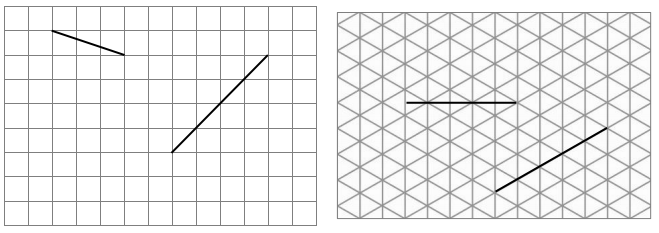
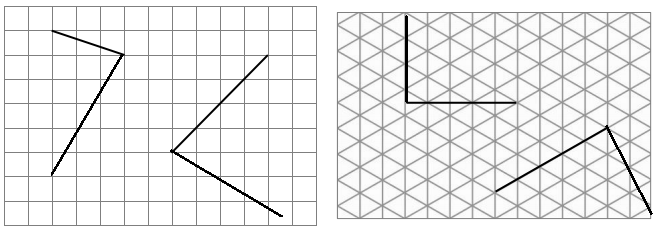
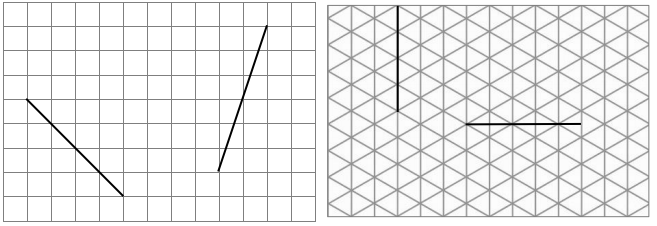
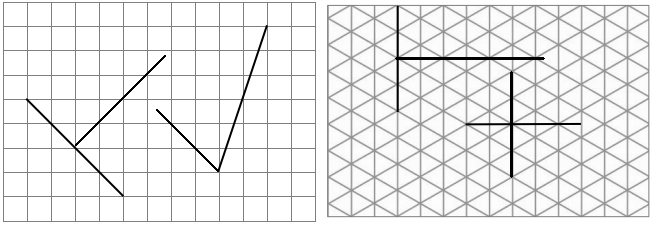
In the square and triangular grids below, use the given segments in each grid to draw a segment that is parallel using a straightedge.
Eureka Math Grade 4 Module 4 Lesson 4 Problem Set Answer Key 2
Answer:
The parallel lines are defined as the set of two lines that are on the same plane are equal at some distance but never meet each other.

Explanation:
Eureka-Math-Grade-4-Module-4-Lesson-4-Problem-Set-Answer-Key-2

The parallel lines are defined as the set of two lines that are on the same plane are equal at some distance but never meet each other. These parallel lines are seen in our real-life are zebra crossing, railway tracks, staircases, etc. So in the above image, we have traced the parallel lines to all the images.

Question 4.
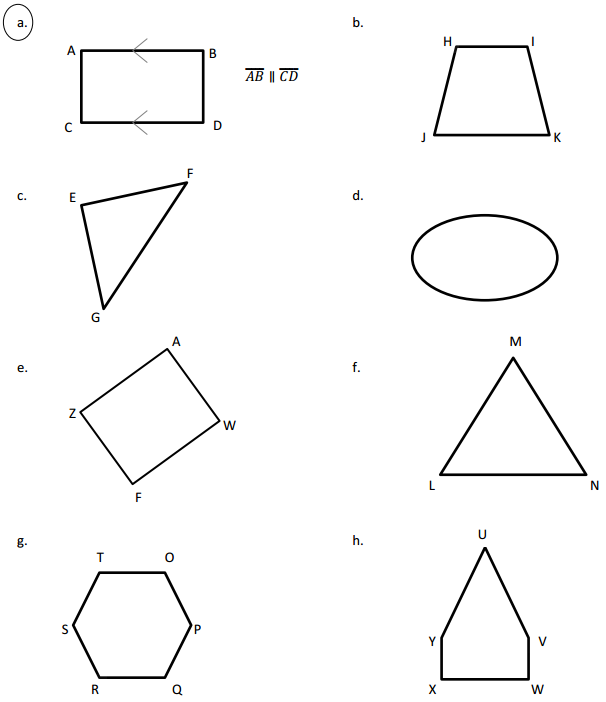
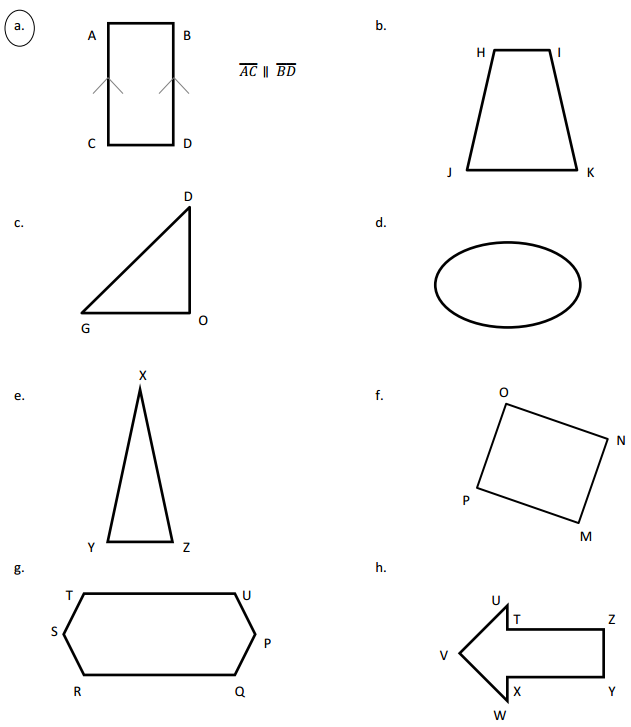
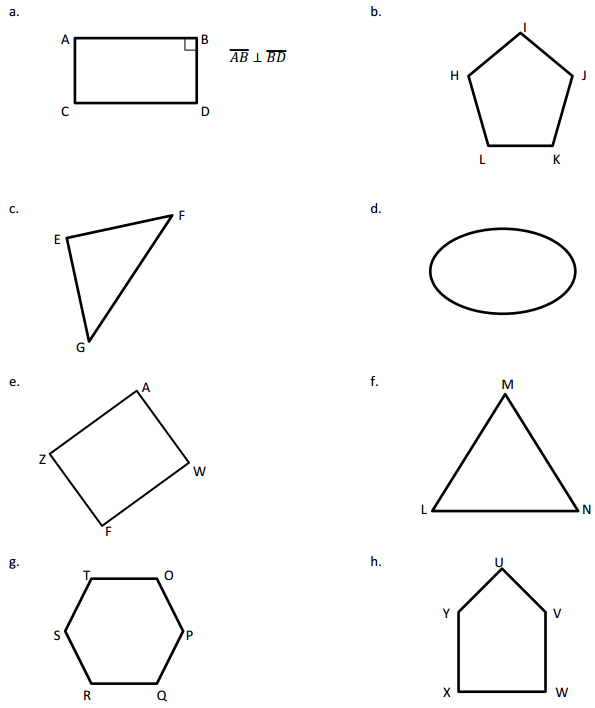
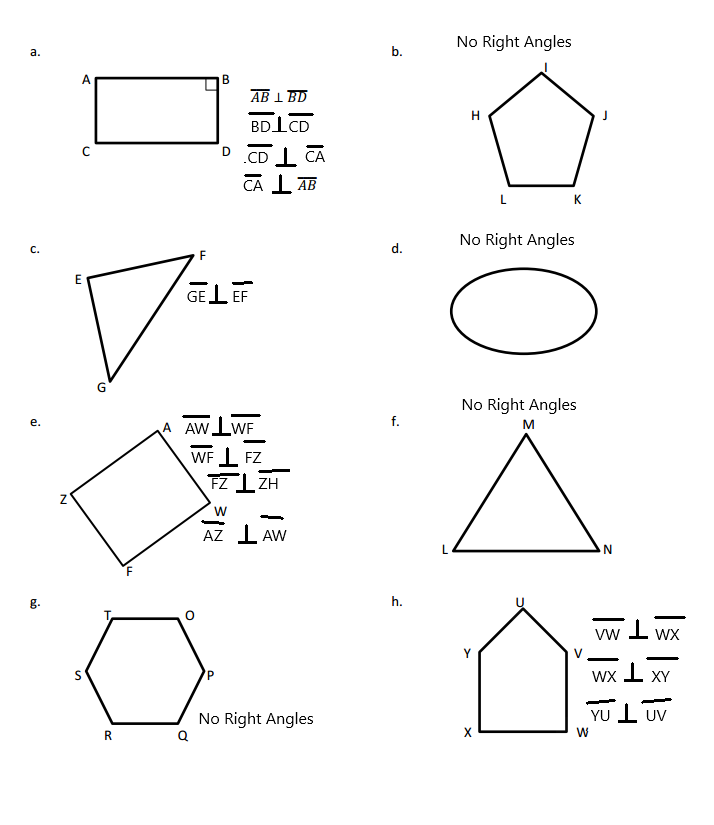
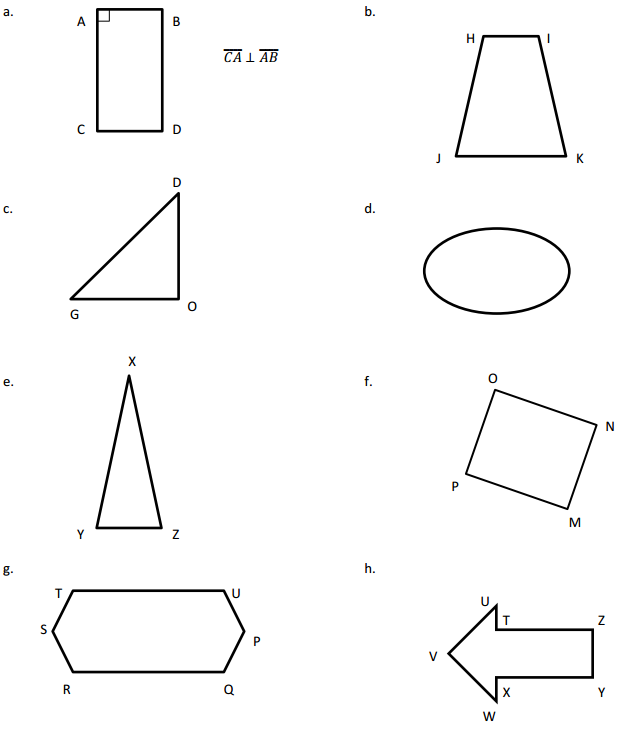
Determine which of the following figures have sides that are parallel by using a straightedge and the right angle template that you created. Circle the letter of the shapes that have at least one pair of parallel sides. Mark each pair of parallel sides with arrowheads, and then identify the parallel sides with a statement modeled after the one in 4(a).
Eureka Math Grade 4 Module 4 Lesson 4 Problem Set Answer Key 3
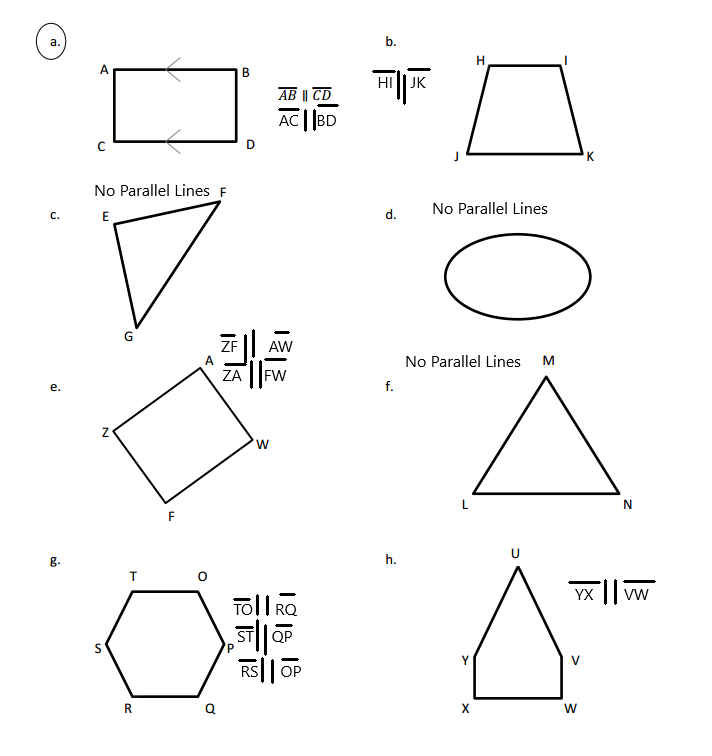
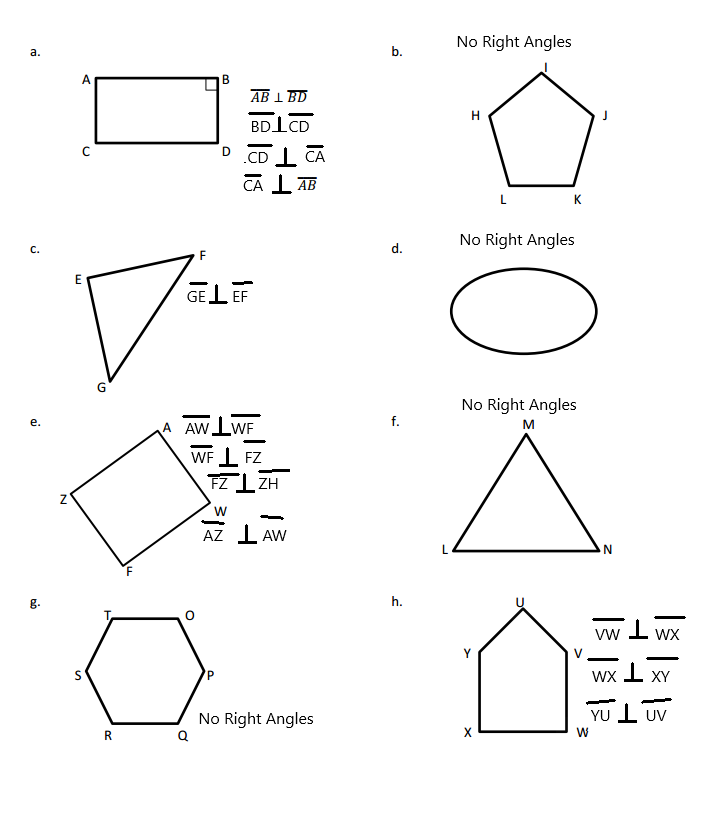
Answer:
The parallel lines in image a are AB and CD and AC and BD.
The parallel lines in image b are HI and JK.
There are no parallel lines in image c.
There are no parallel lines in image d.
The parallel lines in the image e are ZF and AW, ZA and FW.
There are no parallel lines in image f.
The parallel lines in the image g are TO and RQ, ST and QP, RS and OP.
The parallel lines in the image h are YX and VW.

Explanation:
Eureka-Math-Grade-4-Module-4-Lesson-4-Problem-Set-Answer-Key-3

The parallel lines are defined as the set of two lines that are on the same plane are equal at some distance but never meet each other. These parallel lines are seen in our real-life are zebra crossing, railway tracks, staircases, etc. So the parallel lines in the image we can see the set of two lines that are on the same plane are equal at some distance but never meet each other so the parallel lines are AB and CD and AC and BD. In image b we can see the set of two lines that are on the same plane are equal at some distance but never meet each other so the parallel lines are HI and JK. In image c we can see that there are no set of two lines that are on the same plane are equal at some distance but never meet each other so there are no parallel lines. In image d we can see that there no set of two lines that are on the same plane that are equal at some distance but never meet each other so there no parallel lines. In image e we can see the set of two lines that are on the same plane are equal at some distance but never meet each other so the parallel lines are ZF and AW, ZA and FW. In image f we can see that there are no set of two lines that are on the same plane are equal at some distance but never meet each other so there will be no parallel lines. In image g we can see the set of two lines that are on the same plane are equal at some distance but never meet each other so the parallel lines are TO and RQ, ST and QP, RS and OP. In image h we can see the set of two lines that are on the same plane are equal at some distance but never meet each other so the YX and VW.

Question 5.
True or false? A triangle cannot have sides that are parallel. Explain your thinking.
Answer:
Yes, it is true. As the triangle does not have a set of two lines that are on the same plane are equal at some distance but never meet each other.

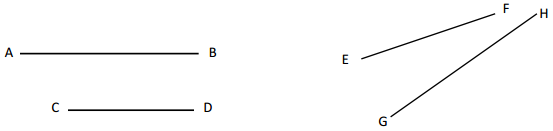
Question 6.
Explain why \(\overline{A B}\) and \(\overline{C D}\) are parallel, but \(\overline{E F}\) and \(\overline{G H}\) are not.
Eureka Math Grade 4 Module 4 Lesson 4 Problem Set Answer Key 4
Answer:
Here in the above image, we can see that AB and CD are parallel because there are set of two lines that are on the same plane are equal at some distance but never meet each other. And we did not see the set of two lines that are on the same plane are equal at some distance but never meet each other in EF and Gh so those lines are not parallel.

Question 7.
Draw a line using your straightedge. Now, use your right angle template and straightedge to construct a line parallel to the first line you drew.
Answer:
As the parallel lines are defined as the set of two lines that are on the same plane are equal at some distance but never meet each other.

Explanation:
As the parallel lines are defined as the set of two lines that are on the same plane are equal at some distance but never meet each other. Here, we will draw a line using a straightedge, and then we will use the right-angle template and straightedge to construct a parallel line. So the image will be
Eureka-Math-Grade-4-Module-4-Lesson-4-Homework-Answer-Key-11-1

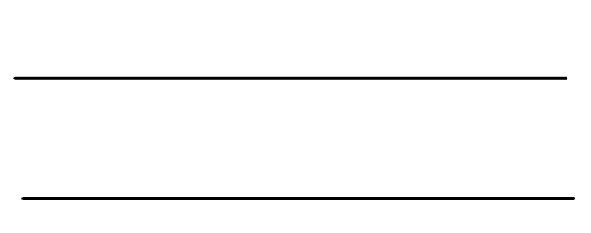
Eureka Math Grade 4 Module 4 Lesson 4 Exit Ticket Answer Key

Look at the following pairs of lines. Identify if they are parallel, perpendicular, or intersecting.

Question 1.
Eureka Math Grade 4 Module 4 Lesson 4 Exit Ticket Answer Key 5
____________________
Answer:
The lines are parallel.

Explanation:
In the above image, there are set of two lines that are on the same plane are equal at some distance but never meet each other. So the lines are parallel lines.

Question 2.
Eureka Math Grade 4 Module 4 Lesson 4 Exit Ticket Answer Key 6
____________________
Answer:
The lines are perpendicular to each other.

Explanation:
When two distinct lines intersect each other at 90 degrees those lines are called perpendicular lines. A right angle is also known as perpendicular lines. In the above images, we have traced out the perpendicular lines and the properties of perpendicular lines are these lines should always intersect at right angles. So if the two lines are perpendicular to the same line then those lines will be parallel to each other and will never intersect. So those lines are perpendicular.

Question 3.
Eureka Math Grade 4 Module 4 Lesson 4 Exit Ticket Answer Key 7
____________________
Answer:
The lines are intersecting each other.

Explanation:
In the above image, we can see that two lines intersect each other, as the two lines cross in a plane and share a common point that exists on all the intersecting lines. So the lines are intersecting each other.

Question 4.
Eureka Math Grade 4 Module 4 Lesson 4 Exit Ticket Answer Key 8
____________________
Answer:
The lines are parallel to each other.

Explanation:
In the above image, there are set of two lines that are on the same plane are equal at some distance but never meet each other. So the lines are parallel lines.

Eureka Math Grade 4 Module 4 Lesson 4 Homework Answer Key

Question 1.
On each object, trace at least one pair of lines that appear to be parallel.
Eureka Math Grade 4 Module 4 Lesson 4 Homework Answer Key 9
Answer:
The parallel lines are defined as the set of two lines that are on the same plane are equal at some distance but never meet each other.

Explanation:
Eureka-Math-Grade-4-Module-4-Lesson-4-Homework-Answer-Key-9
The parallel lines are defined as the set of two lines that are on the same plane are equal at some distance but never meet each other. These parallel lines are seen in our real-life are zebra crossing, railway tracks, staircases, etc. So in the above image, we have traced the parallel lines to all the images.

Question 2.
How do you know if two lines are parallel?
Answer:
We know that the two lines are parallel by seeing that the set of two lines that are on the same plane are equal at some distance but never meet each other.

Question 3.
In the square and triangular grids below, use the given segments in each grid to draw a segment that is parallel using a straightedge.
Eureka Math Grade 4 Module 4 Lesson 4 Homework Answer Key 10
Answer:
The parallel lines are defined as the set of two lines that are on the same plane are equal at some distance but never meet each other.

Explanation:
The parallel lines are defined as the set of two lines that are on the same plane are equal at some distance but never meet each other. These parallel lines are seen in our real-life are zebra crossing, railway tracks, staircases, etc. So in the above image, we have traced the parallel lines to all the images.

Eureka-Math-Grade-4-Module-4-Lesson-4-Homework-Answer-Key-10

Question 4.
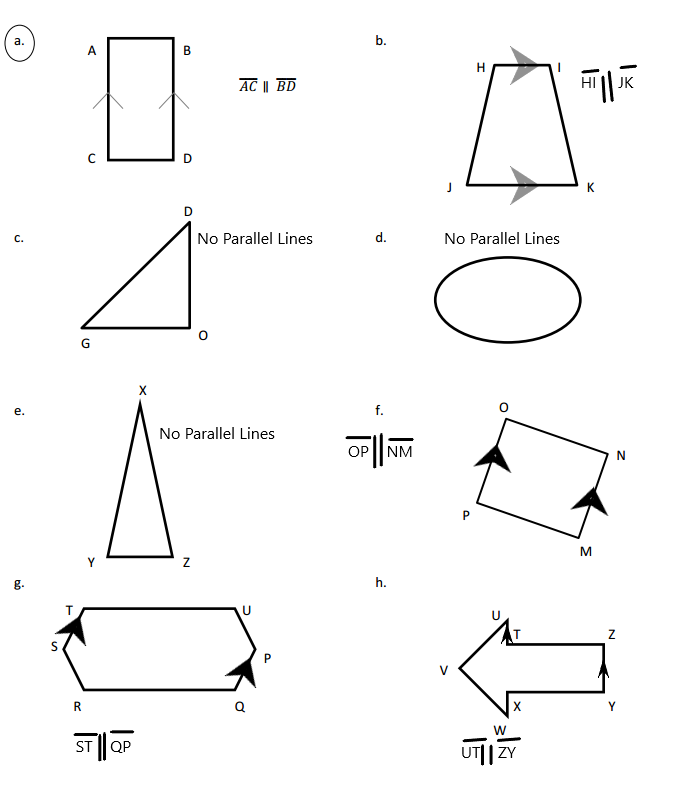
Determine which of the following figures have sides that are parallel by using a straightedge and the right angle template that you created. Circle the letter of the shapes that have at least one pair of parallel sides. Mark each pair of parallel sides with arrows, and then identify the parallel sides with a statement modeled after the one in 4(a).
Eureka Math Grade 4 Module 4 Lesson 4 Homework Answer Key 11
Answer:
The parallel lines in image a are AC and BD.
The parallel lines in image b are HI and JK.
There are no parallel lines in image c.
There are no parallel lines in image d.
There are no parallel lines in image e.
The parallel lines in the image f are OP and NM.
The parallel lines in the image g are ST and QP.
The parallel lines in the image h are UT and ZY.

Explanation:
Eureka-Math-Grade-4-Module-4-Lesson-4-Homework-Answer-Key-11

The parallel lines are defined as the set of two lines that are on the same plane are equal at some distance but never meet each other. These parallel lines are seen in our real-life are zebra crossing, railway tracks, staircases, etc. So the parallel lines in the image we can see the set of two lines that are on the same plane are equal at some distance but never meet each other so the parallel lines are AC and BD. In image b we can see the set of two lines that are on the same plane are equal at some distance but never meet each other so the parallel lines are HI and JK. In image c we can see that there are no set of two lines that are on the same plane are equal at some distance but never meet each other so there are no parallel lines. In image d we can see that there no set of two lines that are on the same plane that are equal at some distance but never meet each other so there no parallel lines. In image e we can see that there are no set of two lines that are on the same plane are equal at some distance but never meet each other so there are no parallel lines. In image f we can see that there are no set of two lines that are on the same plane are equal at some distance but never meet each other so there will be no parallel lines. In image g we can see the set of two lines that are on the same plane are equal at some distance but never meet each other so the parallel lines are ST and QP. In image h we can see the set of two lines that are on the same plane are equal at some distance but never meet each other so the UT and ZY.

Question 5.
True or false? All shapes with a right angle have sides that are parallel. Explain your thinking.
Answer:
No, it’s not true. As the right angle does not have a set of two lines that are on the same plane are equal at some distance but never meet each other. So it is false.

Question 6.
Explain why \(\overline{A B}\) and \(\overline{C D}\) are parallel, but \(\overline{E F}\) and \(\overline{G H}\) are not.
Eureka Math Grade 4 Module 4 Lesson 4 Homework Answer Key 12
Answer:
In the above image, we can see that AB and CD lines are parallel lines, as if we extend the lines they will never intersect. And the lines EF and GH are not parallel as if we extend those lines they will intersect, so these lines are not parallel.

Question 7.
Draw a line using your straightedge. Now, use your right angle template and straightedge to construct a line parallel to the first line you drew.
Answer:
As the parallel lines are defined as the set of two lines that are on the same plane are equal at some distance but never meet each other.

Explanation:
As the parallel lines are defined as the set of two lines that are on the same plane are equal at some distance but never meet each other. Here, we will draw a line using a straightedge, and then we will use the right-angle template and straightedge to construct a parallel line. So the image will be

Eureka-Math-Grade-4-Module-4-Lesson-4-Homework-Answer-Key-11-3


Eureka Math Grade 4 Module 4 Lesson 6 Answer Key

Engage NY Eureka Math 4th Grade Module 4 Lesson 6 Answer Key

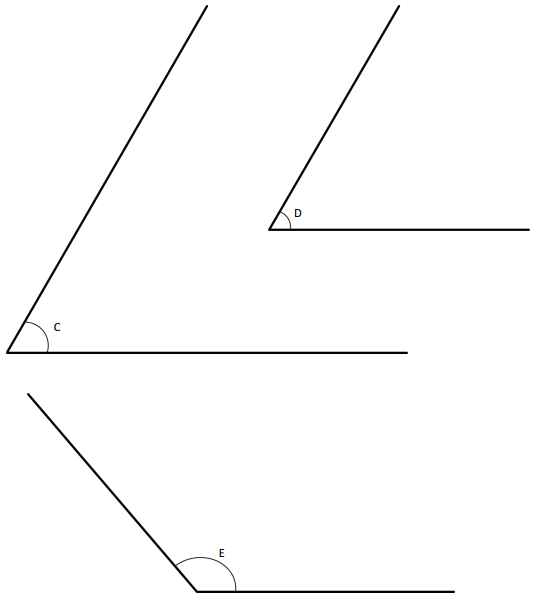
Eureka Math Grade 4 Module 4 Lesson 6 Practice Sheet Answer Key

Eureka Math Grade 4 Module 4 Lesson 6 Practice sheet Answer Key 1
Answer:
The angle C is an acute angle.
The angle D is an acute angle.
The angle E is an obtuse angle.

Explanation:
In the above image, we can see that the angle D is less than 90°. So the angle D will be the acute angle. And we can see that angle C is less than 90°. So the angle D will be the acute angle. And we can see that angle E is greater than 90°, so the angle is an obtuse angle.

Eureka Math Grade 4 Module 4 Lesson 6 Problem Set Answer Key

Question 1.
Use a protractor to measure the angles, and then record the measurements in degrees.
a.
Eureka Math Grade 4 Module 4 Lesson 6 Problem Set Answer Key 2
Answer:
The above angle is 36°.

Explanation:
By measuring the angle with protractor we will get the angle as 36° and it is an acute angle as the angle is less than 90°.

b.
Eureka Math Grade 4 Module 4 Lesson 6 Problem Set Answer Key 3
Answer:
The above angle is 36°.

Explanation:
By measuring the angle with protractor we will get the angle as 36° and it is an acute angle as the angle is less than 90°.

c.
Eureka Math Grade 4 Module 4 Lesson 6 Problem Set Answer Key 4
Answer:
The above angle is 90°.

Explanation:
By measuring the angle with protractor we will get the angle as 90° and it is a right angle as the angle is  90°.

d.
Eureka Math Grade 4 Module 4 Lesson 6 Problem Set Answer Key 5
Answer:
The above angle is 90°.

Explanation:
By measuring the angle with protractor we will get the angle as 90° and it is a right angle as the angle is  90°.

e.
Eureka Math Grade 4 Module 4 Lesson 6 Problem Set Answer Key 6
Answer:
The above angle is 36°.

Explanation:
By measuring the angle with protractor we will get the angle as 36° and it is an acute angle as the angle is less than 90°.

f.
Eureka Math Grade 4 Module 4 Lesson 6 Problem Set Answer Key 7
Answer:
The above angle is 155°.

Explanation:
By measuring the angle with protractor we will get the angle as 155° and it is an obtuse angle as the angle is greater than 90°.

g.
Eureka Math Grade 4 Module 4 Lesson 6 Problem Set Answer Key 8
Answer:
The above angle is 155°.

Explanation:
By measuring the angle with protractor we will get the angle as 155° and it is an obtuse angle as the angle is greater than 90°.

h.
Eureka Math Grade 4 Module 4 Lesson 6 Problem Set Answer Key 9
Answer:
The above angle is 90°.

Explanation:
By measuring the angle with protractor we will get the angle as 90° and it is a right angle as the angle is  90°.

i.
Eureka Math Grade 4 Module 4 Lesson 6 Problem Set Answer Key 10
Answer:
The above angle is 90°.

Explanation:
By measuring the angle with protractor we will get the angle as 90° and it is a right angle as the angle is  90°.

j.
Eureka Math Grade 4 Module 4 Lesson 6 Problem Set Answer Key 11
Answer:
The above angle is 150°.

Explanation:
By measuring the angle with protractor we will get the angle as 150° and it is an obtuse angle as the angle is greater than 90°.

Question 2.
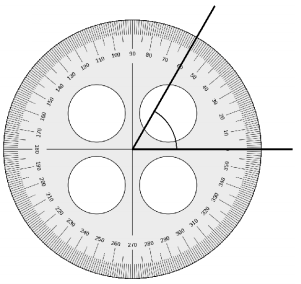
a. Use three different-size protractors to measure the angle. Extend the lines as needed using a straightedge.
Protractor #1: ________°
Protractor #2: ________°
Protractor #3: ________°
Eureka Math Grade 4 Module 4 Lesson 6 Problem Set Answer Key 12
Answer:
Protractor #1: 29°
Protractor #2: 29°
Protractor #3: 29°

Explanation:
By using three different protractors we have got the same angle measurement, which is 29°.

b. What do you notice about the measurement of the above angle using each of the protractors?
Answer:
We have noticed that the measure of the angle is the same using each of the protractors.

Question 3.
Use a protractor to measure each angle. Extend the length of the segments as needed. When you extend the segments, does the angle measure stay the same? Explain how you know.
a.
Eureka Math Grade 4 Module 4 Lesson 6 Problem Set Answer Key 13
Answer:
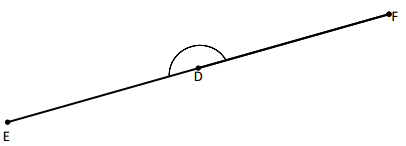
Here, the angle measurement remains the same, we came to know that by measuring with a small protractor. Then we extended the length of the segments and then we have to measure with a large protractor. So by measuring with a small protractor and large protractor there is no change in measuring the angles. And the measurement of the angle is 180°.

b.
Eureka Math Grade 4 Module 4 Lesson 6 Problem Set Answer Key 14
Answer:
Here, the angle measurement remains the same, we came to know that by measuring with a small protractor. Then we extended the length of the segments and then we have to measure with a large protractor. So by measuring with a small protractor and large protractor there is no change in measuring the angles. And the measurement of the angle is 178°.

Eureka Math Grade 4 Module 4 Lesson 6 Exit Ticket Answer Key

Use any protractor to measure the angles, and then record the measurements in degrees.

Question 1.
Eureka Math 4th Grade Module 4 Lesson 6 Exit Ticket Answer Key 15
Answer:
The above angle is 105°.

Explanation:
By measuring the angle with protractor we will get the angle as 105° and it is an obtuse angle as the angle is greater than 90°.

Question 2.
Eureka Math 4th Grade Module 4 Lesson 6 Exit Ticket Answer Key 16
Answer:
The above angle is 150°.

Explanation:
By measuring the angle with protractor we will get the angle as 150° and it is an obtuse angle as the angle is greater than 90°.

Question 3.
Eureka Math 4th Grade Module 4 Lesson 6 Exit Ticket Answer Key 17
Answer:
The above angle is 36°.

Explanation:
By measuring the angle with protractor we will get the angle as 36° and it is an acute angle as the angle is less than 90°.

Question 4.
Eureka Math 4th Grade Module 4 Lesson 6 Exit Ticket Answer Key 18
Answer:
The above angle is 90°.

Explanation:
By measuring the angle with protractor we will get the angle as 90° and it is a right angle as the angle is  90°.

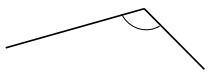
Eureka Math Grade 4 Module 4 Lesson 6 Homework Answer Key

Question 1.
Use a protractor to measure the angles, and then record the measurements in degrees.
a.
Eureka Math 4th Grade Module 4 Lesson 6 Homework Answer Key 19
Answer:
The angle would be 60° or above but less 90° and the angle is called as acute angle.

Explanation:
In the above image, we can see that the angle is less than 90°. So the angle would be 60° or above but less 90° and the angle is called as acute angle.

b.
Eureka Math 4th Grade Module 4 Lesson 6 Homework Answer Key 20
Answer:
The angle would be 60° or above but less 90° and the angle is called as acute angle.

Explanation:
In the above image, we can see that the angle is less than 90°. So the angle would be 60° or above but less 90° and the angle is called as acute angle.

c.
Eureka Math 4th Grade Module 4 Lesson 6 Homework Answer Key 21
Answer:
The angle would be 60° or above but less 90° and the angle is called as acute angle.

Explanation:
In the above image, we can see that the angle is less than 90°. So the angle would be 60° or above but less 90° and the angle is called as acute angle.

d.
Eureka Math 4th Grade Module 4 Lesson 6 Homework Answer Key 22
Answer:
The angle would be 60° or above but less 90° and the angle is called as acute angle.

Explanation:
In the above image, we can see that the angle is less than 90°. So the angle would be 60° or above but less 90° and the angle is called as acute angle.

e.
Eureka Math 4th Grade Module 4 Lesson 6 Homework Answer Key 23
Answer:
The angle would be above 90° but less 180° and the angle is called as obtuse angle.

Explanation:
In the above image, we can see that the angle is greater than 90°. So the angle would be above 90° and the angle is called as obtuse angle.

f.
Eureka Math 4th Grade Module 4 Lesson 6 Homework Answer Key 24
Answer:
The angle would be above 90° but less 180° and the angle is called as obtuse angle.

Explanation:
In the above image, we can see that the angle is greater than 90°. So the angle would be above 90° and the angle is called as obtuse angle.

g.
Eureka Math 4th Grade Module 4 Lesson 6 Homework Answer Key 25
Answer:
The angle would be above 90° but less 180° and the angle is called as obtuse angle.

Explanation:
In the above image, we can see that the angle is greater than 90°. So the angle would be above 90° and the angle is called as obtuse angle.

h.
Eureka Math 4th Grade Module 4 Lesson 6 Homework Answer Key 26
Answer:
The angle would be 60° or above but less 90° and the angle is called as acute angle.

Explanation:
In the above image, we can see that the angle is less than 90°. So the angle would be 60° or above but less 90° and the angle is called as acute angle.

i.
Eureka Math 4th Grade Module 4 Lesson 6 Homework Answer Key 27
Answer:
The angle would be 60° or above but less 90° and the angle is called as acute angle.

Explanation:
In the above image, we can see that the angle is less than 90°. So the angle would be 60° or above but less 90° and the angle is called as acute angle.

j.
Eureka Math 4th Grade Module 4 Lesson 6 Homework Answer Key 28
Answer:
The angle would be above 90° but less 180° and the angle is called as obtuse angle.

Explanation:
In the above image, we can see that the angle is greater than 90°. So the angle would be above 90° and the angle is called as obtuse angle.

Question 2.
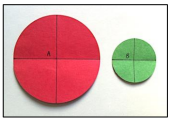
Using the green and red circle cutouts from today’s lesson, explain to someone at home how the cutouts can be used to show that the angle measures are the same even though the circles are different sizes. Write words to explain what you told him or her.
Eureka Math 4th Grade Module 4 Lesson 6 Homework Answer Key 29
Answer:
Here, if we center the smaller circle on the larger circle and the diameters lines up. So the angles are in the same measurement and the arcs are different.

Question 3.
Use a protractor to measure each angle. Extend the length of the segments as needed. When you extend the segments, does the angle measure stay the same? Explain how you know.
a.
Eureka Math 4th Grade Module 4 Lesson 6 Homework Answer Key 30
Answer:
Here, the angle measurement remains the same, we came to know that by measuring with a small protractor. Then we extended the length of the segments and then we have to measure with a large protractor. So by measuring with a small protractor and large protractor there is no change in measuring the angles. And the measurement of the angle is 178°.

b.
Eureka Math 4th Grade Module 4 Lesson 6 Homework Answer Key 31
Answer:
Here, the angle measurement remains the same, we came to know that by measuring with a small protractor. Then we extended the length of the segments and then we have to measure with a large protractor. So by measuring with a small protractor and large protractor there is no change in measuring the angles. And the measurement of the angle is 180°.

Eureka Math Grade 4 Module 4 Lesson 5 Answer Key

Engage NY Eureka Math 4th Grade Module 4 Lesson 5 Answer Key

Eureka Math Grade 4 Module 4 Lesson 5 Problem Set Answer Key

Question 1.
Make a list of the measures of the benchmark angles you drew, starting with Set A.
Round each angle measure to the nearest 5° Both sets have been started for you.
a. Set A: 45°, 90°,
Answer:
The angles that are nearest to 5° will be 90°, 180°, 270°, 360°.

Explanation:
Here, the list of the angles in Set A is 45°, 90°, 135°, 180°, 225°, 270°, 315°, 360°, so here we need to round off the each angle which is nearest to 5° and the angles will be 90°, 180°, 270°, 360° are the angles which are nearest to 5°.

b. Set B: 30°,60°,
Answer:
The angles that are nearest to 5° will be 90°, 180°, 270°, 360°.

Explanation:
Here, the list of the angles in Set A is 30°, 60°, 90°, 120°, 150°, 180°, 210°, 240°,  so here we need to round off the each angle which is nearest to 5° and the angles will be 90°, 180°, 270°, 360° are the angles which are nearest to 5°.

Question 2.
Circle any angle measures that appear on both lists. What do you notice about them?
Answer:
We have noticed that they all are right angles and they all are quarter turns.

Explanation:
The angles that are cricled are 90°, 180°, 270°, 360°, and we have noticed that they all are right angles and they all are quarter turns.

Question 3.
List the angle measures from Problem 1 that are acute. Trace each angle with your finger as you say its measurement.
Answer:
The angles are 30°, 45°, and 60°.

Explanation:
The angles that measures from problem 1 that are acute which we have traced is 30°, 45°, and 60°.

Question 4.
List the angle measures from Problem 1 that are obtuse. Trace each angle with your finger as you say its measurement.
Answer:
The angles are 120°, 135°, and 150°.

Explanation:
The angles that measures from problem 1 that are acute which we have traced is 120°, 135°, and 150°.

Question 5.
We found out today that 1° is \(\frac{1}{360}\) of a whole turn. It is 1 out of 360°. That means a 2° angle is \(\frac{2}{360}\) of a whole turn. What fraction of a whole turn is each of the benchmark angles you listed in Problem 1?
Answer:
The angles in the set A are \(\frac{45}{360}\),\(\frac{90}{360}\), \(\frac{135}{360}\),\(\frac{180}{360}\),\(\frac{225}{360}\),\(\frac{270}{360}\), \(\frac{315}{360}\), \(\frac{360}{360}\).
The angles in the set A are \(\frac{30}{360}\),\(\frac{60}{360}\), \(\frac{90}{360}\),\(\frac{120}{360}\),\(\frac{150}{360}\),\(\frac{180}{360}\), \(\frac{210}{360}\), \(\frac{240}{360}\), \(\frac{270}{360}\), \(\frac{240}{360}\), \(\frac{300}{360}\), \(\frac{330}{360}\), \(\frac{360}{360}\).

Explanation:
The fraction of a whole turn is each of the benchmark angles that are listed in problem 1 set A is \(\frac{45}{360}\),\(\frac{90}{360}\), \(\frac{135}{360}\),\(\frac{180}{360}\),\(\frac{225}{360}\),\(\frac{270}{360}\), \(\frac{315}{360}\), \(\frac{360}{360}\).
The fraction of a whole turn is each of the benchmark angles that are listed in problem 1 set B is \(\frac{30}{360}\),\(\frac{60}{360}\), \(\frac{90}{360}\),\(\frac{120}{360}\),\(\frac{150}{360}\),\(\frac{180}{360}\), \(\frac{210}{360}\), \(\frac{240}{360}\), \(\frac{270}{360}\), \(\frac{240}{360}\), \(\frac{300}{360}\), \(\frac{330}{360}\), \(\frac{360}{360}\).

Question 6.
How many 45° angles does it take to make a full turn?
Answer:
It takes eight 45° angles to make a full turn.

Explanation:
As the circle has 360° for full turn and for 45° It takes eight 45° angles to make a full turn.

Question 7.
How many 30° angles does it take to make a full turn?
Answer:
It takes twelve 45° angles to make a full turn.

Explanation:
As the circle has 360° for full turn and for 45° It takes twelve 45° angles to make a full turn.

Question 8.
If you didn’t have a protractor, how could you reconstruct a quarter of it from 0° to 90°?
Answer:
Here, we could use two 45° angles or three 30° angles and we will put them together and we can make a right angle template.

Eureka Math Grade 4 Module 4 Lesson 5 Exit Ticket Answer Key

Question 1.
How many right angles make a full turn?
Answer:
It takes four right angles to make a full turn.

Explanation:
As the circle has 360° for full turn and four right angles It takes four right angles to make a full turn.

Question 2.
What is the measurement of a right angle?
Answer:
The measurement of a right angle is 90° as the set of two lines intersect each other at 90° and they form a right angle. So the measurement of right angle is 90°.

Question 3.
What fraction of a full turn is 1°
Answer:
As a full turn is 360°, so 1° of 360° written in the fraction as \(\frac{1}{360}\).

Question 4.
Name at least four benchmark angle measurements.
Answer:
The four benchmark angle measurements are 30°, 45°, 60°, 90°.

Explanation:
Here the benchmarks are defined as the standard or reference point against which something can be measured or compared. And benchmark numbers are the numbers against which other numbers or qualities can be estimated or compared. Here the four benchmark angle measurements are 30°, 45°, 60°, 90°.

Eureka Math Grade 4 Module 4 Lesson 5 Homework Answer Key

Question 1.
Identify the measures of the following angles.
a.
Eureka Math Grade 4 Module 4 Lesson 5 Homework Answer Key 1
Answer:
The above angle is measured as 60°.

Explanation:
In the above image, we can see that the angle is 60° and is known as acute angle. As the angle measures less than 90°, so the above angle is measured as 60°.

b.
Eureka Math Grade 4 Module 4 Lesson 5 Homework Answer Key 2
Answer:
The above angle is measured as 130°.

Explanation:
In the above image, we can see that the angle is 130° and is known as obtuse angle. As the angle measures greater than 90°. So the above angle is measured as 130°.

c.
Eureka Math Grade 4 Module 4 Lesson 5 Homework Answer Key 3
Answer:
The above angle is measured as 315°.

Explanation:
In the above image, we can see that the angle is 315° and is known as reflex angle. As the angle measures greater than 180°. So the above angle is measured as 315°.

d.
Eureka Math Grade 4 Module 4 Lesson 5 Homework Answer Key 4
Answer:
The above angle is measured as 120°.

Explanation:
In the above image, we can see that the angle is 120° and is known as obtuse angle. As the angle measures greater than 90°. So the above angle is measured as 90°.

Question 2.
If you didn’t have a protractor, how could you construct one? Use words, pictures, or numbers to explain in the space below.
Answer:
Here, we will take a rectangular sheet of paper and we will fold the top side against aside. And next we will remove the bookmark which is at the bottom. Now we will unfold the square which we had made earlier, now we will fold with + shape and then X shape. So now we can measure the angles in 45° increments.

Eureka Math Grade 4 Module 4 Lesson 5 Template Answer Key

Eureka Math Grade 4 Module 4 Lesson 5 Template Answer Key 5
_________________
circular protractor
Answer:
A protractor is a measuring instrument which will be transparent made with a plastic or a glass. A circular protractor is a protractor which has two sets of measurements, here one set is marked with 180° and the opposite direction is marked with 360°.


Eureka Math Grade 4 Module 4 Lesson 3 Answer Key

Engage NY Eureka Math 4th Grade Module 4 Lesson 3 Answer Key

Eureka Math Grade 4 Module 4 Lesson 3 Problem Set Answer Key

Question 1.
On each object, trace at least one pair of lines that appear to be perpendicular.
Eureka Math Grade 4 Module 4 Lesson 3 Problem Set Answer Key 4
Answer:
When two distinct lines intersect each other at 90 degrees those lines are called perpendicular lines.

Explanation:
Eureka-Math-Grade-4-Module-4-Lesson-3-Problem-Set-Answer-Key-4

When two distinct lines intersect each other at 90 degrees those lines are called perpendicular lines. A right angle is also known as perpendicular lines. In the above images, we have traced out the perpendicular lines and the properties of perpendicular lines are these lines should always intersect at right angles. So if the two lines are perpendicular to the same line then those lines will be parallel to each other and will never intersect.

Question 2.
How do you know if two lines are perpendicular?
Answer:
When two distinct lines intersect each other at 90 degrees those lines are called perpendicular lines. A right angle is also known as perpendicular lines. And the properties of perpendicular lines are these lines should always intersect at right angles. So if the two lines are perpendicular to the same line then those lines will be parallel to each other and will never intersect.

Question 3.
In the square and triangular grids below, use the given segments in each grid to draw a segment that is perpendicular using a straightedge.
Eureka Math Grade 4 Module 4 Lesson 3 Problem Set Answer Key 1

Answer:
As two distinct lines intersect each other at 90 degrees those lines are called perpendicular lines. A right angle is also known as perpendicular lines. And the properties of perpendicular lines are these lines should always intersect at right angles. So if the two lines are perpendicular to the same line then those lines will be parallel to each other and will never intersect.

Explanation:
Eureka-Math-Grade-4-Module-4-Lesson-3-Problem-Set-Answer-Key-1
In the above image, we have constructed the perpendicular lines, as two distinct lines intersect each other at 90 degrees those lines are called perpendicular lines. A right angle is also known as perpendicular lines. And the properties of perpendicular lines are these lines should always intersect at right angles. So if the two lines are perpendicular to the same line then those lines will be parallel to each other and will never intersect.

Question 4.
Use the right angle template that you created in class to determine which of the following figures have a right angle. Mark each right angle with a small square. For each right angle, you find, name the corresponding pair of perpendicular sides. (Problem 4(a) has been started for you.)
Eureka Math Grade 4 Module 4 Lesson 3 Problem Set Answer Key 2
Answer:
The perpendicular angles in the image a are <AB and <BD, <BD and <CD, <CD and <CA, <CA and <AB.
There are no perpendicular angles in image b as there are no right angles.
The perpendicular angles in the image c are <GE and <EF
There are no perpendicular angles in the image d as there are no right angles.
The perpendicular angles in the image e are <AW and <WF, <WF and <FZ, <FZ and <ZH, <AZ and <AW
There are no perpendicular angles in the image f as there are no right angles.
There are no perpendicular angles in the image g as there are no right angles.
The perpendicular angles in the image h are <VW and <WX, <WX and <XY, <YU, and <UV.

Explanation:
Eureka-Math-Grade-4-Module-4-Lesson-3-Problem-Set-Answer-Key-2
As two distinct lines intersect each other at 90 degrees those lines are called perpendicular lines. A right angle is also known as perpendicular lines. And the properties of perpendicular lines are these lines should always intersect at right angles. So if the two lines are perpendicular to the same line then those lines will be parallel to each other and will never intersect. As in the above image a is a square the perpendicular angles are <AB and <BD, <BD and <CD, <CD and <CA, <CA and <AB. And in image b we can see that the image is polygon so there will be No Right Angles. In image c we can see some angles, so the perpendicular angles are <GE and <EF. In image d there will be No Right Angles as there as it is in oval shape and no angles in that image. In image e, there are some angles, so the perpendicular angles are <AW and <WF, <WF and <FZ, <FZ and <ZH, <AZ and <AW. In image f, there are no angles, so there will be no perpendicular angles as there are No Right Angles. In image g there are no angles, so there will be no perpendicular angles as there are No Right Angles. In image e, there are some angles, so the perpendicular angles are <VW and <WX, <WX and <XY, <YU, and <UV.

Question 5.
Mark each right angle on the following figure with a small square. (Note: A right angle does not have to be inside the figure.) How many pairs of perpendicular sides does this figure have?
Eureka Math Grade 4 Module 4 Lesson 3 Problem Set Answer Key 3
Answer:
There are 12 pairs of perpendicular sides.

Explanation:
Eureka-Math-Grade-4-Module-4-Lesson-3-Problem-Set-Answer-Key-3
As two distinct lines intersect each other at 90 degrees those lines are called perpendicular lines. A right angle is also known as perpendicular lines. And the properties of perpendicular lines are these lines should always intersect at right angles. So if the two lines are perpendicular to the same line then those lines will be parallel to each other and will never intersect. So in the above image, we can see that there are 12 pairs of perpendicular sides.

Question 6.
True or false? Shapes that have at least one right angle also have at least one pair of perpendicular sides. Explain your thinking.
Answer:
Yes, it is true. As the right angles are created by sides that are perpendicular, so if a figure has a right angle it must have perpendicular sides.

Eureka Math Grade 4 Module 4 Lesson 3 Exit Ticket Answer Key

Use a right angle template to measure the angles in the following figures. Mark each right angle with a small square. Then, name all pairs of perpendicular sides.

Question 1.
Eureka Math Grade 4 Module 4 Lesson 3 Exit Ticket Answer Key 5
Answer:
In the above image a is a square the perpendicular angles are <BC and <CD, <ED and <DC, <AE and <AB.

Explanation:
As two distinct lines intersect each other at 90 degrees those lines are called perpendicular lines. A right angle is also known as perpendicular lines. And the properties of perpendicular lines are these lines should always intersect at right angles. So if the two lines are perpendicular to the same line then those lines will be parallel to each other and will never intersect. As in the above image a is a square the perpendicular angles are <BC and <CD, <ED and <DC, <AE and <AB.

Question 2.
Eureka Math Grade 4 Module 4 Lesson 3 Exit Ticket Answer Key 6
Answer:
In the above image a is a square the perpendicular angles are <MN and <MP.

Explanation:
As two distinct lines intersect each other at 90 degrees those lines are called perpendicular lines. A right angle is also known as perpendicular lines. And the properties of perpendicular lines are these lines should always intersect at right angles. So if the two lines are perpendicular to the same line then those lines will be parallel to each other and will never intersect. As in the above image a is a square the perpendicular angles are <MN and <MP.

Eureka Math Grade 4 Module 4 Lesson 3 Homework Answer Key

Question 1.
On each object, trace at least one pair of lines that appear to be perpendicular.
Eureka Math Grade 4 Module 4 Lesson 3 Homework Answer Key 7
Answer:
Refer below to check the perpendicular angles which are traced for the images.

Explanation:
Eureka-Math-Grade-4-Module-4-Lesson-3-Homework-Answer-Key-7
As two distinct lines intersect each other at 90 degrees those lines are called perpendicular lines. A right angle is also known as perpendicular lines. And the properties of perpendicular lines are these lines should always intersect at right angles. So if the two lines are perpendicular to the same line then those lines will be parallel to each other and will never intersect. In the above image, we have traced the perpendicular angles of the images.

Question 2.
How do you know if two lines are perpendicular?
Answer:
When two distinct lines intersect each other at 90 degrees those lines are called perpendicular lines. A right angle is also known as perpendicular lines. And the properties of perpendicular lines are these lines should always intersect at right angles. So if the two lines are perpendicular to the same line then those lines will be parallel to each other and will never intersect. By that, we will get to know that two lines are perpendicular.

Question 3.
In the square and triangular grids below, use the given segments in each grid to draw a segment that is perpendicular. Use a straightedge.
Eureka Math Grade 4 Module 4 Lesson 3 Homework Answer Key 8
Answer:
As two distinct lines intersect each other at 90 degrees those lines are called perpendicular lines. A right angle is also known as perpendicular lines. And the properties of perpendicular lines are these lines should always intersect at right angles. So if the two lines are perpendicular to the same line then those lines will be parallel to each other and will never intersect.

Explanation:
Eureka-Math-Grade-4-Module-4-Lesson-3-Homework-Answer-Key-8-1
In the above image, we have constructed the perpendicular lines, as two distinct lines intersect each other at 90 degrees those lines are called perpendicular lines. A right angle is also known as perpendicular lines. And the properties of perpendicular lines are these lines should always intersect at right angles. So if the two lines are perpendicular to the same line then those lines will be parallel to each other and will never intersect.

Question 4.
Use the right angle template that you created in class to determine which of the following figures have a right angle. Mark each right angle with a small square. For each right angle you find, name the corresponding pair of perpendicular sides. (Problem 4(a) has been started for you.)
Eureka Math Grade 4 Module 4 Lesson 3 Homework Answer Key 9
Answer:
The perpendicular angles in the image a are <CA and <AB, <AB and <BD, <BD and <CD, <CD and <AC.
There are no perpendicular angles in image b as there are no right angles.
The perpendicular angles in the image c are <DO and <GO.
There are no perpendicular angles in the image d as there are no right angles.
There are no perpendicular angles in image e as there are no right angles.
The perpendicular angles in the image f are <ON and <NM, <ON and <OP, <PM and <OP, <PM and <MN.
There are no perpendicular angles in the image g as there are no right angles.
The perpendicular angles in the image h are <UV and <VW, <US and <SZ, <WY and <XY, <SZ and <ZY, <XY and <YZ.

Explanation:
Eureka-Math-Grade-4-Module-4-Lesson-3-Problem-Set-Answer-Key-2
As two distinct lines intersect each other at 90 degrees those lines are called perpendicular lines. A right angle is also known as perpendicular lines. And the properties of perpendicular lines are these lines should always intersect at right angles. So if the two lines are perpendicular to the same line then those lines will be parallel to each other and will never intersect. As in the above image a is a square the perpendicular angles are <CA and <AB, <AB and <BD, <BD and <CD, <CD and <AC. And in image b we can see that the image is polygon so there will be No Right Angles. In image c we can see some angles, so the perpendicular angles are <DO and <GO. In image d there will be No Right Angles as there as it is in oval shape and no angles in that image. In image e, there are no angles, so there will be no perpendicular angles as there are No Right Angles. In image f, there are some angles, so the perpendicular angles are <ON and <NM, <ON and <OP, <PM and <OP, <PM and <MN. In image g, there are no angles, so there will be no perpendicular angles as there are No Right Angles. In image h, there are some angles, so the perpendicular angles are <UV and <VW, <US and <SZ, <WY and <XY, <SZ and <ZY, <XY and <YZ.

Question 5.
Use your right angle template as a guide, and mark each right angle in the following figure with a small square. (Note: A right angle does not have to be inside the figure.) How many pairs of perpendicular sides does this figure have?
Eureka Math Grade 4 Module 4 Lesson 3 Homework Answer Key 10
Answer:
In the above image, we can see that there are 9 pairs of perpendicular sides.

Explanation:
Eureka-Math-Grade-4-Module-4-Lesson-3-Homework-Answer-Key-10
As two distinct lines intersect each other at 90 degrees those lines are called perpendicular lines. A right angle is also known as perpendicular lines. And the properties of perpendicular lines are these lines should always intersect at right angles. So if the two lines are perpendicular to the same line then those lines will be parallel to each other and will never intersect. So in the above image, we can see that there are 9 pairs of perpendicular sides.

Question 6.
True or false? Shapes that have no right angles also have no perpendicular segments. Draw some figures to help explain your thinking.
Answer:
Yes, it is true. As the shapes without right angles have no perpendicular segments because perpendicular lines meet at right angles. So the rhombus has equal sides but no right angles and no perpendicular segments.

Eureka Math Grade 4 Module 4 Lesson 2 Answer Key

Engage NY Eureka Math 4th Grade Module 4 Lesson 2 Answer Key

Eureka Math Grade 4 Module 4 Lesson 2 Problem Set Answer Key

Question 1.
Use the right angle template that you made in class to determine if each of the following angles is greater than, less than, or equal to a right angle. Label each as greater than, less than, or equal to, and then connect each angle to the correct label of acute, right, or obtuse. The first one has been completed for you.
Eureka Math Grade 4 Module 4 Lesson 2 Problem Set Answer Key 1
Answer:
In the above image, the acute angles will be a,b, i, and j.
In the above image, the right angles will be c and f.
In the above image, the obtuse angles will be d,e,g,h.

Explanation:
Eureka-Math-Grade-4-Module-4-Lesson-2-Problem-Set-Answer-Key-1
Acute angle: An acute angle is an angle that measures less than 90 degrees. In other words, we can say that the angle which is smaller than the right angle is also known as the Acute angle. So in the above image, the acute angles will be a, b, i, and j.
Right angle: A right angle is an angle that has straight lines that intersect each other at 90 degrees which are perpendicular to each other at the intersection so that we will form a right angle. So in the above image, the right angles will be c and f.
Obtuse angle: An obtuse angle is an angle that measures greater than 90 degrees and less than 180 degrees, so the angles that are longer than a right angle and smaller than a straight angle are called Obtuse angle. So in the above image, the obtuse angles will be d, e, g, h.

Question 2.
Use your right angle template to identify acute, obtuse, and right angles within Picasso’s painting Factory, Horta de Ebbo. Trace at least two of each, label with points, and then name them in the table below the painting.
Eureka Math Grade 4 Module 4 Lesson 2 Problem Set Answer Key 2
Eureka Math Grade 4 Module 4 Lesson 2 Problem Set Answer Key 3
Answer:
In the above image the acute angles will be <GHI, <JKL.
In the above image the right angles will be <MKN, <PQR.
In the above image the obtuse angles will be <ABC, <DEF.

Explanation:
Eureka-Math-Grade-4-Module-4-Lesson-2-Problem-Set-Answer-Key-2
Eureka-Math-Grade-4-Module-4-Lesson-2-Problem-Set-Answer-Key-3
Acute angle: An acute angle is an angle that measures less than 90 degrees. In other words, we can say that the angle which is smaller than the right angle is also known as the Acute angle. So in the above image, the acute angles will be <GHI, <JKL.
Right angle: A right angle is an angle that has straight lines that intersect each other at 90 degrees which are perpendicular to each other at the intersection so that we will form a right angle. So in the above image, the right angles will be <MKN, <PQR.
Obtuse angle: An obtuse angle is an angle that measures greater than 90 degrees and less than 180 degrees, so the angles that are longer than a right angle and smaller than a straight angle are called Obtuse angle. So in the above image, the obtuse angles will be <ABC, <DEF.

Question 3.
Construct each of the following using a straightedge and the right angle template that you created. Explain the characteristics of each by comparing the angle to a right angle. Use the words greater than, less than, or equal to in your explanations.
a. Acute angle
Answer:
Acute angle: An acute angle is an angle that measures less than 90 degrees. In other words, we can say that the angle which is smaller than the right angle is also known as the Acute angle.

Explanation:
Acute angle: An acute angle is an angle that measures less than 90 degrees. In other words, we can say that the angle which is smaller than the right angle is also known as the Acute angle.
Eureka-Math-Grade-4-Module-4-Lesson-2-Problem-Set-Answer-Key-3-2

b. Right angle
Answer:
Right angle: A right angle is an angle that has straight lines that intersect each other at 90 degrees which are perpendicular to each other at the intersection so that we will form a right angle.

Explanation:
Right angle: A right angle is an angle that has straight lines that intersect each other at 90 degrees which are perpendicular to each other at the intersection so that we will form a right angle.
Eureka-Math-Grade-4-Module-4-Lesson-2-Problem-Set-Answer-Key-3-3

c. Obtuse angle
Answer:
Obtuse angle: An obtuse angle is an angle that measures greater than 90 degrees and less than 180 degrees, so the angles that are longer than a right angle and smaller than a straight angle are called Obtuse angle.

Explanation:
Obtuse angle: An obtuse angle is an angle that measures greater than 90 degrees and less than 180 degrees, so the angles that are longer than a right angle and smaller than a straight angle are called Obtuse angle.
Eureka-Math-Grade-4-Module-4-Lesson-2-Problem-Set-Answer-Key-3-4

Eureka Math Grade 4 Module 4 Lesson 2 Exit Ticket Answer Key

Question 1.
Fill in the blanks to make true statements using one of the following words: acute, obtuse, right, straight.
a. In class, we made a __________________ angle when we folded paper twice.
Answer:
In class, we made a right angle when we folded the paper twice.

Explanation:
By folding paper twice we will get a right angle triangle. As the right angle is an angle that has straight lines that intersect each other at 90 degrees which are perpendicular to each other at the intersection so that we will form a right angle.

b. An __________________ angle is smaller than a right angle.
Answer:
An acute angle is smaller than a right angle.

Explanation:
An acute angle is smaller than a right angle. As the acute angle is an angle that measures less than 90 degrees. In other words, we can say that the angle which is smaller than the right angle is also known as the Acute angle.

c. An __________________ angle is larger than a right angle, but smaller than a straight angle.
Answer:
An obtuse angle is larger than a right angle but smaller than a straight angle.

Explanation:
An obtuse angle is larger than a right angle but smaller than a straight angle. As the obtuse angle is an angle that measures greater than 90 degrees and less than 180 degrees, so the angles that are longer than a right angle and smaller than a straight angle are called the Obtuse angle.

Question 2.
Use a right angle template to identify the angles below.
Eureka Math Grade 4 Module 4 Lesson 2 Exit Ticket Answer Key 4
a. Which angles are right angles? ____________________________________________________
Answer:
In the above image, the right angles are <C and <G.

Explanation:
Right angle: A right angle is an angle that has straight lines that intersect each other at 90 degrees which are perpendicular to each other at the intersection so that we will form a right angle. So in the above image, the right angles are <C and <G.

b. Which angles are obtuse angles? __________________________________________________
Answer:
In the above image, the obtuse angles are <B and <E.

Explanation:
Obtuse angle: An obtuse angle is an angle that measures greater than 90 degrees and less than 180 degrees, so the angles that are longer than a right angle and smaller than a straight angle are called Obtuse angle. So in the above image, the obtuse angles are <B and <E.

c. Which angles are acute angles? ___________________________________________________
Answer:
In the above image, the obtuse angles are <A and <D.

Explanation:
Acute angle: An acute angle is an angle that measures less than 90 degrees. In other words, we can say that the angle which is smaller than the right angle is also known as the Acute angle. So in the above image, the obtuse angles are <A and <D.

d. Which angles are straight angles? _________________________________________________
Answer:
In the above image, the obtuse angles are <F and <H.

Explanation:
A straight line is a line that cannot be curved or bent and a line is an object in geometry that is characterized under the zero-width object that extends on both sides. The straight line is a line that extends to both sides to infinity and has no curves. So in the above image, the obtuse angles are <F and <H.

Eureka Math Grade 4 Module 4 Lesson 2 Homework Answer Key

Question 1.
Use the right angle template that you made in class to determine if each of the following angles is greater than, less than, or equal to a right angle. Label each as greater than, less than, or equal to, and then connect each angle to the correct label of acute, right, or obtuse. The first one has been completed for you.
Eureka Math Grade 4 Module 4 Lesson 2 Homework Answer Key 5
Answer:
In the above image, the acute angles will be a, e, h.
In the above image, the right angles will be g, j, b.
In the above image, the obtuse angles will be c, i, d, f.

Explanation:
Eureka-Math-Grade-4-Module-4-Lesson-2-Homework-Answer-Key-5

Acute angle: An acute angle is an angle that measures less than 90 degrees. In other words, we can say that the angle which is smaller than the right angle is also known as the Acute angle. So in the above image, the acute angles will be a, e, h.
Right angle: A right angle is an angle that has straight lines that intersect each other at 90 degrees which are perpendicular to each other at the intersection so that we will form a right angle. So in the above image, the right angles will be g, j, b.
Obtuse angle: An obtuse angle is an angle that measures greater than 90 degrees and less than 180 degrees, so the angles that are longer than a right angle and smaller than a straight angle are called Obtuse angle. So in the above image, the obtuse angles will be c, i, d, f.

Question 2.
Use your right angle template to identify acute, obtuse, and right angles within this painting.
Trace at least two of each, label with points, and then name them in the table below the painting.
Eureka Math Grade 4 Module 4 Lesson 2 Homework Answer Key 6
Eureka Math Grade 4 Module 4 Lesson 2 Homework Answer Key 7
Answer:
In the above image, the acute angles will be <ABC, <DEF.
In the above image, the right angles will be <MNO, <PQR.
In the above image, the obtuse angles will be <GHI, <JKL.

Explanation:
Eureka-Math-Grade-4-Module-4-Lesson-2-Homework-Answer-Key-6
Eureka-Math-Grade-4-Module-4-Lesson-2-Homework-Answer-Key-7

Acute angle: An acute angle is an angle that measures less than 90 degrees. In other words, we can say that the angle which is smaller than the right angle is also known as the Acute angle. So in the above image, the acute angles will be <ABC, <DEF.
Right angle: A right angle is an angle that has straight lines that intersect each other at 90 degrees which are perpendicular to each other at the intersection so that we will form a right angle. So in the above image, the right angles will be <MNO, <PQR.
Obtuse angle: An obtuse angle is an angle that measures greater than 90 degrees and less than 180 degrees, so the angles that are longer than a right angle and smaller than a straight angle are called Obtuse angle. So in the above image, the obtuse angles will be <GHI, <JKL.

Question 3.
Construct each of the following using a straightedge and the right angle template that you created. Explain the characteristics of each by comparing the angle to a right angle. Use the words greater than, less than, or equal to in your explanations.
a. Acute angle
Answer:
Acute angle: An acute angle is an angle that measures less than 90 degrees. In other words, we can say that the angle which is smaller than the right angle is also known as the Acute angle.

Explanation:
Eureka-Math-Grade-4-Module-4-Lesson-2-Problem-Set-Answer-Key-3-2
Acute angle: An acute angle is an angle that measures less than 90 degrees. In other words, we can say that the angle which is smaller than the right angle is also known as the Acute angle.

b. Right angle
Answer:
Right angle: A right angle is an angle that has straight lines that intersect each other at 90 degrees which are perpendicular to each other at the intersection so that we will form a right angle.

Explanation:
Eureka-Math-Grade-4-Module-4-Lesson-2-Problem-Set-Answer-Key-3-3
Right angle: A right angle is an angle that has straight lines that intersect each other at 90 degrees which are perpendicular to each other at the intersection so that we will form a right angle.

c. Obtuse angle
Answer:
Obtuse angle: An obtuse angle is an angle that measures greater than 90 degrees and less than 180 degrees, so the angles that are longer than a right angle and smaller than a straight angle are called Obtuse angle.

Explanation:
Eureka-Math-Grade-4-Module-4-Lesson-2-Problem-Set-Answer-Key-3-4
Obtuse angle: An obtuse angle is an angle that measures greater than 90 degrees and less than 180 degrees, so the angles that are longer than a right angle and smaller than a straight angle are called Obtuse angle.

Eureka Math Grade 4 Module 4 Lesson 2 Template Answer Key

Eureka Math Grade 4 Module 4 Lesson 2 Template Answer Key 8
_______________________________
Answer:
In the above image, the acute angles will be <D, <F.
In the above image, the right angles will be <A, <B, <E, <G.
In the above image, the obtuse angles will be <C, <H, <I, <J.

Explanation:
Acute angle: An acute angle is an angle that measures less than 90 degrees. In other words, we can say that the angle which is smaller than the right angle is also known as the Acute angle. So in the above image, the acute angles will be <D, <F.
Right angle: A right angle is an angle that has straight lines that intersect each other at 90 degrees which are perpendicular to each other at the intersection so that we will form a right angle. So in the above image, the right angles will be <A, <B, <E, <G.
Obtuse angle: An obtuse angle is an angle that measures greater than 90 degrees and less than 180 degrees, so the angles that are longer than a right angle and smaller than a straight angle are called Obtuse angle. So in the above image, the obtuse angles will be <C, <H, <I, <J.

Eureka Math Grade 4 Module 4 Lesson 1 Answer Key

Engage NY Eureka Math 4th Grade Module 4 Lesson 1 Answer Key

Eureka Math Grade 4 Module 4 Lesson 1 Problem Set Answer Key

Question 1.
Use the following directions to draw a figure in the box to the right.
a. Draw two points: A and B.
b. Use a straightedge to draw \(\overline{A B}\).
c. Draw a new point that is not on \(\overline{A B}\). Label it C.
d. Draw \(\overline{A C}\).
e. Draw a point not on \(\overline{A B}\) or \(\overline{A C}\). Call it D.
f. Construct Eureka Math Grade 4 Module 4 Lesson 1 Problem Set Answer Key 4
g. Use the points you’ve already labeled to name one angle. ____________
Eureka Math Grade 4 Module 4 Lesson 1 Problem Set Answer Key 1
Answer:
The labeled angle is <ACD/<BAC.

Explanation:
Here, we have to draw two points and then labeled them as A and B.
And used a straightedge to draw \(\overline{A B}\).
Then we have to draw a new point that is not on \(\overline{A B}\). And we will label it as C.
Then we will draw \(\overline{A C}\).
Then we will draw a point not on \(\overline{A B}\) or \(\overline{A C}\). And we will label it as D.
And then we will construct Eureka Math Grade 4 Module 4 Lesson 1 Problem Set Answer Key 4
We will use these points and we will label with one angle as <ACD/<BAC.
Eureka-Math-Grade-4-Module-4-Lesson-1-Problem-Set-Answer-Key-1

Question 2.
Use the following directions to draw a figure in the box to the right.
a. Draw two points: A and B.
b. Use a straightedge to draw \(\overline{A B}\).
c. Draw a new point that is not on \(\overline{A B}\). Label it C.
d. Draw \(\overline{B C}\).
e. Draw a new point that is not on \(\overline{A B}\) or \(\overline{A C}\)
Label it D.
f. Construct Eureka Math Grade 4 Module 4 Lesson 1 Problem Set Answer Key 5.
g. Identify ∠DAB by drawing an arc to indicate the position of the angle.
h. Identify another angle by referencing points that you have already drawn. _____________
Eureka Math Grade 4 Module 4 Lesson 1 Problem Set Answer Key 1
Answer:
The labeled angle is <ABC.

Explanation:
Here, we have to draw two points and label them as A and B.
And use a straightedge to draw \(\overline{A B}\).
Then we have to draw a new point that is not on \(\overline{A B}\). Label it C.
Then we will draw \(\overline{B C}\).
And we will draw a new point that is not on \(\overline{A B}\) or \(\overline{A C}\)
Label it D.
So we will construct  Eureka Math Grade 4 Module 4 Lesson 1 Problem Set Answer Key 5.

Then we have identified ∠DAB by drawing an arc to indicate the position of the angle.
And we have Identified another angle by referencing points that we have already drawn.
Eureka-Math-Grade-4-Module-4-Lesson-1-Problem-Set-Answer-Key-1-2

Question 3.
a. Observe the familiar figures below. Label some points on each figure.
b. Use those points to label and name representations of each of the following in the table below: ray, line, line segment, and angle. Extend segments to show lines and rays.
Eureka Math Grade 4 Module 4 Lesson 1 Problem Set Answer Key 2
Eureka Math Grade 4 Module 4 Lesson 1 Problem Set Answer Key 3
Extension: Draw a familiar figure. Label it with points, and then identify rays, lines, line segments, and angles as applicable.
Answer:
The ray of the house is marked as AB,
The ray of the flash drive is marked as CD,
The ray of the direction compass is marked as EF.
The Line of the house is marked as AB,
The Line of the flash drive is marked as CD,
The Line of the direction compass is marked as EF.
The Line segment of the house is marked as GH,
The Line segment of the flash drive is marked as IJ,
The Line segment of the direction compass is marked as EK.
The Angle of the house is marked as <HGA,
The Angle of the flash drive is marked as <CIJ,
The Angle of the direction compass is marked as <KEF.

Explanation:

Eureka-Math-Grade-4-Module-4-Lesson-1-Problem-Set-Answer-Key-2
Eureka-Math-Grade-4-Module-4-Lesson-1-Problem-Set-Answer-Key-3
Ray: A Ray can be defined as a part of the line which has a fixed starting point but does not have any endpoint and it can be extended infinitely in one direction and a ray may pass through more than one point.
The ray of the house is marked as AB,
The ray of the flash drive is marked as CD,
The ray of the direction compass is marked as EF.
Line: A line can be defined as a long, straight and continuous path which is represented using arrowheads at both directions and the lines that do not have a fixed point it can be extended in two directions.
The Line of the house is marked as AB,
The Line of the flash drive is marked as CD,
The Line of the compass rose is marked as EF.
Line segment: A line segment is a straight line that passes through the two points and has fixed point and it can not be extended.
The Line segment of the house is marked as GH,
The Line segment of the flash drive is marked as IJ,
The Line segment of the compass rose is marked as EK.
Angle: A figure which is formed by two rays or lines that shares a common endpoint and is called an angle.
So in the above, we can see the house, flash drive, and a compass rose.
The Angle of the house is marked as <HGA,
The Angle of the flash drive is marked as <CIJ,
The Angle of the compass rose is marked as <KEF.

Eureka Math Grade 4 Module 4 Lesson 1 Exit Ticket Answer Key

Question 1.
Draw a line segment to connect the word to its picture.
Eureka Math Grade 4 Module 4 Lesson 1 Exit Ticket Answer Key 6
Answer:
Ray: A Ray can be defined as a part of the line which has a fixed starting point but does not have any endpoint and it can be extended infinitely in one direction and a ray may pass through more than one point.
Line: A line can be defined as a long, straight and continuous path which is represented using arrowheads at both directions and the lines that do not have a fixed point it can be extended in two directions.
Line segment: A line segment is a straight line that passes through the two points and has fixed point and it can not be extended.
Point: A point is an exact location and it has no point only position and point can usually be named often with letters like A, B, etc.
Angle: A figure which is formed by two rays or lines that shares a common endpoint and is called an angle.

Explanation:
Eureka-Math-Grade-4-Module-4-Lesson-1-Exit-Ticket-Answer-Key-6
Ray: A Ray can be defined as a part of the line which has a fixed starting point but does not have any endpoint and it can be extended infinitely in one direction and a ray may pass through more than one point.
Line: A line can be defined as a long, straight and continuous path which is represented using arrowheads at both directions and the lines that do not have a fixed point it can be extended in two directions.
Line segment: A line segment is a straight line that passes through the two points and has fixed point and it can not be extended.
Point: A point is an exact location and it has no point only position and a point can usually be named often with letters like A, B, etc.
Angle: A figure which is formed by two rays or lines that shares a common endpoint and is called an angle.

Question 2.
How is a line different from a line segment?
Answer:
A line can be defined as a long, straight and continuous path which is represented using arrowheads in both directions and the lines do not have a fixed point it can be extended in two directions, but the line segment is a straight line that passes through the two points and have a fixed point and it can not be extended.

Eureka Math Grade 4 Module 4 Lesson 1 Homework Answer Key

Question 1.
Use the following directions to draw a figure in the box to the right.
a. Draw two points: W and X.
b. Use a straightedge to draw \(\overline{W X}\).
c. Draw a new point that is not on \(\overline{W X}\). Label it Y.
d. Draw \(\overline{W Y}\).
e. Draw a point not on \(\overline{W X}\) or \(\overline{W Y}\). Call it Z.
f. Construct Eureka Math Grade 4 Module 4 Lesson 1 Homework Answer Key 7
g. Use the points you’ve already labeled to name one angle. ____________
Eureka Math Grade 4 Module 4 Lesson 1 Homework Answer Key 8
Answer:
The labeled angle is <XWY.

Explanation:
Here, we will draw two points which are represented with W and X.
And we will use a straightedge to draw \(\overline{W X}\).
And then we will draw a new point that is not on \(\overline{W X}\). And we will label it as Y.
Then we will draw \(\overline{W X}\).
Next we will draw a point not on \(\overline{W X}\) or \(\overline{W Y}\). And we will call it Z.
And then we will construct  Eureka Math Grade 4 Module 4 Lesson 1 Homework Answer Key 7
Then we will use these points which were already labeled and name the angle as <XWY.
Eureka-Math-Grade-4-Module-4-Lesson-1-Homework-Answer-Key-8

Question 2.
Use the following directions to draw a figure in the box to the right.
a. Draw two points: W and X.
b. Use a straightedge to draw \(\overline{W X}\).
c. Draw a new point that is not on \(\overline{W X}\). Label it Y.
d. Draw \(\overline{W Y}\).
e. Draw a new point that is not on \(\overline{W Y}\) or on the line containing \(\overline{W X}\). Label it Z.
f. Construct Eureka Math Grade 4 Module 4 Lesson 1 Homework Answer Key 9.
g. Identify ∠ZWX by drawing an arc to indicate the position of the angle.
h. Identify another angle by referencing points that you have already drawn. _____________
Eureka Math Grade 4 Module 4 Lesson 1 Homework Answer Key 8
Answer:
The identified angle is <XW.

Explanation:
Here, we will draw two points and will label them as W and X.
And we will use a straightedge to draw \(\overline{W X}\).
Now we need to draw a new point that is not on \(\overline{W X}\). Label it Y.
Then we will draw \(\overline{W Y}\).
Next, we will draw a new point that is not on \(\overline{W Y}\) or on the line containing \(\overline{W X}\) and Label it as Z.
Then we need to Construct  Eureka Math Grade 4 Module 4 Lesson 1 Homework Answer Key 9.
And then we will identify the angle ∠ZWX by drawing an arc to indicate the position of the angle.
So we will Identify another angle by referencing points that we have already drawn and label the angle as <XW.
Eureka-Math-Grade-4-Module-4-Lesson-1-Homework-Answer-Key-8

Question 3.
a. Observe the familiar figures below. Label some points on each figure.
b. Use those points to label and name representations of each of the following in the table below: ray, line, line segment, and angle. Extend segments to show lines and rays.
Eureka Math Grade 4 Module 4 Lesson 1 Homework Answer Key 10
Eureka Math Grade 4 Module 4 Lesson 1 Homework Answer Key 11
Extension: Draw a familiar figure. Label it with points, and then identify rays, lines, line segments, and angles as applicable.
Answer:
The ray of the clock is marked as AB,
The ray of the die is marked as EF,
The ray of the number line is marked as AC.
The Line of the clock is marked as BC,
The Line of the die is marked as FG,
The Line of the number line is marked as AB.
The Line segment of the clock is marked as AC,
The Line segment of the die is marked as GH,
The Line segment of the number line is marked as BD.
The Angle of the clock is marked as <CAB,
The Angle of the die is marked as <FGH
The Angle of the number line is marked as <CAB.

Explanation:
Eureka-Math-Grade-4-Module-4-Lesson-1-Homework-Answer-Key-10
Eureka-Math-Grade-4-Module-4-Lesson-1-Homework-Answer-Key-11

Ray: A Ray can be defined as a part of the line which has a fixed starting point but does not have any endpoint and it can be extended infinitely in one direction and a ray may pass through more than one point.
The ray of the clock is marked as AB,
The ray of the die is marked as EF,
The ray of the number line is marked as AC.
Line: A line can be defined as a long, straight and continuous path which is represented using arrowheads at both directions and the lines that do not have fixed points it can be extended in two directions.
The Line of the clock is marked as BC,
The Line of the die is marked as FG,
The Line of the number line is marked as AB.
Line segment: A line segment is a straight line that passes through the two points and has fixed point and it can not be extended.
The Line segment of the clock is marked as AC,
The Line segment of the die is marked as GH,
The Line segment of the number line is marked as BD.
Angle: A figure which is formed by two rays or lines that shares a common endpoint and is called an angle.
So in the above, we can see the clock, die, and a number line.
The Angle of the clock is marked as <CAB,
The Angle of the die is marked as <FGH
The Angle of the number line is marked as <CAB.

Eureka Math Grade 6 Module 5 Lesson 17 Answer Key

Engage NY Eureka Math Grade 6 Module 5 Lesson 17 Answer Key

Eureka Math Grade 6 Module 5 Lesson 17 Opening Exercise Answer Key

Opening Exercise:

a. Write a numerical equation for the area of the figure below. Explain and identify different parts of the figure.

i. Eureka Math Grade 6 Module 5 Lesson 17 Opening Exercise Answer Key 1
Answer:
A = \(\frac{1}{2}\) (14 cm)(12 cm) = 84cm2
14 cm represents the bose of the figure because 5 cm + 9 cm = 14 cm, and 12 cm represents the altitude of the figure because it forms a right angle with the base.

ii. How would you write an equation that shows the area of a triangle with base b and height h?
Answer:
A = \(\frac{1}{2}\) bh

b. Write a numerical equation for the area of the figure below. Explain and identify different parts of the figure.
Eureka Math Grade 6 Module 5 Lesson 17 Opening Exercise Answer Key 2
Answer:
A = (28 ft.)(18 ft) = 504 ft2
28 ft. represents the base of the rectangle, 18 ft. and 18 ft. represents the height of the rectangle.

ii. How would you write an equation that shows the area of a rectangle with base b and height h?
Answer:
A = bh.

Eureka Math Grade 6 Module 5 Lesson 17 Example Answer Key

Example 1:

Use the net to calculate the surface area of the figure. (Note: all measurements are in centimeters.)
Eureka Math Grade 6 Module 5 Lesson 17 Example Answer Key 3
Answer:
→ When you are calculating the area of a figure, what are you finding?
The area of a figure is the amount of space inside a two-dimensional figure.

→ The surface area is similar to the area, but the surface area is used to describe three-dimensional figures. What do you think is meant by the surface area of a solid?
The surface area of a three-dimensional figure is the area of each face added together.

→ What type of figure does the net create? How do you know?
It creates a rectangular prism because there are six rectangular faces.

If the boxes on the grid paper represent a 1 cm × 1 cm box, label the dimensions of the net.

Eureka Math Grade 6 Module 5 Lesson 17 Example Answer Key 4

→ The surface area of a figure is the sum of the areas of all faces. Calculate the area of each face, and record this value inside the corresponding rectangle.
Eureka Math Grade 6 Module 5 Lesson 17 Example Answer Key 5

→ In order to calculate the surface area, we have to find the sum of the areas we calculated since they represent the area of each face. There are two faces that have an area of 4 cm2 and four faces that have an area of 2 cm2. How can we use these areas to write a numerical expression to show how to calculate the surface area of the net?
The numerical expression to calculate the surface area of the net would be
(1 cm × 2 cm) + (1 cm × 2 cm) + (1 cm × 2 cm) + (1 cm × 2 cm) + (2 cm × 2 cm)+ (2 cm × 2 cm).

→ Write the expression more compactly, and explain what each part represents on the net.
4(1 cm × 2 cm) + 2(2 cm × 2 cm)
The expression means there are 4 rectangles that have dimensions 1 cm × 2 cm on the net and 2 rectangles that have dimensions 2 cm × 2 cm on the net.

→ What is the surface area of the net?
The surface area of the net is 16 cm2.

Example 2:

Use the net to write an expression for surface area. (Note: all measurements are in square feet.)
Eureka Math Grade 6 Module 5 Lesson 17 Example Answer Key 6
Answer:
→ What type of figure does the net create? How do you know?
It creates a square pyramid because one face is a square and the other four faces are triangles.

→ If the boxes on the grid paper represent a 1 ft. × 1 ft. square, label the dimensions of the net.

Eureka Math Grade 6 Module 5 Lesson 17 Example Answer Key 7

→ How many faces does the rectangular pyramid have?
5

→ Knowing the figure has 5 faces, use the knowledge you gained in Example ito calculate the surface area of the rectangular pyramid.
Area of Base: 3 ft. × 3 ft. = 9 ft2
Area of Triangles: \(\frac{1}{2}\) × 3 ft. × 2 ft. = 3 ft2
Surface Area: 9 ft2 + 3 ft2 + 3 ft2 + 3 ft2 + 3 ft2 = 21 ft2

Eureka Math Grade 6 Module 5 Lesson 17 Exercise Answer Key

Exercises:

Name the solid the net would create, and then write an expression for the surface area. Use the expression to determine the surface area. Assume that each box on the grid paper represents a 1 cm × 1 cm square. Explain how the expression represents the figure.

Exercise 1.
Eureka Math Grade 6 Module 5 Lesson 17 Exercise Answer Key 8
Answer:
Name of Shape: Rectangular Pyramid, but more specifically a Square Pyramid
Surface Area: 4 cm × 4 cm + 4(\(\frac{1}{2}\) × 4 cm × 3 cm)
Work: 16 cm2 + 4(6 cm2) = 40 cm2
The surface area is 40 cm2. The figure is made up of a square base that measures 4 cm × 4 cm and four triangles, each with a base of 4 cm and a height of 3 cm.

Exercise 2.
Eureka Math Grade 6 Module 5 Lesson 17 Exercise Answer Key 9
Answer:
Name of Shape: Rectangular Prism
Surface Area: 2(5 cm × 5 cm) + 4(5 cm × 2 cm)
Work: 2(25 cm2 ) + 4(10 cm2) = 90 cm2
The surface area is 90 cm2. The figure has 2 square faces, each of which measures 5 cm × 5 cm, and 4 rectangular faces, each of which measures 5 cm × 2 cm.

Exercise 3.
Eureka Math Grade 6 Module 5 Lesson 17 Exercise Answer Key 10
Answer:
Name of Shape: Rectangular Pyramid
SurfaceArea: 3 cm × 4 cm + 2(\(\frac{1}{2}\) × 4 cm × 4 cm)+ 2(\(\frac{1}{2}\) × 4 cm × 3 cm)
Work: 12 cm2 + 2(8 cm2) + 2(6 cm2) = 40 cm2
The surface area is 40 cm2. The figure has 1 rectangular base that measures 3 cm × 4 cm, 2 triangular faces, each with a bose of 4 cm and a height of 4 cm, and 2 other triangular faces, each with a base of 3 cm and a height of 4 cm.

Exercise 4.
Eureka Math Grade 6 Module 5 Lesson 17 Exercise Answer Key 11
Answer:
Name of Shape: Rectangular Prism
Surface Area: 2(6 cm × 5 cm) + 2(5 cm × 1 cm) + 2(6 cm × 1 cm)
Work: 2(30 cm2) + 2(5 cm2) + 2(6 cm2) = 82 cm2
The surface area is 82 cm2. The figure has two 6 cm × 5 cm rectangular faces, two 5 cm × 1 cm rectangular faces, and two 6 cm × 1 cm rectangular faces.

Eureka Math Grade 6 Module 5 Lesson 17 Problem Set Answer Key

Name the shape, and write an expression for surface area. Calculate the surface area of the figure. Assume each box on the grid paper represents a 1 ft. × 1 ft. square.

Question 1.
Eureka Math Grade 6 Module 5 Lesson 17 Problem Set Answer Key 12
Answer:
Name of Shape: Rectangular Prism
SurfaceArea: (2 ft. × 4 ft.) + (2 ft. × 4 ft.)+ (4 ft. × 7 ft.) + (4 ft. × 7 ft.) + (7 ft. × 2 ft.)+ (7 ft. × 2 ft.)
Work: 2(2 ft. × 4 ft.) + 2(4 ft. × 7 ft.) + 2(7 ft. × 2 ft.)
= 16 ft2 + 56 ft2 + 28 ft2
= 100 ft2

Question 2.
Eureka Math Grade 6 Module 5 Lesson 17 Problem Set Answer Key 13
Answer:
Name of Shape: Rectangular Pyramid
SurfaceArea: (2 ft. × 5 ft.) + (\(\frac{1}{2}\) × 2ft. × 4ft.)+ (\(\frac{1}{2}\) × 2 ft. × 4ft.) + (\(\frac{1}{2}\) × 5 ft. × 4ft.) + \(\frac{1}{2}\) × 5ft. × 4 ft.)
Work: 2 ft. × 5 ft. + 2(\(\frac{1}{2}\) × 2 ft. × 4 ft.) + 2(\(\frac{1}{2}\) × 5 ft. × 4ft.)
= 10 ft2 + 8 ft2 + 20 ft2 = 38 ft2

Explain the error in each problem below. Assume each box on the grid paper represents a 1 m × 1 m square.

Question 3.
Eureka Math Grade 6 Module 5 Lesson 17 Problem Set Answer Key 14
Name of Shape: Rectangular Pyramid, but more specifically a Square Pyramid
Area of Base: 3m × 3m = 9m2
Area of Triangles: 3 m × 4m = 12 m2
SurfaceArea: 9m2 + 12m2 + 12m2 + 12m2 + 12m2 = 57m2
Answer:
The error in the solution is the area of the triangles. In order to calculate the correct area of the triangles, you must use the correct formula A = \(\frac{1}{2}\)bh. Therefore, the area of each triangle would be 6 m2 and not 12 m2.

Question 4.
Eureka Math Grade 6 Module 5 Lesson 17 Problem Set Answer Key 15
Name of Shape: Rectangular Prism or, more specifically. a Cube
Area of Faces: 3m × 3m = 9m2
Surface Area: 9 m2 + 9 m2 + 9 m2 + 9 m2 + 9 m2 = 45m2
Answer:
The surface area is incorrect because the student did not find the sum of all 6 faces. The solution is shown above only calculates the sum of 5 faces. Therefore, the correct surface area should be 9 m2 + 9 m2 + 9 m2 + 9 m2 + 9 m2 + 9m2 = 54m2 and not 45m2.

Question 5.
Sofia and Ella are both writing expressions to calculate the surface area of a rectangular prism. However, they wrote different expressions.

a. Examine the expressions below, and determine if they represent the same value. Explain why or why not. Sofia’s Expression:
(3 cm × 4 cm) + (3 cm × 4 cm) + (3 cm × 5 cm) + (3 cm × 5 cm) + (4 cm × 5 cm) + (4 cm × 5 cm)

Ella’s Expression:
2(3 cm × 4 cm) + 2(3 cm × 5 cm) + 2(4 cm × 5 cm)
Answer:
Sofia’s and Ella’s expressions are the same, but Ella used the distributive property to make her expression more compact than Sofia’s.

b. What fact about the surface area of a rectangular prism does Ella’s expression show more clearly than Sofia’s?
Answer:
A rectangular prism is composed of three pairs of sides with identical areas.

Eureka Math Grade 6 Module 5 Lesson 17 Exit Ticket Answer Key

Question 1.
Name the shape, and then calculate the surface area of the figure. Assume each box on the grid paper represents a 1 in. × 1 in. square.
Eureka Math Grade 6 Module 5 Lesson 17 Exit Ticket Answer Key 16
Answer:
Name of Shape: Rectangular Pyramid
Area of Base: 5 in. × 4 in. = 20 in2
Area of Triangles: \(\frac{1}{2}\) × 4 in. × 4 in. = 8 in2, \(\frac{1}{2}\) × 5 in. × 4 in. = 10 in2
SurfaceArea: 20 in2 +8 in2 + 8in2 + 10 in2 + 10 in2 = 56 in2

Eureka Math Grade 6 Module 5 Lesson 17 Addition and Subtraction Equations Answer Key

Addition and Subtraction Equations – Round 1:

Directions: Find the value of m in each equation.

Eureka Math Grade 6 Module 5 Lesson 17 Addition and Subtraction Equations Answer Key 17

Eureka Math Grade 6 Module 5 Lesson 17 Addition and Subtraction Equations Answer Key 18

Question 1.
m + 4 = 11
Answer:
m = 7

Question 2.
m + 2 = 5
Answer:
m = 3

Question 3.
m + 5 = 8
Answer:
m = 3

Question 4.
m – 7 = 10
Answer:
m = 17

Question 5.
m – 8 = 1
Answer:
m = 9

Question 6.
m – 4 = 2
Answer:
m = 6

Question 7.
m + 12 = 34
Answer:
m = 22

Question 8.
m + 25 = 45
Answer:
m = 20

Question 9.
m + 43 = 89
Answer:
m = 46

Question 10.
m – 20 = 31
Answer:
m = 51

Question 11.
m – 13 = 34
Answer:
m = 47

Question 12.
m – 45 = 68
Answer:
m = 113

Question 13.
m + 34 = 41
Answer:
m = 7

Question 14.
m + 29 = 52
Answer:
m = 23

Question 15.
m + 37 = 61
Answer:
m = 24

Question 16.
m – 43 = 63
Answer:
m = 106

Question 17.
m – 21 = 40
valuem = 61

Question 18.
m – 54 = 37
Answer:
m = 91

Question 19.
4 + m = 9
Answer:
m = 5

Question 20.
6 + m = 13
Answer:
m = 7

Question 21.
2 + m = 31
Answer:
m = 29

Question 22.
15 = m + 11
Answer:
m = 4

Question 23.
24 = m + 13
Answer:
m = 11

Question 24.
32 = m + 28
Answer:
m = 4

Question 25.
4 = m – 7
Answer:
m = 11

Question 26.
3 = m – 5
Answer:
m = 8

Question 27.
12 = m – 14
Answer:
m = 26

Question 28.
23.6 = m – 7.1
Answer:
m = 30.7

Question 29.
14.2 = m – 33.8
Answer:
m = 48

Question 30.
2.5 = m -41.8
Answer:
m = 44.3

Question 31.
64.9 = m + 23.4
Answer:
m = 41.5

Question 32.
72.2 = m + 38.7
Answer:
m = 33.5

Question 33.
1.81 = m – 15.13
Answer:
m = 16.94

Question 34.
24.68 = m – 56.82
Answer:
m = 81.5

Addition and Subtraction Equations – Round 2:

Directions: Find the value of m in each equation.

Eureka Math Grade 6 Module 5 Lesson 17 Addition and Subtraction Equations Answer Key 19

Eureka Math Grade 6 Module 5 Lesson 17 Addition and Subtraction Equations Answer Key 20

Question 1.
m + 2 = 7
Answer:
m = 5

Question 2.
m + 4 = 10
Answer:
m = 6

Question 3.
m + 8 = 15
Answer:
m = 7

Question 4.
m + 7 = 23
Answer:
m = 16

Question 5.
m + 12 = 16
Answer:
m = 4

Question 6.
m – 5 = 2
Answer:
m = 7

Question 7.
m – 3 = 8
Answer:
m = 11

Question 8.
m – 4 = 12
Answer:
m = 16

Question 9.
m – 14 = 45
Answer:
m = 59

Question 10.
m + 23 = 40
Answer:
m = 17

Question 11.
m + 13 = 31
Answer:
m = 18

Question 12.
m – 23 = 48
Answer:
m = 25

Question 13.
m + 38 = 52
Answer:
m = 14

Question 14.
m – 14 = 27
Answer:
m = 41

Question 15.
m – 23 = 35
Answer:
m = 58

Question 16.
m – 17 = 18
Answer:
m = 35

Question 17.
m – 64 = 1
Answer:
m = 65

Question 18.
6 = m + 3
Answer:
m = 3

Question 19.
12 = m + 7
Answer:
m = 5

Question 20.
24 = m + 16
Answer:
m = 8

Question 21.
13 = m + 9
Answer:
m = 4

Question 22.
32 = m – 3
Answer:
m = 35

Question 23.
22 = m – 12
Answer:
m = 34

Question 24.
34 = m – 10
Answer:
m = 44

Question 25.
48 = m + 29
Answer:
m = 19

Question 26.
21 = m + 17
Answer:
m = 4

Question 27.
52 = m + 37
Answer:
m = 15

Question 28.
\(\frac{6}{7}\) + m = \(\frac{4}{7}\)
Answer:
m = \(\frac{2}{7}\)

Question 29.
\(\frac{2}{3}\) = m – \(\frac{5}{3}\)
Answer:
m = \(\frac{7}{3}\)

Question 30.
\(\frac{1}{4}\) – m = \(\frac{8}{3}\)
Answer:
m = \(\frac{35}{12}\)

Question 31.
\(\frac{5}{6}\) = m – \(\frac{7}{12}\)
Answer:
m = \(\frac{17}{12}\)

Question 32.
\(\frac{7}{8}\) = m – \(\frac{5}{12}\)
Answer:
m = \(\frac{31}{24}\)

Question 33.
\(\frac{7}{6}\) + m = \(\frac{16}{3}\)
Answer:
m = \(\frac{25}{6}\)

Question 34.
\(\frac{1}{3}\) + m = \(\frac{13}{15}\)
Answer:
m = \(\frac{8}{15}\)

Eureka Math Grade 6 Module 3 Lesson 19 Answer Key

Engage NY Eureka Math 6th Grade Module 3 Lesson 19 Answer Key

Eureka Math Grade 6 Module 3 Lesson 19 Exercise Answer Key

Exploratory Challenge

The Length of a Line Segment is the Distance Between its End Points

Exercise 1.
Locate and label (4, 5) and (4, – 3). Draw the line segment between the end points given on the coordinate plane. How long is the line segment that you drew? Explain.
Eureka Math Grade 6 Module 3 Lesson 19 Exercise Answer Key 3
Answer:
The length of the line segment is also 8 units. I found that the distance between (4, – 3) and (4, 5) is 8 units. Because the end points are on opposite sides of zero, I added the absolute values of the second coordinates together, so the distance from end to end is 8 units.
Eureka Math Grade 6 Module 3 Lesson 19 Exercise Answer Key 4

Exercise 2.
Draw a horizontal line segment starting at (4, – 3) that has a length of 9 units. What are the possible coordinates of the other end point of the line segment? (There is more than one answer.)
Answer:
(- 5, – 3) or (13, – 3)

Which point did you choose to be the other end point of the horizontal line segment? Explain how and why you chose that point. Locate and label the point on the coordinate grid.
Answer:
The other end point of the horizontal line segment is (- 5, – 3). I chose this point because the other option, (13, – 3), is located off of the given coordinate grid.
Note: Students may choose the end point (13, – 3), but they must change the number scale of the x-axis to do so.

Exercise 3.
Extending Lengths of Line Segments to Sides of Geometric Figures
The two line segments that you have just drawn could be seen as two sides of a rectangle. Given this, the end points of the two line segments would be three of the vertices of this rectangle.
a. Find the coordinates of the fourth vertex of the rectangle. Explain how you find the coordinates of the fourth vertex using absolute value.
Answer:
The fourth vertex is (- 5, 5). The opposite sides of a rectangle are the same length, so the length of the vertical side starting at (- 5, – 3) has to be 8 units long. Also, the side from (- 5, – 3) to the remaining vertex is a vertical line, so the end points must have the same first coordinate. |- 3| = 3, and 8 – 3 = 5, so the remaining vertex must be five units above the x-axis.
Note: Students can use a similar argument using the length of the horizontal side starting at (4, 5), knowing it has to be 9 units long.

Eureka Math Grade 6 Module 3 Lesson 19 Exercise Answer Key 5

b. How does the fourth vertex that you found relate to each of the consecutive vertices in either direction?
Explain.
The fourth vertex has the same first coordinate as (- 5, – 3) because they are the end points of a vertical line segment. The fourth vertex has the same second coordinate as (4, 5) since they are the end points of a horizontal line segment.

c. Draw the remaining sides of the rectangle.
Answer:

Using Lengths of Sides of Geometric Figures to Solve Problems

Eureka Math Grade 6 Module 3 Lesson 19 Exercise Answer Key 6

Exercise 4.
Using the vertices that you have found and the lengths of the line segments between them, find the perimeter of the rectangle.
Answer:
8 + 9 + 8 + 9 = 34; the perimeter of the rectangle is 34 units.

Exercise 5.
Find the area of the rectangle.
Answer:
9 × 8 = 72; the area of the rectangle is 72 units2.

Exercise 6.
Draw a diagonal line segment through the rectangle with opposite vertices for end points. What geometric figures are formed by this line segment? What are the areas of each of these figures? Explain.
Answer:
The diagonal line segment cuts the rectangle into two right triangles. The areas of the triangles are 36 units2 each because the triangles each make up half of the rectangle, and half of 72 is 36.

Extension (If time allows): Line the edge of a piece of paper up to the diagonal in the rectangle. Mark the length of the diagonal on the edge of the paper. Align your marks horizontally or vertically on the grid, and estimate the length of the diagonal to the nearest integer. Use that estimation to now estimate the perimeter of the triangles.
Answer:
The length of the diagonal is approximately 12 units, and the perimeter of each triangle is approximately 29 units.

Exercise 7
Construct a rectangle on the coordinate plane that satisfies each of the criteria listed below. Identify the coordinate of each of its vertices.
→ Each of the vertices lies in a different quadrant.
→ Its sides are either vertical or horizontal.
→ The perimeter of the rectangle is 28 units.
Answers will vary. The example to the right shows a rectangle with side lengths 10 and 4 units. The coordinates of the rectangle’s vertices are (- 6,3), (4, 3), (4, – 1), and (- 6, – 1).
Eureka Math Grade 6 Module 3 Lesson 19 Exercise Answer Key 7

Using absolute value, show how the lengths of the sides of your rectangle provide a perimeter of 28 units.
Answer:
|- 6| = 6, |4| = 4, and 6 + 4 = 10, so the width of my rectangle is 10 units.
|3| = 3, |-1| = 1, and 3 + 1 = 4, so the height of my rectangle is 4 units.
10 + 4 + 10 + 4 = 28, so the perimeter of my rectangle is 28 units.

Eureka Math Grade 6 Module 3 Lesson 19 Problem Set Answer Key

Question 1.
One end point of a line segment is (-3, -6). The length of the line segment is 7 units. Find four points that could serve as the other end point of the given line segment.
Answer:
(- 10, – 6); (4, – 6); (- 3, 1); (- 3, – 13)

Question 2.
Two of the vertices of a rectangle are (1, – 6) and (- 8, – 6). If the rectangle has a perimeter of 26 units, what are the coordinates of its other two vertices?
Answer:
(1, – 2) and (- 8, – 2), or (1, – 10) and (- 8, – 10)

Question 3.
A rectangle has a perimeter of 28 units, an area of 48 square units, and sides that are either horizontal or vertical. If one vertex is the point (- 5, – 7) and the origin is In the interior of the rectangle, find the vertex of the rectangle that is opposite (- 5, – 7).
Answer:
(1, 1)

Eureka Math Grade 6 Module 3 Lesson 19 Exit Ticket Answer Key

Question 1.
The coordinates of one end point of a line segment are (- 2, – 7). The line segment is 12 units long. Give three
possible coordinates of the line segment’s other end point.
Answer:
(10, – 7); (- 14, – 7); (- 2, 5); (- 2, – 19)

Question 2.
Graph a rectangle with an area of 12 units2 such that its vertices lie in at least two of the four quadrants in the coordinate plane. State the lengths of each of the sides, and use absolute value to show how you determined the lengths of the sides.
Answer:
Answers will vary. The rectangle can have side lengths of 6 and 2 or 3 and 4. A sample is provided on the grid on the right. 6 × 2 = 12
Eureka Math Grade 6 Module 3 Lesson 19 Exit Ticket Answer Key 8

Eureka Math Grade 6 Module 3 Lesson 19 Opening Exercise Answer Key

Question 1.
In the coordinate plane, find the distance between the points using absolute value.
Eureka Math Grade 6 Module 3 Lesson 19 Opening Exercise Answer Key 1
Answer:
The distance between the points is 8 units. The points have the same first coordinates and, therefore, lie on the same vertical line. |- 3| = 3, and |5| = 5, and the numbers lie on opposite sides of 0, so their absolute values are added together; 3 + 5 = 8. We can check our answer by just counting the number of units between the two points.
Eureka Math Grade 6 Module 3 Lesson 19 Opening Exercise Answer Key 2

Eureka Math Grade 6 Module 4 Lesson 1 Answer Key

Engage NY Eureka Math 6th Grade Module 4 Lesson 1 Answer Key

Eureka Math Grade 6 Module 4 Lesson 1 Exercise Answer Key

Exercise 1.
Predict what will happen when a tape diagram has a large number of squares, some squares are removed, and then the same amount of squares are added back on.
Answer:
Possible answer: When some squares are removed from a tape diagram, and then the same amount of squares are added back on, the tape diagram will end up with the same amount of squares that it started with.

Exercise 2.
Build a tape diagram with 10 squares.
a. Remove six squares. Write an expression to represent the tape diagram.
Answer:
10 – 6

b. Add six squares onto the tape diagram. Alter the original expression to represent the current tape diagram.
Answer:
10 – 6 + 6

c. Evaluate the expression.
Answer:
10

Exercise 3.
Write an equation, using variables, to represent the identities we demonstrated with tape diagrams.
Answer:
Possible answer: w – x + x = w

Exercise 4.
Using your knowledge of identities, fill In each of the blanks.
a. 4 + 5 – ______ = 4
Answer:
5

b. 25 – _____ + 10 = 25
Answer:
10

C. ______ + 16 – 16 = 45
Answer:
45

d. 56 – 20 + 20 = ______
Answer:
56

Exercise 5.
Using your knowledge of identities, fill In each of the blanks.
a. a + b – ______ = a
Answer:
b

b. c – d + d = ______
Answer:
C

c. e + _______ – f = e
Answer:
f

d. ________ – h + h = g
Answer:
g

Eureka Math Grade 6 Module 4 Lesson 1 Problem Set Answer Key

Question 1.
Fill in each blank.
a. ____ +15 – 15 = 21
21

b. 450 – 230 + 230 = ____
Answer:
450

c. 1289 – ______ + 856 = 1289
Answer:
856

Question 2.
Why are the equations w – x + x = w and w + x – x = w called identities?
Answer:
Possible answer: These equations are called identities because the variables can be replaced with any numbers, and after completing the operations, I returned to the original value.

Eureka Math Grade 6 Module 4 Lesson 1 Exit Ticket Answer Key

Question 1.
Draw a series of tape diagrams to represent the following number sentences.
a. 3 + 5 – 5 = 3
Answer:
Eureka Math Grade 6 Module 4 Lesson 1 Exit Ticket Answer Key 6

b. 8 – 2 + 2 = 8
Answer:
Eureka Math Grade 6 Module 4 Lesson 1 Exit Ticket Answer Key 7

Question 2.
Fill in each blank.
a. 65+ _____ – 15 = 65
Answer:
15

b. ______ + g – g = k
Answer:
k

c. a + b – _______ = a
Answer:
b

d. 367 – 93 + 93 = _________
Answer:
367

Eureka Math Grade 6 Module 4 Lesson 1 Opening Exercise Answer Key

a. Draw a tape diagram to represent the following expression: 5 + 4.
Answer:
Eureka Math Grade 6 Module 4 Lesson 1 Opening Exercise Answer Key 1

b. Write an expression for each tape diagram.
i.
Eureka Math Grade 6 Module 4 Lesson 1 Opening Exercise Answer Key 2
Answer:
Eureka Math Grade 6 Module 4 Lesson 1 Opening Exercise Answer Key 3

ii.
Eureka Math Grade 6 Module 4 Lesson 1 Opening Exercise Answer Key 4
Answer:
Eureka Math Grade 6 Module 4 Lesson 1 Opening Exercise Answer Key 5

Eureka Math Grade 6 Module 4 Lesson 1 Multiplication of Decimals Answer Key

Progression of Exercises

Question 1.
0.5 × 0.5 =
Answer:
0.25

Question 2.
0.6 × 0.6 =
Answer:
0.36

Question 3.
0.7 × 0.7 =
Answer:
0.49

Question 4.
0.5 × 0.6 =
Answer:
0.3

Question 5.
1.5 × 1.5 =
Answer:
2.25

Question 6.
2.5 × 2.5 =
Answer:
6.25

Question 7.
0.25 × 0.25 =
Answer:
0. 0625

Question 8.
0.1 × 0.1 =
Answer:
0.01

Question 9.
0.1 × 123.4 =
Answer:
12.34

Question 10.
0.01 × 123.4 =
Answer:
1.234

Eureka Math Grade 6 Module 3 End of Module Assessment Answer Key

Engage NY Eureka Math 6th Grade Module 3 End of Module Assessment Answer Key

Eureka Math Grade 6 Module 3 End of Module Assessment Answer Key

Question 1.
Mr. Kindle invested some money in the stock market. He tracks his gains and losses using a computer program. Mr. Kindle receives a daily email that updates him on all his transactions from the previous day. This morning, his email read as follows:
Good morning, Mr. Kindle,
Yesterday’s investment activity included a loss of $800, a gain of $960, and another gain of $230. Log in now to see your current balance.

a. Write an integer to represent each gain and loss.

DescriptionInteger Representation
Loss of $800
Gain of $960
Gain of $230

Answer:

DescriptionInteger Representation
Loss of $800– 800
Gain of $960960
Gain of $230230

b. Mr. Kindle noticed that an error had been made on his account. The “loss of $800” should have been a “gain of $800.” Locate and label both points that represent “a loss of $800” and “a gain of $800” on the number line below. Describe the relationship of these two numbers when zero represents no change (gain or loss).
Eureka Math Grade 6 Module 3 End of Module Assessment Answer Key 1
Answer:
Eureka Math Grade 6 Module 3 End of Module Assessment Answer Key 6
– 800 and 800 are opposites.

c. Mr. Kindle wanted to correct the error, so he entered – (- $800) into the program. He made a note that read, “The opposite of the opposite of $800 is $800.” Is his reasoning correct? Explain.
Answer:
Yes, he is correct. The opposite of 800 is – 800, and the opposite of that is 800.
Eureka Math Grade 6 Module 3 End of Module Assessment Answer Key 7

Question 2.
At 6:00 a.m., Buffalo, NY, had a temperature of 10°F. At noon, the temperature was – 10°F, and at midnight, it was – 20°F.
a. Write a statement comparing – 10°F and – 20°F.
Eureka Math Grade 6 Module 3 End of Module Assessment Answer Key 2
Answer:
– 10°F is warmer than – 20°F.

b. Write an inequality statement that shows the relationship between the three recorded temperatures. Which temperature is the warmest?
Answer:
– 20 < – 10 < 10
10°F is the warmest temperature.

c. Explain how to use absolute value to find the number of degrees below zero the temperature was at noon.
Answer:
|- 10| = 10
The temperature at noon was 10° below zero.

d. In Peekskill, NY, the temperature at 6:00 a.m. was – 12°F. At noon, the temperature was the exact opposite of Buffalo’s temperature at 6:00 a.m. At midnight, a meteorologist recorded the temperature as – 6°F in Peekskill. He concluded that “For temperatures below zero, as the temperature increases, the absolute value of the temperature decreases.” Is his conclusion valid? Explain and use a vertical number line to support your answer.
Answer:
Eureka Math Grade 6 Module 3 End of Module Assessment Answer Key 8
|- 12| = 12
|- 10| = 10
|- 6| = 6
The absolute values are decreasing.

Yes, his conclusion is valid. Absolute value is a number’s distance from zero. As the temperature increases from – 12 to – 10 to – 6 they get closer to zero, So their distance from zero is decreasing.

Question 3.
Choose an integer between 0 and – 5 on a number line, and label the point P. Locate and label each of the following points and their values on the number line.
Eureka Math Grade 6 Module 3 End of Module Assessment Answer Key 3
Answer:
Eureka Math Grade 6 Module 3 End of Module Assessment Answer Key 9

a. Label point A: the opposite of point P.
Answer:
3

b. Label point B: a number less than point P.
Answer:
– 5

c. Label point C: a number greater than point P.
Answer:
0

d. Label point D: a number halfway between point P and the integer to the right of point P.
Answer:
– 2.5

Question 4.
Julia is learning about elevation in math class. She decided to research some facts about New York State to better understand the concept. Here are some facts that she found.

  • Mount Marcy is the highest point in New York State. It is 5,343 feet above sea level.
  • Lake Erie is 210 feet below sea level.
  • The elevation of Niagara Falls, NY, is 614 feet above sea level.
  • The lobby of the Empire State Building is 50 feet above sea level.
  • New York State borders the Atlantic Coast, which is at sea level.
  • The lowest point of Cayuga Lake is 435 feet below sea level.

a. Write an integer that represents each location in relationship to sea level.

Mount Marcy
Lake Erie
Niagara Falls, NY
Empire State Building
Atlantic Coast
Cayuga Lake

Answer:

Mount Marcy5,343
Lake Erie– 210
Niagara Falls, NY614
Empire State Building50
Atlantic Coast0
Cayuga Lake– 435

b. Explain what negative and positive numbers tell Julia about elevation.
Answer:
A  negative number means the elevation is below sea level. A positive number means the elevation is above sea level.

c. Order the elevations from least to greatest, and then state their absolute values. Use the chart below to record your work.
Eureka Math Grade 6 Module 3 End of Module Assessment Answer Key 4
Answer:
Eureka Math Grade 6 Module 3 End of Module Assessment Answer Key 10

d. Circle the row in the table that represents sea level. Describe how the order of the elevations below sea level compares to the order of their absolute values. Describe how the order of the elevations above sea level compares to the order of their absolute values.
Answer:
The elevations below sea level have absolute values that are their opposites, so the order is opposite. – 435 < – 210  but 435 > 210. The elevations above sea level are the same as their absolute values, so the order is the same.
50 < 614 < 5,343

Question 5.
For centuries, a mysterious sea serpent has been rumored to live at the bottom of Mysterious Lake. A team of historians used a computer program to plot the last five positions of the sightings.
Eureka Math Grade 6 Module 3 End of Module Assessment Answer Key 5
a. Locate and label the locations of the last four sightings: A (- 9\(\frac{1}{2}\), 0), B(- 3, – 4.75), C(9, 2), and D(8, – 2.5).
Answer:

b. Over time, most of the sightings occurred in Quadrant Ill. Write the coordinates of a point that lies in Quadrant III.
Answer:
(- 6, – 3)

c. What is the distance between point A and the point (9\(\frac{1}{2}\), 0)? Show your work to support your answer.
Answer:
Eureka Math Grade 6 Module 3 End of Module Assessment Answer Key 11

d. What are the coordinates of point E on the coordinate plane?
Answer:
(5, 2)

e. Point F is related to point E. Its x-coordinate is the same as point E’s, but its y-coordinate is the opposite of point E’s. Locate and label point F. What are the coordinates? How far apart are points E and F? Explain how you arrived at your answer.
Answer:
The coordinates of F are (5, -2). Points E and F are 4 units apart. Since their x-coordinates are the same, I just counted the number of units from 2 to – 2 (between their y- Coordinates), and that is 4.