Triangle in Geometry – Definition, Types, Shapes, Properties, and Examples

Triangle

Triangle is one of the topics in geometry. The word ‘Tri’ in a triangle indicates three. Yes, Triangle is designed with three lines and is shaped as a closed curve with three lines. Each line is considered as a side of the triangle. Totally, one triangle has three sides or faces. The points, where the two sides of the triangle are intersected that particular points are called vertices and the angles are formed at the point of vertices.

Symbol of Triangle

The symbol of the triangle is a closed loop with three sides.
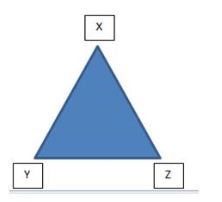
traingle symbol

Here, the name of the triangle is XYZ.

Properties of the Triangle

Have a glance at the Properties of Triangle listed below and they are along the lines

  • Basically, the triangle has three sides. Here, the sides of the triangle are XY, YZ, and ZX.
  • The vertices of the triangle are X, Y, and Z.
  • Angles of the triangle are XYZ, YXZ, and XZY.
  • The sum of the three angles is equal to 180°.
  • The sum of any two sides of the triangle must be greater than the third side of the triangle. That is, XY + YZ = ZX or YZ + ZX = XY or XY + XZ = YZ.
  • In Triangles, we have two types of angles. They are interior angles and exterior angles. Interior angles are formed inside of the intersected point of the sides. Exterior angles are formed outside of the intersected points of the sides.

Also, Read:

Area of a Triangle

Area of the Triangle is equal to 1 / 2 * base * height. Here, Area is denoted by ‘A’, the base is denoted by ‘b’ and the height is denoted by ‘h’.

Area (A) = (1 / 2) b*h.

Perimeter of a Triangle

Perimeter of a triangle is equal to half of the sum of the three sides of the triangle. Perimeter is denoted by s and sides of the triangle are denoted as a, b, c.

Perimeter (s) = (a+ b + c) / 2.

  • We can find out the area of the triangle by using the perimeter and sides of the triangle. That is, Area = √s(s – a) (s – b) (s – c).

Types of Triangles

We have different types of triangles. Based on the sides and angles, triangles are classified into different types. They are

  1. Equilateral Triangle
  2. Isosceles Triangle
  3. Scalene Triangle
  4. Acute angled Triangle
  5. Obtuse angled Triangle
  6. Right-sided angle Triangle

1. Equilateral Triangle: Three sides of the triangle, as well as three angles of the triangle, are equal and it is called as Equilateral Triangle.
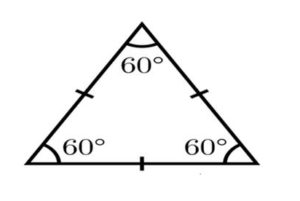
Triangle.Equilateral triangle. image2

Area of the Equilateral Triangle is equal to √3 / 4 *(side)^2.

2. Isosceles Triangle: In this type of Triangle, two sides of the triangle and two angles are equal.
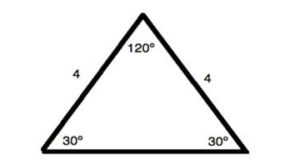
Triangle.Isosceles triangle. image3

The area of an Isosceles Triangle is equal to (base * height) / 2.

3. Scalene Triangle: A Triangle that is generated with three different sides and three different angles is called a Scalene Triangle.
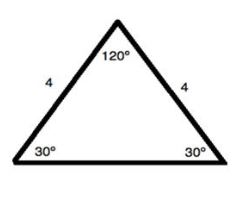
Triangle.Isosceles triangle. image3

Area of the Scalene Triangle is equal to (1 / 2) * base * height.

4. Acute Angled Triangle: Three internal angles of the triangle are measured less than 90° and it is called an Acute Angled Triangle.
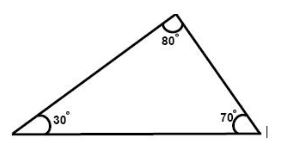
Triangle.Acute Angled triangle. image5

Area of the Acute angled triangle is equal to (1 / 2) * base * height.

5. Obtuse Angled Triangle: Generally, three angles there is a triangle. If any one of the interior angles is measured as greater than 90°, then it is called as Obtuse Angled Triangle.
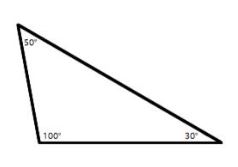
Triangle.obtuse Angled triangle. image6

Area of the obtuse angle is equal to (1 / 2) * base * height.

6. Right-sided angle Triangle: The angle between two sides is equal to 90° and the sum of the remaining two angles must be equal to 90°, then it is called a Right-sided angle triangle.
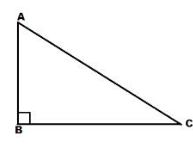
Triangle.Right sided Angle triangle. image7

Area of the Right-angled triangle is equal to (1 / 2) * base * height.

Solved Problems on Triangle

1. The Base of the triangle is 4 cm and the height of the triangle is 9 cm. find the area of the triangle?

Solution:
As per the given data, the base of the triangle (b) = 4 cm.
Height of the triangle (h) = 9 cm.
Area of the triangle (A) = (1 / 2) * base * height.
A = (1 / 2) * 4 * 9.
A = 2 * 9 =18 cm².

The area of the triangle is equal to 18 cm².

2. A triangle has an area of 60 cm² and the base of the triangle is 30 cm. Find the height of the triangle?

Solution:
As per the given information, the Area of the triangle (A) = 60 cm².
Base of the triangle (b) = 30 cm².
Area of the triangle (A) = (1 / 2) * base * height.
60 = (1 / 2) * 30 * h.
60 *2 =30 * h.
120 = 30 * h.
H = 120 / 30 = 4 cm.

Height of the triangle = 4 cm.

3. Two sides of the Isosceles triangle are 10 cm each while the third side is 15 cm. Find the area of the isosceles triangle?

Solution:
As per the given data, two sides of the Isosceles triangle = 10 cm
The third side of the triangle = 15 cm.
Area of the Isosceles triangle (A) = √s (s – a) (s – b) (s – c).
S = (a + b + c) / 2
Here, a = 10, b = 10, c =15
S = (10 + 10 + 15) / 2 = 35 / 2 = 17.5
A = √ 17.5 ( 17.5 – 10) (17.5 – 10) ( 17.5 – 15).
A = √17.5 (7.5) (7.5) (2.5) = 588.27.

The area of the Isosceles Triangle is equal to 588.27.

4. Three sides of the triangle are 12 cm, 10 cm, 10 cm. Find the perimeter of the triangle?

Solution:
As per the given information, three sides of the triangle are 12 cm, 10 cm, 10 cm.
Perimeter of the triangle = (a + b + c) / 2.
Here, a = 12 cm, b = 10 cm, c = 10 cm.
Perimeter = (12 + 10 + 10) / 2 = 32 / 2 = 16 cm.

The perimeter of the triangle = 16 cm.

5. Area of the triangle is 20 cm² and the height of the triangle is 60 cm. What is the base of the triangle?

Solution:
As per the given information, the Area of the triangle (A) = 20 cm².
Height of the triangle (h) = 60 cm.
Area of the triangle (A) = (1 / 2) * base * height.
20 = (1 / 2) * base * 60.
20 *2 = base * 60.
40 / 60 = base.
Base = 4 / 6.

The base of the triangle is equal to 2 / 3.

Frequently Asked Questions on Triangle

1. What is Triangle?

Triangle is made up of three lines and it is a closed curve.

2. What are the properties of the Triangle?

Properties of the triangle are

  • Triangle has three sides, three angles, and three vertices.
  • The Sum of the three angles must be equal to 180°.
  • The Sum of any two angles must be greater than the third angle.

3. What are the types of Triangles?

Based on the angles and sides triangles are divided into 6 types. They are

Classification of triangles based on the sides.

  1. Scalene Triangle
  2. Isosceles Triangle
  3. Equilateral Triangle

Classification of triangles based on the angle

  1. Acute Angle Triangle
  2. Obtuse Angle Triangle
  3. Right Angle Triangle

4. What are the basic formulas for triangles?

The basic formulas of triangles are Area and Perimeter Formulas. They are
Area of the Triangle (A) = (1 / 2) * base * height.
Or
Area (A) = √s(s – a) (s – b) (s – c).
Perimeter of the Triangle (s) = (a + b + c) / 2.

5. Difference between the Isosceles triangle and scalene triangle?

Isosceles Triangle: Two sides of the triangle are equal and the third side is different, then it is called as Isosceles Triangle.
Scalene Triangle: If the three sides of the triangle values are different, then it is called a scalene triangle.
 

Probability for Rolling Two Dice – Examples | How to find Probability of Rolling Two Dice?

Probability for Rolling Two Dice

Probability is a possibility of outcome for a nonoccurrence event. That means, when we are not sure about the outcome or result of an event, at that moment we can apply the probability method to the event. So that, we will know the chances of outcome of an event. For example, if we are trying to flip a coin and we don’t know the result or outcome of a coin that means, either it may be heads or tails. In such a case, we can use the probability method. If you want to know What is the Probability for Rolling Two Dices

Get to know the Probability When Two Dice are Rolled, Solved Examples on How to Calculate the Two Dice Rolling Probability, etc.  Also, find the Possible Outcomes Whe Two Dice are Rolled by checking out the Probability Table.

Two Dice Rolling Probability

In order to determine the probability of a dice roll we need to know two things namely

  • Size of the Sample Space or Set of Possible Outcomes
  • How often an Event Occurs

If you throw a single die the sample space is equal to values on the die i.e. (1, 2, 3, 4, 5, 6). Since th die is fair each number in the set occurs only once. To obtain the probability of rolling any number on the die we divide the event frequency by the size of sample space.

In the same way, When Two Dice are Rolled calculating the Probability becomes difficult. Here, Rolling One Die is independent of the other. One roll has no effect on the other and while dealing with the independent events we use the multiplication rule.

Also, Read:

Possibilities of Outcomes When Two Dice are Rolled

As said above, when we throw two dice, there is the possibility to get 36 outcomes. Have a look at the possibilities below.
Probability of an event = Number of favorable outcomes/ Total number of outcomes
Two dice are thrown at a time. Here, one die is x and another one is y.
X = {1,2,3,4,5,6} and Y = {1,2,3,4,5,6}

Probability Table for Rolling Two Dice 

The Possible Outcomes When Two Dice are Rolled is given below. Total Possible Outcomes is equal to the Product of sample space of the first die(6) and the sample space of the second die(6) that is 36.

123456
1(1, 1)(1, 2)(1, 3)(1, 4)(1, 5)(1, 6)
2(2, 1)(2, 2)(2, 3)(2, 4)(2, 5)(2, 6)
3(3, 1)(3, 2)(3, 3)(3, 4)(3, 5)(3, 6)
4(4, 1)(4, 2)(4, 3)(4, 4)(4, 5)(4, 6)
5(5, 1)(5, 2)(5, 3)(5, 4)(5, 5)(5, 6)
6(6, 1)(6, 2)(6, 3)(6, 4)(6, 5)(6, 6)

Possibility of outcomes are {(1,1), (1,2), (1,3), (1,4), (1,5), (1,6),
(2,1), (2,2), (2,3), (2,4), (2,5), (2,6),
(3,1), (3,2), (3,3), (3,4), (3,5), (3,6),
(4,1), (4,2), (4,3), (4,4), (4,5), (4,6),
(5,1), (5,2), (5,3), (5,4), (5,5), (5,6),
(6,1), (6,2), (6,3), (6,4), (6,5), (6,6)}
Total number of outcomes are 36.

Two Dice Probability Examples

1. Two dice are rolled. Find the Probability of the sum of scores is an even number?

Solution:
Two dices are rolled at a time.
That is, X = {1,2,3,4,5,6} and Y = {1,2,3,4,5,6}.
The total number of outcomes of the two dices is 36.
Add the scores of the two dices. That is
{(1,1), (1,3), (1,5), (2,2), (2,4), (2,6), (3,1), (3,3), (3,5), (4,2), (4,4), (4,6), (5,1), (5,3), (5,5), (6,2), (6,4), (6,6)}.
So, the number of possibilities of the sum of even numbers is 18.
The probability of an event = number of favorable outcomes/ total number of outcomes.

Probability of sum of an even numbers = 18 / 36 = 1 / 2.

2. Two dice are rolled. Find the Probability of the sum of scores is an odd number?

Solution:
Two dices are rolled at a time.
That is, X = {1,2,3,4,5,6} and Y = {1,2,3,4,5,6}.
The total number of outcomes of two dices are 36.
Add the scores of the two dices. That is
{(1,2), (1,4), (1,6), (2,1), (2,3), (2,5), (3,2), (3,4), (3,6), (4,1), (4,3), (4,5), (5,2), (5,4), (5,6), (6,1), (6,3), (6,5)}.
So, the number of possibilities of the sum of odd numbers is 18.
The probability of an event = number of favorable outcomes/ total number of outcomes.

Probability of sum of an odd numbers = 18 / 36 = 1 / 2.

3. Two dice are rolled. Find the probability of the sum of 2, 4, and 12?

Solution:
Two dice are rolled at a time.
That is, X = {1,2,3,4,5,6} and Y = {1,2,3,4,5,6}.
The total number of outcomes of the two dices is 36.
(i) Number of favorable outcomes of the sum of 2 is (1,1).
So, only 1 outcome.
The total number of outcomes = 36.
So, the probability of an event = number of favorable outcomes/ total number of outcomes.
Probability of sum of 2 = 1/36.
(ii) Number of favorable outcomes of sum of 4 are {(1,3), (2,2), (3,1)}.
So, the number of favorable outcomes is 3.
The total number of outcomes = 36.
So, the probability of an event = number of favorable outcomes/ total number of outcomes.
Probability of sum of 4 = 3/36 = 1/12.
(iii) Number of favorable outcomes of the sum of 12 are {(6,6)}.
So, a number of favorable outcomes is 1.
The total number of outcomes = 36.
So, the probability of an event = number of favorable outcomes/ total number of outcomes.
Probability of sum of 12 = 1/36.

4. Two dice are rolled. P is the event that the sum of the numbers shown on the two dice is 5, and Q is the event that at least one of the dice shows up a 3?
Are the two events (i) mutually exclusive, (ii) exhaustive? Give arguments in support of your answer.

Solution:
Two dice are rolled at a time.
That is, X = {1,2,3,4,5,6} and Y = {1,2,3,4,5,6}.
The total number of outcomes of the two dices is 36.
P is sum of 5. That is, P = {(1,4), (2,3), (3,2), (4,1)}.
Q is at least one of the dice shows up 3. That is, Q = {(1,3), (2,3), (3,1), (3,2), (3,3), (3,4), (3,5), (3,6), (4,3), (5,3), (6,3)}
(i) Mutually Exclusive
P ∩ Q = {(2, 3), (3, 2)} ≠ ∅.
Hence, P and Q are not mutually exclusive.
(ii) Exhaustive
P∪ Q ≠ S.

Therefore, P and Q are not exhaustive events.

5. Two dice are thrown simultaneously. Find the probability of (i) doublet (ii) product of 6 (iii) Divisible by 4 (iv) total of at least 10 (v) sum of 8?

Solution:
Two dice are rolled at a time.
That is, X = {1,2,3,4,5,6} and Y = {1,2,3,4,5,6}.
The total number of outcomes of two dices is 36.
(i) Doublets
Possibilities of doublets are {(1,1), (2,2), (3,3), (4,4), (5,5), (6,6)} = 6.
Probability of an event = number of favorable outcomes / total number of outcomes.
Probability of an event = 6 / 36 = 1 / 6.
(ii) Product of 6.
Possibilities of product of 6 is {(1,6), (2,3), (3,2), (6,1)} = 4.
Probability of an event = number of favorable outcomes / total number of outcomes.
Probability of an event = 4 / 36 = 1 / 9.
(iii) Divisible by 4.
Possibilities of Divisible by 4 is {(1,4), (2,2), (2,6), (3,1), (3,5), (4,1), (4,4), (5,3), (6,2), (6,6)} = 10.
Probability of an event = number of favorable outcomes / total number of outcomes.
Probability of an event = 10 / 36 = 5 / 18.
(iv) Total of at least 10.
Possibilities of Total of at least 10 are {(4,6), (5,5), (5,6), (6,4), (6,5), (6,6)} = 6.
Probability of an event = number of favorable outcomes / total number of outcomes.
Probability of an event = 6 / 36 = 1 / 6.
(v) Sum of 8.
Possibilities of sum of 8 are {(2,6), (3,5), (4,4), (5,3), (6,2)} = 5.
Probability of an event = number of favorable outcomes / total number of outcomes.
Probability of an event = 5 / 36.

6. Two dice are thrown. Find the probability of
(i) multiple of 4.
(ii) multiple of 5.
(iii) prime number as the sum.
(iv) product as 2.
(v) sum as < = 5.
(vi) getting a multiple of 4 on one die and multiple of 2 on another die.

Solution:
Two dice are rolled at a time.
That is, X = {1,2,3,4,5,6} and Y = {1,2,3,4,5,6}.
The total number of outcomes of the two dices is 36.
(i) Multiple of 4.
Possibilities of multiple of 4 are {(1,3), (2,2), (2,6), (3,1), (3,5), (4,4), (5,3), (6, 2), (6,6)} = 9.
Probability of an event = number of favorable outcomes / total number of outcomes.
Probability of Multiple of 4 = 9 / 36 = 1 / 4.
(ii) Multiple of 5.
Possibilities of multiple of 5 are {(1,4), (2,3), (3,2), (4,1), (4,6), (5,5), (6,4)} = 7.
Probability of an event = number of favorable outcomes / total number of outcomes.
Probability of Multiple of 5 = 7 / 36.
(iii) Prime number as sum
Prime numbers are 1,2,3,5,7,11,13…..
Possibilities of prime number as sum = {(1,1), (1,2), (1,4), (1,6), (2,1), (2,3), (2,5), (3,2), (3,4), (4,1), (4,3), (5,2), (5,6), (6,1), (6,5)} = 15.
Probability of an event = number of favorable outcomes / total number of outcomes.
Probability of Prime number as sum = 15 / 36 = 5 / 12.
(iv) Product as 2
Possibilities of product as 2 are {(1,2), (2,1)} = 2.
Probability of an event = number of favorable outcomes / total number of outcomes.
Probability of Product as 2 = 2 / 36 = 1 / 18.
(v) sum as < = 5.
Possibilities of sum as < = 5 are {(1,1), (1,2), (1,3), (1,4), (2,1), (2,2), (2,3), (3,1), (3,2), (4,1)} = 10.
Probability of an event = number of favorable outcomes / total number of outcomes.
Probability of sum as <=5 = 10 / 36 = 5 / 18.
(vi) getting a multiple of 4 on one die and multiple of 2 on another die.
Possibilities of getting a multiple of 4 on one die and multiple of 2 on another die are {(4, 2), (4, 4), (4,6), (2,4), (6,4)} = 5.
Probability of an event = number of favorable outcomes / total number of outcomes.

Probability of getting a multiple of 4 on one die and multiple of 2 on another die = 5 / 36.

7. Two dice are thrown. Find out the (i) the odds in favor of getting the sum 4, and (ii) the odds against getting the sum 3.

Solution:
Two dice are rolled at a time.
That is, X = {1,2,3,4,5,6} and Y = {1,2,3,4,5,6}.
The total number of outcomes of the two dices is 36.

(i) The odds in favor of getting the sum 4.
Possibilities of getting the sum 4 = {(1,3), (2,2), (3,1)} = 3.
Probability of an event = number of favorable outcomes / total number of outcomes.
Probability of getting the sum 4 = 3 / 36 = 1 / 12.
Odds in favor of getting the sum 4 = probability of getting the sum 4 / (1 – probability of getting the sum 4).
Odds in favor of getting the sum 4 = (1 / 12) / (1 – (1 / 12).
= (1 / 12) / (11 / 12).
=1 / 11.

Finally, the odds I favor of getting the sum of 4 is equal to 1 / 11.

(ii) the odds against getting the sum 3.
Possibilities of getting the sum 3 = {(1,2), (2,1)} = 2.
Probability of an event = number of favorable outcomes / total number of outcomes.
Probability of getting the sum 3 = 2 / 36 = 1 / 18.
Odds in favor of getting the sum 3 = probability of getting the sum 3 / (1 – the probability of getting the sum 3).
Odds in favor of getting the sum 3 = (1 / 18) / (1 – (1 / 18).
= (1 / 18) / (17 / 18).
=1 / 17.

Finally, the odds I favor of getting the sum 3 is equal to 1 / 17.

8. Two dice are thrown. Find the probability that the numbers on the two dices are different?

Solution:
Two dice are rolled at a time.
That is, X = {1,2,3,4,5,6} and Y = {1,2,3,4,5,6}.
The total number of outcomes of the two dices is 36.
Possibilities of the numbers on the two dices are different = {(1,2), (1,3), (1,4), (1,5), (1,6), (2,1), (2,3), (2,4), (2,5), (2,6), (3,1), (3,2), (3,4), (3,5), (3,6), (4,1), (4,2), (4,3), (4,5), (4,6), (5,1), (5,2), (5,3), (5,4), (5,6), (6,1), (6,2), (6,3), (6,4), (6,5)} = 30.
Probability of an event = number of favorable outcomes / total number of outcomes.

Probability of the numbers on the two dices are different = 30 / 36 = 5 / 6.

Problems on Trigonometric Identities | Word Problems Involving Trigonometric Identities

Problems on Trigonometric Identities

Check problems on trigonometric identities along with the solutions. Find the step by step procedure to know the trigonometric identities problems. Refer to all the solutions present in the below sections to prepare for the exam. Scroll down the page to get the Trigonometric Identities Word Problems and study material. Know the various formulae involved in solving trigonometric identities below. Assess your knowledge level taking the help of the Practice Problems on Trigonometric Identities available.

Also, Read:

Problem 1:

The angle of inclination from a point on the ground 30 feet away to the top of Lakeland’s Armington Clocktower is 60°. Find the height of the clock tower which is nearest to the foot?

Solution:

As given in the question,

The angle of inclination (θ) = 60°

The height from the ground(a) = 30 feet

To find the height of the Clocktower to the nearest foot, we use the formula

tan θ = h/a

tan 60° = h / 30

h = 30 tan 60°

h = 9.60 ≅ 10 feet

Therefore, the height of the clocktower to the nearest foot is 10 feet.

Hence, the final solution is 10 feet.

Problem 2:

Mary wants to determine the California redwood tree height, there are two sightings available from the ground which one is 200 feet directly behind the other. If the angles of inclination (Θ) are 45° and 30° respectively, how tall is the tree to the nearest foot?

Solution:

As given in the question,

Length at which trees are slighting = 200

The angle of inclinations = 45° and 30°

To find the inclination on the first tree, we apply the Pythagorean theorem,

tan 45° = h/x

h = x tan 45° is the (1) equation

tan 30° = h/(200+x)

h = (200 + x) tan 30 is the (2) equation

From both the equations,

x tan 45° = (200 + x) tan 30°

x tan 45° = 200 tan 30° + x tan 30°

x tan 45° – x tan 30° = 200 tan 30

Divide the equation with tan 45° – tan 30°

x (tan 45° – tan 30°) / tan 45° – tan 30° = 200 tan 30° / tan 45° – tan 30°

x = 273.21 feet

h = 273.21 tan 45

h = 273. 21 feet

h ≅ 273 feet

Therefore, the height of the tree to the nearest foot = 273 feet

Thus, the final solution = 273 feet

Problem 3:

A tree that is standing vertically on the level ground casts the 120 foot long shadow. The angle of elevation from the end of the shadow of the top of the tree is 21.4°. Find the height of the tree to the nearest foot?

Solution:

As given in the question,

Length of the foot-long shadow = 120

The inclination of the tree = 21.4°

To find the height of the tree to the nearest foot, we apply the Pythagorean theorem

tan θ = 0/a

tan 214° = h/120

h = 120 tan 214°

h = 47.03

h ≅ 47 feet

The height of the tree to the nearest foot = 47 feet

Thus, the final solution is 47 feet

Problem 4:

The broadcast tower which is for the radio station WSAZ (“Carl” and “Jeff”‘s home of algebra) has 2 enormous flashing red lights on it. Of the 2 enormous flashing lights, one is at the very top and the other one is few feet below the top. From that point to the base of the tower it is 5000 feet away from level ground, the top light angle of elevation is 7.970° and the light angle of elevation of the second light is 7.125°. Find the distance between the nearest foot and the lights.

Solution:

As given in the question,

Height of the tower = 5000 feet

The angle of elevation of top light = 7.970

The angle of elevation of second light = 7.125°

To find the distance between the nearest foot and the lights, we have to use the Pythagorean theorem

tan θ = h/5000

h = 5000 tan 7.97°

tan β = h-x/5000

h-x = 5000 tan (7.125)°

x = h – 5000 tan (7.125)°

x = 5000 tan 7.97° – 5000 tan 7.125°

x = 5000 (tan 7.97° – tan 7.125°)

x = 75.04 feet

x ≅ 75  feet

Therefore, 75 feet is the distance between the nearest foot and the lights

Thus, the final solution is 75 feet.

Problem 5:

Find the solution of tan (θ) = sin (θ) sec (θ)?

Solution:

sinθ/ cosθ = sinθ secθ

sinθ. (1/cosθ) = sinθ secθ

sinθ secθ = sinθ secθ

tanθ = sinθ secθ

= sinθ(1/cosθ)

= sinθ/cosθ

= tanθ

∴ Hence it is proved

Problem 6:

Prove that (sec(θ)-tan(θ))(sec(θ)+tan(θ))=1

Solution:

sec²(θ)-tan²(θ)=1

1/cos²(θ)-sin²(θ)/cos(θ)=1

(1-sin²(θ))/cos²(θ)=1

cos²(θ)/cos²(θ)=1

(1-sin²(θ))/cos²(θ)

1/cos²(θ)-sin²(θ)/cos²(θ)=sec²(θ)-tan²(θ)

(sec(θ)-tan(θ))(sec(θ)+tan(θ))

Therefore, (sec(θ)-tan(θ))(sec(θ)+tan(θ)) = 1

∴Hence, it is proved

Problem 7:

Prove that sec(θ)/(1-tan(θ))=1/(cos(θ)-sin(θ))

Solution:

1/((cos(θ)-sin(θ)).1/cos(θ).1/cos(θ)

(1/cos(θ))/((cos(θ)-sin(θ))-(cos(θ))=sec(θ)/(1-tan(θ))

Therefore, sec(θ)/(1-tan(θ))=1/(cos(θ)-sin(θ))

∴Hence, it is proved

Problem 8 :

An aeroplane over the Pacific sights an atoll at a 20° angle of depression. If the plane is 435 ma above water, how many kilometres is it from a point 435m directly above the centre of a troll?

Solution:

As given in the question,

The angle of depression = 20°

Height of the plane above water = 435ma

Height above the centre of a troll = 435m

To find the kilometers, we use the pythegorean theorem

tan = θ/A

tan 20° = 435/x

x = 435/tan20°

x = 1.195 km

Therefore, 1.195 kilometres is it from a point 435m directly above the centre of a troll

Thus, the final solution is 1.195 kilometres

Problem 9:

The force F (in pounds)on the back of a person when he or she bends over an acute angle θ (in degrees) is given by F = 0.2W sin(θ + 70)/sin12° where w is the weight in pounds of the person

a) Simplify the formula or F.

b) Find the force on the back of a person where an angle of 30° weight is 50 pounds if he bends an angle of 30°

c) How many pounds should a person weigh for his book to endure a force of 400 lbs if he bends 40°?

Solution: 

a. F = 0.2W sin (θ + 90)/sin 12°

= 0.2W [sinθ cos 90 + cosθ sin90]/sin 12°

= 0.2W [θ(sinθ) + (cosθ) (1)]/sin 12°

= 0.2W [0 + cosθ]/sin 12°

F = 0.2W(cosθ)/sin 12°

The value of F is 0.2W(cosθ)/sin 12°

b. W = 50, θ = 30°, F=?

F = 0.2W cosθ/sin 12°

F = 0.2 (50) (cos30°)/sin 12°

F = 41.45

The force on the back of a person wherein the angle of 30e weight is 50 pounds if he bends an angle of 30° is 41.45

c. F = 400, θ = 40°, W = ?

400 = 0.2(w)(cos 40°)/sin 12°

400(sin 12°)/0.2 cos 40 = 0.2 (w) (cos 40°)/0.2 cos40°

542.82 = w

Therefore, the weigh for his book to endure a force of 400 lbs if he bends 40° is 542.82 pounds

Problem 10:

An observer standing on the top of vertical cliff pots a house in the adjacent valley at an angle of depression of 12°. The cliff is 60m tall. How far is the house from the base of the cliff?

Solution:

As given in the question,

The angle of depression = 12°

Height of the cliff = 60m

To find, the distance of the house from the base of the cliff, we apply the Pythagorean theorem

tan 12° = 60/x

x = 60/tan 12°

x = 282m

282m is the distance of the house from the base of the cliff

Hence, the final solution is 282m

Problem 11:

Building A and B are across the street from each other which is 35m apart. From the point on the roof of building A, the angle of elevation of the top of building B is 24°, the angle of depression of the base of building B is 34° How tall is each building?

Solution:

As given in the question,

The angle of elevation of the top of the building = 24°

The angle of depression of the base of the building = 34°

The distance of both buildings = 35m

To find the height of each building, we apply the Pythagoras theorem,

tan 24° = c/35

c = 15.6

tan 56° = 35/a

a = 23.6m

b = a+c

b = 39.2m

A is 23.6m tall

B is 39.2m tall

Therefore, the height of building A is 23.6m tall

The height of building B is 39.2m tall

Thus the final solution is 23.6m, 39.2m

Problem 12:

In Johannesburg in June, the daily low temperature is usually around 3°C, and the daily temperature is around 18°. The temperature is typically halfway between the daily high and daily low at 10 am and 10 pm. and the highest temperatures are in the afternoon. Find out the trigonometric function which models the temperature T in Johannesburg t hours after midnight?

Solution:

As per the question,

To determine the trigonometric model, the temperature ‘T’ which is Celsius degree and the temperature in axis and then right over here is time in hours. To think about the range of temperatures, the daily temperature is around 3-degree celsius and the highest is 18°. The midpoint between 18 and 3 is 10.5 (21 divided by 2)

Let F(t) is the temperature t hours after 10 am

F(t) = 7.5sin(2Π/24 t) + 10.5

T (t) = 7.5sin (Π/12(t-10)) + 10.5

T(10) = F(0) where T(10) is temperature at 10 pm

F(0) is the temperature at 10 am

Therefore, T(10) = F(0) is the trigonometric function that models the temperature T in Johannesburg t hours after midnight

Problem 13:

A ladder is 6 meters long and reaches the wall at a point of 5m from the ground. What is the angle which the ladder will make with the wall?

Solution:

Let θ be the inclination of the ladder which it makes with the wall

As given in the question,

Length of the ladder = 6m

The distance at which the ladder touches the wall = 5m

The angle at which the ladder will make with the wall

cos θ = 5/6

θ = cos¯¹ (5/6)

θ = 33.56°

Problem 14:

The acceleration of the piston is given by a = 5.0(sinωt + cos2ωt). At what positive values of ωt less than 2Π does a = 0?

Solution:

Let ωt be the crank angle(product of time and angular velocity) in piston acceleration, a be the accelaration of a piston.

a = 5.0(sinωt + cos2ωt)

0 = 5.0(sinωt + cos2ωt)

0 = sinωt + cos2ωt

0 = sinωt + 1 – 2sin²ωt

2sin²ωt – sinωt – 1 = 0

(2sinωt + 1) (sinωt – 1) = 0

2sinωt + 1 = 0

2sinωt = -1

sinωt = -1/2

ωt = sin¯¹(-1/2)

ωt = (7π/6, 11π/6)

sinωt – 1 = 0

sinωt = 1

ωt = sin¯¹(1)

ωt = π/2

{π/2, 7π/6, 11π/6}

Problem 15:

A lighthouse at sea level is 34 mi from a boat. It is known that the top of the lighthouse is 42.5mi from the boat. Find the angle of depression from the top of the lighthouse.

Solution:

Let θ be the angle of inclination from the top of the lighthouse to the boat

Let x be the horizontal distance from the base of the lighthouse to the boat, and

r be the distance from the top of the lighthouse to the boat.

As given in the question,

The length of the lighthouse at sea level = 34 mi

The distance of the top lighthouse from the boat = 42.5 mi

To find the angle of depression from the top of the lighthouse, we apply the Pythagorean theorem

cosθ = 34/42.5

θ = cos¯¹(34/42.5)

θ = 36.87°


Eureka Math Grade 3 Module 4 Mid Module Assessment Answer Key

Engage NY Eureka Math 3rd Grade Module 4 Mid Module Assessment Answer Key

Eureka Math Grade 3 Module 4 Mid Module Assessment Answer Key

Question 1.
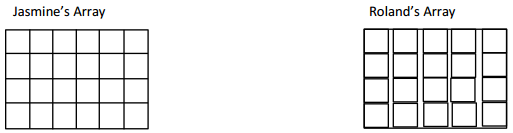
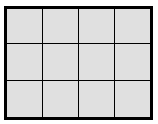
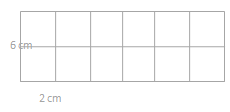
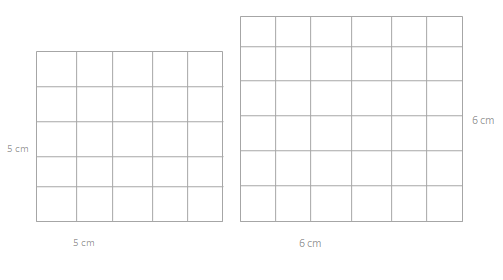
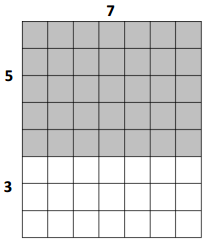
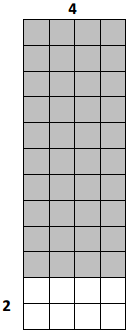
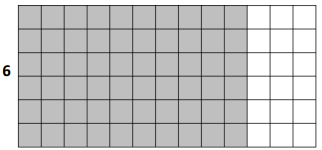
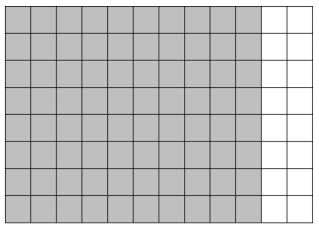
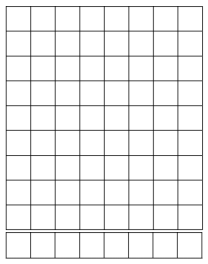
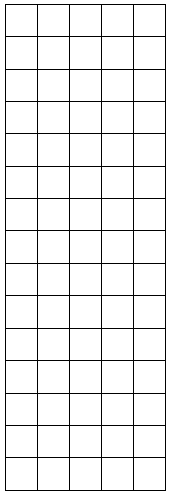
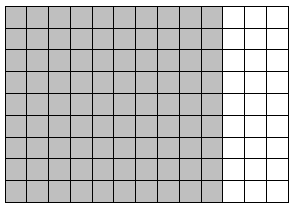
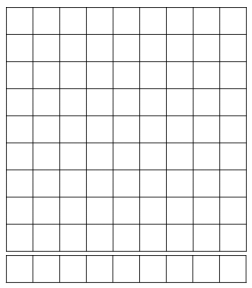
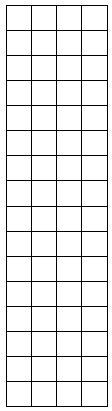
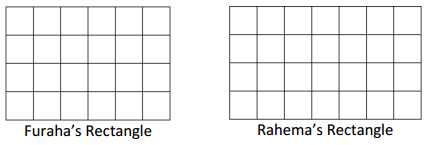
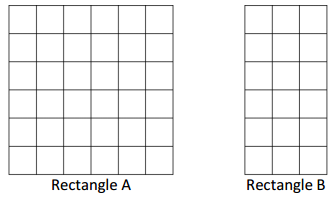
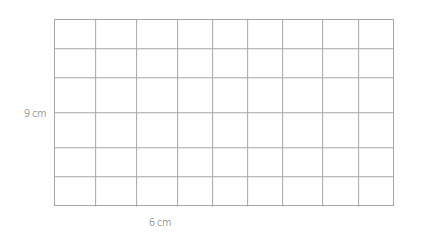
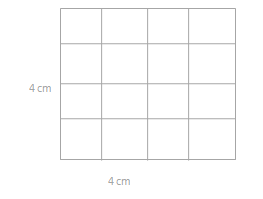
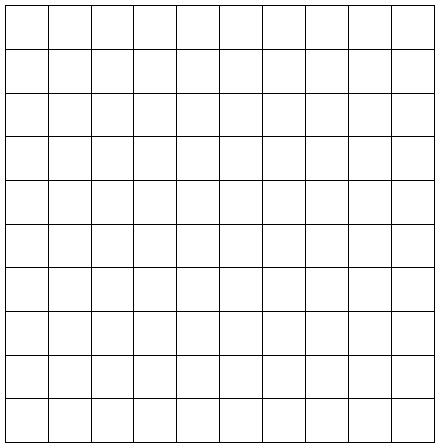
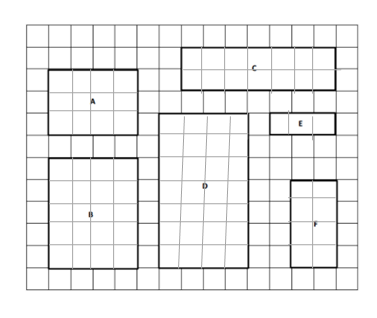
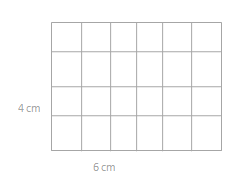
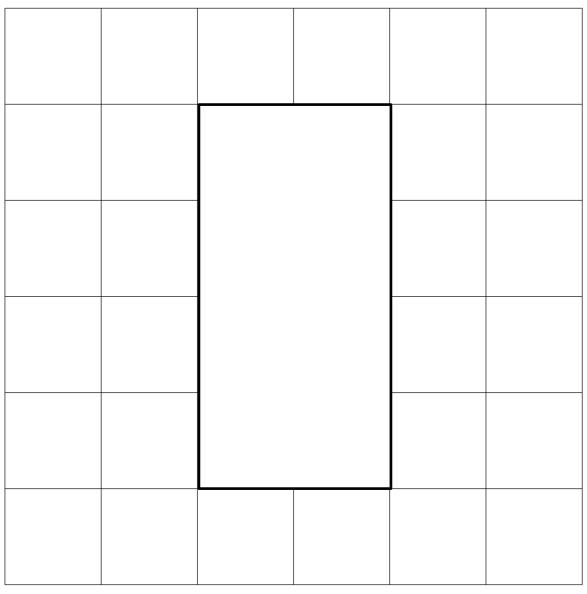
Jasmine and Roland each use unit squares to tile a piece of paper. Their work is shown below.
Eureka Math Grade 3 Module 4 Mid Module Assessment Answer Key 1
a. Can one of the arrays be used to correctly measure the area of the piece of paper? If so, whose array would you use? Explain why.
Answer:

b. What is the area of the piece of paper? Explain your strategy for finding the area.
Answer:

c. Jasmine thinks she can skip-count by sixes to find the area of her rectangle. Is she correct? Explain why or why not.
Answer:

Question 2.
Jaheim says you can create three rectangles with different side lengths using
12 unit squares. Use pictures, numbers, and words to show what Jaheim is saying.
Answer:

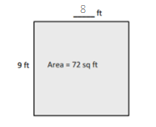
Question 3.
The area of a rectangle is 72 square units. One side has a length of 9 units. What is the other side length? Explain how you know using pictures, equations, and words.
Answer:

Question 4.
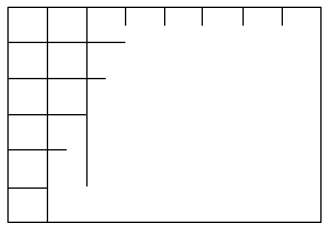
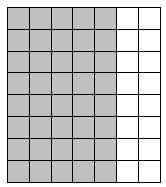
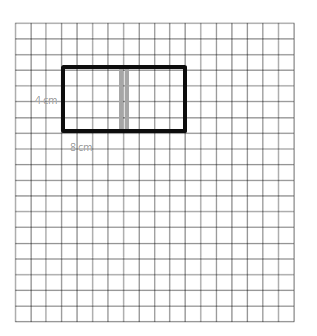
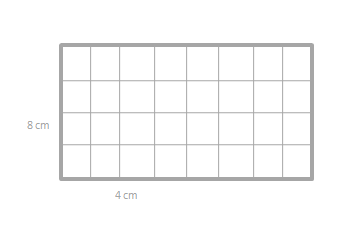
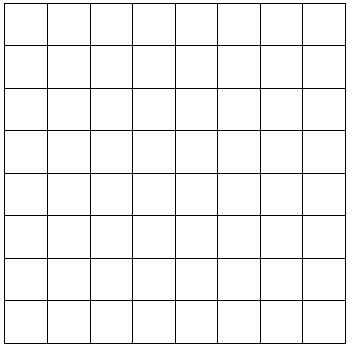
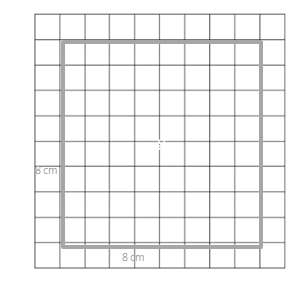
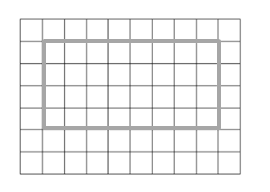
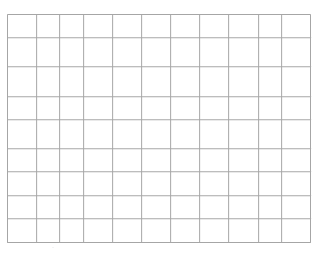
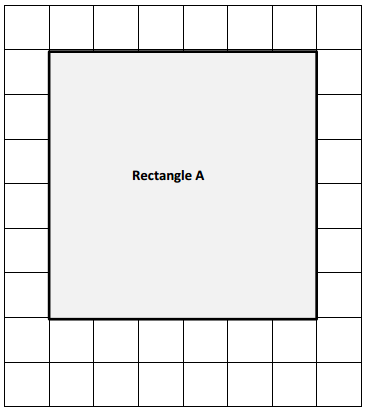
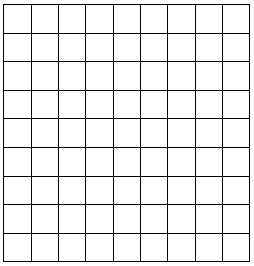
Jax started to draw a grid inside the rectangle to find its area.
Eureka Math Grade 3 Module 4 Mid Module Assessment Answer Key 2
a. Use a straight edge to complete the drawing of the grid.
Answer:

b. Write a skip-count sequence you could use to find the area.
Answer:

c. Write a multiplication equation that you could use to find the area, and then solve.
Answer:

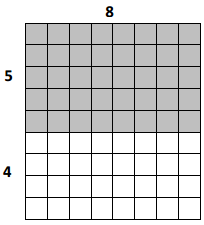
Question 5.
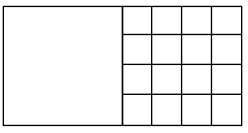
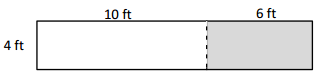
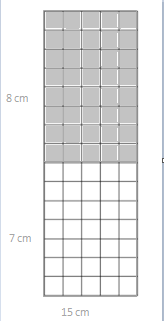
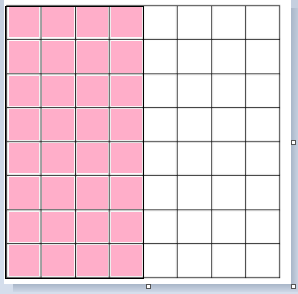
Half of the rectangle below has been tiled with unit squares.
Eureka Math Grade 3 Module 4 Mid Module Assessment Answer Key 3
a. How many more unit squares are needed to fill in the rest of the rectangle?
Answer:

b. What is the total area of the large rectangle? Explain how you found the area.
Answer:

Eureka Math Grade 3 Module 4 End of Module Assessment Answer Key

Students of Grade 3 can get a strong foundation on mathematics concepts by referring to the Eureka Math Book. It was developed by highly professional mathematics educators and the solutions prepared by them are in a concise manner for easy grasping. To achieve high scores in Grade 3, students need to solve all questions and exercises included in Eureka’s Math Grade 3 Book.

Engage NY Eureka Math 3rd Grade Module 4 End of Module Assessment Answer Key

Eureka Math Answer Key for Grade 3 aids teachers to differentiate instruction, building, and reinforcing foundational mathematics skills that alter from the classroom to real life.
With the help of the Eureka Primary School Grade 3 Answer Key, You can think deeply regarding what you are learning, and you will really learn math easily just like that. So teachers and students can find this Eureka Answer Key for Grade 3 more helpful in raising students’ scores and supporting teachers to educate the students.

Eureka Math Grade 3 Module 4 End of Module Assessment Answer Key

Question 1.
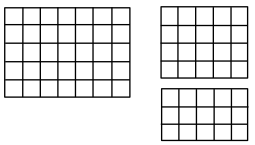
Sarah says the rectangle on the left has the same area as the sum of the two on the right. Pam says they do not have the same areas. Who is correct? Explain using numbers, pictures, and words.
Eureka Math Grade 3 Module 4 End of Module Assessment Answer Key 1

Answer:
Sarah was correct.

Explanation:
In the above-given question,
given that,
the area of the left rectangle = l x b.
area = 5 x 7.
area = 35 sq cm.
the area of the right rectangle 1 = l x b.
area = l x b.
area = 4 x 5.
area = 20 sq cm.
the area of the right rectangle 2 = l x b.
area = l x b.
area = 3 x 5.
area = 15 sq cm.
35 = 20 + 15.
35 = 35.
the area of the left rectangle = sum of the two rectangles on the right.

Question 2.
Draw three different arrays that you could make with 36 square inch tiles. Label the side lengths on each of your arrays. Write multiplication sentences for each array to prove that the area of each array is 36 square inches.

Answer:
The side lengths of the different arrays = 9 x 4, 4 x 9, 6 x 6.

Explanation:
In the above-given question,
given that,
the area of the rectangle 1 = 36 sq in.
area = l x b.
area = 9 x 4.
the area of the rectangle 2 = 36 sq in.
area = l x b.
area = 4 x 9.
the area of the rectangle 3 = 36 sq in.
area = l x b.
area = 6 x 6.

Question 3.
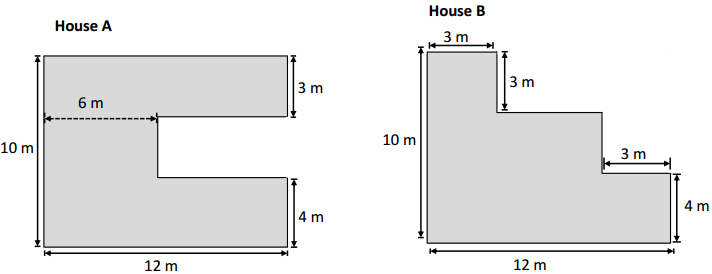
Mr. and Mrs. Jackson are buying a new house. They are deciding between the two floor plans below.
Eureka Math Grade 3 Module 4 End of Module Assessment Answer Key 2
Which floor plan has the greater area? Show how you found your answer on the drawings above. Show your calculations below.

Answer:
The area of the shaded figure = 102 sq m.

Explanation:
In the above-given question,
given that,
area of longer rectangle = 120 sq m.
area = l x b.
area = 12 x 10.
area = 120 sq m.
area of longer rectangle 2 = 36 sq m.
area = l x b.
area = 12 x 3.
area = 36 sq m.
area of smaller rectangle = 18 sq m.
area = l x b.
area = 6 x 3.
area = 18 sq cm.
area of shaded rectangle = area of longer rectangle – area of smaller rectangle.
area of shaded rectangle = 120 – 18.
area of shaded figure = 102.

area of longer rectangle = 48 sq m.
area = l x b.
area = 12 x 4.
area = 48 sq m.
area of longer rectangle 2 = 27 sq m.
area = l x b.
area = 9 x 3.
area = 27 sq m.
area of smaller rectangle = 9 sq m.
area = l x b.
area = 3 x 3.
area = 9 sq cm.
House A has a greater area.

Question 4.
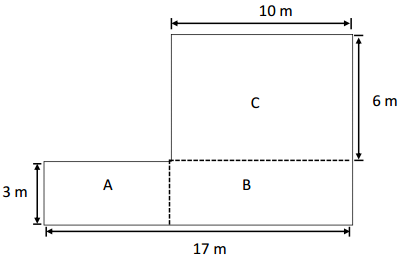
Superior Elementary School uses the design below for their swimming pool. Shapes A, B, and C are rectangles.
Eureka Math Grade 3 Module 4 End of Module Assessment Answer Key 3
a. Label the side lengths of Rectangles A and B on the drawing.

Answer:
The side lengths of Rectangle A = 7 m x 3 m.
The side lengths of Rectangle B = 10 m x 3 m.
The side lengths of Rectangle C = 10 m x 6 m.

Explanation:
In the above-given question,
given that,
the area of the rectangle A = 21 sq m.
area = 7 x 3.
area = 21 sq m.
the area of the rectangle B = 30 sq m.
area = 10 x 3.
area = 30 sq m.
the area of the rectangle C = 60 sq m.
area = 10 x 6.
area = 60 sq m.

b. Find the area of each rectangle.

Answer:
The side lengths of Rectangle A = 7 m x 3 m.
The side lengths of Rectangle B = 10 m x 3 m.
The side lengths of Rectangle C = 10 m x 6 m.

Explanation:
In the above-given question,
given that,
the area of the rectangle A = 21 sq m.
area = 7 x 3.
area = 21 sq m.
the area of the rectangle B = 30 sq m.
area = 10 x 3.
area = 30 sq m.
the area of the rectangle C = 60 sq m.
area = 10 x 6.
area = 60 sq m.

c. Find the area of the entire pool. Explain how you found the area of the pool.

Answer:
The area of the entire pool = 111 sq m.

Explanation:
In the above-given question,
given that,
the area of the rectangle A = 21 sq m.
area = 7 x 3.
area = 21 sq m.
the area of the rectangle B = 30 sq m.
area = 10 x 3.
area = 30 sq m.
the area of the rectangle C = 60 sq m.
area = 10 x 6.
area = 60 sq m.

Eureka Math Grade 3 Module 4 Lesson 16 Answer Key

Eureka Math Answer Key for Grade 3 aids teachers to differentiate instruction, building, and reinforcing foundational mathematics skills that alter from the classroom to real life.
With the help of the Eureka Primary School Grade 3 Answer Key, You can think deeply regarding what you are learning, and you will really learn math easily just like that. So teachers and students can find this Eureka Answer Key for Grade 3 more helpful in raising students’ scores and supporting teachers to educate the students.

Engage NY Eureka Math 3rd Grade Module 4 Lesson 16 Answer Key

Students of Grade 3 can get a strong foundation on mathematics concepts by referring to the Eureka Math Book. It was developed by highly professional mathematics educators and the solutions prepared by them are in a concise manner for easy grasping. To achieve high scores in Grade 3, students need to solve all questions and exercises included in Eureka’s Math Grade 3 Book.

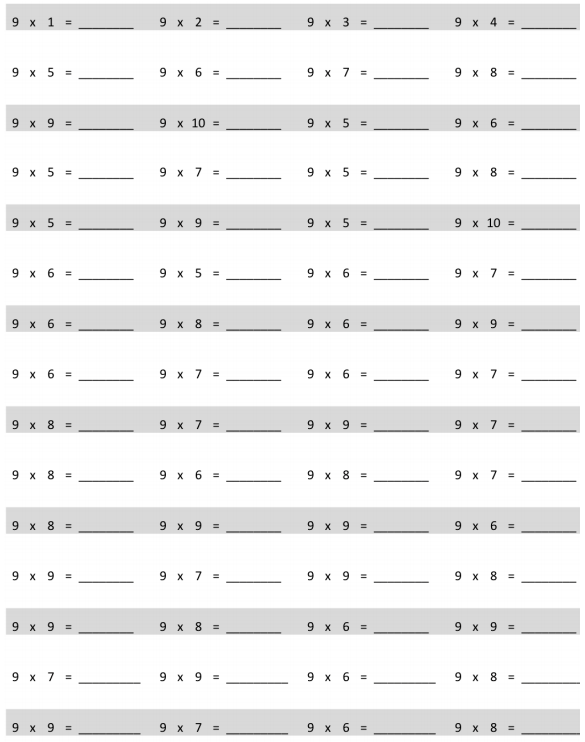
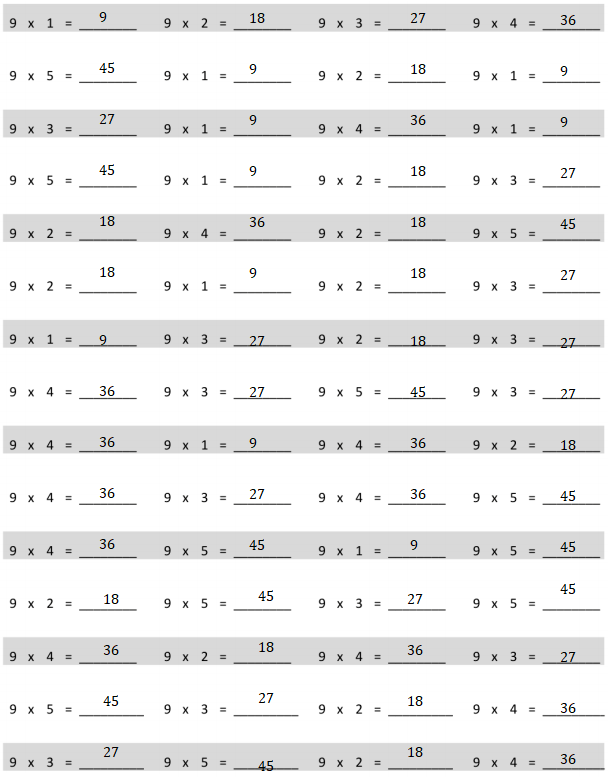
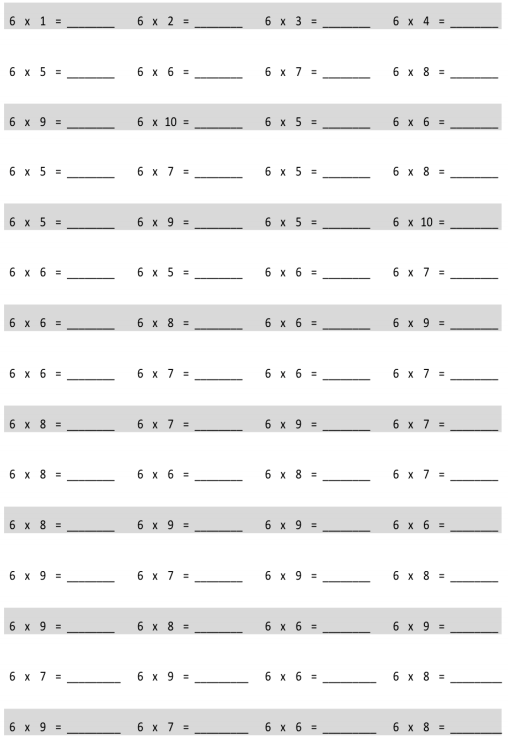
Eureka Math Grade 3 Module 4 Lesson 16 Pattern Sheet Answer Key

Multiply
Eureka Math Grade 3 Module 4 Lesson 16 Pattern Sheet Answer Key 1

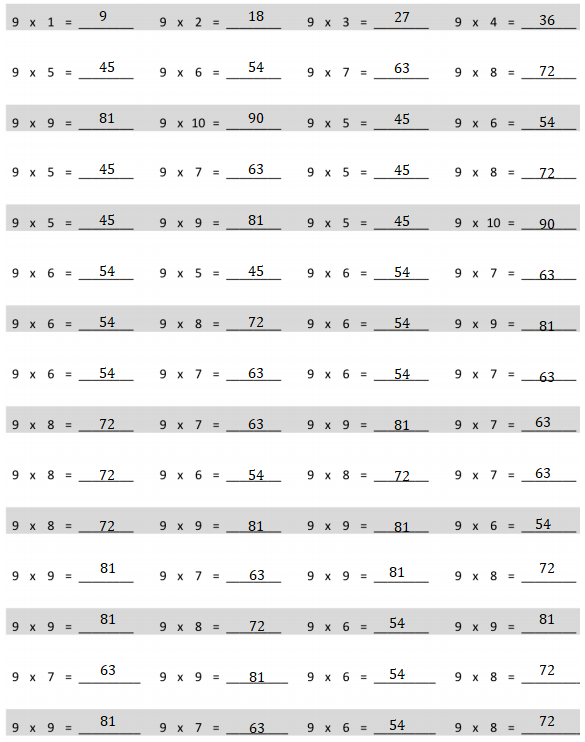
Answer:
9 x 1 = 9, 9 x 2 = 18, 9 x 3 = 27, 9 x 4 = 36, 9 x 5 = 45, 9 x 6 = 54, 9 x 7 = 63, 9 x 8 = 72, 9 x 9 = 81, 9 x 10 = 90, 9 x 5 = 45, 9 x 6 = 54, 9 x 5 = 45, 9 x 7 = 63, 9 x 8 = 72, 9 x 5 = 45, 9 x 5 = 45, 9 x 10 = 90, 9 x 6 = 54, 9 x 5 = 45, 9 x 6 = 54, 9 x 7 = 63, 9 x 6 = 54, 9 x 8 = 72, 9 x 6 = 54, 9 x 9 = 81, 9 x 6 = 54, 9 x 7 = 63, 9 x 6 = 54, 9 x 7 = 63, 9 x 8 = 72, 9 x 7 = 63, 9 x 9 = 81, 9 x 7 = 63, 9 x 8 = 72, 9 x 6 = 54, 9 x 8 = 72, 9 x 7 = 63, 9 x 8 = 72, 9 x 9 = 81, 9 x 9 = 81, 9 x 6 = 54, 9 x 9 = 81, 9 x 7 = 63, 9 x 9 = 81, 9 x 8 = 72, 9 x 9 = 81, 9 x 8 = 72, 9 x 6 = 54, 9 x 9 = 81, 9 x 7 = 63, 9 x 9 = 81, 9 x 6 = 54, 9 x 8 = 72, 9 x 9 = 81, 9 x 7 = 63, 9 x 6 = 54, 9 x 8 = 72.

Explanation:
In the above-given question,
given that,
multiply with 9.
9 x 1 = 9, 9 x 2 = 18, 9 x 3 = 27, 9 x 4 = 36, 9 x 5 = 45, 9 x 6 = 54, 9 x 7 = 63, 9 x 8 = 72, 9 x 9 = 81, 9 x 10 = 90, 9 x 5 = 45, 9 x 6 = 54, 9 x 5 = 45, 9 x 7 = 63, 9 x 8 = 72, 9 x 5 = 45, 9 x 5 = 45, 9 x 10 = 90, 9 x 6 = 54, 9 x 5 = 45, 9 x 6 = 54, 9 x 7 = 63, 9 x 6 = 54, 9 x 8 = 72, 9 x 6 = 54, 9 x 9 = 81, 9 x 6 = 54, 9 x 7 = 63, 9 x 6 = 54, 9 x 7 = 63, 9 x 8 = 72, 9 x 7 = 63, 9 x 9 = 81, 9 x 7 = 63, 9 x 8 = 72, 9 x 6 = 54, 9 x 8 = 72, 9 x 7 = 63, 9 x 8 = 72, 9 x 9 = 81, 9 x 9 = 81, 9 x 6 = 54, 9 x 9 = 81, 9 x 7 = 63, 9 x 9 = 81, 9 x 8 = 72, 9 x 9 = 81, 9 x 8 = 72, 9 x 6 = 54, 9 x 9 = 81, 9 x 7 = 63, 9 x 9 = 81, 9 x 6 = 54, 9 x 8 = 72, 9 x 9 = 81, 9 x 7 = 63, 9 x 6 = 54, 9 x 8 = 72.
Eureka-Math-Grade-3-Module-4-Lesson-16-Answer Key-1

Eureka Math Grade 3 Module 4 Lesson 16 Problem Set Answer Key

Record the new side lengths you have chosen for each of the rooms and show that these side lengths equal the required area. For non-rectangular rooms, record the side lengths and areas of the small rectangles. Then, show how the areas of the small rectangles equal the required area.

RoomNew Side lengths
Bedroom 1
60 sq cm
12 cm x 5 cm
Bedroom
56 sq cm
8 cm x 7 cm
Kitchen
42 sq cm
6 cm x 7 cm
Hallway
24 sq cm
6 cm x 4 cm
Bathroom
25 sq cm
5 cm x 5 cm
Dinning Room
28 sq cm
7 cm x 4 cm
Living Room
88 Sq cm
11 cm x 8 cm

Answer:
The side lengths of Bedroom 1 = 12 cm x 5 cm.
the side lengths of Bedroom 2 = 8 cm x 7 cm.
the side lengths of the Kitchen = 6 cm x 7 cm.
the side lengths of the hallway = 6 cm x 4 cm.
the side lengths of the bathroom = 5 cm x 5 cm.
the side lengths of the dining room = 7 cm x 4 cm.
the side lengths of the living room = 11 cm x 8 cm.

Explanation:
In the above-given question,
given that,
the area of the rooms.
The side lengths of Bedroom 1 = 12 cm x 5 cm.
the side lengths of Bedroom 2 = 8 cm x 7 cm.
the side lengths of the Kitchen = 6 cm x 7 cm.
the side lengths of the hallway = 6 cm x 4 cm.
the side lengths of the bathroom = 5 cm x 5 cm.
the side lengths of the dining room = 7 cm x 4 cm.
the side lengths of the living room = 11 cm x 8 cm.

Eureka Math Grade 3 Module 4 Lesson 16 Exit Ticket Answer Key

Find the area of the shaded figure. Then, draw and label a rectangle with the same area.
Eureka Math Grade 3 Module 4 Lesson 16 Exit Ticket Answer Key 2

Answer:
The area of the shaded figure = 40 sq cm.

Explanation:
In the above-given question,
given that,
area of longer rectangle = 49 sq cm.
area = l x b.
area = 7 x 7.
area = 49 sq cm.
area of smaller rectangle = 9 sq cm.
area = l x b.
area = 3 x 3.
area = 9 sq cm.
area of shaded rectangle = area of the longer rectangle – the area of the smaller rectangle.
area of shaded rectangle = 49 – 9.
area = 40 sq cm

Eureka Math Grade 3 Module 4 Lesson 16 Homework Answer Key

Jeremy plans and designs his own dream playground on grid paper. His new playground will cover a total area of 100 square units. The chart shows how much space he gives for each piece of equipment, or area. Use the information in the chart to draw and label a possible way Jeremy can plan his playground.

Basketball court10 square units
Jungle gym9 Square units
Slide6 Square units
Soccer area24 Square units

Eureka Math Grade 3 Module 4 Lesson 16 Exit Ticket Answer Key 3

Answer:
The area of the basketball court = 10 sq units.
The area of the Jungle gym = 9 sq units.
The area of the slide = 6 sq units.
The area of the soccer area = 24 sq units.

Explanation:
In the above-given question,
given that,
The area of the basketball court = 10 sq units.
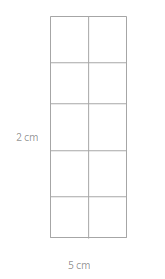
area = 5 cm x 2 cm.
The area of the Jungle gym = 9 sq units.
area = 3 cm x 3 cm.
The area of the slide = 6 sq units.
area = 3 cm x 2 cm.
The area of the soccer area = 24 sq units.
area = 6 cm x 4 cm.
Eureka-Math-Grade-3-Module-4-Lesson-16-Answer Key-2

Eureka Math Grade 3 Module 4 Lesson 15 Answer Key

Engage NY Eureka Math 3rd Grade Module 4 Lesson 15 Answer Key

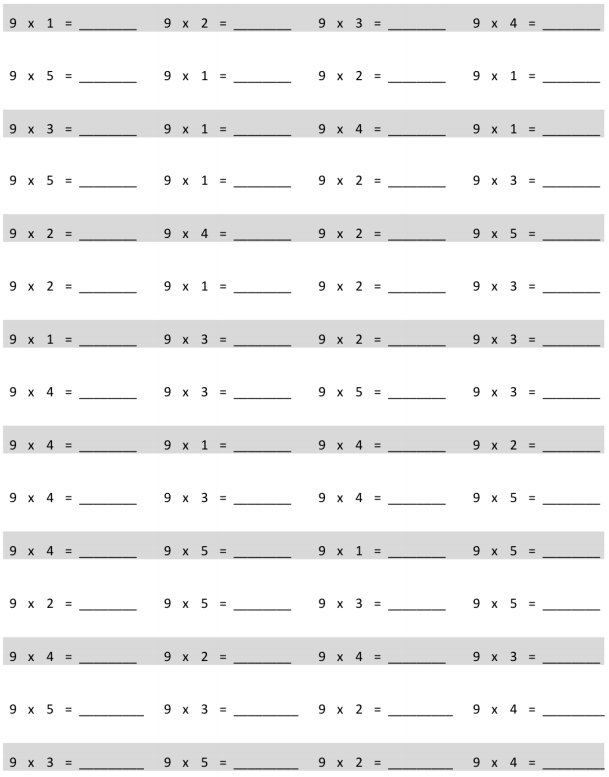
Eureka Math Grade 3 Module 4 Lesson 15 Pattern Sheet Answer Key

Multiply
Eureka Math Grade 3 Module 4 Lesson 15 Pattern Sheet Answer Key 1

Answer:
9 x 1 = 9, 9 x 2 = 18, 9 x 3 = 27, 9 x 4 = 36, 9 x 5 = 45, 9 x 6 = 54, 9 x 7 = 63, 9 x 8 = 72, 9 x 9 = 81, 9 x 10 = 90, 9 x 4 = 36, 9 x 1 = 9, 9 x 5 = 45, 9 x 1 = 9, 9 x 2 = 18, 9 x 3 = 27, 9 x 2 = 18, 9 x 4 = 36, 9 x 2 = 18, 9 x 5 = 45, 9 x 2 = 18, 9 x 1 = 9, 9 x 2 = 18, 9 x 3 = 27, 9 x 1 = 9, 9 x 3 = 27, 9 x 2 = 18, 9 x 3 = 27, 9 x 4 = 36, 9 x 3 = 27, 9 x 5 = 45, 9 x 3 = 27, 9 x 4 = 36, 9 x 1 = 9, 9 x 4 = 36, 9 x 2 = 18, 9 x 4 = 36, 9 x 3 = 27, 9 x 4 = 36, 9 x 5 = 45, 9 x 4 = 36, 9 x 3 = 27, 9 x 5 = 45, 9 x 4 = 36, 9 x 2 = 18, 9 x 4 = 36, 9 x 3 = 27, 9 x 5 = 45, 9 x 3 = 27, 9 x 2 = 18, 9 x 4 = 36, 9 x 3 = 27, 9 x 5 = 45, 9 x 2 = 18, 9 x 4 = 36.

Explanation:
In the above-given question,
given that,
multiply by 9.
9 x 1 = 9, 9 x 2 = 18, 9 x 3 = 27, 9 x 4 = 36, 9 x 5 = 45, 9 x 6 = 54, 9 x 7 = 63, 9 x 8 = 72, 9 x 9 = 81, 9 x 10 = 90, 9 x 4 = 36, 9 x 1 = 9, 9 x 5 = 45, 9 x 1 = 9, 9 x 2 = 18, 9 x 3 = 27, 9 x 2 = 18, 9 x 4 = 36, 9 x 2 = 18, 9 x 5 = 45, 9 x 2 = 18, 9 x 1 = 9, 9 x 2 = 18, 9 x 3 = 27, 9 x 1 = 9, 9 x 3 = 27, 9 x 2 = 18, 9 x 3 = 27, 9 x 4 = 36, 9 x 3 = 27, 9 x 5 = 45, 9 x 3 = 27, 9 x 4 = 36, 9 x 1 = 9, 9 x 4 = 36, 9 x 2 = 18, 9 x 4 = 36, 9 x 3 = 27, 9 x 4 = 36, 9 x 5 = 45, 9 x 4 = 36, 9 x 3 = 27, 9 x 5 = 45, 9 x 4 = 36, 9 x 2 = 18, 9 x 4 = 36, 9 x 3 = 27, 9 x 5 = 45, 9 x 3 = 27, 9 x 2 = 18, 9 x 4 = 36, 9 x 3 = 27, 9 x 5 = 45, 9 x 2 = 18, 9 x 4 = 36.
Eureka-Math-Grade-3-Module-4-Lesson-15-Answer Key-1

Eureka Math Grade 3 Module 4 Lesson 15 Problem Set Answer Key

Question 1.
Make a prediction: Which room looks like it has the biggest area?

Answer:
The living room looks like it has the biggest area.

Explanation:
In the above-given question,
given that,
the living room is the biggest room in the house.
so the living room has the biggest area.

Question 2.
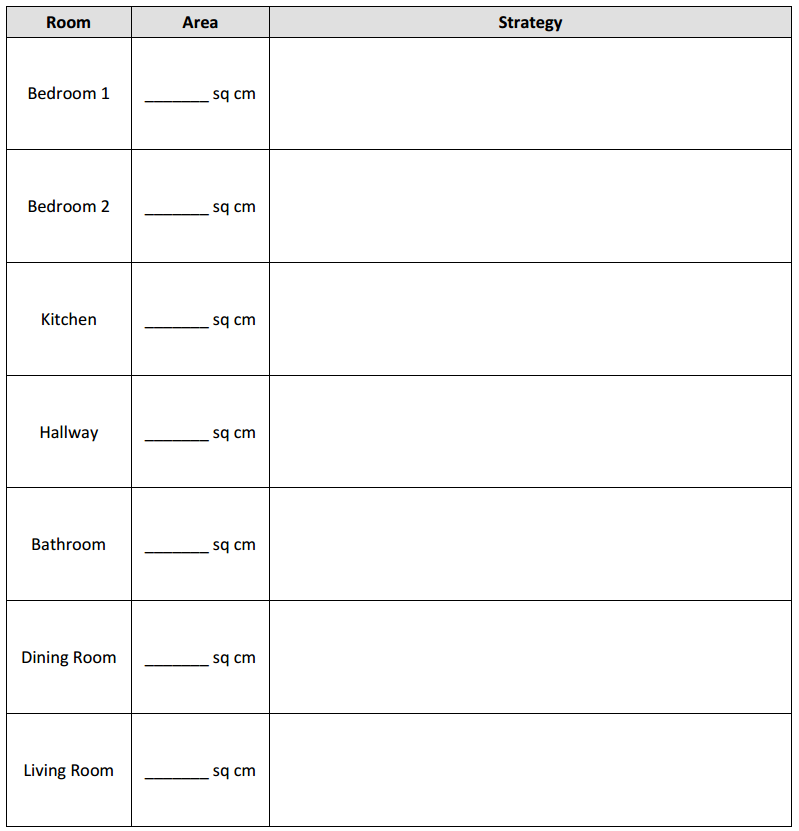
Record the areas and show the strategy you used to find each area.
Eureka Math Grade 3 Module 4 Lesson 15 Problem Set Answer Key 2

Answer:
The area of Bedroom 1 = 1200 sq cm.
the area of bedroom 2 = 1000 sq cm.
the area of kitchen = 200 sq cm.
the area of the living room = 1500 sq cm.
the area of hallway = 900 sq cm.
the area of bathroom = 250 sq cm.
the area of the dining room = 500 sq cm.

Explanation:
In the above-given question,
given that,
The area of Bedroom 1 = 1200 sq cm.
the area of bedroom 2 = 1000 sq cm.
the area of kitchen = 200 sq cm.
the area of the living room = 1200 sq cm.
the area of hallway = 900 sq cm.
the area of bathroom = 250 sq cm.
the area of the dining room = 500 sq cm.

Question 3.
Which room has the biggest area? Was your prediction right? Why or why not?

Answer:
The living room has the biggest area.

Explanation:
In the above-given question,
given that,
the living room area is bigger than all other rooms in the house.
area of living room = 1500 sq cm.

Question 4.
Find the side lengths of the house without using your ruler to measure them, and explain the process you used.
Side lengths: _____350_____ centimeters and ___15_______ centimeters

Answer:
The side lengths = 350 cm and 15 cm.

Explanation:
In the above-given question,
given that,
The area of the room = 5250 sq cm.
length = 350 cm and breadth = 15 cm.
area = 5250 sq cm

Question 5.
What is the area of the whole floor plan? How do you know?
Area = _____5250_____ square centimeters

Answer:
The area = 5250 sq cm.

Explanation:
In the above-given question,
given that,
The area of the room = 5250 sq cm.
length = 350 cm and breadth = 15 cm.
area = 5250 sq cm

Eureka Math Grade 3 Module 4 Lesson 15 Exit Ticket Answer Key

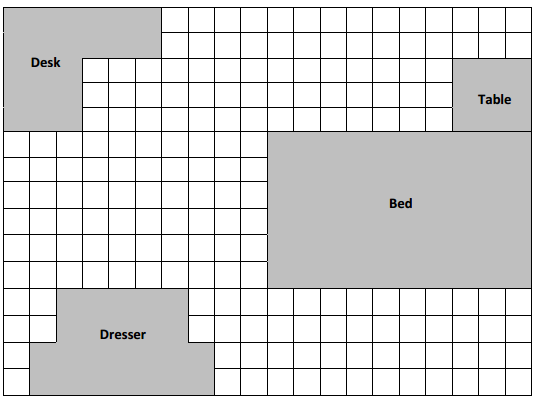
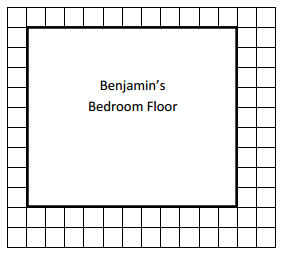
Jack uses grid paper to create a floor plan of his room. Label the unknown measurements, and find the area of the items listed below.
Eureka Math Grade 3 Module 4 Lesson 15 Problem Set Answer Key 4

NameEquationsTotal area
a.  Jack’s Room15 x 20 units_300_______ square units
b.  Bed6 x 10 units___60_____ square units
c.  Table3 x 3 units__9______ square units
d.  Dresser6 x 4___24_____ square units
e.  Desk3 + 12 units___15_____ square units

Answer:
The area of the Bed = 60 sq units.
the area of the table = 9 sq units.
the area of the dresser = 24 sq units.
the area of the desk = 15 sq units.

Explanation:
In the above-given question,
given that,
The area of the Bed = 60 sq units.
the area of the table = 9 sq units.
the area of the dresser = 24 sq units.
the area of the desk = 15 sq units.

Eureka Math Grade 3 Module 4 Lesson 15 Homework Answer Key

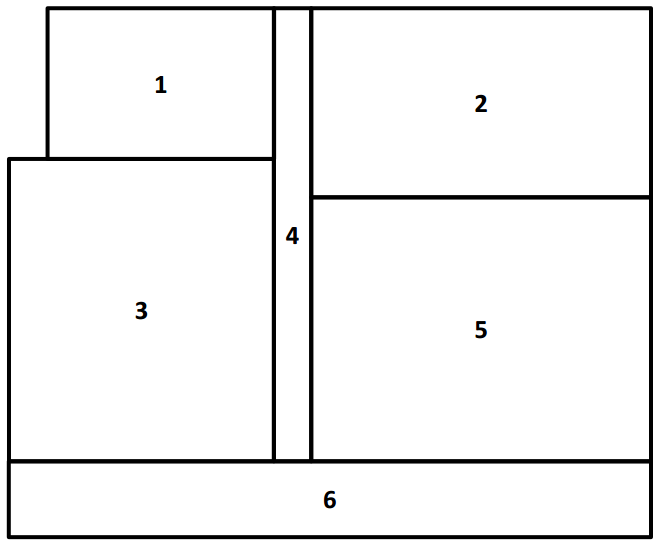
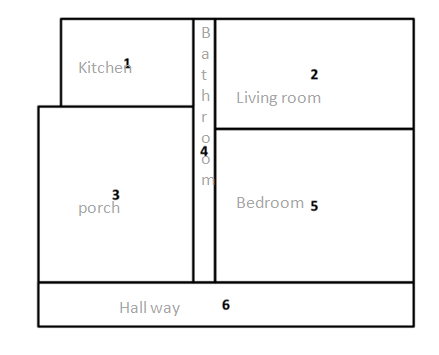
Use a ruler to measure the side lengths of each numbered room in centimeters. Then, find the area. Use the measurements below to match, and label the rooms with the correct areas.
Kitchen: 45 square centimeters
Living Room: 63 square centimeters
Porch: 34 square centimeters
Bedroom: 56 square centimeters
Bathroom: 24 square centimeters
Hallway: 12 square centimeters

Answer:
Kitchen: 45 square centimeters.
Living Room: 63 square centimeters.
Porch: 34 square centimeters.
Bedroom: 56 square centimeters.
Bathroom: 24 square centimeters.
Hallway: 12 square centimeters.

Explanation:
In the above-given question,
given that,
the area of the rooms.
Kitchen: 45 square centimeters
Living Room: 63 square centimeters
Porch: 34 square centimeters
Bedroom: 56 square centimeters
Bathroom: 24 square centimeters
Hallway: 12 square centimeters

Eureka Math Grade 3 Module 4 Lesson 15 Homework Answer Key 5

Eureka-Math-Grade-3-Module-4-Lesson-15-Answer Key-2

Eureka Math Grade 3 Module 4 Lesson 14 Answer Key

Students of Grade 3 can get a strong foundation on mathematics concepts by referring to the Eureka Math Book. It was developed by highly professional mathematics educators and the solutions prepared by them are in a concise manner for easy grasping. To achieve high scores in Grade 3, students need to solve all questions and exercises included in Eureka’s Math Grade 3 Book.

Engage NY Eureka Math 3rd Grade Module 4 Lesson 14 Answer Key

Eureka Math Answer Key for Grade 3 aids teachers to differentiate instruction, building, and reinforcing foundational mathematics skills that alter from the classroom to real life.
With the help of the Eureka Primary School Grade 3 Answer Key, You can think deeply regarding what you are learning, and you will really learn math easily just like that. So teachers and students can find this Eureka Answer Key for Grade 3 more helpful in raising students’ scores and supporting teachers to educate the students.

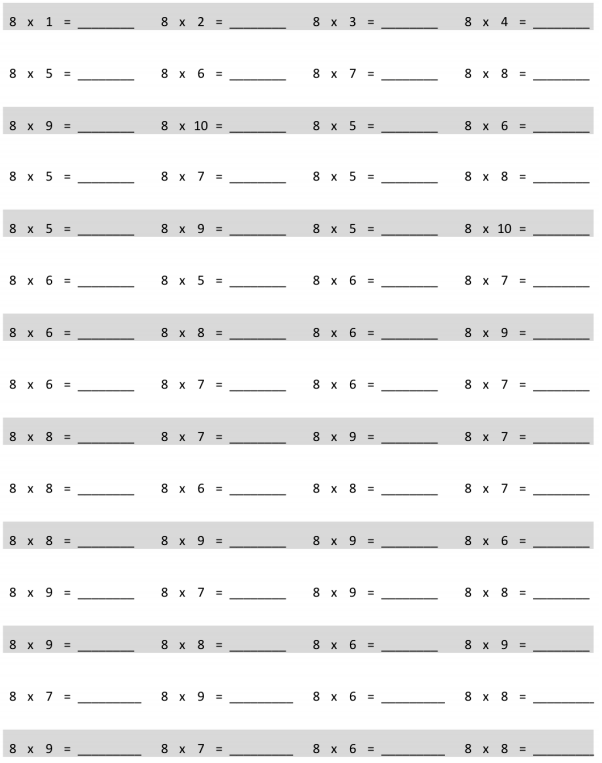
Eureka Math Grade 3 Module 4 Lesson 14 Pattern Sheet Answer Key

Multiply
Eureka Math Grade 3 Module 4 Lesson 14 Pattern Sheet Answer Key 1

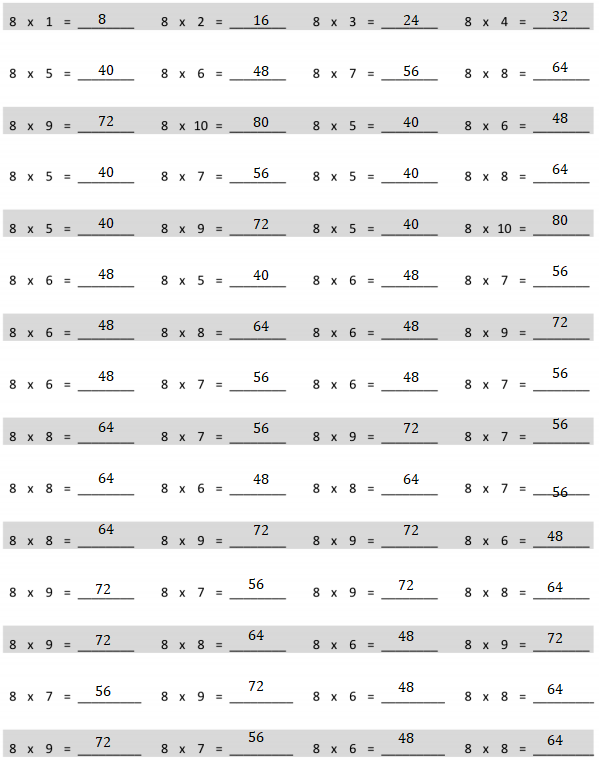
Answer:
8 x 1 = 8, 8 x 2 = 16, 8 x 3 = 24, 8 x 4 = 32, 8 x 5 = 40, 8 x 6 = 48, 8 x 7 = 56, 8 x 8 = 64, 8 x 9 = 72, 8 x 10 = 80, 8 x 5 = 40, 8 x 6 = 48, 8 x 5 = 40, 8 x 7 = 56, 8 x 5 = 40, 8 x 8 = 64, 8 x 5 = 40, 8 x 9 = 72, 8 x 5 = 40, 8 x 10 = 80, 8 x 6 = 48, 8 x 5 = 40, 8 x 6 = 48, 8 x 7 = 56, 8 x 6 = 48, 8 x 7 = 56, 8 x 6 = 48, 8 x 7 = 56, 8 x 8 = 64, 8 x 7 = 56, 8 x 9 = 72, 8 x 7 = 56, 8 x 8 = 64, 8 x 6 = 48, 8 x 8 = 64, 8 x 7 = 56, 8 x 8 = 64, 8 x 9 = 72, 8 x 9 = 72, 8 x 6 = 48, 8 x 9 = 72, 8 x 7 = 56, 8 x 9 = 72, 8 x 8 = 64, 8 x 9 = 72, 8 x 8 = 64, 8 x 6 = 48, 8 x 9 = 72, 8 x 7 = 56, 8 x 9 = 72, 8 x 6 = 48, 8 x 8 = 64, 8 x 9 = 72, 8 x 7 = 56, 8 x 6 = 48, 8 x 8 = 64.

Explanation:
In the above-given question,
given that,
multiply with 8.
8 x 1 = 8, 8 x 2 = 16, 8 x 3 = 24, 8 x 4 = 32, 8 x 5 = 40, 8 x 6 = 48, 8 x 7 = 56, 8 x 8 = 64, 8 x 9 = 72, 8 x 10 = 80, 8 x 5 = 40, 8 x 6 = 48, 8 x 5 = 40, 8 x 7 = 56, 8 x 5 = 40, 8 x 8 = 64, 8 x 5 = 40, 8 x 9 = 72, 8 x 5 = 40, 8 x 10 = 80, 8 x 6 = 48, 8 x 5 = 40, 8 x 6 = 48, 8 x 7 = 56, 8 x 6 = 48, 8 x 7 = 56, 8 x 6 = 48, 8 x 7 = 56, 8 x 8 = 64, 8 x 7 = 56, 8 x 9 = 72, 8 x 7 = 56, 8 x 8 = 64, 8 x 6 = 48, 8 x 8 = 64, 8 x 7 = 56, 8 x 8 = 64, 8 x 9 = 72, 8 x 9 = 72, 8 x 6 = 48, 8 x 9 = 72, 8 x 7 = 56, 8 x 9 = 72, 8 x 8 = 64, 8 x 9 = 72, 8 x 8 = 64, 8 x 6 = 48, 8 x 9 = 72, 8 x 7 = 56, 8 x 9 = 72, 8 x 6 = 48, 8 x 8 = 64, 8 x 9 = 72, 8 x 7 = 56, 8 x 6 = 48, 8 x 8 = 64.
Eureka-Math-Grade-3-Module-4-Lesson-14-Answer Key-1

Eureka Math Grade 3 Module 4 Lesson 14 Problem Set Answer Key

Question 1.
Find the area of each of the following figures. All figures are made up of rectangles.
a.
Eureka Math Grade 3 Module 4 Lesson 14 Problem Set Answer Key 2

Answer:
The area of figure 1 = 10 sq cm.
the area of figure 2 = 9 sq cm.

Explanation:
In the above-given question,
given that,
area of the figure 1 = 10 sq cm.
area = l x b.
where l = length and b = breadth.
area = 5 x 2.
area = 10.
area of the figure 2 = 9 sq cm.
area = l x b.
where l = length and b = breadth.
area = 3 x 3.
area = 9.

b.
Eureka Math Grade 3 Module 4 Lesson 14 Problem Set Answer Key 3

Answer:
The area of the shaded figure = 78 sq cm.

Explanation:
In the above-given question,
given that,
area of longer rectangle = 12 sq cm.
area = l x b.
area = 3 x 4.
area = 12 sq cm.
area of smaller rectangle = 2 sq cm.
area = l x b.
area = 1 x 2.
area = 2 sq cm.
area of shaded rectangle = area of longer rectangle – area of smaller rectangle.
area of shaded rectangle = 12 – 2.
area = 10 sq cm

Question 2.
The figure below shows a small rectangle in a big rectangle. Find the area of the shaded part of the figure.
Eureka Math Grade 3 Module 4 Lesson 14 Problem Set Answer Key 4

Answer:
The area of the shaded figure = 24 sq cm.

Explanation:
In the above-given question,
given that,
the area of the longer rectangle = 30 sq cm.
area = l x b.
area = 6 x 5.
area = 30 sq cm.
area of smaller rectangle = 6 sq cm.
area = l x b.
area = 3 x 2.
area = 6 sq cm.
area of shaded rectangle = area of longer rectangle – area of smaller rectangle.
area of shaded rectangle = 30 – 6.
area of shaded rectangle = 24.

Question 3.
A paper rectangle has a length of 6 inches and a width of 8 inches. A square with a side length of 3 inches was cut out of it. What is the area of the remaining paper?

Answer:
The area of the remaining paper = 25 sq in.

Explanation:
In the above-given question,
given that,
A paper rectangle has a length of 6 inches and a width of 8 inches.
A square with a side length of 3 inches was cut out of it.
area = 6 x 8 = 48.
the area of remaining paper = 25.
8 – 3 = 5.
6 – 1 = 5.
area = 5 x 5.
area = 25.

Question 4.
Tila and Evan both have paper rectangles measuring 6 cm by 9 cm. Tila cuts a 3 cm by 4 cm rectangle out of hers, and Evan cuts a 2 cm by 6 cm rectangle out of his. Tila says she has more paper left over. Evan says they have the same amount. Who is correct? Show your work below.

Answer:
Tila is correct.

Explanation:
In the above-given question,
given that,
Tila and Evan both have paper rectangles measuring 6 cm by 9 cm.
Tila cuts a 3 cm by 4 cm rectangle out of hers,
Evan cuts 2 cm by 6 cm rectangle out of his.
3 x 5 = 15.
4 x 3 = 12.
so Tila is correct.

Eureka Math Grade 3 Module 4 Lesson 14 Exit Ticket Answer Key

Mary draws an 8 cm by 6 cm rectangle on her grid paper. She shades a square with a side length of 4 cm inside her rectangle. What area of the rectangle is left unshaded?

Answer:
The area of the rectangle is left unshaded = 24 sq cm.

Explanation:
In the above-given question,
given that,
area of longer rectangle = 48 sq cm.
area = l x b.
area = 8 x 6.
area = 48 sq cm.
area of smaller rectangle = 24 sq cm.
area = l x b.
area = 6 x 4.
area = 24 sq cm.
area of shaded rectangle = area of longer rectangle – area of smaller rectangle.
area of shaded rectangle = 48 – 24.
area of shaded rectangle = 24 sq cm.

Eureka Math Grade 3 Module 4 Lesson 14 Homework Answer Key

Question 1.
Find the area of each of the following figures. All figures are made up of rectangles.
a.
Eureka Math Grade 3 Module 4 Lesson 14 Homework Answer Key 5

Answer:
The area of figure 1 = 48 sq cm.
the area of figure 2 = 27 sq cm.

Explanation:
In the above-given question,
given that,
area of the figure 1 = 48 sq cm.
area = l x b.
where l = length and b = breadth.
area = 6 x 8.
area = 48.
area of the figure 2 = 27 sq cm.
area = l x b.
where l = length and b = breadth.
area = 9 x 3.
area = 27.

b.
Eureka Math Grade 3 Module 4 Lesson 14 Homework Answer Key 6

Answer:
The area of figure 1 = 64 sq in.
the area of figure 2 = 6 sq in.

Explanation:
In the above-given question,
given that,
area of the figure 1 = 64 sq in.
area = l x b.
where l = length and b = breadth.
area = 8 x 8.
area = 64.
area of the figure 2 = 6 sq in.
area = l x b.
where l = length and b = breadth.
area = 2 x 3.
area = 6.

Question 2.
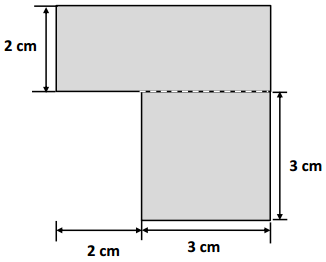
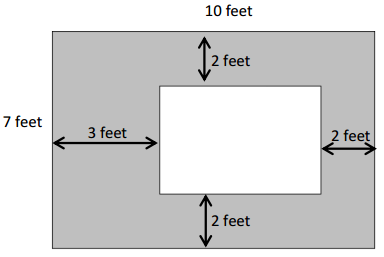
The figure below shows a small rectangle cut out of a big rectangle.
Eureka Math Grade 3 Module 4 Lesson 14 Homework Answer Key 7
a. Label the side lengths of the unshaded region.

Answer:
The side lengths of the unshaded region is = 5 ft and 3 ft.

Explanation:
In the above-given question,
given that,
the area of the larger rectangle = 10 x 7.
area = 70 sq ft.
10 – 3 + 2 = 5.
7 – 2 + 2 = 4.
so the side lengths of the unshaded region = 5 ft and 3 ft.

b. Find the area of the shaded region.

Answer:
The area of the shaded figure = 55 sq ft.

Explanation:
In the above-given question,
given that,
area of longer rectangle = 70 sq ft.
area = l x b.
area = 10 x 7.
area = 70 sq cm.
area of smaller rectangle = 15 sq ft.
area = l x b.
area = 5 x 3.
area = 15 sq ft.
area of shaded rectangle = area of longer rectangle – area of smaller rectangle.
area of shaded rectangle = 70 – 15.
area of shaded rectangle = 55.

Eureka Math Grade 3 Module 4 Lesson 13 Answer Key

You may have diverse opportunities to develop math skills and problem-solving skills but practicing with Eureka Math 3rd Grade Answer Key for better and efficient learning. Eureka Math Grade 3 provided Free Access Student Edition of Eureka Math Grade 3 Answers are enough to practice more and get a good grip on the subject. The diverse opportunities will develop problem-solving skills among the primary school kids Practising.

Engage NY Eureka Math 3rd Grade Module 4 Lesson 13 Answer Key

Fun learning activities are the best option to educate primary school students and make them understand the basic mathematical concepts like addition, subtraction, multiplication, division, etc. Grade 3 primary school students can find these fun-learning exercises for all math concepts through the Eureka Math Answers Grade 3 Common Core Curriculum.

Eureka Math Grade 3 Module 4 Lesson 13 Problem Set Answer Key

Question 1.
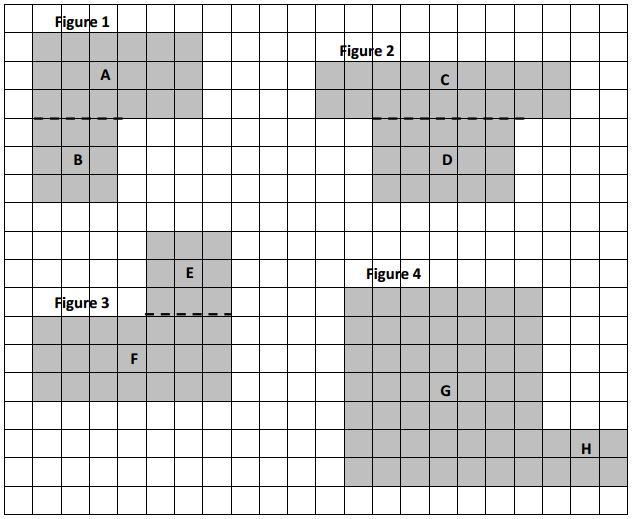
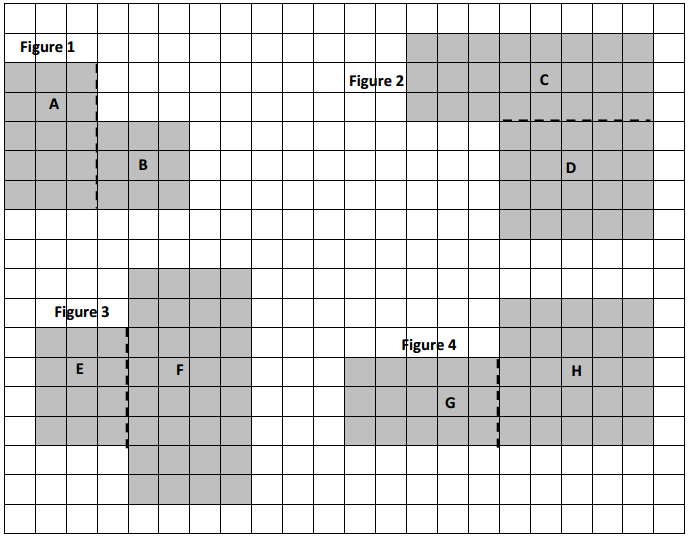
Each of the following figures is made up of 2 rectangles. Find the total area of each figure.
Eureka Math Grade 3 Module 4 Lesson 13 Problem Set Answer Key 1

Figure 1: Area of A + Area of B: ____18_____ sq units + _____9____ sq units = _____27____ sq units

Figure 2: Area of C + Area of D: ____18_____ sq units + ___15______ sq units = ___33______ sq units

Figure 3: Area of E + Area of F: _____9____ sq units + ____21_____ sq units = ____30_____ sq units

Figure 4: Area of G + Area of H: _____49____ sq units + ___6______ sq units = ____55_____sq units

Answer:
The total area of figure 1 = 27 sq units.
the total area of figure 2 = 33 sq units.
the total area of figure 3 = 30 sq units.
the total area of figure 4 = 55 sq units.

Explanation:
In the above-given question,
given that,
the area of rectangle A + rectangle B = figure 1.
area of rectangle A = 18 sq units.
area of rectangle B = 9 sq units.
so the area of figure 1 = 27 sq units.
the area of rectangle C + rectangle D = figure 2.
area of rectangle C = 18 sq units.
area of rectangle D = 15 sq units.
so the area of figure 2 = 33 sq units.
the area of rectangle E + rectangle F = figure 3.
area of rectangle E = 9 sq units.
area of rectangle F = 21 sq units.
so the area of figure 3 = 30 sq units.
the area of rectangle G + rectangle H = figure 4.
area of rectangle G = 49 sq units.
area of rectangle H = 6 sq units.
so the area of figure 4 = 55 sq units.

Question 2.
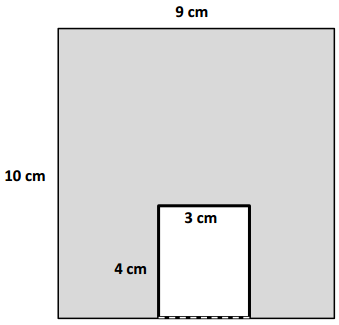
The figure shows a small rectangle cut out of a bigger rectangle. Find the area of the shaded figure.
Eureka Math Grade 3 Module 4 Lesson 13 Problem Set Answer Key 2
Area of the shaded figure: __90____ – __12____ = ___78___
Area of the shaded figure: ___78___ square centimeters

Answer:
The area of the shaded figure = 78 sq cm.

Explanation:
In the above-given question,
given that,
area of longer rectangle = 90 sq cm.
area = l x b.
area = 9 x 10.
area = 90 sq cm.
area of smaller rectangle = 12 sq cm.
area = l x b.
area = 3 x 4.
area = 12 sq cm.
area of shaded rectangle = area of longer rectangle – area of smaller rectangle.
area of shaded rectangle = 90 – 12.
area of shaded rectangle = 78 sq cm.

Question 3.
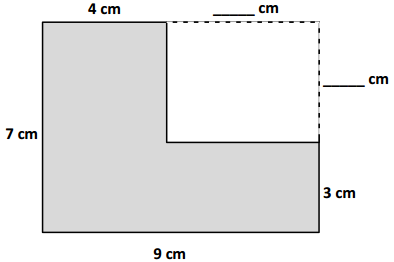
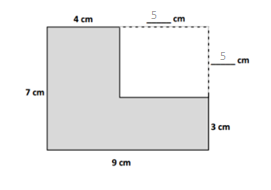
The figure shows a small rectangle cut out of a big rectangle.
Eureka Math Grade 3 Module 4 Lesson 13 Problem Set Answer Key 3
a. Label the unknown measurements.

Answer:
The unknown measurements = 4 cm and 5 cm.

Explanation:
In the above-given question,
given that,
the longer rectangle = 9 x 7 = 63 cm.
9 – 4 = 3.
7 – 3 = 4.
so the unknown measurements = 4 cm and 5 cm.
Eureka-Math-Grade-3-Module-4-Lesson-13-Answer Key-1

b. Area of the big rectangle:
___9__ cm × __7___ cm = __63___ sq cm

Answer:
The area of big rectangle = 63 sq cm.

Explanation:
In the above-given question,
given that,
area of the big rectangle = l x b.
where l = length, and b = breadth.
area = 9 x 7 = 63 sq cm.
so the area of big rectangle = 63 sq cm.

c. Area of the small rectangle:
___5__ cm × __4___ cm = ___20__ sq cm

Answer:
The area of small rectangle = 20 sq cm.

Explanation:
In the above-given question,
given that,
area of the big rectangle = l x b.
where l = length, and b = breadth.
area = 5 x 4 = 20 sq cm.
so the area of big rectangle = 20 sq cm.

d. Find the area of the shaded figure.

Answer:
The area of the shaded figure = 43 sq cm.

Explanation:
In the above-given question,
given that,
the area of the longer rectangle = 63 sq cm.
area = l x b.
area = 9 x 7.
area = 63 sq cm.
area of smaller rectangle = 20 sq cm.
area = l x b.
area = 5 x 4.
area = 20 sq cm.
area of shaded rectangle = area of the longer rectangle – the area of the smaller rectangle.
area of shaded rectangle = 63 – 20.
area of shaded rectangle = 43 sq cm.

Eureka Math Grade 3 Module 4 Lesson 13 Exit Ticket Answer Key

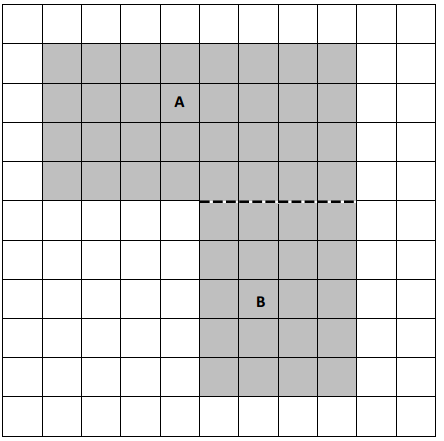
The following figure is made up of 2 rectangles. Find the total area of the figure.
Eureka Math Grade 3 Module 4 Lesson 13 Exit Ticket Answer Key 4
Area of A + Area of B: _____32___ sq units + ____20_____ sq units = ___52______ sq units

Answer:
The area of rectangle A and B = 52 sq units.
Explanation:
In the above-given question,
given that,
the area of rectangle A + rectangle B = figure 1.
area of rectangle A = 32 sq units.
area of rectangle B = 20 sq units.
so the area of rectangle A and B = 52 sq units.

Eureka Math Grade 3 Module 4 Lesson 13 Homework Answer Key

Question 1.
Each of the following figures is made up of 2 rectangles. Find the total area of each figure.
Eureka Math Grade 3 Module 4 Lesson 13 Homework Answer Key 5
Figure 1: Area of A + Area of B: ____15_____ sq units + ____9_____ sq units = ___24______ sq units

Figure 2: Area of C + Area of D: ___3______ sq units + ____8_____ sq units = ____24_____ sq units

Figure 3: Area of E + Area of F: ___12______ sq units + ____32_____ sq units = ____44_____ sq units

Figure 4: Area of G + Area of H: _____15____ sq units + ____25_____ sq units = ___40______ sq units

Answer:
The total area of figure 1 = 24 sq units.
the total area of figure 2 = 24 sq units.
the total area of figure 3 = 44 sq units.
the total area of figure 4 = 40 sq units.

Explanation:
In the above-given question,
given that,
the area of rectangle A + rectangle B = figure 1.
area of rectangle A = 15 sq units.
area of rectangle B = 9 sq units.
so the area of figure 1 = 24 sq units.
the area of rectangle C + rectangle D = figure 2.
area of rectangle C = 3 sq units.
area of rectangle D = 8 sq units.
so the area of figure 2 = 24 sq units.
the area of rectangle E + rectangle F = figure 3.
area of rectangle E = 12 sq units.
area of rectangle F = 32 sq units.
so the area of figure 3 = 44 sq units.
the area of rectangle G + rectangle H = figure 4.
area of rectangle G = 15 sq units.
area of rectangle H = 25 sq units.
so the area of figure 4 = 40 sq units.

Question 2.
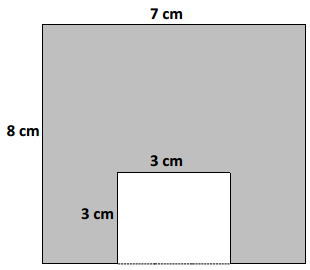
The figure shows a small rectangle cut out of a big rectangle. Find the area of the shaded figure.
Eureka Math Grade 3 Module 4 Lesson 13 Homework Answer Key 6

Answer:
The area of the shaded figure = 45 sq cm.

Explanation:
In the above-given question,
given that,
the area of the longer rectangle = 56 sq cm.
area = l x b.
area = 7 x 8.
area = 56 sq cm.
area of smaller rectangle = 9 sq cm.
area = l x b.
area = 3 x 3.
area = 9 sq cm.
area of shaded rectangle = area of the longer rectangle – the area of the smaller rectangle.
area of shaded rectangle = 56 – 9.
area of shaded rectangle = 45 sq cm.

Question 3.
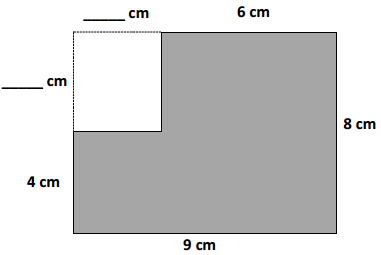
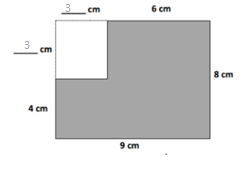
The figure shows a small rectangle cut out of a big rectangle.
Eureka Math Grade 3 Module 4 Lesson 13 Homework Answer Key 7
a. Label the unknown measurements.

Answer:
The unknown measurements = 3 cm and 4 cm.

Explanation:
In the above-given question,
given that,
the longer rectangle = 9 x 8 = 72 cm.
9 – 6 = 3.
8 – 4 = 4.
so the unknown measurements = 3 cm and 4 cm.
Eureka-Math-Grade-3-Module-4-Lesson-13-Answer Key-2

b. Area of the big rectangle:
____9__ cm × ___8___ cm = ___72___ sq cm

Answer:
The area of big rectangle = 72 sq cm.

Explanation:
In the above-given question,
given that,
area of the big rectangle = l x b.
where l = length, and b = breadth.
area = 9 x 8 = 72 sq cm.
so the area of big rectangle = 72 sq cm.

c. Area of the small rectangle:
___3___ cm × ___4___ cm = __12____ sq cm

Answer:
The area of small rectangle = 12 sq cm.

Explanation:
In the above-given question,
given that,
area of the big rectangle = l x b.
where l = length, and b = breadth.
area = 3 x 4 = 12 sq cm.
so the area of small rectangle = 12 sq cm.

d. Find the area of the shaded figure.

Answer:
The area of the shaded figure = 43 sq cm.

Explanation:
In the above-given question,
given that,
area of longer rectangle = 72 sq cm.
area = l x b.
area = 9 x 8.
area = 72 sq cm.
area of smaller rectangle = 12 sq cm.
area = l x b.
area = 3 x 4.
area = 12 sq cm.
area of shaded rectangle = area of longer rectangle – area of smaller rectangle.
area of shaded rectangle = 72 – 12.
area of shaded rectangle = 60 sq cm.

Eureka Math Grade 3 Module 4 Lesson 13 Template Answer Key

Eureka Math Grade 3 Module 4 Lesson 13 Template Answer Key 8

Area of A + Area of B: _____32___ sq units + ____20_____ sq units = ___52______ sq units

Answer:
The area of rectangle A and B = 52 sq units.
Explanation:
In the above-given question,
given that,
the area of rectangle A + rectangle B = figure 1.
area of rectangle A = 32 sq units.
area of rectangle B = 20 sq units.
so the area of rectangle A and B = 52 sq units.
Eureka Math Grade 3 Module 4 Lesson 13 Exit Ticket Answer Key 3

Eureka Math Grade 3 Module 4 Lesson 12 Answer Key

Fun learning activities are the best option to educate primary school students and make them understand the basic mathematical concepts like addition, subtraction, multiplication, division, etc. Grade 3 primary school students can find these fun-learning exercises for all math concepts through the Eureka Math Answers Grade 3 Common Core Curriculum.

Engage NY Eureka Math 3rd Grade Module 4 Lesson 12 Answer Key

You may have diverse opportunities to develop math skills and problem-solving skills but practicing with Eureka Math 3rd Grade Answer Key for better and efficient learning. Eureka Math Grade 3 provided Free Access Student Edition of Eureka Math Grade 3 Answers are enough to practice more and get a good grip on the subject. The diverse opportunities will develop problem-solving skills among the primary school kids Practising.

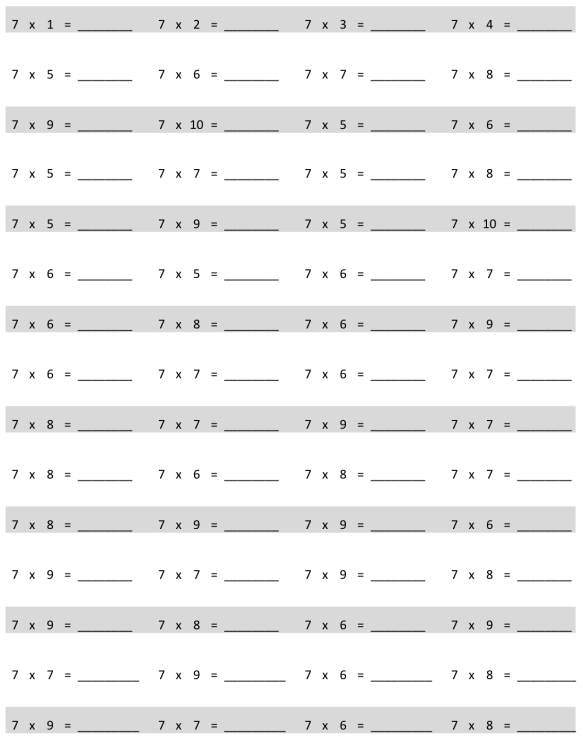
Eureka Math Grade 3 Module 4 Lesson 12 Pattern Sheet Answer Key

Multiply
Eureka Math Grade 3 Module 4 Lesson 12 Pattern Sheet Answer Key 1

Answer:
7 x 1 = 7, 7 x 2 = 14, 7 x 3 = 21, 7 x 4 = 28, 7 x 5 = 35, 7 x 6 = 42, 7 x 7 = 49, 7 x 8 = 56, 7 x 9 = 63, 7 x 10 = 70, 7 x 5 = 35, 7 x 6 = 42, 7 x 5 = 35, 7 x 7 = 49, 7 x 5 = 35, 7 x 8 = 56, 7 x 5 = 35, 7 x 9 = 63, 7 x 5 = 35, 7 x 10 = 70, 7 x 6 = 42, 7 x 5 = 35, 7 x 6 = 42, 7 x 7 = 49, 7 x 6 = 42, 7 x 8 = 56, 7 x 6 = 42, 7 x 9 = 63, 7 x 6 = 42, 7 x 7 = 49, 7 x 6 = 42, 7 x 7 = 49, 7 x 8 = 56, 7 x 7 = 49, 7 x 9 = 63, 7 x 7 = 49, 7 x 8 = 56, 7 x 6 = 42, 7 x 8 = 56, 7 x 7 = 49, 7 x 8 = 56, 7 x 9 = 63, 7 x 9 = 63, 7 x 6 = 52, 7 x 9 = 63, 7 x 7 = 49, 7 x 9 = 63, 7 x 8 = 56, 7 x 9 = 63, 7 x 8 = 56, 7 x 6 = 42, 7 x 9 = 63, 7 x 7 = 49, 7 x 9 = 63, 7 x 6 = 42, 7 x 8 = 56, 7 x 9 = 63, 7 x 7 = 49, 7 x 6 = 42, 7 x 8 = 56.

Explanation:
In the above-given question,
given that,
multiply with 7.
7 x 1 = 7, 7 x 2 = 14, 7 x 3 = 21, 7 x 4 = 28, 7 x 5 = 35, 7 x 6 = 42, 7 x 7 = 49, 7 x 8 = 56, 7 x 9 = 63, 7 x 10 = 70, 7 x 5 = 35, 7 x 6 = 42, 7 x 5 = 35, 7 x 7 = 49, 7 x 5 = 35, 7 x 8 = 56, 7 x 5 = 35, 7 x 9 = 63, 7 x 5 = 35, 7 x 10 = 70, 7 x 6 = 42, 7 x 5 = 35, 7 x 6 = 42, 7 x 7 = 49, 7 x 6 = 42, 7 x 8 = 56, 7 x 6 = 42, 7 x 9 = 63, 7 x 6 = 42, 7 x 7 = 49, 7 x 6 = 42, 7 x 7 = 49, 7 x 8 = 56, 7 x 7 = 49, 7 x 9 = 63, 7 x 7 = 49, 7 x 8 = 56, 7 x 6 = 42, 7 x 8 = 56, 7 x 7 = 49, 7 x 8 = 56, 7 x 9 = 63, 7 x 9 = 63, 7 x 6 = 52, 7 x 9 = 63, 7 x 7 = 49, 7 x 9 = 63, 7 x 8 = 56, 7 x 9 = 63, 7 x 8 = 56, 7 x 6 = 42, 7 x 9 = 63, 7 x 7 = 49, 7 x 9 = 63, 7 x 6 = 42, 7 x 8 = 56, 7 x 9 = 63, 7 x 7 = 49, 7 x 6 = 42, 7 x 8 = 56.
Eureka-Math-Grade-3-Module-4-Lesson-12-Answer Key-1

Eureka Math Grade 3 Module 4 Lesson 12 Problem Set Answer Key

Question 1.
Each side on a sticky note measures 9 centimeters. What is the area of the sticky note?

Answer:
The area of sticky notes = 81 sq cm.

Explanation:
In the above-given question,
given that,
the area of the sticky notes = 81 sq cm.
area = l x b.
where l = length, and b = breadth.
area = 9 x 9.
area = 81.
so the area of the sticky notes = 81 sq cm.

Question 2.
Stacy tiles the rectangle below using her square pattern blocks.
Eureka Math Grade 3 Module 4 Lesson 12 Problem Set Answer Key 2
a. Find the area of Stacy’s rectangle in square units. Then, draw and label a different rectangle with whole number side lengths that has the same area.

Answer:
The area of the stacky tiles = 12 sq units.

Explanation:
In the above-given question,
given that,
the area of the rectangle = l x b.
where l = length, b = breadth.
area = l x b.
area = 3 x 4.
area = 12 sq units.
so the area of the stacky tiles = 12 sq units.
Eureka-Math-Grade-3-Module-4-Lesson-12-Answer Key-2

b. Can you draw another rectangle with different whole number side lengths and have the same area? Explain how you know.

Answer:
The area of the rectangle = 12 sq units.

Explanation:
In the above-given question,
given that,
the area of the rectangle = l x b.
where l = length, b = breadth.
area = l x b.
area = 2 x 6.
area = 12 sq units.
so the area of the other rectangle = 12 sq units.
Eureka-Math-Grade-3-Module-4-Lesson-12-Answer Key-3

Question 3.
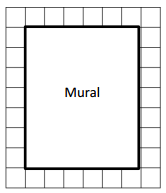
An artist paints a 4 foot × 16 foot mural on a wall. What is the total area of the mural? Use the break apart and distribute strategy.
Eureka Math Grade 3 Module 4 Lesson 12 Problem Set Answer Key 3

Answer:
The area of the mural on a wall = 64 sq ft.

Explanation:
In the above-given question,
given that,
An artist paints a 4-foot x 16 foot mural on a wall.
area = 4 x 16.
area = 4 x ( 10 + 6 ).
area = ( 4 x 10 ) + 6.
area = 40 + 6.
area = 46.
so the area of the mural on a wall = 64 sq ft.

Question 4.
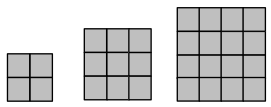
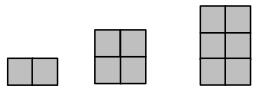
Alana tiles the 3 figures below. She says, “I’m making a pattern!”
Eureka Math Grade 3 Module 4 Lesson 12 Problem Set Answer Key 4
a. Find the area of Alana’s 3 figures and explain her pattern.

Answer:
The area of the square 1 = 4 sq units.
the area of the square 2 = 9 sq units.
the area of the square 3 = 16 sq units.

Explanation:
In the above-given question,
given that,
Alana tiles the 3 figures.
the area of the square 1 = 4 sq units.
area = l x b.
where l = length, b = breadth.
area = 2 x 2.
area = 4.
the area of the square 2 = 9 sq units.
area = l x b.
area = 3 x 3.
area = 9.
the area of the square 3 = 16 sq units.
area = l x b.
area = 4 x 4.
area = 16.

b. Draw the next 2 figures in Alana’s pattern and find their areas.

Answer:
The area of square 1 = 25 sq units.
the area of square 2 = 36 sq units.

Explanation:
In the above-given question,
given that,
Alana tiles the 3 figures.
the area of the square 1 = 25 sq units.
area = l x b.
where l = length, b = breadth.
area = 5 x 5.
area = 25.
the area of the square 2 = 36 sq units.
area = l x b.
area = 6 x 6.
area = 36.
Eureka-Math-Grade-3-Module-4-Lesson-12-Answer Key-4

Question 5.
Jermaine glues 3 identical pieces of paper as shown below and makes a square. Find the unknown side length of 1 piece of paper. Then, find the total area of 2 pieces of paper.
Eureka Math Grade 3 Module 4 Lesson 12 Problem Set Answer Key 5

Answer:
The unknown side length of 1 piece of paper = 3 cm.

Explanation:
In the above-given question,
given that,
Jermaine glues 3 identical pieces of paper as shown below and makes a square.
area of the rectangle = 3 x 3cm.
area = 3 x 3.
area = 9 cm.
so the unknown side length of 1 piece of paper = 3 cm.

Eureka Math Grade 3 Module 4 Lesson 12 Exit Ticket Answer Key

Question 1.
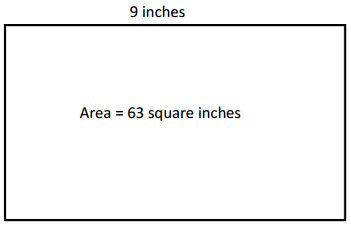
A painting has an area of 63 square inches. One side length is 9 inches. What is the other side length?
Eureka Math Grade 3 Module 4 Lesson 12 Exit Ticket Answer Key 6

Answer:
The other side length of the rectangle = 7 inches.

Explanation:
In the above-given question,
given that,
A painting has an area of 63 square inches.
one side length is 9 inches.
area of the rectangle is given.
63 = l x b.
l = 9 inches.
63 = 9 x b.
b = 63 / 9.
b = 7 inches.
so the other side length of the rectabgle = 7 inches.

Question 2.
Judy’s mini dollhouse has one floor and measures 4 inches by 16 inches. What is the total area of the dollhouse floor?

Answer:
The total area of the dollhouse floor = 64 sq inches.

Explanation:
In the above-given question,
given that,
Judy’s mini dollhoue has one floor and measures 4 inches by 16 inches.
area = l x b.
where l = length, and b = breadth.
area = 4 x 16.
area = 64 sq inches.

Eureka Math Grade 3 Module 4 Lesson 12 Homework Answer Key

Question 1.
A square calendar has sides that are 9 inches long. What is the calendar’s area?

Answer:
The area of the square calendar = 81 sq inches.

Explanation:
In the above-given question,
given that,
A square calendar has sides that are 9 inches long.
area = l x b.
where l = length and b = breadth.
area = 9 x 9 = 81 sq inches.
so the area of the square calendar = 81 sq inches.

Question 2.
Each Eureka Math Grade 3 Module 4 Lesson 12 Homework Answer Key 7 is 1 square unit. Sienna uses the same square units to draw a 6 × 2 rectangle and says that it has the same area as the rectangle below. Is she correct? Explain why or why not.
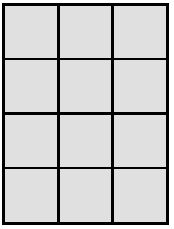
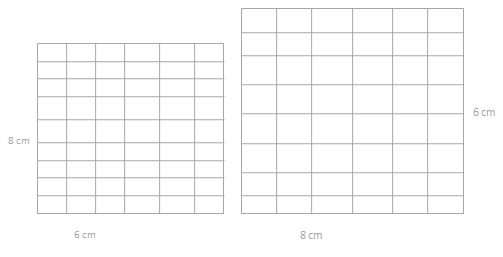
Eureka Math Grade 3 Module 4 Lesson 12 Homework Answer Key 8

Answer:
Yes, she was correct.

Explanation:
In the above-given question,
given that,
Sienna uses the same square units to draw a 6 x 2 rectangle.
area of the given rectangle = 12 sq units.
area = 4 x 3.
area = 12 sq units.
area of Sienna’s rectangle = 12 sq units.
area = 6 x 2.
area = 12 sq units.

Question 3.
The surface of an office desk has an area of 15 square feet. Its length is 5 feet. How wide is the office desk?

Answer:
The width of the office desk = 3 feet.

Explanation:
In the above-given question,
given that,
The surface of an office desk has an area of 15 square feet.
Its length is 5 feet.
area = l x w.
15 = 5 x w.
w = 15 / 5.
w = 3 feet.
so the width of the office desk = 3 feet.

Question 4.
A rectangular garden has a total area of 48 square yards. Draw and label two possible rectangular gardens with different side lengths that have the same area.

Answer:
The side lengths of the rectangular garden 1 = 6 x 8 yards.
The side lengths of the rectangular garden 2 = 12 x 4 yards.

Explanation:
given that,
A rectangular garden 1 has a total area of 48 square yards.
area = l x b.
where l = length and b = breadth.
area = 6 x 8 = 48 sq yards.
so the area of the rectangular garden 1 = 48 sq yards.
A rectangular garden 2 has a total area of 48 square yards.
area = l x b.
where l = length and b = breadth.
area = 12 x 4 = 48 sq yards.
so the area of the rectangular garden 2 = 48 sq yards
Eureka-Math-Grade-3-Module-4-Lesson-12-Answer Key-5

Question 5.
Lila makes the pattern below. Find and explain her pattern. Then, draw the fifth figure in her pattern
Eureka Math Grade 3 Module 4 Lesson 12 Homework Answer Key 9

Answer:
The area of the square 1 = 2 sq units.
the area of the square 2 = 4 sq units.
the area of the square 3 = 6 sq units.

Explanation:
In the above-given question,
given that,
Alana tiles the 3 figures.
the area of the square 1 = 2 sq units.
area = l x b.
where l = length, b = breadth.
area = 1 x 2.
area = 2.
the area of the square 2 = 4 sq units.
area = l x b.
area = 2 x 2.
area = 4.
the area of the square 3 = 6 sq units.
area = l x b.
area = 3 x 2.
area = 6.
Eureka-Math-Grade-3-Module-4-Lesson-12-Answer Key-6

Eureka Math Grade 3 Module 4 Lesson 11 Answer Key

Fun learning activities are the best option to educate primary school students and make them understand the basic mathematical concepts like addition, subtraction, multiplication, division, etc. Grade 3 primary school students can find these fun-learning exercises for all math concepts through the Eureka Math Answers Grade 3 Common Core Curriculum.

Engage NY Eureka Math 3rd Grade Module 4 Lesson 11 Answer Key

You may have diverse opportunities to develop math skills and problem-solving skills but practicing with Eureka Math 3rd Grade Answer Key for better and efficient learning. Eureka Math Grade 3 provided Free Access Student Edition of Eureka Math Grade 3 Answers are enough to practice more and get a good grip on the subject. The diverse opportunities will develop problem-solving skills among the primary school kids Practising.

Eureka Math Grade 3 Module 4 Lesson 11 Problem Set Answer Key

Question 1.
The rectangles below have the same area. Move the parentheses to find the unknown side lengths. Then, solve.
a.
Eureka Math Grade 3 Module 4 Lesson 11 Problem Set Answer Key 1
Area: 8 × __6____ = __48____
Area: ___48___ sq cm

Answer:
The area of the rectangle = 48 sq cm.

Explanation:
In the above-given question,
given that,
The area of the rectangle = l x b.
where l = length, b = breadth.
area = 6 x 8 = 48.
area of the rectangle = 48 sq cm.

b.
Eureka Math Grade 3 Module 4 Lesson 11 Problem Set Answer Key 2
Area: 1 × 48 = __( 1_x_6)_x 8
Area: __48____ sq cm

Answer:
The area of the rectangle = 48 sq cm.

Explanation:
In the above-given question,
given that,
The area of the rectangle = l x b.
where l = length, b = breadth.
area = 48 x 1 = 48.
area of the rectangle = 48 sq cm.
Eureka-Math-Grade-3-Module-4-Lesson-11-Answer Key-1

c.
Eureka Math Grade 3 Module 4 Lesson 11 Problem Set Answer Key 3
Area: 8 × 6 = (2 × 4) × 6
= 2 × 4 × 6
= __8____ × __6____
= __48____
Area: __48____ sq cm

Answer:
The area of the rectangle = 48 sq cm.

Explanation:
In the above-given question,
given that,
The area of the rectangle = l x b.
where l = length, b = breadth.
area = 8 x 6 = 48.
area = 8 x 6 = (2 x 4) x 6.
2 x ( 4 x 6).
2 x 24.
area of the rectangle = 48 sq cm.

d.
Eureka Math Grade 3 Module 4 Lesson 11 Problem Set Answer Key 4
Area: 8 × 6 = (4 × 2) × 6
= 4 × 2 × 6
= ___4___ × ___12___
= __48____
Area: ___48___ sq cm

Answer:
The area of the rectangle = 48 sq cm.

Explanation:
In the above-given question,
given that,
The area of the rectangle = l x b.
where l = length, b = breadth.
area = 8 x 6 = 48.
area = 8 x 6 = (4 x 2) x 6.
area = 4 x 12.
area of the rectangle = 48 sq cm.
Eureka-Math-Grade-3-Module-4-Lesson-11-Answer Key-2

e.
Eureka Math Grade 3 Module 4 Lesson 11 Problem Set Answer Key 5
Area: 8 × 6 = 8 × (2 × 3)
= 8 × 2 × 3
= __16____ × ___3__
= ___48___
Area: ___48___ sq cm

Answer:
The area of the rectangle = 48 sq cm.

Explanation:
In the above-given question,
given that,
The area of the rectangle = l x b.
where l = length, b = breadth.
area = 8 x 6 = 48.
area = 8 x 6 = (8 x 2) x 3.
area = 16 x 3.
area of the rectangle = 48 sq cm.
Eureka-Math-Grade-3-Module-4-Lesson-11-Answer Key-3

Question 2.
Does Problem 1 show all the possible whole number side lengths for a rectangle with an area of 48 square centimeters? How do you know?

Answer:
The area of the rectangle = 48 sq cm.

Explanation:
In the above-given question,
given that,
The area of the rectangle = l x b.
where l = length, b = breadth.
area = 8 x 6 = 48.
area = 8 x 6 = (4 x 2) x 6.
area = 4 x 12.
area of the rectangle = 48 sq cm.

Question 3.
In Problem 1, what happens to the shape of the rectangle as the difference between the side lengths gets smaller?

Answer:
The area of the rectangle also decreases= 48 sq cm.

Explanation:
In the above-given question,
given that,
The area of the rectangle = l x b.
where l = length, b = breadth.
area = 8 x 6 = 48.
area = 8 x 6 = (4 x 2) x 6.
area = 4 x 12.
area of the rectangle = 48 sq cm.

Question 4.
a. Find the area of the rectangle below.
Eureka Math Grade 3 Module 4 Lesson 11 Problem Set Answer Key 6

Answer:
The area of the rectangle = 72 sq cm.

Explanation:
In the above-given question,
given that,
area of the rectangle = l x b.
where l = length, b = breadth.
l = 8 cm and b = 9 cm given.
area = l x b.
area = 8 x 9.
area = 72 sq cm.

b. Julius says a 4 cm by 18 cm rectangle has the same area as the rectangle in Part (a). Place parentheses in the equation to find the related fact and solve. Is Julius correct? Why or why not?
4 × 18 = 4 × 2 × 9
= 4 × 2 × 9
= ___8___ × __9____
= __72____
Area: __72___ sq cm

Answer:
Yes, Julius was correct.

Explanation:
In the above-given question,
given that,
The area of the rectangle = l x b.
where l = length, b = breadth.
area = 4 x 18 = 72.
area = 4 x 18 = (4 x 2) x 9.
area = 8 x 9.
area of the rectangle = 72 sq cm.

c. Use the expression 8 × 9 to find different side lengths for a rectangle that has the same area as the rectangle in Part (a). Show your equations using parentheses. Then, estimate to draw the rectangle and label the side lengths.

Answer:
The area of the rectangle = 72 sq cm.

Explanation:
In the above-given question,
given that,
The area of the rectangle = l x b.
where l = length, b = breadth.
area = 8 x 9 = 72.
area = 8 x 9 = (4 x 2) x 9.
area = 4 x 18.
area of the rectangle = 72 sq cm.
Eureka-Math-Grade-3-Module-4-Lesson-11-Answer Key-5

Eureka Math Grade 3 Module 4 Lesson 11 Exit Ticket Answer Key

Question 1.
Find the area of the rectangle.
Eureka Math Grade 3 Module 4 Lesson 11 Exit Ticket Answer Key 7

Answer:
The area of the rectangle = 64 sq cm.

Explanation:
In the above-given question,
given that,
The area of the rectangle = l x b.
where l = length, b = breadth.
area = 8 x 8 = 64.
area = 8 x 8 = (4 x 2) x 8.
area = 4 x 16.
area of the rectangle = 64 sq cm.

Question 2.
The rectangle below has the same area as the rectangle in Problem 1. Move the parentheses to find the unknown side lengths. Then, solve.
Eureka Math Grade 3 Module 4 Lesson 11 Exit Ticket Answer Key 8
Area: 8 × 8 = (4 × 2) × 8
= 4 × 2 × 8
= __8____ × __8____
= __64____
Area: __64____ sq cm

Answer:
The area of the rectangle = 64 sq cm.

Explanation:
In the above-given question,
given that,
The area of the rectangle = l x b.
where l = length, b = breadth.
area = 8 x 8 = 64.
area = 8 x 8 = (4 x 2) x 8.
area = 4 x 16.
area of the rectangle = 64 sq cm.
Eureka-Math-Grade-3-Module-4-Lesson-11-Answer Key-5

Eureka Math Grade 3 Module 4 Lesson 11 Homework Answer Key

Question 1.
The rectangles below have the same area. Move the parentheses to find the unknown side lengths.
Then, solve.
a.
Eureka Math Grade 3 Module 4 Lesson 11 Exit Ticket Answer Key 9
Area: 4 × ___9___ = ___36___
Area: __36____ sq cm

Answer:
The area of the rectangle = 36 sq cm.

Explanation:
In the above-given question,
given that,
The area of the rectangle = l x b.
where l = length, b = breadth.
area = 4 x 9 = 36.
area = 4 x 9 = (4 x 3) x 3.
area = 4 x 9.
area of the rectangle = 36 sq cm.

b.
Eureka Math Grade 3 Module 4 Lesson 11 Exit Ticket Answer Key 10
Area: 1 × 36 = __36____
Area: ___36___ sq cm

Answer:
The area of the rectangle = 36 sq cm.

Explanation:
In the above-given question,
given that,
The area of the rectangle = l x b.
where l = length, b = breadth.
area = 1 x 36 = 36.
area = 1 x 36 = (1 x 6) x 6.
area = 6 x 6.
area of the rectangle = 36 sq cm.

c.
Eureka Math Grade 3 Module 4 Lesson 11 Exit Ticket Answer Key 11
Area: 4 × 9 = (2 × 2) × 9
= 2 × 2 × 9
= __4____ × __9____
= ___36___
Area: __36____ sq cm

Answer:
The area of the rectangle = 36 sq cm.

Explanation:
In the above-given question,
given that,
The area of the rectangle = l x b.
where l = length, b = breadth.
area = 4 x 9 = 36.
area = 4 x 9 = (4 x 3) x 3.
area = 12 x 3.
area of the rectangle = 36 sq cm.
Eureka-Math-Grade-3-Module-4-Lesson-11-Answer Key-6

d.
Eureka Math Grade 3 Module 4 Lesson 11 Exit Ticket Answer Key 12
Area: 4 × 9 = 4 × (3 × 3)
= 4 × 3 × 3
= ___12___ × __3____
= ___36___
Area: ___36___ sq cm

Answer:
The area of the rectangle = 36 sq cm.

Explanation:
In the above-given question,
given that,
The area of the rectangle = l x b.
where l = length, b = breadth.
area = 4 x 9 = 36.
area = 4 x 9 = (4 x 3) x 3.
area = 12 x 3.
area of the rectangle = 36 sq cm.
Eureka-Math-Grade-3-Module-4-Lesson-11-Answer Key-7

e.
Eureka Math Grade 3 Module 4 Lesson 11 Exit Ticket Answer Key 13
Area: 12 × 3 = (6 × 2) × 3
= 6 × 2 × 3
= ___6___ × __6____
= __36____
Area: ___36___ sq cm

Answer:
The area of the rectangle = 36 sq cm.

Explanation:
In the above-given question,
given that,
The area of the rectangle = l x b.
where l = length, b = breadth.
area = 12 x 3 = 48.
area = 12 x 3 = (6 x 2) x 3.
area = 12 x 3.
area of the rectangle = 36 sq cm.
Eureka-Math-Grade-3-Module-4-Lesson-11-Answer Key-8

Question 2.
Does Problem 1 show all the possible whole number side lengths for a rectangle with an area of 36 square centimeters? How do you know?

Answer:
The area of the rectangle = 36 sq cm.

Explanation:
In the above-given question,
given that,
The area of the rectangle = l x b.
where l = length, b = breadth.
area = 6 x 6 = 36.
area = 6 x 6 = (6 x 2) x 3.
area = 12 x 3.
area of the rectangle = 36 sq cm.

Question 3.
a. Find the area of the rectangle below.
Eureka Math Grade 3 Module 4 Lesson 11 Exit Ticket Answer Key 14

Answer:
The area of the rectangle = 48 sq cm.

Explanation:
In the above-given question,
given that,
The area of the rectangle = l x b.
where l = length, b = breadth.
area = 6 x 8 = 48.
area of the rectangle = 48 sq cm.

b. Hilda says a 4 cm by 12 cm rectangle has the same area as the rectangle in Part (a). Place parentheses in the equation to find the related fact and solve. Is Hilda correct? Why or why not?
4 × 12 = 4 × 2 × 6
= 4 × 2 × 6
= __8____ × __6____
= ___48___
Area: __48____ sq cm

Answer:
The area of the rectangle = 48 sq cm.

Explanation:
In the above-given question,
given that,
The area of the rectangle = l x b.
where l = length, b = breadth.
area = 4 x 12 = 48.
area = 4 x 12 = (4 x 2) x 6.
area = 8 x 6.
area of the rectangle = 48 sq cm.

c. Use the expression 8 × 6 to find different side lengths for a rectangle that has the same area as the rectangle in Part (a). Show your equations using parentheses. Then, estimate to draw the rectangle and label the side lengths.

Answer:
The area of the rectangle = 48 sq cm.

Explanation:
In the above-given question,
given that,
The area of the rectangle = l x b.
where l = length, b = breadth.
area = 4 x 12 = 48.
area = 4 x 12 = (4 x 2) x 6.
area = 8 x 6.
area of the rectangle = 48 sq cm.
Eureka-Math-Grade-3-Module-4-Lesson-11-Answer Key-9

Eureka Math Grade 3 Module 4 Lesson 10 Answer Key

Eureka Math Answer Key for Grade 3 aids teachers to differentiate instruction, building, and reinforcing foundational mathematics skills that alter from the classroom to real life.
With the help of the Eureka Primary School Grade 3 Answer Key, You can think deeply regarding what you are learning, and you will really learn math easily just like that. So teachers and students can find this Eureka Answer Key for Grade 3 more helpful in raising students’ scores and supporting teachers to educate the students.

Engage NY Eureka Math 3rd Grade Module 4 Lesson 10 Answer Key

Students of Grade 3 can get a strong foundation on mathematics concepts by referring to the Eureka Math Book. It was developed by highly professional mathematics educators and the solutions prepared by them are in a concise manner for easy grasping. To achieve high scores in Grade 3, students need to solve all questions and exercises included in Eureka’s Math Grade 3 Book.

Eureka Math Grade 3 Module 4 Lesson 10 Problem Set Answer Key

Question 1.
Label the side lengths of the shaded and unshaded rectangles when needed. Then, find the total area of the large rectangle by adding the areas of the two smaller rectangles.
a.
Eureka Math Grade 3 Module 4 Lesson 10 Problem Set Answer Key 1
8 × 7 = (5 + 3) × 7
= (5 × 7) + (3 × 7)
= ___35___ + ___21___
= __56____
Area: ___56___ square units

Answer:
The area of the larger rectangle = 56 sq unit.
the area of the small rectangle A = 35 sq unit.
the area of the small rectangle B = 21 sq unit.

Explanation:
In the above-given question,
given that,
the area of the larger rectangle = 56 sq unit.
area = length x breadth.
area = l x b.
area = 8 x 7.
area = 56.
the area of the rectangle A = 35 sq unit.
area = length x breadth.
area = l x b.
area = 5 x 7.
area = 35.
the area of the rectangle B = 21 sq unit.
area = length x breadth.
area = l x b.
area = 3 x 7.
area = 21.

b.
Eureka Math Grade 3 Module 4 Lesson 10 Problem Set Answer Key 2
12 × 4 = (___10___ + 2) × 4
= (__10____ × 4) + (2 × 4)
= ___40___ + 8
= ___48___
Area: __48____ square units

Answer:
The area of the larger rectangle = 48 sq unit.
the area of the small rectangle A = 40 sq unit.
the area of the small rectangle B = 8 sq unit.

Explanation:
In the above-given question,
given that,
the area of the larger rectangle = 48 sq unit.
area = length x breadth.
area = l x b.
area = 12 x 4.
area = 48.
the area of the rectangle A = 40 sq unit.
area = length x breadth.
area = l x b.
area = 10 x 4.
area = 40.
the area of the rectangle B = 8 sq unit.
area = length x breadth.
area = l x b.
area = 2 x 4.
area = 8.

c.
Eureka Math Grade 3 Module 4 Lesson 10 Problem Set Answer Key 3
6 × 13 = 6 × (___10___ + 3)
= (6 ×___10___) + (6 × 3)
= __60____ + ___18___
= ___78___
Area: __78____ square units

Answer:
The area of the larger rectangle = 78 sq unit.
the area of the small rectangle A = 60 sq unit.
the area of the small rectangle B = 18 sq unit.

Explanation:
In the above-given question,
given that,
the area of the larger rectangle = 78 sq unit.
area = length x breadth.
area = l x b.
area = 6 x 13.
area = 78.
the area of the rectangle A = 60 sq unit.
area = length x breadth.
area = l x b.
area = 10 x 6.
area = 60.
the area of the rectangle B = 8 sq unit.
area = length x breadth.
area = l x b.
area = 6 x 3.
area = 18.

d.
Eureka Math Grade 3 Module 4 Lesson 10 Problem Set Answer Key 4
8 × 12 = 8 × (___10___ + ___2___)
= (8 × __10____) + (8 × ___2___)
= ___80___ + __16____
= __96____
Area: __96____ square units

Answer:
The area of the larger rectangle = 96 sq unit.
the area of the small rectangle A = 80 sq unit.
the area of the small rectangle B = 16 sq unit.

Explanation:
In the above-given question,
given that,
the area of the larger rectangle = 96 sq unit.
area = length x breadth.
area = l x b.
area = 8 x 12.
area = 96.
the area of the rectangle A = 80 sq unit.
area = length x breadth.
area = l x b.
area = 10 x 8.
area = 80.
the area of the rectangle B = 16 sq unit.
area = length x breadth.
area = l x b.
area = 8 x 2.

Question 2.
Vince imagines 1 more row of eight to find the total area of a 9 × 8 rectangle. Explain how this could help him solve 9 × 8.
Eureka Math Grade 3 Module 4 Lesson 10 Problem Set Answer Key 5

Answer:
The area of the rectangle = 72 sq cm.

Explanation:
In the above-given question,
given that,
the area of the rectangle = l x b.
where l = length and b = breadth.
area = 9 x 8.
area = 72 sq cm.
so the area of the rectangle = 72 sq cm.

Question 3.
Break the 15 × 5 rectangle into 2 rectangles by shading one smaller rectangle within it. Then, find the sum of the areas of the 2 smaller rectangles and show how it relates to the total area. Explain your thinking.
Eureka Math Grade 3 Module 4 Lesson 10 Problem Set Answer Key 6

Answer:
The area of the rectangle = 40 sq cm.

Explanation:
In the above-given question,
given that,
the area of the rectangle = l x b.
where l = length and b = breadth.
area = 5 x 8.
area = 40 sq cm.
so the area of the rectangle = 40 sq cm.

Answer:
The area of the rectangle = 35 sq cm.

Explanation:
In the above-given question,
given that,
the area of the rectangle = l x b.
where l = length and b = breadth.
area = 5 x 7.
area = 35 sq cm.
so the area of the rectangle = 35 sq cm.
Eureka-Math-Grade-3-Module-4-Lesson-10-Answer Key-1

Eureka Math Grade 3 Module 4 Lesson 10 Exit Ticket Answer Key

Label the side lengths of the shaded and unshaded rectangles. Then, find the total area of the large rectangle by adding the areas of the 2 smaller rectangles.

Question 1.
Eureka Math Grade 3 Module 4 Lesson 10 Exit Ticket Answer Key 7
8 × 7 = 8 × (___5___ + __2____)
= (8 ×___5___) + (8 ×___2___)
= __40____ + __16____
= ___56___
Area: __56____ square units

Answer:
The area of the larger rectangle = 56 sq unit.
the area of the small rectangle A = 40 sq unit.
the area of the small rectangle B = 16 sq unit.

Explanation:
In the above-given question,
given that,
the area of the larger rectangle = 56 sq unit.
area = length x breadth.
area = l x b.
area = 8 x 7.
area = 56.
the area of the rectangle A = 40 sq unit.
area = length x breadth.
area = l x b.
area = 8 x 5.
area = 40.
the area of the rectangle B = 16 sq unit.
area = length x breadth.
area = l x b.
area = 8 x 2.
area = 16.

Question 2.
Eureka Math Grade 3 Module 4 Lesson 10 Exit Ticket Answer Key 8
9 × 13 = 9 × (___10___+___3___)
= (___9___ × ___10___) + (__9____×___3___)
= __90____ + ___27___
= __117____
Area: ___117___ square units

Answer:
The area of the larger rectangle = 117 sq unit.
the area of the small rectangle A = 90 sq unit.
the area of the small rectangle B = 27 sq unit.

Explanation:
In the above-given question,
given that,
the area of the larger rectangle = 117 sq unit.
area = length x breadth.
area = l x b.
area = 9 x 13.
area = 117.
the area of the rectangle A = 90 sq unit.
area = length x breadth.
area = l x b.
area = 9 x 10.
area = 90.
the area of the rectangle B = 27 sq unit.
area = length x breadth.
area = l x b.
area = 9 x 3.
area = 27.

Eureka Math Grade 3 Module 4 Lesson 10 Homework Answer Key

Question 1.
Label the side lengths of the shaded and unshaded rectangles. Then, find the total area of the large rectangle by adding the areas of the 2 smaller rectangles.
a.
Eureka Math Grade 3 Module 4 Lesson 10 Homework Answer Key 9
9 × 8 = (5 + 4) × 8
= (5 × 8) + (4 × 8)
= ___40___ + __32____
= __72____
Area: ___72___ square units

Answer:
The area of the larger rectangle = 72 sq unit.
the area of the small rectangle A = 40 sq unit.
the area of the small rectangle B = 32 sq unit.

Explanation:
In the above-given question,
given that,
the area of the larger rectangle = 78 sq unit.
area = length x breadth.
area = l x b.
area = 9 x 8.
area = 72.
the area of the rectangle A = 40 sq unit.
area = length x breadth.
area = l x b.
area = 5 x 8.
area = 40.
the area of the rectangle B = 32 sq unit.
area = length x breadth.
area = l x b.
area = 4 x 8.
area = 32.

b.
Eureka Math Grade 3 Module 4 Lesson 10 Homework Answer Key 10
12 × 5 = (__10____ + 2) × 5
= (___10___ × 5) + (2 × 5)
= ___50___ + 10
= ___60___
Area: __60____ square units

Answer:
The area of the larger rectangle = 60 sq unit.
the area of the small rectangle A = 50 sq unit.
the area of the small rectangle B = 10 sq unit.

Explanation:
In the above-given question,
given that,
the area of the larger rectangle = 60 sq unit.
area = length x breadth.
area = l x b.
area = 12 x 5.
area = 60.
the area of the rectangle A = 50 sq unit.
area = length x breadth.
area = l x b.
area = 10 x 5.
area = 50.
the area of the rectangle B = 10 sq unit.
area = length x breadth.
area = l x b.
area = 2 x 5.
area = 10.

c.
Eureka Math Grade 3 Module 4 Lesson 10 Homework Answer Key 11
7 × 13 = 7 × (___10___+ 3)
= (7 × ___10___) + (7 × 3)
= __70____ + __21____
= __91____
Area: __91____ square units

Answer:
The area of the larger rectangle = 91 sq unit.
the area of the small rectangle A = 70 sq unit.
the area of the small rectangle B = 21 sq unit.

Explanation:
In the above-given question,
given that,
the area of the larger rectangle = 91 sq unit.
area = length x breadth.
area = l x b.
area = 7 x 13.
area = 91.
the area of the rectangle A = 70 sq unit.
area = length x breadth.
area = l x b.
area = 7 x 10.
area = 70.
the area of the rectangle B = 21 sq unit.
area = length x breadth.
area = l x b.
area = 7 x 3.
area = 21.

d.
Eureka Math Grade 3 Module 4 Lesson 10 Homework Answer Key 12
9 × 12 = 9 × (___10___ + __2____)
= (9 × ___10___) + (9 × __2____)
= __90____ + ___18___
= __108____
Area: __108____ square units

Answer:
The area of the larger rectangle = 108 sq unit.
the area of the small rectangle A = 90 sq unit.
the area of the small rectangle B = 18 sq unit.

Explanation:
In the above-given question,
given that,
the area of the larger rectangle = 108 sq unit.
area = length x breadth.
area = l x b.
area = 9 x 12.
area = 108.
the area of the rectangle A = 90 sq unit.
area = length x breadth.
area = l x b.
area = 9 x 10.
area = 90.
the area of the rectangle B = 18 sq unit.
area = length x breadth.
area = l x b.
area = 9 x 2.
area = 18.

Question 2.
Finn imagines 1 more row of nine to find the total area of 9 × 9 rectangle. Explain how this could help him solve 9 × 9.
Eureka Math Grade 3 Module 4 Lesson 10 Homework Answer Key 13

Answer:
The area of the rectangle = 81 sq cm.

Explanation:
In the above-given question,
given that,
the area of the rectangle = l x b.
where l = length and b = breadth.
area = 9 x 9.
area = 81 sq cm.
so the area of the rectangle = 81 sq cm.

Question 3.
Shade an area to break the 16 × 4 rectangle into 2 smaller rectangles. Then, find the sum of the areas of the 2 smaller rectangles to find the total area. Explain your thinking.
Eureka Math Grade 3 Module 4 Lesson 10 Homework Answer Key 14

Answer:
The area of the rectangle = 40 sq cm.

Explanation:
In the above-given question,
given that,
the area of the rectangle = l x b.
where l = length and b = breadth.
area = 10 x 4.
area = 40 sq cm.
so the area of the rectangle = 40 sq cm.

Answer:
The area of the rectangle = 24 sq cm.

Explanation:
In the above-given question,
given that,
the area of the rectangle = l x b.
where l = length and b = breadth.
area = 6 x 4.
area = 24 sq cm.
so the area of the rectangle = 24 sq cm.
Eureka-Math-Grade-3-Module-4-Lesson-10-Answer Key-2

Eureka Math Grade 3 Module 4 Lesson 10 Template Answer Key

Eureka Math Grade 3 Module 4 Lesson 10 Template Answer Key 15
____24__sq__cm______
tiling
Answer:
The area of the rectangle = 16 sq cm.

Explanation:
In the above-given question,
given that,
the area of the rectangle = l x b.
where l = length and b = breadth.
area = 4 x 4.
area = 16 sq cm.
so the area of the rectangle = 16 sq cm.

Answer:
The area of the rectangle = 8 sq cm.

Explanation:
In the above-given question,
given that,
the area of the rectangle = l x b.
where l = length and b = breadth.
area = 4 x 2.
area = 8 sq cm.
so the area of the rectangle = 8 sq cm.
Eureka-Math-Grade-3-Module-4-Lesson-10-Answer Key-3

Eureka Math Grade 3 Module 4 Lesson 9 Answer Key

Fun learning activities are the best option to educate primary school students and make them understand the basic mathematical concepts like addition, subtraction, multiplication, division, etc. Grade 3 primary school students can find these fun-learning exercises for all math concepts through the Eureka Math Answers Grade 3 Common Core Curriculum.

Engage NY Eureka Math 3rd Grade Module 4 Lesson 9 Answer Key

You may have diverse opportunities to develop math skills and problem-solving skills but practicing with Eureka Math 3rd Grade Answer Key for better and efficient learning. Eureka Math Grade 3 provided Free Access Student Edition of Eureka Math Grade 3 Answers are enough to practice more and get a good grip on the subject. The diverse opportunities will develop problem-solving skills among the primary school kids Practising.

Eureka Math Grade 3 Module 4 Lesson 9 Problem Set Answer Key

Question 1.
Cut the grid into 2 equal rectangles.
a. Draw and label the side lengths of the 2 rectangles.

Answer:
The side lengths of the two rectangles = 4 x 4 and 4 x 4.

Explanation:
In the above-given question,
given that,
cut the grid into two equal rectangles.
area of the rectangle = l x b.
where l = length and b = breadth.
area = 4 x 4.
area = 16.
so the side lengths of 2 rectangles = 4 x 4.
Eureka-Math-Grade-3-Module-4-Lesson-9-Answer Key-1

b. Write an equation to find the area of 1 of the rectangles.

Answer:
The area of the 1 of the rectangle = length x breadth.

Explanation:
In the above-given question,
given that,
area of the rectangle = l x b.
where l = length and b = breadth.
area = l x b.

c. Write an equation to show the total area of the 2 rectangles.

Answer:
The total area of the 2 rectangles = 16 sq cms.

Explanation:
In the above-given question,
given that,
area of the rectangle = l x b.
where l = length and b = breadth.
area = 4 x 4.
area = 16.

Question 2.
Place your 2 equal rectangles side by side to create a new, longer rectangle.
a. Draw an area model to show the new rectangle. Label the side lengths.

Answer:

The side lengths of the two rectangles = 4 cm x 8 cm.

Explanation:
In the above-given question,
given that,
cut the grid into two equal rectangles.
area of the rectangle = l x b.
where l = length and b = breadth.
area = 4 x 8.
area = 32.
so the side lengths of 2 rectangles = 4 x 8.
Eureka-Math-Grade-3-Module-4-Lesson-9-Answer Key-2

b. Find the total area of the longer rectangle.

Answer:
The total area of the longer rectangle = 32 sq cms.

Explanation:
In the above-given question,
given that,
area of the rectangle = l x b.
where l = length and b = breadth.
area = 4 x 8.
area = 32 sq cms.

Question 3.
Furaha and Rahema use square tiles to make the rectangles shown below.
Eureka Math Grade 3 Module 4 Lesson 9 Problem Set Answer Key 1
a. Label the side lengths on the rectangles above, and find the area of each rectangle.

Answer:
The side length of the Rahema rectangle = 4 cms x 6 cms.

Explanation:
In the above-given question,
given that,
area of the rectangle = l x b.
where l = length and b = breadth.
area = 4 x 6.
area = 24.

Answer:
The side length of the Rahema rectangle = 4 cms x 7 cms.

Explanation:
In the above-given question,
given that,
area of the rectangle = l x b.
where l = length and b = breadth.
area = 4 x 7.
area = 28.

b. Furaha pushes his rectangle next to Rahema’s rectangle to form a new, longer rectangle. Draw an area model to show the new rectangle. Label the side lengths.

Answer:
The side length of the Rahema rectangle = 4 cms x 8 cms.

Explanation:
In the above-given question,
given that,
area of the rectangle = l x b.
where l = length and b = breadth.
area = 4 x 8.
area = 32.
Eureka-Math-Grade-3-Module-4-Lesson-9-Answer Key-3

c. Rahema says the area of the new, longer rectangle is 52 square units. Is she right? Explain your answer.

Answer:
No, she was not correct.

Explanation:

given that,
area of the rectangle = l x b.
where l = length and b = breadth.
area = 4 x 8.
area = 32.
so the area of the rectangle = 32 sq units.

Question 4.
Kiera says she can find the area of the long rectangle below by adding the areas of Rectangles A and B. Is she right? Why or why not?
Eureka Math Grade 3 Module 4 Lesson 9 Problem Set Answer Key 2

Answer:
Yes, she was correct.

Explanation:
In the above-given question,
given that,
Kiera says that she can find the area of the long rectangle below by adding the areas of the rectangles A and B.
area = l x b.
area of the rectangles A + B = rectangle C.
so she was correct.

Eureka Math Grade 3 Module 4 Lesson 9 Exit Ticket Answer Key

Lamar uses square tiles to make the 2 rectangles shown below.

Eureka Math Grade 3 Module 4 Lesson 9 Problem Set Answer Key 3

Question 1.
Label the side lengths of the 2 rectangles.

Answer:
The side lengths of rectangle A = 6 cm x 6 cm.
the side lengths of  rectangle B = 6 cm x 3 cm.

Explanation:
In the above-given question,
given that,
area of the rectangle A = l x b.
where l = length and b = breadth.
area = 6 x 6.
area of the rectangle B = l x b.
where l = length and b = breadth.
area = 6 x 3.

Question 2.
Write equations to find the areas of the rectangles.
Area of Rectangle A: ______36_sq__cm______
Area of Rectangle B: ___18__sq__cm________

Answer:
The area of rectangle A = 36 sq cm.
the area of rectangle B = 18 sq cm.

Explanation:
In the above-given question,
given that,
area of the rectangle A = l x b.
where l = length and b = breadth.
area = 6 x 6.
area = 36 sq cm.
area of the rectangle B = l x b.
where l = length and b = breadth.
area = 6 x 3.
area = 18 sq cm.

Question 3.
Lamar pushes Rectangle A next to Rectangle B to make a bigger rectangle. What is the area of the bigger rectangle? How do you know?

Answer:
The area of the bigger rectangle = 6 cms x 9 cms.

Explanation:
In the above-given question,
given that,
area of the rectangle = l x b.
where l = length and b = breadth.
area = 6 x 9.
area = 54.
so the area of the bigger rectangle = 54 sq cms.
Eureka-Math-Grade-3-Module-4-Lesson-9-Answer Key-4

Eureka Math Grade 3 Module 4 Lesson 9 Homework Answer Key

Question 1.
Use the grid to answer the questions below.
Eureka Math Grade 3 Module 4 Lesson 9 Homework Answer Key 4
a. Draw a line to divide the grid into 2 equal rectangles. Shade in 1 of the rectangles that you created.

Answer:
The area of the rectangle = 32 sq cms.

Explanation:
In the above-given question,
given that,
area of the rectangle = l x b.
where l = length and b = breadth.
area = 8 x 4.
area = 32 sq cm.
Eureka-Math-Grade-3-Module-4-Lesson-9-Answer Key-5

b. Label the side lengths of each rectangle.

Answer:
The side lengths of rectangle A = 8 cm x 4 cm.
the side lengths of rectangle B = 8 cm x 4 cm.

Explanation:
In the above-given question,
given that,
area of the rectangle A = l x b.
where l = length and b = breadth.
area = 8 x 4.
area = 32 sq cm.
area of the rectangle B = l x b.
where l = length and b = breadth.
area = 8 x 4.
area = 32 sq cm.

c. Write an equation to show the total area of the 2 rectangles.

Answer:
The area of rectangle A = 32 sq cm.
the area of rectangle B = 32 sq cm.

Explanation:
In the above-given question,
given that,
area of the rectangle A = l x b.
where l = length and b = breadth.
area = 8 x 4.
area = 32 sq cm.
area of the rectangle B = l x b.
where l = length and b = breadth.
area = 8 x 4.
area = 32 sq cm.

Question 2.
Alexa cuts out the 2 equal rectangles from Problem 1(a) and puts the two shorter sides together.
a. Draw Alexa’s new rectangle and label the side lengths below.

Answer:
The side lengths of the new rectangle = 4 cm x 4cm.

Explanation:
In the above-given question,
given that,
area of the rectangle = l x b.
where l = length and b = breadth.
area = 4 x 4.
area = 16 sq cm.
Eureka-Math-Grade-3-Module-4-Lesson-9-Answer Key-6

b. Find the total area of the new, longer rectangle.

Answer:
The area of the new rectangle = 16 sq cm.

Explanation:
In the above-given question,
given that,
area of the rectangle = l x b.
where l = length and b = breadth.
area = 4 x 4.
area = 16 sq cm.

c. Is the area of the new, longer rectangle equal to the total area in Problem 1(c)? Explain why or why not.
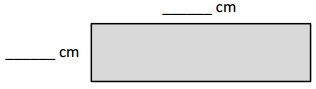
Answer:
No, the longer rectangle does not equal the total area in the problem.

Explanation:
In the above-given question,
given that,
the area of the longer rectangle = l x b.
where l = length and b = breadth.
area = 4 x 4.
area = 16 sq cm.

Eureka Math Grade 3 Module 4 Lesson 9 Template Answer Key

Eureka Math Grade 3 Module 4 Lesson 9 Template Answer Key 5

________64_sq_cm.____
small centimeter grid

Answer:
The area of the rectangle = 64 sq cm.

Explanation:

given that,
area of the rectangle = l x b.
where l = length and b = breadth.
area = 8 x 8.
area = 64.
so the area of the rectangle = 64 sq cm.
Eureka-Math-Grade-3-Module-4-Lesson-9-Answer Key-7

Eureka Math Grade 3 Module 4 Lesson 8 Answer Key

Teachers and students can find this Eureka Answer Key for Grade 3 more helpful in raising students’ scores and supporting teachers to educate the students. Eureka Math Answer Key for Grade 3 aids teachers to differentiate instruction, building and reinforcing foundational mathematics skills that alter from the classroom to real life. With the help of Eureka’s primary school Grade 3 Answer Key, you can think deeply regarding what you are learning, and you will really learn math easily just like that.

Engage NY Eureka Math 3rd Grade Module 4 Lesson 8 Answer Key

Students of Grade 3 Module 4 can get a strong foundation on mathematics concepts by referring to the Eureka Math Book. It was developed by highly professional mathematics educators and the solutions prepared by them are in a concise manner for easy grasping. To achieve high scores in Grade 3, students need to solve all questions and exercises included in Eureka’s Grade 3 Textbook.

Eureka Math Grade 3 Module 4 Lesson 8 Pattern Sheet Answer Key

Multiply
Eureka Math Grade 3 Module 4 Lesson 8 Pattern Sheet Answer Key 1

Answer:
6 x 1 = 6, 6 x 2 = 12, 6 x 3 = 18, 6 x 4 = 24, 6 x 5 = 30, 6 x 6 = 36, 6 x 7 = 42, 6 x 8 = 48, 6 x 9 = 54, 6 x 10 = 60, 6 x 5 = 30, 6 x 6 = 36, 6 x 5 = 30, 6 x 7 = 42, 6 x 5 = 30, 6 x 8 = 48, 6 x 5 = 30, 6 x 9 = 54, 6 x 5 = 30, 6 x 10 = 60, 6 x 6 = 36, 6 x 5 = 30, 6 x 6 = 36, 6 x 7 = 42, 6 x 6 = 36, 6 x 8 = 48, 6 x 6 = 36, 6 x 9 = 54, 6 x 6 = 36, 6 x 7 = 42, 6 x 6 = 36, 6 x 7 = 42, 6 x 8 = 48, 6 x 7 = 42, 6 x 9 = 54, 6 x 7 = 42, 6 x 8 = 48, 6 x 6 = 36, 6 x 8 = 48, 6 x 7 = 42, 6 x 8 = 48, 6 x 9 = 54, 6 x 9 = 54, 6 x 6 = 36, 6 x 9 = 54, 6 x 7 = 42, 6 x 9 = 54, 6 x 8 = 48, 6 x 9 = 54, 6 x 8 = 48, 6 x 6 = 36, 6 x 9 = 54, 6 x 7 = 42, 6 x 9 = 54, 6 x 6 = 36, 6 x 8 = 48, 6 x 9 = 54, 6 x 7 = 42, 6 x 6 = 36, 6 x 8 = 48.

Explanation:
In the above-given question,
given that,
multiply with 6.
6 x 1 = 6, 6 x 2 = 12, 6 x 3 = 18, 6 x 4 = 24, 6 x 5 = 30, 6 x 6 = 36, 6 x 7 = 42, 6 x 8 = 48, 6 x 9 = 54, 6 x 10 = 60, 6 x 5 = 30, 6 x 6 = 36, 6 x 5 = 30, 6 x 7 = 42, 6 x 5 = 30, 6 x 8 = 48, 6 x 5 = 30, 6 x 9 = 54, 6 x 5 = 30, 6 x 10 = 60, 6 x 6 = 36, 6 x 5 = 30, 6 x 6 = 36, 6 x 7 = 42, 6 x 6 = 36, 6 x 8 = 48, 6 x 6 = 36, 6 x 9 = 54, 6 x 6 = 36, 6 x 7 = 42, 6 x 6 = 36, 6 x 7 = 42, 6 x 8 = 48, 6 x 7 = 42, 6 x 9 = 54, 6 x 7 = 42, 6 x 8 = 48, 6 x 6 = 36, 6 x 8 = 48, 6 x 7 = 42, 6 x 8 = 48, 6 x 9 = 54, 6 x 9 = 54, 6 x 6 = 36, 6 x 9 = 54, 6 x 7 = 42, 6 x 9 = 54, 6 x 8 = 48, 6 x 9 = 54, 6 x 8 = 48, 6 x 6 = 36, 6 x 9 = 54, 6 x 7 = 42, 6 x 9 = 54, 6 x 6 = 36, 6 x 8 = 48, 6 x 9 = 54, 6 x 7 = 42, 6 x 6 = 36, 6 x 8 = 48.
Eureka-Math-Grade-3-Module-4-Lesson-8-Answer Key-1

Eureka Math Grade 3 Module 4 Lesson 8 Problem Set Answer Key

Question 1.
Write a multiplication equation to find the area of each rectangle.
a.
Eureka Math Grade 3 Module 4 Lesson 8 Pattern Sheet Answer Key 2
__7_____ × ____4___ = ___28_sqft___

Answer:
The area of the rectangle = 28 sq ft.

Explanation:
In the above-given question,
given that,
the area of the rectangle = l x b.
where l = 4 and b = 7.
area = 4 x 7.
area = 28.
Eureka-Math-Grade-3-Module-4-Lesson-8-Answer Key-2

b.
Eureka Math Grade 3 Module 4 Lesson 8 Pattern Sheet Answer Key 3
__8_____ × ____7___ = ___56___

Answer:
The area of the rectangle = 56 sq ft.

Explanation:
In the above-given question,
given that,
the area of the rectangle = l x b.
where l = 8 and b = 7.
area = 8 x 7.
area = 56.
Eureka-Math-Grade-3-Module-4-Lesson-8-Answer Key-3

c.
Eureka Math Grade 3 Module 4 Lesson 8 Pattern Sheet Answer Key 4
___6____ × ___6____ = ___36___

Answer:
The area of the rectangle = 36 sq ft.

Explanation:
In the above-given question,
given that,
the area of the rectangle = l x b.
where l = 6 and b = 6.
area = 6 x 6.
area = 36.
Eureka-Math-Grade-3-Module-4-Lesson-8-Answer Key-4

Question 2.
Write a multiplication equation and a division equation to find the unknown side length for each rectangle.

a.
Eureka Math Grade 3 Module 4 Lesson 8 Pattern Sheet Answer Key 5
___9____ × __8_____ = __72____
____72___ ÷ __9_____ = ___8____

Answer:
The unknown side length of the rectangle = 8 sq ft.

Explanation:
In the above-given question,
given that,
the area of the rectangle = l x b.
where area = 72 and b = 8.
72 = l x 8.
l = 8 x 9 = 72.
l = 72/9 = 8.
Eureka-Math-Grade-3-Module-4-Lesson-8-Answer Key-5

b.
Eureka Math Grade 3 Module 4 Lesson 8 Pattern Sheet Answer Key 6
___5____ × ___3____ = ___15___
___15____ ÷ ____5___ = ___3____

Answer:
The unknown side length of the rectangle = 5 sq ft.

Explanation:
In the above-given question,
given that,
the area of the rectangle = l x b.
where area = 15 and b = 3.
15 = l x 3.
l = 15 / 3 = 5.
Eureka-Math-Grade-3-Module-4-Lesson-8-Answer Key-6

c.
Eureka Math Grade 3 Module 4 Lesson 8 Pattern Sheet Answer Key 7
___4____ × ____7___ = ___28___
___28____ ÷ ____4___ = ___7____

Answer:
The unknown side length of the rectangle = 7 sq ft.

Explanation:
In the above-given question,
given that,
the area of the rectangle = l x b.
where area = 28 and l = 4.
28 = b x 4.
b = 28 / 4 = 7.
Eureka-Math-Grade-3-Module-4-Lesson-8-Answer Key-7

Question 3.
On the grid below, draw a rectangle that has an area of 42 square units. Label the side lengths.
Eureka Math Grade 3 Module 4 Lesson 8 Pattern Sheet Answer Key 8

Answer:
The area of the rectangle = 42 sq ft.

Explanation:
In the above-given question,
given that,
the area of the rectangle = l x b.
where area = 42 and b = 6.
42 = l x 6.
l = 42 / 6 = 7.
Eureka-Math-Grade-3-Module-4-Lesson-8-Answer Key-8

Question 4.
Ursa draws a rectangle that has side lengths of 9 centimeters and 6 centimeters. What is the area of the rectangle? Explain how you found your answer.

Answer:
The area of the rectangle = 56 sq cm.

Explanation:
In the above-given question,
given that,
the area of the rectangle = l x b.
where l = 9 and b = 6.
area = 9 x 6.
area = 54.

Question 5.
Eliza’s bedroom measures 6 feet by 7 feet. Her brother’s bedroom measures 5 feet by 8 feet. Eliza says their rooms have the same exact floor area. Is she right? Why or why not?

Answer:
No, their rooms do not have the same exact floor area.

Explanation:
In the above-given question,
given that,
the area of the rectangle = l x b.
where l = 6 and b = 7.
area = 6 x 7.
area = 42.
the area of the rectangle = l x b.
where l = 5 and b = 8.
area = 5 x 8.
area = 40.

Question 6.
Cliff draws a rectangle with a side length of 6 inches and an area of 24 square inches. What is the other side length? How do you know?

Answer:
The unknown side length of the rectangle = 4 sq inches.

Explanation:
In the above-given question,
given that,
the area of the rectangle = l x b.
where area = 24 and l = 6.
24 = b x 6.
b = 24 / 6 = 4.

Eureka Math Grade 3 Module 4 Lesson 8 Exit Ticket Answer Key

Question 1.
Write a multiplication equation to find the area of the rectangle below.
Eureka Math Grade 3 Module 4 Lesson 8 Exit Ticket Answer Key 9
___9___ × ___3____ = ___27___

Answer:
The area of the rectangle = 27 sq ft.

Explanation:
In the above-given question,
given that,
the area of the rectangle = l x b.
where l = 9 and b = 3.
area = 9 x 3.
area = 27.
Eureka-Math-Grade-3-Module-4-Lesson-8-Answer Key-9

Question 2.
Write a multiplication equation and a division equation to find the unknown side length for the rectangle below.
Eureka Math Grade 3 Module 4 Lesson 8 Exit Ticket Answer Key 10
___6____ × ___9____ = ___54___
__54_____ ÷ ___6____ = ____9___

Answer:
The unknown side length of the rectangle = 9 sq in.

Explanation:
In the above-given question,
given that,
the area of the rectangle = l x b.
where area = 54 and b = 6.
54 = l x 6.
l = 54 / 6 = 9.
Eureka-Math-Grade-3-Module-4-Lesson-8-Answer Key-10

Eureka Math Grade 3 Module 4 Lesson 8 Homework Answer Key

Question 1.
Write a multiplication equation to find the area of each rectangle.
a.
Eureka Math Grade 3 Module 4 Lesson 8 Homework Answer Key 11
___3____ × ___8____ = ___24___

Answer:
The area of the rectangle = 24 sq ft.

Explanation:
In the above-given question,
given that,
the area of the rectangle = l x b.
where l = 8 and b = 3.
area = 8 x 3.
area = 24.
Eureka-Math-Grade-3-Module-4-Lesson-8-Answer Key-11

b.
Eureka Math Grade 3 Module 4 Lesson 8 Homework Answer Key 12
____8___ × ___6____ = ___48___

Answer:
The area of the rectangle = 48 sq cm.

Explanation:
In the above-given question,
given that,
the area of the rectangle = l x b.
where l = 8 and b = 6.
area = 8 x 6.
area = 48.
Eureka-Math-Grade-3-Module-4-Lesson-8-Answer Key-12

c.
Eureka Math Grade 3 Module 4 Lesson 8 Homework Answer Key 13
____4___ × ____4___ = ___16___

Answer:
The area of the rectangle = 16 sq ft.

Explanation:
In the above-given question,
given that,
the area of the rectangle = l x b.
where l = 4 and b = 4.
area = 4 x 4.
area = 16.
Eureka-Math-Grade-3-Module-4-Lesson-8-Answer Key-13

d.
Eureka Math Grade 3 Module 4 Lesson 8 Homework Answer Key 14
___7____ × ____4___ = ___28___

Answer:
The area of the rectangle = 28 sq ft.

Explanation:
In the above-given question,
given that,
the area of the rectangle = l x b.
where l = 7 and b = 4.
area = 7 x 4.
area = 28.
Eureka-Math-Grade-3-Module-4-Lesson-8-Answer Key-14

Question 2.
Write a multiplication equation and a division equation to find the unknown side length for each rectangle.
a.
Eureka Math Grade 3 Module 4 Lesson 8 Homework Answer Key 15
__8_____ × ___3____ = __24____
__24_____ ÷ __3_____ = ___8____

Answer:
The unknown side length of the rectangle = 8 sq in.

Explanation:
In the above-given question,
given that,
the area of the rectangle = l x b.
where area = 24 and b = 3.
24 = l x 3.
l = 24 / 3 = 8.
Eureka-Math-Grade-3-Module-4-Lesson-8-Answer Key-15

b.
Eureka Math Grade 3 Module 4 Lesson 8 Homework Answer Key 16
____9___ × __4_____ = ____36__
___36____ ÷ ___9____ = ___4____

Answer:
The unknown side length of the rectangle = 4 sq ft.

Explanation:
In the above-given question,
given that,
the area of the rectangle = l x b.
where area = 36 and l = 9.
36 = b x 9.
b = 36 / 9 = 4.
Eureka-Math-Grade-3-Module-4-Lesson-8-Answer Key-16

Question 3.
On the grid below, draw a rectangle that has an area of 32 square centimeters. Label the side lengths.
Eureka Math Grade 3 Module 4 Lesson 8 Homework Answer Key 17

Answer:
The area of the rectangle = 32 sq cm.

Explanation:
In the above-given question,
given that,
the area of the rectangle = l x b.
where area = 32 and b = 4.
32 = l x 4.
l = 32 / 4 = 8.
Eureka-Math-Grade-3-Module-4-Lesson-8-Answer Key-17

Question 4.
Patricia draws a rectangle that has side lengths of 4 centimeters and 9 centimeters. What is the area of the rectangle? Explain how you found your answer.

Answer:
The area of the rectangle = 54 sq cm.

Explanation:
In the above-given question,
given that,
the area of the rectangle = l x b.
where l = 4 and b = 9.
area = 4 x 9.
area = 36.

Question 5.
Charles draws a rectangle with a side length of 9 inches and an area of 27 square inches. What is the other side length? How do you know?

Answer:
The unknown side length of the rectangle = 3 sq in.

Explanation:
In the above-given question,
given that,
the area of the rectangle = l x b.
where area = 27 and l = 9.
27 = b x 9.
b = 27 / 9 = 3.

Eureka Math Grade 3 Module 4 Lesson 8 Template Answer Key

Eureka Math Grade 3 Module 4 Lesson 8 Template Answer Key 18

_____27 ___sq cm__________
grid

Answer:
The unknown side length of the rectangle = 3 cm.

Explanation:
In the above-given question,
given that,
the area of the rectangle = l x b.
where area = 27 and l = 9.
27 = b x 9.
b = 27 / 9 = 3.
Eureka-Math-Grade-3-Module-4-Lesson-8-Answer Key-18

Eureka Math Grade 3 Module 4 Lesson 7 Answer Key

Students of Grade 3 Module 4 can get a strong foundation on mathematics concepts by referring to the Eureka Math Book. It was developed by highly professional mathematics educators and the solutions prepared by them are in a concise manner for easy grasping. To achieve high scores in Grade 3, students need to solve all questions and exercises included in Eureka’s Grade 3 Textbook.

Engage NY Eureka Math 3rd Grade Module 4 Lesson 7 Answer Key

Teachers and students can find this Eureka Answer Key for Grade 3 more helpful in raising students’ scores and supporting teachers to educate the students. Eureka Math Answer Key for Grade 3 aids teachers to differentiate instruction, building and reinforcing foundational mathematics skills that alter from the classroom to real life. With the help of Eureka’s primary school Grade 3 Answer Key, you can think deeply regarding what you are learning, and you will really learn math easily just like that.

Eureka Math Grade 3 Module 4 Lesson 7 Problem Set Answer Key

Question 1.
Use a straight edge to draw a grid of equal size squares within the rectangle. Find and label the side lengths. Then, multiply the side lengths to find the area.
Eureka Math Grade 3 Module 4 Lesson 7 Problem Set Answer Key 1
a. Area A:
____3____ units × ___4_____ units = ____12____ square units

Answer:
a. The area of the rectangle = 12 sq units.

Explanation:
In the above-given question,
given that,
the area of the rectangle = l x b.
where l = 3 and b = 4.
area = 3 x 4.
area = 12.

b. Area B:
__5______ units × ___4_____ units = ___20_____ square units

Answer:
b. The area of the rectangle = 20 sq units.

Explanation:
In the above-given question,
given that,
the area of the rectangle = l x b.
where l = 5 and b = 4.
area = 5 x 4.
area = 20.

c. Area C:
____2____ units × ___7_____ units = ___14_____ square units

Answer:
c. The area of the rectangle = 14 sq units.

Explanation:
In the above-given question,
given that,
the area of the rectangle = l x b.
where l = 2 and b = 7.
area = 2 x 7.
area = 14.

d. Area D:
___7_____ units × ___4_____ units = ___28_____ square units

Answer:
d. The area of the rectangle = 28 sq units.

Explanation:
In the above-given question,
given that,
the area of the rectangle = l x b.
where l = 7 and b = 4.
area = 7 x 4.
area = 28.

e. Area E:
___1_____ units × ___3_____ units = ___3_____ square units

Answer:
e. The area of the rectangle = 30 sq units.

Explanation:
In the above-given question,
given that,
the area of the rectangle = l x b.
where l = 5 and b = 6.
area = 5 x 6.
area = 30.

f. Area F:
___4_____ units × ___2_____ units = ___8_____ square units

Answer:
f. The area of the rectangle = 8 sq units.

Explanation:
In the above-given question,
given that,
the area of the rectangle = l x b.
where l = 4 and b = 2.
area = 4 x 2.
area = 8.
Eureka-Math-Grade-3-Module-4-Lesson-7-Answer Key-1

Question 2.
The area of Benjamin’s bedroom floor is shown on the grid to the right. Each Eureka Math Grade 3 Module 4 Lesson 7 Problem Set Answer Key 2 represents 1 square foot. How many total square feet is Benjamin’s floor?
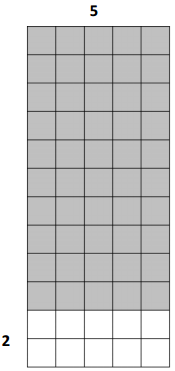
Eureka Math Grade 3 Module 4 Lesson 7 Problem Set Answer Key 3
a. Label the side lengths.

Answer:
a. The side lengths of the rectangle = 9 x 11.

Explanation:
In the above-given question,
given that,
the area of the rectangle = l x b.
where l = 9 and b = 11.
area = 9 x 11.
area = 99.

b. Use a straight edge to draw a grid of equal size squares within the rectangle.

Answer:
b. The area of the rectangle = 99 sq cms.

Explanation:
In the above-given question,
given that,
the area of the rectangle = l x b.
where l = 9 and b = 11.
area = 9 x 11.
area = 11.
Eureka-Math-Grade-3-Module-4-Lesson-7-Answer Key-2

c. Find the total number of squares.

Answer:
c. The area of the rectangle = 99 sq cms.

Explanation:
In the above-given question,
given that,
the area of the rectangle = l x b.
where l = 9 and b = 11.
area = 9 x 11.
area = 99.

Question 3.
Mrs. Young’s art class needs to create a mural that covers exactly 35 square feet. Mrs. Young marks the area for the mural as shown on the grid. Each Eureka Math Grade 3 Module 4 Lesson 7 Problem Set Answer Key 2 represents 1 square foot. Did she mark the area correctly? Explain your answer.
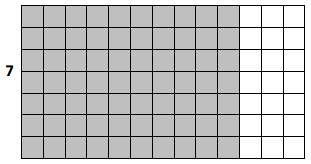
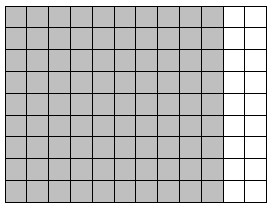
Eureka Math Grade 3 Module 4 Lesson 7 Problem Set Answer Key 4

Answer:
No, she did not mark the area correctly.

Explanation:
In the above-given question,
given that,
the area of the rectangle = l x b.
where l = 7 and b = 6.
area = 7 x 6.
area = 42 square feet.

Question 4.
Mrs. Barnes draws a rectangular array. Mila skip-counts by fours and Jorge skip-counts by sixes to find the total number of square units in the array. When they give their answers, Mrs. Barnes says that they are both right.
a. Use pictures, numbers, and words to explain how Mila and Jorge can both be right.

Answer:
The area of the rectangular array = 24 sq units.

Explanation:
In the above-given question,
given that,
the area of the rectangle = l x b.
where l = 4 and b = 6.
area = 4 x 6.
area = 24.
Eureka-Math-Grade-3-Module-4-Lesson-7-Answer Key-3

b. How many square units might Mrs. Barnes’ array have had?

Answer:
The area of the rectangular array = 24 sq units.

Explanation:
In the above-given question,
given that,
the area of the rectangle = l x b.
where l = 4 and b = 6.
area = 4 x 6.
area = 24.

Eureka Math Grade 3 Module 4 Lesson 7 Exit Ticket Answer Key

Question 1.
Label the side lengths of Rectangle A on the grid below. Use a straight edge to draw a grid of equal size squares within Rectangle A. Find the total area of Rectangle A.
Eureka Math Grade 3 Module 4 Lesson 7 Problem Set Answer Key 5
Area: ___36_____ square units

Answer:
The area of the rectangular array = 36 sq units.

Explanation:
In the above-given question,
given that,
the area of the rectangle = l x b.
where l = 6 and b = 6.
area = 6 x 6.
area = 36.
Eureka-Math-Grade-3-Module-4-Lesson-7-Answer Key-4

Question 2.
Mark makes a rectangle with 36 square centimeter tiles. Gia makes a rectangle with 36 square inch tiles. Whose rectangle has a bigger area? Explain your answer.

Answer:
The Gia rectangle has a bigger area.

Explanation:
In the above-given question,
given that,
the area of the rectangle = l x b.
where l = 6 and b = 6.
area = 6 x 6.
area = 36.

Eureka Math Grade 3 Module 4 Lesson 7 Homework Answer Key

Question 1.
Find the area of each rectangular array. Label the side lengths of the matching area model, and write a multiplication equation for each area model.
Eureka Math Grade 3 Module 4 Lesson 7 Homework Answer Key 6

Answer:
a.The area of the rectangular array = 6 sq units.

Explanation:
In the above-given question,
given that,
the area of the rectangle = l x b.
where l = 3 and b = 2.
area = 3 x 2.
area = 6.

Answer:
b.The area of the rectangular array = 10 sq units.

Explanation:
In the above-given question,
given that,
the area of the rectangle = l x b.
where l = 2 and b = 5.
area = 2 x 5.
area = 10.

Answer:
c.The area of the rectangular array = 12 sq units.

Explanation:
In the above-given question,
given that,
the area of the rectangle = l x b.
where l = 3 and b = 4.
area = 3 x 4.
area = 12.

Answer:
d.The area of the rectangular array = 16 sq units.

Explanation:
In the above-given question,
given that,
the area of the rectangle = l x b.
where l = 4 and b = 4.
area = 4 x 4.
area = 16.
Eureka-Math-Grade-3-Module-4-Lesson-7-Answer Key-5

Question 2.
Jillian arranges square pattern blocks into a 7 by 4 array. Draw Jillian’s array on the the grid below. How many square units are in Jillian’s rectangular array?
a.
Eureka Math Grade 3 Module 4 Lesson 7 Homework Answer Key 7

Answer:
The area of the rectangular array = 28 sq units.

Explanation:
In the above-given question,
given that,
the area of the rectangle = l x b.
where l = 7 and b = 4.
area = 7 x 4.
area = 28.
Eureka-Math-Grade-3-Module-4-Lesson-7-Answer Key-6

b. Label the side lengths of Jillian’s array from Part (a) on the rectangle below. Then, write a multiplication sentence to represent the area of the rectangle.
Eureka Math Grade 3 Module 4 Lesson 7 Homework Answer Key 8

Answer:
The area of the rectangular array = 28 sq units.

Explanation:
In the above-given question,
given that,
the area of the rectangle = l x b.
where l = 4 and b = 6.
area = 7 x 4.
area = 28.
Eureka-Math-Grade-3-Module-4-Lesson-7-Answer Key-7

Question 3.
Fiona draws a 24 square centimeter rectangle. Gregory draws a 24 square inch rectangle. Whose rectangle is larger in area? How do you know?

Answer:
Gregory’s rectangle is larger in area.

Explanation:
In the above-given question,
given that,
the area of the rectangle = l x b.
where l = 6 and b = 4.
area = 6 x 4.
area = 24.

Eureka Math Grade 3 Module 4 Lesson 7 Template Answer Key

Eureka Math Grade 3 Module 4 Lesson 7 Homework Answer Key 9

____8__sq__inches_______
area of model

Answer:
The area of the rectangular array = 8 sq inches.

Explanation:
In the above-given question,
given that,
the area of the rectangle = l x b.
where l = 4 and b = 2.
area = 4 x 2.
area = 8.
Eureka-Math-Grade-3-Module-4-Lesson-7-Answer Key-7