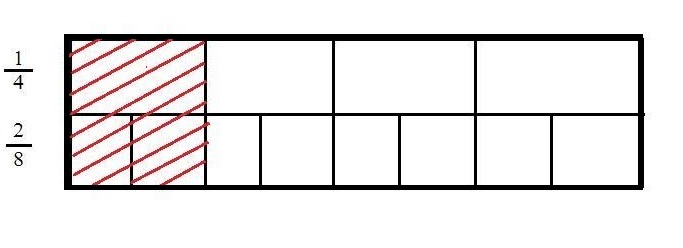
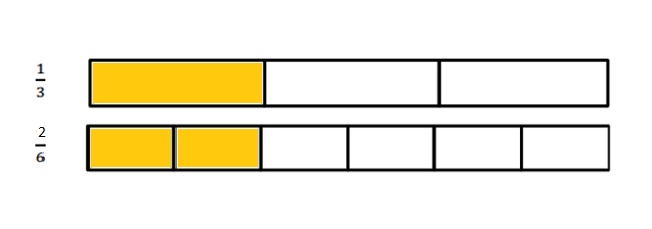
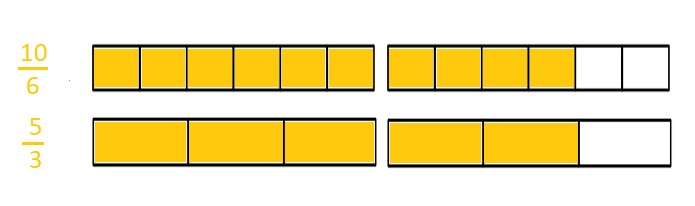
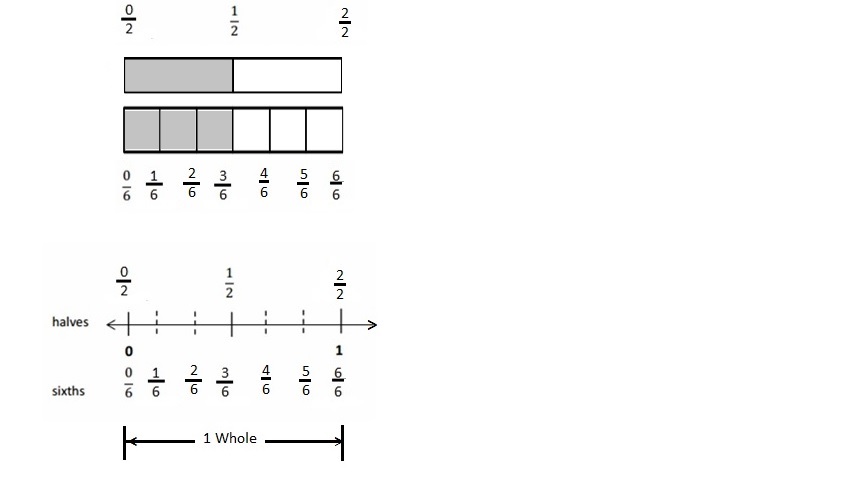
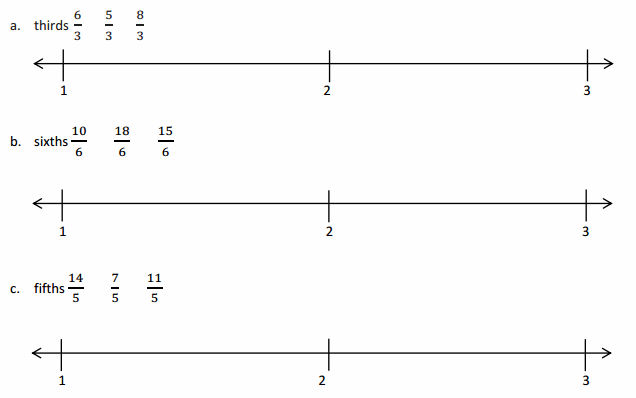
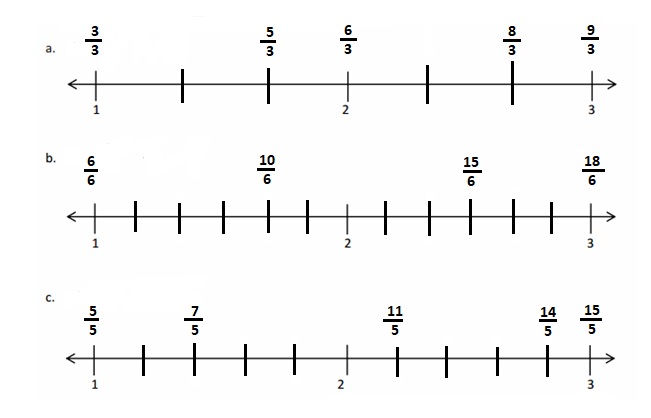
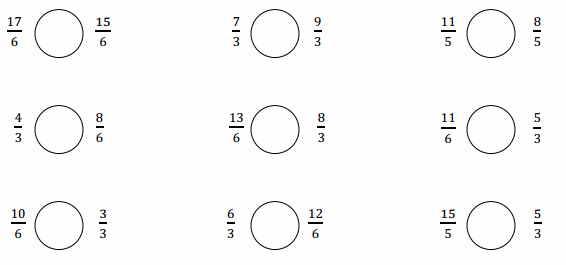
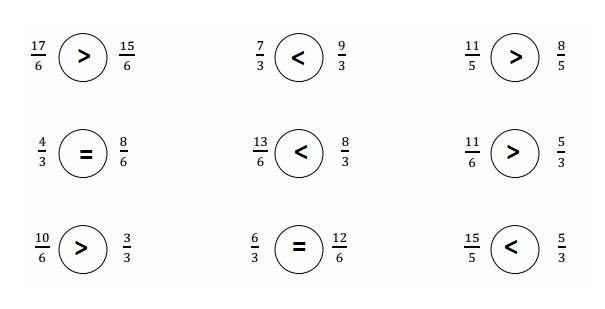
Eureka Math Grade 4 Module 1 Lesson 18 Answer Key

Engage NY Eureka Math 4th Grade Module 1 Lesson 18 Answer Key

Eureka Math Grade 4 Module 1 Lesson 18 Problem Set Answer Key

Draw a tape diagram to represent each problem. Use numbers to solve, and write your answer as a statement.

Question 1.
In one year, the factory used 11,650 meters of cotton, 4,950 fewer meters of silk than cotton, and 3,500 fewer meters of wool than silk. How many meters in all were used of the three fabrics?
Answer:
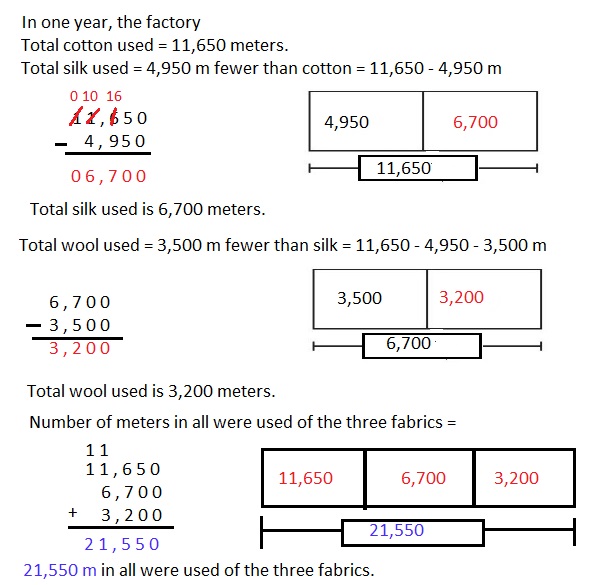
In one year, the factory
Total cotton used = 11,650 meters.
Total silk used = 4,950 m fewer than cotton = 11,650 – 4,950 m
Total wool used = 3,500 m fewer than silk = 11,650 – 4,950 – 3,500 m
Engage-NY-Eureka-Math-4th-Grade-Module-1-Lesson-18-Answer-Key-Eureka-Math-Grade-4-Module-1-Lesson-18-Problem-Set-Answer-Key-Question-1

Question 2.
The shop sold 12,789 chocolate and 9,324 cookie dough cones. It sold 1,078 more peanut butter cones than cookie dough cones and 999 more vanilla cones than chocolate cones. What was the total number of ice cream cones sold?
Answer:
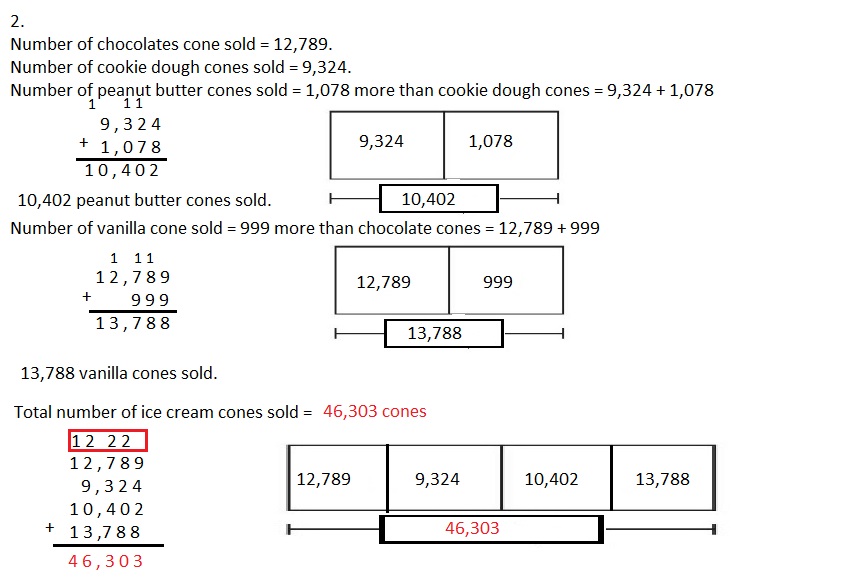
Number of chocolates cone sold = 12,789.
Number of cookie dough cones sold = 9,324.
Number of peanut butter cones sold = 1,078 more than cookie dough cones = 9,324 + 1,078
Number of vanilla cone sold = 999 more than chocolate cones = 12,789 + 999
Engage-NY-Eureka-Math-4th-Grade-Module-1-Lesson-18-Answer-Key-Eureka-Math-Grade-4-Module-1-Lesson-18-Problem-Set-Answer-Key-Question-2

Question 3.
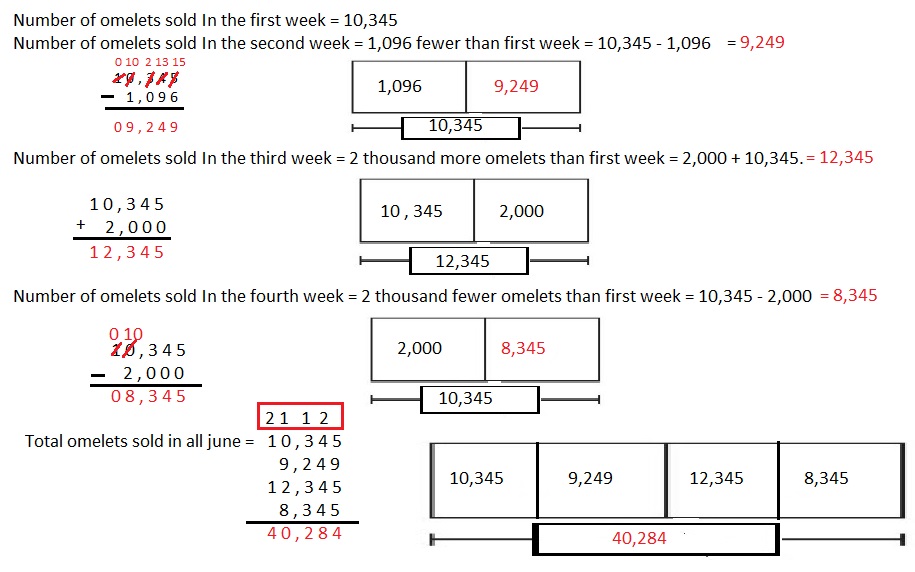
In the first week of June, a restaurant sold 10,345 omelets. In the second week, 1,096 fewer omelets were sold than in the first week. In the third week, 2 thousand more omelets were sold than in the first week. In the fourth week, 2 thousand fewer omelets were sold than in the first week. How many omelets were sold in all in June?
Answer:
Number of omelets sold In the first week = 10,345
Number of omelets sold In the second week = 1,096 fewer than first week = 10,345 – 1,096
Number of omelets sold In the third week = 2 thousand more omelets than first week = 2,000 + 10,345.
Number of omelets sold In the fourth week = 2 thousand fewer omelets than first week = 10,345 – 2,000
Engage-NY-Eureka-Math-4th-Grade-Module-1-Lesson-18-Answer-Key-Eureka-Math-Grade-4-Module-1-Lesson-18-Problem-Set-Answer-Key-Question-3

Eureka Math Grade 4 Module 1 Lesson 18 Exit Ticket Answer Key

Draw a tape diagram to represent the problem. Use numbers to solve, and write your answer as a statement.

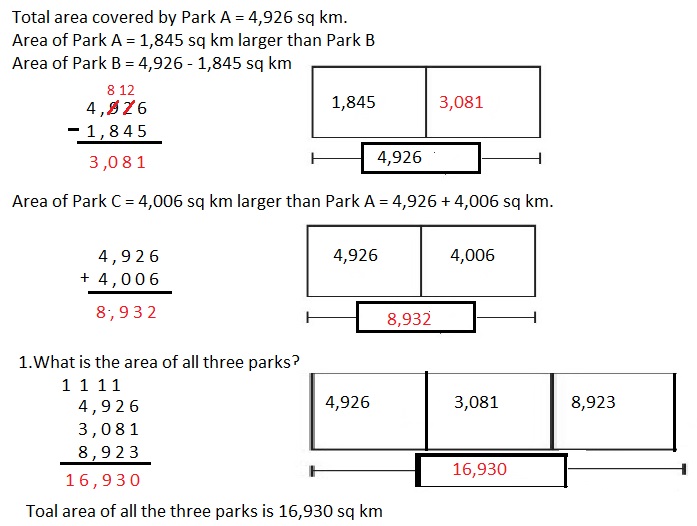
Park A covers an area of 4,926 square kilometers. It is 1,845 square kilometers larger than Park B. Park C is 4,006 square kilometers larger than Park A.
Answer:
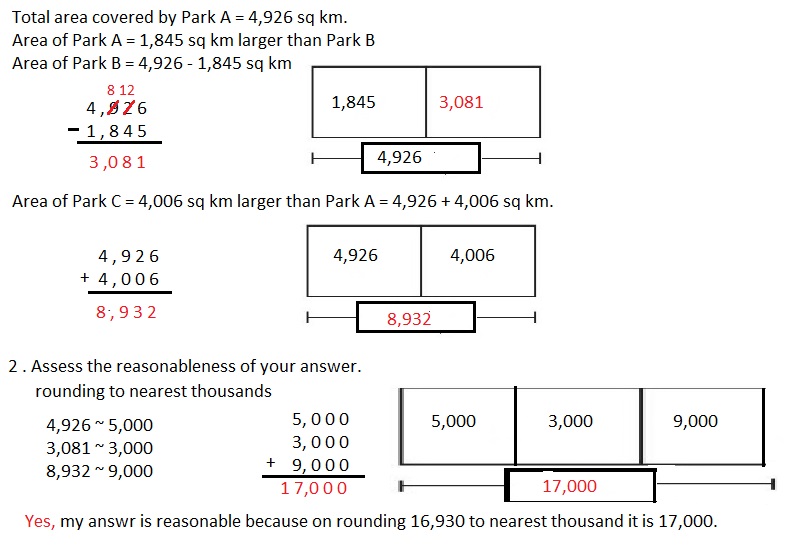
Total area covered by Park A = 4,926 sq km.
Area of Park A = 1,845 sq km larger than Park B = 4,926 – 1,845
Area of Park C = 4,006 sq km larger than Park A = 4,926 + 4,006 sq km.

Question 1.
What is the area of all three parks?
Answer:
Engage-NY-Eureka-Math-4th-Grade-Module-1-Lesson-18-Answer-Key-Eureka-Math-Grade-4-Module-1-Lesson-18-Exit-Ticket-Answer-Key-Question-1

Question 2.
Assess the reasonableness of your answer.
Answer:
Engage-NY-Eureka-Math-4th-Grade-Module-1-Lesson-18-Answer-Key-Eureka-Math-Grade-4-Module-1-Lesson-18-Exit-Ticket-Answer-Key-Question-2

Eureka Math Grade 4 Module 1 Lesson 18 Homework Answer Key

Draw a tape diagram to represent each problem. Use numbers to solve, and write your answer as a statement.

Question 1.
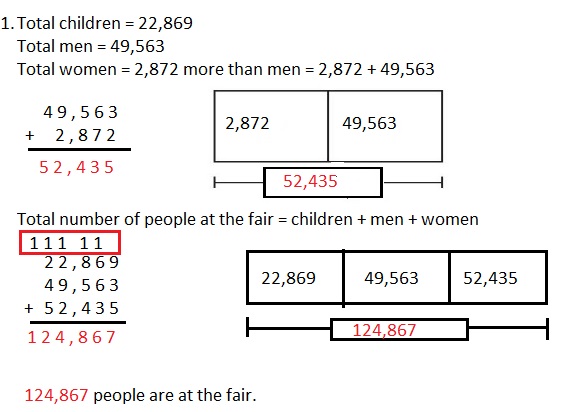
There were 22,869 children, 49,563 men, and 2,872 more women than men at the fair. How many people were at the fair?
Answer:
Total children = 22,869
Total men = 49,563
Total women = 2,872 more than men = 2,872 + 49,563
Total number of people at the fair = children + men + women
Engage-NY-Eureka-Math-4th-Grade-Module-1-Lesson-18-Answer-Key-Eureka-Math-Grade-4-Module-1-Lesson-18-Homework-Answer-Key-Question-1

Question 2.
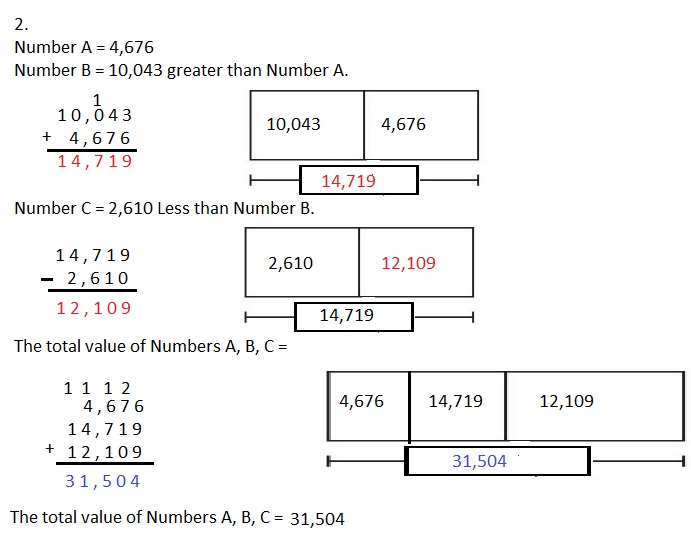
Number A is 4,676. Number B is 10,043 greater than A. Number C is 2,610 less than B. What is the total value of numbers A, B, and C?
Answer:
Number A = 4,676
Number B = 10,043 greater than Number A.
Number C = 2,610 Less than Number B.
The total value of Numbers A, B, C =
Engage-NY-Eureka-Math-4th-Grade-Module-1-Lesson-18-Answer-Key-Eureka-Math-Grade-4-Module-1-Lesson-18-Homework-Answer-Key-Question-2

Question 3.
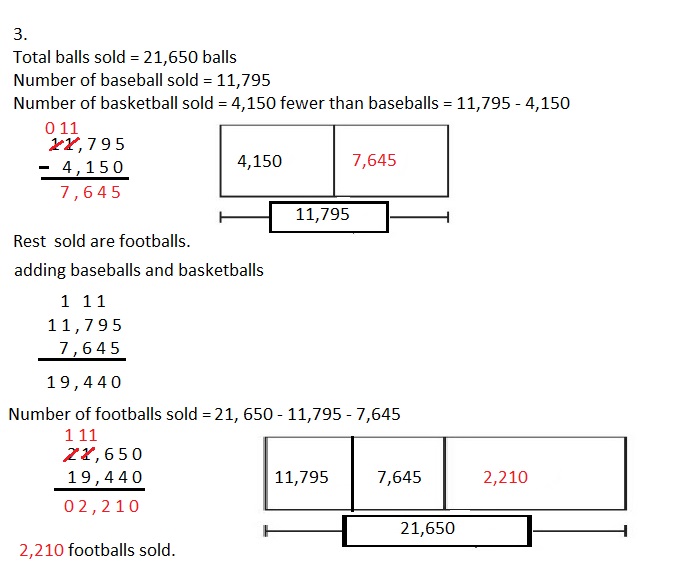
A store sold a total of 21,650 balls. It sold 11,795 baseballs. It sold 4,150 fewer basketballs than baseballs. The rest of the balls sold were footballs. How many footballs did the store sell?
Answer:
Total balls sold = 21,650 balls
Number of baseball sold = 11,795
Number of basketball sold = 4,150 fewer than baseballs = 11,795 – 4,150
Rest  sold are footballs.
Number of footballs sold =
Engage-NY-Eureka-Math-4th-Grade-Module-1-Lesson-18-Answer-Key-Eureka-Math-Grade-4-Module-1-Lesson-18-Homework-Answer-Key-Question-3

Eureka Math Grade 4 Module 1 Lesson 16 Answer Key

Engage NY Eureka Math 4th Grade Module 1 Lesson 16 Answer Key

Eureka Math Grade 4 Module 1 Lesson 16 Sprint Answer Key

A
Convert Meters and Centimeters to Centimeters
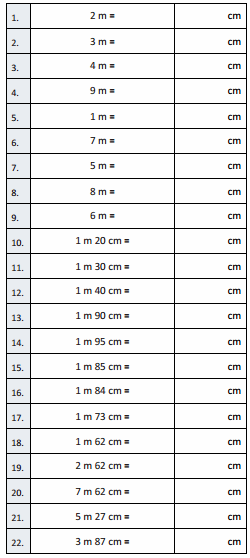
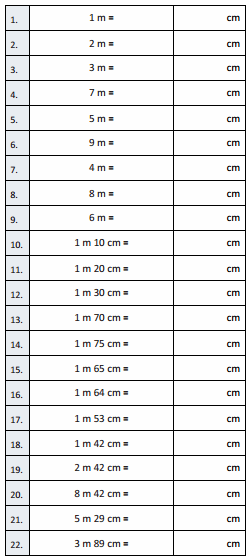
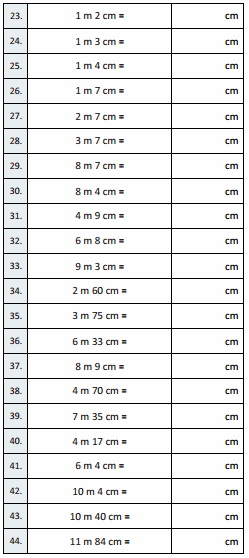
Eureka Math Grade 4 Module 1 Lesson 16 Sprint Answer Key 1
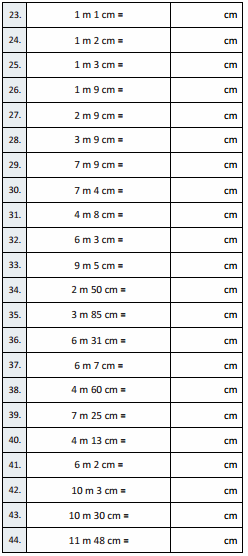
Eureka Math Grade 4 Module 1 Lesson 16 Sprint Answer Key 2
Explanation:
1 meter = 100 Centimeter
To convert from meters to centimeters, simply multiply the number of meters by 100 and change the units to cm.

Question 1.
2 m = cm
Answer:
2 m = 2× 100 cm = 200 cm.

Question 2.
3 m = cm
Answer:
3 m = 3× 100 cm = 300 cm.

Question 3.
4 m = cm
Answer:
4 m = 4 × 100 cm = 400 cm.

Question 4.
9 m = cm
Answer:
9 m = 9 × 100 = 900 cm.

Question 5.
1 m = cm
Answer:
1 m = 1×100 = 100 cm.

Question 6.
7 m = cm
Answer:
7 m = 7 × 100 = 700 cm.

Question 7.
5 m = cm
Answer:
5 m = 5×100 = 500 cm.

Question 8.
8 m = cm
Answer:
8 m = 8×100 = 800 cm.

Question 9.
6 m = cm
Answer:
6 m = 6×100 = 600 cm.

Question 10.
1 m 20 cm = cm
Answer:
1 m 20 cm = 1×100 cm 20 cm =100 cm 20 cm = 120 cm.

Question 11.
1 m 30 cm = cm
Answer:
1 m 30 cm = 1×100 cm 30 cm = 100 cm 30 cm = 130 cm.

Question 12.
1 m 40 cm = cm
Answer:
1 m 40 cm = 1×100 cm 40 cm = 100 cm 40 cm = 140 cm.

Question 13.
1 m 90 cm = cm
Answer:
1 m 90 cm = 1×100 cm 90 cm = 100 cm 90 cm = 190 cm.

Question 14.
1 m 95 cm = cm
Answer:
1 m 95 cm = 1×100 cm 95 cm = 195 cm.

Question 15.
1 m 85 cm = cm
Answer:
1 m 85 cm = 1×100 cm 85 cm =185 cm.

Question 16.
1 m 84 cm = cm
Answer:
1 m 84 cm = 1×100 cm 84 cm = 184 cm.

Question 17.
1 m 73 cm = cm
Answer:
1 m 73 cm = 1×100 cm 73 cm = 173 cm.

Question 18.
1 m 62 cm = cm
Answer:
1 m 62 cm = 1×100 cm 62 cm = 162 cm.

Question 19.
2 m 62 cm = cm
Answer:
2 m 62 cm = 2× 100 cm 62 cm = 262 cm.

Question 20.
7 m 62 cm = cm
Answer:
7 m 62 cm = 7×100 cm 62 cm = 762 cm.

Question 21.
5 m 27 cm = cm
Answer:
5 m 27 cm = 5× 100 cm 27 cm =527 cm.

Question 22.
3 m 87 cm = cm
Answer:
3 m 87 cm = 3×100 cm 87 cm = 387 cm.

Question 23.
1 m 2 cm = cm
Answer:
1 m 2 cm = 1×100 cm 2 cm = 102 cm.

Question 24.
1 m 3 cm = cm
Answer:
1 m 3 cm = 1×100 cm 3 cm = 103 cm.

Question 25.
1 m 4 cm = cm
Answer:
1 m 4 cm = 1× 100 cm 4 cm = 104 cm.

Question 26.
1 m 7 cm = cm
Answer:
1 m 7 cm = 1×100 cm 7 cm = 107 cm.

Question 27.
2 m 7 cm = cm
Answer:
2 m 7 cm = 2×100 cm 7 cm =207 cm.

Question 28.
3 m 7 cm = cm
Answer:
3 m 7 cm = 3×100 cm 7 cm = 307 cm.

Question 29.
8 m 7 cm = cm
Answer:
8 m 7 cm = 8×100 cm 7 cm =807 cm.

Question 30.
8 m 4 cm = cm
Answer:
8 m 4 cm = 8 ×100 cm 4 cm = 804 cm.

Question 31.
4 m 9 cm = cm
Answer:
4 m 9 cm = 4×100 cm 9 cm =409 cm.

Question 32.
6 m 8 cm = cm
Answer:
6 m 8 cm = 6×100 cm 8 cm =608 cm.

Question 33.
9 m 3 cm = cm
Answer:
9 m 3 cm = 9×100 cm 3 cm = 903 cm.

Question 34.
2 m 60 cm = cm
Answer:
2 m 60 cm =2 ×100 cm 60 cm =260 cm.

Question 35.
3 m 75 cm = cm
Answer:
3 m 75 cm = 3×100 cm 75 cm = 375 cm.

Question 36.
6 m 33 cm = cm
Answer:
6 m 33 cm = 6×100 cm 33 cm =633 cm.

Question 37.
8 m 9 cm = cm
Answer:
8 m 9 cm =8×100 cm 9 cm =809 cm.

Question 38.
4 m 70 cm = cm
Answer:
4 m 70 cm = 4×100 cm 70 cm = 470 cm.

Question 39.
7 m 35 cm = cm
Answer:
7 m 35 cm = 7×100 cm 35 cm =735 cm.

Question 40.
4 m 17 cm = cm
Answer:
4 m 17 cm = 4×100 cm 17 cm = 417 cm.

Question 41.
6 m 4 cm = cm
Answer:
6 m 4 cm = 6×100 cm 4 cm =604 cm.

Question 42.
10 m 4 cm = cm
Answer:
10 m 4 cm = 10 ×100 cm 4 cm =1004 cm.

Question 43.
10 m 40 cm = cm
Answer:
10 m 40 cm = 10 × 100 cm 40 cm =1000 cm 40 cm =1040 cm.

Question 44.
11 m 84 cm = cm
Answer:
11 m 84 cm =11×100 cm 84 cm =1100 cm 84 cm =1184 cm.

B
Convert Meters and Centimeters to Centimeters
Eureka Math Grade 4 Module 1 Lesson 16 Sprint Answer Key 3
Eureka Math Grade 4 Module 1 Lesson 16 Sprint Answer Key 4

Explanation:
1 meter = 100 Centimeter
To convert from meters to centimeters, simply multiply the number of meters by 100 and change the units to cm.

Question 1.
1 m = cm
Answer:
1 m = 1×100 cm = 100 cm.

Question 2.
2 m = cm
Answer:
2 m = 2×100 cm = 200 cm.

Question 3.
3 m = cm
Answer:
3 m = 3× 100 cm = 300 cm.

Question 4.
7 m = cm
Answer:
7 m = 7×100 cm = 700 cm.

Question 5.
5 m = cm
Answer:
5 m = 5 × 100 cm = 500 cm

Question 6.
9 m = cm
Answer:
9 m = 9 × 100 cm = 900 cm.

Question 7.
4 m = cm
Answer:
4 m = 4× 100 cm = 400 cm

Question 8.
8 m = cm
Answer:
8 m = 8 ×100 cm = 800 cm.

Question 9.
6 m = cm
Answer:
6 m = 6 × 100 cm = 600 cm.

Question 10.
1 m 10 cm = cm
Answer:
1 m 10 cm = 1× 100 cm 10 cm =100 cm 10 cm = 110 cm.

Question 11.
1 m 20 cm = cm
Answer:
1 m 20 cm = 1 × 100 cm 20 cm = 100 cm 20 cm = 120 cm.

Question 12.
1 m 30 cm = cm
Answer:
1 m 30 cm = 1×100 cm 30 cm = 100 cm 30 cm = 130 cm.

Question 13.
1 m 70 cm = cm
Answer:
1 m 70 cm = 1 × 100 cm 70 cm = 100 cm 70 cm = 170 cm.

Question 14.
1 m 75 cm = cm
Answer:
1 m 75 cm = 1×100 cm 75 cm = 100 cm 75 cm =175 cm.

Question 15.
1 m 65 cm = cm
Answer:
1 m 65 cm = 1×100 cm 65 cm =100 cm 65 cm =165 cm.

Question 16.
1 m 64 cm = cm
Answer:
1 m 64 cm = 1 × 100 cm 64 cm = 100 cm 64 cm = 164 cm.

Question 17.
1 m 53 cm = cm
Answer:
1 m 53 cm = 1 × 100 cm 53 cm = 100 cm 53 cm = 153 cm.

Question 18.
1 m 42 cm = cm
Answer:
1 m 42 cm = 1 × 100 cm 42 cm = 100 cm 42 cm = 142 cm.

Question 19.
2 m 42 cm = cm
Answer:
2 m 42 cm = 2 × 100 cm 42 cm = 200 cm 42 cm = 242 cm.

Question 20.
8 m 42 cm = cm
Answer:
8 m 42 cm = 8 × 100 cm 42 cm = 800 cm 42 cm = 842 cm.

Question 21.
5 m 29 cm = cm
Answer:
5 m 29 cm = 5 × 100 29 cm = 500 cm 29 cm = 529 cm.

Question 22.
3 m 89 cm = cm
Answer:
3 m 89 cm = 3 × 100 cm 89 cm = 300 cm 89 cm = 389 cm.

Question 23.
1 m 1 cm = cm
Answer:
1 m 1 cm = 1 × 100 cm 1 cm = 100 cm 1 cm = 101 cm.

Question 24.
1 m 2 cm = cm
Answer:
1 m 2 cm = 1 × 100 cm 2 cm = 100 cm 2 cm = 102 cm.

Question 25.
1 m 3 cm = cm
Answer:
1 m 3 cm = 1 × 100 cm 3 cm = 100 cm 3 cm = 103 cm.

Question 26.
1 m 9 cm = cm
Answer:
1 m 9 cm = 1 × 100 cm 9 cm = 100 cm 9 cm = 109 cm.

Question 27.
2 m 9 cm = cm
Answer:
2 m 9 cm = 2 × 100 cm 9 cm = 200 cm 9 cm = 209 cm.

Question 28.
3 m 9 cm = cm
Answer:
3 m 9 cm = 3 × 100 cm 9 cm = 300 cm 9 cm = 309 cm.

Question 29.
7 m 9 cm = cm
Answer:
7 m 9 cm = 7 × 100 cm 9 cm = 700 cm 9 cm = 709 cm.

Question 30.
7 m 4 cm = cm
Answer:
7 m 4 cm = 7 × 100 cm 4 cm = 700 cm 4 cm = 704 cm

Question 31.
4 m 8 cm = cm
Answer:
4 m 8 cm = 4 × 100 cm 8 cm = 400 cm 8 cm = 408 cm.

Question 32.
6 m 3 cm = cm
Answer:
6 m 3 cm = 6 × 100 cm 3 cm = 600 cm 3 cm = 603 cm.

Question 33.
9 m 5 cm = cm
Answer:
9 m 5 cm = 9 × 100 cm 5 cm = 900 cm 5 cm = 905 cm.

Question 34.
2 m 50 cm = cm
Answer:
2 m 50 cm = 2 × 100 cm 50 cm = 200 cm 50 cm = 250 cm

Question 35.
3 m 85 cm = cm
Answer:
3 m 85 cm = 3 × 100 cm 85 cm = 300 cm 85 cm = 385 cm.

Question 36.
6 m 31 cm = cm
Answer:
6 m 31 cm = 6 × 100 cm 31 cm = 600 cm 31 cm = 631 cm.

Question 37.
6 m 7 cm = cm
Answer:
6 m 7 cm = 6 × 100 cm 7 cm = 600 cm 7 cm = 607 cm.

Question 38.
4 m 60 cm = cm
Answer:
4 m = 4 × 100 = 400 cm 60 cm = 460 cm.

Question 39.
7 m 25 cm = cm
Answer:
7 m = 7 × 100 = 700 cm 25 cm = 725 cm

Question 40.
4 m 13 cm = cm
Answer:
4 m = 4 × 100 = 400 cm 13 cm = 413 cm

Question 41.
6 m 2 cm = cm
Answer:
6 m = 6 × 100 = 600 cm 2 cm = 602 cm

Question 42.
10 m 3 cm = cm
Answer:
10 m = 10 × 100 = 1000 cm 3 cm = 1003 cm

Question 43.
10 m 30 cm = cm
Answer:
10 m = 10 × 100 = 1000 cm 30 cm = 1030 cm

Question 44.
11 m 48 cm = cm
Answer:
11 m = 11 × 100 = 1100 cm
48 cm
1148 cm

Eureka Math Grade 4 Module 1 Lesson 16 Problem Set Answer Key

Estimate first, and then solve each problem. Model the problem with a tape diagram. Explain if your answer is reasonable.

Question 1.
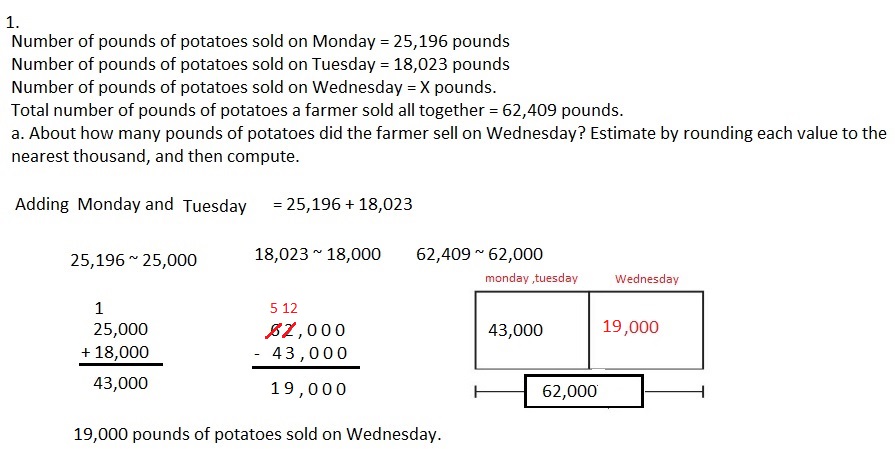
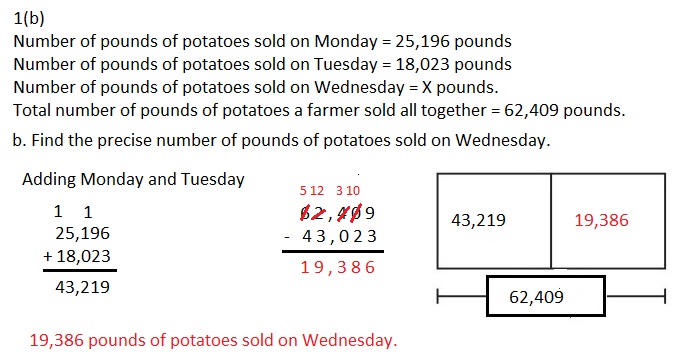
On Monday, a farmer sold 25,196 pounds of potatoes. On Tuesday, he sold 18,023 pounds. On Wednesday, he sold some more potatoes. In all, he sold 62,409 pounds of potatoes.
Answer:
Number of pounds of potatoes sold on Monday = 25,196 pounds
Number of pounds of potatoes sold on Tuesday = 18,023 pounds
Number of pounds of potatoes sold on Wednesday = X pounds.
Total number of pounds of potatoes a farmer sold all together = 62,409 pounds.
a. About how many pounds of potatoes did the farmer sell on Wednesday? Estimate by rounding each value to the nearest thousand, and then compute.
Answer:
Engage-NY-Eureka-Math-4th-Grade-Module-1-Lesson-16-Answer-Key-Eureka-Math-Grade-4-Module-1-Lesson-16-Problem-Set-Answer-Key-Question-1-a
b. Find the precise number of pounds of potatoes sold on Wednesday.
Answer:
Engage-NY-Eureka-Math-4th-Grade-Module-1-Lesson-16-Answer-Key-Eureka-Math-Grade-4-Module-1-Lesson-16-Problem-Set-Answer-Key-Question-1-b
c. Is your precise answer reasonable? Compare your estimate from (a) to your answer from (b). Write a sentence to explain your reasoning.
Answer:
Yes, my precise answer is reasonable. On rounding to the nearest thousand answer is 19,000 and my precise value is 19,386 . Both the values are close enough.

Question 2.
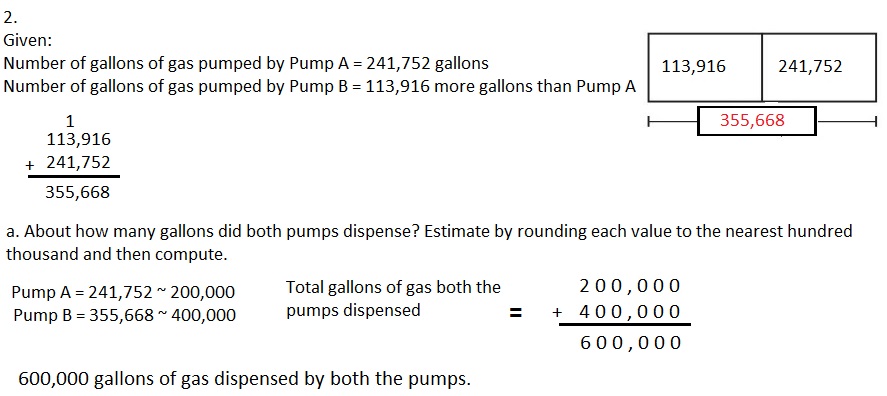
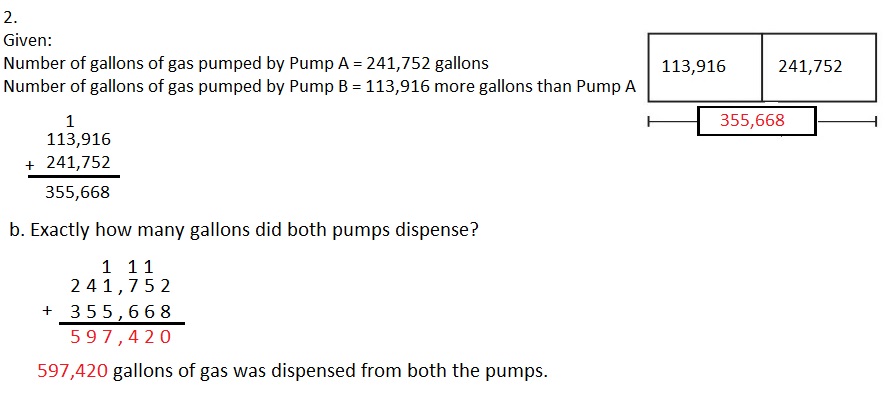
A gas station had two pumps. Pump A dispensed 241,752 gallons. Pump B dispensed 113,916 more gallons than Pump A.
Answer:
Given:
Number of gallons of gas pumped by Pump A = 241,752 gallons
Number of gallons of gas pumped by Pump B = 113,916 more gallons than Pump A

a. About how many gallons did both pumps dispense? Estimate by rounding each value to the nearest hundred thousand and then compute.
Answer:
Engage-NY-Eureka-Math-4th-Grade-Module-1-Lesson-16-Answer-Key-Eureka-Math-Grade-4-Module-1-Lesson-16-Problem-Set-Answer-Key-Question-2-a
b. Exactly how many gallons did both pumps dispense?
Answer:
Engage-NY-Eureka-Math-4th-Grade-Module-1-Lesson-16-Answer-Key-Eureka-Math-Grade-4-Module-1-Lesson-16-Problem-Set-Answer-Key-Question-2-b
c. Assess the reasonableness of your answer in (b). Use your estimate from (a) to explain.
Answer:
The Exact and the Estimation Answers are so close to each other. The difference between them is
600,000 – 597,420 = 2,580 which is not a huge difference.

Question 3.
Martin’s car had 86,456 miles on it. Of that distance, Martin’s wife drove 24,901 miles, and his son drove 7,997 miles. Martin drove the rest.
Given:
Total distance reading on Martin’s car = 86,456 miles
From that Martin’s wife drove = 24,901 miles.
From that Martin’s son drove =7, 997 miles.
Remaining drove by Martin = 86,456 – 24,901 – 7,997
a. About how many miles did Martin drive? Round each value to estimate.
Answer:
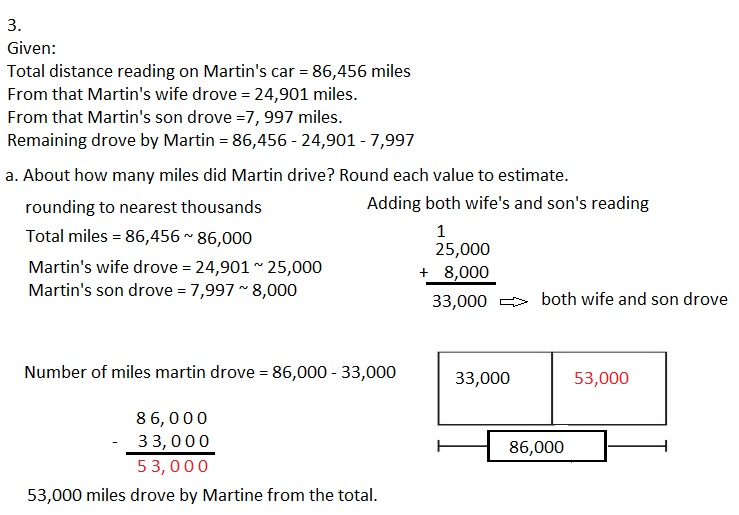
Engage-NY-Eureka-Math-4th-Grade-Module-1-Lesson-16-Answer-Key-Eureka-Math-Grade-4-Module-1-Lesson-16-Problem-Set-Answer-Key-Question-3-a
b. Exactly how many miles did Martin drive?
Answer:
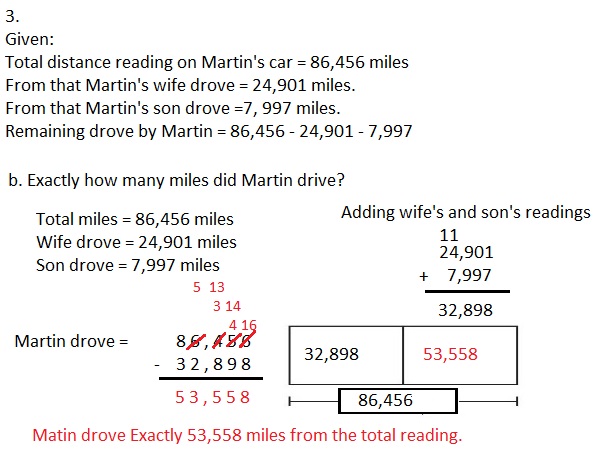
Engage-NY-Eureka-Math-4th-Grade-Module-1-Lesson-16-Answer-Key-Eureka-Math-Grade-4-Module-1-Lesson-16-Problem-Set-Answer-Key-Question-3-b
c. Assess the reasonableness of your answer in (b). Use your estimate from (a) to explain.
Answer:
Both the answer are relatively close. They both are reasonable answers.

Question 4.
A class read 3,452 pages the first week and 4,090 more pages in the second week than in the first week. How many pages had they read by the end of the second week? Is your answer reasonable? Explain how you know using estimation.
Answer:
Number of pages read by A class in the first week = 3,452 pages
Number of pages read by the class in the second week = 4,090 more than week 1 = 4,090 + 3,452
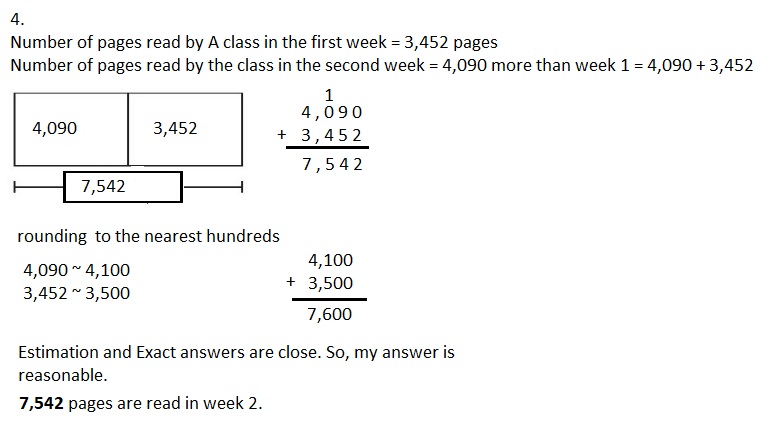
Engage-NY-Eureka-Math-4th-Grade-Module-1-Lesson-16-Answer-Key-Eureka-Math-Grade-4-Module-1-Lesson-16-Problem-Set-Answer-Key-Question-4

Question 5.
A cargo plane weighed 500,000 pounds. After the first load was taken off, the airplane weighed 437,981 pounds. Then 16,478 more pounds were taken off. What was the total number of pounds of cargo removed from the plane? Is your answer reasonable? Explain.
Answer:
Total weight of a cargo plane = 500,000 pounds
After the first load the weight of the plane = 437,981 pounds
Again a load of weight was taken off the plane = 16,478
The total number of pounds of cargo removed from the plane =
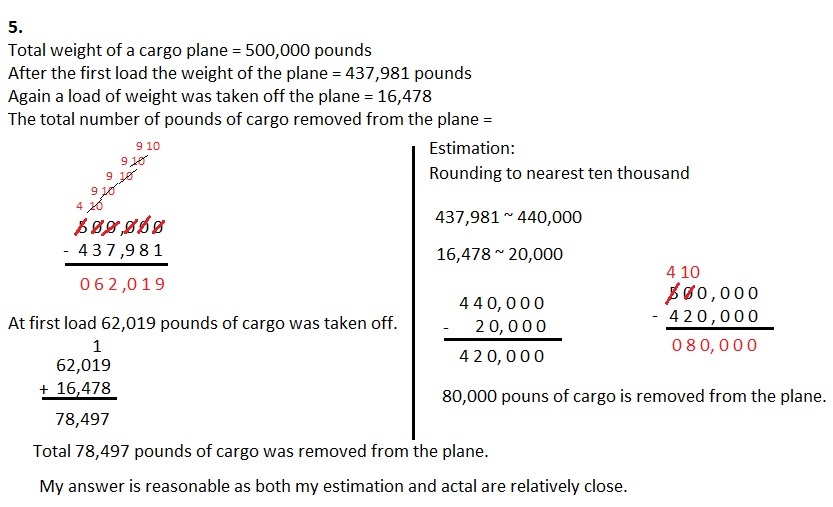
Engage-NY-Eureka-Math-4th-Grade-Module-1-Lesson-16-Answer-Key-Eureka-Math-Grade-4-Module-1-Lesson-16-Problem-Set-Answer-Key-Question-5

Eureka Math Grade 4 Module 1 Lesson 16 Exit Ticket Answer Key

Quarterback Brett Favre passed for 71,838 yards between the years 1991 and 2011. His all-time high was 4,413 passing yards in one year. In his second highest year, he threw 4,212 passing yards.
Answer:
Given:
Total yards passed = 71,838
The passing yard in one year = 4,413
The passing yard in the second year = 4,212

Question 1.
About how many passing yards did he throw in the remaining years? Estimate by rounding each value to the nearest thousand and then compute.
Answer:
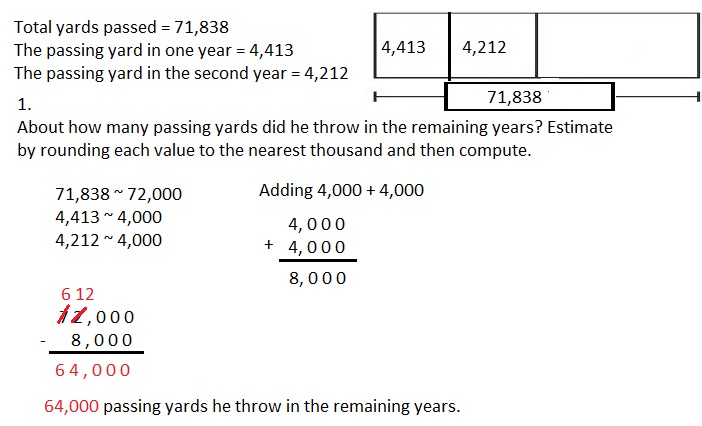
Engage-NY-Eureka-Math-4th-Grade-Module-1-Lesson-16-Answer-Key-Eureka-Math-Grade-4-Module-1-Lesson-16-Exit-Ticket-Answer-Key-Question-1

Question 2.
Exactly how many passing yards did he throw in the remaining years?
Answer:
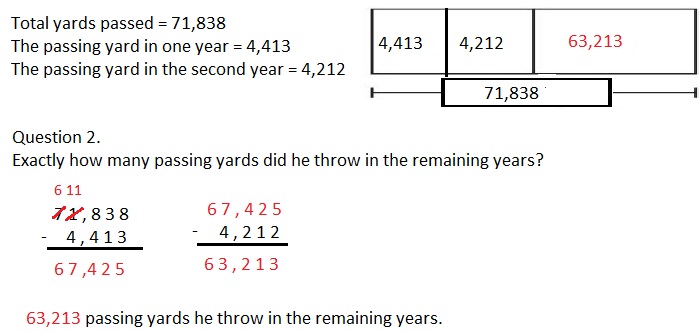
Engage-NY-Eureka-Math-4th-Grade-Module-1-Lesson-16-Answer-Key-Eureka-Math-Grade-4-Module-1-Lesson-16-Exit-Ticket-Answer-Key-Question-2

Question 3.
Assess the reasonableness of your answer in (b). Use your estimate from (a) to explain.
Answer:
The answer in (b) is 63,213 .and the estimated answer is 64,000. Both the answers are close and reasonable.

Eureka Math Grade 4 Module 1 Lesson 16 Homework Answer Key

Question 1.
Zachary’s final project for a college course took a semester to write and had 95,234 words. Zachary wrote 35,295 words the first month and 19,240 words the second month.
Given:
Total words written in the Zachary’s final project  in the complete semester = 95,234 words
Number of words Zachary’s wrote in the first month = 35,295 words
Number of words Zachary’s wrote in the second month = 19,240 words
a. Round each value to the nearest ten thousand to estimate how many words Zachary wrote during the remaining part of the semester.
Answer:
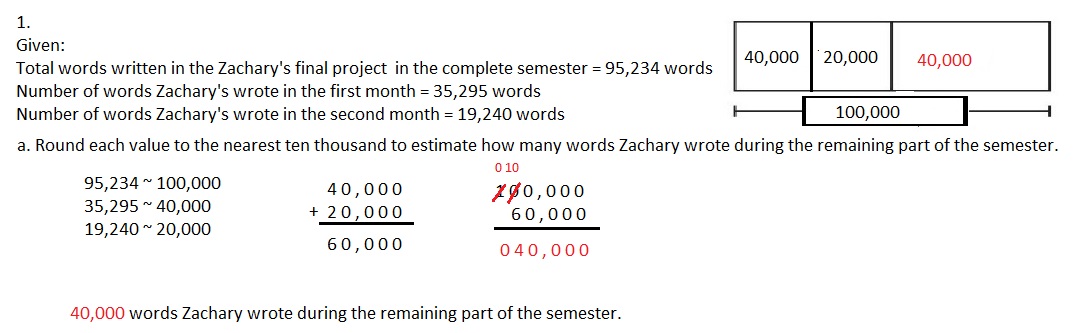
Engage-NY-Eureka-Math-4th-Grade-Module-1-Lesson-16-Answer-Key-Eureka-Math-Grade-4-Module-1-Lesson-16-Homework-Answer-Key-Question-1-a
b. Find the exact number of words written during the remaining part of the semester.
Answer:
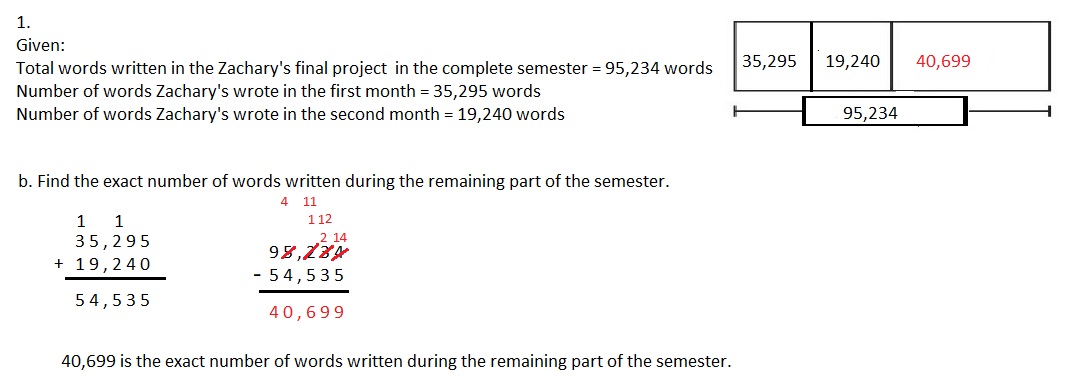
Engage-NY-Eureka-Math-4th-Grade-Module-1-Lesson-16-Answer-Key-Eureka-Math-Grade-4-Module-1-Lesson-16-Homework-Answer-Key-Question-1-b
c. Use your answer from (a) to explain why your answer in (b) is reasonable.
Answer:
Yes, my answer is reasonable because 40,699 is estimated to 40,000 on rounding to nearest ten thousand.

Question 2.
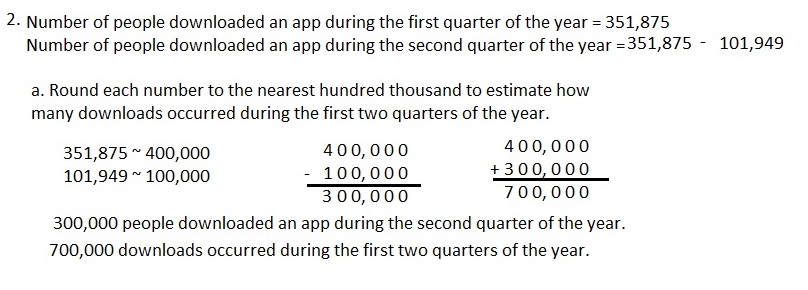
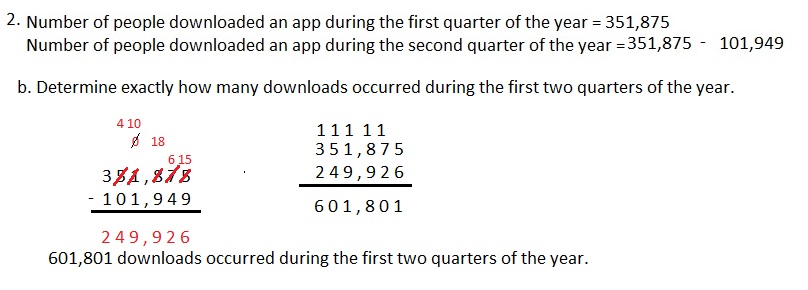
During the first quarter of the year, 351,875 people downloaded an app for their smartphones. During the second quarter of the year, 101,949 fewer people downloaded the app than during the first quarter. How many downloads occurred during the two quarters of the year?
GIVEN:
Number of people downloaded an app during the first quarter of the year = 351,875
Number of people downloaded an app during the second quarter of the year = 351,875 -101,949
a. Round each number to the nearest hundred thousand to estimate how many downloads occurred during the first two quarters of the year.
Answer:
Engage-NY-Eureka-Math-4th-Grade-Module-1-Lesson-16-Answer-Key-Eureka-Math-Grade-4-Module-1-Lesson-16-Homework-Answer-Key-Question-2-a
b. Determine exactly how many downloads occurred during the first two quarters of the year.
Answer:
Engage-NY-Eureka-Math-4th-Grade-Module-1-Lesson-16-Answer-Key-Eureka-Math-Grade-4-Module-1-Lesson-16-Homework-Answer-Key-Question-2-b
c. Determine if your answer is reasonable. Explain.
Answer:
Yes, my answer is reasonable as 700,000 is the next highest hundred thousand number to 601,801.

Question 3.
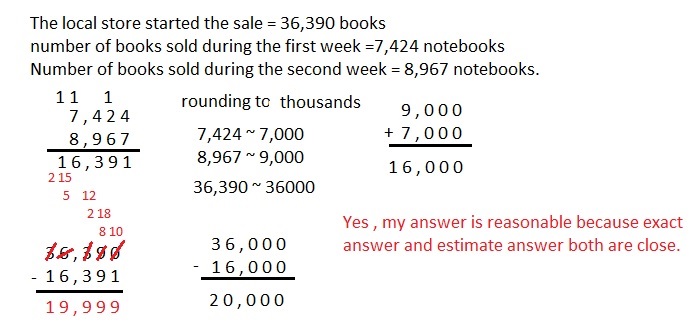
A local store was having a two-week Back to School sale. They started the sale with 36,390 notebooks. During the first week of the sale, 7,424 notebooks were sold. During the second week of the sale, 8,967 notebooks were sold. How many notebooks were left at the end of the two weeks? Is your answer reasonable?
Answer:
The local store started the sale = 36,390 books
number of books sold during the first week =7,424 notebooks
Number of books sold during the second week = 8,967 notebooks.
Engage-NY-Eureka-Math-4th-Grade-Module-1-Lesson-16-Answer-Key-Eureka-Math-Grade-4-Module-1-Lesson-16-Homework-Answer-Key-Question-3

Eureka Math Grade 3 Module 5 Lesson 21 Answer Key

Engage NY Eureka Math 3rd Grade Module 5 Lesson 21 Answer Key

Eureka Math Grade 3 Module 5 Lesson 21 Problem Set Answer Key

Question 1.
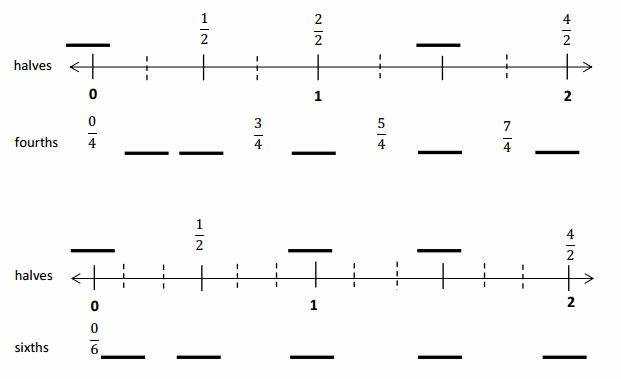
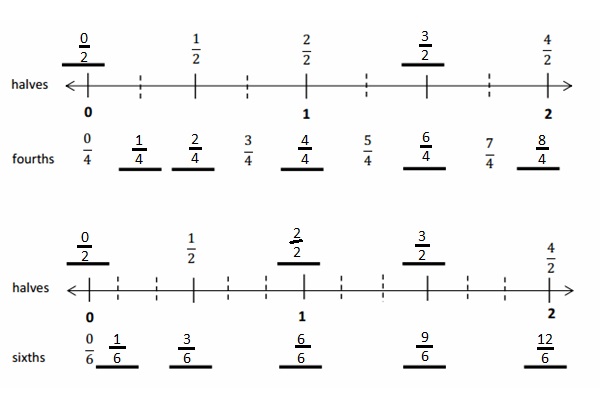
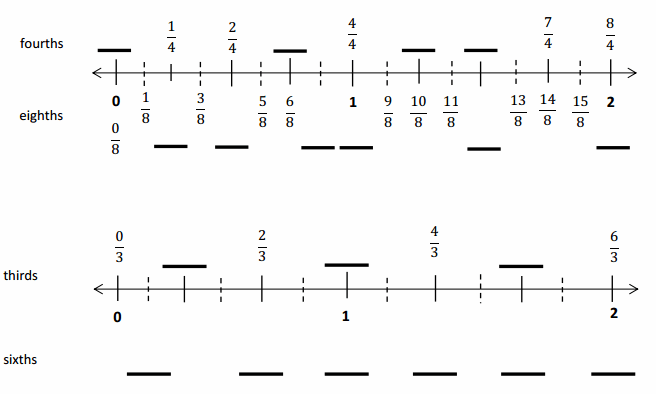
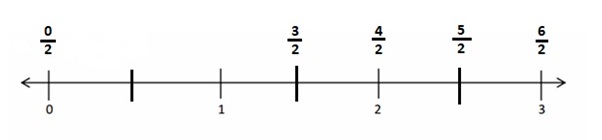
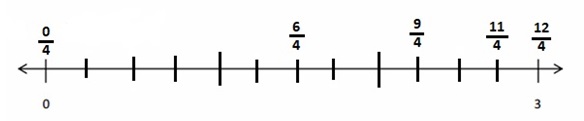
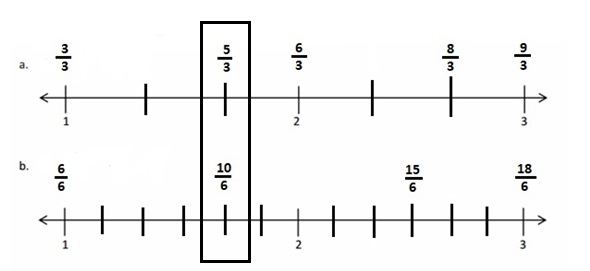
Use the fractional units on the left to count up on the number line. Label the missing fractions on the blanks.
Eureka Math Grade 3 Module 5 Lesson 21 Problem Set Answer Key 1
Answer :

Engage-NY-Eureka-Math-3rd-Grade-Module-5-Lesson-21-Answer-Key-Eureka-Math-Grade-3-Module-5-Lesson-21-Problem-Set-Answer-Key-Question-1
Explanation :
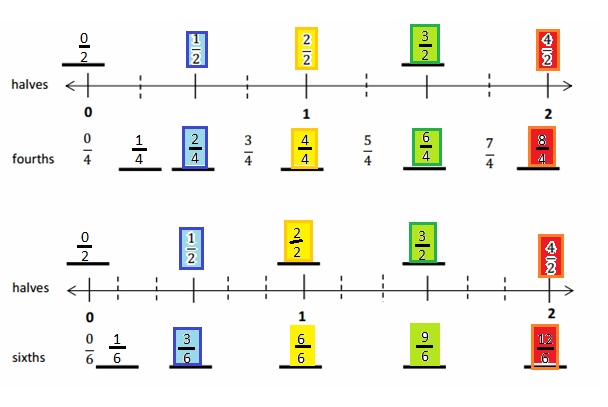
In the First figure the number line is divided into halves and fourths . The respective missing terms are written .
In the Second Figure The number line is divided into halves and Sixths .The respective Missing terms are written .

Question 2.
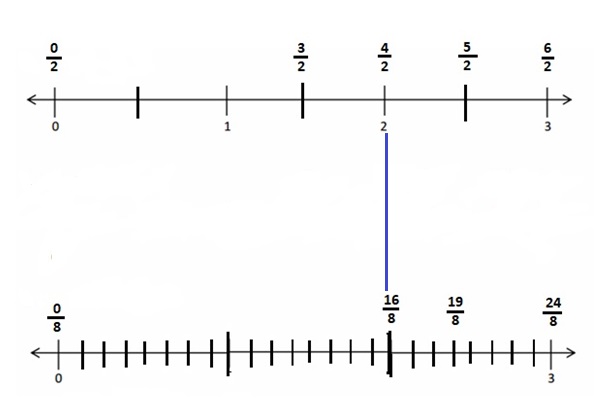
Use the number lines above to:

  • Color fractions equal to 1 half blue.
  • Color fractions equal to 1 yellow.
  • Color fractions equal to 3 halves green.
  • Color fractions equal to 2 red.

Answer :
Engage-NY-Eureka-Math-3rd-Grade-Module-5-Lesson-21-Answer-Key-Eureka-Math-Grade-3-Module-5-Lesson-21-Problem-Set-Answer-Key-Question-2
Explanation :
Respective colors are marked to the respective Fractions .

Question 3.
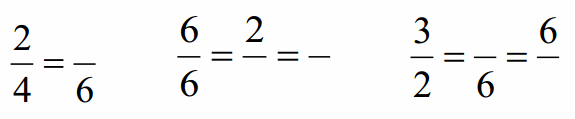
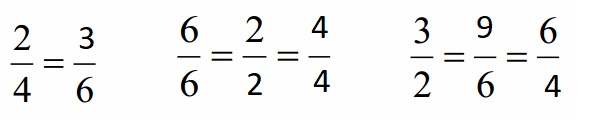
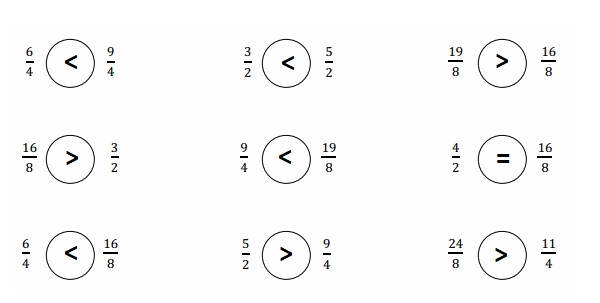
Use the number lines above to make the number sentences true.
Eureka Math Grade 3 Module 5 Lesson 21 Problem Set Answer Key 2
Answer :
Engage-NY-Eureka-Math-3rd-Grade-Module-5-Lesson-21-Answer-Key-Eureka-Math-Grade-3-Module-5-Lesson-21-Problem-Set-Answer-Key-Question-3

Question 4.
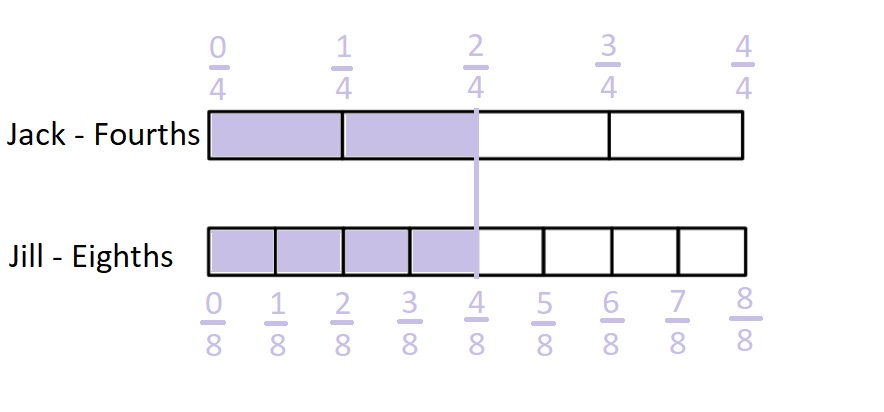
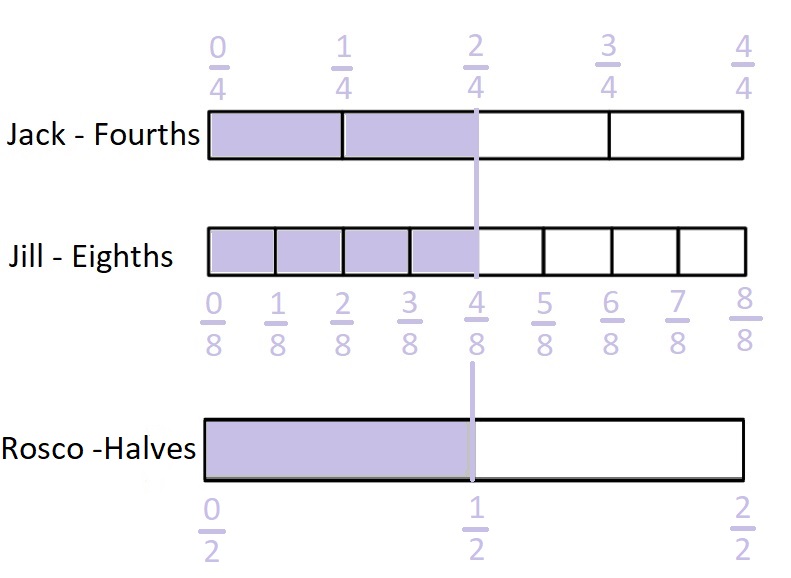
Jack and Jill use rain gauges the same size and shape to measure rain on the top of a hill. Jack uses a rain gauge marked in fourths of an inch. Jill’s gauge measures rain in eighths of an inch. On Thursday, Jack’s gauge measured \(\frac{2}{4}\) inches of rain. They both had the same amount of water, so what was the reading on Jill’s gauge Thursday? Draw a number line to help explain your thinking.
Answer :
Engage-NY-Eureka-Math-3rd-Grade-Module-5-Lesson-21-Answer-Key-Eureka-Math-Grade-3-Module-5-Lesson-21-Problem-Set-Answer-Key-Question-4
Explanation :
Jack Gauges is measured in Fourths and Jill’s Gauges is measured in Eighths.
Jack measures amount of rain = \(\frac{2}{4}\)
Both Gauges measures same . so amount of Rain in jill’s gauges = \(\frac{4}{8}\) .
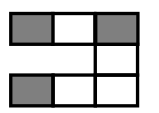
It is shown in the figure .

Question 5.
Jack and Jill’s baby brother Rosco also had a gauge the same size and shape on the same hill. He told Jack and Jill that there had been \(\frac{1}{2}\) inch of rain on Thursday. Is he right? Why or why not? Use words and a number line to explain your answer.
Answer :
Yes, Rosco is correct .
Engage-NY-Eureka-Math-3rd-Grade-Module-5-Lesson-21-Answer-Key-Eureka-Math-Grade-3-Module-5-Lesson-21-Problem-Set-Answer-Key-Question-5
Explanation :
Rosco is Correct Because his gauges is divided into halves . His amount of rain is equal to \(\frac{1}{2}\) .
It is clearly shown in the above figure .

Eureka Math Grade 3 Module 5 Lesson 21 Exit Ticket Answer Key

Question 1.
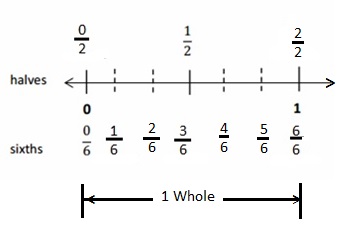
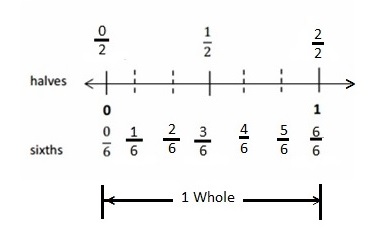
Claire went home after school and told her mother that 1 whole is the same as \(\frac{2}{2}\) and \(\frac{6}{6}\) . Her mother asked why, but Claire couldn’t explain. Use a number line and words to help Claire show and explain why
1 = \(\frac{2}{2}\) = \(\frac{6}{6}\).
Answer :
Engage-NY-Eureka-Math-3rd-Grade-Module-5-Lesson-21-Answer-Key-Eureka-Math-Grade-3-Module-5-Lesson-21-Exit-Ticket-Answer-Key-Question-1
Explanation :
The number is marked for 1 whole . The 1 whole is divided into halves and sixths . we can \(\frac{2}{2}\) and \(\frac{6}{6}\) are marked at the same point. Both the fractions represents 1 so , they are equal .

Eureka Math Grade 3 Module 5 Lesson 21 Homework Answer Key

Question 1.
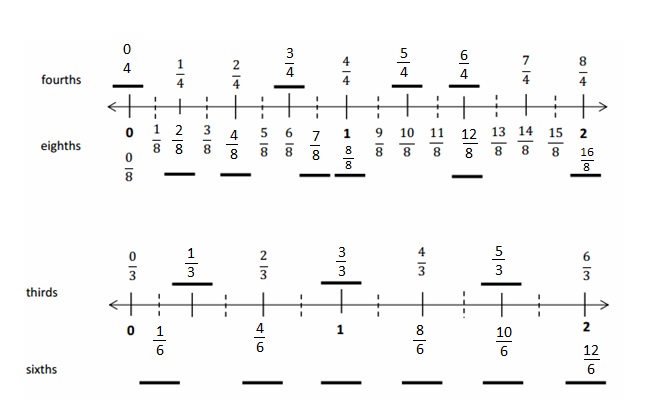
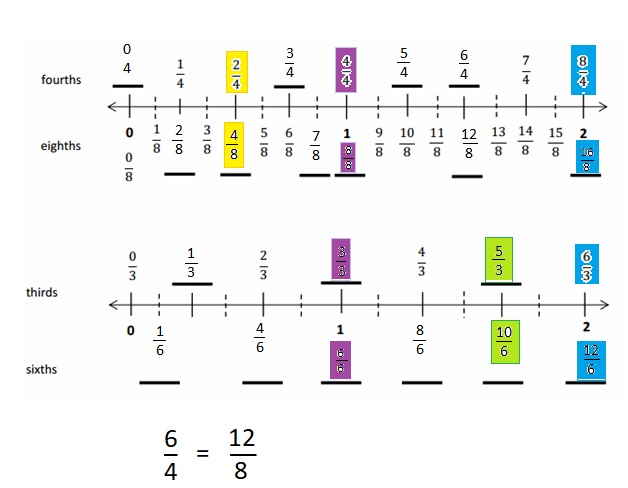
Use the fractional units on the left to count up on the number line. Label the missing fractions on the blanks.
Eureka Math 3rd Grade Module 5 Lesson 21 Homework Answer Key 10
Answer :
Engage-NY-Eureka-Math-3rd-Grade-Module-5-Lesson-21-Answer-Key-Eureka-Math-Grade-3-Module-5-Lesson-21-Homework-Answer-Key-Question-1
Explanation :
In the First figure the number line is divided into fourths and Eighths . The respective missing terms are written .
In the Second Figure The number line is divided into Thirds and Sixths .The respective Missing terms are written .

Question 2.
Use the number lines above to:

  • Color fractions equal to 1 purple.
  • Color fractions equal to 2 fourths yellow.
  • Color fractions equal to 2 blue.
  • Color fractions equal to 5 thirds green.
  • Write a pair of fractions that are equivalent.

________________ = ________________
Answer :
Engage-NY-Eureka-Math-3rd-Grade-Module-5-Lesson-21-Answer-Key-Eureka-Math-Grade-3-Module-5-Lesson-21-Homework-Answer-Key-Question-2
Explanation :
Respective colors are marked for the respective fractions .

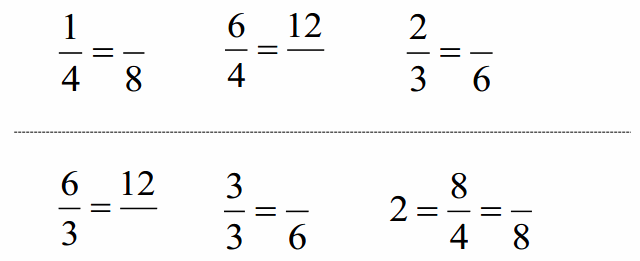
Question 3.
Use the number lines on the previous page to make the number sentences true.
Eureka Math 3rd Grade Module 5 Lesson 21 Homework Answer Key 11
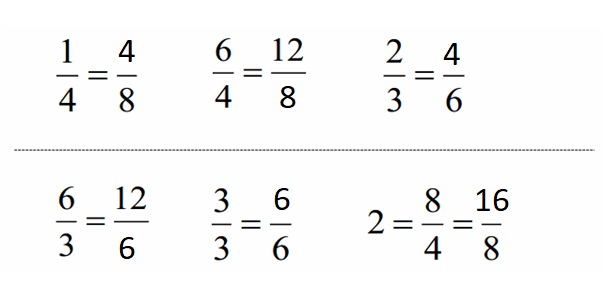
Answer :
Engage-NY-Eureka-Math-3rd-Grade-Module-5-Lesson-21-Answer-Key-Eureka-Math-Grade-3-Module-5-Lesson-21-Homework-Answer-Key-Question-3

Question 4.
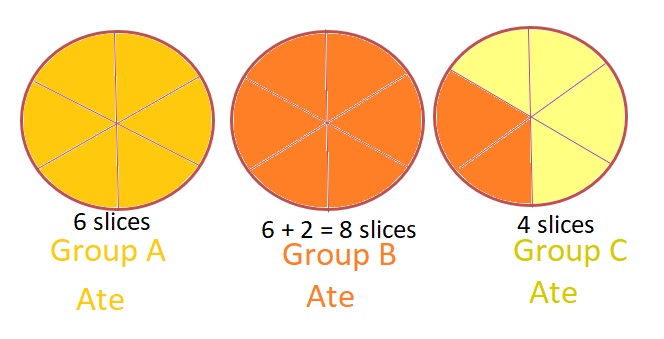
Mr. Fairfax ordered 3 large pizzas for a class party. Group A ate \(\frac{6}{6}\) of the first pizza, and Group B ate \(\frac{8}{6}\) of the remaining pizza. During the party, the class discussed which group ate more pizza.
a. Did Group A or B eat more pizza? Use words and pictures to explain your answer to the class.
b. Later, Group C ate all remaining slices of pizza. What fraction of the pizza did group C eat? Use words and pictures to explain your answer.
Answer :
Engage-NY-Eureka-Math-3rd-Grade-Module-5-Lesson-21-Answer-Key-Eureka-Math-Grade-3-Module-5-Lesson-21-Homework-Answer-Key-Question-4
a.
Each pizza is divided into 6 equal parts .
The Group A ate 1 complete pizza of 6 slices . 6 slices is equal to 1 pizza .
The Group B ate 1 complete pizza and 2 slices of third pizza that means total 8 slices of pizza .
Group B ate 2 slices more than Group A .
b.
Group B ate 2 slices of third pizza that means 4 slices are remaining . This remaining slices are eaten by Group C.
The Fraction of Group C ate is \(\frac{4}{6}\) .

Eureka Math Grade 3 Module 5 Lesson 20 Answer Key

Engage NY Eureka Math 3rd Grade Module 5 Lesson 20 Answer Key

Eureka Math Grade 3 Module 5 Lesson 20 Pattern Sheet Answer Key

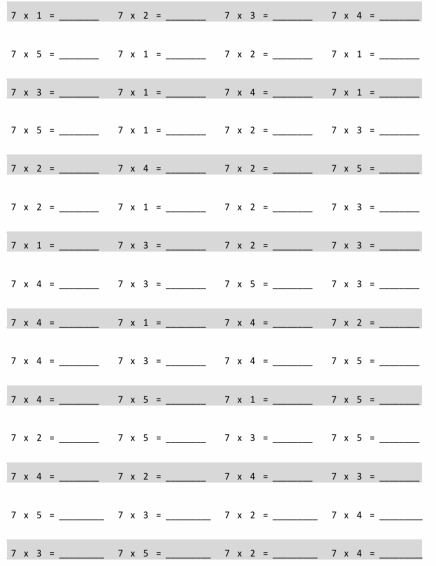
Multiply.
Engage NY Math Grade 3 Module 5 Lesson 20 Pattern Sheet Answer Key 1
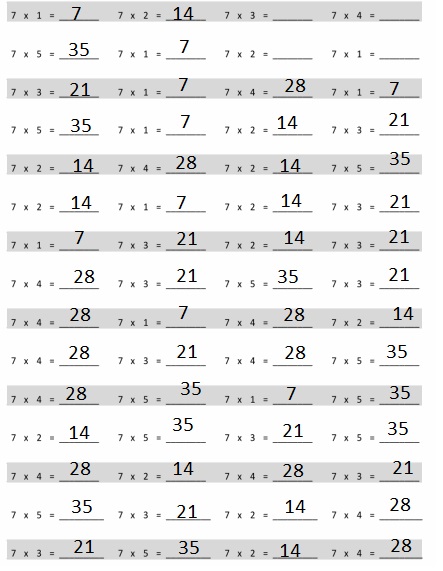
Answer :
Engage-NY-Eureka-Math-3rd-Grade-Module-5-Lesson-20-Answer-Key-Eureka-Math-Grade-3-Module-5-Lesson-20-Pattern-Sheet-Answer-Key
Explanation :
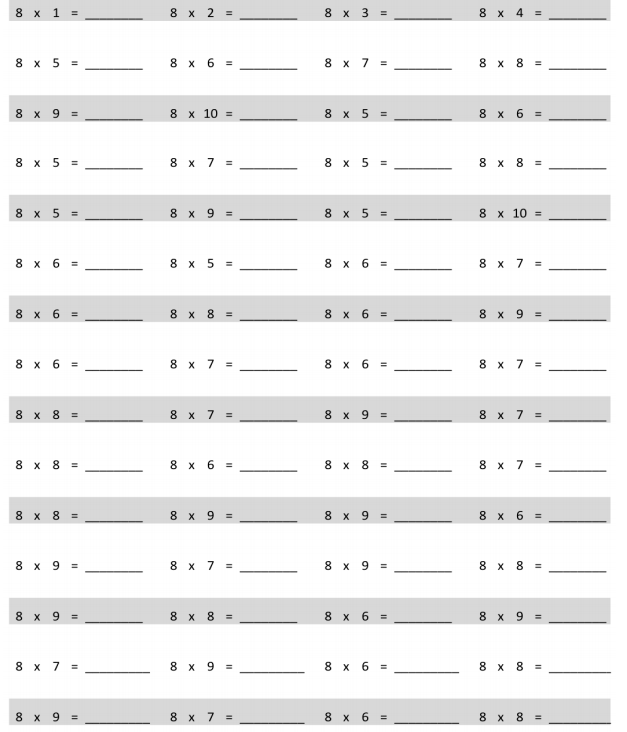
Here we see the seven table
7 × 1 = 7
7 × 2 = 14
7 × 3 = 21
7 × 4 = 28
7 × 5 = 35

Eureka Math Grade 3 Module 5 Lesson 20 Problem Set Answer Key

Question 1.
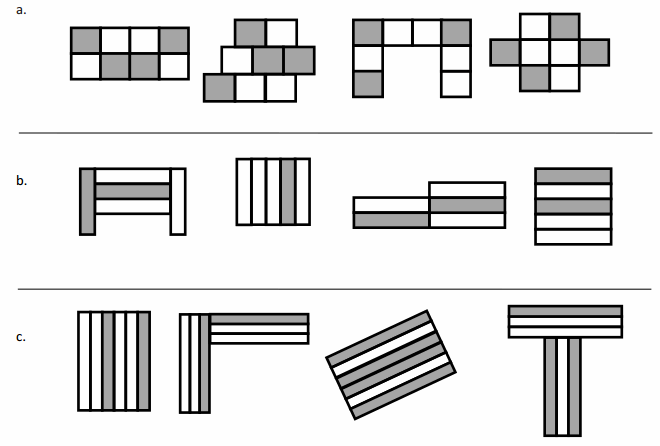
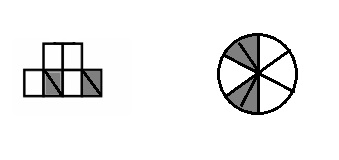
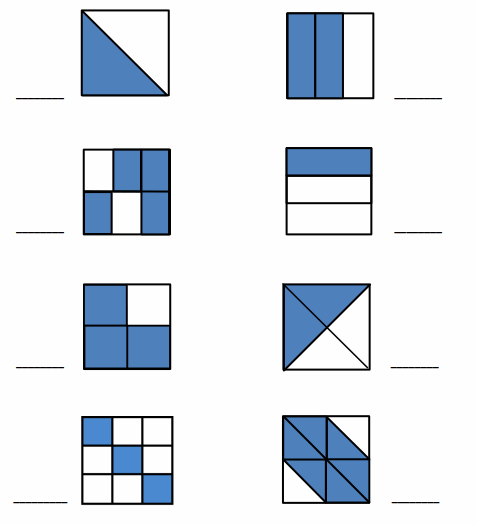
Label what fraction of each shape is shaded. Then, circle the fractions that are equal.
Eureka Math Grade 3 Module 5 Lesson 20 Problem Set Answer Key 2
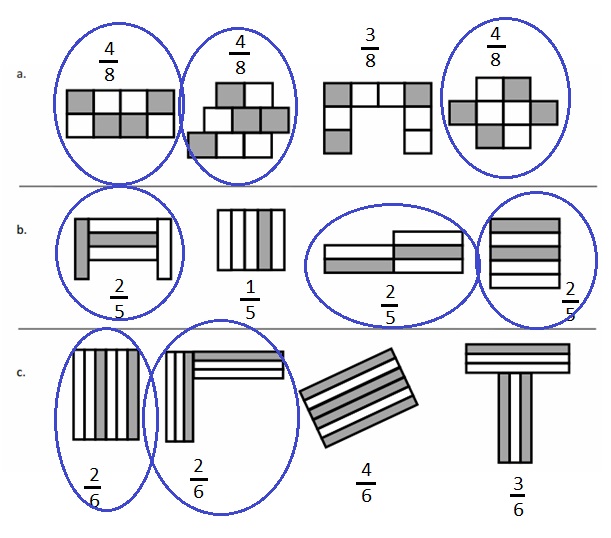
Answer :
Engage-NY-Eureka-Math-3rd-Grade-Module-5-Lesson-20-Answer-Key-Eureka-Math-Grade-3-Module-5-Lesson-20-Problem-Set-Answer-Key-Question-1
Explanation :
The Fraction of shaded parts = Number of shaded parts ÷ Total Number of Parts .
fraction of each shape shaded are written and the fractions which are same are circled as shown in the above figure .

Question 2.
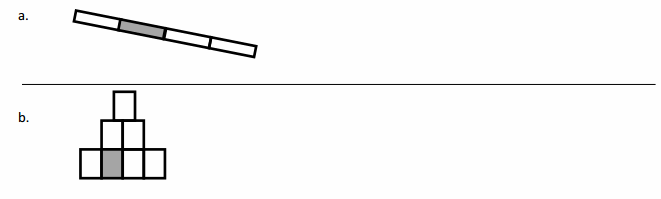
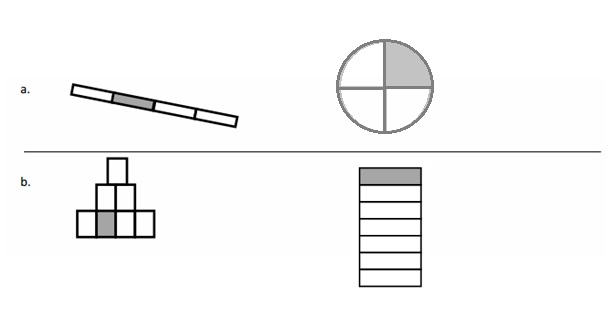
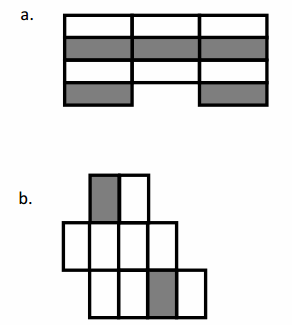
Label the shaded fraction. Draw 2 different representations of the same fractional amount.
Eureka Math Grade 3 Module 5 Lesson 20 Problem Set Answer Key 3
Answer :
Engage-NY-Eureka-Math-3rd-Grade-Module-5-Lesson-20-Answer-Key-Eureka-Math-Grade-3-Module-5-Lesson-20-Problem-Set-Answer-Key-Question-2
Explanation :
In figure a the Fraction of shaded = \(\frac{1}{4}\) the same fraction is represented with a circle divided into 4 equal parts and 1 part is shaded
In figure b the Fraction of shaded = \(\frac{1}{7}\) the same fraction is represented with a Rectangle which is divided into 7 equal parts and 1 part is shaded .

Question 3.
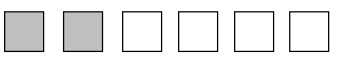
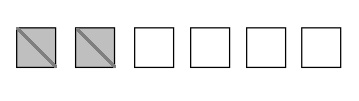
Ann has 6 small square pieces of paper. 2 squares are grey. Ann cuts the 2 grey squares in half with a diagonal line from one corner to the other.
Eureka Math Grade 3 Module 5 Lesson 20 Problem Set Answer Key 4
a. What shapes does she have now?
b. How many of each shape does she have?
c. Use all the shapes with no overlaps. Draw at least 2 different ways Ann’s set of shapes might look. What fraction of the figure is grey?
Answer :
Engage-NY-Eureka-Math-3rd-Grade-Module-5-Lesson-20-Answer-Key-Eureka-Math-Grade-3-Module-5-Lesson-20-Problem-Set-Answer-Key-Question-3
a. The shapes does she have now is Triangles and Squares.
b. 4 Triangles and 4 Squares .
c. Engage-NY-Eureka-Math-3rd-Grade-Module-5-Lesson-20-Answer-Key-Eureka-Math-Grade-3-Module-5-Lesson-20-Problem-Set-Answer-Key-Question-3-c
Explanation :
The fraction of shaded parts = Number of shaded parts ÷ Total Number of Parts .
Fraction = \(\frac{2}{6}\) .

Question 4.
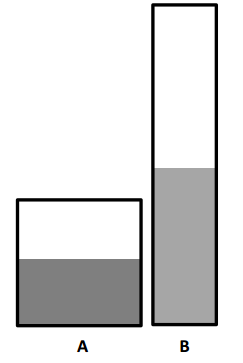
Laura has 2 different beakers that hold exactly 1 liter. She pours \(\frac{1}{2}\) liter of blue liquid into Beaker A. She pours \(\frac{1}{2}\) liter of orange liquid into Beaker B. Susan says the amounts are not equal. Cristina says they are. Explain who you think is correct and why.
Eureka Math Grade 3 Module 5 Lesson 20 Problem Set Answer Key 5
Answer :
Cristine is Correct .
Explanation :
Here the Breaker A contains Blue Liquid of \(\frac{1}{2}\) liter
Breaker B contains Orange liquid of \(\frac{1}{2}\) liter .
Whatever may be the shapes of the breaker but both the Amount of Quantities are same .
Where as , Susan Comparing the breakers Shape and saying the quantities are different . But she is Wrong .

Eureka Math Grade 3 Module 5 Lesson 20 Exit Ticket Answer Key

Question 1.
Label what fraction of the figure is shaded. Then, circle the fractions that are equal.
Engage NY Math 3rd Grade Module 5 Lesson 20 Exit Ticket Answer Key 6
Answer :
Engage-NY-Eureka-Math-3rd-Grade-Module-5-Lesson-20-Answer-Key-Eureka-Math-Grade-3-Module-5-Lesson-20-Exit-Ticket-Answer-Key-Question-1
Explanation :
The fraction of shaded parts = Number of shaded parts ÷ Total Number of Parts .

Question 2.
Label the shaded fraction. Draw 2 different representations of the same fractional amount.
Engage NY Math 3rd Grade Module 5 Lesson 20 Exit Ticket Answer Key 7
Answer : Engage-NY-Eureka-Math-3rd-Grade-Module-5-Lesson-20-Answer-Key-Eureka-Math-Grade-3-Module-5-Lesson-20-Exit-Ticket-Answer-Key-Question-2
Explanation :
The fraction of shaded parts = Number of shaded parts ÷ Total Number of Parts .
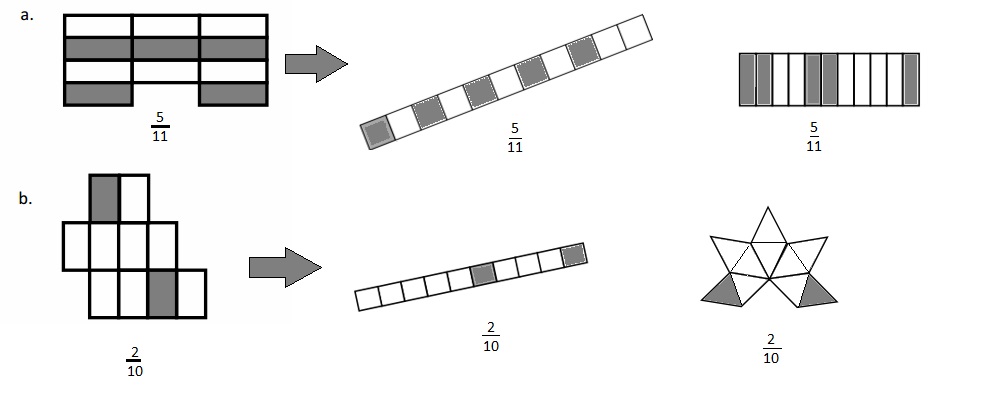
The figure a has shaded fraction = \(\frac{5}{11}\)
The fraction is represented with 2 different shapes . The first is a small rectangular strip with 11 parts and 5 parts are shaded and another figure is Longer rectangular strip with 11 parts and 5 parts are shaded .
The figure b has shaded fraction = \(\frac{2}{10}\)
The fraction is represented with 2 different shapes . The first is a small rectangular strip with 10 parts and 2 parts are shaded and another figure is star shape with 10 parts of Triangles and 2 parts are shaded .

Eureka Math Grade 3 Module 5 Lesson 20 Homework Answer Key

Question 1.
Label the shaded fraction. Draw 2 different representations of the same fractional amount.
Eureka Math 3rd Grade Module 5 Lesson 20 Homework Answer Key 8
Answer :
Engage-NY-Eureka-Math-3rd-Grade-Module-5-Lesson-20-Answer-Key-Eureka-Math-Grade-3-Module-5-Lesson-20-Homework-Answer-Key-Question-1
Explanation :
The fraction of shaded parts = Number of shaded parts ÷ Total Number of Parts .
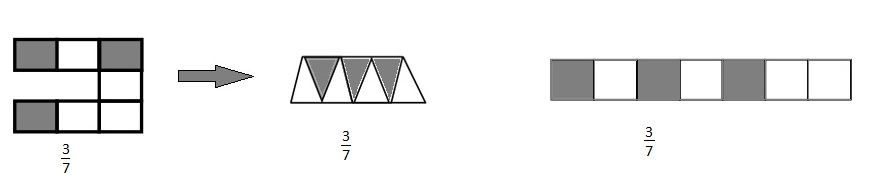
The figure a has shaded fraction = \(\frac{3}{7}\)
The fraction is represented with 2 different shapes . The first is a Triangular strip with 7 parts and 3 parts are shaded and another figure is rectangular strip with 7 parts and 3 parts are shaded .

Question 2.
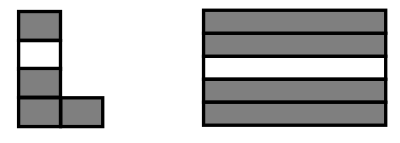
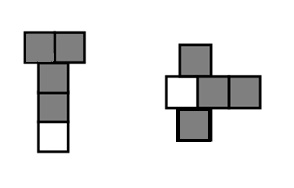
These two shapes both show \(\frac{4}{5}\).
Eureka Math 3rd Grade Module 5 Lesson 20 Homework Answer Key 9
a. Are the shapes equivalent? Why or why not?
b. Draw two different representations of \(\frac{4}{5}\) that are equivalent.
Answer :
a. No, The Shapes are not Equivalent , Both the shapes are \(\frac{4}{5}\) units but both the shapes are different .
b.
Engage-NY-Eureka-Math-3rd-Grade-Module-5-Lesson-20-Answer-Key-Eureka-Math-Grade-3-Module-5-Lesson-20-Homework-Answer-Key-Question-2
Explanation :
2 Different shapes of \(\frac{4}{5}\) units are represented in the above figure .

Question 3.
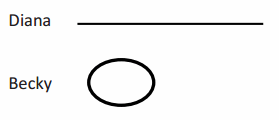
Diana ran a quarter mile straight down the street. Becky ran a quarter mile on a track. Who ran more? Explain your thinking.
Eureka Math 3rd Grade Module 5 Lesson 20 Homework Answer Key 10
Answer :
If the length of the down street and the track is same then
Diana and Becky both ran Quarter that means both ran same length .
Whereas if the length of the down street and the track is different , Then length of the Quarter will be different then both Ran different miles . The one who ran more can be known by if the length of the down street and track mile if given .

Eureka Math Grade 3 Module 5 Lesson 22 Answer Key

Engage NY Eureka Math 3rd Grade Module 5 Lesson 22 Answer Key

Eureka Math Grade 3 Module 5 Lesson 22 Problem Set Answer Key

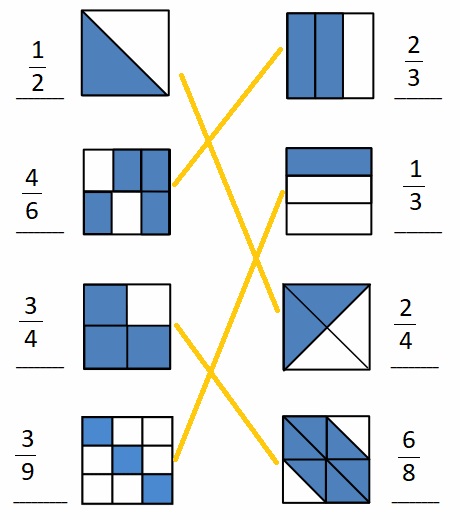
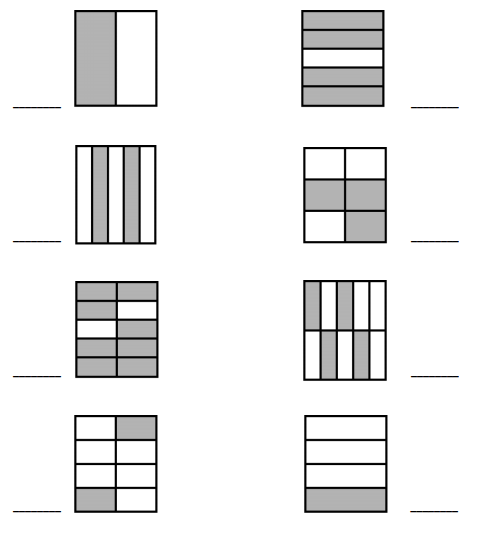
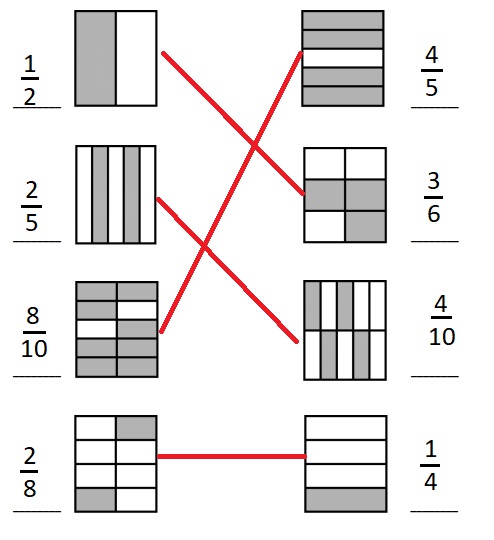
Write the shaded fraction of each figure on the blank. Then, draw a line to match the equivalent fractions.
Eureka Math Grade 3 Module 5 Lesson 22 Problem Set Answer Key 1
Answer :
Engage-NY-Eureka-Math-3rd-Grade-Module-5-Lesson-22-Answer-Key-Eureka-Math-Grade-3-Module-5-Lesson-22-Problem-Set-Answer-Key-Question-1
Explanations :
The fraction of shaded parts = Number of shaded parts ÷ Total Number of Parts .
All the fractions are written and the respective fractions are matched .

Question 2.
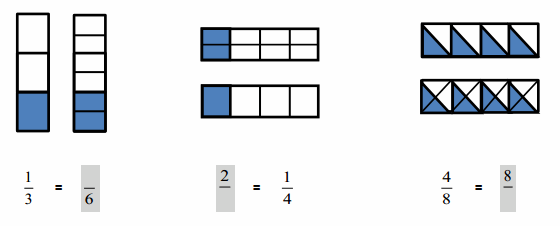
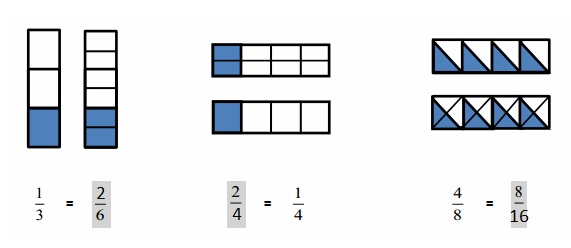
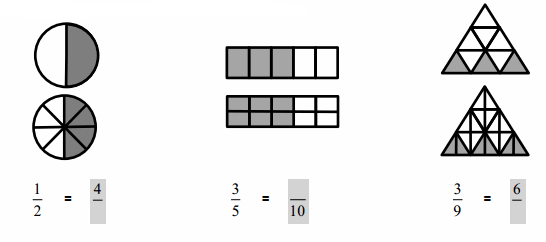
Write the missing parts of the fractions.
Eureka Math Grade 3 Module 5 Lesson 22 Problem Set Answer Key 2
Answer :
Engage-NY-Eureka-Math-3rd-Grade-Module-5-Lesson-22-Answer-Key-Eureka-Math-Grade-3-Module-5-Lesson-22-Problem-Set-Answer-Key-Question-2
Explanations :
The fraction of shaded parts = Number of shaded parts ÷ Total Number of Parts .
The Shaded fractions are written .

Question 3.
Why does it take 2 copies of \(\frac{1}{8}\) to show the same amount as 1 copy of \(\frac{1}{4}\)? Explain your answer in words and pictures.
Answer :
Engage-NY-Eureka-Math-3rd-Grade-Module-5-Lesson-22-Answer-Key-Eureka-Math-Grade-3-Module-5-Lesson-22-Problem-Set-Answer-Key-Question-3
Explanation :
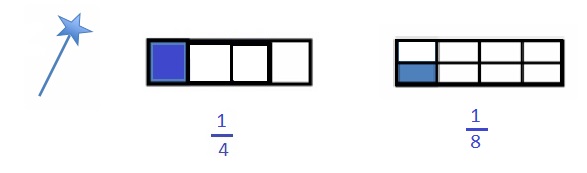
Because, the parts in 1/8 is doubled than 1/4, so, we need to double the copies.
Since, by the Above diagram,


Thus, the parts in 1/8 is doubled than 1/4, so, we need to double the copies.

Question 4.
How many sixths does it take to make the same amount as \(\frac{1}{3}\) ? Explain your answer in words and pictures.
Answer :
Engage-NY-Eureka-Math-3rd-Grade-Module-5-Lesson-22-Answer-Key-Eureka-Math-Grade-3-Module-5-Lesson-22-Problem-Set-Answer-Key-Question-4
Explanation :
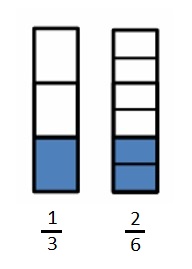
The Rectangular strip is divided into 3 parts and 6 parts . The first strip is marked \(\frac{1}{3}\) and the second is marked \(\frac{2}{6}\) which means \(\frac{1}{3}\) is equal to \(\frac{2}{6}\).
It takes two one-sixths to make a third.

Question 5.
Why does it take 10 copies of 1 sixth to make the same amount as 5 copies of 1 third? Explain your answer in words and pictures.
Answer :
Engage-NY-Eureka-Math-3rd-Grade-Module-5-Lesson-22-Answer-Key-Eureka-Math-Grade-3-Module-5-Lesson-22-Problem-Set-Answer-Key-Question-5
Explanation :
The Sixths have as many as units as thirds .
So, \(\frac{10}{6}\) are as equal as \(\frac{5}{3}\) copies as shown in above figure .

Eureka Math Grade 3 Module 5 Lesson 22 Exit Ticket Answer Key

Question 1.
Draw and label two models that show equivalent fractions.
Answer :
Engage-NY-Eureka-Math-3rd-Grade-Module-5-Lesson-22-Answer-Key-Eureka-Math-Grade-3-Module-5-Lesson-22-Exit-Ticket-Answer-Key-Question-1
Explanation :
From The above figure we notice
The First rectangular strip is divided into 2 equal parts and fraction shaded is \(\frac{1}{2}\) .
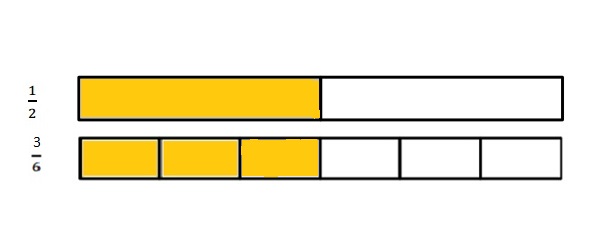
The Second rectangular strip is divided into 6 equal parts and the fraction shaded is \(\frac{3}{6}\) .
Both show the equivalent fraction \(\frac{1}{2}\) = \(\frac{3}{6}\) .

Question 2.
Draw a number line that proves your thinking about Problem 1.
Answer :
Engage-NY-Eureka-Math-3rd-Grade-Module-5-Lesson-22-Answer-Key-Eureka-Math-Grade-3-Module-5-Lesson-22-Exit-Ticket-Answer-Key-Question-2
Explanation :
The number is represented for the above equivalent Fraction \(\frac{1}{2}\) = \(\frac{3}{6}\) .

Eureka Math Grade 3 Module 5 Lesson 22 Homework Answer Key

Question 1.
Write the shaded fraction of each figure on the blank. Then, draw a line to match the equivalent fractions.
Eureka Math 3rd Grade Module 5 Lesson 22 Homework Answer Key 3
Answer :
Engage-NY-Eureka-Math-3rd-Grade-Module-5-Lesson-22-Answer-Key-Eureka-Math-Grade-3-Module-5-Lesson-22-Homework-Answer-Key-Question-1
Explanation :
The fraction of shaded parts = Number of shaded parts ÷ Total Number of Parts .
All the fractions are written and the respective fractions are matched .

Question 2.
Complete the fractions to make true statements.
Eureka Math 3rd Grade Module 5 Lesson 22 Homework Answer Key 4Answer :
Answer :
Engage-NY-Eureka-Math-3rd-Grade-Module-5-Lesson-22-Answer-Key-Eureka-Math-Grade-3-Module-5-Lesson-22-Homework-Answer-Key-Question-2
Explanation :
The Figures are divided into double and the shaded Fractions are compared .

Question 3.
Why does it take 3 copies of \(\frac{1}{6}\) to show the same amount as 1 copy of \(\frac{1}{2}\)? Explain your answer in words and pictures.
Answer :
Engage-NY-Eureka-Math-3rd-Grade-Module-5-Lesson-22-Answer-Key-Eureka-Math-Grade-3-Module-5-Lesson-22-Homework-Answer-Key-Question-3
Explanation :
The Two tape Diagram Shows 3 copies of \(\frac{3}{6}\) is the same length as 1 copy of \(\frac{1}{2}\) .

Question 4.
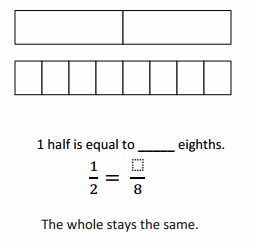
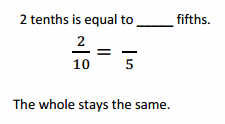
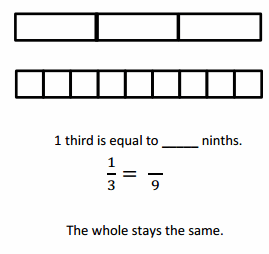
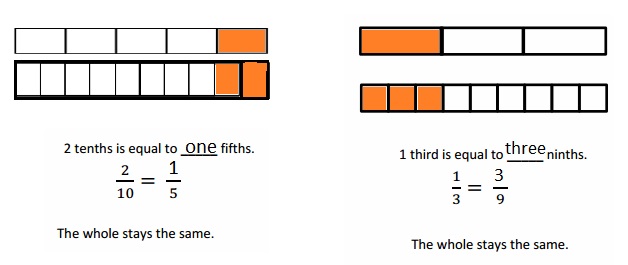
How many ninths does it take to make the same amount as \(\frac{1}{3}\)? Explain your answer in words and pictures.
Answer :
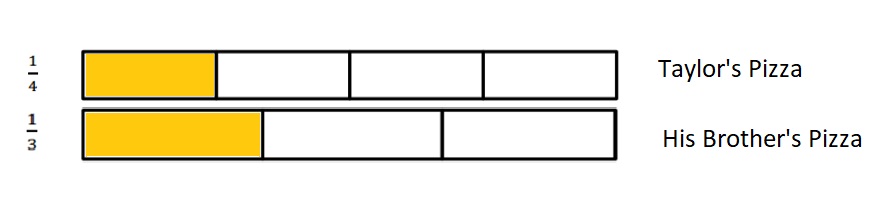
Engage-NY-Eureka-Math-3rd-Grade-Module-5-Lesson-22-Answer-Key-Eureka-Math-Grade-3-Module-5-Lesson-22-Homework-Answer-Key-Question-4
Explanation :
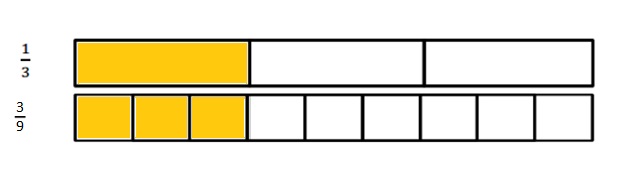
The Two tape Diagram Shows 3 ninths ( \(\frac{3}{9}\)) is the same length as 1Thirds (\(\frac{1}{3}\)) .

Question 5.
A pie was cut into 8 equal slices. If Ruben ate \(\frac{3}{4}\) of the pie, how many slices did he eat? Explain your answer using a number line and words.
Answer :

Engage-NY-Eureka-Math-3rd-Grade-Module-5-Lesson-22-Answer-Key-Eureka-Math-Grade-3-Module-5-Lesson-22-Homework-Answer-Key-Question-5
Explanation :
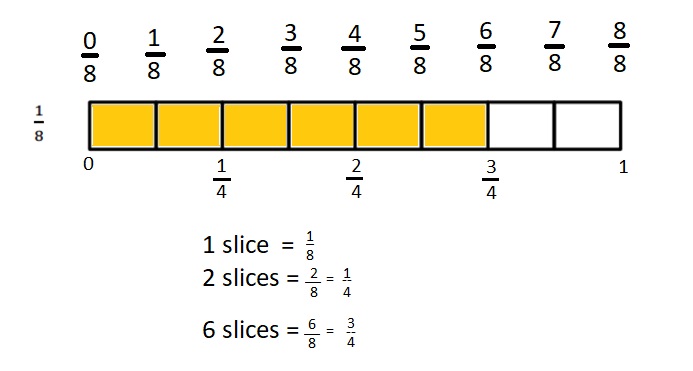
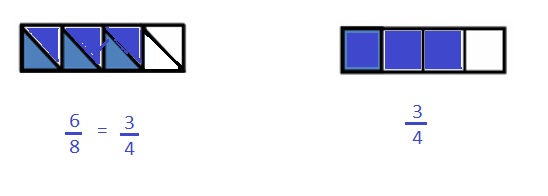
\(\frac{3}{4}\) is the same length as \(\frac{6}{8}\)
Ruben ate 6 slices which is \(\frac{6}{8}\) = \(\frac{3}{4}\).

Eureka Math Grade 3 Module 5 Lesson 23 Answer Key

Engage NY Eureka Math 3rd Grade Module 5 Lesson 23 Answer Key

Eureka Math Grade 3 Module 5 Lesson 23 Sprint Answer Key

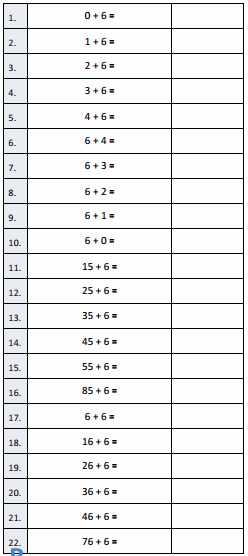
A
Add by Six
Eureka Math Grade 3 Module 5 Lesson 23 Sprint Answer Key 1
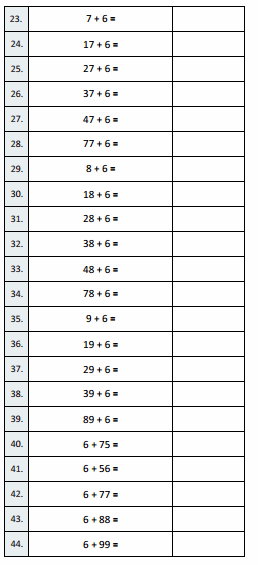
Eureka Math Grade 3 Module 5 Lesson 23 Sprint Answer Key 2

Question 1.
0 + 6 =

Question 2.
1 + 6 =

Question 3.
2 + 6 =

Question 4.
3 + 6 =

Question 5.
4 + 6 =

Question 6.
6 + 4 =

Question 7.
6 + 3 =

Question 8.
6 + 2 =

Question 9.
6 + 1 =

Question 10.
6 + 0 =

Question 11.
15 + 6 =

Question 12.
25 + 6 =

Question 13.
35 + 6 =

Question 14.
45 + 6 =

Question 15.
55 + 6 =

Question 16.
85 + 6 =

Question 17.
6 + 6 =

Question 18.
16 + 6 =

Question 19.
26 + 6 =

Question 20.
36 + 6 =

Question 21.
46 + 6 =

Question 22.
76 + 6 =

Question 23.
7 + 6 =

Question 24.
17 + 6 =

Question 25.
27 + 6 =

Question 26.
37 + 6 =

Question 27.
47 + 6 =

Question 28.
77 + 6 =

Question 29.
8 + 6 =

Question 30.
18 + 6 =

Question 31.
28 + 6 =

Question 32.
38 + 6 =

Question 33.
48 + 6 =

Question 34.
78 + 6 =

Question 35.
9 + 6 =

Question 36.
19 + 6 =

Question 37.
29 + 6 =

Question 38.
39 + 6 =

Question 39.
89 + 6 =

Question 40.
6 + 75 =

Question 41.
6 + 56 =

Question 42.
6 + 77 =

Question 43.
6 + 88 =

Question 44.
6 + 99 =

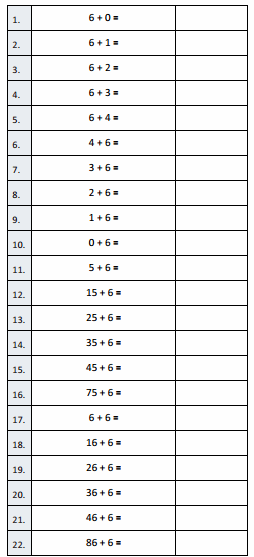
B
Add by Six
Eureka Math Grade 3 Module 5 Lesson 23 Sprint Answer Key 3
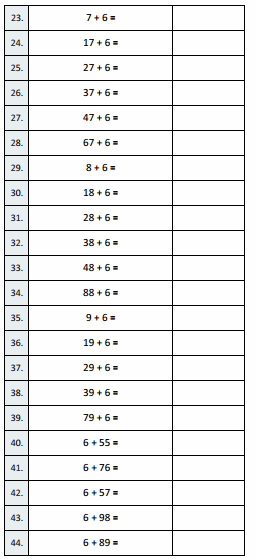
Eureka Math Grade 3 Module 5 Lesson 23 Sprint Answer Key 4

Question 1.
6 + 0 =

Question 2.
6 + 1 =

Question 3.
6 + 2 =

Question 4.
6 + 3 =

Question 5.
6 + 4 =

Question 6.
4 + 6 =

Question 7.
3 + 6 =

Question 8.
2 + 6 =

Question 9.
1 + 6 =

Question 10.
0 + 6 =

Question 11.
5 + 6 =

Question 12.
15 + 6 =

Question 13.
25 + 6 =

Question 14.
35 + 6 =

Question 15.
45 + 6 =

Question 16.
75 + 6 =

Question 17.
6 + 6 =

Question 18.
16 + 6 =

Question 19.
26 + 6 =

Question 20.
36 + 6 =

Question 21.
46 + 6 =

Question 22.
86 + 6 =

Question 23.
7 + 6 =

Question 24.
17 + 6 =

Question 25.
27 + 6 =

Question 26.
37 + 6 =

Question 27.
47 + 6 =

Question 28.
67 + 6 =

Question 29.
8 + 6 =

Question 30.
18 + 6 =

Question 31.
28 + 6 =

Question 32.
38 + 6 =

Question 33.
48 + 6 =

Question 34.
88 + 6 =

Question 35.
9 + 6 =

Question 36.
19 + 6 =

Question 37.
29 + 6 =

Question 38.
39 + 6 =

Question 39.
79 + 6 =

Question 40.
6 + 55 =

Question 41.
6 + 76 =

Question 42.
6 + 57 =

Question 43.
6 + 98 =

Question 44.
6 + 89 =

Eureka Math Grade 3 Module 5 Lesson 23 Sprint Answer Key 5

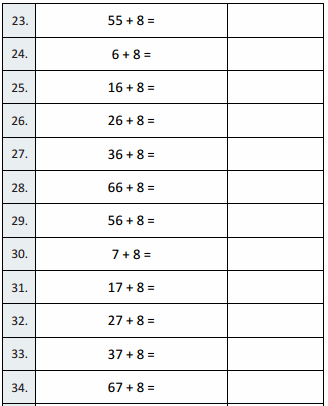
Eureka Math Grade 3 Module 5 Lesson 23 Problem Set Answer Key

Question 1.
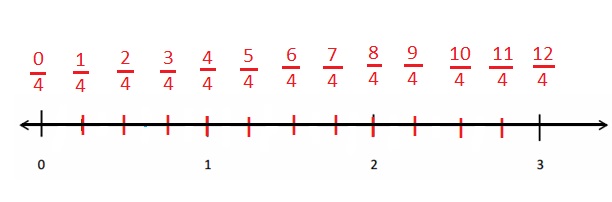
On the number line above, use a red colored pencil to divide each whole into fourths, and label each fraction above the line. Use a fraction strip to help you estimate, if necessary.
Answer :
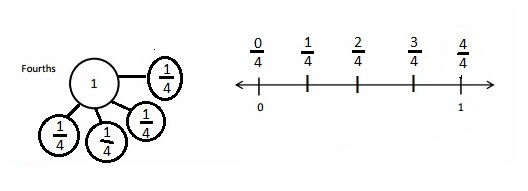
Engage-NY-Eureka-Math-3rd-Grade-Module-5-Lesson-23-Answer-Key-Eureka-Math-Grade-3-Module-5-Lesson-23-Problem-Set-Answer-Key-Question-1

Question 2.
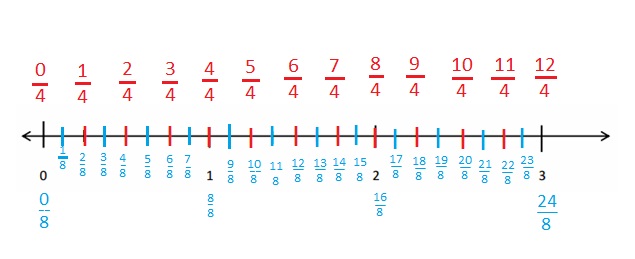
On the number line above, use a blue colored pencil to divide each whole into eighths, and label each fraction below the line. Refold your fraction strip from Problem 1 to help you estimate.
Answer :
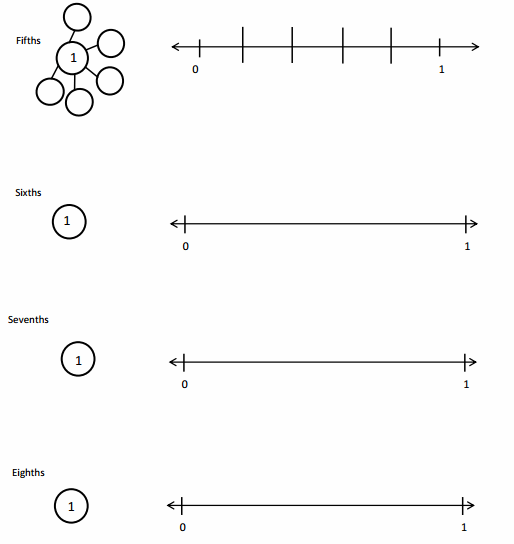
Engage-NY-Eureka-Math-3rd-Grade-Module-5-Lesson-23-Answer-Key-Eureka-Math-Grade-3-Module-5-Lesson-23-Problem-Set-Answer-Key-Question-1

Question 3.
List the fractions that name the same place on the number line.
Answer :
The Fractions that have same place on the number line are
\(\frac{1}{4}\) = \(\frac{2}{8}\)
\(\frac{2}{4}\) = \(\frac{4}{8}\)
\(\frac{3}{4}\) = \(\frac{6}{8}\)
\(\frac{4}{4}\) = \(\frac{8}{8}\)
\(\frac{5}{4}\) = \(\frac{10}{8}\)
\(\frac{6}{4}\) = \(\frac{12}{8}\)
\(\frac{7}{4}\) = \(\frac{14}{8}\)
\(\frac{8}{4}\) = \(\frac{16}{8}\)
\(\frac{9}{4}\) = \(\frac{18}{8}\)
\(\frac{10}{4}\) = \(\frac{20}{8}\)
\(\frac{11}{4}\) = \(\frac{22}{8}\)
\(\frac{12}{4}\) = \(\frac{24}{8}\)

Question 4.
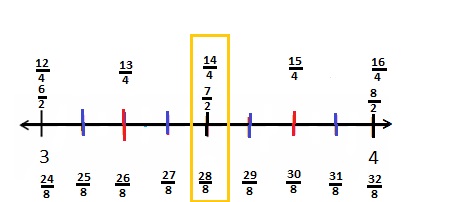
Using your number line to help, what red fraction and what blue fraction would be equal to \(\frac{7}{2}\)? Draw the part of the number line below that would include these fractions, and label it.
Answer :

\(\frac{7}{2}\) = \(\frac{14}{4}\) = \(\frac{28}{8}\).
Engage-NY-Eureka-Math-3rd-Grade-Module-5-Lesson-23-Answer-Key-Eureka-Math-Grade-3-Module-5-Lesson-23-Problem-Set-Answer-Key-Question-4

Question 5.
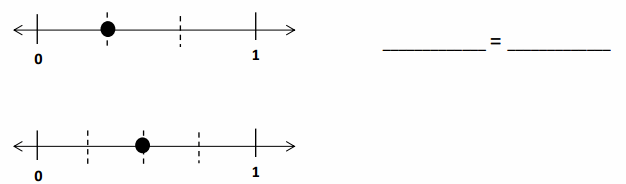
Write two different fractions for the dot on the number line. You may use halves, thirds, fourths, fifths, sixths, or eighths. Use fraction strips to help you, if necessary.
Eureka Math Grade 3 Module 5 Lesson 23 Problem Set Answer Key 6
_____________ = _____________

_____________ = _____________

_____________ = _____________
Answer :
Engage-NY-Eureka-Math-3rd-Grade-Module-5-Lesson-23-Answer-Key-Eureka-Math-Grade-3-Module-5-Lesson-23-Problem-Set-Answer-Key-Question-5
Explanation :
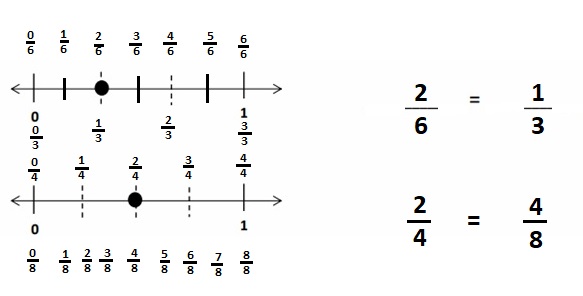
The given 1 st number line is divided into 3 parts that means it can be partitioned into thirds and sixths .
All fraction numbers are written and at a given point we notice the fraction value is \(\frac{2}{6}\) = \(\frac{1}{3}\) .
The given 2nd number line is divided into 4 parts that means it can be partitioned intoFourths and Eighths .
All fraction numbers are written and at a given point we notice the fraction value is \(\frac{2}{4}\) = \(\frac{4}{8}\) .

Question 6.
Cameron and Terrance plan to run in the city race on Saturday. Cameron has decided that he will divide his race into 3 equal parts and will stop to rest after running 2 of them. Terrance divides his race into 6 equal parts and will stop and rest after running 2 of them. Will the boys rest at the same spot in the race? Why or why not? Draw a number line to explain your answer.
Answer :
No, they don’t spot in the same place .
Engage-NY-Eureka-Math-3rd-Grade-Module-5-Lesson-23-Answer-Key-Eureka-Math-Grade-3-Module-5-Lesson-23-Problem-Set-Answer-Key-Question-6
Explanation :
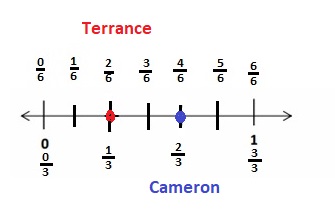
The number line is divided into thirds and sixths .
The Cameron partitioned the race into 3 parts and fraction values are written below the number line .
The Cameron stop and rest after running 2 of them = \(\frac{2}{3}\) .
The Terrance partitioned the race into 6 parts and fraction values are written above the number line .
The Terrance stop and rest after running 2 of them = \(\frac{2}{6}\) .
That means they don’t spot the same place for rest .

Question 7.
Henry and Maddie were in a pie-eating contest. The pies were cut either into thirds or sixths. Henry picked up a pie cut into sixths and ate \(\frac{4}{6}\) of it in 1 minute. Maddie picked up a pie cut into thirds. What fraction of her pie does Maddie have to eat in 1 minute to tie with Henry? Draw a number line, and use words to explain your answer.
Answer :
Engage-NY-Eureka-Math-3rd-Grade-Module-5-Lesson-23-Answer-Key-Eureka-Math-Grade-3-Module-5-Lesson-23-Problem-Set-Answer-Key-Question-7
Explanation :
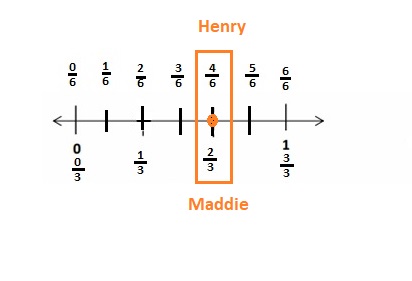
Henry pie is cut in sixths.
Number of of pies ate by henry in 1 minute= \(\frac{4}{6}\)
Maddie pie cut in thirds.
Number of of pies ate by Maddie in 1 minute= ?
For tie Maddie should eat same quantity as Henry that means the point \(\frac{4}{6}\) is marked says number of pies Maddie should eat in thirds .
Number of of pies ate by Maddie in 1 minute=\(\frac{2}{3}\) .

Eureka Math Grade 3 Module 5 Lesson 23 Homework Answer Key

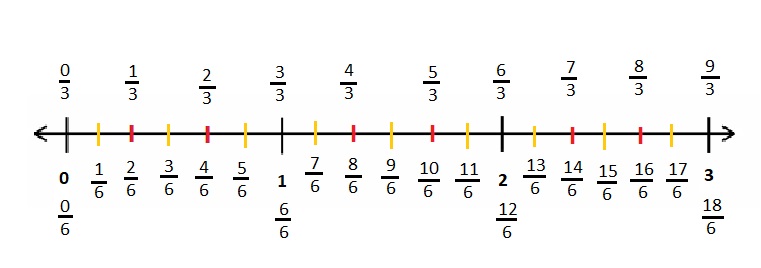
Eureka Math 3rd Grade Module 5 Lesson 23 Homework Answer Key 6.1

Question 1.
On the number line above, use a colored pencil to divide each whole into thirds and label each fraction above the line.
Answer :
Engage-NY-Eureka-Math-3rd-Grade-Module-5-Lesson-23-Answer-Key-Eureka-Math-Grade-3-Module-5-Lesson-23-Homework-Answer-Key-Question-1
Explanation :
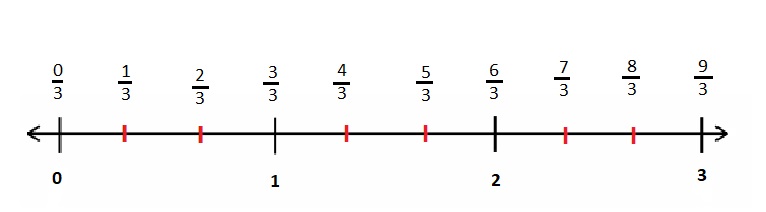
Number line from 0 to 3 is partitioned into thirds . and all the fraction values are written above the number line .

Question 2.
On the number line above, use a different colored pencil to divide each whole into sixths and label each fraction below the line.
Answer :
Engage-NY-Eureka-Math-3rd-Grade-Module-5-Lesson-23-Answer-Key-Eureka-Math-Grade-3-Module-5-Lesson-23-Homework-Answer-Key-Question-2
Explanation :
Number line from 0 to 3 is partitioned into sixths . and all the fraction values are written below the number line .

Question 3.
Write the fractions that name the same place on the number line.
Answer :
The Fractions that have same place on the number line are
\(\frac{1}{3}\) = \(\frac{2}{6}\)
\(\frac{2}{3}\) = \(\frac{4}{6}\)
\(\frac{3}{3}\) = \(\frac{6}{6}\)
\(\frac{4}{3}\) = \(\frac{8}{6}\)
\(\frac{5}{3}\) = \(\frac{10}{6}\)
\(\frac{6}{3}\) = \(\frac{12}{6}\)
\(\frac{7}{3}\) = \(\frac{14}{6}\)
\(\frac{8}{3}\) = \(\frac{16}{6}\)
\(\frac{9}{3}\) = \(\frac{18}{6}\)

Question 4.
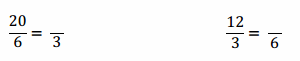
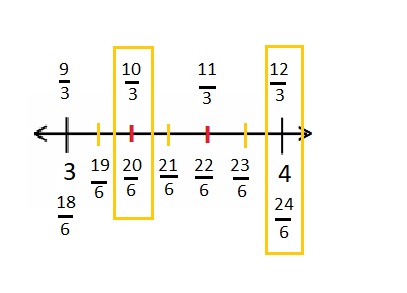
Using your number line to help, name the fraction equivalent to \(\frac{20}{6}\). Name the fraction equivalent to \(\frac{12}{3}\). Draw the part of the number line that would include these fractions below, and label it.
Eureka Math 3rd Grade Module 5 Lesson 23 Homework Answer Key 16
Answer :

Engage-NY-Eureka-Math-3rd-Grade-Module-5-Lesson-23-Answer-Key-Eureka-Math-Grade-3-Module-5-Lesson-23-Homework-Answer-Key-Question-4
Explanation :
Number line is partitioned from 3 to 4 into thirds and sixths and all the thirds fraction values are written above number line and  sixths fraction values are written below the number line .
We notice \(\frac{20}{6}\) = \(\frac{10}{3}\) and \(\frac{12}{3}\) = \(\frac{24}{6}\) .

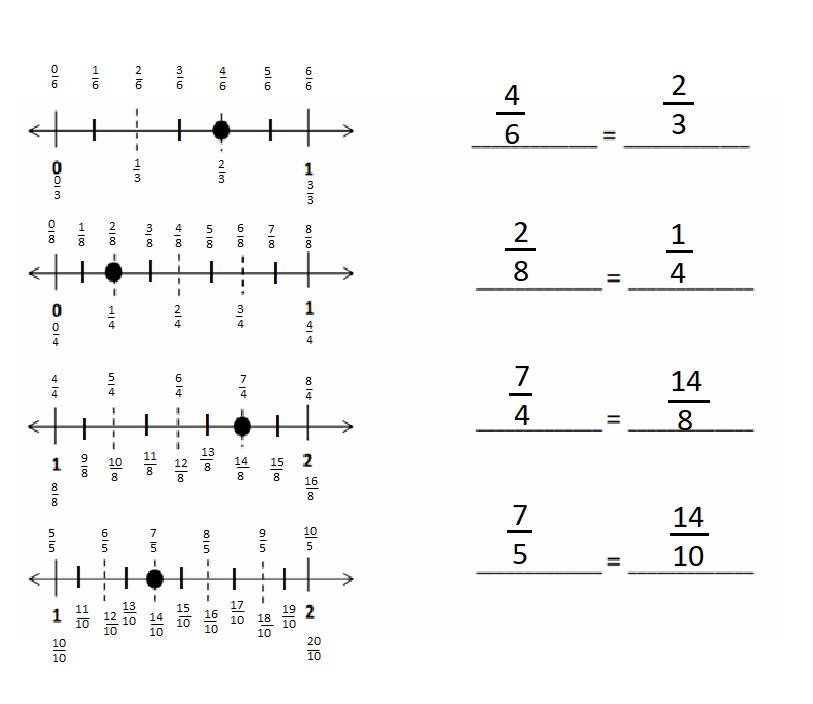
Question 5.
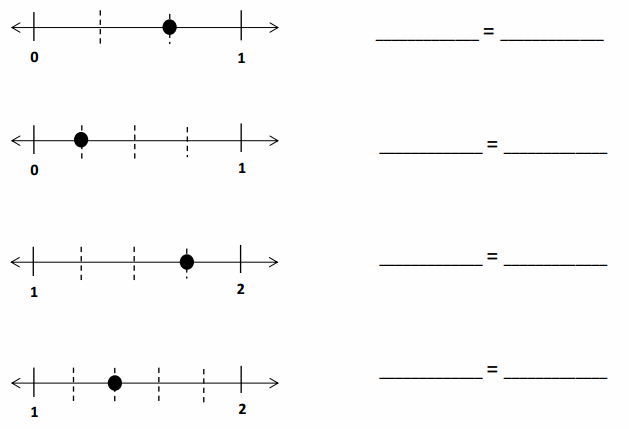
Write two different fraction names for the dot on the number line. You may use halves, thirds, fourths, fifths, sixths, eighths, or tenths.
Eureka Math 3rd Grade Module 5 Lesson 23 Homework Answer Key 17
Answer :
Engage-NY-Eureka-Math-3rd-Grade-Module-5-Lesson-23-Answer-Key-Eureka-Math-Grade-3-Module-5-Lesson-23-Homework-Answer-Key-Question-5
Explanation :
The given 1 st number line is divided into 3 parts that means it can be partitioned into thirds and sixths .
All fraction numbers are written and at a given point we notice the fraction value is \(\frac{4}{6}\) = \(\frac{2}{3}\) .
The given 2nd number line is divided into 4 parts that means it can be partitioned into Fourths and Eighths .
All fraction numbers are written and at a given point we notice the fraction value is \(\frac{2}{8}\) = \(\frac{1}{4}\) .
The given 3rd number line is divided into 4 parts that means it can be partitioned into Fourths and Eighths .
All fraction numbers are written and at a given point we notice the fraction value is \(\frac{7}{4}\) = \(\frac{14}{8}\) .
The given 4th number line is divided into 5 parts that means it can be partitioned into fifths and tenths .
All fraction numbers are written and at a given point we notice the fraction value is \(\frac{7}{5}\) = \(\frac{14}{10}\) .

Question 6.
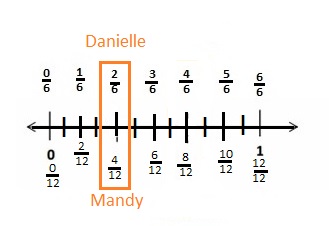
Danielle and Mandy each ordered a large pizza for dinner. Danielle’s pizza was cut into sixths, and Mandy’s pizza was cut into twelfths. Danielle ate 2 sixths of her pizza. If Mandy wants to eat the same amount of pizza as Danielle, how many slices of pizza will she have to eat? Write the answer as a fraction. Draw a number line to explain your answer.
Answer :
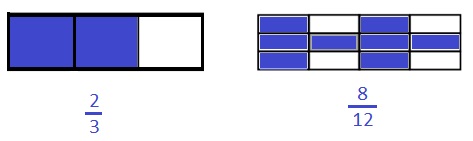
Engage-NY-Eureka-Math-3rd-Grade-Module-5-Lesson-23-Answer-Key-Eureka-Math-Grade-3-Module-5-Lesson-23-Homework-Answer-Key-Question-6
Explanation :
Danielle pizza is cut in sixths.
Number of pizza pieces ate by Danielle = \(\frac{2}{6}\)
Mandy pizza cut in twelfths.
Number of pizza pieces ate by Mandy= ?
For same Quantity Mandy should eat same quantity as Danielle that means the point \(\frac{2}{6}\) is marked says number of pizza pieces Mandy should eat in twelfths .
Number of pizza pieces should eat by mandy =\(\frac{4}{12}\) .

Eureka Math Grade 3 Module 5 Lesson 24 Answer Key

Engage NY Eureka Math 3rd Grade Module 5 Lesson 24 Answer Key

Eureka Math Grade 3 Module 5 Lesson 24 Sprint Answer Key

A
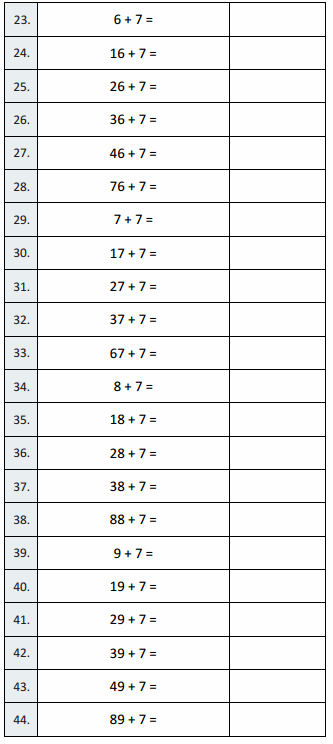
Add by Seven
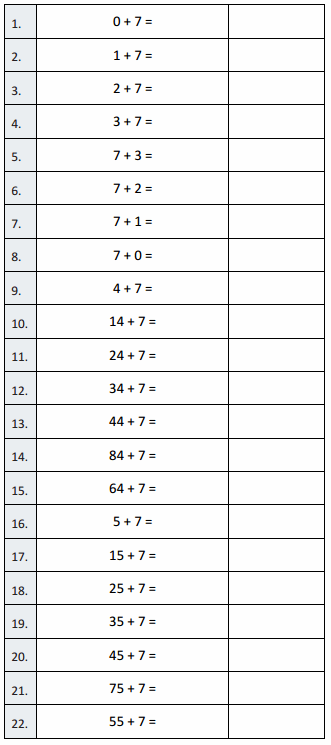
Eureka Math Grade 3 Module 5 Lesson 24 Sprint Answer Key 1
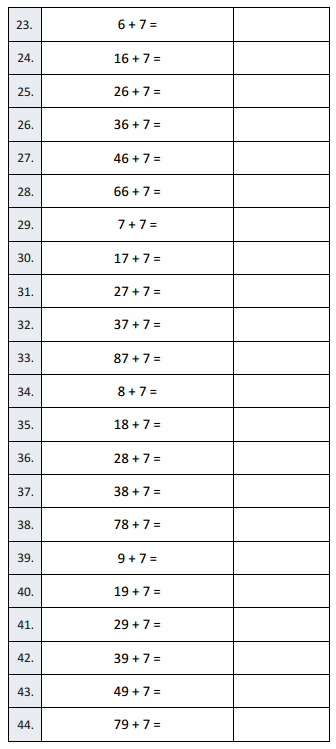
Eureka Math Grade 3 Module 5 Lesson 24 Sprint Answer Key 2

Question 1.
0 + 7 =
Answer :
0 + 7 = 7
Explanation :

Ones
Addend0
Addend7
Sum7

Question 2.
1 + 7 =
Answer :
1 + 7 = 8
Explanation :

Ones
Addend1
Addend7
Sum8


Question 3.
2 + 7 =
Answer :

2 + 7 = 9
Explanation :

Ones
Addend2
Addend7
Sum9


Question 4.
3 + 7 =
Answer :
3 + 7 = 10
Explanation :

TensOnes
carrier1
Addend3
Addend7
Sum10

Question 5.
7 + 3 =
Answer :
7 + 3 = 10
Explanation :

TensOnes
carrier1
Addend7
Addend3
Sum10

Question 6.
7 + 2 =
Answer :
7 + 2 = 9
Explanation :

Ones
Addend7
Addend2
Sum9

Question 7.
7 + 1 =
Answer :
7 + 1 = 8

Question 8.
7 + 0 =
Answer :
7 + 0 = 7

Question 9.
4 + 7 =
Answer :
4 + 7 = 11

Explanation :

TensOnes
carrier1
Addend4
Addend7
Sum11

Question 10.
14 + 7 =
Answer :
14 + 7 = 21

Explanation :

TensOnes
carrier1
Addend14
Addend7
Sum21

Question 11.
24 + 7 =
Answer :
24 + 7 = 31

Explanation :

TensOnes
carrier1
Addend24
Addend7
Sum31

Question 12.
34 + 7 =
Answer :
34 + 7 = 41

Explanation :

TensOnes
carrier1
Addend34
Addend7
Sum41


Question 13.
44 + 7 =
Answer :
44 + 7 = 51

Explanation :

TensOnes
carrier1
Addend44
Addend7
Sum51


Question 14.
84 + 7 =
Answer :
84 + 7 = 91

Explanation :

TensOnes
carrier1
Addend84
Addend7
Sum91


Question 15.
64 + 7 =
Answer :
64 + 7 = 71

Explanation :

TensOnes
carrier1
Addend64
Addend7
Sum71


Question 16.
5 + 7 =
Answer :
5 + 7 = 12

Explanation :

TensOnes
carrier1
Addend5
Addend7
Sum12


Question 17.
15 + 7 =
Answer :
15 + 7 = 22

Explanation :

TensOnes
carrier1
Addend15
Addend7
Sum22


Question 18.
25 + 7 =
Answer :
25 + 7 = 32

Explanation :

TensOnes
carrier1
Addend25
Addend7
Sum32


Question 19.
35 + 7 =
Answer :
35 + 7 = 42

Explanation :

TensOnes
carrier1
Addend35
Addend7
Sum42


Question 20.
45 + 7 =
Answer :
45 + 7 = 52

Explanation :

TensOnes
carrier1
Addend45
Addend7
Sum52

Question 21.
75 + 7 =
Answer :
75 + 7 = 82

Explanation :

TensOnes
carrier1
Addend75
Addend7
Sum82


Question 22.
55 + 7 =
Answer :
55 + 7 = 62

Explanation :

TensOnes
carrier1
Addend55
Addend7
Sum62


Question23.
6 + 7 =

Ones
Addend6
Addend7
Sum13


Question 24.
16 + 7 =
Answer :
16 + 7 = 23

Explanation :

TensOnes
carrier1
Addend16
Addend7
Sum23

Question 25.
26 + 7 =
Answer :
26 + 7 = 33

Explanation :

TensOnes
carrier1
Addend26
Addend7
Sum33

Question 26.
36 + 7 =
Answer :
36 + 7 = 43

Explanation :

TensOnes
carrier1
Addend36
Addend7
Sum43

Question 27.
46 + 7 =
Answer :
46 + 7 = 53

Explanation :

TensOnes
carrier1
Addend46
Addend7
Sum53


Question 28.
66 + 7 =
Answer :
66 + 7 = 73

Explanation :

TensOnes
carrier1
Addend66
Addend7
Sum73


Question 29.
7 + 7 =
Answer :
7 + 7 = 14

Question 30.
17 + 7 =
Answer :
17 + 7 = 24

Explanation :

TensOnes
carrier1
Addend17
Addend7
Sum24

Question 31.
27 + 7 =
Answer :
27 + 7 = 34

Explanation :

TensOnes
carrier1
Addend27
Addend7
Sum34

Question 32.
37 + 7 =
Answer :
37 + 7 = 44

Explanation :

TensOnes
carrier1
Addend37
Addend7
Sum44

Question 33.
87 + 7 =
Answer :
87 + 7 = 94

Explanation :

TensOnes
carrier1
Addend87
Addend7
Sum94

Question 34.
8 + 7 =
Answer :
8 + 7 = 15

Question 35.
18 + 7 =
Answer :
18 + 7 = 25
Explanation :

TensOnes
carrier1
Addend18
Addend7
Sum25

Question 36.
28 + 7 =
Answer :
28 + 7 = 35

Explanation :

TensOnes
carrier1
Addend28
Addend7
Sum35

Question 37.
38 + 7 =
Answer :
38 + 7 = 45
Explanation :

TensOnes
carrier1
Addend38
Addend7
Sum45

Question 38.
78 + 7 =
Answer :
78 + 7 = 85

Explanation :

TensOnes
carrier1
Addend78
Addend7
Sum85

Question 39.
9 + 7 =
Answer :
9 + 7 =
Answer :
9 + 7 =  16

Question 40.
19 + 7 =
Answer :
19 + 7 = 26
Explanation :

TensOnes
carrier1
Addend9
Addend7
Sum16

Question 41.
29 + 7 =
Answer :
29 + 7 = 36

Explanation :

TensOnes
carrier1
Addend29
Addend7
Sum36

Question 42.
39 + 7 =
Answer :
39 + 7 = 46

Explanation :

TensOnes
carrier1
Addend39
Addend7
Sum46

Question 43.
49 + 7 =
Answer :
49 + 7 = 56
Explanation :

TensOnes
carrier1
Addend49
Addend7
Sum56

Question 44.
79 + 7 =
Answer :
79 + 7 = 86

Explanation :

TensOnes
carrier1
Addend79
Addend7
Sum86

B
Add by Seven
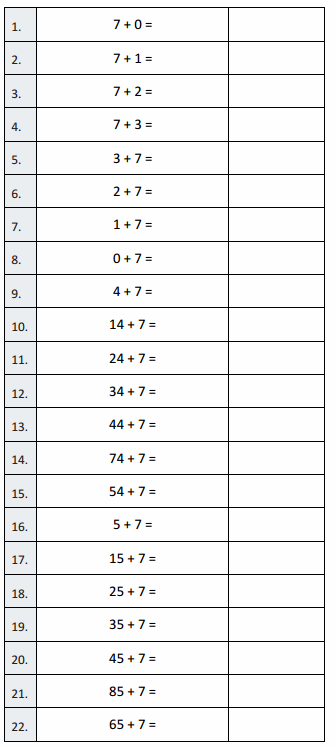
Eureka Math Grade 3 Module 5 Lesson 24 Sprint Answer Key 3
Eureka Math Grade 3 Module 5 Lesson 24 Sprint Answer Key 4

Question 1.
7 + 0 =
Answer :
7 + 0 = 7

Question 2.
7 + 1 =
Answer :
7 + 1 = 8

Question 3.
7 + 2 =
Answer :
7 + 2 = 9

Question 4.
7 + 3 =
Answer :
7 + 3 = 10

Question 5.
3 + 7 =
Answer :
3 + 7 = 10

Question 6.
2 + 7 =
Answer :
2 + 7 = 9

Question 7.
1 + 7 =
Answer :
1 + 7 = 8

Question 8.
0 + 7 =
Answer :
0 + 7 = 7

Question 9.
4 + 7 =
Answer :
4 + 7 = 11

Question 10.
14 + 7 =
Answer :
14 + 7 = 21

Question 11.
24 + 7 =
Answer :
24 + 7 = 31

Question 12.
34 + 7 =
Answer :
34 + 7 = 41

Question 13.
44 + 7 =
Answer :
44 + 7 = 51

Question 14.
74 + 7 =
Answer :
74 + 7 = 81

Question 15.
54 + 7 =
Answer :
54 + 7 = 61

Question 16.
5 + 7 =
Answer :
5 + 7 = 12

Question 17.
15 + 7 =
Answer :
15 + 7 = 22

Question 18.
25 + 7 =
Answer :
25 + 7 = 32

Question 19.
35 + 7 =
Answer :
35 + 7 = 42

Question 20.
45 + 7 =
Answer :
45 + 7 = 52

Question 21.
85 + 7 =
Answer :
85 + 7 = 92

Question 22.
65 + 7 =
Answer :
65 + 7 = 72

Question 23.
6 + 7 =
Answer :
6 + 7 = 13

Question 24.
16 + 7 =
Answer :
16 + 7 = 23

Question 25.
26 + 7 =
Answer :
26 + 7 = 33

Question 26.
36 + 7 =
Answer :
36 + 7 = 43

Question 27.
46 + 7 =
Answer :
46 + 7 = 53

Question 28.
76 + 7 =
Answer :
76 + 7 = 83

Question 29.
7 + 7 =
Answer :
7 + 7 = 14

Question 30.
17 + 7 =
Answer :
17 + 7 = 24

Question 31.
27 + 7 =
Answer :
27 + 7 = 34

Question 32.
37 + 7 =
Answer :
37 + 7 = 44

Question 33.
67 + 7 =
Answer :
67 + 7 = 74

Question 34.
8 + 7 =
Answer :
8 + 7 = 15

Question 35.
18 + 7 =
Answer :
18 + 7 = 25

Question 36.
28 + 7 =
Answer :
28 + 7 = 35

Question 37.
38 + 7 =
Answer :
38 + 7 = 45

Question 38.
88 + 7 =
Answer :
88 + 7 = 95

Question 39.
9 + 7 =
Answer :
9 + 7 = 16

Question 40.
19 + 7 =
Answer :
19 + 7 = 26

Question 41.
29 + 7 =
Answer :
29 + 7 = 36

Question 42.
39 + 7 =
Answer :
39 + 7 = 46

Question 43.
49 + 7 =
Answer :
49 + 7 = 56

Question 44.
89 + 7 =
Answer :
89 + 7 = 96

Eureka Math Grade 3 Module 5 Lesson 24 Problem Set Answer Key

Question 1.
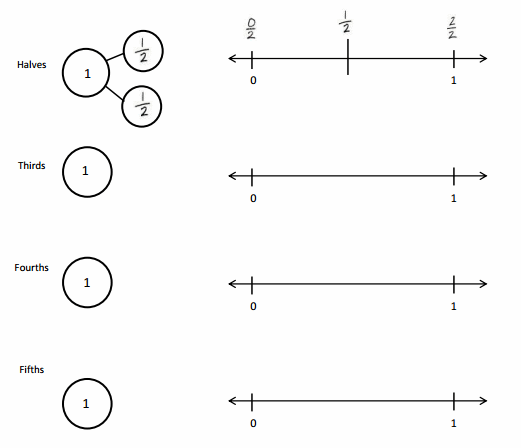
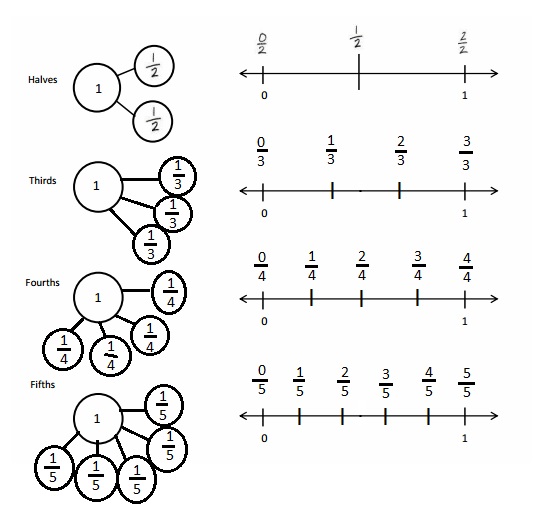
Complete the number bond as indicated by the fractional unit. Partition the number line into the given fractional unit, and label the fractions. Rename 0 and 1 as fractions of the given unit. The first one is done for you.
Eureka Math Grade 3 Module 5 Lesson 24 Problem Set Answer Key 6
Answer :
Engage-NY-Eureka-Math-3rd-Grade-Module-5-Lesson-24-Answer-Key-Eureka-Math-Grade-3-Module-5-Lesson-24-Problem-Set-Answer-Key-Question-1
Explanation :
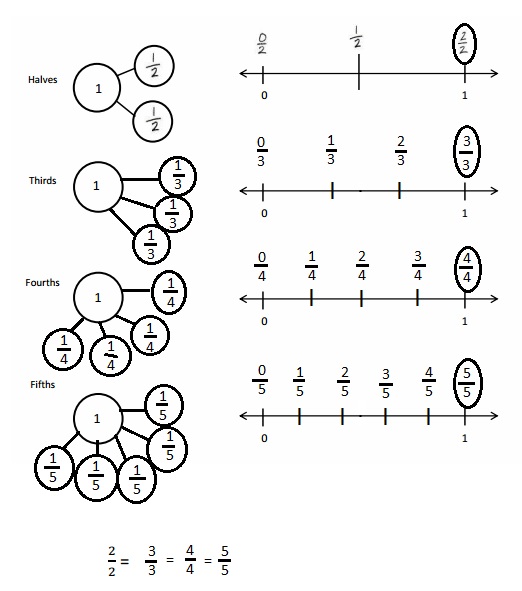
The number line is divided into halves , thirds , Fourths and fifths and respective number bond is represented in the above figure .
Thirds: Number bond showing 3 units of \(\frac{1}{3}\) ; number line partitioned and labeled from 0 to 1
Fourths: Number bond showing 4 units of \(\frac{1}{4}\) ;number line partitioned and labeled from 0 to 1
Fifths: Number bond showing 5 units of \(\frac{1}{5}\) ; number line partitioned and labeled from 0 to 1

Question 2.
Circle all the fractions in Problem 1 that are equal to 1. Write them in a number sentence below.
Eureka Math Grade 3 Module 5 Lesson 24 Problem Set Answer Key 7
Answer :
Engage-NY-Eureka-Math-3rd-Grade-Module-5-Lesson-24-Answer-Key-Eureka-Math-Grade-3-Module-5-Lesson-24-Problem-Set-Answer-Key-Question-2

Question 3.
What pattern do you notice in the fractions that are equivalent to 1?
Answer :
The fractions that are equivalent to 1 have The Numerator and the Denominator same .

Question 4.
Taylor took his little brother to get pizza. Each boy ordered a small pizza. Taylor’s pizza was cut in fourths, and his brother’s was cut in thirds. After they had both eaten all of their pizza, Taylor’s little brother said, “Hey that was no fair! You got more than me! You got 4 pieces, and I only got 3.”
Should Taylor’s little brother be mad? What could you say to explain the situation to him? Use words, pictures, or a number line.
Answer :
Engage-NY-Eureka-Math-3rd-Grade-Module-5-Lesson-24-Answer-Key-Eureka-Math-Grade-3-Module-5-Lesson-24-Problem-Set-Answer-Key-Question-4
Explanation :
The Taylor’s pizza and His brother pizza ordered small size pizza. Both the pizza’s are of same length.
The Taylor’s pizza is divided into fourths that means into 4 parts.
His Brother’s pizza is divided into thirds that means into 3 parts.
The slice of Taylor’s pizza is smaller than compared to his brother’s pizza .
The size doesn’t depends on the number of slices .

Eureka Math Grade 3 Module 5 Lesson 24 Exit Ticket Answer Key

Question 1.
Complete the number bond as indicated by the fractional unit. Partition the number line into the given fractional unit, and label the fractions. Rename 0 and 1 as fractions of the given unit.
Engage NY Math 3rd Grade Module 5 Lesson 24 Exit Ticket Answer Key 8
Answer :
Engage-NY-Eureka-Math-3rd-Grade-Module-5-Lesson-24-Answer-Key-Eureka-Math-Grade-3-Module-5-Lesson-24-Exit-Ticket-Answer-Key-Question-1
Explanation :
Fourths: Number bond showing 4 units of \(\frac{1}{4}\) ; number line partitioned and labeled from 0 to 1

Question 2.
How many copies of \(\frac{1}{4}\) does it take to make 1 whole? What’s the fraction for 1 whole in this case? Use the number line or the number bond in Problem 1 to help you explain.
Answer :
Fourths: Number bond showing 4 units of \(\frac{1}{4}\) ; number line partitioned and labeled from 0 to 1 in the above figure .
For 1 whole we notice \(\frac{4}{4}\) Fraction in the figure that means we require 4 \(\frac{1}{4}\) copies to make 1 Whole .

Eureka Math Grade 3 Module 5 Lesson 24 Homework Answer Key

Question 1.
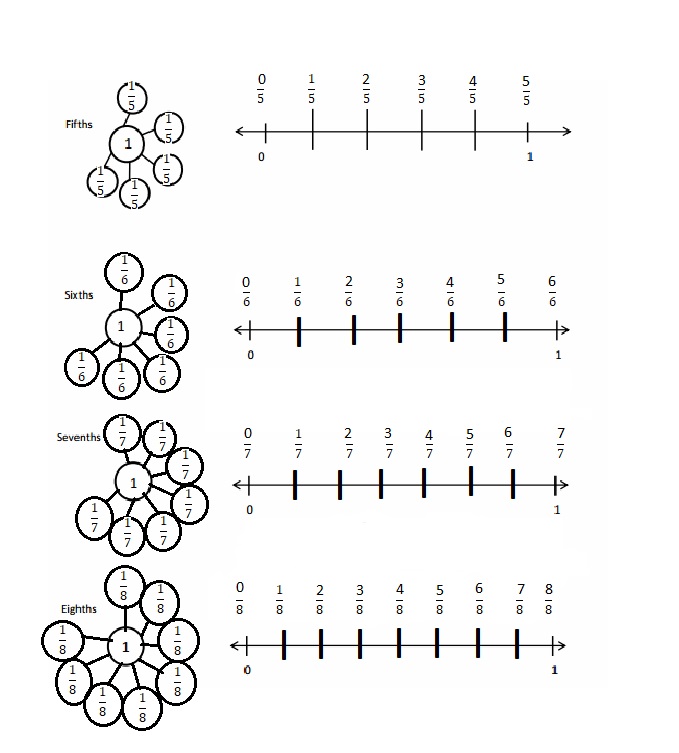
Complete the number bond as indicated by the fractional unit. Partition the number line into the given fractional unit, and label the fractions. Rename 0 and 1 as fractions of the given unit.
Eureka Math 3rd Grade Module 5 Lesson 24 Homework Answer Key 9
Answer :
Engage-NY-Eureka-Math-3rd-Grade-Module-5-Lesson-24-Answer-Key-Eureka-Math-Grade-3-Module-5-Lesson-24-Homework-Answer-Key-Question-1
Explanation :
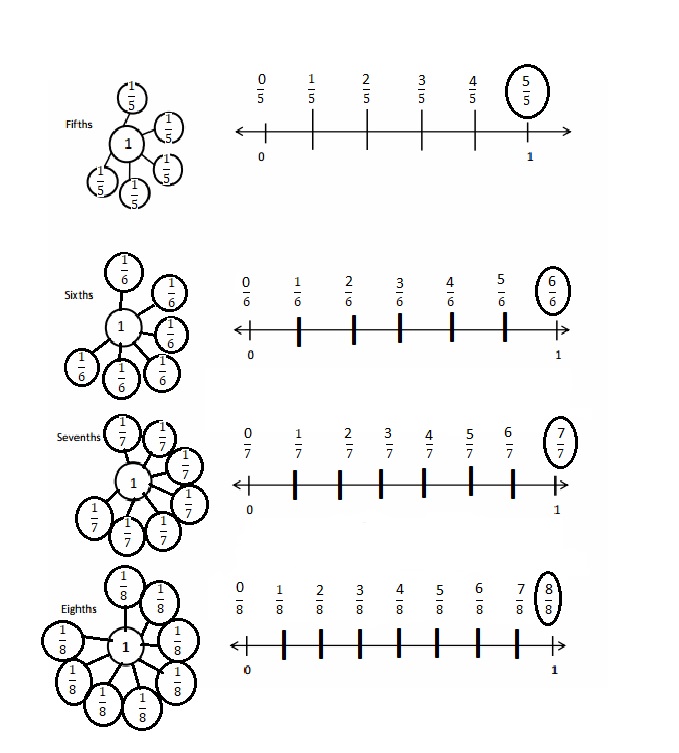
The number line is divided into fifths, Sixths, Sevenths and Eighths and respective number bond is represented in the above figure .
Fifths: Number bond showing 5 units of \(\frac{1}{5}\) ; number line partitioned and labeled from 0 to 1
Sixths: Number bond showing 6 units of \(\frac{1}{6}\) ; number line partitioned and labeled from 0 to 1
Seventhss: Number bond showing 7 units of \(\frac{1}{7}\) ;number line partitioned and labeled from 0 to 1
Eigths: Number bond showing 8 units of \(\frac{1}{8}\) ; number line partitioned and labeled from 0 to 1

Question 2.
Circle all the fractions in Problem 1 that are equal to 1. Write them in a number sentence below.
Eureka Math 3rd Grade Module 5 Lesson 24 Homework Answer Key 10
Answer :
\(\frac{5}{5}\) = \(\frac{6}{6}\) = \(\frac{7}{7}\) = \(\frac{8}{8}\) .

Engage-NY-Eureka-Math-3rd-Grade-Module-5-Lesson-24-Answer-Key-Eureka-Math-Grade-3-Module-5-Lesson-24-Homework-Answer-Key-Question-2

Question 3.
What pattern do you notice in the fractions that are equivalent to 1? Following this pattern, how would you represent ninths as 1 whole?
Answer :
The Fractions that are equivalent to 1 follow the pattern have Numerator and Denominator Equal .
To represent Ninths are 1 whole = \(\frac{9}{9}\) .

Question 4.
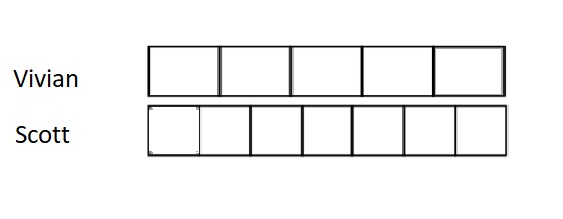
In Art class, Mr. Joselyn gave everyone a 1-foot stick to measure and cut. Vivian measured and cut her stick into 5 equal pieces. Scott measured and cut his into 7 equal pieces. Scott said to Vivian, “The total length of my stick is longer than yours because I have 7 pieces, and you only have 5.” Is Scott correct? Use words, pictures, or a number line to help you explain.
Answer :
Engage-NY-Eureka-Math-3rd-Grade-Module-5-Lesson-24-Answer-Key-Eureka-Math-Grade-3-Module-5-Lesson-24-Homework-Answer-Key-Question-4
Explanation :
Scott is wrong , Even though he has more pieces than Vivian Both the Lengths of Sticks = 1 foot .
Scott pieces are smaller because his stick is broken into more pieces .

Eureka Math Grade 3 Module 5 Lesson 25 Answer Key

Engage NY Eureka Math 3rd Grade Module 5 Lesson 25 Answer Key

Eureka Math Grade 3 Module 5 Lesson 25 Problem Set Answer Key

A
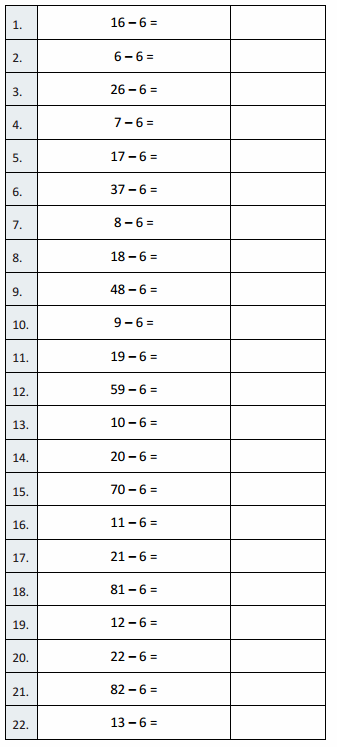
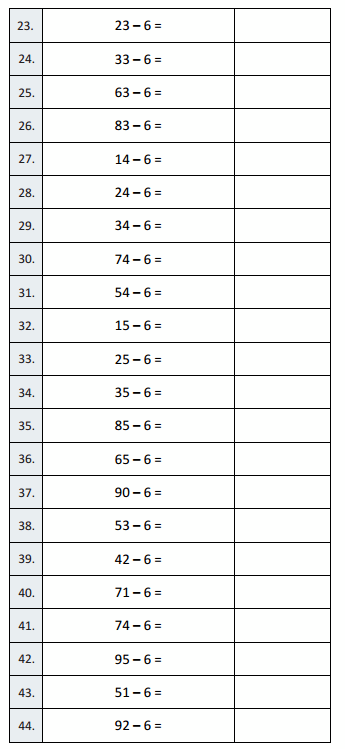
Subtract by Six
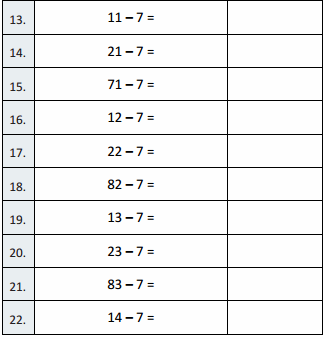
Eureka Math Grade 3 Module 5 Lesson 25 Sprint Answer Key 1
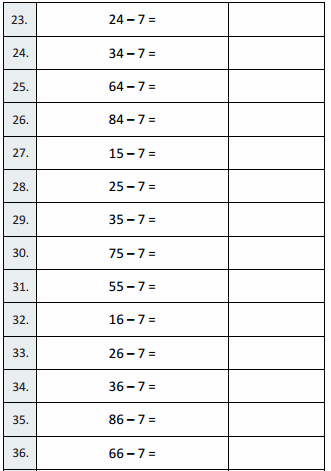
Eureka Math Grade 3 Module 5 Lesson 25 Sprint Answer Key 2

Question 1.
16 – 6 =

Question 2.
6 – 6 =

Question 3.
26 – 6 =

Question 4.
7 – 6 =

Question 5.
17 – 6 =

Question 6.
37 – 6 =

Question 7.
8 – 6 =

Question 8.
18 – 6 =

Question 9.
48 – 6 =

Question 10.
9 – 6 =

Question 11.
19 – 6 =

Question 12.
59 – 6 =

Question 13.
10 – 6 =

Question 14.
20 – 6 =

Question 15.
70 – 6 =

Question 16.
11 – 6 =

Question 17.
21 – 6 =

Question 18.
81 – 6 =

Question 19.
12 – 6 =

Question 20.
22 – 6 =

Question 21.
82 – 6 =

Question 22.
13 – 6 =

Question 23.
23 – 6 =

Question 24.
33 – 6 =

Question 25.
63 – 6 =

Question 26.
83 – 6 =

Question 27.
14 – 6 =

Question 28.
24 – 6 =

Question 29.
34 – 6 =

Question 30.
74 – 6 =

Question 31.
54 – 6 =

Question 32.
15 – 6 =

Question 33.
25 – 6 =

Question 34.
35 – 6 =

Question 35.
85 – 6 =

Question 36.
65 – 6 =

Question 37.
90 – 6 =

Question 38.
53 – 6 =

Question 39.
42 – 6 =

Question 40.
71 – 6 =

Question 41.
74 – 6 =

Question 42.
95 – 6 =

Question 43.
51 – 6 =

Question 44.
92 – 6 =

B
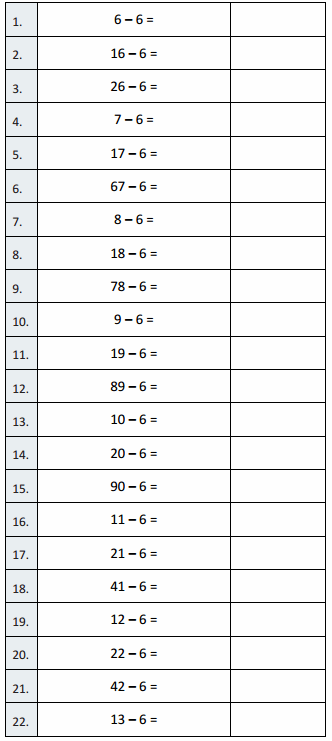
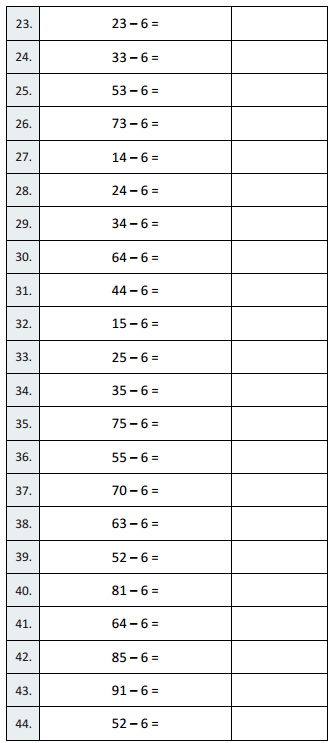
Subtract by Six
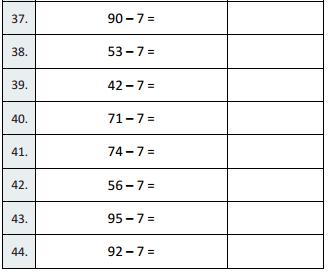
Eureka Math Grade 3 Module 5 Lesson 25 Sprint Answer Key 3
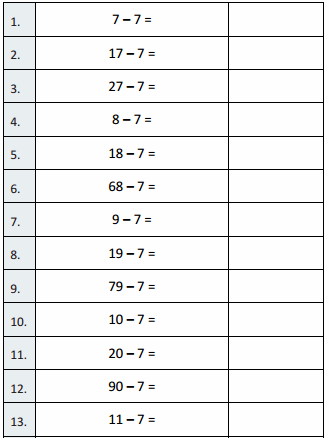
Eureka Math Grade 3 Module 5 Lesson 25 Sprint Answer Key 4

Question 1.
6 – 6 =

Question 2.
16 – 6 =

Question 3.
26 – 6 =

Question 4.
7 – 6 =

Question 5.
17 – 6 =

Question 6.
67 – 6 =

Question 7.
8 – 6 =

Question 8.
18 – 6 =

Question 9.
78 – 6 =

Question 10.
9 – 6 =

Question 11.
19 – 6 =

Question 12.
89 – 6 =

Question 13.
10 – 6 =

Question 14.
20 – 6 =

Question 15.
90 – 6 =

Question 16.
11 – 6 =

Question 17.
21 – 6 =

Question 18.
41 – 6 =

Question 19.
12 – 6 =

Question 20.
22 – 6 =

Question 21.
42 – 6 =

Question 22.
13 – 6 =

Question 23.
23 – 6 =

Question 24.
33 – 6 =

Question 25.
53 – 6 =

Question 26.
73 – 6 =

Question 27.
14 – 6 =

Question 28.
24 – 6 =

Question 29.
34 – 6 =

Question 30.
64 – 6 =

Question 31.
44 – 6 =

Question 32.
15 – 6 =

Question 33.
25 – 6 =

Question 34.
35 – 6 =

Question 35.
75 – 6 =

Question 36.
55 – 6 =

Question 37.
70 – 6 =

Question 38.
63 – 6 =

Question 39.
52 – 6 =

Question 40.
81 – 6 =

Question 41.
64 – 6 =

Question 42.
85 – 6 =

Question 43.
91 – 6 =

Question 44.
52 – 6 =

Eureka Math Grade 3 Module 5 Lesson 25 Problem Set Answer Key

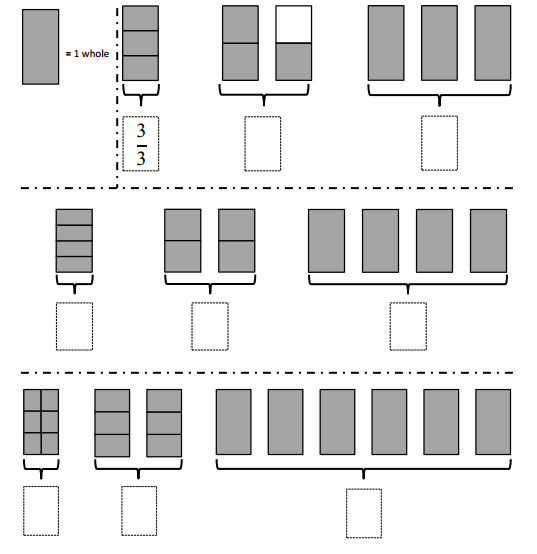
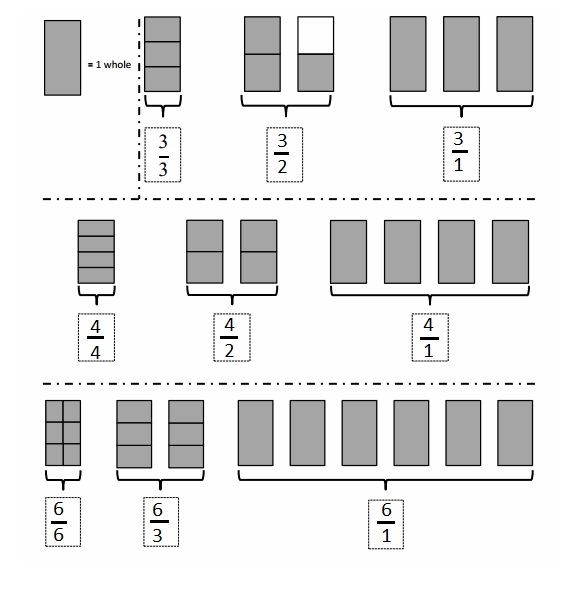
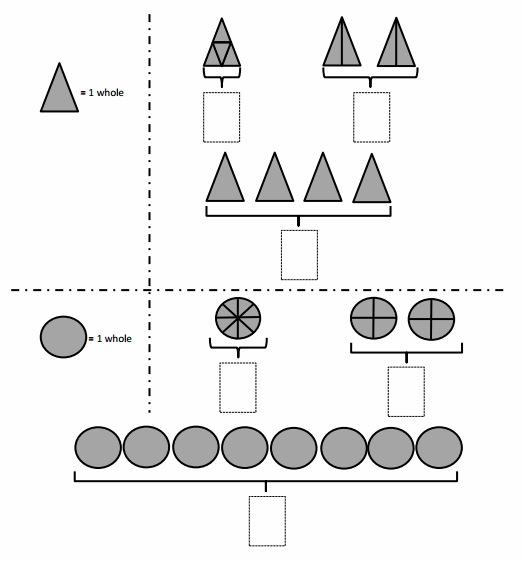
Question 1.
Label the following models as a fraction inside the dotted box. The first one has been done for you.
Eureka Math Grade 3 Module 5 Lesson 25 Problem Set Answer Key 11
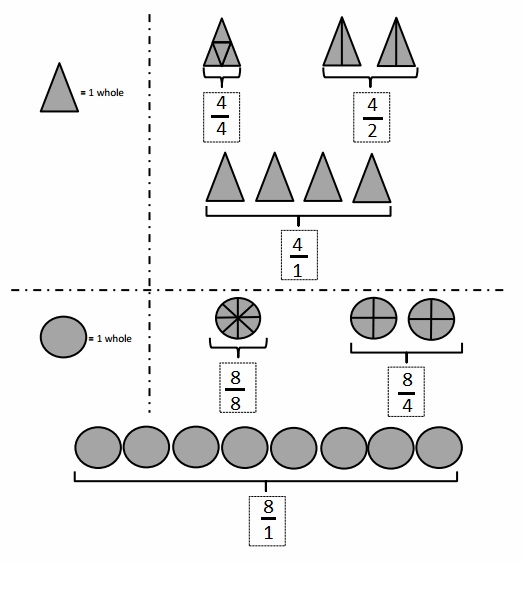
Answer :
Engage-NY-Eureka-Math-3rd-Grade-Module-5-Lesson-25-Answer-Key-Eureka-Math-Grade-3-Module-5-Lesson-25-Problem-Set-Answer-Key-Question-1
Explanation :
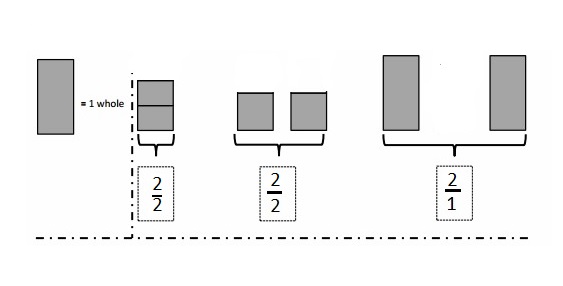
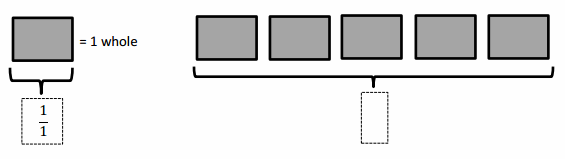
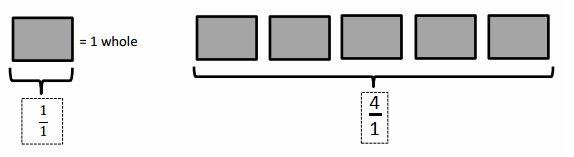
\(\frac{4}{1}\) means it is 4 whole . ( you have 4 copies of 1 whole ).
\(\frac{4}{4}\) means you have 1 whole . ( you have 4 copies of \(\frac{1}{4}\) ) .
\(\frac{4}{2}\) means you have 2 whole .( you have 4 copies of \(\frac{1}{2}\) ) .
and similar for others .

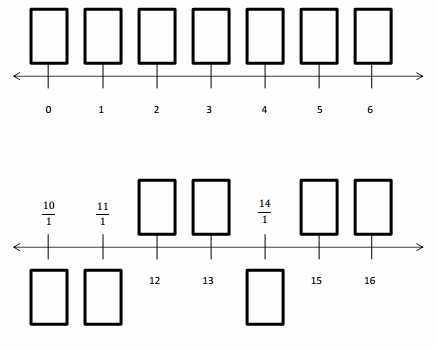
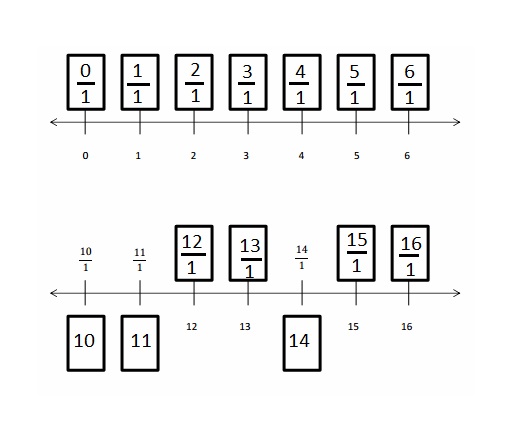
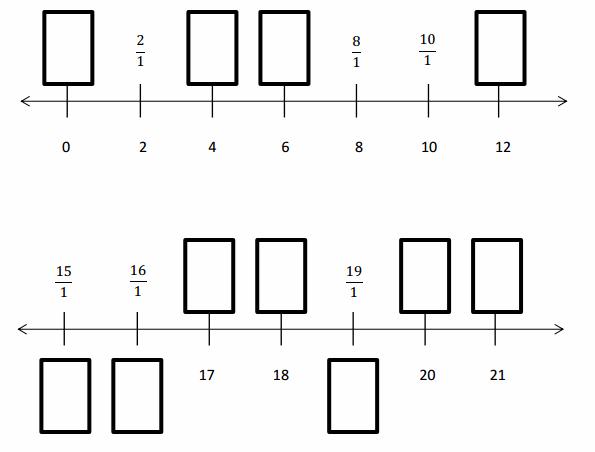
Question 2.
Fill in the missing whole numbers in the boxes below the number line. Rename the whole numbers as fractions in the boxes above the number line.
Eureka Math Grade 3 Module 5 Lesson 25 Problem Set Answer Key 12
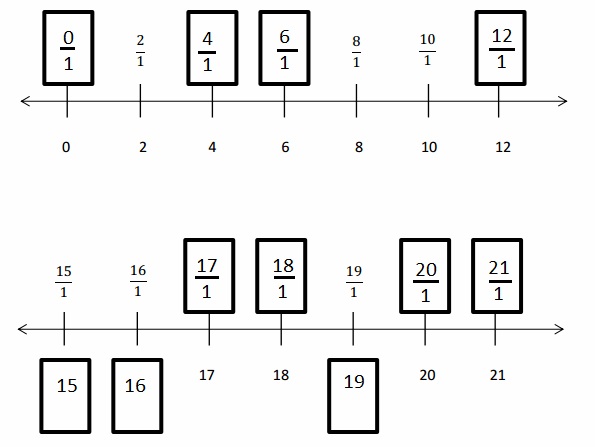
Answer :
Engage-NY-Eureka-Math-3rd-Grade-Module-5-Lesson-25-Answer-Key-Eureka-Math-Grade-3-Module-5-Lesson-25-Problem-Set-Answer-Key-Question-2

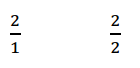
Question 3.
Explain the difference between these two fractions with words and pictures.
Eureka Math Grade 3 Module 5 Lesson 25 Problem Set Answer Key 13
Answer :
Engage-NY-Eureka-Math-3rd-Grade-Module-5-Lesson-25-Answer-Key-Eureka-Math-Grade-3-Module-5-Lesson-25-Problem-Set-Answer-Key-Question-3
Explanation :
\(\frac{2}{1}\) means it is 2 whole . ( you have 2 copies of 1 whole ).
\(\frac{2}{2}\) means you have 1 whole . ( you have 2 copies of \(\frac{1}{2}\) ) .

Eureka Math Grade 3 Module 5 Lesson 25 Exit Ticket Answer Key

Question 1.
Label the model as a fraction inside the box.
Engage NY Math 3rd Grade Module 5 Lesson 25 Exit Ticket Answer Key 14
Answer :
Engage-NY-Eureka-Math-3rd-Grade-Module-5-Lesson-25-Answer-Key-Eureka-Math-Grade-3-Module-5-Lesson-25-Exit-Ticket-Answer-Key-Question-1

Question 2.
Partition the wholes into thirds. Rename the fraction for 3 wholes. Use the number line and words to explain your answer.
Engage NY Math 3rd Grade Module 5 Lesson 25 Exit Ticket Answer Key 15
Answer :
Engage-NY-Eureka-Math-3rd-Grade-Module-5-Lesson-25-Answer-Key-Eureka-Math-Grade-3-Module-5-Lesson-25-Exit-Ticket-Answer-Key-Question-2
Explanation :
Number line partitioned into thirds; fraction for 3 wholes renamed as \(\frac{9}{3}\)

Eureka Math Grade 3 Module 5 Lesson 25 Homework Answer Key

Question 1.
Label the following models as fractions inside the boxes.
Eureka Math 3rd Grade Module 5 Lesson 25 Homework Answer Key 16
Answer :
Engage-NY-Eureka-Math-3rd-Grade-Module-5-Lesson-25-Answer-Key-Eureka-Math-Grade-3-Module-5-Lesson-25-Homework-Answer-Key-Question-1
Explanation :
\(\frac{4}{1}\) means it is 4 whole . ( you have 4 copies of 1 whole ).
\(\frac{4}{4}\) means you have 1 whole . ( you have 4 copies of \(\frac{1}{4}\) ) .
\(\frac{4}{2}\) means you have 2 whole .( you have 4 copies of \(\frac{1}{2}\) ) .

\(\frac{8}{1}\) means it is 8 whole . ( you have 8 copies of 1 whole ).
\(\frac{8}{8}\) means you have 1 whole . ( you have 8 copies of \(\frac{1}{8}\) ) .
\(\frac{8}{2}\) means you have 2 whole .( you have 8 copies of \(\frac{1}{4}\) ) .

Fill in the missing whole numbers in the boxes below the number line. Rename the wholes as fractions in the boxes above the number line.
Eureka Math 3rd Grade Module 5 Lesson 25 Homework Answer Key 17
Answer :
Engage-NY-Eureka-Math-3rd-Grade-Module-5-Lesson-25-Answer-Key-Eureka-Math-Grade-3-Module-5-Lesson-25-Homework-Answer-Key-Question-2
Answer :
Number is represented from 0 to 12 and from 15 to 21 .the whole numbers are renamed in fraction form. All the missing whole numbers and fraction numbers are written .

Question 3.
Explain the difference between these fractions with words and pictures.
Eureka Math 3rd Grade Module 5 Lesson 25 Homework Answer Key 18
Answer :
Engage-NY-Eureka-Math-3rd-Grade-Module-5-Lesson-25-Answer-Key-Eureka-Math-Grade-3-Module-5-Lesson-25-Homework-Answer-Key-Question-3
Explanation :
\(\frac{5}{1}\) means it is 5 whole . ( you have 5 copies of 1 whole ).
\(\frac{5}{5}\) means you have 1 whole . ( you have 5 copies of \(\frac{1}{5}\) ) .

Eureka Math Grade 3 Module 5 Lesson 26 Answer Key

Engage NY Eureka Math 3rd Grade Module 5 Lesson 26 Answer Key

Eureka Math Grade 3 Module 5 Lesson 26 Sprint Answer Key

A
Add by Eight
Eureka Math Grade 3 Module 5 Lesson 26 Sprint Answer Key 1
Eureka Math Grade 3 Module 5 Lesson 26 Sprint Answer Key 2
Eureka Math Grade 3 Module 5 Lesson 26 Sprint Answer Key 3
Eureka Math Grade 3 Module 5 Lesson 26 Sprint Answer Key 4

Question 1.
0 + 8 =

Question 2.
1 + 8 =

Question 3.
2 + 8 =

Question 4.
8 + 2 =

Question 5.
1 + 8 =

Question 6.
0 + 8 =

Question 7.
3 + 8 =

Question 8.
13 + 8 =

Question 9.
23 + 8 =

Question 10.
33 + 8 =

Question 11.
43 + 8 =

Question 12.
83 + 8 =

Question 13.
4 + 8 =

Question 14.
14 + 8 =

Question 15.
24 + 8 =

Question 16.
34 + 8 =

Question 17.
44 + 8 =

Question 18.
74 + 8 =

Question 19.
5 + 8 =

Question 20.
15 + 8 =

Question 21.
25 + 8 =

Question 22.
35 + 8 =

Question 23.
65 + 8 =

Question 24.
6 + 8 =

Question 25.
16 + 8 =

Question 26.
26 + 8 =

Question 27.
36 + 8 =

Question 28.
86 + 8 =

Question 29.
46 + 8 =

Question 30.
7 + 8 =

Question 31.
17 + 8 =

Question 32.
27 + 8 =

Question 33.
37 + 8 =

Question 34.
77 + 8 =

Question 35.
8 + 8 =

Question 36.
18 + 8 =

Question 37.
28 + 8 =

Question 38.
38 + 8 =

Question 39.
68 + 8 =

Question 40.
9 + 8 =

Question 41.
19 + 8 =

Question 42.
29 + 8 =

Question 43.
39 + 8 =

Question 44.
89 + 8 =

B
Add by Eight
Eureka Math Grade 3 Module 5 Lesson 26 Sprint Answer Key 5
Eureka Math Grade 3 Module 5 Lesson 26 Sprint Answer Key 6
Eureka Math Grade 3 Module 5 Lesson 26 Sprint Answer Key 7
Eureka Math Grade 3 Module 5 Lesson 26 Sprint Answer Key 8

Question 1.
8 + 0 =

Question 2.
8 + 1 =

Question 3.
8 + 2 =

Question 4.
2 + 8 =

Question 5.
1 + 8 =

Question 6.
0 + 8 =

Question 7.
3 + 8 =

Question 8.
13 + 8 =

Question 9.
23 + 8 =

Question 10.
33 + 8 =

Question 11.
43 + 8 =

Question 12.
73 + 8 =

Question 13.
4 + 8 =

Question 14.
14 + 8 =

Question 15.
24 + 8 =

Question 16.
34 + 8 =

Question 17.
44 + 8 =

Question 18.
84 + 8 =

Question 19.
5 + 8 =

Question 20.
15 + 8 =

Question 21.
25 + 8 =

Question 22.
35 + 8 =

Question 23.
55 + 8 =

Question 24.
6 + 8 =

Question 25.
16 + 8 =

Question 26.
26 + 8 =

Question 27.
36 + 8 =

Question 28.
66 + 8 =

Question 29.
56 + 8 =

Question 30.
7 + 8 =

Question 31.
17 + 8 =

Question 32.
27 + 8 =

Question 33.
37 + 8 =

Question 34.
67 + 8 =

Question 35.
8 + 8 =

Question 36.
18 + 8 =

Question 37.
28 + 8 =

Question 38.
38 + 8 =

Question 39.
78 + 8 =

Question 40.
9 + 8 =

Question 41.
19 + 8 =

Question 42.
29 + 8 =

Question 43.
39 + 8 =

Question 44.
89 + 8 =

Eureka Math Grade 3 Module 5 Lesson 26 Problem Set Answer Key

Question 1.
Partition the number line to show the fractional units. Then, draw number bonds using copies of 1 whole for the circled whole numbers.
Eureka Math Grade 3 Module 5 Lesson 26 Problem Set Answer Key 10
Answer :

Engage-NY-Eureka-Math-3rd-Grade-Module-5-Lesson-26-Answer-Key-Eureka-Math-Grade-3-Module-5-Lesson-26-Problem-Set-Answer-Key-Question-1
Explanation :
The number line is divided into halves from 0 to 2 and whole numbers are represented in fraction form and number bond is completed .
The number line is divided into thirds from 2 to 4  and whole numbers are represented in fraction form and number bond is completed .

Question 2.
Write the fractions that name the whole numbers for each fractional unit. The first one has been done.
Eureka Math Grade 3 Module 5 Lesson 26 Problem Set Answer Key 11
Answer :
Engage-NY-Eureka-Math-3rd-Grade-Module-5-Lesson-26-Answer-Key-Eureka-Math-Grade-3-Module-5-Lesson-26-Problem-Set-Answer-Key-Question-2

Question 3.
Sammy uses \(\frac{1}{4}\) meter of wire each day to make things.
a. Draw a number line to represent 1 meter of wire. Partition the number line to represent how much Sammy uses each day. How many days does the wire last?
b. How many days will 3 meters of wire last?
Answer :
a.
Engage-NY-Eureka-Math-3rd-Grade-Module-5-Lesson-26-Answer-Key-Eureka-Math-Grade-3-Module-5-Lesson-26-Problem-Set-Answer-Key-Question-3
Explanation :
Number line is partitioned into Fourths . Each day he does \(\frac{1}{4}\) . In four days he completes the 1 meter work .
b.
Each day he works \(\frac{1}{4}\).
In 4 days he completes 1 meter work .
For 3 meter work it takes 4 × 3 = 12 days .

Question 4.
Cindy feeds her dog \(\frac{1}{3}\) pound of food each day.
a. Draw a number line to represent 1 pound of food. Partition the number line to represent how much food she uses each day.
b. Draw another number line to represent 4 pounds of food. After 3 days, how many pounds of food has she given her dog?
c. After 6 days, how many pounds of food has she given her dog?
Answer :
a.
Engage-NY-Eureka-Math-3rd-Grade-Module-5-Lesson-26-Answer-Key-Eureka-Math-Grade-3-Module-5-Lesson-26-Problem-Set-Answer-Key-Question-4-a
Explanation :
A number of 1 pound food is partitioned into thirds . Each day Cindy feeds her dog \(\frac{1}{3}\) pound of food . She can feed for 3 days of 1 pound food .
b.
Engage-NY-Eureka-Math-3rd-Grade-Module-5-Lesson-26-Answer-Key-Eureka-Math-Grade-3-Module-5-Lesson-26-Problem-Set-Answer-Key-Question-4-b
Explanation
The Number Line is partitioned in thirds for 4 pounds of food .Each day Cindy feeds her dog \(\frac{1}{3}\) pound of food .After 3 days she feeds 1 pound of food to her dog  .
c.
After 6 days she feeds 2 pound of food to her dog .
For Every 3 days she completes 1 pound of food .

Eureka Math Grade 3 Module 5 Lesson 26 Exit Ticket Answer Key

Irene has 2 yards of fabric.
a. Draw a number line to represent the total length of Irene’s fabric.
b. Irene cuts her fabric into pieces of \(\frac{1}{5}\) yard in length. Partition the number line to show her cuts.
c. How many \(\frac{1}{5}\)-yard pieces does she cut altogether? Use number bonds with copies of wholes to help you explain.
Answer :
Engage-NY-Eureka-Math-3rd-Grade-Module-5-Lesson-26-Answer-Key-Eureka-Math-Grade-3-Module-5-Lesson-26-Exit-Ticket-Answer-Key-Question-1
Explanation :
a. Number line drawn to represent 2 yards of fabric
b. Number line partitioned and labeled to show fifths
c. 10peices are cut al together ; number bond completed

Eureka Math Grade 3 Module 5 Lesson 26 Homework Answer Key

Question 1.
Partition the number line to show the fractional units. Then, draw number bonds with copies of 1 whole for the circled whole numbers.
Eureka Math 3rd Grade Module 5 Lesson 26 Homework Answer Key 12
Answer :
Engage-NY-Eureka-Math-3rd-Grade-Module-5-Lesson-26-Answer-Key-Eureka-Math-Grade-3-Module-5-Lesson-26-Homework-Answer-Key-Question-1
Explanation :
The number line is divided into sixths from 0 to 2 and whole numbers are represented in fraction form and number bond is completed .
The number line is divided into Fifths from 2 to 4  and whole numbers are represented in fraction form and number bond is completed .

Question 2.
Write the fractions that name the whole numbers for each fractional unit. The first one has been done for you.
Eureka Math 3rd Grade Module 5 Lesson 26 Homework Answer Key 14
Answer :
Engage-NY-Eureka-Math-3rd-Grade-Module-5-Lesson-26-Answer-Key-Eureka-Math-Grade-3-Module-5-Lesson-26-Homework-Answer-Key-Question-2

Question 3.
Rider dribbles the ball down \(\frac{1}{3}\) of the basketball court on the first day of practice. Each day after that, he dribbles \(\frac{1}{3}\) of the way more than he did the day before. Draw a number line to represent the court. Partition the number line to represent how far Rider dribbles on Day 1, Day 2, and Day 3 of practice. What fraction of the way does he dribble on Day 3?
Answer :
Engage-NY-Eureka-Math-3rd-Grade-Module-5-Lesson-26-Answer-Key-Eureka-Math-Grade-3-Module-5-Lesson-26-Homework-Answer-Key-Question-3
Explanation :
Number line drawn to represent the basketball court, partitioned into thirds, and labeled correctly;
Day 1: \(\frac{1}{3}\)
Day 2: \(\frac{2}{3}\)
Day 3: \(\frac{3}{3}\)
The Fraction that dribble on Day 3 is \(\frac{3}{3}\) . He dribbles the complete way .

Eureka Math Grade 3 Module 5 Lesson 27 Answer Key

Engage NY Eureka Math 3rd Grade Module 5 Lesson 27 Answer Key

Eureka Math Grade 3 Module 5 Lesson 27 Sprint Answer Key

A
Subtract by Seven
Eureka Math Grade 3 Module 5 Lesson 27 Sprint Answer Key 1
Eureka Math Grade 3 Module 5 Lesson 27 Sprint Answer Key 2
Eureka Math Grade 3 Module 5 Lesson 27 Sprint Answer Key 3
Eureka Math Grade 3 Module 5 Lesson 27 Sprint Answer Key 4

Question 1.
17 – 7 =

Question 2.
7 – 7 =

Question 3.
27 – 7 =

Question 4.
8 – 7 =

Question 5.
18 – 7 =

Question 6.
38 – 7 =

Question 7.
9 – 7 =

Question 8.
19 – 7 =

Question 9.
49 – 7 =

Question 10.
10 – 7 =

Question 11.
20 – 7 =

Question 12.
60 – 7 =

Question 13.
11 – 7 =

Question 14.
21 – 7 =

Question 15.
71 – 7 =

Question 16.
12 – 7 =

Question 17.
22 – 7 =

Question 18.
82 – 7 =

Question 19.
13 – 7 =

Question 20.
23 – 7 =

Question 21.
83 – 7 =

Question 22.
14 – 7 =

Question 23.
24 – 7 =

Question 24.
34 – 7 =

Question 25.
64 – 7 =

Question 26.
84 – 7 =

Question 27.
15 – 7 =

Question 28.
25 – 7 =

Question 29.
35 – 7 =

Question 30.
75 – 7 =

Question 31.
55 – 7 =

Question 32.
16 – 7 =

Question 33.
26 – 7 =

Question 34.
36 – 7 =

Question 35.
86 – 7 =

Question 36.
66 – 7 =

Question 37.
90 – 7 =

Question 38.
53 – 7 =

Question 39.
42 – 7 =

Question 40.
71 – 7 =

Question 41.
74 – 7 =

Question 42.
56 – 7 =

Question 43.
95 – 7 =

Question 44.
92 – 7 =

B
Subtract by Seven
Eureka Math Grade 3 Module 5 Lesson 27 Sprint Answer Key 5
Eureka Math Grade 3 Module 5 Lesson 27 Sprint Answer Key 6
Eureka Math Grade 3 Module 5 Lesson 27 Sprint Answer Key 7
Eureka Math Grade 3 Module 5 Lesson 27 Sprint Answer Key 8

Question 1.
7 – 7 =

Question 2.
17 – 7 =

Question 3.
27 – 7 =

Question 4.
8 – 7 =

Question 5.
18 – 7 =

Question 6.
68 – 7 =

Question 7.
9 – 7 =

Question 8.
19 – 7 =

Question 9.
79 – 7 =

Question 10.
10 – 7 =

Question 11.
20 – 7 =

Question 12.
90 – 7 =

Question 13.
11 – 7 =

Question 14.
21 – 7 =

Question 15.
91 – 7 =

Question 16.
12 – 7 =

Question 17.
22 – 7 =

Question 18.
42 – 7 =

Question 19.
13 – 7 =

Question 20.
23 – 7 =

Question 21.
43 – 7 =

Question 22.
14 – 7 =

Question 23.
24 – 7 =

Question 24.
34 – 7 =

Question 25.
54 – 7 =

Question 26.
74 – 7 =

Question 27.
15 – 7 =

Question 28.
25 – 7 =

Question 29.
35 – 7 =

Question 30.
65 – 7 =

Question 31.
45 – 7 =

Question 32.
16 – 7 =

Question 33.
26 – 7 =

Question 34.
36 – 7 =

Question 35.
76 – 7 =

Question 36.
56 – 7 =

Question 37.
70 – 7 =

Question 38.
63 – 7 =

Question 39.
52 – 7 =

Question 40.
81 – 7 =

Question 41.
74 – 7 =

Question 42.
66 – 7 =

Question 43.
85 – 7 =

Question 44.
52 – 7 =

Eureka Math Grade 3 Module 5 Lesson 27 Problem Set Answer Key

Question 1.
Use the pictures to model equivalent fractions. Fill in the blanks, and answer the questions.
Eureka Math Grade 3 Module 5 Lesson 27 Problem Set Answer Key 10

What happened to the size of the equal parts when there were fewer equal parts?
What happened to the number of equal parts when the equal parts became larger?
Eureka Math Grade 3 Module 5 Lesson 27 Problem Set Answer Key 11
What happened to the size of the equal parts when there were more equal parts?
What happened to the number of equal parts when the equal parts became smaller?
Answer :
Engage-NY-Eureka-Math-3rd-Grade-Module-5-Lesson-27-Answer-Key-Eureka-Math-Grade-3-Module-5-Lesson-27-Problem-Set-Answer-Key-Question-1
Explanation :
In figure a
When there are fewer parts the size of the equal parts are bigger .
When the equal parts became larger The number of equal parts will become fewer .
In figure b
when there were more equal parts the size of the equal parts are smaller .
when the equal parts became smaller the number of equal parts will become more .

Question 2.
6 friends want to share 3 chocolate bars that are all the same size, which are represented by the 3 rectangles below. When the bars are unwrapped, the friends notice that the first chocolate bar is cut into 2 equal parts, the second is cut into 4 equal parts, and the third is cut into 6 equal parts. How can the 6 friends share the chocolate bars equally without breaking any of the pieces?
Eureka Math Grade 3 Module 5 Lesson 27 Problem Set Answer Key 12
Answer :
Engage-NY-Eureka-Math-3rd-Grade-Module-5-Lesson-27-Answer-Key-Eureka-Math-Grade-3-Module-5-Lesson-27-Problem-Set-Answer-Key-Question-2
Explanation :
The First Chocolate is shared by 2 friend’s with \(\frac{1}{2}\) part each .
The Second chocolate is shared by 2 friend’s with\(\frac{2}{4}\) part each .
The Third chocolate is shared by 2 friend’s with\(\frac{3}{6}\) part each .
That means each friend will get \(\frac{1}{2}\) of one chocolate .

Question 3.
When the whole is the same, why does it take 6 copies of 1 eighth to equal 3 copies of 1 fourth? Draw a model to support your answer.
Answer :
Engage-NY-Eureka-Math-3rd-Grade-Module-5-Lesson-27-Answer-Key-Eureka-Math-Grade-3-Module-5-Lesson-27-Problem-Set-Answer-Key-Question-3
Explanation :
It takes Six one-Eighths to make Three one Fourths.
\(\frac{3}{4}\) is equivalent to \(\frac{6}{8}\) .

Question 4.
When the whole is the same, how many sixths does it take to equal 1 third? Draw a model to support your answer.
Answer :
Engage-NY-Eureka-Math-3rd-Grade-Module-5-Lesson-27-Answer-Key-Eureka-Math-Grade-3-Module-5-Lesson-27-Problem-Set-Answer-Key-Question-4
Explanation :
It takes two one-sixths to make a third. and we can see that there are \(\frac{1}{6}\) = 6 sixths in a whole.

Question 5.
You have a magic wand that doubles the number of equal parts but keeps the whole the same size. Use your magic wand. In the space below, draw to show what happens to a rectangle that is partitioned in fourths after you tap it with your wand. Use words and numbers to explain what happened.
Eureka Math Grade 3 Module 5 Lesson 27 Problem Set Answer Key 13
Answer :
Engage-NY-Eureka-Math-3rd-Grade-Module-5-Lesson-27-Answer-Key-Eureka-Math-Grade-3-Module-5-Lesson-27-Problem-Set-Answer-Key-Question-5
Explanation :
Both the wholes have same length .
The Rectangular strip is partitioned in Fourths. after magic the Rectangular strip is partitioned into eigths with same length by dividing the rectangular strip in middle  as shown in above figure .

Eureka Math Grade 3 Module 5 Lesson 27 Exit Ticket Answer Key

Question 1.
Solve.
2 thirds is equal to __ twelfths
Engage NY Math 3rd Grade Module 5 Lesson 27 Exit Ticket Answer Key 14
Answer :
2 thirds is equal to 8 twelfths

Question 2.
Draw and label two models that show fractions equivalent to those in Problem 1.
Answer :
Engage-NY-Eureka-Math-3rd-Grade-Module-5-Lesson-27-Answer-Key-Eureka-Math-Grade-3-Module-5-Lesson-27-Exit-Ticket-Answer-Key-Question-2
Explanation :
2 thirds is equal to 8 twelfths

Question 3.
Use words to explain why the two fractions in Problem 1 are equal.
Answer :
Both the wholes have same length .
The Rectangular strip is partitioned in Thirds. The Same Rectangular strip is partitioned into twelfths with same length by dividing the rectangular strip in middle into by 2 strips as shown in above figure .

Eureka Math Grade 3 Module 5 Lesson 27 Homework Answer Key

Question 1.
Use the pictures to model equivalent fractions. Fill in the blanks, and answer the questions.
Eureka Math 3rd Grade Module 5 Lesson 27 Homework Answer Key 15
What happened to the size of the equal parts when there were fewer equal parts?
Eureka Math 3rd Grade Module 5 Lesson 27 Homework Answer Key 16
What happened to the size of the equal parts when there were more equal parts?
Answer :
Engage-NY-Eureka-Math-3rd-Grade-Module-5-Lesson-27-Answer-Key-Eureka-Math-Grade-3-Module-5-Lesson-27-Homework-Answer-Key-Question-1
Explanation :
when there were fewer equal parts the number of parts are bigger .
when there were more equal parts the number of parts are smaller .

Question 2.
8 students share 2 pizzas that are the same size, which are represented by the 2 circles below. They notice that the first pizza is cut into 4 equal slices, and the second is cut into 8 equal slices. How can the 8 students share the pizzas equally without cutting any of the pieces?
Eureka Math 3rd Grade Module 5 Lesson 27 Homework Answer Key 17
Answer :
Engage-NY-Eureka-Math-3rd-Grade-Module-5-Lesson-27-Answer-Key-Eureka-Math-Grade-3-Module-5-Lesson-27-Homework-Answer-Key-Question-2
Explanation :
Each student gets \(\frac{1}{4}\) or \(\frac{2}{8}\) of the pizza . From 1 st pizza 4 students get \(\frac{1}{4}\) of the pizza and from 2nd pizza 4 students get \(\frac{2}{8}\) of the pizza .

Question 3.
When the whole is the same, why does it take 4 copies of 1 tenth to equal 2 copies of 1 fifth? Draw a model to support your answer.
Answer :
Engage-NY-Eureka-Math-3rd-Grade-Module-5-Lesson-27-Answer-Key-Eureka-Math-Grade-3-Module-5-Lesson-27-Homework-Answer-Key-Question-3
Explanation :
Both the wholes have same length .
The Rectangular strip is partitioned in fifths. The Another Rectangular strip is partitioned into tenths with same length by dividing the rectangular strip in middle as shown in above figure .
two one fifths is equal to four one tenths .

Question 4.
When the whole is the same, how many eighths does it take to equal 1 fourth? Draw a model to support your Answer.
Engage-NY-Eureka-Math-3rd-Grade-Module-5-Lesson-27-Answer-Key-Eureka-Math-Grade-3-Module-5-Lesson-27-Problem-Set-Answer-Key-Question-4
Explanation :
Both the wholes have same length .
The Rectangular strip is partitioned in fourths. The Another Rectangular strip is partitioned into Eigths with same length by dividing the rectangular strip in middle as shown in above figure .
one fourths is equal to four two Eighths .

Question 5.
Mr. Pham cuts a cake into 8 equal slices. Then, he cuts every slice in half. How many of the smaller slices does he have? Use words and numbers to explain your answer.
Answer :
Engage-NY-Eureka-Math-3rd-Grade-Module-5-Lesson-27-Answer-Key-Eureka-Math-Grade-3-Module-5-Lesson-27-Problem-Set-Answer-Key-Question-5
Explanation :
The figure shows a cake of 8 slices .the middle orange line shows the cake is sliced in half , creating 16 small slices .

Eureka Math Grade 3 Module 5 Lesson 28 Answer Key

Engage NY Eureka Math 3rd Grade Module 5 Lesson 28 Answer Key

Eureka Math Grade 3 Module 5 Lesson 28 Sprint Answer Key

A
Subtract by Eight
Eureka Math Grade 3 Module 5 Lesson 28 Sprint Answer Key 31
Eureka Math Grade 3 Module 5 Lesson 28 Sprint Answer Key 32

Eureka Math Grade 3 Module 5 Lesson 28 Sprint Answer Key 33

Eureka Math Grade 3 Module 5 Lesson 28 Sprint Answer Key 34

Question 1.
18 – 8 =

Question 2.
8 – 8 =

Question 3.
28 – 8 =

Question 4.
9 – 8 =

Question 5.
19 – 8 =

Question 6.
39 – 8 =

Question 7.
10 – 8 =

Question 8.
20 – 8 =

Question 9.
50 – 8 =

Question 10.
11 – 8 =

Question 11.
21 – 8 =

Question 12.
71 – 8 =

Question 13.
12 – 8 =

Question 14.
22 – 8 =

Question 15.
82 – 8 =

Question 16.
13 – 8 =

Question 17.
23 – 8 =

Question 18.
83 – 8 =

Question 19.
14 – 8 =

Question 20.
24 – 8 =

Question 21.
34 – 8 =

Question 22.
54 – 8 =

Question 23.
74 – 8 =

Question 24.
15 – 8 =

Question 25.
25 – 8 =

Question 26.
35 – 8 =

Question 27.
85 – 8 =

Question 28.
65 – 8 =

Question 29.
16 – 8 =

Question 30.
26 – 8 =

Question 31.
36 – 8 =

Question 32.
96 – 8 =

Question 33.
76 – 8 =

Question 34.
17 – 8 =

Question 35.
27 – 8 =

Question 36.
37 – 8 =

Question 37.
87 – 8 =

Question 38.
67 – 8 =

Question 39.
70 – 8 =

Question 40.
62 – 8 =

Question 41.
84 – 8 =

Question 42.
66 – 8 =

Question 43.
91 – 8 =

Question 44.
75 – 8 =

B
Subtract by Eight
Eureka Math Grade 3 Module 5 Lesson 28 Sprint Answer Key 35
Eureka Math Grade 3 Module 5 Lesson 28 Sprint Answer Key 36

Eureka Math Grade 3 Module 5 Lesson 28 Sprint Answer Key 37
Eureka Math Grade 3 Module 5 Lesson 28 Sprint Answer Key 38

Question 1.
8 – 8 =

Question 2.
18 – 8 =

Question 3.
28 – 8 =

Question 4.
9 – 8 =

Question 5.
19 – 8 =

Question 6.
69 – 8 =

Question 7.
10 – 8 =

Question 8.
20 – 8 =

Question 9.
60 – 8 =

Question 10.
11 – 8 =

Question 11.
21 – 8 =

Question 12.
81 – 8 =

Question 13.
12 – 8 =

Question 14.
22 – 8 =

Question 15.
52 – 8 =

Question 16.
13 – 8 =

Question 17.
23 – 8 =

Question 18.
93 – 8 =

Question 19.
14 – 8 =

Question 20.
24 – 8 =

Question 21.
34 – 8 =

Question 22.
74 – 8 =

Question 23.
94 – 8 =

Question 24.
15 – 8 =

Question 25.
25 – 8 =

Question 26.
35 – 8 =

Question 27.
95 – 8 =

Question 28.
75 – 8 =

Question 29.
16 – 8 =

Question 30.
26 – 8 =

Question 31.
36 – 8 =

Question 32.
66 – 8 =

Question 33.
46 – 8 =

Question 34.
17 – 8 =

Question 35.
27 – 8 =

Question 36.
37 – 8 =

Question 37.
97 – 8 =

Question 38.
77 – 8 =

Question 39.
80 – 8 =

Question 40.
71 – 8 =

Question 41.
53 – 8 =

Question 42.
45 – 8 =

Question 43.
87 – 8 =

Question 44.
54 – 8 =

Eureka Math Grade 3 Module 5 Lesson 28 Problem Set Answer Key

Shade the models to compare the fractions. Circle the larger fraction for each problem.

Question 1.
2 fifths Eureka Math Grade 3 Module 5 Lesson 28 Problem Set Answer Key 1
2 thirds Eureka Math Grade 3 Module 5 Lesson 28 Problem Set Answer Key 2
Answer :
Engage-NY-Eureka-Math-3rd-Grade-Module-5-Lesson-28-Answer-Key-Eureka-Math-Grade-3-Module-5-Lesson-28-Problem-Set-Answer-Key-Question-1
Explanation :
The Length of 2 thirds is greater than the length of the 2 fifths that means \(\frac{2}{3}\) is greater than \(\frac{2}{5}\) .

Question 2.
2 tenths Eureka Math Grade 3 Module 5 Lesson 28 Problem Set Answer Key 3
2 eighths Eureka Math Grade 3 Module 5 Lesson 28 Problem Set Answer Key 4
Answer :
Engage-NY-Eureka-Math-3rd-Grade-Module-5-Lesson-27-Answer-Key-Eureka-Math-Grade-3-Module-5-Lesson-27-Problem-Set-Answer-Key-Question-2
Explanation :
The Length of 2 Eighths is longer than the length of the 2 Tenths that means \(\frac{2}{8}\) is greater than \(\frac{2}{10}\) .

Question 3.
3 fourths Eureka Math Grade 3 Module 5 Lesson 28 Problem Set Answer Key 5
3 eighths Eureka Math Grade 3 Module 5 Lesson 28 Problem Set Answer Key 6
Answer :
Engage-NY-Eureka-Math-3rd-Grade-Module-5-Lesson-27-Answer-Key-Eureka-Math-Grade-3-Module-5-Lesson-27-Problem-Set-Answer-Key-Question-3
Explanation :
The Length of 3 Fourths is longer than the length of the 3 eighths that means \(\frac{3}{4}\) is greater than \(\frac{3}{8}\) .

Question 4.
4 eighths Eureka Math Grade 3 Module 5 Lesson 28 Problem Set Answer Key 7
4 sixths Eureka Math Grade 3 Module 5 Lesson 28 Problem Set Answer Key 8
Answer :
Engage-NY-Eureka-Math-3rd-Grade-Module-5-Lesson-27-Answer-Key-Eureka-Math-Grade-3-Module-5-Lesson-27-Problem-Set-Answer-Key-Question-4
Explanation :
The Length of 4 sixths is longer than the length of the 4 eighths that means \(\frac{4}{6}\) is greater than \(\frac{4}{8}\) .

Question 5.
3 thirds Eureka Math Grade 3 Module 5 Lesson 28 Problem Set Answer Key 9
3 sixths Eureka Math Grade 3 Module 5 Lesson 28 Problem Set Answer Key 10
Answer :
Engage-NY-Eureka-Math-3rd-Grade-Module-5-Lesson-27-Answer-Key-Eureka-Math-Grade-3-Module-5-Lesson-27-Problem-Set-Answer-Key-Question-5
Explanation :
The Length of 3 thirds is longer than the length of the 3 sixths that means \(\frac{3}{3}\) is 1 whole is greater than \(\frac{3}{6}\) .

Question 6.
After softball, Leslie and Kelly each buy a half-liter bottle of water. Leslie drinks 3 fourths of her water. Kelly drinks 3 fifths of her water. Who drinks the least amount of water? Draw a picture to support your answer.
Answer :
Kelly drinks least amount of water .
Engage-NY-Eureka-Math-3rd-Grade-Module-5-Lesson-27-Answer-Key-Eureka-Math-Grade-3-Module-5-Lesson-27-Problem-Set-Answer-Key-Question-6
Explanation :
Leslie drinks \(\frac{3}{4}\) amount of half litre water .
Kelly drinks \(\frac{3}{5}\) amount of half litre water .
The Length of 3 fourths s is longer than the length of the 3 fifths
that means \(\frac{3}{5}\) is smaller than \(\frac{3}{4}\) .
So, Kelly drinks least amount of water .

Question 7.
Becky and Malory get matching piggy banks. Becky fills \(\frac{2}{3}\) of her piggy bank with pennies. Malory fills \(\frac{2}{4}\) of her piggy bank with pennies. Whose piggy bank has more pennies? Draw a picture to support your answer.
Answer :
Engage-NY-Eureka-Math-3rd-Grade-Module-5-Lesson-27-Answer-Key-Eureka-Math-Grade-3-Module-5-Lesson-27-Problem-Set-Answer-Key-Question-7
Explanation :
Length of becky piggy bank filled = \(\frac{2}{3}\)
Length of Malory piggy bank filled = \(\frac{2}{4}\)
The length of becky bank is more than length of malory bank  that means more the length more number of pennies .
So, becky piggy bank has more pennies .

Question 8.
Heidi lines up her dolls in order from shortest to tallest. Doll A is \(\frac{2}{4}\) foot tall, Doll B is \(\frac{2}{6}\) foot tall, and Doll C is \(\frac{2}{3}\) foot tall. Compare the heights of the dolls to show how Heidi puts them in order. Draw a picture to support your answer.
Answer :
Engage-NY-Eureka-Math-3rd-Grade-Module-5-Lesson-27-Answer-Key-Eureka-Math-Grade-3-Module-5-Lesson-27-Problem-Set-Answer-Key-Question-8
Explanation :
The Height of Doll A is \(\frac{2}{4}\)
The Height of Doll B is \(\frac{2}{6}\)
The height of Doll C is \(\frac{2}{3}\)
Longer the Length of Doll more than fraction value .
Therefore , \(\frac{2}{3}\) > \(\frac{2}{4}\)

Eureka Math Grade 3 Module 5 Lesson 28 Exit Ticket Answer Key

Question 1.
Shade the models to compare the fractions.
2 thirds Engage NY Math 3rd Grade Module 5 Lesson 28 Exit Ticket Answer Key 21
2 eighths Engage NY Math 3rd Grade Module 5 Lesson 28 Exit Ticket Answer Key 22
Which is larger, 2 thirds or 2 eighths? Why? Use words to explain.
Answer :
Engage-NY-Eureka-Math-3rd-Grade-Module-5-Lesson-27-Answer-Key-Eureka-Math-Grade-3-Module-5-Lesson-27-Exit-Ticket-Answer-Key-Question-1
Explanation :
The Length of 2 thirds is longer than the length of the 2 eigths that means \(\frac{2}{3}\) is greater than \(\frac{2}{8}\) .

Question 2.
Draw a model for each fraction. Circle the smaller fraction.
3 sevenths

3 fourths
Answer :
Engage-NY-Eureka-Math-3rd-Grade-Module-5-Lesson-27-Answer-Key-Eureka-Math-Grade-3-Module-5-Lesson-27-Exit-Ticket-Answer-Key-Question-2
Explanation :
The Length of 3 fourths is longer than the length of the 3 sevenths that means \(\frac{3}{4}\) is greater than \(\frac{3}{7}\) .

Eureka Math Grade 3 Module 5 Lesson 28 Homework Answer Key

Shade the models to compare the fractions. Circle the larger fraction for each problem.

Question 1.
1 half Eureka Math 3rd Grade Module 5 Lesson 28 Homework Answer Key 23
1 fifth Eureka Math 3rd Grade Module 5 Lesson 28 Homework Answer Key 24
Answer :
Engage-NY-Eureka-Math-3rd-Grade-Module-5-Lesson-27-Answer-Key-Eureka-Math-Grade-3-Module-5-Lesson-27-Homework-Answer-Key-Question-1
Explanation :
The Length of 1 Halfs is longer than the length of the 1 fifths that means \(\frac{1}{2}\) is greater than \(\frac{1}{5}\) .

Question 2.
2 sevenths Eureka Math 3rd Grade Module 5 Lesson 28 Homework Answer Key 25
2 fourths Eureka Math 3rd Grade Module 5 Lesson 28 Homework Answer Key 26
Answer :
Engage-NY-Eureka-Math-3rd-Grade-Module-5-Lesson-27-Answer-Key-Eureka-Math-Grade-3-Module-5-Lesson-27-Homework-Answer-Key-Question-2
Explanation :
The Length of 2 sevenths is longer than the length of the 2 fourths that means \(\frac{2}{7}\) is greater than \(\frac{2}{4}\) .

Question 3.
4 fifths Eureka Math 3rd Grade Module 5 Lesson 28 Homework Answer Key 27
4 ninths Eureka Math 3rd Grade Module 5 Lesson 28 Homework Answer Key 28

Answer:
Engage-NY-Eureka-Math-3rd-Grade-Module-5-Lesson-27-Answer-Key-Eureka-Math-Grade-3-Module-5-Lesson-27-Homework-Answer-Key-Question-3
Explanation :
The Length of 4 fifths is longer than the length of the 4 ninths that means \(\frac{4}{5}\) is greater than \(\frac{4}{9}\) .

Question 4.
5 sevenths Eureka Math 3rd Grade Module 5 Lesson 28 Homework Answer Key 29
5 tenths Eureka Math 3rd Grade Module 5 Lesson 28 Homework Answer Key 30

Answer :
Engage-NY-Eureka-Math-3rd-Grade-Module-5-Lesson-27-Answer-Key-Eureka-Math-Grade-3-Module-5-Lesson-27-Homework-Answer-Key-Question-4
Explanation :
The Length of 5 sevenths is longer than the length of the 5 tenths that means \(\frac{5}{7}\) is greater than \(\frac{5}{10}\) .

Question 5.
4 sixths Eureka Math 3rd Grade Module 5 Lesson 28 Homework Answer Key 31
4 fourths Eureka Math 3rd Grade Module 5 Lesson 28 Homework Answer Key 32

Answer :
Engage-NY-Eureka-Math-3rd-Grade-Module-5-Lesson-27-Answer-Key-Eureka-Math-Grade-3-Module-5-Lesson-27-Homework-Answer-Key-Question-5
Explanation :
The Length of 4 sixths is smaller than the length of the 4 fourths that means \(\frac{4}{4}\) is greater than \(\frac{4}{6}\) .

Question 6.
Saleem and Edwin use inch rulers to measure the lengths of their caterpillars. Saleem’s caterpillar measures 3 fourths of an inch. Edwin’s caterpillar measures 3 eighths of an inch. Whose caterpillar is longer? Draw a picture to support your answer.
Answer :
Engage-NY-Eureka-Math-3rd-Grade-Module-5-Lesson-27-Answer-Key-Eureka-Math-Grade-3-Module-5-Lesson-27-Homework-Answer-Key-Question-6
Explanation :
Length of Saleem’s caterpillar = 3 fourths
Length of Edwin’s caterpillar = 3 eighths
Length of Saleem’s caterpillar is longer than Edwin’s caterpillar
So, \(\frac{3}{4}\) is greater than \(\frac{3}{8}\) .

Question 7.
Lily and Jasmine each bake the same-sized chocolate cake. Lily puts \(\frac{5}{10}\) of a cup of sugar into her cake. Jasmine puts \(\frac{5}{6}\) of a cup of sugar into her cake. Who uses less sugar? Draw a picture to support your answer.
Answer :
Engage-NY-Eureka-Math-3rd-Grade-Module-5-Lesson-27-Answer-Key-Eureka-Math-Grade-3-Module-5-Lesson-27-Homework-Answer-Key-Question-7
Explanation :
Amount of sugar used by lily = \(\frac{5}{10}\)
Amount of sugar used by Jasmine = \(\frac{5}{6}\)
\(\frac{5}{10}\)  is less than \(\frac{5}{6}\) .
So, lily used less sugar than jasmine .

Eureka Math Grade 3 Module 5 Lesson 30 Answer Key

Engage NY Eureka Math 3rd Grade Module 5 Lesson 30 Answer Key

Eureka Math Grade 3 Module 5 Lesson 30 Pattern Sheet Answer Key

Multiply.
Engage NY Math Grade 3 Module 5 Lesson 30 Pattern Sheet Answer Key 1
multiply by 9 (1–5)
Answer :
Engage-NY-Eureka-Math-3rd-Grade-Module-5-Lesson-30-Answer-Key-Eureka-Math-Grade-3-Module-5-Lesson-30-Pattern-Sheet-Answer-Key-Question-1
Explanation :
multiply by 9 (1–5)
9 × 1 = 9
9 × 2 = 18
9 × 3 = 27
9 × 4 = 36
9 × 5 = 45

Eureka Math Grade 3 Module 5 Lesson 30 Homework Answer Key

Describe step by step the experience you had of partitioning a length into equal units by simply using a piece of notebook paper and a straight edge. Illustrate the process.
Eureka Math 3rd Grade Module 5 Lesson 30 Homework Answer Key 2
Answer :
Engage-NY-Eureka-Math-3rd-Grade-Module-5-Lesson-30-Answer-Key-Eureka-Math-Grade-3-Module-5-Lesson-30-Homework-Answer-Key-Question-1
Explanation :
Turn the page into vertical lines .
Mark 0 at one point and make equal differences in the above figure i am leaving 4 vertical lines and marking the next point  as \(\frac{1}{4}\), and next leave another 4 vertical lines and mark the next point as \(\frac{2}{4}\) mark all the points in the same way till 1 that means \(\frac{4}{4}\).
Mark all the points and draw the vertical lines from these points .
Next take a rectangular strip point one the end on point 0 and put another end on the vertical line of point 1.
Mark the points where the rectangular strip are touching these points .
Then take the same strip and place it horizontal then the strip is divided into 4 equal parts .

Eureka Math Grade 3 Module 5 Lesson 29 Answer Key

Engage NY Eureka Math 3rd Grade Module 5 Lesson 29 Answer Key

Eureka Math Grade 3 Module 5 Lesson 29 Pattern Sheet Answer Key

Multiply.

Engage NY Math Grade 3 Module 5 Lesson 29 Pattern Sheet Answer Key 1

multiply by 8 (5–9)
Answer :
Engage-NY-Eureka-Math-3rd-Grade-Module-5-Lesson-29-Answer-Key-Eureka-Math-Grade-3-Module-5-Lesson-29-Pattern-Sheet-Answer-Key-Question-1
Explanation :
MULTIPLICATION of 8 (5 – 9 ) are given here .
8 × 5 = 40
8 × 6 = 48
8 × 7 = 56
8 × 8 = 64
8 × 9 = 72

Eureka Math Grade 3 Module 5 Lesson 29 Problem Set Answer Key

Label each shaded fraction. Use >, <, or = to compare. The first one has been done for you.

Question 1.
Eureka Math Grade 3 Module 5 Lesson 29 Problem Set Answer Key 2

Question 2.
Eureka Math Grade 3 Module 5 Lesson 29 Problem Set Answer Key 3
Answer :
Engage-NY-Eureka-Math-3rd-Grade-Module-5-Lesson-29-Answer-Key-Eureka-Math-Grade-3-Module-5-Lesson-29-Problem-Set-Answer-Key-Question-2

Question 3.
Eureka Math Grade 3 Module 5 Lesson 29 Problem Set Answer Key 4
Answer :
Engage-NY-Eureka-Math-3rd-Grade-Module-5-Lesson-29-Answer-Key-Eureka-Math-Grade-3-Module-5-Lesson-29-Problem-Set-Answer-Key-Question-3

Question 4.
Eureka Math Grade 3 Module 5 Lesson 29 Problem Set Answer Key 5
Answer :
Engage-NY-Eureka-Math-3rd-Grade-Module-5-Lesson-29-Answer-Key-Eureka-Math-Grade-3-Module-5-Lesson-29-Problem-Set-Answer-Key-Question-4

Question 5.
Partition each number line into the units labeled on the left. Then, use the number lines to compare the fractions.
Eureka Math Grade 3 Module 5 Lesson 29 Problem Set Answer Key 6
Answer :
Engage-NY-Eureka-Math-3rd-Grade-Module-5-Lesson-29-Answer-Key-Eureka-Math-Grade-3-Module-5-Lesson-29-Problem-Set-Answer-Key-Question-5
Explanation :
The number lines are partitioned with the respective given units and compared the fractions .

Draw your own model to compare the following fractions.

Question 6.
Eureka Math Grade 3 Module 5 Lesson 29 Problem Set Answer Key 7
Answer :
Engage-NY-Eureka-Math-3rd-Grade-Module-5-Lesson-29-Answer-Key-Eureka-Math-Grade-3-Module-5-Lesson-29-Problem-Set-Answer-Key-Question-6
Explanation :
The number lines are partitioned with the respective given units and compared the fractions .
The length of \(\frac{3}{10}\) is shorter than the length of \(\frac{3}{5}\) .
That means \(\frac{3}{5}\) is greater than \(\frac{3}{10}\) .

Question 7.
Eureka Math Grade 3 Module 5 Lesson 29 Problem Set Answer Key 8
AnsEngage-NY-Eureka-Math-3rd-Grade-Module-5-Lesson-29-Answer-Key-Eureka-Math-Grade-3-Module-5-Lesson-29-Problem-Set-Answer-Key-Question-7wer :

Explanation :
The number lines are partitioned with the respective given units and compared the fractions .
The length of \(\frac{3}{10}\) is shorter than the length of \(\frac{3}{5}\) .
That means \(\frac{3}{5}\) is greater than \(\frac{3}{10}\) .

Question 8.
John ran 2 thirds of a kilometer after school. Nicholas ran 2 fifths of a kilometer after school. Who ran the shorter distance? Use the model below to support your answer. Be sure to label 1 whole as 1 kilometer.
Eureka Math Grade 3 Module 5 Lesson 29 Problem Set Answer Key 9
Answer :
Engage-NY-Eureka-Math-3rd-Grade-Module-5-Lesson-29-Answer-Key-Eureka-Math-Grade-3-Module-5-Lesson-29-Problem-Set-Answer-Key-Question-8
Explanation :
Distance ran by John = \(\frac{2}{3}\)
Distance ran by Nicholas = \(\frac{2}{5}\)
The distance traveled by John is more than Nicholas .
Therefore, \(\frac{2}{3}\) > \(\frac{2}{5}\) .

Question 9.
Erica ate 2 ninths of a licorice stick. Robbie ate 2 fifths of an identical licorice stick. Who ate more?
Use the model below to support your answer.
Eureka Math Grade 3 Module 5 Lesson 29 Problem Set Answer Key 10

Answer :
Engage-NY-Eureka-Math-3rd-Grade-Module-5-Lesson-29-Answer-Key-Eureka-Math-Grade-3-Module-5-Lesson-29-Problem-Set-Answer-Key-Question-9
Explanation :
Licorice stick ate by Erica = \(\frac{2}{9}\)
Licorice stick ate by Robbie = \(\frac{2}{5}\)
From the above image we notice that Robbie ate more than Erica which means more length of orange strip is marked by Robbie .
Therefore, \(\frac{2}{9}\) < \(\frac{2}{5}\) .

Eureka Math Grade 3 Module 5 Lesson 29 Exit Ticket Answer Key

Question 1.
Complete the number sentence by writing >, <, or =.
Engage NY Math 3rd Grade Module 5 Lesson 29 Exit Ticket Answer Key 11
Answer :
\(\frac{3}{5}\) > \(\frac{3}{9}\)

Question 2.
Draw 2 number lines with endpoints 0 and 1 to show each fraction in Problem 1. Use the number lines to explain how you know your comparison in Problem 1 is correct.
Answer :
Engage-NY-Eureka-Math-3rd-Grade-Module-5-Lesson-29-Answer-Key-Eureka-Math-Grade-3-Module-5-Lesson-29-Exit-Ticket-Answer-Key-Question-1
Explanation :
The length of strip marked for \(\frac{3}{5}\) in the above number line is longer than the length of strip marked for \(\frac{3}{9}\).
More the length of strip marked on the number line means greater is the number .
Therefore \(\frac{3}{5}\) > \(\frac{3}{9}\)

Eureka Math Grade 3 Module 5 Lesson 29 Homework Answer Key

Label each shaded fraction. Use >, <, or = to compare.

Question 1.
Eureka Math 3rd Grade Module 5 Lesson 29 Homework Answer Key 12
Answer :
Engage-NY-Eureka-Math-3rd-Grade-Module-5-Lesson-29-Answer-Key-Eureka-Math-Grade-3-Module-5-Lesson-29-Homework-Answer-Key-Question-1

Question 2.
Eureka Math 3rd Grade Module 5 Lesson 29 Homework Answer Key 13
Answer :
Engage-NY-Eureka-Math-3rd-Grade-Module-5-Lesson-29-Answer-Key-Eureka-Math-Grade-3-Module-5-Lesson-29-Homework-Answer-Key-Question-2

Question 3.
Eureka Math 3rd Grade Module 5 Lesson 29 Homework Answer Key 14
Answer :
Engage-NY-Eureka-Math-3rd-Grade-Module-5-Lesson-29-Answer-Key-Eureka-Math-Grade-3-Module-5-Lesson-29-Homework-Answer-Key-Question-3

Question 4.
Eureka Math 3rd Grade Module 5 Lesson 29 Homework Answer Key 15
Answer :
Engage-NY-Eureka-Math-3rd-Grade-Module-5-Lesson-29-Answer-Key-Eureka-Math-Grade-3-Module-5-Lesson-29-Homework-Answer-Key-Question-4

Question 5.
Partition each number line into the units labeled on the left. Then, use the number lines to compare the fractions.
Eureka Math 3rd Grade Module 5 Lesson 29 Homework Answer Key 16

Answer :
Engage-NY-Eureka-Math-3rd-Grade-Module-5-Lesson-29-Answer-Key-Eureka-Math-Grade-3-Module-5-Lesson-29-Homework-Answer-Key-Question-5
Explanation :
The number lines are partitioned with the respective given units and compared the fractions .

Draw your own models to compare the following fractions.
Question 6.

Eureka Math 3rd Grade Module 5 Lesson 29 Homework Answer Key 17
Answer :
Engage-NY-Eureka-Math-3rd-Grade-Module-5-Lesson-29-Answer-Key-Eureka-Math-Grade-3-Module-5-Lesson-29-Homework-Answer-Key-Question-6
Explanation :
The length of strip marked for \(\frac{7}{8}\) in the above figure is longer than the length of strip marked for \(\frac{7}{10}\).
More the length of strip marked on the rectangular strip means greater is the number .
Therefore \(\frac{7}{8}\) > \(\frac{7}{10}\)

Question 7.
Eureka Math 3rd Grade Module 5 Lesson 29 Homework Answer Key 17.1
Answer :
Engage-NY-Eureka-Math-3rd-Grade-Module-5-Lesson-29-Answer-Key-Eureka-Math-Grade-3-Module-5-Lesson-29-Homework-Answer-Key-Question-7
Explanation :
The length of strip marked for \(\frac{4}{6}\) in the above figure is longer than the length of strip marked for \(\frac{4}{9}\).
More the length of strip marked on the rectangular strip means greater is the number .
Therefore \(\frac{4}{6}\) > \(\frac{4}{9}\)

Question 8.
For an art project, Michello used \(\frac{3}{4}\) of a glue stick. Yamin used \(\frac{3}{6}\) of an identical glue stick. Who used more of the glue stick? Use the model below to support your answer. Be sure to label 1 whole as 1 glue stick.
Eureka Math 3rd Grade Module 5 Lesson 29 Homework Answer Key 18
Answer :
Engage-NY-Eureka-Math-3rd-Grade-Module-5-Lesson-29-Answer-Key-Eureka-Math-Grade-3-Module-5-Lesson-29-Homework-Answer-Key-Question-8
Explanation :
Glue stick Used by Michello = \(\frac{3}{4}\)
Glue stick used by Yamin = \(\frac{3}{6}\)
The length of strip marked for \(\frac{3}{4}\) in the above figure is longer than the length of strip marked for \(\frac{3}{6}\).
More the length of strip marked on the rectangular strip means greater is the number .
Therefore \(\frac{3}{4}\) > \(\frac{3}{6}\)

Question 9.
After gym class, Jahsir drank 2 eighths of a bottle of water. Jade drank 2 fifths of an identical bottle of water. Who drank less water? Use the model below to support your answer.
Eureka Math 3rd Grade Module 5 Lesson 29 Homework Answer Key 19
Answer :
Engage-NY-Eureka-Math-3rd-Grade-Module-5-Lesson-29-Answer-Key-Eureka-Math-Grade-3-Module-5-Lesson-29-Homework-Answer-Key-Question-9
Explanation :
Quantity of Water drank by Jahsir = \(\frac{2}{8}\)
Quantity of water drank by Jade = \(\frac{2}{5}\)
The length of strip marked for \(\frac{2}{5}\) in the above figure is longer than the length of strip marked for \(\frac{2}{8}\).
Less the length of strip marked on the rectangular strip means lesser is the number .
Therefore \(\frac{2}{8}\) < \(\frac{2}{5}\) .

Eureka Math Grade 3 Module 5 Lesson 19 Answer Key

Engage NY Eureka Math 3rd Grade Module 5 Lesson 19 Answer Key

Eureka Math Grade 3 Module 5 Lesson 19 Sprint Answer Key

A
Express Fractions as Whole Numbers
Eureka Math Grade 3 Module 5 Lesson 19 Sprint Answer Key 1
Eureka Math Grade 3 Module 5 Lesson 19 Sprint Answer Key 2

Question 1.
\(\frac { 2 }{ 1 }\) =
Answer :
\(\frac { 2 }{ 1 }\) = 2

Question 2.
\(\frac { 2 }{ 2 }\) =
Answer :
\(\frac { 2 }{ 2 }\) = 1

Question 3.
\(\frac { 4 }{ 2 }\) =
Answer :
\(\frac { 4 }{ 2 }\) = 2
Explanation :
2 x 2 = 4

Question 4.
\(\frac { 6 }{ 2 }\) =
Answer :
\(\frac { 6 }{ 2 }\) = 3
Explanation :
2 x 3 = 6

Question 5.
\(\frac { 10 }{ 2 }\) =
Answer :
\(\frac { 10 }{ 2 }\) = 5
Explanation :
2  ×  5  = 10

Question 6.
\(\frac { 8 }{ 2 }\) =
Answer :
\(\frac { 8 }{ 2 }\) = 4
Explanation :
2  × 4  = 8

Question 7.
\(\frac { 5 }{ 1 }\) =
Answer :
\(\frac { 5 }{ 1 }\) = 5
Explanation :
1  × 5 = 5

Question 8.
\(\frac { 5 }{ 5 }\) =
Answer :
\(\frac { 5 }{ 5 }\) = 1
Explanation :
1  × 5 = 5

Question 9.
\(\frac { 10 }{ 5 }\) =
Answer :
\(\frac { 10 }{ 5 }\) = 2
Explanation :
2  × 5 = 10

Question 10.
\(\frac { 15 }{ 5 }\) =
Answer :
\(\frac { 15 }{ 5 }\) = 3
Explanation :
3  × 5 = 15

Question 11.
\(\frac { 25 }{ 5 }\) =
Answer :
\(\frac { 25 }{ 5 }\) = 5
Explanation :
5  × 5 = 25

Question 12.
\(\frac { 20 }{ 5 }\) =
Answer :
\(\frac { 20 }{ 5 }\) = 4
Explanation :
4  × 5 = 20

Question 13.
\(\frac { 10 }{ 10 }\) =
Answer :
\(\frac { 10 }{ 10 }\) = 1
Explanation :
1  × 10 = 10

Question 14.
\(\frac { 50 }{ 10 }\) =
Answer :
\(\frac { 50 }{ 10 }\) = 5
Explanation :
10  × 5 = 50

Question 15.
\(\frac { 30 }{ 10 }\) =
Answer :
\(\frac { 30 }{ 10 }\) = 3
Explanation :
10  × 3 = 30

Question 16.
\(\frac { 10 }{ 1 }\) =
Answer :
\(\frac { 10 }{ 1 }\) = 10
Explanation :
10  × 1 = 10

Question 17.
\(\frac { 20 }{ 10 }\) =
Answer :
\(\frac { 20 }{ 10 }\) = 2
Explanation :
10  × 2 = 20

Question 18.
\(\frac { 40 }{ 10 }\) =
Answer :
\(\frac { 40 }{ 10 }\) = 4
Explanation :
10  × 4 = 40

Question 19.
\(\frac { 8 }{ 4 }\) =
Answer :
\(\frac { 8 }{ 4 }\) = 2
Explanation :
2  × 4 = 8

Question 20.
\(\frac { 4 }{ 4 }\) =
Answer :
\(\frac { 4 }{ 4 }\) = 1
Explanation :
1  × 4 = 4

Question 21.
\(\frac { 4 }{ 1 }\) =
Answer :
\(\frac { 4 }{ 1 }\) = 4
Explanation :
1  × 4 = 4

Question 22.
\(\frac { 12 }{ 4 }\) =
Answer :
\(\frac { 12 }{ 4 }\) = 3
Explanation :
3  × 4 = 12

Question 23.
\(\frac { 6 }{ 3 }\) =
Answer :
\(\frac { 6 }{ 3 }\) = 2
Explanation :
3  × 2 = 6

Question 24.
\(\frac { 3 }{ 3 }\) =
Answer :
\(\frac { 3 }{ 3 }\) = 1
Explanation :
1  × 3 = 3

Question 25.
\(\frac { 3 }{ 1 }\) =
Answer :
\(\frac { 3 }{ 1 }\) = 3
Explanation :
1  × 3 = 3

Question 26.
\(\frac { 9 }{ 3 }\) =
Answer :
\(\frac { 9 }{ 3 }\) = 3
Explanation :
3  × 3 = 9

Question 27.
\(\frac { 16 }{ 4 }\) =
Answer :
\(\frac { 16 }{ 4 }\) = 4
Explanation :
4  × 4 = 16

Question 28.
\(\frac { 20 }{ 4 }\) =
Answer :
\(\frac { 20 }{ 4 }\) = 5
Explanation :
4  × 5 = 20

Question 29.
\(\frac { 12 }{ 3 }\) =
Answer :
\(\frac { 12 }{ 3 }\) = 4
Explanation :
4  × 3 = 12

Question 30.
\(\frac { 15 }{ 3 }\) =
Answer :
\(\frac { 15 }{ 3 }\) = 5
Explanation :
3  × 5 = 15

Question 31.
\(\frac { 70 }{ 10 }\) =
Answer :
\(\frac { 70 }{ 10 }\) = 7
Explanation :
10  × 7 = 70

Question 32.
\(\frac { 12 }{ 2 }\) =
Answer :
\(\frac { 12 }{ 2 }\) = 6
Explanation :
2  × 6 = 12

Question 33.
\(\frac { 14 }{ 2 }\) =
Answer :
\(\frac { 14 }{ 2 }\) = 7
Explanation :
2  × 7 = 14

Question 34.
\(\frac { 90 }{ 10 }\) =
Answer :
\(\frac { 90 }{ 10 }\) = 9
Explanation :
10  × 9 = 90

Question 35.
\(\frac { 30 }{ 5 }\) =
Answer :
\(\frac { 30 }{ 5 }\) = 6
Explanation :
5  × 6 = 30

Question 36.
\(\frac { 35 }{ 5 }\) =
Answer :
\(\frac { 35 }{ 5 }\) = 7
Explanation :
5  × 7 = 35

Question 37.
\(\frac { 60 }{ 10 }\) =
Answer :
\(\frac { 60 }{ 10 }\) = 6
Explanation :
10  × 6 = 60

Question 38.
\(\frac { 18 }{ 2 }\) =
Answer :
\(\frac { 18 }{ 2 }\) = 9
Explanation :
2 × 9 = 18

Question 39.
\(\frac { 40 }{ 5 }\) =
Answer :
\(\frac { 40 }{ 5 }\) = 8
Explanation :
5  × 8 = 40

Question 40.
\(\frac { 80 }{ 10 }\) =
Answer :
\(\frac { 80 }{ 10 }\) = 8
Explanation :
10  × 8 = 80

Question 41.
\(\frac { 16 }{ 2 }\) =
Answer :
\(\frac { 16 }{ 2 }\) = 8
Explanation :
2  × 8 = 16

Question 42.
\(\frac { 45 }{ 5 }\) =
Answer :
\(\frac { 45 }{ 5 }\) = 9
Explanation :
5  × 9 = 45

Question 43.
\(\frac { 27 }{ 3 }\) =
Answer :
\(\frac { 27 }{ 3 }\) = 9
Explanation :
3 × 9 = 27

Question 44.
\(\frac { 32 }{ 4 }\) =
Answer :
\(\frac { 32 }{ 4 }\) = 8
Explanation :
3  × 8 = 32

B
Express Fractions as Whole Numbers
Eureka Math Grade 3 Module 5 Lesson 19 Sprint Answer Key 3
Eureka Math Grade 3 Module 5 Lesson 19 Sprint Answer Key 4

Question 1.
\(\frac { 5 }{ 1 }\) =
Answer :
\(\frac { 5 }{ 1 }\) = 5
Explanation :
5  × 1 = 5

Question 2.
\(\frac { 5 }{ 5 }\) =
Answer :
\(\frac { 5 }{ 5 }\) = 1
Explanation :
5  × 1 = 5

Question 3.
\(\frac { 10 }{ 5 }\) =
Answer :
\(\frac { 10 }{ 5 }\) = 2
Explanation :
5  × 2 = 10

Question 4.
\(\frac { 15 }{ 5 }\) =
Answer :
\(\frac { 15 }{ 5 }\) = 3
Explanation :
5  × 3 = 1

Question 5.
\(\frac { 25 }{ 5 }\) =
Answer :
\(\frac { 25 }{ 5 }\) = 5
Explanation :
5  × 5 = 25

Question 6.
\(\frac { 20 }{ 5 }\) =
Answer :
\(\frac { 20 }{ 5 }\) = 4
Explanation :
5  × 4 = 20

Question 7.
\(\frac { 2 }{ 1 }\) =
Answer :
\(\frac { 2 }{ 1 }\) = 2
Explanation :
1  × 2 = 2

Question 8.
\(\frac { 2 }{ 2 }\) =
Answer :
\(\frac { 2 }{ 2 }\) = 1
Explanation :
1  × 2 = 2

Question 9.
\(\frac { 4 }{ 2 }\) =
Answer :
\(\frac { 4 }{ 2 }\) = 2
Explanation :
2 × 2 = 4

Question 10.
\(\frac { 6 }{ 2 }\) =
Answer :
\(\frac { 6 }{ 2 }\) = 3
Explanation :
2 × 3 = 6

Question 11.
\(\frac { 10 }{ 2 }\) =
Answer :
\(\frac { 10 }{ 2 }\) = 5
Explanation :
2 × 5 = 10

Question 12.
\(\frac { 8 }{ 2 }\) =
Answer :
\(\frac { 8 }{ 2 }\) = 4
Explanation :
2 × 4 = 8

Question 13.
\(\frac { 10 }{ 1 }\) =
Answer :
\(\frac { 10 }{ 1 }\) = 10
Explanation :
1 × 10 = 10

Question 14.
\(\frac { 10 }{ 10 }\) =
Answer :
\(\frac { 10 }{ 10 }\) = 1
Explanation :
1 × 10 = 10

Question 15.
\(\frac { 50 }{ 10 }\) =
Answer :
\(\frac { 50 }{ 10 }\) = 5
Explanation :
10 × 5 = 50

Question 16.
\(\frac { 30 }{ 10 }\) =
Answer :
\(\frac { 30 }{ 10 }\) = 3
Explanation :
10 × 3 = 30

Question 17.
\(\frac { 20 }{ 10 }\) =
Answer :
\(\frac { 20 }{ 10 }\) = 2
Explanation :
10 × 2 = 20

Question 18.
\(\frac { 40 }{ 10 }\) =
Answer :
\(\frac { 40 }{ 10 }\) = 4
Explanation :
10 × 4 = 40

Question 19.
\(\frac { 6 }{ 3 }\) =
Answer :
\(\frac { 6 }{ 3 }\) = 2
Explanation :
2 × 3 = 6

Question 20.
\(\frac { 3 }{ 3 }\) =
Answer :
\(\frac { 3 }{ 3 }\) = 1
Explanation :
1 × 3 = 3

Question 21.
\(\frac { 3 }{ 1 }\) =
Answer :
\(\frac { 3 }{ 1 }\) = 3
Explanation :
1 × 3 = 3

Question 22.
\(\frac { 9 }{ 3 }\) =
Answer :
\(\frac { 9 }{ 3 }\) =3
Explanation :
3 × 3 = 9

Question 23.
\(\frac { 8 }{ 4 }\) =
Answer :
\(\frac { 8 }{ 4 }\) = 2
Explanation :
2 × 4 = 8

Question 24.
\(\frac { 4 }{ 4 }\) =
Answer :
\(\frac { 4 }{ 4 }\) = 1
Explanation :
1 × 4 = 4

Question 25.
\(\frac { 4 }{ 1 }\) =
Answer :
\(\frac { 4 }{ 1 }\) = 4
Explanation :
1 × 4 = 4

Question 26.
\(\frac { 12 }{ 4 }\) =
Answer :
\(\frac { 12 }{ 4 }\) = 3
Explanation :
3 × 4 = 12

Question 27.
\(\frac { 12 }{ 3 }\) =
Answer :
\(\frac { 12 }{ 3 }\) = 4
Explanation :
3 × 4 = 12

Question 28.
\(\frac { 15 }{ 3 }\) =
Answer :
\(\frac { 15 }{ 3 }\) = 5
Explanation :
5 × 3 = 15

Question 29.
\(\frac { 16 }{ 4 }\) =
Answer :
\(\frac { 16 }{ 4 }\) = 4
Explanation :
4 × 4 = 16

Question 30.
\(\frac { 20 }{ 4 }\) =
Answer :
\(\frac { 20 }{ 4 }\) = 5
Explanation :
5 × 4 = 20

Question 31.
\(\frac { 90 }{ 10 }\) =
Answer :
\(\frac { 90 }{ 10 }\) = 9
Explanation :
10 × 9 = 90

Question 32.
\(\frac { 30 }{ 5 }\) =
Answer :
\(\frac { 30 }{ 5 }\) = 6
Explanation :
5 × 6 = 30

Question 33.
\(\frac { 35 }{ 5 }\) =
Answer :
\(\frac { 35 }{ 5 }\) = 7
Explanation :
5 × 7 = 35

Question 34.
\(\frac { 70 }{ 10 }\) =
Answer :
\(\frac { 70 }{ 10 }\) = 7
Explanation :
10 × 7 = 70

Question 35.
\(\frac { 12 }{ 2 }\) =
Answer :
\(\frac { 12 }{ 2 }\) = 6
Explanation :
2 × 6 = 12

Question 36.
\(\frac { 14 }{ 2 }\) =
Answer :
\(\frac { 14 }{ 2 }\) = 7
Explanation :
2 × 7 = 14

Question 37.
\(\frac { 80 }{ 10 }\) =
Answer :
\(\frac { 80 }{ 10 }\) = 8
Explanation :
10 × 9 = 90

Question 38.
\(\frac { 45 }{ 5 }\) =
Answer :
\(\frac { 45 }{ 5 }\) = 9
Explanation :
5 × 9 = 45

Question 39.
\(\frac { 16 }{ 2 }\) =
Answer :
\(\frac { 16 }{ 2 }\) = 8
Explanation :
2 × 8 = 16

Question 40.
\(\frac { 60 }{ 10 }\) =
Answer :
\(\frac { 60 }{ 10 }\) = 6
Explanation :
10 × 6 = 60

Question 41.
\(\frac { 18 }{ 2 }\) =
Answer :
\(\frac { 18 }{ 2 }\) = 9
Explanation :
2 × 9 = 18

Question 42.
\(\frac { 40 }{ 5 }\) =
Answer :
\(\frac { 40 }{ 5 }\) =8
Explanation :
5 × 8 = 40

Question 43.
\(\frac { 36 }{ 4 }\) =
Answer :
\(\frac { 36 }{ 4 }\) = 9
Explanation :
4 × 9 = 36

Question 44.
\(\frac { 24 }{ 3 }\) =
Answer :
\(\frac { 24 }{ 3 }\) = 8
Explanation :
4 × 8 = 32

Eureka Math Grade 3 Module 5 Lesson 19 Problem Set Answer Key

Question 1.
Divide each number line into the given fractional unit. Then, place the fractions. Write each whole as a fraction.
Eureka Math Grade 3 Module 5 Lesson 19 Problem Set Answer Key 5
Answer :
Engage-NY-Eureka-Math-3rd-Grade-Module-5-Lesson-19-Answer Key-Eureka-Math-Grade-3-Module-5-Lesson-1-9Problem-Set-Answer-Key-Question-1
Explanation :
Number lines are represented and the given fractions are located and labeled .

Question 2.
Use the number lines above to compare the following fractions using >, <, or =.
Eureka Math Grade 3 Module 5 Lesson 19 Problem Set Answer Key 6
Answer :
Engage-NY-Eureka-Math-3rd-Grade-Module-5-Lesson-19-Answer Key-Eureka-Math-Grade-3-Module-5-Lesson-1-9Problem-Set-Answer-Key-Question-2
Explanation :
From the above figure the comparisons are done .

Question 3.
Choose a greater than comparison you made in Problem 2. Use pictures, numbers, and words to explain how you made that comparison.
Answer :
Engage-NY-Eureka-Math-3rd-Grade-Module-5-Lesson-19-Answer Key-Eureka-Math-Grade-3-Module-5-Lesson-1-9Problem-Set-Answer-Key-Question-3
\(\frac {5 }{ 2 }\) is greater than \(\frac { 3 }{ 2 }\)
Explanation :
The number which is on the right of the number is greater and the number which is on the left of the other number is lesser.
\(\frac {5 }{ 2 }\) is right on the number of \(\frac {3 }{ 2 }\)
So, \(\frac {5 }{ 2 }\) is greater than \(\frac { 3 }{ 2 }\)

Question 4.
Choose a less than comparison you made in Problem 2. Use pictures, numbers, and words to explain a different way of thinking about the comparison than what you wrote in Problem 3.
Answer :
Engage-NY-Eureka-Math-3rd-Grade-Module-5-Lesson-19-Answer Key-Eureka-Math-Grade-3-Module-5-Lesson-1-9Problem-Set-Answer-Key-Question-4
\(\frac {6 }{ 4 }\) is lesser than \(\frac {11 }{ 4 }\)
Explanation :
The number which is on the right of the number is greater and the number which is on the left of the other number is lesser.
\(\frac {6 }{ 4 }\) is left of the number of \(\frac {11 }{ 4 }\)
So, \(\frac {6 }{ 4 }\) is lesser than \(\frac {11 }{ 4 }\)

Question 5.
Choose an equal to comparison you made in Problem 2. Use pictures, numbers, and words to explain two ways that you can prove your comparison is true.
Answer :
Engage-NY-Eureka-Math-3rd-Grade-Module-5-Lesson-19-Answer Key-Eureka-Math-Grade-3-Module-5-Lesson-1-9Problem-Set-Answer-Key-Question-5
Explanation :
\(\frac { 4 }{ 2 }\) = \(\frac { 16 }{ 8 }\) both the points intersect as shown in above figure .

Eureka Math Grade 3 Module 5 Lesson 19 Exit Ticket Answer Key

Question 1.
Divide the number line into the given fractional unit. Then, place the fractions. Write each whole as a fraction.
Engage NY Math 3rd Grade Module 5 Lesson 19 Exit Ticket Answer Key 7
Answer :
Engage-NY-Eureka-Math-3rd-Grade-Module-5-Lesson-19-Answer Key-Eureka-Math-Grade-3-Module-5-Lesson-19-Exit-Ticket-Answer-Key-Question-1

Question 2.
Use the number line above to compare the following fractions using >, <, or =.
Engage NY Math 3rd Grade Module 5 Lesson 19 Exit Ticket Answer Key 8
Answer :
Engage-NY-Eureka-Math-3rd-Grade-Module-5-Lesson-19-Answer Key-Eureka-Math-Grade-3-Module-5-Lesson-19-Exit-Ticket-Answer-Key-Question-2

Question 3.
Use the number line from Problem 1. Which is larger: 2 wholes or \(\frac{9}{4}\)? Use words, pictures, and numbers to explain your answer.
Answer :
Engage-NY-Eureka-Math-3rd-Grade-Module-5-Lesson-19-Answer Key-Eureka-Math-Grade-3-Module-5-Lesson-19-Exit-Ticket-Answer-Key-Question-3
Explanation :
The number which is on the right of the number is greater and the number which is on the left of the other number is lesser.
\(\frac {9 }{ 4 }\) is right of the number of 2 wholes
So, \(\frac {9 }{ 4 }\) > 2 wholes .

Eureka Math Grade 3 Module 5 Lesson 19 Homework Answer Key

Question 1.
Divide each number line into the given fractional unit. Then, place the fractions. Write each whole as a fraction.
Eureka Math 3rd Grade Module 5 Lesson 19 Homework Answer Key 9
Answer :
Engage-NY-Eureka-Math-3rd-Grade-Module-5-Lesson-19-Answer Key-Eureka-Math-Grade-3-Module-5-Lesson-19-Homework-Answer-Key-Question-1

Question 2.
Use the number lines above to compare the following fractions using >, <, or =.
Eureka Math 3rd Grade Module 5 Lesson 19 Homework Answer Key 10
Answer :
Engage-NY-Eureka-Math-3rd-Grade-Module-5-Lesson-19-Answer Key-Eureka-Math-Grade-3-Module-5-Lesson-19-Homework-Answer-Key-Question-2

Question 3.
Use fractions from the number lines in Problem 1. Complete the sentence. Use words, pictures, or numbers to explain how you made that comparison.
____________ is greater than ____________.
Answer :
\(\frac { 18 }{ 6 }\) is greater than \(\frac { 15 }{ 6 }\)
Explanation :
The number which is on the right of the number is greater and the number which is on the left of the other number is lesser.
\(\frac { 18 }{ 6 }\) is right of the number of \(\frac { 15 }{ 6 }\)
So, \(\frac { 18 }{ 6 }\) > \(\frac { 15 }{ 6 }\)

Question 4.
Use fractions from the number lines in Problem 1. Complete the sentence. Use words, pictures, or numbers to explain how you made that comparison.
____________ is less than ____________.
Answer :
\(\frac { 5 }{ 3 }\) is lesser than \(\frac { 6 }{ 3 }\)
Explanation :
The number which is on the right of the number is greater and the number which is on the left of the other number is lesser.
\(\frac { 5 }{ 3 }\) is right of the number of \(\frac { 6 }{ 3 }\)
So, \(\frac { 5 }{ 3 }\) < \(\frac { 6 }{ 3 }\)

Question 5.
Use fractions from the number lines in Problem 1. Complete the sentence. Use words, pictures, or numbers to explain how you made that comparison.
____________ is equal to ____________.

Answer :
\(\frac { 5 }{ 3 }\) is Equal to \(\frac { 10 }{ 6 }\)
Engage-NY-Eureka-Math-3rd-Grade-Module-5-Lesson-19-Answer Key-Eureka-Math-Grade-3-Module-5-Lesson-19-Homework-Answer-Key-Question-5
Explanation :
\(\frac { 5 }{ 3 }\) = \(\frac { 10 }{ 6 }\)
Both the numbers are of equal distance and lies at the point as shown in the above figure .

Eureka Math Grade 3 Module 7 Lesson 28 Answer Key

Engage NY Eureka Math 3rd Grade Module 7 Lesson 28 Answer Key

Eureka Math Grade 3 Module 7 Lesson 28 Pattern Sheet Answer Key

Multiply.
Engage NY Math 3rd Grade Module 7 Lesson 28 Pattern Sheet Answer Key p 1
multiply by 8 (6–10)
Answer:

Eureka Math Grade 3 Module 7 Lesson 28 Problem Set Answer Key

Question 1.
Gia measures her rectangular garden and finds the width is 9 yards and the length is 7 yards.
a. Estimate to draw Gia’s garden, and label the side lengths.
b. What is the area of Gia’s garden?
c. What is the perimeter of Gia’s garden?
Answer:

Question 2.
Elijah draws a square that has side lengths of 8 centimeters.
a. Estimate to draw Elijah’s square, and label the side lengths.
b. What is the area of Elijah’s square?
c. What is the perimeter of Elijah’s square?
d. Elijah connects three of these squares to make one long rectangle. What is the perimeter of this rectangle?
Answer:

Question 3.
The area of Mason’s rectangular painting is 72 square inches. The width of the painting is 8 inches.
a. Estimate to draw Mason’s painting, and label the side lengths.
b. What is the length of the painting?
c. What is the perimeter of Mason’s painting?
d. Mason’s mom hangs the painting on a wall that already has two of Mason’s other paintings. The areas of the other paintings are 64 square inches and 81 square inches. What is the total area of the wall that is covered with Mason’s paintings?
Answer:

Question 4.
The perimeter of Jillian’s rectangular bedroom is 34 feet. The length of her bedroom is 9 feet.
a. Estimate to draw Jillian’s bedroom, and label the side lengths.
b. What is the width of Jillian’s bedroom?
c. What is the area of Jillian’s bedroom?
d. Jillian has a 4-foot by 6-foot rug in her room. What is the area of the floor that is not covered by the rug?
Answer:

Eureka Math Grade 3 Module 7 Lesson 28 Exit Ticket Answer Key

Jennifer measures her rectangular sandbox and finds the width is 8 feet and the length is 6 feet.
a. Estimate to draw Jennifer’s sandbox, and label the side lengths.
b. What is the area of Jennifer’s sandbox?
c. What is the perimeter of Jennifer’s sandbox?
Answer:

Eureka Math Grade 3 Module 7 Lesson 28 Homework Answer Key

Question 1.
Carl draws a square that has side lengths of 7 centimeters.
a. Estimate to draw Carl’s square, and label the side lengths.
b. What is the area of Carl’s square?
c. What is the perimeter of Carl’s square?
d. Carl draws two of these squares to make one long rectangle. What is the perimeter of this rectangle?
Answer:

Question 2.
Mr. Briggs puts food for the class party on a rectangular table. The table has a perimeter of 18 feet and a width of 3 feet.
a. Estimate to draw the table, and label the side lengths.
b. What is the length of the table?
c. What is the area of the table?
d. Mr. Briggs puts three of these tables together side by side to make 1 long table. What is the area of the long table?
Answer: