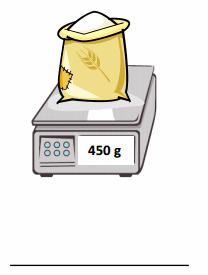
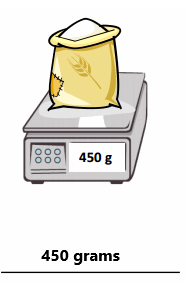
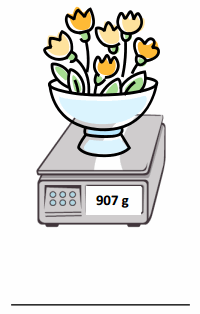
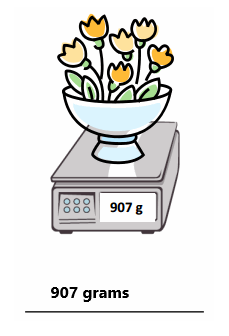
Eureka Math Grade 3 Module 2 Lesson 8 Answer Key

Engage NY Eureka Math 3rd Grade Module 2 Lesson 8 Answer Key

Eureka Math Grade 3 Module 2 Lesson 8 Problem Set Answer Key

Question 1.
Tim goes to the market to buy fruits and vegetables. He weighs some string beans and some grapes.
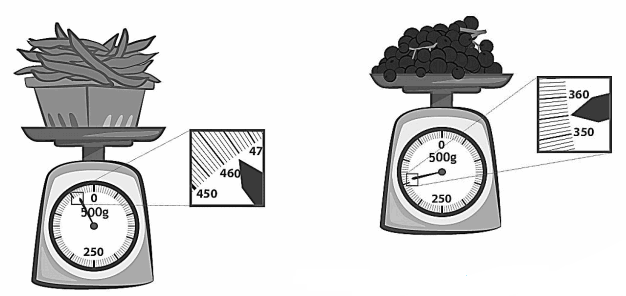
Eureka Math Grade 3 Module 2 Lesson 8 Problem Set Answer Key 1
List the weights for both the string beans and grapes.
The string beans weigh _____________ grams.
The grapes weigh _____________ grams.

Answer:
The string beans weigh 464 grams.
The grapes weigh 355 grams.

Question 2.
Use tape diagrams to model the following problems. Keiko and her brother Jiro get weighed at the doctor’s office. Keiko weighs 35 kilograms, and Jiro weighs 43 kilograms.
a. What is Keiko and Jiro’s total weight?
Keiko and Jiro weigh __________ kilograms.

Answer:
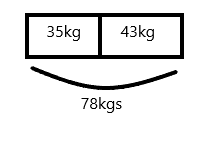
Explanation:
Keiko and her brother Jiro get weighed at the doctor’s office. Keiko weighs 35 kilograms, and Jiro weighs 43 kilograms.
Add 35 and 43
35+43=78kgs
Therefore, Keiko and Jiro weigh 78 kilograms

b. How much heavier is Jiro than Keiko?
Jiro is __________ kilograms heavier than Keiko.

Answer:
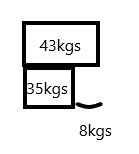
Explanation:
Keiko weighs 35 kilograms, and Jiro weighs 43 kilograms.
Subtract 35 from 43
43-35=8kgs
Therefore, Jiro is 8 kilograms heavier than Keiko

Question 3.
Jared estimates that his houseplant is as heavy as a 5-kilogram bowling ball. Draw a tape diagram to estimate the weight of 3 houseplants.

Answer:
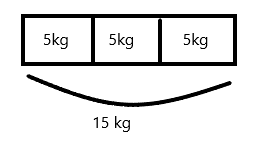
Explanation:
If weight of 1 house plant is 5kg then weight of 3 houseplants will be 5 x 3=15 kg.Therefore the weight of 3houseplants is 15kg.

Question 4.
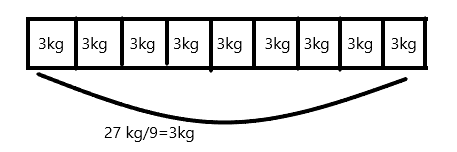
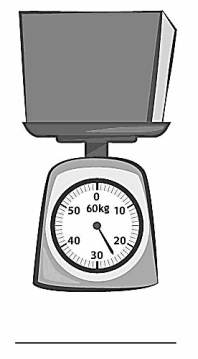
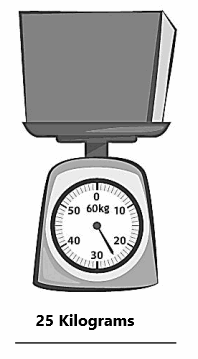
Jane and her 8 friends go apple picking. They share what they pick equally. The total weight of the apples they pick is shown to the right.
a. About how many kilograms of apples will Jane take home?
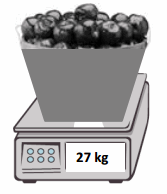
Eureka Math Grade 3 Module 2 Lesson 8 Problem Set Answer Key 2

Answer:

Explanation:
Jane and her 8 friends go apple picking. They share what they pick equally.
There are 27kgs of apples in the weighing balance.
divide 27 kgs of apples with 9 people
27/9=3
Therefore, Jane will take about 3kgs of apples home

b. Jane estimates that a pumpkin weighs about as much as her share of the apples. About how much do 7 pumpkins weigh altogether?

Answer:
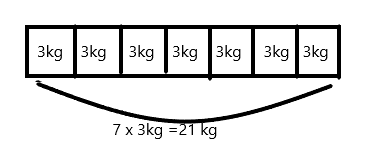
Explanation:
Jane estimates that a pumpkin weighs about as much as her share of the apples.Jane’s share of apples is 3kg.If each pumpkin weighs 3 kgs then the weight of 7 pumpkins will be
7 x 3=21 kg.
Therefore 7 pumpkins weigh 21kgs altogether.

Eureka Math Grade 3 Module 2 Lesson 8 Exit Ticket Answer Key

The weights of a backpack and suitcase are shown below.
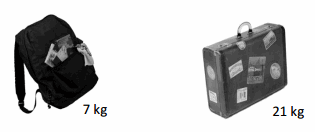
Engage NY Math 3rd Grade Module 2 Lesson 8 Exit Ticket Answer Key 3
a. How much heavier is the suitcase than the backpack?

Answer:
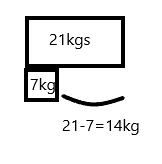
Explanation:
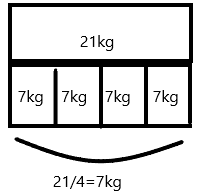
The weight of suitcase is 21 kg but weight of backpack is 7 kg.So, subtract 7 from 21.
21-7=14
Therefore, the suitcase is 14 kg more than the backpack.

b. What is the total weight of 4 identical backpacks?

Answer:
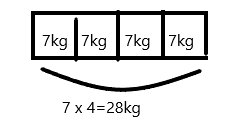
Explanation:
If the weight of each backpack is 7 kgs then the weight of 4 such backpacks will be 7 x 4=28kgs
Therefore, total weight of 4 identical backpacks is 28kgs.

c. How many backpacks weigh the same as one suitcase?

Answer:
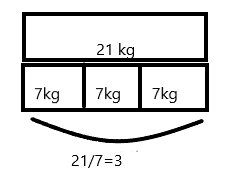
Explanation:
The weight of suitcase is 21 kg and weight of backpack is 7 kg.Divide weight of suitcase and weight of backpack.
21/7=3.
Therefore 3 backpacks weigh the same as one suitcase.

Eureka Math Grade 3 Module 2 Lesson 8 Homework Answer Key

Question 1.
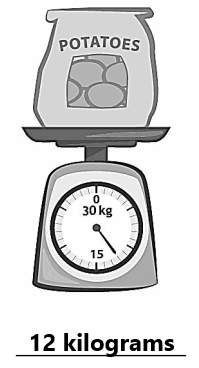
The weights of 3 fruit baskets are shown below.
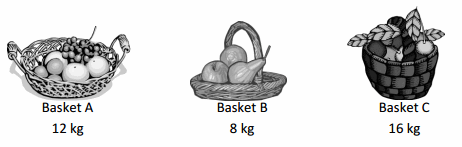
Eureka Math 3rd Grade Module 2 Lesson 8 Homework Answer Key 4
a. Basket ______ is the heaviest.

Answer:
Basket C is the heaviest as it has fruits of 16kgs.

b. Basket ______ is the lightest.

Answer:
Basket B is the lightest as it has fruits of 8kgs.

c. Basket A is __________ kilograms heavier than Basket B.

Answer:
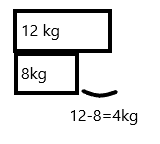
Explanation:
Weight of Basket A is 12kgs and Basket B is 8kgs.Subtract 8 from 12.
12-8=4
Therefore, Basket A is 4 kilograms heavier than Basket B.

d. What is the total weight of all three baskets?

Answer:
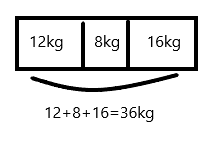
Explanation:
Add the weights of all the 3 baskets
12+8+16=36kgs
Therefore, the total weight of all three baskets is 36kgs.

Question 2.
Each journal weighs about 280 grams. What is total weight of 3 journals?

Answer:
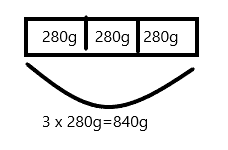
Explanation:
If each journal weighs about 280 grams then total weight of 3 journals will be 3 x 280g=840g
Therefore, weight of 3 journals is 840grams.

Question 3.
Ms. Rios buys 453 grams of strawberries. She has 23 grams left after making smoothies. How many grams of strawberries did she use?

Answer:
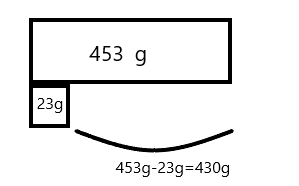
Explanation:
Ms. Rios buys 453 grams of strawberries. She has 23 grams left after making smoothies.Subtract 23g from 453 is 453-23=430
Therefore, Ms. Rios used 430 grams of strawberries.

Question 4.
Andrea’s dad is 57 kilograms heavier than Andrea. Andrea weighs 34 kilograms.
a. How much does Andrea’s dad weigh?

Answer:
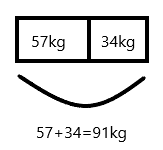
Explanation:
Andrea’s dad is 57 kilograms heavier than Andrea.If Andrea weighs 34 kilograms then her fathers weight is 34+57=91kgs.

b. How much do Andrea and her dad weigh in total?

Answer:
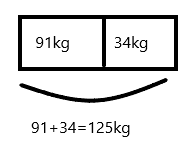
Explanation:
The weight of Andrea is 34kgs and weight of Andreas father is 91kgs.Add 91 and 34
91+34=125kg
Therefore, Andrea and her dad weigh 125kgs in total.

Question 5.
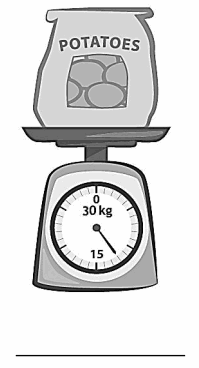
Jennifer’s grandmother buys carrots at the farm stand. She and her 3 grandchildren equally share the carrots. The total weight of the carrots she buys is shown below.
a. How many kilograms of carrots will Jennifer get?
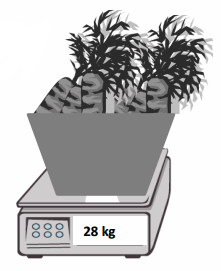
Eureka Math 3rd Grade Module 2 Lesson 8 Homework Answer Key 5

Answer:

Explanation:
Jennifer’s grandmother buys carrots at the farm stand. She and her 3 grandchildren equally share the carrots.She buys 28kgs of carrots.
Her share of carrots is 28/4=7kgs.
Therefore, jennifer gets 7 kilograms of carrots.

b. Jennifer uses 2 kilograms of carrots to bake muffins. How many kilograms of carrots does she have left?

Answer:
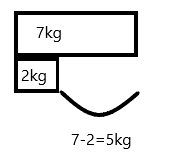
Explanation:
Jennifer gets 7 kilograms of carrots.
If Jennifer uses 2 kilograms of carrots to bake muffins then she will be left with 7-2=5kgs
Therefore, 5 kilograms of carrots she have left.
Eureka Math Grade 3 Module 2 Answer Key

Eureka Math Grade 3 Module 2 Lesson 7 Answer Key

Engage NY Eureka Math 3rd Grade Module 2 Lesson 7 Answer Key

Eureka Math Grade 3 Module 2 Lesson 7 Problem Set Answer Key

Work with a partner. Use the corresponding weights to estimate the weight of objects in the classroom. Then, check your estimate by weighing on a scale.
A.

Objects that Weigh About 1 Kilogram

Actual Weight

               A Water bottle                      980g
               A Dictionary                     1100g
               My shoes                      1250g

B.

Objects that Weigh About 100 grams

Actual Weight

                  A Notebook                         110g
                  An Apple                          95g
                 A Pencil box                          108g

C.

Objects that Weigh About 10 grams

Actual Weight

                      An   Eraser                             8g
                      A Marker                             12g
                      My Bracelet                             9g

D.

Objects that Weigh About 1 gram

Actual Weight

                      A Coin                              2g
                      A Pencil                              4g
                     A Sharpener                              3g

E. Circle the correct unit of weight for each estimation.

Question 1.
A box of cereal weighs about 350 (grams / kilograms).

Question 2.
A watermelon weighs about 3 (grams / kilograms).

Question 3.
A postcard weighs about 6 (grams / kilograms).

Question 4.
A cat weighs about 4 (grams / kilograms).

Question 5.
A bicycle weighs about 15 (grams / kilograms).

Question 6.
A lemon weighs about 58 (grams / kilograms).

F. During the exploration, Derrick finds that his bottle of water weighs the same as a 1-kilogram bag of rice. He then exclaims, “Our class laptop weighs the same as 2 bottles of water!” How much does the laptop weigh in kilograms? Explain your reasoning.

Answer:
The laptop weighs 2kg.

Explanation:
Derrick finds that his bottle of water weighs the same as a 1-kilogram bag of rice and he says that class laptop weighs the same as 2 bottles of water.So, If 1 bottle of water weighs 1 kg then 2 bottles of water weighs 2 kg.Therefore laptop weighs 2kg.

G. Nessa tells her brother that 1 kilogram of rice weighs the same as 10 bags containing 100 grams of beans each. Do you agree with her? Explain why or why not.

Answer:
Yes, 1 kilogram of rice weighs the same as 10 bags containing 100 grams of beans each.

Explanation:
Yes, because 10 X 100g=1000g and as we know 1000g is equal to 1 kilogram.

Engage NY Math 3rd Grade Module 2 Lesson 7 Exit Ticket Answer Key

Question 1.
Read and write the weights below. Write the word kilogram or gram with the measurement.
Engage NY Math 3rd Grade Module 2 Lesson 7 Exit Ticket Answer Key 1


Engage NY Math 3rd Grade Module 2 Lesson 7 Exit Ticket Answer Key 1.1

Question 2.
Circle the correct unit of weight for each estimation.
a. An orange weighs about 200 (grams / kilograms).

b. A basketball weighs about 624 (grams / kilograms).

c. A brick weighs about 2 (grams / kilograms).

d. A small packet of sugar weighs about 4 (grams / kilograms).

e. A tiger weighs about 190 (grams / kilograms).

Eureka Math 3rd Grade Module 2 Lesson 7 Homework Answer Key

Question 1.
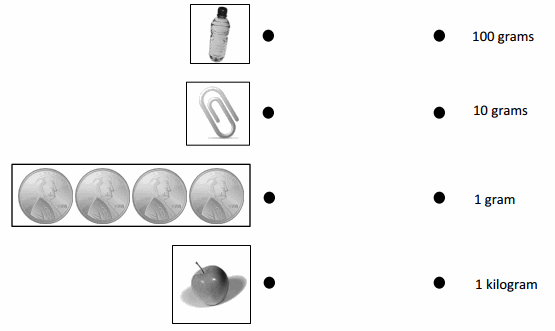
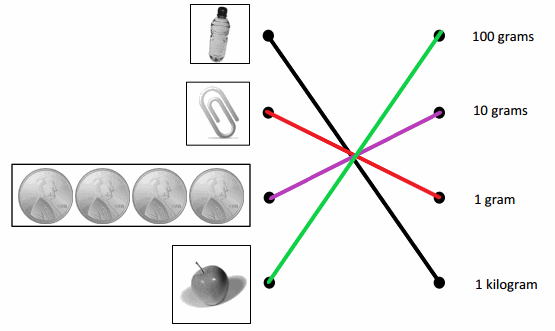
Match each object with its approximate weight.
Eureka Math 3rd Grade Module 2 Lesson 7 Homework Answer Key 2

Question 2.
Alicia and Jeremy weigh a cell phone on a digital scale. They write down 113 but forget to record the unit. Which unit of measurement is correct, grams or kilograms? How do you know?

Question 3.
Read and write the weights below. Write the word kilogram or gram with the measurement.
Eureka Math 3rd Grade Module 2 Lesson 7 Homework Answer Key 3


Eureka Math 3rd Grade Module 2 Lesson 7 Homework Answer Key 4


Eureka Math 3rd Grade Module 2 Lesson 7 Homework Answer Key 5


Eureka Math 3rd Grade Module 2 Lesson 7 Homework Answer Key 6


Eureka Math 3rd Grade Module 2 Lesson 7 Homework Answer Key 7

Eureka Math Grade 3 Module 2 Answer Key

Eureka Math Grade 3 Module 2 Lesson 6 Answer Key

Engage NY Eureka Math 3rd Grade Module 2 Lesson 6 Answer Key

Eureka Math Grade 3 Module 2 Lesson 6 Problem Set Answer Key

Question 1.
Illustrate and describe the process of making a 1-kilogram weight.

Answer:

Explanation:
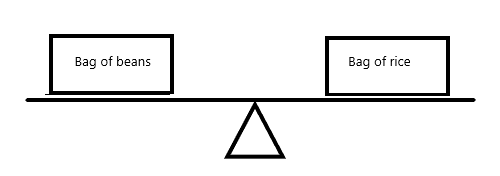
I put a 1 kg beans on one side of the pan balance.Then i filled a bag of rice on the other side of pan until the pan gets balanced.

Question 2.
Illustrate and describe the process of decomposing 1 kilogram into groups of 100 grams.

Answer:

Explanation:
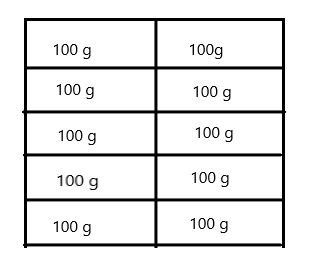
I drew a ten-frame on the 1kg bag of rice.Each part of frame is 100g.There are 10 hundreds which is equal to 1000g.

Question 3.
Illustrate and describe the process of decomposing 100 grams into groups of 10 grams.

Answer:

Explanation:
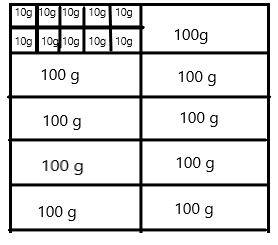
I erased one of the 100g labels and drew a new ten frame .Each part of ten frame is 10g.There are 10 tens which is equal to 100g.

Question 4.
Illustrate and describe the process of decomposing 10 grams into groups of 1 gram.

Answer:

Explanation:
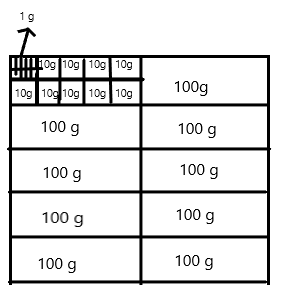
I erases one of the 10g  labels and drew a new ten frame.Each part of new frame is 1g.There are 10 ones which is equal to 10 g.

Question 5.
Compare the two place value charts below. How does today’s exploration using kilograms and grams relate to your understanding of place value?

1 kilogram100 grams10 grams

1 gram

Thousands

HundredsTens

Ones

Answer:
Todays exploration with weights relates to place value because 1 tens is equal to 10 ones, 1 hundreds is equal to 10 tens and 1 thousands is equal to 10 hundreds.The weights we used today also worked in the same way.10g is ten 1g, 100g is ten 10g and the 1000g is ten 100g.

Eureka Math Grade 3 Module 2 Lesson 6 Exit Ticket Answer Key

Ten bags of sugar weigh 1 kilogram. How many grams does each bag of sugar weigh?

Answer:

Explanation:
If I drew a ten frame on the 1kg bag of sugar, Each part of ten frame is 100g.So, If ten bags of sugar weigh 1kg then each bag of sugar weighs 100g.

Eureka Math Grade 3 Module 2 Lesson 6 Homework Answer Key

Question 1.
Use the chart to help you answer the following questions:

1 kilogram100 grams10 grams

1 gram

a. Isaiah puts a 10-gram weight on a pan balance. How many 1-gram weights does he need to balance the scale?

Answer:
As we know one 10g is equal to ten 1g.So, needs to put ten 1g to balance the scale.

b. Next, Isaiah puts a 100-gram weight on a pan balance. How many 10-gram weights does he need to balance the scale?

Answer:
As we know one 100g is equal to ten 10g.So, needs to put ten 10g to balance the scale.

c. Isaiah then puts a kilogram weight on a pan balance. How many 100-gram weights does he need to balance the scale?

Answer:
As we know one 1000g is equal to ten 100g.So, needs to put ten 100g to balance the scale.

d. What pattern do you notice in Parts (a–c)?

Answer:
I noticed here the pattern of place values.1 tens is equal to 10 ones, 1 hundreds is equal to 10 tens and 1 thousands is equal to 10 hundreds.In the same way one 10g is ten 1g,  one100g is ten 10g and the one 1000g is ten 100g

Question 2.
Read each digital scale. Write each weight using the word kilogram or gram for each measurement.
Eureka Math 3rd Grade Module 2 Lesson 6 Homework Answer Key 1


Eureka Math 3rd Grade Module 2 Lesson 6 Homework Answer Key 2


Eureka Math 3rd Grade Module 2 Lesson 6 Homework Answer Key 3


Eureka Math 3rd Grade Module 2 Lesson 6 Homework Answer Key 4


Eureka Math 3rd Grade Module 2 Lesson 6 Homework Answer Key 5


Eureka Math 3rd Grade Module 2 Lesson 6 Homework Answer Key 6

Eureka Math Grade 3 Module 2 Answer Key

Eureka Math Grade 3 Module 2 Lesson 5 Answer Key

Engage NY Eureka Math 3rd Grade Module 2 Lesson 5 Answer Key

Eureka Math Grade 3 Module 2 Lesson 5 Problem Set Answer Key

Question 1.
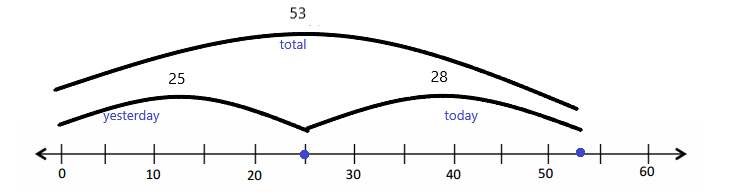
Cole read his book for 25 minutes yesterday and for 28 minutes today. How many minutes did Cole read altogether? Model the problem on the number line, and write an equation to solve.
Eureka Math Grade 3 Module 2 Lesson 5 Problem Set Answer Key 1
Cole read for __________ minutes.

Answer:

Explanation:
Cole read his book for 25 minutes yesterday and for 28 minutes today.
25+28=53
Cole read altogether 53 minutes.

Question 2.
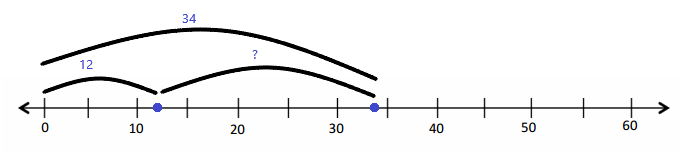
Tessa spends 34 minutes washing her dog. It takes her 12 minutes to shampoo and rinse and the rest of the time to get the dog in the bathtub! How many minutes does Tessa spend getting her dog in the bathtub? Draw a number line to model the problem, and write an equation to solve.

Answer:

Explanation:
Tessa spends 34 minutes washing her dog. It takes her 12 minutes to shampoo and rinse and the rest of the time to get the dog in the bathtub.
34-12=22
Tessa spend getting her dog in the bathtub for about 22 minutes.

Question 3.
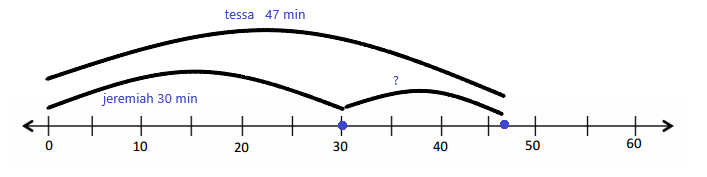
Tessa walks her dog for 47 minutes. Jeremiah walks his dog for 30 minutes. How many more minutes did tessa walks her dog than jeremiah?

Answer:

Explanation:
Tessa walks her dog for 47 minutes. Jeremiah walks his dog for 30 minutes
47-30=17
17 more minutes tessa walks her dog than jeremiah

Question 4.
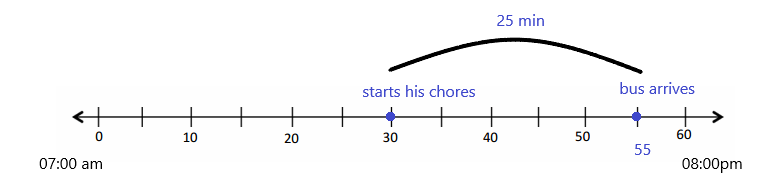
a. It takes Austin 4 minutes to take out the garbage, 12 minutes to wash the dishes, and 13 minutes to mop the kitchen floor. How long does it take Austin to do his chores?
b. Austin’s bus arrives at 7:55 a.m. If he starts his chores at 7:30 a.m., will he be done in time to meet his bus? Explain your reasoning.

Answer:

Explanation:
It takes Austin 4 minutes to take out the garbage, 12 minutes to wash the dishes, and 13 minutes to mop the kitchen floor.
4+12+13=29
It take Austin to do his chores for about 29 minutes.

Explanation:
Austin’s bus arrives at 7:55 a.m. If he starts his chores at 7:30 a.m., will he be done in time to meet his bus.
It take Austin to do his chores for about 29 minutes, If he starts his chores at 7:30am he cannot finish the work within 25min as the bus starts at 7:55am.

Question 5.
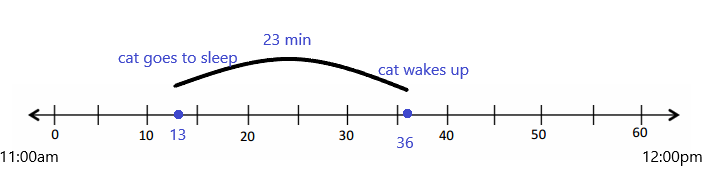
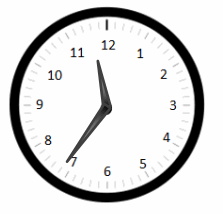
Gilberto’s cat sleeps in the sun for 23 minutes. It wakes up at the time shown on the clock below. What time did the cat go to sleep?
Eureka Math Grade 3 Module 2 Lesson 5 Problem Set Answer Key 2

Answer:

Explanation:
Gilberto’s cat sleeps in the sun for 23 minutes. It wakes up at the time 11:36.So, the cat sleeps for 23 minutes.

Eureka Math Grade 3 Module 2 Lesson 5 Exit Ticket Answer Key

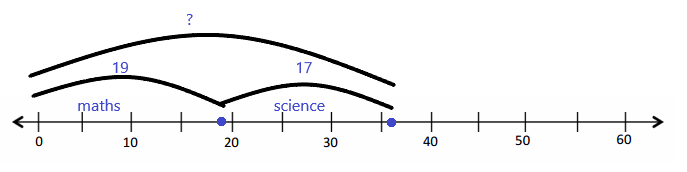
Michael spends 19 minutes on his math homework and 17 minutes on his science homework.
How many minutes does Michael spend doing his homework?

Model the problem on the number line, and write an equation to solve.
Engage NY Math 3rd Grade Module 2 Lesson 5 Exit Ticket Answer Key 3
Michael spends __________ minutes on his homework.

Answer:


Explanation:
Michael spends 19 minutes on his math homework and 17 minutes on his science homework
19+17=36
Michael spends 36 minutes on his homework

Eureka Math Grade 3 Module 2 Lesson 5 Homework Answer Key

Question 1.
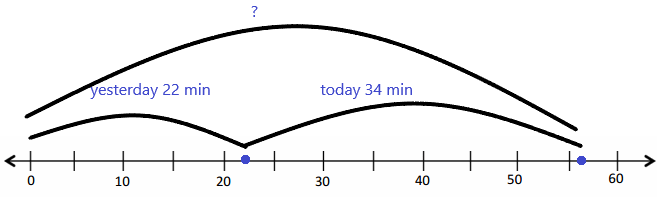
Abby spent 22 minutes working on her science project yesterday and 34 minutes working on it today. How many minutes did Abby spend working on her science project altogether? Model the problem on the number line, and write an equation to solve.
Eureka Math 3rd Grade Module 2 Lesson 5 Homework Answer Key 4
Abby spent __________ minutes working on her science project.

Answer:

Explanation:
Abby spent 22 minutes working on her science project yesterday and 34 minutes working on it today
22+34=56
Abby spent 56 minutes working on her science project

Question 2.
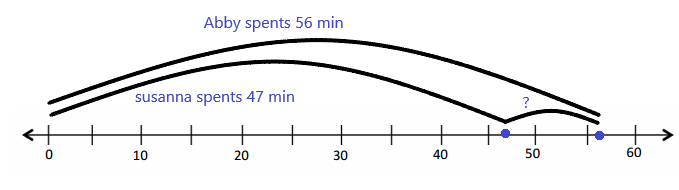
Susanna spends a total of 47 minutes working on her project. How many more minutes than Susanna does Abby spend working? Draw a number line to model the problem, and write an equation to solve.

Answer:

Explanation:
Abby spents 56minutes and susanna spents 47 minutes to work on their projects.
56-47=9 minutes.
Abby spend working 9 minutes more than Susanna.

Question 3.
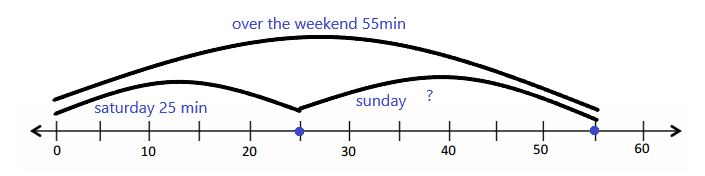
Peter practices violin for a total of 55 minutes over the weekend. He practices 25 minutes on Saturday. How many minutes does he practice on Sunday?

Answer:

Explanation:
Peter practices violin for total of 55 minutes over the weekend
He practices 25 minutes on Saturday.
55-25=30
Peter practices violin for 30 minutes on sunday.

Question 4.
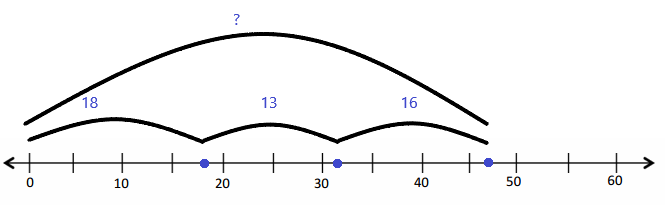
a. Marcus gardens. He pulls weeds for 18 minutes, waters for 13 minutes, and plants for 16 minutes. How many total minutes does he spend gardening?
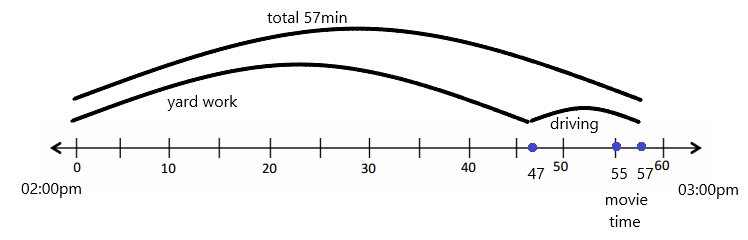
b. Marcus wants to watch a movie that starts at 2:55 p.m. It takes 10 minutes to drive to the theater. If Marcus starts the yard work at 2:00 p.m., can he make it on time for the movie? Explain your reasoning.

Answer:

Explanation:
Marcus gardens. He pulls weeds for 18 minutes, waters for 13 minutes, and plants for 16 minutes
18+13+16=47
Marcus spend gardening for a total of 47 minutes.

Explanation:
Marcus wants to watch a movie that starts at 2:55 p.m. It takes 10 minutes to drive to the theater. If Marcus starts the yard work at 2:00 p.m, he cannot reach the movie on time as it takes 57 minutes for him to reach but he has only 55 minutes.

Question 5.
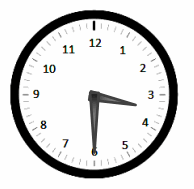
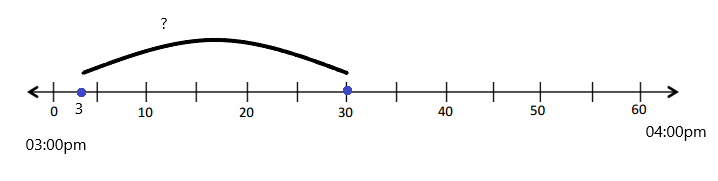
Arelli takes a short nap after school. As she falls asleep, the clock reads 3:03 p.m. She wakes up at the time shown below. How long is Arelli’s nap?
Eureka Math 3rd Grade Module 2 Lesson 5 Homework Answer Key 5

Answer:

Explanation:
Arelli takes a short nap after school. As she falls asleep, the clock reads 3:03 p.m. She wakes up at the time 3:30pm
30-3=27
So,

Eureka Math Grade 3 Module 2 Answer Key

Eureka Math Grade 3 Module 2 Lesson 3 Answer Key

Engage NY Eureka Math 3rd Grade Module 2 Lesson 3 Answer Key

Eureka Math Grade 3 Module 2 Lesson 3 Problem Set Answer Key

Question 1
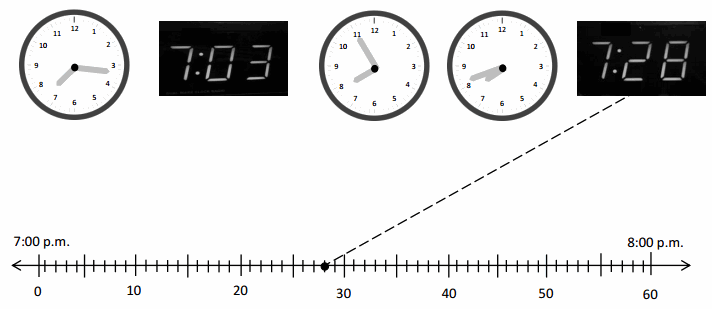
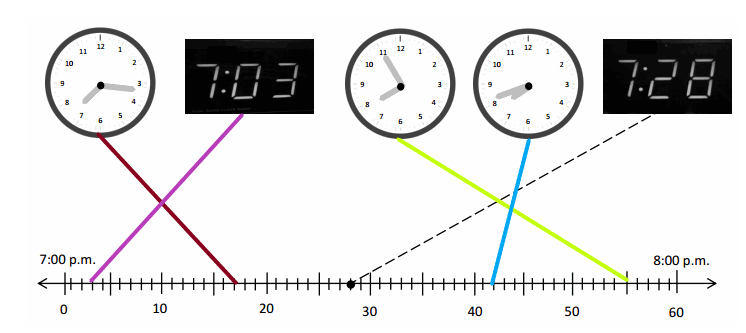
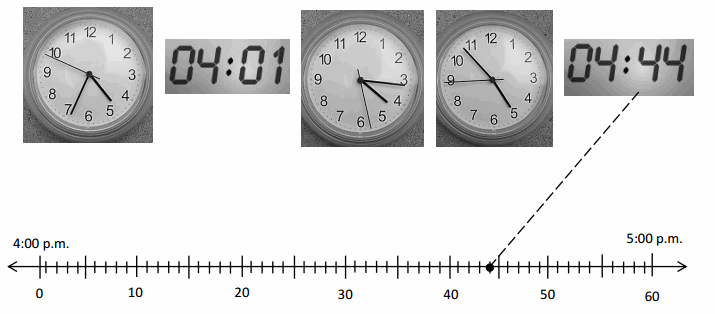
Plot a point on the number line for the times shown on the clocks below. Then, draw a line to match the clocks to the points.
Eureka Math Grade 3 Module 2 Lesson 3 Problem Set Answer Key 1

Answer:

Explanation:
The red lines shows the time 7:17pm, the pink line shows 7:03pm, the green line shows the time 7:55pm and the blue line shows the time 7:42pm on the number line.

Question 2.
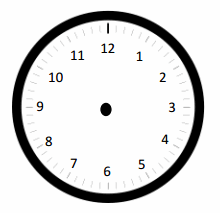
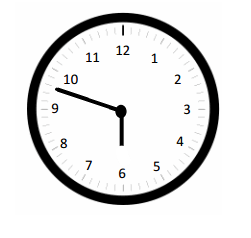
Jessie woke up this morning at 6:48 a.m. Draw hands on the clock below to show what time Jessie woke up.
Eureka Math Grade 3 Module 2 Lesson 3 Problem Set Answer Key 2

Answer:

Explanation:
To show the time 6:48am in the clock draw the hours hand on six and minutes hand between 9 and 10.

Question 3.
Mrs. Barnes starts teaching math at 8:23 a.m. Draw hands on the clock below to show what time Mrs. Barnes starts teaching math.
Eureka Math Grade 3 Module 2 Lesson 3 Problem Set Answer Key 3

Answer:

Explanation:
To show the time 8:23am in the clock draw the hours hand on 8 and minutes hand between 4 and 5.

Question 4.
The clock shows what time Rebecca finishes her homework. What time does Rebecca finish her homework?
Eureka Math Grade 3 Module 2 Lesson 3 Problem Set Answer Key 4
Rebecca finishes her homework at _______________.

Answer:
Rebecca finishes her homework at 5:27pm.

Explanation:
As the hours hand is pointed between 5 and 6 and the minutes hand is placed between 25 and 30, The time is 5 hours and 27 minutes.

Question 5.
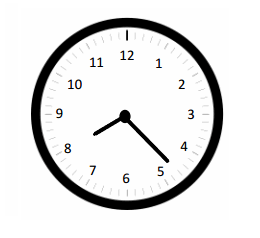
The clock below shows what time Mason’s mom drops him off for practice.
a. What time does Mason’s mom drop him off?
Eureka Math Grade 3 Module 2 Lesson 3 Problem Set Answer Key 5
b. Mason’s coach arrived 11 minutes before Mason. What time did Mason’s coach arrive?

Answer:

Explanation:
As the hours hand is pointing 4 and the minutes hand 9 ie 45 minutes, The time is 3:45.Therefore Mason’s coach arrived at 3:45.

Eureka Math Grade 3 Module 2 Lesson 3 Exit Ticket Answer Key

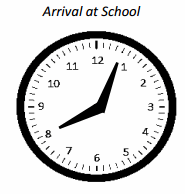
The clock shows what time Jason gets to school in the morning.
a. What time does Jason get to school?
Engage NY Math 3rd Grade Module 2 Lesson 3 Exit Ticket Answer Key 6

Answer:
Jason gets to school at 8:04am in the morning.

Explanation:
A the clock shows the hours hand on 8 and the minutes hand on 4 so, the time is 8:04am.

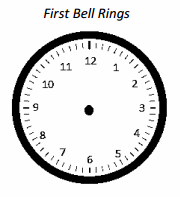
b. The first bell rings at 8:23 a.m. Draw hands on the clock to show when the first bell rings.
Engage NY Math 3rd Grade Module 2 Lesson 3 Exit Ticket Answer Key 7

Answer:

Explanation:
As the first bell rings at 8:23am point the hours hand at 8 and the minutes hands between 4 and 5 ie 20 and 25.

c. Label the first and last tick marks 8:00 a.m. and 9:00 a.m. Plot a point to show when Jason arrives at school. Label it A. Plot a point on the line when the first bell rings and label it B.
Engage NY Math 3rd Grade Module 2 Lesson 3 Exit Ticket Answer Key 7.1

Answer:

Explanation:
The first and last tick marks are 8:00am and 9:00am.The pointed marks on the number line are A Jason gets to school at 8:04am and B first bell rings at 8:23am.

Eureka Math Grade 3 Module 2 Lesson 3 Homework Answer Key

Question 1.
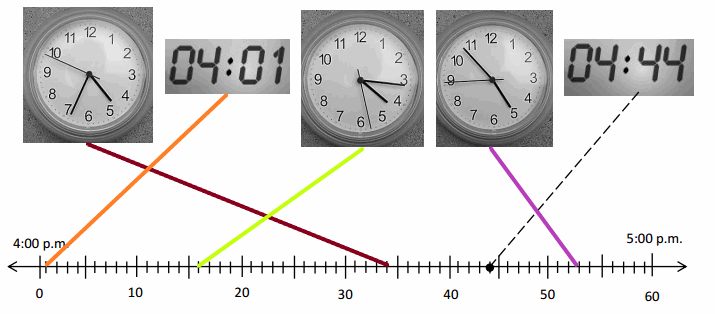
Plot points on the number line for each time shown on a clock below. Then, draw lines to match the clocks to the points.
Eureka Math 3rd Grade Module 2 Lesson 3 Homework Answer Key 8

Answer:

Explanation:
The red lines shows the time 04:34pm, the pink line shows 04:53pm, the green line shows the time 04:16pm and the orange line shows the time 4:01pm on the number line.


Question 2.
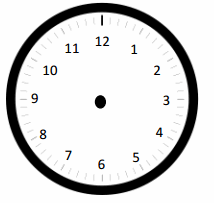
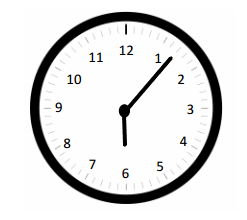
Julie eats dinner at 6:07 p.m. Draw hands on the clock below to show what time Julie eats dinner.
Eureka Math 3rd Grade Module 2 Lesson 3 Homework Answer Key 9

Answer:

Explanation:
To show the time 06:07am in the clock draw the hours hand on 6 and minutes hand between 1 and 2.

Question 3.
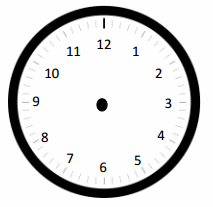
P.E. starts at 1:32 p.m. Draw hands on the clock below to show what time P.E. starts.
Eureka Math 3rd Grade Module 2 Lesson 3 Homework Answer Key 10

Answer:

Explanation:
To show the time 1:32am in the clock draw the hours hand on 1 and minutes hand between 6 and 7.

Question 4.
The clock shows what time Zachary starts playing with his action figures.
a. What time does he start playing with his action figures?
Eureka Math 3rd Grade Module 2 Lesson 3 Homework Answer Key 11

Explanation:
As the hours hand on 2 and the minutes hand between 6 and 7.So, the time 2:32.

b. He plays with his action play finishes after 23 minutes.What time does he finish playing?
c. Draw hands on the clock to the right to show what time Zachary finishes playing.
Eureka Math 3rd Grade Module 2 Lesson 3 Homework Answer Key 12

Answer:

Explanation:
Zachary finishes playing after 23 minutes from P.E. at 1:32 p.m. so, the time is 1:55.Mark the hours hand on 1 and the minutes hand on 11 ie 55 minutes.

d. Label the first and last tick marks with 2:00 p.m. and 3:00 p.m. Then, plot Zachary’s start and finish times. Label his start time with a B and his finish time with an F.
Eureka Math 3rd Grade Module 2 Lesson 3 Homework Answer Key 13

Answer:

Explanation:
The first and last tick marks are labled with the timings 2:00 p.m. and 3:00 p.m.The start and finish time of Zachary are marked as B the start time(2:32) and F the finish time(2:55).

Eureka Math Grade 3 Module 2 Answer Key

Eureka Math Grade 3 Module 2 Lesson 2 Answer Key

Engage NY Eureka Math 3rd Grade Module 2 Lesson 2 Answer Key

Eureka Math Grade 3 Module 2 Lesson 2 Problem Set Answer Key

Question 1.
Follow the directions to label the number line below.
Eureka Math Grade 3 Module 2 Lesson 2 Problem Set Answer Key 1
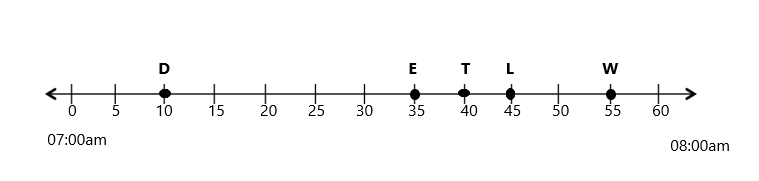
a. Ingrid gets ready for school between 7:00 a.m. and 8:00 a.m. Label the first and last tick marks as 7:00 a.m. and 8:00 a.m.
b. Each interval represents 5 minutes. Count by fives starting at 0, or 7:00 a.m. Label each 5-minute interval below the number line up to 8:00 a.m.
c. Ingrid starts getting dressed at 7:10 a.m. Plot a point on the number line to represent this time. Above the point, write D.
d. Ingrid starts eating breakfast at 7:35 a.m. Plot a point on the number line to represent this time. Above the point, write E.
e. Ingrid starts brushing her teeth at 7:40 a.m. Plot a point on the number line to represent this time. Above the point, write T.
f. Ingrid starts packing her lunch at 7:45 a.m. Plot a point on the number line to represent this time. Above the point, write L.
g. Ingrid starts waiting for the bus at 7:55 a.m. Plot a point on the number line to represent this time. Above the point, write W.

Answer:

Explanation:
The number line above shows the following points
The point D shows Ingrid begins getting dressed(7:10am)
The point E shows Ingrid begins Eating breakfast(7:35am)
The point T shows Ingrid begins brussing her teeth(7:40am)
The point L shows Ingrid begins packing her lunch(7:45am)
The point W shows Ingrid begins waiting for the bus(7:55am).

Question 2.
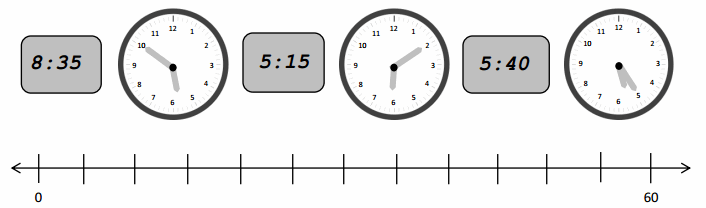
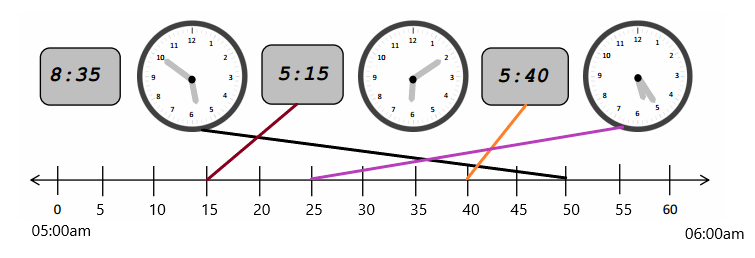
Label every 5 minutes below the number line shown. Draw a line from each clock to the point on the number line which shows its time. Not all of the clocks have matching points.
Eureka Math Grade 3 Module 2 Lesson 2 Problem Set Answer Key 2

Answer:

Explanation:
The black line points the time 05:50 am,the red line points the time 05:15am, the pink line points the time 05:25am and the orange line points the time 05:40am.

Question 3.
Noah uses a number line to locate 5:45 p.m. Each interval is 5 minutes. The number line shows the hour from 5 p.m. to 6 p.m. Label the number line below to show his work.
Eureka Math Grade 3 Module 2 Lesson 2 Problem Set Answer Key 3

Answer:

Explanation:
Noah wanted to point the 5:45pm.Draw a number line lable the points of number line with intervels of 5 starting from 0 to 60.Mark 45 and this point will be the time 5:45 that Noah wanted to locate.

Question 4.
Tanner tells his little brother that 11:25 p.m. comes after 11:20 a.m. Do you agree with Tanner? Why or why not?

Answer:
I donot agree with tanner because after 11:20 am comes 11:25 am not 11:25 pm.AM AntiMeridian means before midday and PM PostMeridian means after midday.

Eureka Math Grade 3 Module 2 Lesson 2 Exit Ticket Answer Key

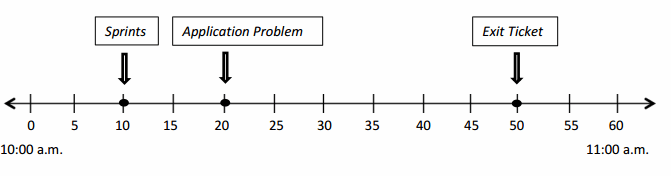
The number line below shows a math class that begins at 10:00 a.m. and ends at 11:00 a.m. Use the number line to answer the following questions.

Eureka Math Grade 3 Module 2 Lesson 2 Exit Ticket Answer Key 4

a. What time do Sprints begin?
b. What time do students begin the Application Problem?
c. What time do students work on the Exit Ticket?

d. How long is math class?

Answer:
a
Sprints begin at 10:10am.

Explanation:
As sprints is located on 10 min mark on number line it means the time is 10:10 am.

b
Students begin application problems at 10:20 am.

Explanation:
As application problem is located on 20 min mark on number line it means the time is 10:20 am.

c
Students work on Exit Ticket at 10:50am

Explanation:
As Exit ticket is located on 50 min mark on number line it means the time is 10:50 am.

d
The math class is 1 hour long because the number line denotes 60 minutes from 0 to 60 that is from 10am to 11am.

Eureka Math Grade 3 Module 2 Lesson 2 Homework Answer Key

Follow the directions to label the number line below.
Eureka Math Grade 3 Module 2 Lesson 2 Homework Answer Key 5
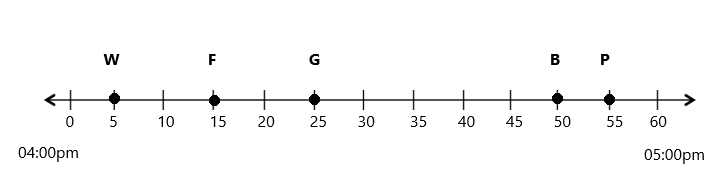
a. The basketball team practices between 4:00 p.m. and 5:00 p.m. Label the first and last tick marks as 4:00 p.m. and 5:00 p.m.
b. Each interval represents 5 minutes. Count by fives starting at 0, or 4:00 p.m. Label each 5-minute interval below the number line up to 5:00 p.m.
c. The team warms up at 4:05 p.m. Plot a point on the number line to represent this time. Above the point, write W.
d. The team shoots free throws at 4:15 p.m. Plot a point on the number line to represent this time. Above the point, write F.
e. The team plays a practice game at 4:25 p.m. Plot a point on the number line to represent this time. Above the point, write G.
f. The team has a water break at 4:50 p.m. Plot a point on the number line to represent this time. Above the point, write B.
g. The team reviews their plays at 4:55 p.m. Plot a point on the number line to represent this time. Above the point, write P.

Answer:

Explanation:
The number line above shows the following points
The point W shows the team warms up(4:05pm)
The point F shows the team shoots free throws(4:15pm)
The point G shows the team plays a practice game(4:25pm)
The point B shows the team has a water break(4:50pm)
The point P shows the team reviews their plays(4:55pm).

Eureka Math Grade 3 Module 2 Answer Key

Eureka Math Grade 3 Module 4 Mid Module Assessment Answer Key

Engage NY Eureka Math 3rd Grade Module 4 Mid Module Assessment Answer Key

Eureka Math Grade 3 Module 4 Mid Module Assessment Answer Key

Question 1.
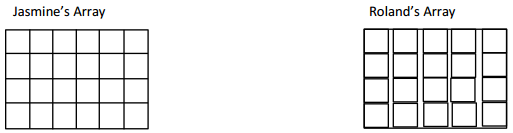
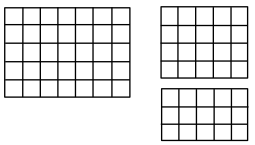
Jasmine and Roland each use unit squares to tile a piece of paper. Their work is shown below.
Eureka Math Grade 3 Module 4 Mid Module Assessment Answer Key 1
a. Can one of the arrays be used to correctly measure the area of the piece of paper? If so, whose array would you use? Explain why.
Answer:

b. What is the area of the piece of paper? Explain your strategy for finding the area.
Answer:

c. Jasmine thinks she can skip-count by sixes to find the area of her rectangle. Is she correct? Explain why or why not.
Answer:

Question 2.
Jaheim says you can create three rectangles with different side lengths using
12 unit squares. Use pictures, numbers, and words to show what Jaheim is saying.
Answer:

Question 3.
The area of a rectangle is 72 square units. One side has a length of 9 units. What is the other side length? Explain how you know using pictures, equations, and words.
Answer:

Question 4.
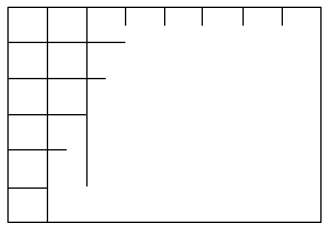
Jax started to draw a grid inside the rectangle to find its area.
Eureka Math Grade 3 Module 4 Mid Module Assessment Answer Key 2
a. Use a straight edge to complete the drawing of the grid.
Answer:

b. Write a skip-count sequence you could use to find the area.
Answer:

c. Write a multiplication equation that you could use to find the area, and then solve.
Answer:

Question 5.
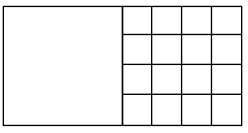
Half of the rectangle below has been tiled with unit squares.
Eureka Math Grade 3 Module 4 Mid Module Assessment Answer Key 3
a. How many more unit squares are needed to fill in the rest of the rectangle?
Answer:

b. What is the total area of the large rectangle? Explain how you found the area.
Answer:

Eureka Math Grade 3 Module 4 End of Module Assessment Answer Key

Students of Grade 3 can get a strong foundation on mathematics concepts by referring to the Eureka Math Book. It was developed by highly professional mathematics educators and the solutions prepared by them are in a concise manner for easy grasping. To achieve high scores in Grade 3, students need to solve all questions and exercises included in Eureka’s Math Grade 3 Book.

Engage NY Eureka Math 3rd Grade Module 4 End of Module Assessment Answer Key

Eureka Math Answer Key for Grade 3 aids teachers to differentiate instruction, building, and reinforcing foundational mathematics skills that alter from the classroom to real life.
With the help of the Eureka Primary School Grade 3 Answer Key, You can think deeply regarding what you are learning, and you will really learn math easily just like that. So teachers and students can find this Eureka Answer Key for Grade 3 more helpful in raising students’ scores and supporting teachers to educate the students.

Eureka Math Grade 3 Module 4 End of Module Assessment Answer Key

Question 1.
Sarah says the rectangle on the left has the same area as the sum of the two on the right. Pam says they do not have the same areas. Who is correct? Explain using numbers, pictures, and words.
Eureka Math Grade 3 Module 4 End of Module Assessment Answer Key 1

Answer:
Sarah was correct.

Explanation:
In the above-given question,
given that,
the area of the left rectangle = l x b.
area = 5 x 7.
area = 35 sq cm.
the area of the right rectangle 1 = l x b.
area = l x b.
area = 4 x 5.
area = 20 sq cm.
the area of the right rectangle 2 = l x b.
area = l x b.
area = 3 x 5.
area = 15 sq cm.
35 = 20 + 15.
35 = 35.
the area of the left rectangle = sum of the two rectangles on the right.

Question 2.
Draw three different arrays that you could make with 36 square inch tiles. Label the side lengths on each of your arrays. Write multiplication sentences for each array to prove that the area of each array is 36 square inches.

Answer:
The side lengths of the different arrays = 9 x 4, 4 x 9, 6 x 6.

Explanation:
In the above-given question,
given that,
the area of the rectangle 1 = 36 sq in.
area = l x b.
area = 9 x 4.
the area of the rectangle 2 = 36 sq in.
area = l x b.
area = 4 x 9.
the area of the rectangle 3 = 36 sq in.
area = l x b.
area = 6 x 6.

Question 3.
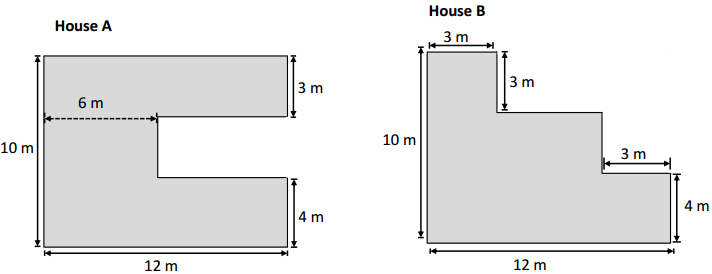
Mr. and Mrs. Jackson are buying a new house. They are deciding between the two floor plans below.
Eureka Math Grade 3 Module 4 End of Module Assessment Answer Key 2
Which floor plan has the greater area? Show how you found your answer on the drawings above. Show your calculations below.

Answer:
The area of the shaded figure = 102 sq m.

Explanation:
In the above-given question,
given that,
area of longer rectangle = 120 sq m.
area = l x b.
area = 12 x 10.
area = 120 sq m.
area of longer rectangle 2 = 36 sq m.
area = l x b.
area = 12 x 3.
area = 36 sq m.
area of smaller rectangle = 18 sq m.
area = l x b.
area = 6 x 3.
area = 18 sq cm.
area of shaded rectangle = area of longer rectangle – area of smaller rectangle.
area of shaded rectangle = 120 – 18.
area of shaded figure = 102.

area of longer rectangle = 48 sq m.
area = l x b.
area = 12 x 4.
area = 48 sq m.
area of longer rectangle 2 = 27 sq m.
area = l x b.
area = 9 x 3.
area = 27 sq m.
area of smaller rectangle = 9 sq m.
area = l x b.
area = 3 x 3.
area = 9 sq cm.
House A has a greater area.

Question 4.
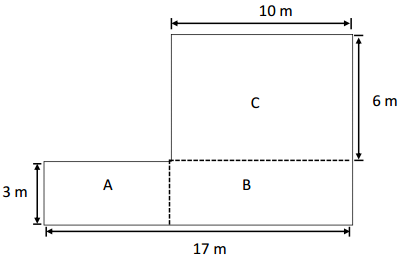
Superior Elementary School uses the design below for their swimming pool. Shapes A, B, and C are rectangles.
Eureka Math Grade 3 Module 4 End of Module Assessment Answer Key 3
a. Label the side lengths of Rectangles A and B on the drawing.

Answer:
The side lengths of Rectangle A = 7 m x 3 m.
The side lengths of Rectangle B = 10 m x 3 m.
The side lengths of Rectangle C = 10 m x 6 m.

Explanation:
In the above-given question,
given that,
the area of the rectangle A = 21 sq m.
area = 7 x 3.
area = 21 sq m.
the area of the rectangle B = 30 sq m.
area = 10 x 3.
area = 30 sq m.
the area of the rectangle C = 60 sq m.
area = 10 x 6.
area = 60 sq m.

b. Find the area of each rectangle.

Answer:
The side lengths of Rectangle A = 7 m x 3 m.
The side lengths of Rectangle B = 10 m x 3 m.
The side lengths of Rectangle C = 10 m x 6 m.

Explanation:
In the above-given question,
given that,
the area of the rectangle A = 21 sq m.
area = 7 x 3.
area = 21 sq m.
the area of the rectangle B = 30 sq m.
area = 10 x 3.
area = 30 sq m.
the area of the rectangle C = 60 sq m.
area = 10 x 6.
area = 60 sq m.

c. Find the area of the entire pool. Explain how you found the area of the pool.

Answer:
The area of the entire pool = 111 sq m.

Explanation:
In the above-given question,
given that,
the area of the rectangle A = 21 sq m.
area = 7 x 3.
area = 21 sq m.
the area of the rectangle B = 30 sq m.
area = 10 x 3.
area = 30 sq m.
the area of the rectangle C = 60 sq m.
area = 10 x 6.
area = 60 sq m.

Eureka Math Grade 3 Module 4 Lesson 16 Answer Key

Eureka Math Answer Key for Grade 3 aids teachers to differentiate instruction, building, and reinforcing foundational mathematics skills that alter from the classroom to real life.
With the help of the Eureka Primary School Grade 3 Answer Key, You can think deeply regarding what you are learning, and you will really learn math easily just like that. So teachers and students can find this Eureka Answer Key for Grade 3 more helpful in raising students’ scores and supporting teachers to educate the students.

Engage NY Eureka Math 3rd Grade Module 4 Lesson 16 Answer Key

Students of Grade 3 can get a strong foundation on mathematics concepts by referring to the Eureka Math Book. It was developed by highly professional mathematics educators and the solutions prepared by them are in a concise manner for easy grasping. To achieve high scores in Grade 3, students need to solve all questions and exercises included in Eureka’s Math Grade 3 Book.

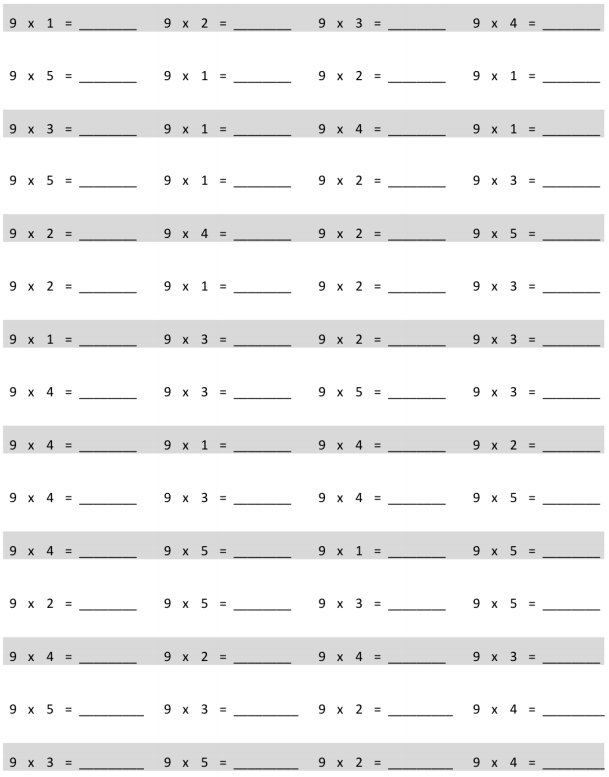
Eureka Math Grade 3 Module 4 Lesson 16 Pattern Sheet Answer Key

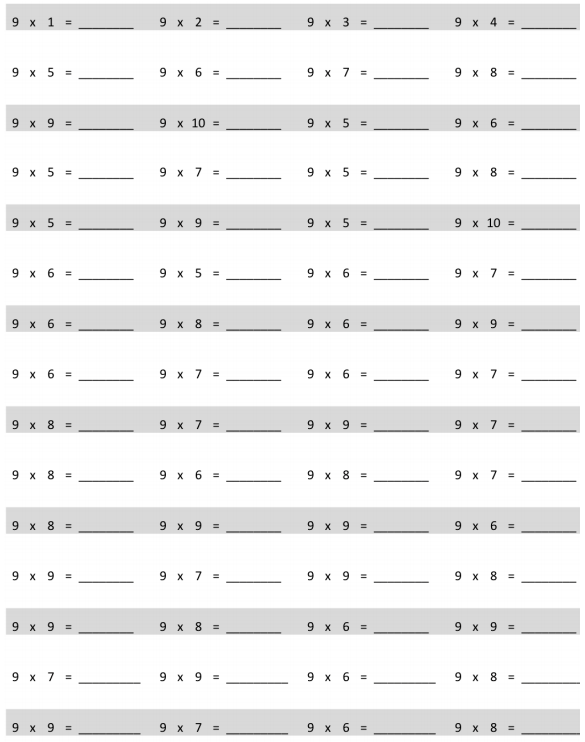
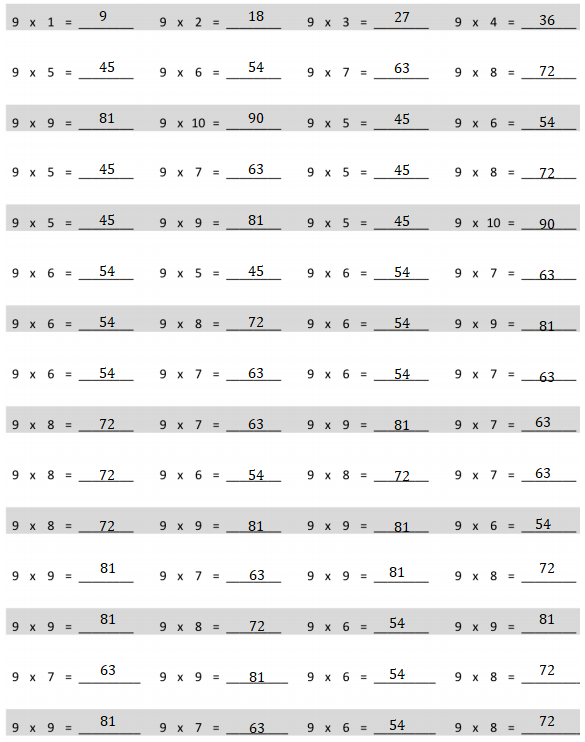
Multiply
Eureka Math Grade 3 Module 4 Lesson 16 Pattern Sheet Answer Key 1

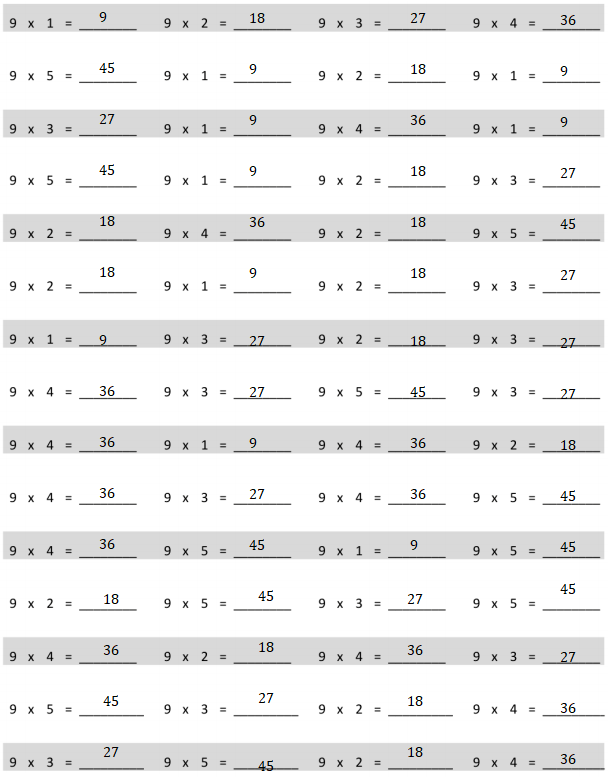
Answer:
9 x 1 = 9, 9 x 2 = 18, 9 x 3 = 27, 9 x 4 = 36, 9 x 5 = 45, 9 x 6 = 54, 9 x 7 = 63, 9 x 8 = 72, 9 x 9 = 81, 9 x 10 = 90, 9 x 5 = 45, 9 x 6 = 54, 9 x 5 = 45, 9 x 7 = 63, 9 x 8 = 72, 9 x 5 = 45, 9 x 5 = 45, 9 x 10 = 90, 9 x 6 = 54, 9 x 5 = 45, 9 x 6 = 54, 9 x 7 = 63, 9 x 6 = 54, 9 x 8 = 72, 9 x 6 = 54, 9 x 9 = 81, 9 x 6 = 54, 9 x 7 = 63, 9 x 6 = 54, 9 x 7 = 63, 9 x 8 = 72, 9 x 7 = 63, 9 x 9 = 81, 9 x 7 = 63, 9 x 8 = 72, 9 x 6 = 54, 9 x 8 = 72, 9 x 7 = 63, 9 x 8 = 72, 9 x 9 = 81, 9 x 9 = 81, 9 x 6 = 54, 9 x 9 = 81, 9 x 7 = 63, 9 x 9 = 81, 9 x 8 = 72, 9 x 9 = 81, 9 x 8 = 72, 9 x 6 = 54, 9 x 9 = 81, 9 x 7 = 63, 9 x 9 = 81, 9 x 6 = 54, 9 x 8 = 72, 9 x 9 = 81, 9 x 7 = 63, 9 x 6 = 54, 9 x 8 = 72.

Explanation:
In the above-given question,
given that,
multiply with 9.
9 x 1 = 9, 9 x 2 = 18, 9 x 3 = 27, 9 x 4 = 36, 9 x 5 = 45, 9 x 6 = 54, 9 x 7 = 63, 9 x 8 = 72, 9 x 9 = 81, 9 x 10 = 90, 9 x 5 = 45, 9 x 6 = 54, 9 x 5 = 45, 9 x 7 = 63, 9 x 8 = 72, 9 x 5 = 45, 9 x 5 = 45, 9 x 10 = 90, 9 x 6 = 54, 9 x 5 = 45, 9 x 6 = 54, 9 x 7 = 63, 9 x 6 = 54, 9 x 8 = 72, 9 x 6 = 54, 9 x 9 = 81, 9 x 6 = 54, 9 x 7 = 63, 9 x 6 = 54, 9 x 7 = 63, 9 x 8 = 72, 9 x 7 = 63, 9 x 9 = 81, 9 x 7 = 63, 9 x 8 = 72, 9 x 6 = 54, 9 x 8 = 72, 9 x 7 = 63, 9 x 8 = 72, 9 x 9 = 81, 9 x 9 = 81, 9 x 6 = 54, 9 x 9 = 81, 9 x 7 = 63, 9 x 9 = 81, 9 x 8 = 72, 9 x 9 = 81, 9 x 8 = 72, 9 x 6 = 54, 9 x 9 = 81, 9 x 7 = 63, 9 x 9 = 81, 9 x 6 = 54, 9 x 8 = 72, 9 x 9 = 81, 9 x 7 = 63, 9 x 6 = 54, 9 x 8 = 72.
Eureka-Math-Grade-3-Module-4-Lesson-16-Answer Key-1

Eureka Math Grade 3 Module 4 Lesson 16 Problem Set Answer Key

Record the new side lengths you have chosen for each of the rooms and show that these side lengths equal the required area. For non-rectangular rooms, record the side lengths and areas of the small rectangles. Then, show how the areas of the small rectangles equal the required area.

RoomNew Side lengths
Bedroom 1
60 sq cm
12 cm x 5 cm
Bedroom
56 sq cm
8 cm x 7 cm
Kitchen
42 sq cm
6 cm x 7 cm
Hallway
24 sq cm
6 cm x 4 cm
Bathroom
25 sq cm
5 cm x 5 cm
Dinning Room
28 sq cm
7 cm x 4 cm
Living Room
88 Sq cm
11 cm x 8 cm

Answer:
The side lengths of Bedroom 1 = 12 cm x 5 cm.
the side lengths of Bedroom 2 = 8 cm x 7 cm.
the side lengths of the Kitchen = 6 cm x 7 cm.
the side lengths of the hallway = 6 cm x 4 cm.
the side lengths of the bathroom = 5 cm x 5 cm.
the side lengths of the dining room = 7 cm x 4 cm.
the side lengths of the living room = 11 cm x 8 cm.

Explanation:
In the above-given question,
given that,
the area of the rooms.
The side lengths of Bedroom 1 = 12 cm x 5 cm.
the side lengths of Bedroom 2 = 8 cm x 7 cm.
the side lengths of the Kitchen = 6 cm x 7 cm.
the side lengths of the hallway = 6 cm x 4 cm.
the side lengths of the bathroom = 5 cm x 5 cm.
the side lengths of the dining room = 7 cm x 4 cm.
the side lengths of the living room = 11 cm x 8 cm.

Eureka Math Grade 3 Module 4 Lesson 16 Exit Ticket Answer Key

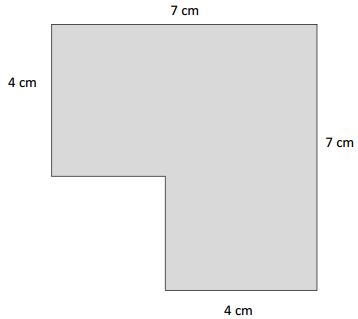
Find the area of the shaded figure. Then, draw and label a rectangle with the same area.
Eureka Math Grade 3 Module 4 Lesson 16 Exit Ticket Answer Key 2

Answer:
The area of the shaded figure = 40 sq cm.

Explanation:
In the above-given question,
given that,
area of longer rectangle = 49 sq cm.
area = l x b.
area = 7 x 7.
area = 49 sq cm.
area of smaller rectangle = 9 sq cm.
area = l x b.
area = 3 x 3.
area = 9 sq cm.
area of shaded rectangle = area of the longer rectangle – the area of the smaller rectangle.
area of shaded rectangle = 49 – 9.
area = 40 sq cm

Eureka Math Grade 3 Module 4 Lesson 16 Homework Answer Key

Jeremy plans and designs his own dream playground on grid paper. His new playground will cover a total area of 100 square units. The chart shows how much space he gives for each piece of equipment, or area. Use the information in the chart to draw and label a possible way Jeremy can plan his playground.

Basketball court10 square units
Jungle gym9 Square units
Slide6 Square units
Soccer area24 Square units

Eureka Math Grade 3 Module 4 Lesson 16 Exit Ticket Answer Key 3

Answer:
The area of the basketball court = 10 sq units.
The area of the Jungle gym = 9 sq units.
The area of the slide = 6 sq units.
The area of the soccer area = 24 sq units.

Explanation:
In the above-given question,
given that,
The area of the basketball court = 10 sq units.
area = 5 cm x 2 cm.
The area of the Jungle gym = 9 sq units.
area = 3 cm x 3 cm.
The area of the slide = 6 sq units.
area = 3 cm x 2 cm.
The area of the soccer area = 24 sq units.
area = 6 cm x 4 cm.
Eureka-Math-Grade-3-Module-4-Lesson-16-Answer Key-2

Eureka Math Grade 3 Module 4 Lesson 15 Answer Key

Engage NY Eureka Math 3rd Grade Module 4 Lesson 15 Answer Key

Eureka Math Grade 3 Module 4 Lesson 15 Pattern Sheet Answer Key

Multiply
Eureka Math Grade 3 Module 4 Lesson 15 Pattern Sheet Answer Key 1

Answer:
9 x 1 = 9, 9 x 2 = 18, 9 x 3 = 27, 9 x 4 = 36, 9 x 5 = 45, 9 x 6 = 54, 9 x 7 = 63, 9 x 8 = 72, 9 x 9 = 81, 9 x 10 = 90, 9 x 4 = 36, 9 x 1 = 9, 9 x 5 = 45, 9 x 1 = 9, 9 x 2 = 18, 9 x 3 = 27, 9 x 2 = 18, 9 x 4 = 36, 9 x 2 = 18, 9 x 5 = 45, 9 x 2 = 18, 9 x 1 = 9, 9 x 2 = 18, 9 x 3 = 27, 9 x 1 = 9, 9 x 3 = 27, 9 x 2 = 18, 9 x 3 = 27, 9 x 4 = 36, 9 x 3 = 27, 9 x 5 = 45, 9 x 3 = 27, 9 x 4 = 36, 9 x 1 = 9, 9 x 4 = 36, 9 x 2 = 18, 9 x 4 = 36, 9 x 3 = 27, 9 x 4 = 36, 9 x 5 = 45, 9 x 4 = 36, 9 x 3 = 27, 9 x 5 = 45, 9 x 4 = 36, 9 x 2 = 18, 9 x 4 = 36, 9 x 3 = 27, 9 x 5 = 45, 9 x 3 = 27, 9 x 2 = 18, 9 x 4 = 36, 9 x 3 = 27, 9 x 5 = 45, 9 x 2 = 18, 9 x 4 = 36.

Explanation:
In the above-given question,
given that,
multiply by 9.
9 x 1 = 9, 9 x 2 = 18, 9 x 3 = 27, 9 x 4 = 36, 9 x 5 = 45, 9 x 6 = 54, 9 x 7 = 63, 9 x 8 = 72, 9 x 9 = 81, 9 x 10 = 90, 9 x 4 = 36, 9 x 1 = 9, 9 x 5 = 45, 9 x 1 = 9, 9 x 2 = 18, 9 x 3 = 27, 9 x 2 = 18, 9 x 4 = 36, 9 x 2 = 18, 9 x 5 = 45, 9 x 2 = 18, 9 x 1 = 9, 9 x 2 = 18, 9 x 3 = 27, 9 x 1 = 9, 9 x 3 = 27, 9 x 2 = 18, 9 x 3 = 27, 9 x 4 = 36, 9 x 3 = 27, 9 x 5 = 45, 9 x 3 = 27, 9 x 4 = 36, 9 x 1 = 9, 9 x 4 = 36, 9 x 2 = 18, 9 x 4 = 36, 9 x 3 = 27, 9 x 4 = 36, 9 x 5 = 45, 9 x 4 = 36, 9 x 3 = 27, 9 x 5 = 45, 9 x 4 = 36, 9 x 2 = 18, 9 x 4 = 36, 9 x 3 = 27, 9 x 5 = 45, 9 x 3 = 27, 9 x 2 = 18, 9 x 4 = 36, 9 x 3 = 27, 9 x 5 = 45, 9 x 2 = 18, 9 x 4 = 36.
Eureka-Math-Grade-3-Module-4-Lesson-15-Answer Key-1

Eureka Math Grade 3 Module 4 Lesson 15 Problem Set Answer Key

Question 1.
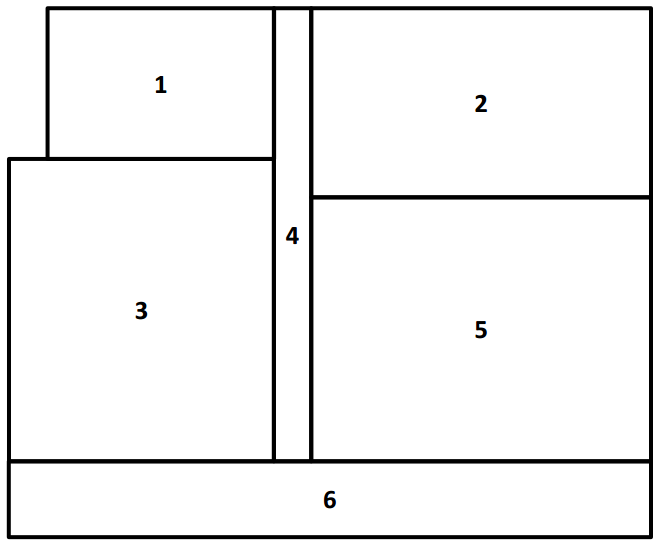
Make a prediction: Which room looks like it has the biggest area?

Answer:
The living room looks like it has the biggest area.

Explanation:
In the above-given question,
given that,
the living room is the biggest room in the house.
so the living room has the biggest area.

Question 2.
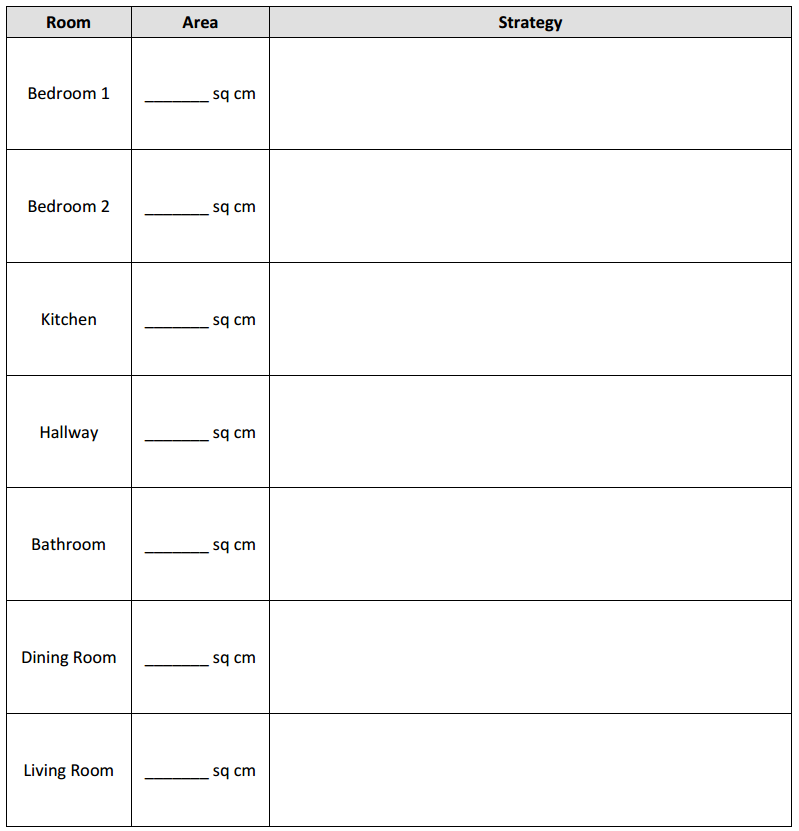
Record the areas and show the strategy you used to find each area.
Eureka Math Grade 3 Module 4 Lesson 15 Problem Set Answer Key 2

Answer:
The area of Bedroom 1 = 1200 sq cm.
the area of bedroom 2 = 1000 sq cm.
the area of kitchen = 200 sq cm.
the area of the living room = 1500 sq cm.
the area of hallway = 900 sq cm.
the area of bathroom = 250 sq cm.
the area of the dining room = 500 sq cm.

Explanation:
In the above-given question,
given that,
The area of Bedroom 1 = 1200 sq cm.
the area of bedroom 2 = 1000 sq cm.
the area of kitchen = 200 sq cm.
the area of the living room = 1200 sq cm.
the area of hallway = 900 sq cm.
the area of bathroom = 250 sq cm.
the area of the dining room = 500 sq cm.

Question 3.
Which room has the biggest area? Was your prediction right? Why or why not?

Answer:
The living room has the biggest area.

Explanation:
In the above-given question,
given that,
the living room area is bigger than all other rooms in the house.
area of living room = 1500 sq cm.

Question 4.
Find the side lengths of the house without using your ruler to measure them, and explain the process you used.
Side lengths: _____350_____ centimeters and ___15_______ centimeters

Answer:
The side lengths = 350 cm and 15 cm.

Explanation:
In the above-given question,
given that,
The area of the room = 5250 sq cm.
length = 350 cm and breadth = 15 cm.
area = 5250 sq cm

Question 5.
What is the area of the whole floor plan? How do you know?
Area = _____5250_____ square centimeters

Answer:
The area = 5250 sq cm.

Explanation:
In the above-given question,
given that,
The area of the room = 5250 sq cm.
length = 350 cm and breadth = 15 cm.
area = 5250 sq cm

Eureka Math Grade 3 Module 4 Lesson 15 Exit Ticket Answer Key

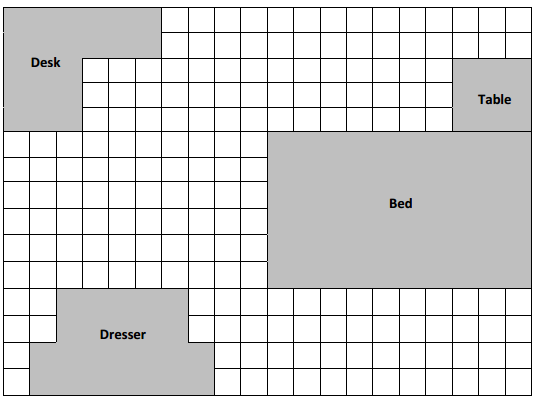
Jack uses grid paper to create a floor plan of his room. Label the unknown measurements, and find the area of the items listed below.
Eureka Math Grade 3 Module 4 Lesson 15 Problem Set Answer Key 4

NameEquationsTotal area
a.  Jack’s Room15 x 20 units_300_______ square units
b.  Bed6 x 10 units___60_____ square units
c.  Table3 x 3 units__9______ square units
d.  Dresser6 x 4___24_____ square units
e.  Desk3 + 12 units___15_____ square units

Answer:
The area of the Bed = 60 sq units.
the area of the table = 9 sq units.
the area of the dresser = 24 sq units.
the area of the desk = 15 sq units.

Explanation:
In the above-given question,
given that,
The area of the Bed = 60 sq units.
the area of the table = 9 sq units.
the area of the dresser = 24 sq units.
the area of the desk = 15 sq units.

Eureka Math Grade 3 Module 4 Lesson 15 Homework Answer Key

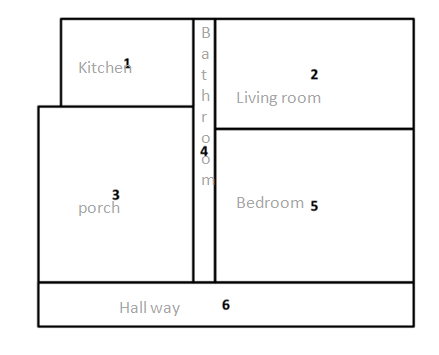
Use a ruler to measure the side lengths of each numbered room in centimeters. Then, find the area. Use the measurements below to match, and label the rooms with the correct areas.
Kitchen: 45 square centimeters
Living Room: 63 square centimeters
Porch: 34 square centimeters
Bedroom: 56 square centimeters
Bathroom: 24 square centimeters
Hallway: 12 square centimeters

Answer:
Kitchen: 45 square centimeters.
Living Room: 63 square centimeters.
Porch: 34 square centimeters.
Bedroom: 56 square centimeters.
Bathroom: 24 square centimeters.
Hallway: 12 square centimeters.

Explanation:
In the above-given question,
given that,
the area of the rooms.
Kitchen: 45 square centimeters
Living Room: 63 square centimeters
Porch: 34 square centimeters
Bedroom: 56 square centimeters
Bathroom: 24 square centimeters
Hallway: 12 square centimeters

Eureka Math Grade 3 Module 4 Lesson 15 Homework Answer Key 5

Eureka-Math-Grade-3-Module-4-Lesson-15-Answer Key-2

Eureka Math Grade 3 Module 4 Lesson 14 Answer Key

Students of Grade 3 can get a strong foundation on mathematics concepts by referring to the Eureka Math Book. It was developed by highly professional mathematics educators and the solutions prepared by them are in a concise manner for easy grasping. To achieve high scores in Grade 3, students need to solve all questions and exercises included in Eureka’s Math Grade 3 Book.

Engage NY Eureka Math 3rd Grade Module 4 Lesson 14 Answer Key

Eureka Math Answer Key for Grade 3 aids teachers to differentiate instruction, building, and reinforcing foundational mathematics skills that alter from the classroom to real life.
With the help of the Eureka Primary School Grade 3 Answer Key, You can think deeply regarding what you are learning, and you will really learn math easily just like that. So teachers and students can find this Eureka Answer Key for Grade 3 more helpful in raising students’ scores and supporting teachers to educate the students.

Eureka Math Grade 3 Module 4 Lesson 14 Pattern Sheet Answer Key

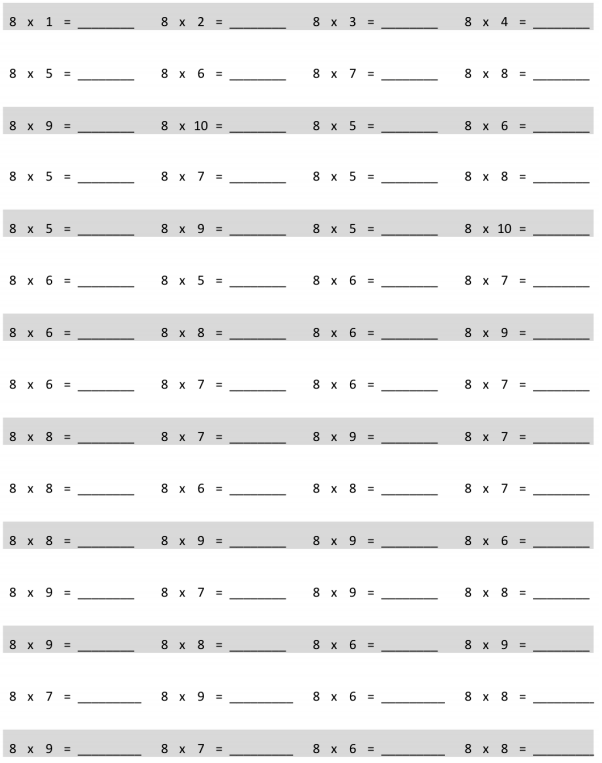
Multiply
Eureka Math Grade 3 Module 4 Lesson 14 Pattern Sheet Answer Key 1

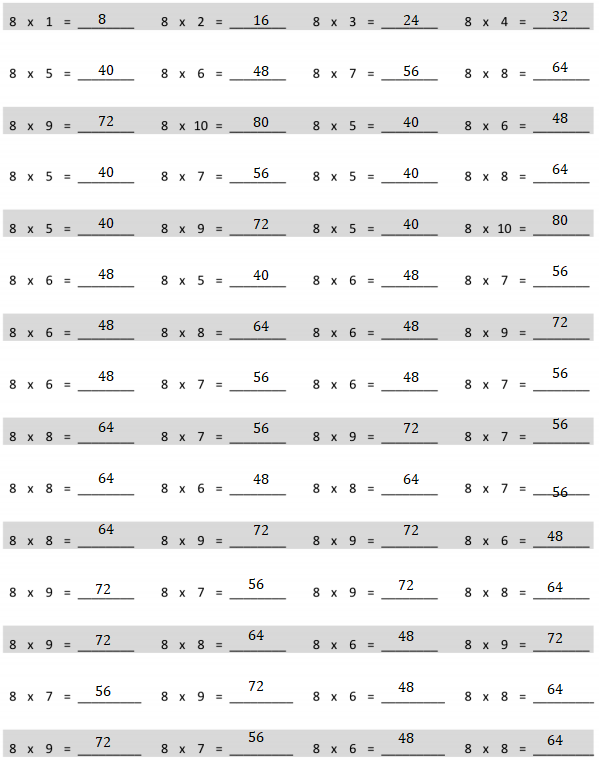
Answer:
8 x 1 = 8, 8 x 2 = 16, 8 x 3 = 24, 8 x 4 = 32, 8 x 5 = 40, 8 x 6 = 48, 8 x 7 = 56, 8 x 8 = 64, 8 x 9 = 72, 8 x 10 = 80, 8 x 5 = 40, 8 x 6 = 48, 8 x 5 = 40, 8 x 7 = 56, 8 x 5 = 40, 8 x 8 = 64, 8 x 5 = 40, 8 x 9 = 72, 8 x 5 = 40, 8 x 10 = 80, 8 x 6 = 48, 8 x 5 = 40, 8 x 6 = 48, 8 x 7 = 56, 8 x 6 = 48, 8 x 7 = 56, 8 x 6 = 48, 8 x 7 = 56, 8 x 8 = 64, 8 x 7 = 56, 8 x 9 = 72, 8 x 7 = 56, 8 x 8 = 64, 8 x 6 = 48, 8 x 8 = 64, 8 x 7 = 56, 8 x 8 = 64, 8 x 9 = 72, 8 x 9 = 72, 8 x 6 = 48, 8 x 9 = 72, 8 x 7 = 56, 8 x 9 = 72, 8 x 8 = 64, 8 x 9 = 72, 8 x 8 = 64, 8 x 6 = 48, 8 x 9 = 72, 8 x 7 = 56, 8 x 9 = 72, 8 x 6 = 48, 8 x 8 = 64, 8 x 9 = 72, 8 x 7 = 56, 8 x 6 = 48, 8 x 8 = 64.

Explanation:
In the above-given question,
given that,
multiply with 8.
8 x 1 = 8, 8 x 2 = 16, 8 x 3 = 24, 8 x 4 = 32, 8 x 5 = 40, 8 x 6 = 48, 8 x 7 = 56, 8 x 8 = 64, 8 x 9 = 72, 8 x 10 = 80, 8 x 5 = 40, 8 x 6 = 48, 8 x 5 = 40, 8 x 7 = 56, 8 x 5 = 40, 8 x 8 = 64, 8 x 5 = 40, 8 x 9 = 72, 8 x 5 = 40, 8 x 10 = 80, 8 x 6 = 48, 8 x 5 = 40, 8 x 6 = 48, 8 x 7 = 56, 8 x 6 = 48, 8 x 7 = 56, 8 x 6 = 48, 8 x 7 = 56, 8 x 8 = 64, 8 x 7 = 56, 8 x 9 = 72, 8 x 7 = 56, 8 x 8 = 64, 8 x 6 = 48, 8 x 8 = 64, 8 x 7 = 56, 8 x 8 = 64, 8 x 9 = 72, 8 x 9 = 72, 8 x 6 = 48, 8 x 9 = 72, 8 x 7 = 56, 8 x 9 = 72, 8 x 8 = 64, 8 x 9 = 72, 8 x 8 = 64, 8 x 6 = 48, 8 x 9 = 72, 8 x 7 = 56, 8 x 9 = 72, 8 x 6 = 48, 8 x 8 = 64, 8 x 9 = 72, 8 x 7 = 56, 8 x 6 = 48, 8 x 8 = 64.
Eureka-Math-Grade-3-Module-4-Lesson-14-Answer Key-1

Eureka Math Grade 3 Module 4 Lesson 14 Problem Set Answer Key

Question 1.
Find the area of each of the following figures. All figures are made up of rectangles.
a.
Eureka Math Grade 3 Module 4 Lesson 14 Problem Set Answer Key 2

Answer:
The area of figure 1 = 10 sq cm.
the area of figure 2 = 9 sq cm.

Explanation:
In the above-given question,
given that,
area of the figure 1 = 10 sq cm.
area = l x b.
where l = length and b = breadth.
area = 5 x 2.
area = 10.
area of the figure 2 = 9 sq cm.
area = l x b.
where l = length and b = breadth.
area = 3 x 3.
area = 9.

b.
Eureka Math Grade 3 Module 4 Lesson 14 Problem Set Answer Key 3

Answer:
The area of the shaded figure = 78 sq cm.

Explanation:
In the above-given question,
given that,
area of longer rectangle = 12 sq cm.
area = l x b.
area = 3 x 4.
area = 12 sq cm.
area of smaller rectangle = 2 sq cm.
area = l x b.
area = 1 x 2.
area = 2 sq cm.
area of shaded rectangle = area of longer rectangle – area of smaller rectangle.
area of shaded rectangle = 12 – 2.
area = 10 sq cm

Question 2.
The figure below shows a small rectangle in a big rectangle. Find the area of the shaded part of the figure.
Eureka Math Grade 3 Module 4 Lesson 14 Problem Set Answer Key 4

Answer:
The area of the shaded figure = 24 sq cm.

Explanation:
In the above-given question,
given that,
the area of the longer rectangle = 30 sq cm.
area = l x b.
area = 6 x 5.
area = 30 sq cm.
area of smaller rectangle = 6 sq cm.
area = l x b.
area = 3 x 2.
area = 6 sq cm.
area of shaded rectangle = area of longer rectangle – area of smaller rectangle.
area of shaded rectangle = 30 – 6.
area of shaded rectangle = 24.

Question 3.
A paper rectangle has a length of 6 inches and a width of 8 inches. A square with a side length of 3 inches was cut out of it. What is the area of the remaining paper?

Answer:
The area of the remaining paper = 25 sq in.

Explanation:
In the above-given question,
given that,
A paper rectangle has a length of 6 inches and a width of 8 inches.
A square with a side length of 3 inches was cut out of it.
area = 6 x 8 = 48.
the area of remaining paper = 25.
8 – 3 = 5.
6 – 1 = 5.
area = 5 x 5.
area = 25.

Question 4.
Tila and Evan both have paper rectangles measuring 6 cm by 9 cm. Tila cuts a 3 cm by 4 cm rectangle out of hers, and Evan cuts a 2 cm by 6 cm rectangle out of his. Tila says she has more paper left over. Evan says they have the same amount. Who is correct? Show your work below.

Answer:
Tila is correct.

Explanation:
In the above-given question,
given that,
Tila and Evan both have paper rectangles measuring 6 cm by 9 cm.
Tila cuts a 3 cm by 4 cm rectangle out of hers,
Evan cuts 2 cm by 6 cm rectangle out of his.
3 x 5 = 15.
4 x 3 = 12.
so Tila is correct.

Eureka Math Grade 3 Module 4 Lesson 14 Exit Ticket Answer Key

Mary draws an 8 cm by 6 cm rectangle on her grid paper. She shades a square with a side length of 4 cm inside her rectangle. What area of the rectangle is left unshaded?

Answer:
The area of the rectangle is left unshaded = 24 sq cm.

Explanation:
In the above-given question,
given that,
area of longer rectangle = 48 sq cm.
area = l x b.
area = 8 x 6.
area = 48 sq cm.
area of smaller rectangle = 24 sq cm.
area = l x b.
area = 6 x 4.
area = 24 sq cm.
area of shaded rectangle = area of longer rectangle – area of smaller rectangle.
area of shaded rectangle = 48 – 24.
area of shaded rectangle = 24 sq cm.

Eureka Math Grade 3 Module 4 Lesson 14 Homework Answer Key

Question 1.
Find the area of each of the following figures. All figures are made up of rectangles.
a.
Eureka Math Grade 3 Module 4 Lesson 14 Homework Answer Key 5

Answer:
The area of figure 1 = 48 sq cm.
the area of figure 2 = 27 sq cm.

Explanation:
In the above-given question,
given that,
area of the figure 1 = 48 sq cm.
area = l x b.
where l = length and b = breadth.
area = 6 x 8.
area = 48.
area of the figure 2 = 27 sq cm.
area = l x b.
where l = length and b = breadth.
area = 9 x 3.
area = 27.

b.
Eureka Math Grade 3 Module 4 Lesson 14 Homework Answer Key 6

Answer:
The area of figure 1 = 64 sq in.
the area of figure 2 = 6 sq in.

Explanation:
In the above-given question,
given that,
area of the figure 1 = 64 sq in.
area = l x b.
where l = length and b = breadth.
area = 8 x 8.
area = 64.
area of the figure 2 = 6 sq in.
area = l x b.
where l = length and b = breadth.
area = 2 x 3.
area = 6.

Question 2.
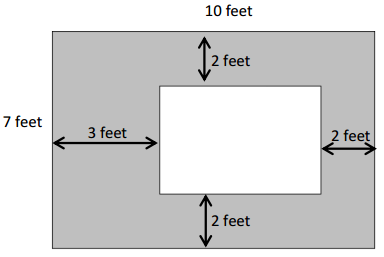
The figure below shows a small rectangle cut out of a big rectangle.
Eureka Math Grade 3 Module 4 Lesson 14 Homework Answer Key 7
a. Label the side lengths of the unshaded region.

Answer:
The side lengths of the unshaded region is = 5 ft and 3 ft.
Explanation:
In the above-given question,
given that,
the area of the larger rectangle = 10 x 7.
area = 70 sq ft.
10 – 3 + 2 = 5.
7 – 2 + 2 = 4.
so the side lengths of the unshaded region = 5 ft and 3 ft.

b. Find the area of the shaded region.

Answer:
The area of the shaded figure = 55 sq ft.

Explanation:
In the above-given question,
given that,
area of longer rectangle = 70 sq ft.
area = l x b.
area = 10 x 7.
area = 70 sq cm.
area of smaller rectangle = 15 sq ft.
area = l x b.
area = 5 x 3.
area = 15 sq ft.
area of shaded rectangle = area of longer rectangle – area of smaller rectangle.
area of shaded rectangle = 70 – 15.
area of shaded rectangle = 55.

Eureka Math Grade 3 Module 4 Lesson 13 Answer Key

You may have diverse opportunities to develop math skills and problem-solving skills but practicing with Eureka Math 3rd Grade Answer Key for better and efficient learning. Eureka Math Grade 3 provided Free Access Student Edition of Eureka Math Grade 3 Answers are enough to practice more and get a good grip on the subject. The diverse opportunities will develop problem-solving skills among the primary school kids Practising.

Engage NY Eureka Math 3rd Grade Module 4 Lesson 13 Answer Key

Fun learning activities are the best option to educate primary school students and make them understand the basic mathematical concepts like addition, subtraction, multiplication, division, etc. Grade 3 primary school students can find these fun-learning exercises for all math concepts through the Eureka Math Answers Grade 3 Common Core Curriculum.

Eureka Math Grade 3 Module 4 Lesson 13 Problem Set Answer Key

Question 1.
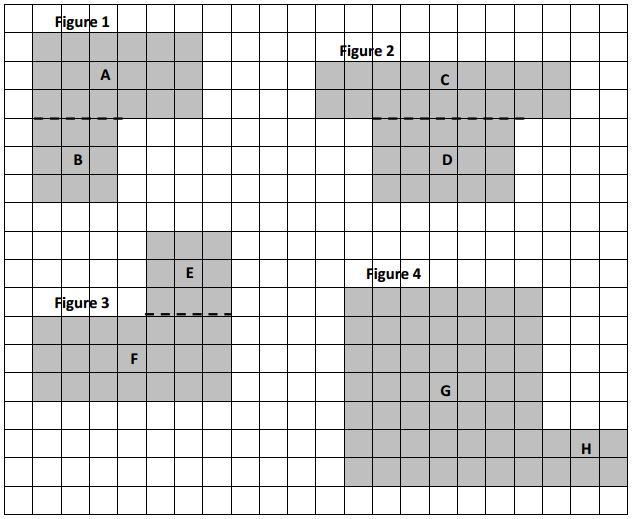
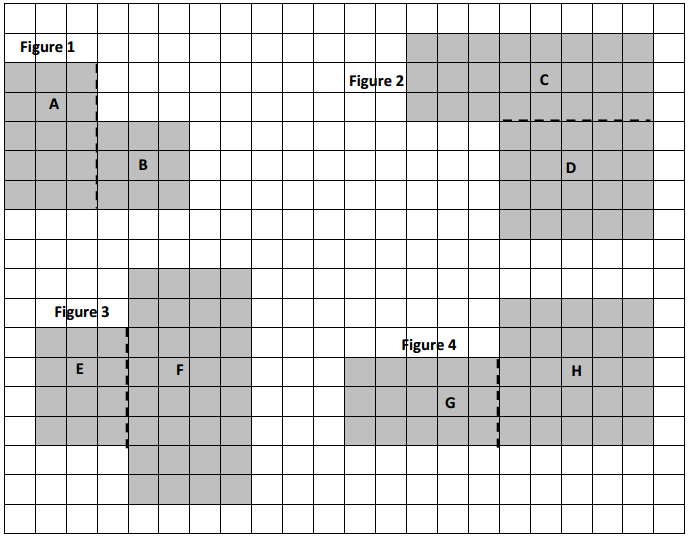
Each of the following figures is made up of 2 rectangles. Find the total area of each figure.
Eureka Math Grade 3 Module 4 Lesson 13 Problem Set Answer Key 1

Figure 1: Area of A + Area of B: ____18_____ sq units + _____9____ sq units = _____27____ sq units

Figure 2: Area of C + Area of D: ____18_____ sq units + ___15______ sq units = ___33______ sq units

Figure 3: Area of E + Area of F: _____9____ sq units + ____21_____ sq units = ____30_____ sq units

Figure 4: Area of G + Area of H: _____49____ sq units + ___6______ sq units = ____55_____sq units

Answer:
The total area of figure 1 = 27 sq units.
the total area of figure 2 = 33 sq units.
the total area of figure 3 = 30 sq units.
the total area of figure 4 = 55 sq units.

Explanation:
In the above-given question,
given that,
the area of rectangle A + rectangle B = figure 1.
area of rectangle A = 18 sq units.
area of rectangle B = 9 sq units.
so the area of figure 1 = 27 sq units.
the area of rectangle C + rectangle D = figure 2.
area of rectangle C = 18 sq units.
area of rectangle D = 15 sq units.
so the area of figure 2 = 33 sq units.
the area of rectangle E + rectangle F = figure 3.
area of rectangle E = 9 sq units.
area of rectangle F = 21 sq units.
so the area of figure 3 = 30 sq units.
the area of rectangle G + rectangle H = figure 4.
area of rectangle G = 49 sq units.
area of rectangle H = 6 sq units.
so the area of figure 4 = 55 sq units.

Question 2.
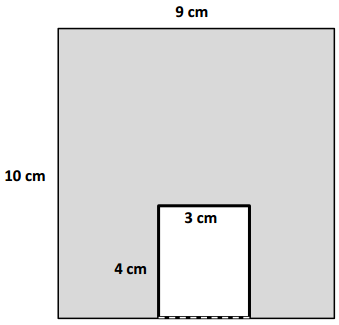
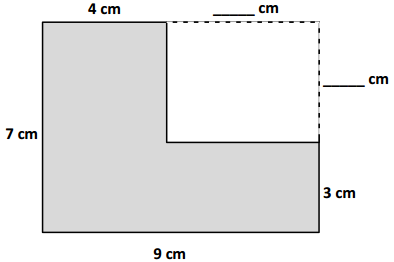
The figure shows a small rectangle cut out of a bigger rectangle. Find the area of the shaded figure.
Eureka Math Grade 3 Module 4 Lesson 13 Problem Set Answer Key 2
Area of the shaded figure: __90____ – __12____ = ___78___
Area of the shaded figure: ___78___ square centimeters

Answer:
The area of the shaded figure = 78 sq cm.

Explanation:
In the above-given question,
given that,
area of longer rectangle = 90 sq cm.
area = l x b.
area = 9 x 10.
area = 90 sq cm.
area of smaller rectangle = 12 sq cm.
area = l x b.
area = 3 x 4.
area = 12 sq cm.
area of shaded rectangle = area of longer rectangle – area of smaller rectangle.
area of shaded rectangle = 90 – 12.
area of shaded rectangle = 78 sq cm.

Question 3.
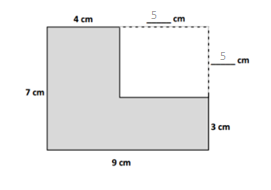
The figure shows a small rectangle cut out of a big rectangle.
Eureka Math Grade 3 Module 4 Lesson 13 Problem Set Answer Key 3
a. Label the unknown measurements.

Answer:
The unknown measurements = 4 cm and 5 cm.

Explanation:
In the above-given question,
given that,
the longer rectangle = 9 x 7 = 63 cm.
9 – 4 = 3.
7 – 3 = 4.
so the unknown measurements = 4 cm and 5 cm.
Eureka-Math-Grade-3-Module-4-Lesson-13-Answer Key-1

b. Area of the big rectangle:
___9__ cm × __7___ cm = __63___ sq cm

Answer:
The area of big rectangle = 63 sq cm.

Explanation:
In the above-given question,
given that,
area of the big rectangle = l x b.
where l = length, and b = breadth.
area = 9 x 7 = 63 sq cm.
so the area of big rectangle = 63 sq cm.

c. Area of the small rectangle:
___5__ cm × __4___ cm = ___20__ sq cm

Answer:
The area of small rectangle = 20 sq cm.

Explanation:
In the above-given question,
given that,
area of the big rectangle = l x b.
where l = length, and b = breadth.
area = 5 x 4 = 20 sq cm.
so the area of big rectangle = 20 sq cm.

d. Find the area of the shaded figure.

Answer:
The area of the shaded figure = 43 sq cm.

Explanation:
In the above-given question,
given that,
the area of the longer rectangle = 63 sq cm.
area = l x b.
area = 9 x 7.
area = 63 sq cm.
area of smaller rectangle = 20 sq cm.
area = l x b.
area = 5 x 4.
area = 20 sq cm.
area of shaded rectangle = area of the longer rectangle – the area of the smaller rectangle.
area of shaded rectangle = 63 – 20.
area of shaded rectangle = 43 sq cm.

Eureka Math Grade 3 Module 4 Lesson 13 Exit Ticket Answer Key

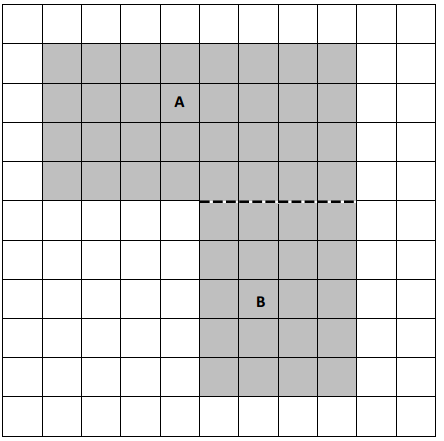
The following figure is made up of 2 rectangles. Find the total area of the figure.
Eureka Math Grade 3 Module 4 Lesson 13 Exit Ticket Answer Key 4
Area of A + Area of B: _____32___ sq units + ____20_____ sq units = ___52______ sq units

Answer:
The area of rectangle A and B = 52 sq units.
Explanation:
In the above-given question,
given that,
the area of rectangle A + rectangle B = figure 1.
area of rectangle A = 32 sq units.
area of rectangle B = 20 sq units.
so the area of rectangle A and B = 52 sq units.

Eureka Math Grade 3 Module 4 Lesson 13 Homework Answer Key

Question 1.
Each of the following figures is made up of 2 rectangles. Find the total area of each figure.
Eureka Math Grade 3 Module 4 Lesson 13 Homework Answer Key 5
Figure 1: Area of A + Area of B: ____15_____ sq units + ____9_____ sq units = ___24______ sq units

Figure 2: Area of C + Area of D: ___3______ sq units + ____8_____ sq units = ____24_____ sq units

Figure 3: Area of E + Area of F: ___12______ sq units + ____32_____ sq units = ____44_____ sq units

Figure 4: Area of G + Area of H: _____15____ sq units + ____25_____ sq units = ___40______ sq units

Answer:
The total area of figure 1 = 24 sq units.
the total area of figure 2 = 24 sq units.
the total area of figure 3 = 44 sq units.
the total area of figure 4 = 40 sq units.

Explanation:
In the above-given question,
given that,
the area of rectangle A + rectangle B = figure 1.
area of rectangle A = 15 sq units.
area of rectangle B = 9 sq units.
so the area of figure 1 = 24 sq units.
the area of rectangle C + rectangle D = figure 2.
area of rectangle C = 3 sq units.
area of rectangle D = 8 sq units.
so the area of figure 2 = 24 sq units.
the area of rectangle E + rectangle F = figure 3.
area of rectangle E = 12 sq units.
area of rectangle F = 32 sq units.
so the area of figure 3 = 44 sq units.
the area of rectangle G + rectangle H = figure 4.
area of rectangle G = 15 sq units.
area of rectangle H = 25 sq units.
so the area of figure 4 = 40 sq units.

Question 2.
The figure shows a small rectangle cut out of a big rectangle. Find the area of the shaded figure.
Eureka Math Grade 3 Module 4 Lesson 13 Homework Answer Key 6

Answer:
The area of the shaded figure = 45 sq cm.

Explanation:
In the above-given question,
given that,
the area of the longer rectangle = 56 sq cm.
area = l x b.
area = 7 x 8.
area = 56 sq cm.
area of smaller rectangle = 9 sq cm.
area = l x b.
area = 3 x 3.
area = 9 sq cm.
area of shaded rectangle = area of the longer rectangle – the area of the smaller rectangle.
area of shaded rectangle = 56 – 9.
area of shaded rectangle = 45 sq cm.

Question 3.
The figure shows a small rectangle cut out of a big rectangle.
Eureka Math Grade 3 Module 4 Lesson 13 Homework Answer Key 7
a. Label the unknown measurements.

Answer:
The unknown measurements = 3 cm and 4 cm.

Explanation:
In the above-given question,
given that,
the longer rectangle = 9 x 8 = 72 cm.
9 – 6 = 3.
8 – 4 = 4.
so the unknown measurements = 3 cm and 4 cm.
Eureka-Math-Grade-3-Module-4-Lesson-13-Answer Key-2

b. Area of the big rectangle:
____9__ cm × ___8___ cm = ___72___ sq cm

Answer:
The area of big rectangle = 72 sq cm.

Explanation:
In the above-given question,
given that,
area of the big rectangle = l x b.
where l = length, and b = breadth.
area = 9 x 8 = 72 sq cm.
so the area of big rectangle = 72 sq cm.

c. Area of the small rectangle:
___3___ cm × ___4___ cm = __12____ sq cm

Answer:
The area of small rectangle = 12 sq cm.

Explanation:
In the above-given question,
given that,
area of the big rectangle = l x b.
where l = length, and b = breadth.
area = 3 x 4 = 12 sq cm.
so the area of small rectangle = 12 sq cm.

d. Find the area of the shaded figure.

Answer:
The area of the shaded figure = 43 sq cm.

Explanation:
In the above-given question,
given that,
area of longer rectangle = 72 sq cm.
area = l x b.
area = 9 x 8.
area = 72 sq cm.
area of smaller rectangle = 12 sq cm.
area = l x b.
area = 3 x 4.
area = 12 sq cm.
area of shaded rectangle = area of longer rectangle – area of smaller rectangle.
area of shaded rectangle = 72 – 12.
area of shaded rectangle = 60 sq cm.

Eureka Math Grade 3 Module 4 Lesson 13 Template Answer Key

Eureka Math Grade 3 Module 4 Lesson 13 Template Answer Key 8

Area of A + Area of B: _____32___ sq units + ____20_____ sq units = ___52______ sq units

Answer:
The area of rectangle A and B = 52 sq units.
Explanation:
In the above-given question,
given that,
the area of rectangle A + rectangle B = figure 1.
area of rectangle A = 32 sq units.
area of rectangle B = 20 sq units.
so the area of rectangle A and B = 52 sq units.
Eureka Math Grade 3 Module 4 Lesson 13 Exit Ticket Answer Key 3

Eureka Math Grade 3 Module 4 Lesson 12 Answer Key

Fun learning activities are the best option to educate primary school students and make them understand the basic mathematical concepts like addition, subtraction, multiplication, division, etc. Grade 3 primary school students can find these fun-learning exercises for all math concepts through the Eureka Math Answers Grade 3 Common Core Curriculum.

Engage NY Eureka Math 3rd Grade Module 4 Lesson 12 Answer Key

You may have diverse opportunities to develop math skills and problem-solving skills but practicing with Eureka Math 3rd Grade Answer Key for better and efficient learning. Eureka Math Grade 3 provided Free Access Student Edition of Eureka Math Grade 3 Answers are enough to practice more and get a good grip on the subject. The diverse opportunities will develop problem-solving skills among the primary school kids Practising.

Eureka Math Grade 3 Module 4 Lesson 12 Pattern Sheet Answer Key

Multiply
Eureka Math Grade 3 Module 4 Lesson 12 Pattern Sheet Answer Key 1

Answer:
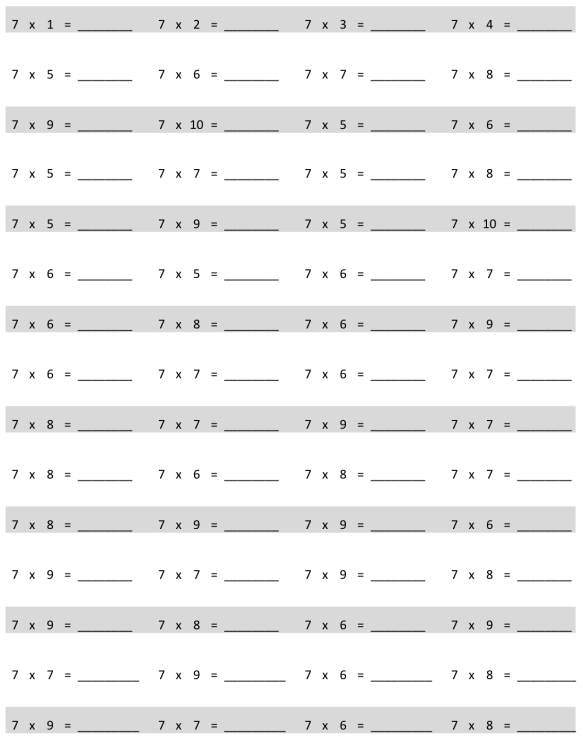
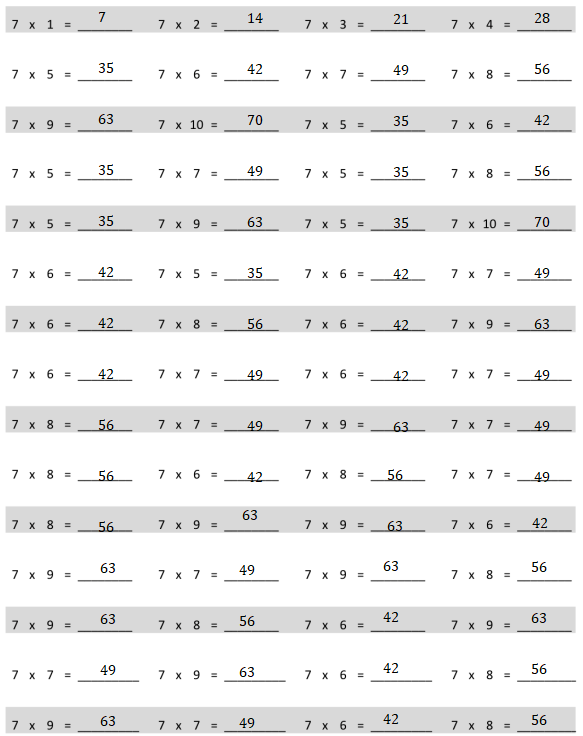
7 x 1 = 7, 7 x 2 = 14, 7 x 3 = 21, 7 x 4 = 28, 7 x 5 = 35, 7 x 6 = 42, 7 x 7 = 49, 7 x 8 = 56, 7 x 9 = 63, 7 x 10 = 70, 7 x 5 = 35, 7 x 6 = 42, 7 x 5 = 35, 7 x 7 = 49, 7 x 5 = 35, 7 x 8 = 56, 7 x 5 = 35, 7 x 9 = 63, 7 x 5 = 35, 7 x 10 = 70, 7 x 6 = 42, 7 x 5 = 35, 7 x 6 = 42, 7 x 7 = 49, 7 x 6 = 42, 7 x 8 = 56, 7 x 6 = 42, 7 x 9 = 63, 7 x 6 = 42, 7 x 7 = 49, 7 x 6 = 42, 7 x 7 = 49, 7 x 8 = 56, 7 x 7 = 49, 7 x 9 = 63, 7 x 7 = 49, 7 x 8 = 56, 7 x 6 = 42, 7 x 8 = 56, 7 x 7 = 49, 7 x 8 = 56, 7 x 9 = 63, 7 x 9 = 63, 7 x 6 = 52, 7 x 9 = 63, 7 x 7 = 49, 7 x 9 = 63, 7 x 8 = 56, 7 x 9 = 63, 7 x 8 = 56, 7 x 6 = 42, 7 x 9 = 63, 7 x 7 = 49, 7 x 9 = 63, 7 x 6 = 42, 7 x 8 = 56, 7 x 9 = 63, 7 x 7 = 49, 7 x 6 = 42, 7 x 8 = 56.

Explanation:
In the above-given question,
given that,
multiply with 7.
7 x 1 = 7, 7 x 2 = 14, 7 x 3 = 21, 7 x 4 = 28, 7 x 5 = 35, 7 x 6 = 42, 7 x 7 = 49, 7 x 8 = 56, 7 x 9 = 63, 7 x 10 = 70, 7 x 5 = 35, 7 x 6 = 42, 7 x 5 = 35, 7 x 7 = 49, 7 x 5 = 35, 7 x 8 = 56, 7 x 5 = 35, 7 x 9 = 63, 7 x 5 = 35, 7 x 10 = 70, 7 x 6 = 42, 7 x 5 = 35, 7 x 6 = 42, 7 x 7 = 49, 7 x 6 = 42, 7 x 8 = 56, 7 x 6 = 42, 7 x 9 = 63, 7 x 6 = 42, 7 x 7 = 49, 7 x 6 = 42, 7 x 7 = 49, 7 x 8 = 56, 7 x 7 = 49, 7 x 9 = 63, 7 x 7 = 49, 7 x 8 = 56, 7 x 6 = 42, 7 x 8 = 56, 7 x 7 = 49, 7 x 8 = 56, 7 x 9 = 63, 7 x 9 = 63, 7 x 6 = 52, 7 x 9 = 63, 7 x 7 = 49, 7 x 9 = 63, 7 x 8 = 56, 7 x 9 = 63, 7 x 8 = 56, 7 x 6 = 42, 7 x 9 = 63, 7 x 7 = 49, 7 x 9 = 63, 7 x 6 = 42, 7 x 8 = 56, 7 x 9 = 63, 7 x 7 = 49, 7 x 6 = 42, 7 x 8 = 56.
Eureka-Math-Grade-3-Module-4-Lesson-12-Answer Key-1

Eureka Math Grade 3 Module 4 Lesson 12 Problem Set Answer Key

Question 1.
Each side on a sticky note measures 9 centimeters. What is the area of the sticky note?

Answer:
The area of sticky notes = 81 sq cm.

Explanation:
In the above-given question,
given that,
the area of the sticky notes = 81 sq cm.
area = l x b.
where l = length, and b = breadth.
area = 9 x 9.
area = 81.
so the area of the sticky notes = 81 sq cm.

Question 2.
Stacy tiles the rectangle below using her square pattern blocks.
Eureka Math Grade 3 Module 4 Lesson 12 Problem Set Answer Key 2
a. Find the area of Stacy’s rectangle in square units. Then, draw and label a different rectangle with whole number side lengths that has the same area.

Answer:
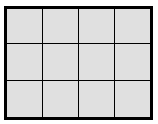
The area of the stacky tiles = 12 sq units.

Explanation:
In the above-given question,
given that,
the area of the rectangle = l x b.
where l = length, b = breadth.
area = l x b.
area = 3 x 4.
area = 12 sq units.
so the area of the stacky tiles = 12 sq units.
Eureka-Math-Grade-3-Module-4-Lesson-12-Answer Key-2

b. Can you draw another rectangle with different whole number side lengths and have the same area? Explain how you know.

Answer:
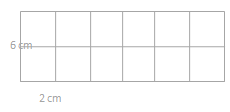
The area of the rectangle = 12 sq units.

Explanation:
In the above-given question,
given that,
the area of the rectangle = l x b.
where l = length, b = breadth.
area = l x b.
area = 2 x 6.
area = 12 sq units.
so the area of the other rectangle = 12 sq units.
Eureka-Math-Grade-3-Module-4-Lesson-12-Answer Key-3

Question 3.
An artist paints a 4 foot × 16 foot mural on a wall. What is the total area of the mural? Use the break apart and distribute strategy.
Eureka Math Grade 3 Module 4 Lesson 12 Problem Set Answer Key 3

Answer:
The area of the mural on a wall = 64 sq ft.

Explanation:
In the above-given question,
given that,
An artist paints a 4-foot x 16 foot mural on a wall.
area = 4 x 16.
area = 4 x ( 10 + 6 ).
area = ( 4 x 10 ) + 6.
area = 40 + 6.
area = 46.
so the area of the mural on a wall = 64 sq ft.

Question 4.
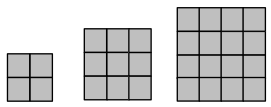
Alana tiles the 3 figures below. She says, “I’m making a pattern!”
Eureka Math Grade 3 Module 4 Lesson 12 Problem Set Answer Key 4
a. Find the area of Alana’s 3 figures and explain her pattern.

Answer:
The area of the square 1 = 4 sq units.
the area of the square 2 = 9 sq units.
the area of the square 3 = 16 sq units.

Explanation:
In the above-given question,
given that,
Alana tiles the 3 figures.
the area of the square 1 = 4 sq units.
area = l x b.
where l = length, b = breadth.
area = 2 x 2.
area = 4.
the area of the square 2 = 9 sq units.
area = l x b.
area = 3 x 3.
area = 9.
the area of the square 3 = 16 sq units.
area = l x b.
area = 4 x 4.
area = 16.

b. Draw the next 2 figures in Alana’s pattern and find their areas.

Answer:
The area of square 1 = 25 sq units.
the area of square 2 = 36 sq units.

Explanation:
In the above-given question,
given that,
Alana tiles the 3 figures.
the area of the square 1 = 25 sq units.
area = l x b.
where l = length, b = breadth.
area = 5 x 5.
area = 25.
the area of the square 2 = 36 sq units.
area = l x b.
area = 6 x 6.
area = 36.
Eureka-Math-Grade-3-Module-4-Lesson-12-Answer Key-4

Question 5.
Jermaine glues 3 identical pieces of paper as shown below and makes a square. Find the unknown side length of 1 piece of paper. Then, find the total area of 2 pieces of paper.
Eureka Math Grade 3 Module 4 Lesson 12 Problem Set Answer Key 5

Answer:
The unknown side length of 1 piece of paper = 3 cm.

Explanation:
In the above-given question,
given that,
Jermaine glues 3 identical pieces of paper as shown below and makes a square.
area of the rectangle = 3 x 3cm.
area = 3 x 3.
area = 9 cm.
so the unknown side length of 1 piece of paper = 3 cm.

Eureka Math Grade 3 Module 4 Lesson 12 Exit Ticket Answer Key

Question 1.
A painting has an area of 63 square inches. One side length is 9 inches. What is the other side length?
Eureka Math Grade 3 Module 4 Lesson 12 Exit Ticket Answer Key 6

Answer:
The other side length of the rectangle = 7 inches.

Explanation:
In the above-given question,
given that,
A painting has an area of 63 square inches.
one side length is 9 inches.
area of the rectangle is given.
63 = l x b.
l = 9 inches.
63 = 9 x b.
b = 63 / 9.
b = 7 inches.
so the other side length of the rectabgle = 7 inches.

Question 2.
Judy’s mini dollhouse has one floor and measures 4 inches by 16 inches. What is the total area of the dollhouse floor?

Answer:
The total area of the dollhouse floor = 64 sq inches.

Explanation:
In the above-given question,
given that,
Judy’s mini dollhoue has one floor and measures 4 inches by 16 inches.
area = l x b.
where l = length, and b = breadth.
area = 4 x 16.
area = 64 sq inches.

Eureka Math Grade 3 Module 4 Lesson 12 Homework Answer Key

Question 1.
A square calendar has sides that are 9 inches long. What is the calendar’s area?

Answer:
The area of the square calendar = 81 sq inches.

Explanation:
In the above-given question,
given that,
A square calendar has sides that are 9 inches long.
area = l x b.
where l = length and b = breadth.
area = 9 x 9 = 81 sq inches.
so the area of the square calendar = 81 sq inches.

Question 2.
Each Eureka Math Grade 3 Module 4 Lesson 12 Homework Answer Key 7 is 1 square unit. Sienna uses the same square units to draw a 6 × 2 rectangle and says that it has the same area as the rectangle below. Is she correct? Explain why or why not.
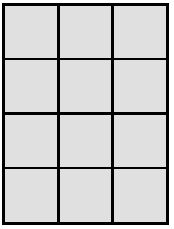
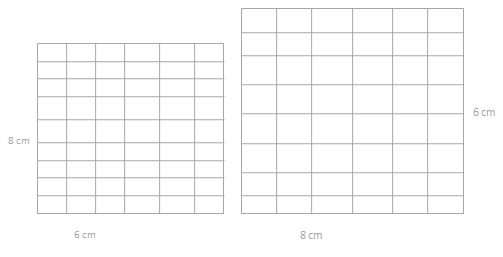
Eureka Math Grade 3 Module 4 Lesson 12 Homework Answer Key 8

Answer:
Yes, she was correct.

Explanation:
In the above-given question,
given that,
Sienna uses the same square units to draw a 6 x 2 rectangle.
area of the given rectangle = 12 sq units.
area = 4 x 3.
area = 12 sq units.
area of Sienna’s rectangle = 12 sq units.
area = 6 x 2.
area = 12 sq units.

Question 3.
The surface of an office desk has an area of 15 square feet. Its length is 5 feet. How wide is the office desk?

Answer:
The width of the office desk = 3 feet.

Explanation:
In the above-given question,
given that,
The surface of an office desk has an area of 15 square feet.
Its length is 5 feet.
area = l x w.
15 = 5 x w.
w = 15 / 5.
w = 3 feet.
so the width of the office desk = 3 feet.

Question 4.
A rectangular garden has a total area of 48 square yards. Draw and label two possible rectangular gardens with different side lengths that have the same area.

Answer:
The side lengths of the rectangular garden 1 = 6 x 8 yards.
The side lengths of the rectangular garden 2 = 12 x 4 yards.

Explanation:
given that,
A rectangular garden 1 has a total area of 48 square yards.
area = l x b.
where l = length and b = breadth.
area = 6 x 8 = 48 sq yards.
so the area of the rectangular garden 1 = 48 sq yards.
A rectangular garden 2 has a total area of 48 square yards.
area = l x b.
where l = length and b = breadth.
area = 12 x 4 = 48 sq yards.
so the area of the rectangular garden 2 = 48 sq yards
Eureka-Math-Grade-3-Module-4-Lesson-12-Answer Key-5

Question 5.
Lila makes the pattern below. Find and explain her pattern. Then, draw the fifth figure in her pattern
Eureka Math Grade 3 Module 4 Lesson 12 Homework Answer Key 9

Answer:
The area of the square 1 = 2 sq units.
the area of the square 2 = 4 sq units.
the area of the square 3 = 6 sq units.

Explanation:
In the above-given question,
given that,
Alana tiles the 3 figures.
the area of the square 1 = 2 sq units.
area = l x b.
where l = length, b = breadth.
area = 1 x 2.
area = 2.
the area of the square 2 = 4 sq units.
area = l x b.
area = 2 x 2.
area = 4.
the area of the square 3 = 6 sq units.
area = l x b.
area = 3 x 2.
area = 6.
Eureka-Math-Grade-3-Module-4-Lesson-12-Answer Key-6

Eureka Math Grade 3 Module 4 Lesson 11 Answer Key

Fun learning activities are the best option to educate primary school students and make them understand the basic mathematical concepts like addition, subtraction, multiplication, division, etc. Grade 3 primary school students can find these fun-learning exercises for all math concepts through the Eureka Math Answers Grade 3 Common Core Curriculum.

Engage NY Eureka Math 3rd Grade Module 4 Lesson 11 Answer Key

You may have diverse opportunities to develop math skills and problem-solving skills but practicing with Eureka Math 3rd Grade Answer Key for better and efficient learning. Eureka Math Grade 3 provided Free Access Student Edition of Eureka Math Grade 3 Answers are enough to practice more and get a good grip on the subject. The diverse opportunities will develop problem-solving skills among the primary school kids Practising.

Eureka Math Grade 3 Module 4 Lesson 11 Problem Set Answer Key

Question 1.
The rectangles below have the same area. Move the parentheses to find the unknown side lengths. Then, solve.
a.
Eureka Math Grade 3 Module 4 Lesson 11 Problem Set Answer Key 1
Area: 8 × __6____ = __48____
Area: ___48___ sq cm

Answer:
The area of the rectangle = 48 sq cm.

Explanation:
In the above-given question,
given that,
The area of the rectangle = l x b.
where l = length, b = breadth.
area = 6 x 8 = 48.
area of the rectangle = 48 sq cm.

b.
Eureka Math Grade 3 Module 4 Lesson 11 Problem Set Answer Key 2
Area: 1 × 48 = __( 1_x_6)_x 8
Area: __48____ sq cm

Answer:
The area of the rectangle = 48 sq cm.

Explanation:
In the above-given question,
given that,
The area of the rectangle = l x b.
where l = length, b = breadth.
area = 48 x 1 = 48.
area of the rectangle = 48 sq cm.
Eureka-Math-Grade-3-Module-4-Lesson-11-Answer Key-1

c.
Eureka Math Grade 3 Module 4 Lesson 11 Problem Set Answer Key 3
Area: 8 × 6 = (2 × 4) × 6
= 2 × 4 × 6
= __8____ × __6____
= __48____
Area: __48____ sq cm

Answer:
The area of the rectangle = 48 sq cm.

Explanation:
In the above-given question,
given that,
The area of the rectangle = l x b.
where l = length, b = breadth.
area = 8 x 6 = 48.
area = 8 x 6 = (2 x 4) x 6.
2 x ( 4 x 6).
2 x 24.
area of the rectangle = 48 sq cm.

d.
Eureka Math Grade 3 Module 4 Lesson 11 Problem Set Answer Key 4
Area: 8 × 6 = (4 × 2) × 6
= 4 × 2 × 6
= ___4___ × ___12___
= __48____
Area: ___48___ sq cm

Answer:
The area of the rectangle = 48 sq cm.

Explanation:
In the above-given question,
given that,
The area of the rectangle = l x b.
where l = length, b = breadth.
area = 8 x 6 = 48.
area = 8 x 6 = (4 x 2) x 6.
area = 4 x 12.
area of the rectangle = 48 sq cm.
Eureka-Math-Grade-3-Module-4-Lesson-11-Answer Key-2

e.
Eureka Math Grade 3 Module 4 Lesson 11 Problem Set Answer Key 5
Area: 8 × 6 = 8 × (2 × 3)
= 8 × 2 × 3
= __16____ × ___3__
= ___48___
Area: ___48___ sq cm

Answer:
The area of the rectangle = 48 sq cm.

Explanation:
In the above-given question,
given that,
The area of the rectangle = l x b.
where l = length, b = breadth.
area = 8 x 6 = 48.
area = 8 x 6 = (8 x 2) x 3.
area = 16 x 3.
area of the rectangle = 48 sq cm.
Eureka-Math-Grade-3-Module-4-Lesson-11-Answer Key-3

Question 2.
Does Problem 1 show all the possible whole number side lengths for a rectangle with an area of 48 square centimeters? How do you know?

Answer:
The area of the rectangle = 48 sq cm.

Explanation:
In the above-given question,
given that,
The area of the rectangle = l x b.
where l = length, b = breadth.
area = 8 x 6 = 48.
area = 8 x 6 = (4 x 2) x 6.
area = 4 x 12.
area of the rectangle = 48 sq cm.

Question 3.
In Problem 1, what happens to the shape of the rectangle as the difference between the side lengths gets smaller?

Answer:
The area of the rectangle also decreases= 48 sq cm.

Explanation:
In the above-given question,
given that,
The area of the rectangle = l x b.
where l = length, b = breadth.
area = 8 x 6 = 48.
area = 8 x 6 = (4 x 2) x 6.
area = 4 x 12.
area of the rectangle = 48 sq cm.

Question 4.
a. Find the area of the rectangle below.
Eureka Math Grade 3 Module 4 Lesson 11 Problem Set Answer Key 6

Answer:
The area of the rectangle = 72 sq cm.

Explanation:
In the above-given question,
given that,
area of the rectangle = l x b.
where l = length, b = breadth.
l = 8 cm and b = 9 cm given.
area = l x b.
area = 8 x 9.
area = 72 sq cm.

b. Julius says a 4 cm by 18 cm rectangle has the same area as the rectangle in Part (a). Place parentheses in the equation to find the related fact and solve. Is Julius correct? Why or why not?
4 × 18 = 4 × 2 × 9
= 4 × 2 × 9
= ___8___ × __9____
= __72____
Area: __72___ sq cm

Answer:
Yes, Julius was correct.

Explanation:
In the above-given question,
given that,
The area of the rectangle = l x b.
where l = length, b = breadth.
area = 4 x 18 = 72.
area = 4 x 18 = (4 x 2) x 9.
area = 8 x 9.
area of the rectangle = 72 sq cm.

c. Use the expression 8 × 9 to find different side lengths for a rectangle that has the same area as the rectangle in Part (a). Show your equations using parentheses. Then, estimate to draw the rectangle and label the side lengths.

Answer:
The area of the rectangle = 72 sq cm.

Explanation:
In the above-given question,
given that,
The area of the rectangle = l x b.
where l = length, b = breadth.
area = 8 x 9 = 72.
area = 8 x 9 = (4 x 2) x 9.
area = 4 x 18.
area of the rectangle = 72 sq cm.
Eureka-Math-Grade-3-Module-4-Lesson-11-Answer Key-5

Eureka Math Grade 3 Module 4 Lesson 11 Exit Ticket Answer Key

Question 1.
Find the area of the rectangle.
Eureka Math Grade 3 Module 4 Lesson 11 Exit Ticket Answer Key 7

Answer:
The area of the rectangle = 64 sq cm.

Explanation:
In the above-given question,
given that,
The area of the rectangle = l x b.
where l = length, b = breadth.
area = 8 x 8 = 64.
area = 8 x 8 = (4 x 2) x 8.
area = 4 x 16.
area of the rectangle = 64 sq cm.

Question 2.
The rectangle below has the same area as the rectangle in Problem 1. Move the parentheses to find the unknown side lengths. Then, solve.
Eureka Math Grade 3 Module 4 Lesson 11 Exit Ticket Answer Key 8
Area: 8 × 8 = (4 × 2) × 8
= 4 × 2 × 8
= __8____ × __8____
= __64____
Area: __64____ sq cm

Answer:
The area of the rectangle = 64 sq cm.

Explanation:
In the above-given question,
given that,
The area of the rectangle = l x b.
where l = length, b = breadth.
area = 8 x 8 = 64.
area = 8 x 8 = (4 x 2) x 8.
area = 4 x 16.
area of the rectangle = 64 sq cm.
Eureka-Math-Grade-3-Module-4-Lesson-11-Answer Key-5

Eureka Math Grade 3 Module 4 Lesson 11 Homework Answer Key

Question 1.
The rectangles below have the same area. Move the parentheses to find the unknown side lengths.
Then, solve.
a.
Eureka Math Grade 3 Module 4 Lesson 11 Exit Ticket Answer Key 9
Area: 4 × ___9___ = ___36___
Area: __36____ sq cm

Answer:
The area of the rectangle = 36 sq cm.

Explanation:
In the above-given question,
given that,
The area of the rectangle = l x b.
where l = length, b = breadth.
area = 4 x 9 = 36.
area = 4 x 9 = (4 x 3) x 3.
area = 4 x 9.
area of the rectangle = 36 sq cm.

b.
Eureka Math Grade 3 Module 4 Lesson 11 Exit Ticket Answer Key 10
Area: 1 × 36 = __36____
Area: ___36___ sq cm

Answer:
The area of the rectangle = 36 sq cm.

Explanation:
In the above-given question,
given that,
The area of the rectangle = l x b.
where l = length, b = breadth.
area = 1 x 36 = 36.
area = 1 x 36 = (1 x 6) x 6.
area = 6 x 6.
area of the rectangle = 36 sq cm.

c.
Eureka Math Grade 3 Module 4 Lesson 11 Exit Ticket Answer Key 11
Area: 4 × 9 = (2 × 2) × 9
= 2 × 2 × 9
= __4____ × __9____
= ___36___
Area: __36____ sq cm

Answer:
The area of the rectangle = 36 sq cm.

Explanation:
In the above-given question,
given that,
The area of the rectangle = l x b.
where l = length, b = breadth.
area = 4 x 9 = 36.
area = 4 x 9 = (4 x 3) x 3.
area = 12 x 3.
area of the rectangle = 36 sq cm.
Eureka-Math-Grade-3-Module-4-Lesson-11-Answer Key-6

d.
Eureka Math Grade 3 Module 4 Lesson 11 Exit Ticket Answer Key 12
Area: 4 × 9 = 4 × (3 × 3)
= 4 × 3 × 3
= ___12___ × __3____
= ___36___
Area: ___36___ sq cm

Answer:
The area of the rectangle = 36 sq cm.

Explanation:
In the above-given question,
given that,
The area of the rectangle = l x b.
where l = length, b = breadth.
area = 4 x 9 = 36.
area = 4 x 9 = (4 x 3) x 3.
area = 12 x 3.
area of the rectangle = 36 sq cm.
Eureka-Math-Grade-3-Module-4-Lesson-11-Answer Key-7

e.
Eureka Math Grade 3 Module 4 Lesson 11 Exit Ticket Answer Key 13
Area: 12 × 3 = (6 × 2) × 3
= 6 × 2 × 3
= ___6___ × __6____
= __36____
Area: ___36___ sq cm

Answer:
The area of the rectangle = 36 sq cm.

Explanation:
In the above-given question,
given that,
The area of the rectangle = l x b.
where l = length, b = breadth.
area = 12 x 3 = 48.
area = 12 x 3 = (6 x 2) x 3.
area = 12 x 3.
area of the rectangle = 36 sq cm.
Eureka-Math-Grade-3-Module-4-Lesson-11-Answer Key-8

Question 2.
Does Problem 1 show all the possible whole number side lengths for a rectangle with an area of 36 square centimeters? How do you know?

Answer:
The area of the rectangle = 36 sq cm.

Explanation:
In the above-given question,
given that,
The area of the rectangle = l x b.
where l = length, b = breadth.
area = 6 x 6 = 36.
area = 6 x 6 = (6 x 2) x 3.
area = 12 x 3.
area of the rectangle = 36 sq cm.

Question 3.
a. Find the area of the rectangle below.
Eureka Math Grade 3 Module 4 Lesson 11 Exit Ticket Answer Key 14

Answer:
The area of the rectangle = 48 sq cm.

Explanation:
In the above-given question,
given that,
The area of the rectangle = l x b.
where l = length, b = breadth.
area = 6 x 8 = 48.
area of the rectangle = 48 sq cm.

b. Hilda says a 4 cm by 12 cm rectangle has the same area as the rectangle in Part (a). Place parentheses in the equation to find the related fact and solve. Is Hilda correct? Why or why not?
4 × 12 = 4 × 2 × 6
= 4 × 2 × 6
= __8____ × __6____
= ___48___
Area: __48____ sq cm

Answer:
The area of the rectangle = 48 sq cm.

Explanation:
In the above-given question,
given that,
The area of the rectangle = l x b.
where l = length, b = breadth.
area = 4 x 12 = 48.
area = 4 x 12 = (4 x 2) x 6.
area = 8 x 6.
area of the rectangle = 48 sq cm.

c. Use the expression 8 × 6 to find different side lengths for a rectangle that has the same area as the rectangle in Part (a). Show your equations using parentheses. Then, estimate to draw the rectangle and label the side lengths.

Answer:
The area of the rectangle = 48 sq cm.

Explanation:
In the above-given question,
given that,
The area of the rectangle = l x b.
where l = length, b = breadth.
area = 4 x 12 = 48.
area = 4 x 12 = (4 x 2) x 6.
area = 8 x 6.
area of the rectangle = 48 sq cm.
Eureka-Math-Grade-3-Module-4-Lesson-11-Answer Key-9