Adding Decimals – Definition, Facts, Examples | How to Add Decimal Numbers?

Adding Decimals

The Addition of Decimals is a bit complex compared to regular natural numbers or whole numbers. Before, we learn how to add decimal numbers let us learn firstly about Decimals. Decimal Numbers are used for representing a number with greater precision in comparison to integers or whole numbers. A Dot is placed in a decimal number namely Decimal Point. Refer to the complete article to be well versed with the Procedure for Adding Decimals, Solved Examples on Decimal Addition, etc.

Also, Read: Decimals

How to Add Decimal Numbers?

Follow the below-listed steps to add decimal numbers easily and they are as such

  • Arrange the given decimal numbers lined up vertically one under the other.
  • Firstly, pad the numbers with zeros depending on the maximum number of digits present next to the decimal for any of the numbers and change them to like decimals.
  • Arrange the Addends in a way that digits of the same place are in the same column.
  • Add the numbers from right similar to the usual addition.
  • Later, place the decimal point down in the result in the same place as the numbers above it.

Decimal Addition Examples

1. Add the Decimals 2.83, 10.103, 534.8?

Solution:

Given Decimals are 2.83, 10.103, 534.8

Before performing the Addition of Decimals you have to convert the given decimals to like decimals by padding with zeros.

The Maximum Number of Decimal Places in the given decimals is 3. So, Change the given decimals to like decimals having 3 places of decimals

2.83  ➙ 2.830

10.103  ➙10.103(Since it already has 3 places of decimal remains the same)

534.8  ➙ 534.800

Align the Like Decimals one under the other vertically and perform the addition operation as usual

Carry  1

002.830

010.103

534.800
(+)

——–—

547.733

——–—

2. Add 7.1, 5.26?

Solution:

Given Decimals are 7.1, 5.26

Before performing the Addition of Decimals you have to convert the given decimals to like decimals by padding with zeros.

The Maximum Number of Decimal Places in the given decimals is 2. So, Change the given decimals to like decimals having 2 places of decimals

7.1  ➙ 7.10

5.26 ➙ 5.26

Align the Like Decimals one under the other vertically and perform the addition operation as usual

7.10

5.26

(+)

——–

12.36

——–

3. Add Decimals 8.35, 53.002?

Solution:

Given Decimals are 8.35, 53.002

Before performing the Addition of Decimals you have to convert the given decimals to like decimals by padding with zeros.

The Maximum Number of Decimal Places in the given decimals is 3. So, Change the given decimals to like decimals having 3 places of decimals

8.35    ➙ 8.350

53.002 ➙ 53.002

Align the Like Decimals one under the other vertically and perform the addition operation as usual

08.350

53.002

(+)
——––

58.352

——––

FAQs on Adding Decimals

1. What is a Decimal Number?

A Decimal Number can be defined as a number whose whole number part and fractional part is separated by a decimal point.

2. What is meant by Adding Decimals?

Adding Decimals is much similar to adding whole numbers except for a few technical details. For Decimals, we line up the decimal points so that whole number parts line up and decimal parts line up.

3. How to add Decimals?

Write down the decimals one under the other with decimal points lined up. Put in Zeros so that numbers have the same length and add them as regular numbers and place a decimal point in the result.
Examples on the Formation of Greatest and the Smallest Number | How to find the Greatest and Smallest Number?

Examples on the Formation of Greatest and the Smallest Number

Do you want to know how to form the greatest and smallest numbers using the digits? If yes, then stay tuned to this page. On this page, students can learn about the detailed steps to form the largest and smallest numbers with their definitions. We have also covered plenty of examples on the formation of the greatest and the smallest numbers in the below-mentioned sections.

What is Greatest and Smallest Number?

The greatest number is a number which is having the highest value when compared with other numbers. And we can also say that the largest number has all the digits arranged in descending order. The position of the digit at the extreme left of a number increases its place value. So the greatest digit from the given digits must be placed at the extreme left side of the number to raise its value.

The smallest number is a number that is having the lowest value compared with other numbers. In the lowest number, the digits are arranged in ascending order. If the given digits have 0, we never write 0 at the extreme left place, instead write at the second place from the left to get the smallest number.

Detailed Process on Formation of Greatest and the Smallest Number

Check out the step-by-step process of forming the greatest and smallest numbers from the given digits along the lines.

  • To form the greatest numbers from the given digits, arrange the digits in descending order. And the extreme left digit has the highest value when compared with others.
  • To form the lowest numbers from the given digits, arrange the digits in ascending order. And the extreme left digit has the lowest value compared with other digits.
  • If there is a 0, then don’t write 0 at the extreme left position instead place it at the second place from the left to obtain the lowest number.

Example:

Form the greatest and smallest number using the digits 5, 4, 8, 6.

To form the greatest number, follow these steps.

  • The smallest digit is placed at one’s place
  • The next greater digit at ten’s place and so on
  • The greatest digit is placed at the highest place of the number

To form the smallest number, follow the reverse procedure

  • The greatest digit is placed at one’s position
  • The next smaller digit is placed at ten’s position and so on.
  • So, the smallest digit is placed at the highest place of the number.

The ascending order of the numbers 4, 5, 6, 8

So, the smallest number is 4568.

The descending order of the numbers 8, 6, 5, 4

So, the greatest number is 8654.

Also, Read

Worked Out Examples on the Formation of Greatest and the Smallest Number

Example 1:

Write the greatest and smallest 4 digit numbers using the digits 1, 0, 8, 4

Solution:

The given digits are 1, 0, 8, 4.

We know that the four-digit number has four places those are thousands, hundreds, tens, and ones. If the given digits are arranged in descending order (from greatest to lowest value), we get the greatest number. If digits are arranged in ascending order (from lowest to highest), we get the smallest number.

The descending order is 8 < 4 < 1 < 0.

The ascending order is 0 < 1 < 4 < 8.

                                     Th      H       T       O

Greatest number           8       4       1       0
Lowest Number            1       0       4       8

As the given digits have 0, place zero at the second-highest position i.e hundredth position.

So, the greatest number using the digits 1, 0, 8, 4 is 8410.

The smallest number using the digits 1, 0, 8, 4 is 1048.

Example 2:

Write the greatest and smallest 5 digit number using the digits 7, 5, 6, 8, 2.

Solution:

The given digits are 7, 5, 6, 8, 2.

                           Tth      Th     H       T       O 
Greatest number    8       7       6       5       2
Smallest number    2       5       6       7       8

Arrange the given digits in the descending order 2 < 5 < 6 < 7 < 8.

To get the greatest number, the greatest digit 8 is placed at the highest valued place, i.e., ten thousand place, next smaller digit 7 at thousands place, next smaller digit 6 at hundred’s place, still smaller digit 5 is placed at ten’s place and the smallest digit 2 at one’s or units place.

Therefore, the greatest 5 digit number using the digits 7, 5, 6, 8, 2 is 87652.

Arrange the given digits in the ascending order 8 > 7 > 6 > 5 > 2.

To get the smallest number, the greatest digit 8 is placed at the lowest valued place i.e one’s place, next highest digit 7 is placed at ten’s place, next highest digit 6 is placed at hundred’s place, still greatest digit 5 is placed at thousand’s place, remaining digit 2 is placed at ten thousand place.

Therefore, the smallest 5 digit number using the digits 7, 5, 6, 8, 2 is 25678.

Example 3:

Write the greatest and smallest 5 digit number using 1, 2, 5. The digit may be repeated.

Solution:

The given digits are 1, 2, 5.
 Tth      Th     H       T       O
Greatest number    5       5       5       2       1

Smallest number    1       1       1       2       5

Arrange the given digits in the descending order 1 < 2 < 5

Since we have to make the greatest 5 digit number using 3 digits, we will repeat the greatest digit required a number of times.

To get the greatest number, the greatest digit 5 is placed at the highest valued place, i.e., ten thousand place, next smaller digit 5 at thousands place, next smaller digit 5 at hundred’s place, still smaller digit 2 is placed at ten’s place and the smallest digit 1 at one’s or units place.

Therefore, the greatest 5 digit number using the digits 1, 2, 5 is 55521.

To get the smallest number, the smallest digit 1 is placed at ten thousands-place, next greater digit 1 at thousand’s place, still greater digit 1 at hundred’s place, next greatest digit 2 is placed at ten’s place,  and greatest digit 1 at one’s or units place.

Therefore, the smallest 5 digit number using the digits 1, 2, 5 is 11125.

Example 4:

Write the greatest and smallest 4 digit number using 8, 7, 1, 4.

Solution:

The given digits are 8, 7, 1, 4.

       Th     H       T       O 
Greatest number      8       7       4       1

Smallest number       1       4       7       8

Arrange the given digits in the descending order 1 < 4 < 7 < 8

The greatest number using the digits 8, 7, 1, 4 is 8741.

To get the smallest number, we arrange the digits in ascending order.

Ascending order of 8, 7, 1, 4 is 8 > 7 > 4 > 1.

The smallest number using the digits 8, 7, 1, 4 is 1478.

FAQs on Formation of Greatest and Smallest Numbers

1. How to obtain the greatest and the smallest among the group of numbers?

The greatest number among the number of numbers is obtained by arranging the group of digits in the descending order and writing the numbers as it is. The smallest number is obtained by arranging the group of digits in the ascending order and representing them as it is.

2. Which is the greatest and smallest 4 digit number?

The greatest 4 digit number is 9999 and the smallest 4 digit number is 1000.

3. What is the ascending order?

The process of arranging the group of numbers or items of the same category from the lowest to the highest in value is called the ascending order.

Word Problems on Multiplication | Multiplication Word Problems with Solutions

Word Problems on Multiplication

Multiplication is one of the important arithmetic operations which helps to solve math problems easily. Usually, math tables are used for solving multiplication problems. So, make use of the Multiplication Tables for 0 to 25 and get the solution for your multiplication word problems quickly and easily. Students can get different types of word problems in the below sections.

What is Meant by Multiplication?

Multiplication is one of the basic arithmetic operations which gives the result of combining groups of equal sizes. Multiplication is a process of repeated addition. It is represented by the cross “x”, asterisk “*”, dot “.” symbol. When we multiply two numbers the answer is called the product.

Solved Problems on Multiplication

Question 1:

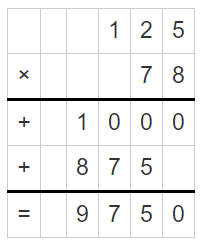
Find the product of 125 and 78.

Solution:

Given numbers are 125, 78.

125 x 78 = 9750

Word Problems on Multiplication 1

Question 2:

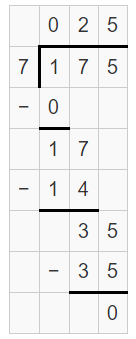
The product of two numbers is 175 and the multiplier is 7. Find the multiplicand?

Solution:

Given that,

The product of two numbers = 175

Multiplier = 7

Multiplicand = ?

Multiplicand * multiplier = Product

Multiplicand * 7 = 175

Multiplicand = 175/7

Word Problems on Multiplication 2

So, multiplicand = 25

Question 3:

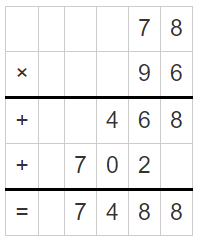
Solve 78 x 96?

Solution:

Multiplicand = 78

Multiplier = 96

Word Problems on Multiplication 3

78 x 96 = 7488.

Also, Read

Worked out Word Problems on Multiplication

Question 1:

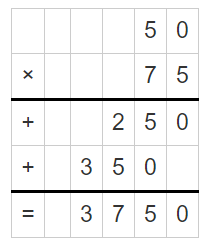
The weight of a rice bag is 50 kg. What will be the weight of 75 such bags?

Solution:

Given that,

Weight of a rice bag = 50 kg

Weight of 75 rice bags = 50 x 75

Word Problems on Multiplication 4

So, the total weight of 75 rice bags is 3750 kgs.

Question 2:

The price of a wooden box is $179 and a plastic box is $82. Find the cost of 40 wooden boxes and 150 plastic boxes in total?

Solution:

Given that,

The price of a wooden box = $179

The price of a plastic box = $82

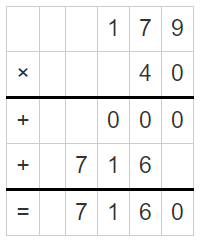
The cost of 40 wooden boxes = 179 x 40 = 7160

Word Problems on Multiplication 5

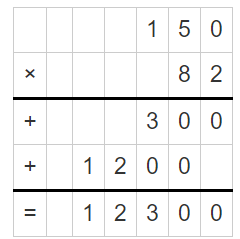
The cost of 150 plastic boxes = 150 x 82 = 12300

Word Problems on Multiplication 6

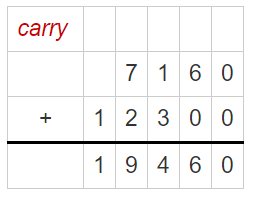
The total cost of 40 wooden boxes and 150 plastic boxes = 7160 + 12300

= 19460

Word Problems on Multiplication 7

Therefore, the total cost of 40 wooden boxes and 150 plastic boxes is $19460.


Question 3:

A toy costs $216. How much will be paid for such 56 toys?

Solution:

Given that,

The cost of one toy = $216

The amount to be paid to buy 56 toy means add 216, 56 times

Otherwise, multiply 216 and 56 the obtained product is the amount paid.

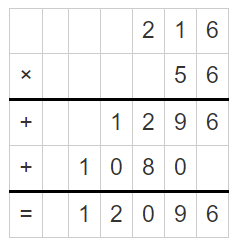
So, the amount paid for 56 toys = 216 x 56

Word Problems on Multiplication 8

Therefore, $12096 must be paid to buy 56 toys.

Question 4:

The monthly salary of a man is $3156. What is his annual income by salary?

Solution:

Given that,

The monthly salary of a man = $3156

The annual income of the man by salary = Add man’s salary 12 times

Or, multiply the man’s monthly salary by 12 months to get the annual income in dollars.

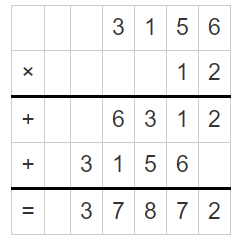
So, the annual income of the man by salary = 3156 x 12

Word Problems on Multiplication 9

Therefore, the annual income of the man by salary is $37872.

Question 5:

Each student of class IV $75 for the flood victims. If there are 368 students in class IV, what is the total amount of money collected?

Solution:

Given that,

All the students of Class IV have given $75 for the flood victims

The total number of students in class IV = 368

The total amount of money collected from class IV students for flood victims = 75 should be added 368 times.

Otherwise, multiply the number of students by the amount each student is given.

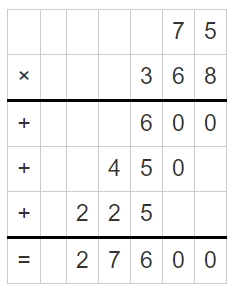
So, the total amount of money collected from class IV students for flood victims = 75 x 368

Word Problems on Multiplication 10

Therefore, the total amount of money collected from class IV students for flood victims is $27600.

Question 6:

Prove that by adding multiplicand, multiplier times is equal to multiplicand into multiplier by solving the following question.

Ramu buys 7 pencils in a shop. The cost of each pencil is $2. Find the total amount paid to buy 7 pencils.

Solution:

Given that,

The cost of each pencil = $2

The number of pencils bought = 7

The amount paid to buy 7 pencils = cost of each pencil x total number of pencils bought

= 2 x 7

= $14

The amount paid to buy 7 pencils = Add the total number of pencils by the cost of each pencil times

= 2 + 2 + 2 + 2 + 2 + 2 + 2

= $14

Therefore, the cost of 7 pencils is $14

Hence proved.

Question 7:

A truck can carry 2,545 kg of coal per trip. How much coal will be carried if the truck makes 135 trips?

Solution:

Given that,

A truck can carry 2,545 kg of coal per trip

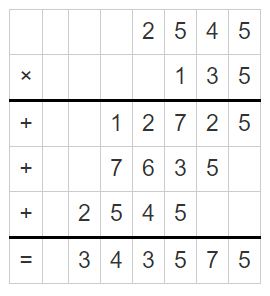
The amount of coal carried by 135 trips = 2545 x 135 = 343575

Word Problems on Multiplication 11

Therefore, 3,43,575 kgs of coal will be carried if the truck makes 135 trips.

Question 8:

There are 365 days in a year. How many days are there in 29 years?

Solution:

Given that,

The number of days in a year = 365

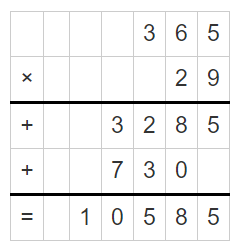
The number of days in 29 years = 365 x 29

Word Problems on Multiplication 12

Therefore, the number of days in 29 years is 10585.

Question 9:

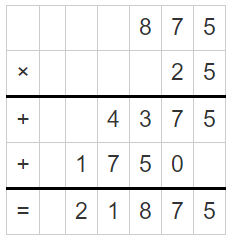
A bookseller sells 875 books per day in the month of July. How many books will he be able to sell in 25 days of July?

Solution:

Given that,

A bookseller sells 875 books per day in the month of July

The number of books the bookseller will sell in 25 days of July = 875 x 25

Word Problems on Multiplication 13

Therefore, 21875 books will the bookseller be able to sell in 25 days of July.

Question 10:

There are 1125 students in a school. If a student pays $ 365 as fees and $ 150 as bus charge per month, how much money is collected after 8 months?

Solution:

Given that,

The number of students in a school = 1125

A student pays $ 365 as fees and $ 150 as bus charge per month

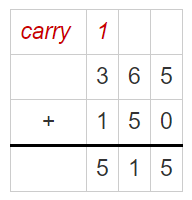
The amount of money collected from one student in a month = 365 + 150 = 515

Word Problems on Multiplication 14

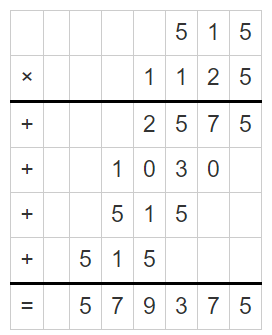
The total amount of money collected from all students in a month = 515 x 1125 = $579375

Word Problems on Multiplication 15

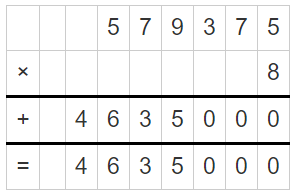
The total amount of money collected from all students in 8 months = $579375 x 8

Word Problems on Multiplication 16

Therefore, the total amount of money collected from 1125 students of a school as fee and bus fee in 8 months is $4635000.

Nets of Solids – Definition | Geometry Shapes | Nets of a Cube, Cone, Pyramid, Prism, Cylinder

Nets of Solids

A net is a flattened out 3-dimensional solid. It is the basic skeleton outline in two dimensions, that can be folded and glued together to obtain the 3D structure. Nets are used for making 3D shapes. In the below sections, we have discussed the nets of different geometric shapes along with the examples.

Nets of Solids – Definition

A geometry net is a two-dimensional shape that can be folded to form a three-dimensional solid. When the surface of a three-dimensional figure is laid out flat showing each face of the solid, the pattern obtained is called the net. Nets are useful in finding the surface area of the solids. The following are some steps we must take to determine whether a net forms a solid:

  • Ensure that the net and a solid have the same number of faces and that there is a match between the shapes of faces of the solid and the shapes of the corresponding faces in the net.
  • Visualize how the net is to be folded to form the solid and all the sides fit together properly.

Nets of Cube

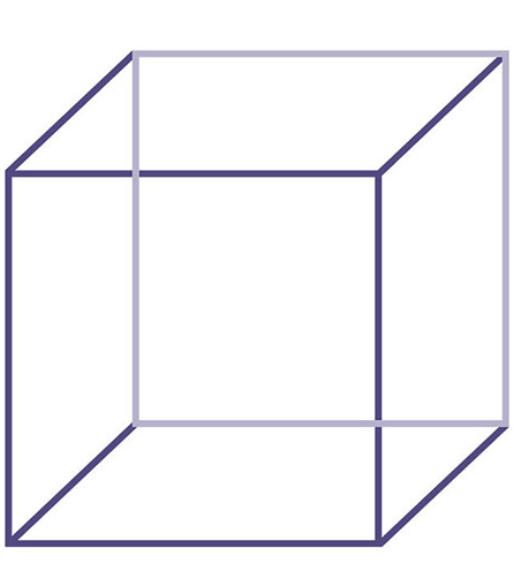
A cube is a 3-dimensional figure having 6 faces of equal length. The cube has 8 vertices, 12 edges. All the faces of a cube are in square shape. The plane angles of the cube are the right angle. The edges opposite to each other are parallel.

Nets of Solid 1

Cube Image

Nets of Solid 2

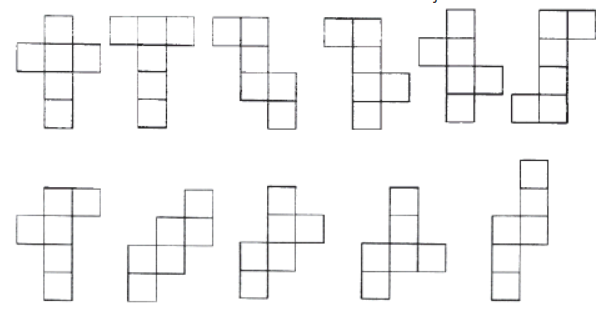
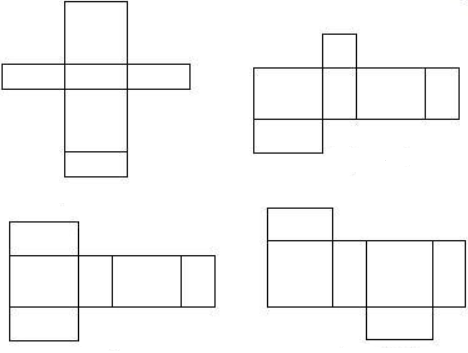
11 possible nets of a cube

Nets of Cylinder

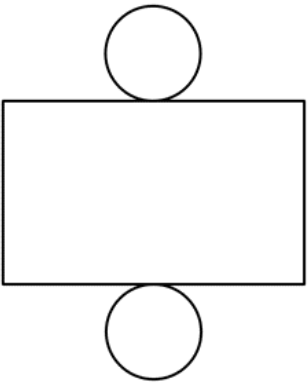
A cylinder has two parallel bases joined by a curved surface at a fixed distance. The bases are in circular shape and the center of two bases are joined by a line segment, called the axis. The perpendicular distance between the bases is the height and the distance from the axis to the outer surface is the radius of the cylinder.

Nets of Solid 3

Cylinder Image

Nets of Solid 4

Nets of Cylinder

Nets of Rectangular Prism

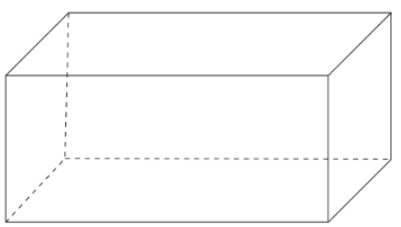
A rectangular prism has six faces and each face is a rectangle. Both the bases of the prism are rectangles and other lateral faces are also rectangles. it is also called a cuboid.

Nets of solid 5

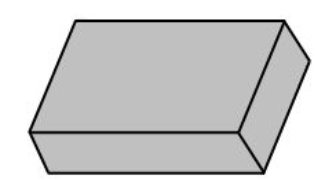
Rectangular Prism Image

nets of Solid 6

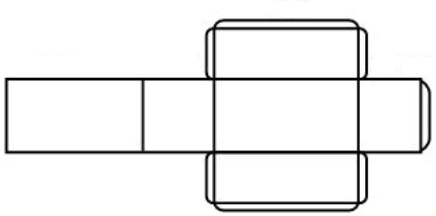
Nets of a Rectangular Prism

Nets of Triangular Prism

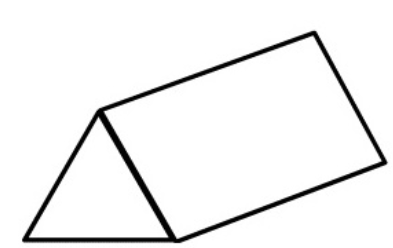
A triangular prism is a polyhedron having two triangular bases and three rectangular sides. Like other prisms, two bases are congruent and parallel. The prism has 5 faces, 9 sides and 6 vertices.

Nets of Solid 7

Triangular Prism Image

Nets of Solid 8

Nets of Triangular Prism

Nets of Cone

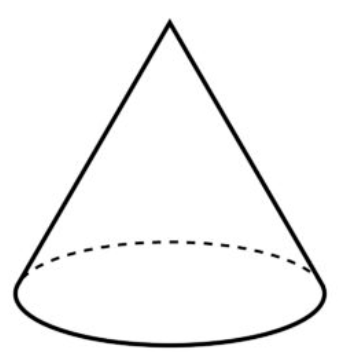
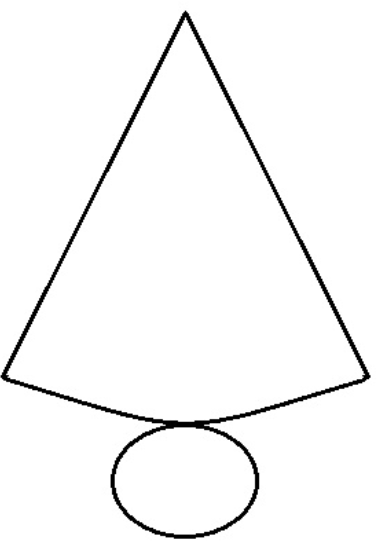
A cone is a shape formed by using a set of line segments which connects a common point, called vertex to all the points of a circular base. the distance between vertex to base of the cone is known as its height.

nets of solid 9

Cone Image

Nets of Solid 10

Nets of Cone

Also, Read

Nets of Square Pyramid

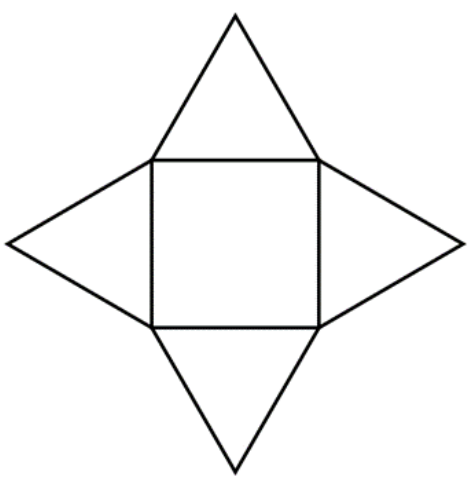
A three-dimensional geometric shape with square base and four triangular faces all those faces meet at a single point is called the square pyramid. If all triangular faces have equal edges, then this pyramid is called an equilateral square pyramid.

Nets of solid 11

Square Pyramid Image

Nets of Solid 12

Nets of Square Pyramid

Solved Examples on Nets of Solid

Example 1:

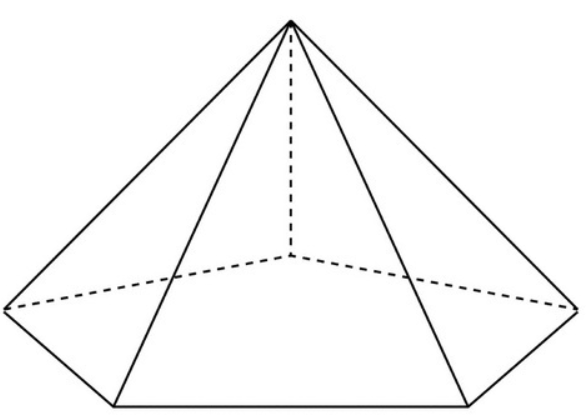
Sketch the net of the solid shape given below.

Nets of Solid 13

Solution:

If the pyramid is unfolded along its edges we get the following net.

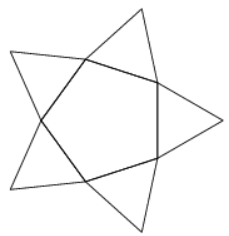
The net of the pentagonal pyramid is as follows.

Nets of Solid 14

Example 2:

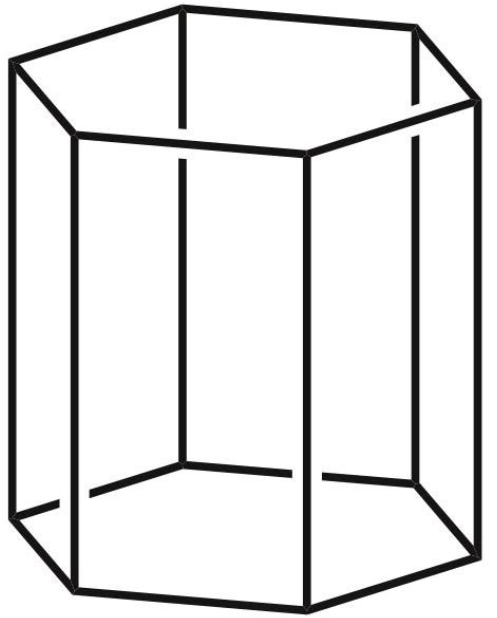
Sketch the net of the solid shape given below.

Nets of Solid 16

Solution:

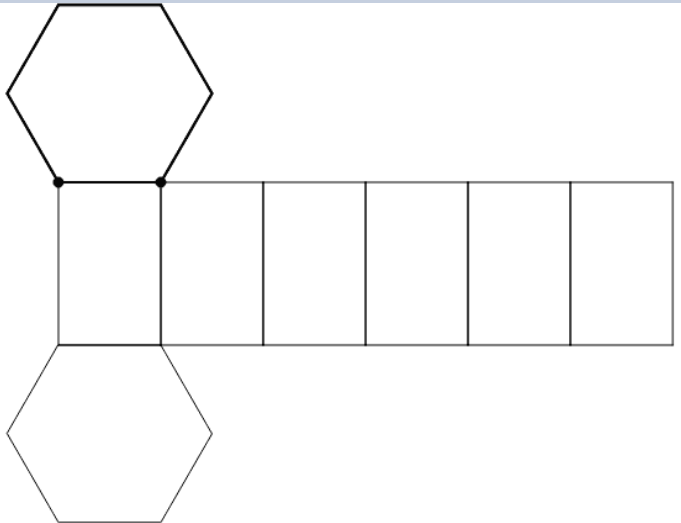
If the prism is unfolded along its edges we get the following net.

The net of the hexagonal prism is as follows.

Nets of solid 15

Example 3:

Sketch the net of the solid shape given below.

Nets of Solid 17

Solution:

If the prism is unfolded along its edges we get the following net.

The net of the hexagonal prism is as follows.

Nets of Solid 18

Frequently Asked Questions on Nets of Solid

1. How are nets useful in real life?

Nets are used in finding the surface area of the solids. The examples of nets are all three dimensional geometric shapes. Some of the 3 dimensional geometric shapes are square pyramid, cone, cylinder, triangular prism, rectangular pyramid, rectangular prism nad others.

2. Can a solid have different Nets?

Yes, a solid have different nets. Visualize how the net is folded to form a solid and make sure that all sides fit together properly. Make sure the solid and the net have same number of faces, shape of faces should match.

3. What is the net of a 3D shape?

The net of a 3D shape is what it looks like if it is opened out flat. A net can be folded up to ake a 3D shape. There can be several possible nets for one 3D shape. Draw a net on paper, then fold it into the shape.

4. How many nets are there for a cube?

There are exactly eleven nets that will form a cube.

2 Digit Numbers -Definition, Arithmetic Operations, Place Value, Examples

2 Digit Numbers

The concept of two-digit numbers is started with the 10 and ends with the number 99. That is 10, 11, 12, 13, 14, …………98, 99. These two-digit numbers have both tens digit and one’s digit. You might observe that after 10, the next digit will be 11 where 1 is placed after 1. The digits, 0, 1, 2, 3, 4, 5, 6, 7, 8, and 9 are changed manually to the right of digit 1. Therefore, the numbers 11, 12, 13, 14, 15, 16, 17, 18 and 19 are formed.

For example

  • Numbers 10 ——– one ten.
  • Number 11 ———one ten and 1 one.
  • Number 12 ———-one ten and 2 ones.
  • Number 13 ——— one ten and 3 ones.
  • Number 20 ——— two ten.
  • Number 21 ———two ten and 1 one.
  • Number 22 ——— two ten and 2 ones.
    .
    .
    .
  • Number 98 ——-9 ten and 8 ones.
  • Number 99 ——- 9 ten and 9 ones.

So, in between the numbers from 10 to 99 are called 2 digit numbers. When the number 19 finished the next digit will start from 2 after the number 0 right to it. As mentioned above, the digits, 0, 1, 2, 3, 4, 5, 6, 7, 8, and 9 are changed manually to the right of digit 2. The number 20 has 2 tens.

Place Value of 2 Digit Numbers

In 2 Digit Numbers, there are two places present where one place is called one’s place and the other one is called 10’s place. In a 2 digit number, the left side number is at 1’s place and the right side and the right side number is at 10’s place. The one’s place digit has its original value. The digit placed at the left side ten’s place has its value ten times its original value.

Example:
23 – 3 is at one place and 2 is at tens place.
48 – 8 is at one place and 4 is at tens place.
27 – 2 is at one place and 7 is at tens place.

Also, Read:

Addition of 2 Digit Numbers

(i) An addition of two-digit numbers, Add the one’s digits of the two numbers and then add the ten’s digits of the two numbers.
1. 10 + 20 = 30.
2. 12 + 12 = 24.
3. 22 + 15 = 37.
4. 80 + 10 = 90.
5. 50 + 30 = 80.

(ii) If you add the two-digit number with zero (0), then you will get the same two-digit number as the resultant value. That is,
25 + 0 = 25.
36 + 0 = 36.
42 + 0 = 42.
65 + 0 = 65.

(iii) If you want to add the two-digit number with the single-digit number, then you need to add this single-digit number with the one’s place digit of the 2 digit number. That is
16 + 2 = 18.
15 + 4 = 19.
20 + 2 = 22.
25 + 3 = 28.

Subtraction of 2 Digit Numbers

(i) Subtraction of 2 digit numbers also the same as the addition method. In this method Firstly, subtract the one’s place digits of the two numbers first and then subtract the ten’s place digit. That is
1. 14 – 10 = 4.
2. 25 – 12 = 13.
3. 36 – 28 = 8.
4. 48 – 24 = 24.
5. 82 – 22 = 60.

(ii) If you subtract the zero from the two-digit number, then you will get the result value of is the same two-digit number. That is,
78 – 0 = 78.
45 – 0 = 45.
66 – 0 = 66.
94 – 0 = 95.

(iii) To subtract the single-digit number from the two-digit number, you need to subtract the single digit from the one’s place digit of a two-digit number. That is,
44 – 2 = 42.
68 – 6 = 62.
82 – 8 = 74.
96 – 4 = 92.

Multiplication of Two-Digit Numbers

Multiply the one’s digit of the second number with the first number and then multiply the one’s digit of the second number with the ten’s digit of the second number. Again repeat the same process with the ten’s digit of the second number. Finally, add the values and get the resultant value. That is,
25 X 25 = 625
The resultant value of 25 X 25 is equal to 625.
25 X 15 = 375
The resultant value of 25 X 15 is equal to 375.

Conjugate Complex Numbers – Graphical Representation, Properties | How to find Conjugate of Complex Numbers?

Conjugate Complex Numbers

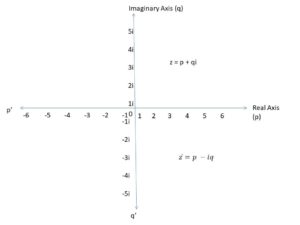
Conjugate Complex Numbers are the numbers that can be obtained by changing the sign of the imaginary part of the complex number. Complex numbers are the combination of both real numbers and imaginary numbers. The basic expression for the complex numbers is z= p + iq. In the above expression, ‘p’ is a real number and the ‘iq’ is an imaginary number. The value of ‘i’ is equal to √(-1.)An imaginary part of the complex numbers is denoted by either ‘i’ or ‘j’. For example, the complex number is 1 + 3i where 1 is a real number and 3i is an imaginary number.

We can find out the conjugate number for every complex number. Yes, the conjugate complex number changes the sign of the imaginary part and there is no change in the sign of the real numbers. The conjugate complex number is denoted by\(\overline {z}\) or z*.

The conjugate complex number of z is \(\overline {z}\) or z*= p – iq.

For example,

  • The conjugate complex number of 1 + 3i is \(\overline {z}\) = 1 – 3i.
  • The conjugate complex number of 2 + 8i is \(\overline {z}\) = 2 – 8i.
  • The conjugate complex number of 10 + 5i is \(\overline {z}\)  = 10 – 5i.
  • The complex conjugate number of 0.24 + 1.32i is \(\overline {z}\) = 0.24 – 1.32i.

Also, See:

Graphical Representation of the Conjugate Complex Number

conjugate complex number. introduction.image 1

Properties of a Conjugate Complex Numbers

The basic properties of the conjugate complex numbers are mentioned below. They are

(i) \(\overline {z}\) = z

Proof: z is a complex number. that is z = p + iq.
The conjugate complex number z is \(\overline {z}\) = p – iq.
Again, the conjugate of \(\overline {z}\) is z = p + iq.

Hence, \(\overline {z}\) = z is proved.

(ii) (z1 + z2) ̅ = (z1) ̅ + (z2) ̅

Proof: If z1 = p + iq and z2 = r + is.
Then, z1 + z2 = p + iq + r + is.
z1 + z2= (p + r) + i(q + s).
The conjugate of z1 + z2 is  {z1 + z2} ̅  = (p + r) – i(q + s) ———(1).
The conjugate of z1 is {z1} ̅ = p – iq.
The conjugate of z2 is {z2} ̅  = r – is.
Now, z1+  z2= p – iq + r – is.
= (p + r) – i(q + s) ——-(2).
Finally, equation (1) = equation (2). (z1 + z2) ̅ = (z1) ̅ + (z2) ̅

(iii) (z1 – z2) ̅ = {z1} ̅   – {z2} ̅

Proof: If z1 = p + iq and z2 = r + is.
Then, z1 – z2 = (p + iq) –(r + is).
z1 – z2 = (p + iq – r – is)
z1 – z2 = (p – r) – i(q – s).
The conjugate of z1 – z2 is (z1 – z2) ̅ = (p – r) + i(q – s) ———(1).
The conjugate of z1 is z1  ̅= p – iq.
The conjugate of z2 is z2  ̅=r – is.
Now, z1̅-  z2̅= p – iq –(r – is).
= p – iq – r + is.
= (p – r) – i(q – s) ——-(2).
Finally, equation (1) = equation (2). That is (z1 – z2) ̅ = z1̅-  z2̅

(iv) (z1z2)= z1z2

Proof: If z1= p + iq and z2 = r + is.
Then, z1*z2 = (p + iq) * ( r + is) = pr + ips + iqr + (i)^2 qs.
i^2 = -1.
Apply the i^2 value in the above equation.
Then, we will get z1z2  = pr + i(ps + qr) – qs.
z1z2 = (pr – qs) +i(ps + qr).
The conjugate of z1z2 is (z1z2) ̅ = (pr – qs) – i(ps + qr) ———(1).
The conjugate of z1 is (z1) ̅ = p – iq.
The conjugate of z2 is (z2) ̅  = r – is.
= (p –iq) (r – is).
= pr –ips –iqr + i^2qs.
=pr – i(ps + qr) – qs.
= (pr – qs) – i(ps + qr) ———(2).
Finally, equation (1) is equal to equation (2).
(z1z2)=  {z1} {z2}

(v)(z1//z2) =  {z1} {z2} if z2 is not equal to zero.

Proof: (z1//z2)=  {z1}. {1/z2}
We can write it as {z1} {1/z2}={z1}/  {z2}
Hence, It is proved as {(z1//z2)}=  {z1}/  {z2}

(vi) |\(\overline {z}\)| = |z|

Proof: if z = p + iq.
Then conjugate of z is \(\overline {z}\) = p – iq.
|\(\overline {z}\)|= √(p^2+(-q)^2)=√(p^2+q^2) ——-(1).
|z| = √(p^2+(q)^2) ——-(2).
So, equation (1) is equal to equation (2).
Hence, |\(\overline {z}\)| = |z| is proved.

(vii) z\(\overline {z}\)=|z|^2.

Proof: if z = p + iq, then the conjugate of z is \(\overline {z}\)= p – iq.
z\(\overline {z}\)= (p + iq) ( p – iq).
= (p^2 – ipq + ipq –(iq)^2).
= p^2 –(i)^2q^2.
i^2 = -1.
Then, z\(\overline {z}\)=p^2+q^2 ———(1).
|z| = √(p^2+q^2).
|z|^2 = (√(p^2+q^2)))^2 = p^2 + q^2 ——-(2).
Equation (1) is equal to equation (2).
So, z\(\overline {z}\)=|z|^2 is proved.

(viii) z^-1 = {z/|z|2}, where z is not equal to zero.

Proof: The given information is
z^-1 =  {z/|z|2}
we can write it as 1 / z = {z/|z|2}
So, |z|^2 = z\(\overline {z}\).
It is proved in the above property.
So, z^-1 =  {z/|z|2} is proved.

Key Points of Conjugate Complex Numbers

  • z + \(\overline {z}\)= 2 real parts of (z).
  • z – \(\overline {z}\)= 2 imaginary parts of (z).

Solved Examples of Conjugate Complex Number

1. Find the conjugate of the complex number z = (2 + 3i) (2 + 5i)?

Solution: The given complex number is z = (2 + 3i) (2 + 5i).
z =4 + 10i + 6i + 15(i)^2.
Substitute (i)^2 = -1 in the above expression. Then we will get
z= 4 + 16i – 15 = -11 + i16.
Now, the conjugate of the complex number z is
\(\overline {z}\)= -11 – i16.

Therefore, the conjugate of the complex number z = (2 + 3i) (2 + 5i) is equal to -11 – i16.

2. Find the conjugate of the complex number z = (1 + 3i) / (1 – 3i)?

Solution: The given complex number is z = (1 + 3i) / (1 – 3i).
Multiply the numerator and denominator with the (1 + 3i). That is,
z = (1 + 3i) (1 + 3i) / ( 1 – 3i) (1 + 3i).
z = (1 + 3i)^2 / (1)^2 – (3i)^2.
(a + b)^2 = a^2 + 2ab + b^2—–(1).
a^2 – b^2 = (a + b) (a – b)—–(2).
Substitute the equation (1) and (2) in the complex number z. That is,
z = 1 + 2(3i) + (3i)^2 / (1 + 3i) (1 – 3i).
z = 1 + 6i -9 / 1 – 3i + 3i -9i^2. {i^2 = -1}.
z = -8 + 6i / 1+9.
z = – 8 + 6i / 10.

The conjugate of complex number z is \(\overline {z}\)= – 8 – 6i / 10.

3. Find the Conjugate of the complex number 4 + 10i and explain the real and imaginary numbers?

Solution: The given information is
The complex number is 4 + 10i.
The conjugate of the complex number 4 + 10i is 4 – 10i.
Here, the real number is 4 and the imaginary number is 10i.

4. Find the conjugate of the complex number (2x + 3yi)(2x + 20yi) and identify the real and imaginary numbers?

Solution: As per the given information
The complex number is (2x + 3yi) (2x + 20yi).
(2x + 3yi) (2x + 20yi) = 4x^2 + 40xyi + 6xyi + 60y^2(i)^2.
(2x + 3yi) ( 2x + 20yi) = 4x^2 + i46xy – 60y^2. {where i=-1}.
(2x + 3yi) ( 2x + 20yi) = (4x^2 – 60y^2) + i46xy.
The conjugate of complex number (4x^2 – 60y^2) + i46xy is (4x^2 – 60y^2) – i46xy.
The real number of the complex number is (4x^2 – 60y^2).

The imaginary number of the complex number is i46xy.

5. Evaluate the expression (3 + 5i) – (8 + 2i) and find the conjugate of the expression?

Solution: The given expression is (3 + 5i) – (8 + 2i).
Expand the expression 3 + 5i – 8 – 2i.
-5 + 3i.
By evaluating the expression (3 + 5i) – ( 8 + 2i) is equal to – 5 + 3i.

The conjugate of the expression – 5 + 3i is – 5 – 3i.

6. If z = 3 + 2i, then find the z\(\overline {z}\)?

Solution: The given complex number is z = 3 + 2i.
The conjugate of the complex number z is \(\overline {z}\)= 3 – 2i.
z\(\overline {z}\)= (3 + 2i)(3 – 2i).
z\(\overline {z}\)= 9 – 6i + 6i – 4(i)^2 {if i^2 = -1}.
z\(\overline {z}\)= 9 – 4(-1).
z\(\overline {z}\)= 9 + 4 = 13.
Therefore, z\(\overline {z}\) is equal to 13 and it is a real number.

Graph of Standard Linear Relations between x and y | Linear Relationship between X and Y

Graph of Standard Linear Relations between X Y

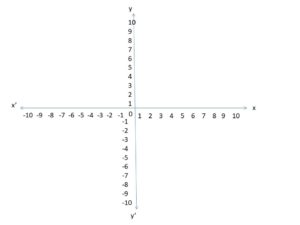
A Linear indicates the straight line. We need to find out the linear relation between the two variables. Here, the two variables are x and y. We need to draw the graph for the linear relation between x and y. The basic expression for the linear relation with two variables in mathematics is ax + by + c = 0. Here, a, b, c are constants, and x and y are variables. The constants or real numbers are a and b. These real numbers are not equal to zero and that is called a linear equation with two variables.  The below diagram is the basic diagram of the Graph of Standard Linear Relations between x and y.

linear relation between x and y. introduction. image 1

Quadrants of a Graph

Generally, the graph is divided into four quadrants. In the first quadrant both the variables, x and y are positive numbers. Where the x variable values are negative and the y variable values are positive, that is called the second quadrant of the graph. In the third quadrant, both the variables x and y are negative numbers. Finally, the fourth quadrant has the y variables as negative numbers and the x variables as positive numbers. That is

  • The first quadrant – x and y variables are positive.
  • The second quadrant – x variable is negative and the y variable is positive.
  • The third quadrant – x and y variables are negative.
  • The fourth quadrant – x variable is positive and y variable is negative.

Linear Relationship with Two Variables

In this section, we are elaborating on how we can find the variable values by using the linear equation.

x value x + 4 = yy value(x, y)
22 + 4 = y6(2, 6)
33 + 4 = y7(3, 7)
00 + 4 = y4(0, 4)
-1-1 + 4 =y3(-1, 3)
-2-2 + 4 = y2(-2, 2)

Plotting Points on a Graph with x and y Values.

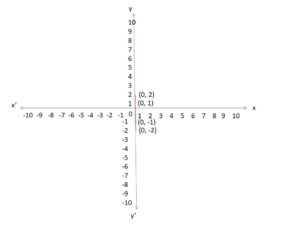
(I) If x = 0 and y = 1, 2, -1, -2.
The given details are x = 0 and y = 1, 2, -1, -2.
The x and y variable values are mentioned on the below graph.
linear relation between x and y. if x 0. image 3
Here, x=0. So, all points are placed on the y- axis.

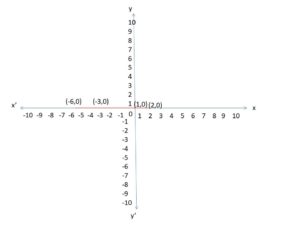
(ii) If y = 0 and x = 1, 2, -3, -6.
As per the given information y = 0 and x = 1, 2, -3, -6.
linear relation between x and y. if y 0. image 4
The x and y values are marked on the below graph.
linear relation between x and y. if y 0. image 5
All the x and y related points are marked on the x-axis only.

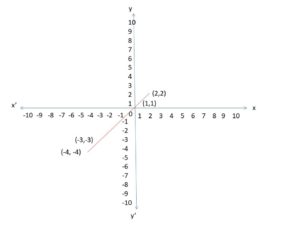
(iii) If x = y
linear relation between x and y. if x y. image 6
The x and y variables are marked on the below graph.
linear relation between x and y. if x y. image 7

Solved Examples on Linear Relationship between x and y

1. If x = 1, 2, 0, -1, -2 and the linear equation is 2x + y +1 =0, then find the y values?

Solution:
As per the given information, x = 1, 2, 0, -1, -2.
The given linear equation is 2x + y + 1 = 0.
Substitute the ‘x’ values in the above linear equation, then we will get
If x = 1
Substitute x = 1 in the linear equation 2x + y + 1 = 0.
That is, 2(1) + y + 1 = 0.
3 + y = 0.
So, y = -3.
If x = 1 then y = -3.
If x = 2.
Substitute x = 2 in the linear equation 2x + y + 1 = 0.
That is, 2(2) + y + 1 = 0.
4 + y + 1 = 0.
5 + y = 0.
So, y = -5.
If x = 2 then y = -5.
If x = 0.
Substitute x = 0 in the linear equation 2x + y + 1 = 0.
That is, 2(0) + y + 1 = 0.
y + 1 = 0.
So, y = -1.
If x = 0 then y = -1.
If x = -1.
Substitute x = -1 in the linear equation 2x + y + 1 = 0.
That is, 2(-1) + y + 1 = 0.
– 2 + y + 1 = 0.
-1 + y = 0.
So, y = 1.
So, If x = -1 then y = 1.
If x = -2.
Substitute x = -2 in the linear equation 2x + y + 1 = 0.
That is, 2(-2) + y + 1 = 0.
-4 + y + 1 = 0.
-3 + y = 0.
So, y = 3.
So, If x = -2 then y = 3.
Finally, x and y variable values are

linear relation between x and y. problem. image 8

2. Find the two variable values by using the linear equation 2x + 3y = 10?

Solution:
From the given details, the linear equation is 2x + 3y = 10.
To find out the variable values, we need to substitute the x =0 and y = 0 in the linear equation.
Firstly, apply the x = 0  in the above linear equation. That is, 2x + 3y =10.
2(0) + 3y = 10.
3y = 10.
y = 10 / 3.
Now, apply y = 0 in the linear equation. Then we will get 2x + 3y = 10.
2x + 3(0) = 10.
2x = 10.
x = 10 / 2 = 5.

Therefore, the values of the variables are x = 5 and y = 10 / 3.

3. Find the variable values by using the linear equations 2x + 5y =10 and 3x + 6y = 6?

Solution:
The given linear equations are
2x + 5y = 10——–(1).
3x + 6y = 6———(2).
Multiply the equation (1) with 3 on both sides. That is,
3 * (2x + 5y) = 10 * 3.
6x + 15y = 30——–(3).
Multiply equation (2) with 2 on both sides. That is,
2 * (3x + 6y) = 6 *2.
6x + 12y = 12——–(4).
Subtract the equation (3) and equation (4). That is
6x + 15y = 30.
6x + 12y = 12.
(-)    (-)       (-)
3y   = 18.
Y = 18 / 3 = 6.
Substitute the y = 6 in the equation (1). We will get
2x + 5y = 10.
2x + 5(6) = 10.
2x + 30 = 10.
2x = 10 – 30 = -20.
X = -20 / 2 = -10.

Therefore, the two variable values are x = -10 and y = 6.

Subtraction by 2’s Complement | How to do 2s Complement Subtraction?

Subtraction by 2’s Complement

Subtraction using 2’s Complement is an easy way to find the subtraction of numbers. Binary Subtraction is nothing but subtracting one binary number from another binary number. The Two’s Complement is the best process to works without having to separate the sign bits. The results are effectively built-into the addition/subtraction calculation using 2’s Complement method.

Check out the 2’s complement method for the binary number subtraction. We can easily subtract the binary numbers with the 2’s complement method. The expression for the 2’s complement is X – Y = X + not (Y) + 1.
For example, Y = 2 we can write it as 0010 in binary format
Not (Y) = 1101 and
Not (Y) + 1 = 1101
= 0001
Therefore, not(Y) + 1 = 1110
1110 is the 2’s complement of not(Y) + 1 where X is called as Minued and Y is called as a subtrahend.

Also, Read:

Conversion of Numbers into Binary Format

The very first thing, we should know the converting process of numbers into binary format. To convert the numbers into binary numbers, we have to follow one code. That is ‘8421’. Based on this code we can write the binary format numbers up to 15.

Example:
8421
0000 – 0 —-1’ s complement is 1111.
0001 – 1 —- 1’s complement is 1110.
0010 – 2 —-1’s complement is 1101.
0011 – 3 —-1’s complement is 1100.
0100 – 4 —-1’s complement is 1011.
0101 – 5 —-1’s complement is 1010.
0110 – 6 …..1’s complement is 1001.
up to 1111 = 15 —- 1’s complement is 0000.
For 2’s complement values, we need to add the ‘1’ to the 1’s complement values.
By applying the subtraction on binary numbers, we need to know some basic things like below,

  • 0 – 0 = 0.
  • 1 – 0 = 1.
  • 0 – 1 = 1 (Borrow 1).
  • 1 – 1 = 0.

How to Subtract Binary Numbers using 2’s Complement?

Follow the simple and easy steps to Perform Subtraction of Binary Numbers by 2S Complement. They are as follows

  1. Note down the given numbers in the binary format.
  2. Change the negative integer or number into its own 1’s complement. That means, change numbers as ‘0’ in place of ‘1’ and ‘1’ instead of ‘0’.
  3. After getting the 1’s complement value of the number, add the 1 in terms of binary format to the 1’s complement value.
  4. Now, the resultant value should be considered as a two’s complement of the negative integer.
  5. Finally, add the two’s complement of the negative integer with the first integer value.
  6. If you get the carrier that is ‘1’ by adding the above two numbers, then the result is considered positive.
  7. If you won’t get the carry, then the resultant value should be considered as a negative number.

Solved Examples on Binary Subtraction by 2’s Complement

1. 1100 – 1010.

Solution:
We can write the given numbers as 1100 + (- 1010).
Step (i) The given numbers are already in binary format.
Step (ii) Change the negative integer or number or subtrahend into its own 1’s complement. That means, change numbers as ‘0’ in place of ‘1’ and ‘1’ instead of ‘0’.
The 1’s complement of 1010 is 0101.
Step (iii) Add the ’1’ to the 0101 that is 0101 + 1 = 0110.
Step (iv) 0110 is a two’s complement of – 1010.
Step (v) Minued ——1100.
Subtrahend ————1010.
Resultant value = 1   0110.

The carry number in the resultant value is ‘1’. So, the final value is a positive number. That is (+) 0110.

2. Find the value of 15 – 10 by 2’s complement?

Solution:
The given numbers are 15 – 10.
15 – 10 in terms of binary format is 1111 – 1010.
We can write it as 1111 + (-1010).
Here, 1111 is minued and the 10101 is subtrahend.
1’s complement of subtrahend is 0101.
For the 2’s complement, add the ‘1’ to the 0101. That is, 0101 + 1 = 0110.
Now, add the minued number with the 2’s complement of subtrahend number.
Minued ——-                     1111.
Subtrahend —                    0110.
The resultant value is    1  0101.

The carry number is ‘1’. So the resultant value is a positive number that is (+) 0101.

3. Calculate the subtraction of 11100 – 01100 by two’s complement?

Solution:
The given numbers are 11100 – 01100.
we can write it as 11100 + (- 01100).
Here, 11100 isminued and 01100 is subtrahend.
1’s complement of 01100 is 10011.
For the 2’s complement, add the ‘1’ to the 10011. That is 10011 + 1 = 10100.
Now, add the minued number with 2’s complement of subtrahend number.
Minued ———-                                     11100.
2’s complement of subtrahend ——-10100.
The resultant value is ——               1  10000.

The carry number is ‘1’. So the resultant value is positive. That is (+) 10000.

4. Find the subtraction by 2’s complement for 00111 – 10101?

Solution:
The given numbers are 00111 –10101.
we can write it as 00111 + (- 10101).
Here,00111 isminued and 10101 is subtrahend.
1’s complement of 10101 is 01010.
For the 2’s complement, add the ‘1’ to the 01010. That is 01010 + 1 = 01011.
Now, add the minued number with 2’s complement of subtrahend number.
Minued ———-                                     00111.
2’s complement of subtrahend ——-01011.
The resultant value is —— 10010.

There is no carry number. So the resultant value is negative. That is (-) 10010.

5. Calculate 1001.01 – 1100.10?

Solution:
The given numbers are 1001.01 – 1100.10.
we can write it as 1001.01 + (– 1100.10).
Here, 1001.01isminued and 1100.10 is subtrahend.
1’s complement of 1100.10 is 0011.01.
For the 2’s complement, add the ‘1’ to the 0011.01. That is 0011.01 + 1 = 0011.10.
Now, add the minued number with 2’s complement of subtrahend number.
Minued ———-                                     1001.01.
2’s complement of subtrahend ——-0011.10.
The resultant value is ——                   1100.11.

There is no carry number. So the resultant value is negative. That is (-) 1100.11.

6. Find the subtraction by 2’s complement for 101011 – 011001?

Solution:
The given numbers are 101011 – 011001.
We can write it as 101011 + (– 011001).
Here, 101011isminued and 011001 is subtrahend.
1’s complement of 011001 is 100110.
For the 2’s complement, add the ‘1’ to the 100110. That is 100110 + 1 = 100111.
Now, add the minued number with 2’s complement of subtrahend number.
Minued ———-                                      101011.
2’s complement of subtrahend ——- 100111.
The resultant value is ——1  110010.

The carry is ‘1’ in the resultant value. So the resultant value is positive. That is (+) 110010.

Comparing Decimals | Less than and Greater than Decimals | How to Compare Decimal Numbers?

Comparing Decimals

Trying to Solve Problems on Comparing Decimals and facing any difficulties? You have come to the right place where you can get a complete idea of Decimal Comparison. Learn the Step by Step Procedure to Compare Decimal Numbers and check whether they are greater or smaller. Refer to Solved Examples on Comparing Decimals explained along with detailed steps in the later sections.

How to Compare Decimal Numbers?

When comparing decimal numbers use the following steps. They are along the lines

  • We know a decimal number has whole number part and decimal part. The Decimal Number with Greater whole number part is greater.
  • If the Decimals you are comparing have the same number of digits in them check the value of the number without a decimal point. The Larger the Decimal Number the Closer it is to One and thus it is greater.

Also, Read:

Comparing Decimals Examples

1. Compare 6.4 and 2.98?

Solution:

Firstly, check the whole number part in both the decimals

Since 6 >2

The Decimal Number 6.4 is greater than 2.98

2. Compare 5.45 and 5.62?

Solution:

Given Decimal Numbers are 5.45 and 5.62

In these two decimal numbers, the whole number part is the same

So we need to check the value after the decimal point

45<62

Therefore, decimal number 5.62 is greater than 5.45

3. Which is Smaller 18.02 or 18.234?

Solution:

Given Decimals are 18.02 and 18.234

Check the whole number parts, since both the whole number parts are the same check for the values next to the decimal point

.02<.234

As .234 is closer to one it is greater than .02

Thus, in the given decimals 18.02 is smaller than 18.234

4. Find the greater number 163.19 and 136.21?

Solution:

Given Decimals are 163.19 and 136.21

Check the whole number parts initially

163<136

Since the Whole Number 163 is greater the Decimal Number 163.19 is greater.

5. Find the greater number; 2332.47 or 2332.99?

Solution:

Given Decimals are 2332.47 and 2332.99

Firstly, check the whole number parts

2332=2332

As the whole number parts are the same check the values of digits after the decimal point. The number closer to one is greater

.47<.99

.99 is closer to one thus it is larger

Therefore, 2332.99 is greater.

6. Find the greater number 321.13 or 321.13?

Solution:

Given Decimal Numbers are 321.13, 32.13

Check the Whole Number Parts

321= 321

Now, check the decimal parts of the given numbers

.13 = .13

Therefore, both the decimal numbers are equal.

Conversion of Unlike Decimals to Like Decimals | How to Change Unlike Decimals to Like Decimals?

Conversion of Unlike Decimals to Like Decimals

Learn about Changing Unlike Decimals to Like Decimals by going through this article. Know the Procedure on How to Convert, Unlike Decimals to Like Decimals explained with solved examples here. We can change Unlike Decimals to Like Decimals by simply adding the required number of Zeros on the extreme right side of the decimal so that the value doesn’t alter.

Also, See: Like and Unlike Decimals

How to Convert Unlike Decimals to Like Decimals?

We follow the Annexing Zeros on the Extreme Right Side of the Decimal Method. Follow the simple procedure listed below to change Unlike Decimals to Like Decimals. They are along the lines

  • The first and foremost step is to find the decimal number having maximum number of decimal places say(n)
  • Now change the decimals to their equivalent decimals that have the same number of decimal places with the highest number of decimal places.

Solved Examples on Changing Unlike Decimals to Like Decimals

1. Convert the following unlike decimals into like decimals: 83.439, 164.2, 427.23

Solution:

In the Given Decimals 83.439, 164.2, 427.23 we observe that the Decimal Number 83.439 has the maximum number of decimal places i.e. 3

Therefore, to change the given unlike decimals to like decimals we convert all of them into like decimals having three places of decimal.

83.439  is already having 3 decimal places thus it remains the same➙ 83.439

164.2 ➙ 164.200

427.23 ➙ 427.230

Therefore, 83.439, 164.200, 427.230 are all expressed as Like Decimals.

2. Covert the following unlike decimals 3.72, 24.361, 3.32, and 0.7 into like decimals?

Solution:

Given Decimal Numbers are 3.72, 24.361, 3.32, and 0.7

We observe that 24.361 has the maximum number of decimal places i.e. 3

Thus, we can change the given unlike decimals to like decimals we covert all of them into like decimals having three places of decimal

3.72 ➙ 3.720

24.361 ➙ 24.361

3.32 ➙ 3.320

0.7 ➙ 0.700

Therefore, 3.720, 24.361, 3.320, 0.700 are all expressed as Like Decimals.

3. Check whether the following decimals are like or unlike and if not so Convert them to Like Decimals?

33.04, 84.32, 105.432

Solution:

Given Decimals are 33.04, 84.32, 105.4326

We observe that the decimal number 105.432 has the maximum number of decimal places i.e. 4

Thus, we annex with zeros on the right side of the decimal part to make them all like decimals

33.04 ➙ 33.0400

84.32 ➙ 84.3200

105.4326 ➙105.4326

Therefore, 33.0400, 84.3200, 105.4326 are all expressed as Like Decimals.

4. Convert 0.4444, 147.03, 65.4 to Like Decimals

Solution:

Given Decimal Numbers are 0.4444, 147.03, 65.4

We observe the decimal number 0.4444 has the maximum number of decimal places i.e. 4

Thus, we annex with zeros on the right side of the decimal part to make them all like decimals

0.4444 ➙ 0.4444

147.03 ➙ 147.0300

65.4 ➙ 65.4000

Therefore, 0.4444, 147.0300, 65.4000 are all expressed as Like Decimals.

Like and Unlike Decimals – Definition, Examples | How to Convert Unlike Decimals to Like Decimals

Like and Unlike Decimals

Are you confused about how to check if Decimal Numbers are Like or Unlike? If so, you have arrived at the right place as you will get a complete idea of the entire concept of Like and Unlike Decimals. Get to Know in detail the Like and Unlike Decimals such as Definitions, Procedure to Convert Unlike Decimals to Like Decimals, Solved Examples, etc. in the later sections.

Like and Unlike Decimals – Definitions

Decimals having the same number of decimal places i.e. decimals having the same number of digits on the right side of the decimal part are called Like Decimals.

Example: 2.35, 6.54, 7.28 are all Like Decimals

On the other hand, Decimals having a different number of decimals i.e. decimals having different digits on the right side of the decimal part are called, Unlike Decimals.

Example: 4.56, 7.854, 9.634 are Unlike Decimals

How to Check if given Decimal Numbers are Like and Unlike?

Like Decimals will have the same number of digits after the decimal point. For Example, 2.34 and 5.76 are like decimals since both the numbers have 2 decimal places after the decimal point.

Unlike Decimals will not have the same number of decimal places after the decimal point. For Example, 3.2 and 4.568 are unlike since both of them don’t have the same number of decimal places after the decimal point.

Also, Read:

How to Convert Unlike Decimals to Like Decimals?

If we place any number of annexing zeros on the right side of the extreme right digit of the decimal part of a number then the value of the number is not altered. Thus, Unlike Decimals can be converted to Like Decimals by annexing with the required number of zeros on the extreme right digit in the decimal part.

We can convert Unlike Decimals to Like Decimals by simply adding Zeros to the right of the Decimal Point or by finding the Equivalent Decimal. However, Unlike Decimals can also be equivalent decimals. For Example, 0.4, 0.40, 0.400 are all, Unlike Decimals but not equivalent decimals.

Like and Unlike Decimals Examples

1. Check if the two decimals are like or unlike: 43.47 and 53.895?

Solution:

Given Decimals are 43.47 and 53.895

Number of Decimal Places in 43.47 = 2

Number of Decimal Places in 53.895 = 3

Since both the numbers don’t have the same number of decimal places in the decimal part given decimals are unlike decimals.

2. Check if two decimals 34.5 and 547.6 are like or unlike?

Solution:

Given Decimals are 34.5 and 547.6

Number of Decimal Places in 34.5 = 1

Number of Decimal Places in 547.6 = 1

Since both the numbers have the same number of decimal places in the decimal part given decimals are like decimals

3. Convert Decimals 1.3, 4.23, 6.756 into Like Decimals?

Solution:

Given Decimals are 1.3, 4.23, 6.756

To Change the given Unlike Decimals to Like Decimals annex with a required number of zeros as placing the zeros after the right side of the decimal part will not alter the value.

Decimal Places in 1.3 = 1

Decimal Places in 4.23 = 2

Decimal Places in 6.756 = 3

To make them into like decimals annex with the required number of Zeros

Annexing with Zeros for the given decimals to make them like decimals

1.3 ➝1.300

4.23➝4.230

6.756➝6.756

Thus, given decimals changed to like decimals are 1.300, 4.230, 6.756

Decimal and Fractional Expansion | How to do Decimal Expansion? | How to Write Fractional Expansion?

Fractional and Decimal Expansion

In this article, you will learn about the Decimal and Fractional Expansion of a Decimal Number. Before Proceeding further know the definitions of Decimal, Fraction, and the Place Value Chart. A Decimal is any number in the base 10 number system and is used to separate units place from tenths place in decimal. The decimal point present in between separates the Whole Number Part and Decimal Part.

Also, Read:

Decimal Expansion of a Number

Decimal Expansion of a Number is its representation in the base-10 system. In this System, each decimal place consists of digits 0-9 arranged such that each digit is multiplied by a power of 10 decreasing from left to right and a decimal place with 10^0 is the one’s place.

Decimal Expansion of Number 1423.25 is defined as

1423.25 = 1*103+4*102+2*101+3*100+2*10-1+5*10-2

= 1000+400+20+3+0.2+0.05

Decimal Expansion of a Number may terminate and in such case, the number is called a regular number or finite decimal. At times, the Decimal Expansion of a Number may become periodic and in such case, it is called a repeating decimal. However, the expansion may continue infinitely without repeating and it is called an irrational number.

Fractional Expansion of Decimals

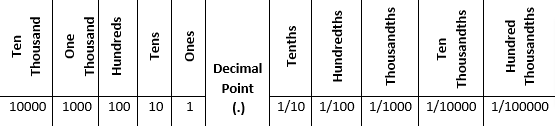
In the Expanded Form of Decimal Fractions, you will learn how to read and write the Decimal Numbers. Decimal Numbers can be written in expanded form using the Place Value Chart.

Decimal and Fractional Expansion

Let us understand the same by considering an example

384.264

384.264 = 3 × 100 + 8 × 10 + 4 × 1 + 2 × \(\frac { 1 }{10 } \) + 6 × \(\frac { 1 }{100 } \) + 4 × \(\frac { 1 }{1000 } \)

= 300+80+4+\(\frac { 2 }{10 } \)+\(\frac { 6 }{100 } \)+\(\frac { 4 }{1000 } \)

Solved Examples on Decimal and Fractional Expansion

1. Write the decimal and fractional expansion of 334.252?

Solution:

In Decimal Expansion

334.252 = 3*100+3*10+4*1+2*\(\frac { 1 }{10 } \)+5*\(\frac { 1 }{100 } \)+2*\(\frac { 1 }{1000 } \)

= 300+30+4+\(\frac { 2 }{10 } \)+\(\frac { 5 }{100 } \) + \(\frac { 2 }{1000 } \)

= 300+30+4+0.2+0.05+0.002

In Fractional Expansion

= 3*100+3*10+4*1+2*\(\frac { 1 }{10 } \)+5*\(\frac { 1 }{100 } \)+2*\(\frac { 1 }{1000 } \)

= 300+30+4+\(\frac { 2 }{10 } \)+\(\frac { 5 }{100 } \) + \(\frac { 2 }{1000 } \)

2. Write the decimal and fractional expansion of 543.32?

Solution:

In Decimal Expansion

543.32 = 5*100+4*10+3*1+3*\(\frac { 1 }{10 } \)+2*\(\frac { 1 }{100 } \)

= 500+40+3+\(\frac { 3 }{10 } \)+\(\frac { 2 }{100 } \)

= 500+40+3+0.3+0.02

In Fractional Expansion

= 5*100+4*10+3*1+3*\(\frac { 1 }{10 } \)+2*\(\frac { 1 }{100 } \)

= 500+40+3+\(\frac { 3 }{10 } \)+\(\frac { 2 }{100 } \)

3. Write the Decimal and Fractional Expansion of 647.345?

Solution:

In Decimal Expansion

647.345 = 6*100+4*10+7*1+3*\(\frac { 1 }{10 } \)+4*\(\frac { 1 }{100 } \)+5*\(\frac { 1 }{1000 } \)

= 600+40+7+\(\frac { 3 }{10 } \)+\(\frac { 4 }{100 } \)+\(\frac { 5 }{1000 } \)

= 600+40+7+0.3+0.04+0.005

In Fractional Expansion

647.345 = 6*100+4*10+7*1+3*\(\frac { 1 }{10 } \)+4*\(\frac { 1 }{100 } \)+5*\(\frac { 1 }{1000 } \)

= 600+40+7+\(\frac { 3 }{10 } \)+\(\frac { 4 }{100 } \)+\(\frac { 5 }{1000 } \)

FAQ’s on Decimal and Fractional Expansion

1. What is Decimal in Expanded Form?

Expanded form notation for the decimal numbers is the mathematical expression that shows the sum of the values of each digit in the number.

2. What is the Decimal Expansion of Number 164.38?

Decimal Number 164.38 can be written in expanded form by writing it as the sum of the place value of all the digits i.e. 1*100+6*10+4*1+3*\(\frac { 1 }{10 } \)+8*\(\frac { 1 }{100 } \) = 100+60+4+0.3+0.08

3. What is the Fractional Expansion of Number 94.38?

Fractional Expansion of Number 94.38 is 9*10+4*10+3*\(\frac { 1 }{10 } \)+8*\(\frac { 1 }{100 } \) which inturn results in 90+40+\(\frac { 3 }{10 } \)+\(\frac { 8 }{100 } \)

Order of a Matrix – Definition, Examples | How to Determine the Order of Matrix? | Matrix Multiplication

Order of a Matrix

Before we learn about the Order of a Matrix let us know What is a Matrix. Matrices are defined as a rectangular array of numbers or functions. It is a rectangular array and two- dimensional. A Matrix is a rectangular array of numbers or symbols which are generally arranged in rows and columns. The plural of matrix is matrices. The entries are the numbers in the matrix and each number is known as an element.

Order a Matrix – Definition

Basically, a two-dimensional matrix consists of the number of rows and the number of columns. The order of the matrix is defined as the number of rows and columns. The number of rows is represented by ‘m’ and the number of columns is represented by ‘n’. Therefore the order of the matrix is equal to m x n, and it is also called as ‘m by n’.

The size of the matrix is written as m x n, where m is the number of rows and n is the number of columns. For example, we have a 3 x 2 matrix, the number of rows is equal to 3, and the number of columns is equal to 2.

Different Types of Matrices

There are different types of matrices, basically categorized on the basis of the value of their elements, their order,  number of rows and number of columns, etc. Now, using different conditions, the various matrix types are categorized along with their definition.

  1. Row Matrix
  2. Column Matrix
  3. Null Matrix
  4.  Square Matrix
  5. Diagonal Matrix
  6. Upper Triangular Matrix
  7. Lower Triangular Matrix
  8. Symmetric Matrix
  9. Anti- Symmetric Matrix
  10. Equal Matrix
  11. Singular Matrix
  12. Non Singular Matrix
  13. Horizontal Matrix
  14. Vertical Matrix
  15. Unity or identity Matrix.

Row Matrix: A Matrix having only one row is called a Row Matrix. A= [aij]mxn  is a row matrix , if m=1 then row matrix is represented as A= [aij]1xn . It has only one row and the order of a matrix will be 1 x n. For example, A= [1 2 4 5] is row matrix of order 1 x 4.

Column Matrix: A Matrix having only one column is called a Column Matrix. A= [aij]mxn  is a column matrix, if n=1 then column matrix is represented as A= [aij]mx1 . It has only one column and the order of a matrix will be m x 1. Just like row matrices had only one row, column matrices have only one column. Thus the value of the column matrix will be 1.

Null Matrix: Null Matrix is also called Zero Matrix. In a matrix all the elements are zero then it is called a Zero Matrix or Null Matrix and it is generally denoted by 0. Thus, A = [aij]mxn is a Zero or Null Matrix.

Unity or Identity Matrix: If a square matrix has all elements 0 and each diagonal element is non-zero, it is called an identity matrix. It is denoted by I.

Equal Matrix: If two matrices are said to be equal if they are same order if their corresponding elements are equal to the square matrix.

Square Matrix: If the number of rows and the number of columns in a matrix are equal, then it is called Square Matrix.

How to find Order of a Matrix?

A Two- Dimensional matrix consists of the number of rows (m) and a number of columns (n). The order of the matrix is equal to m x n (also pronounced as ‘m by n’).

Order of Matrix = Number of Rows x Number of Columns.

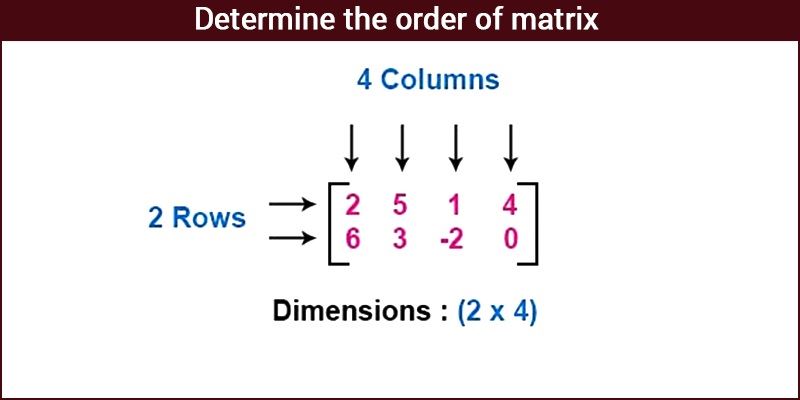
In the above, you can see, the matrix has 2 rows and 4 columns. Therefore, the order of the matrix is 2 x 4.

How will you Determine the Order of Matrix?

If a matrix has m number of rows and n number of columns, now let’s know how to find the order of the matrix.

Here few examples, how to find the order of a matrix,

[1  2  3] is an example, in this, the order of the matrix is (1 x 3), which means the number of rows (m) is 1 and the number of columns (n) is 3.

[7  5] is an example of (1 x 2) matrix, in this number of rows are (m) is 1 and number of columns (n) is 2.
\( A =\left[
\begin{matrix}
6 & 2 & 3\cr
12 & 15 & 35 \cr
\end{matrix}
\right]
\)

The order of the above matrix is (2 x 3), in this number of rows is (m) is 2, and the number of columns (n) is 3.

A matrix of the order m x n has mn elements. Hence we say that if the number of elements in a matrix is prime, then it must have one row or one column. Usually, we denote a matrix by using capital letters such as A, B, C, D, M, N, X, Y, Z, etc.

The product of m and n can be obtained in more than one ways, some of the ways are,

  1. mn x 1
  2. 1 x mn
  3. m x n
  4. n x m

Number of Elements in Matrix

Suppose, A is the order of 2 x 3. Therefore, the number of elements present in a matrix will also be 2 times 3, i.e 6.

Similarly, the other matrix order is 4 x 3, thus the number of elements will be 12 i.e. 4 times 3. If we know the order of a matrix, we can easily determine the total number of elements that the matrix has,

If a matrix is of m x n order, it will have mn element.

Order of a Matrix Examples

Example 1.

If matrix A has an 8 number of elements, then determine the order of the matrix.

Solution:

We know that number of elements is 8

Let’s write all the possible factors of the number 8

8 = 1 x 8

8 = 4 x 2

8 = 2 x 4

8 = 8 x 1

we can get the number 8 is four ways.

Therefore, there are four possible ways or orders of the matrix with 8 number of elements are 1 x 8, 2 x 4, 4 x 2, and 8 x 1.

Example 2.

If a matrix X has 7 number of elements, find the order of the matrix.

Solution:

We know that number of elements is 7

Let’s write all the possible factors of the number 7

7 = 1 x 7

7= 7 x 1

we can get the number 7 in two ways.

Therefore, there are two possible ways or orders of the matrix with 7 number of elements are 1 x 7, 7 x 1.

Example 3.

What is the order of a matrix given below?

\( A =\left[
\begin{matrix}
1 & 2 & 9\cr
18 & 12 & 15 \cr
\end{matrix}
\right]
\)

Solution:

The number of rows in a given matrix is A = 2

The number of columns in a given matrix is A = 3

Therefore, the order of matrix is  2 x 3.

Example 4.

What is the order of a matrix given below?

\( A =\left[
\begin{matrix}
4 & 5 & 7\cr
11 & 14 & 18 \cr
21 & 24 & 8 \cr
\end{matrix}
\right]
\)

Solution:

The number of rows in a given matrix is A = 3

The number of columns in a given matrix is A = 3

Therefore, the order of the matrix is 3 x 3.

FAQ’s on Order of Matrix

1. What is Matrix and Types?

A Matrix can be defined as a rectangular array of numbers or functions. A matrix consists of rows (m) and columns (n) that is m x n. Types of Matrices are :

  1. Row Matrix
  2. Column Matrix
  3. Null Matrix
  4. Equal Matrix
  5. Unity or Identity Matrix
  6. Square Matrix
  7. Rectangular Matrix
  8. Horizontal Matrix
  9. Vertical Matrix
  10. Scalar Matrix

2. What is the Null Matrix?

Null Matrix is also called Zero Matrix. In a matrix all the elements are zero then it is called a Zero Matrix or Null Matrix and it is generally denoted by 0. Thus, A = [aij]mxn is a Zero or Null Matrix.

3. What is another name of Unity Matrix?

Another name of the unity matrix is Identity Matrix. If a square matrix has all elements 0 and each diagonal element is non-zero, it is called an Identity Matrix. It is denoted by I.

4. What is the order of Square Matrix?

A Matrix that has a number of rows is equal to a number of columns is called Square Matrix. In this matrix, all the elements are arranged in m number of rows and n number of columns . So the order of the matrix is denoted by mxn.

5. Explain a Scalar Matrix?

Scalar Matrix is similar to a square matrix. In the scalar matrix, all off-diagonal elements are equal to zero and all on diagonal elements happen to be equal. In other words, the Scalar Matrix is an identity matrices multiple.

Binary Addition Using 1s Complement – Definition, Examples | How to Add Binary Numbers in 1’s Complement?

Binary Addition Using 1s Complement

Are you searching for a tool that computes the addition of two binary numbers using 1’s complement method? If yes, then you have reached the correct place. Here we are giving the detailed steps on how binary addition of two numbers with 1s complement. You can also get Binary Addition Using 1s Complement definition, how to get 1s complement of a binary number, and example questions to improve the levels of understanding.

What is Binary Addition?

A binary number is a number with the base 2. Binary addition is one of the basic arithmetic operations. The binary system has only two digits 0 and 1. The binary code uses the digits 0’s and 1’s to make certain processes turn on or off. The process of the binary addition operation is very familiar to the decimal system by adjusting to the base 2.

Before attempting the binary addition, you must have complete knowledge of how the place works in the binary number system. Almost all modern digital computers and electronic circuits perform the binary operation by representing each bit as a voltage signal. The binary bit 0 means OFF state, 1 means ON state.

1’s Complement of a Binary Number

We have a simple algorithm to convert a binary number into 1’s complement. To get 1’s complement of a binary number, invert the given binary number. You can also implement a logic circuit using only NOT gate for each bit of binary number input.

Example:

Calculate the 1’s complement of a binary number 10101110

Invert each bit of a given binary number

So, 1’s complement of 10101110 is 01010001.

Also, Read

Binary Addition Using 1’s Complement

Binary addition means simply performing an addition operation between two binary numbers. You can add two binary numbers digit by digit just like decimal numbers. The rules for adding two binary digits is 0 + 0 = 0, 1 + 0 = 1, 0 + 1 = 1, 1 + 1 = 10(1 is carry). At first, convert the given numbers to the 1’s complement and add those numbers using thee rules. Also, have a look at the detailed process on how to add binary numbers using 1’s complement in the following section.

How to do Binary Addition Using 1s Complement?

The process of adding binary numbers purely depends on their sign and magnitude. Here are the different cases.

Case I: Adding a positive and a negative number. If the positive number has a greater magnitude

Here, the addition of numbers is performed after taking 1’s complement of the negative number, and at the end round carry of the sum is added to the LSB (least significant bit).

Example: + 1101 – 1011

+ 1101 ⇒ 0 1 1 0 1

– 1011 ⇒ 1 0 1 0 0 (1’s complement)

⇒ 0 0 0 0 1 + 1 = 0 0 0 1 0

Hence the sum is +0010.

Case II: If the negative number has a greater magnitude

Here the addition is done in the same way as in case I but there will be non-end-around carry. The sum is obtained by taking the 1’s complement of the magnitude bits of the result and the sum is negative.

Example: 1011 – 1101

+ 1 0 1 1 ⇒ 0 1 0 1 1

– 1 1 0 1 ⇒ 1 0 0 1 0 (1’s complement)

⇒ 1 1 1 0 1

The sum is 1’s complement of 1101

Hence the sum is – 0010.

Case III: If two binary numbers are negative.

To add two negative binary numbers, 1’s complements of both the numbers are taken later addition is performed. In this case, an end-around carry will always appear. This along with a carry from the MSB will generate a 1 in the sign bit. 1’s complement of the magnitude bits of the result of an addition will give the final sum.

Example: -0110 and -0111

– 0 1 1 0 ⇒ 1 1 0 0 1 (1’s complement)

– 0 1 1 1 ⇒ 1 1 0 0 0 (1’s complement)

⇒ 1 0 0 0 1 + 1 = 1 0 0 1 0

1’s complement of 0010 is 1101 and the sign bit is 1

Hence the sum is -1101.

Binary Addition Using 1s Complement Examples

Example 1:

Calculate the sum of 0100, -1000 using the 1’s complement.

Solution:

The given binary numbers are 0100, -1000

1’s complement of -1000 is 10111

0 0 1 0 0 + 1 0 1 1 1 = 1 1 0 1 1

1’s complement of 1011 is 0100

Hence the sum is -0100.

Example 2:

Find the sum of 10000, -00111 using the 1’s complement.

Solution:

The given binary numbers are 10000, -00111

Find the 1’s complement of the negative number i.e 00111

1’s complement of 000111 = 111000

010000 + 111000 = 1 0 0 1 0 0 0

0 0 1 0 0 0 + 1 = 0 0 1 0 0 1

Hence, the sum is 001001.

Example 3:

Find the sum of -0100, -0010 using the 1’s complement method.

Solution:

The given numbers are -0100, -0010

Find the 1’s complement of the negative numbers

1’s complement of 0100 is 1011

1’s complement of 0010 is 1101

1 0 1 1 + 1 1 0 1 = 1 1 0 0 0

1 1 0 0 0 + 1 = 1 1 0 0 1

1’s complement of 1 0 01 is 0 1 1 0 and 1 is the sign bit

Hence, the sum is -0110

Example 4:

Find the sum of 1000 and -0101 using the 1’s complement.

Solution:

The given binary numbers are 1000 and -0101.

Find the 1’s complement of the negative number

1’s complement of 0101 is 11010.

0 1 0 0 0 + 1 1 0 1 0 = 1 0 0 0 1 0

1 0 0 0 1 0 + 1 = 1 0 0 0 1 1

Hence the sum is 00011.

FAQ’s on Binary Addition using 1’s Complement

1. How to find 1’s complement of a binary number?

To get the 1’s complement of binary numbers, just invert the number. Inversion means placing 1’s in place of 0’s and 0’s in place of 1’s. Otherwise, you can also use NOT logic gate to find the 1’s complement.

2. How to add two negative binary numbers using the 1’s complement?

For adding two negative binary numbers with the 1’s complement, just find the 1’s complement of both numbers. Add those 1’s complement numbers and add 1 to the obtained result. Then you will get 1 in place of the sign bit. Get the 1’s complement of the obtained sum to get the final result.
3. What’s the purpose of using complements in binary number operations?
Compared to other systems for representing the signed numbers 1’s complement, 2’s complement has the advantage that the fundamental arithmetic operations are identical to those for unsigned binary numbers.

Straight Line in Two-Point Form – Formula, Examples | How to find the Equation of a Straight Line Passing through Two Points

Straight Line in Two-Point Form

The equation of a straight line represents each and every point on that line. Let us consider the straight line created by passing through the two points such as (a1, b1) and (a2, b2). There are no curves present in the straight line. The basic equation for the straight line in Two-point for is ax + by + c = 0. Here, a, b, c are constants, and x and y are variables.

How to find the Equation of a Straight Line Passing Through Two Points?

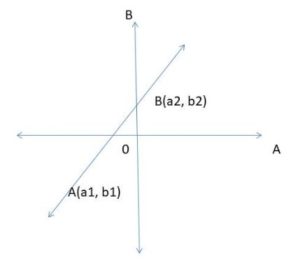
The below diagram shows the straight line in two-point form. In this, (a1, b1) is the starting point of the straight line, and (a2, b2) is the ending point of the straight line.

Straight line in Two-point form. Image 1

The equation of the straight line which is passing through the two points A(a1, b1) and B(a2, b2) is b – b1 = (b2 – b1) / (a2 – a1) * (a – a1). P(a, b)is the joining point of A and B.
The straight line is passing through the two points A and B. Then the slope of the line AB = (b1 – b2) / (a1- a2).———( 1 ).
Now, the straight line is passing through the two – points A and P. Then the slope of the line AP = (b – b1) / (a – a1). ——- ( 2 ).
To find out the equation of a straight line with two point form, we need to equate the two equations. That is,
Slope of the line AP = Slope of the line AB.
(b – b1) / (a – a1) = (b1 – b2) / (a1 – a2).
(b – b1) = (b1 – b2) / (a1 – a2) * (a – a1).
Equation for the straight line of two – point form is equal to (b – b1) = (b1 – b2) / (a1 – a2) * (a – a1).
Let us consider the slope (b1 – b2) / (a1 – a2) as ‘m’. substitute the value in the above equation. Then straight line equation becomes as
(b – b1) = m(a – a1).

Steps to Solve Equation of the Straight Line Problems

Follow the three steps to find the Equation of the Straight Line. They are

1. Find the slope of the line.
2. Put the slope and one point into the “Point-Slope Formula”.
3. Simplify the equation.

Also, See:

Two – Point Form Examples with Solutions

1. Find the Equation of the straight line passing through the points (1, 2), and (3, -2)?

Solution:
The given details are (a1, b1) = (1, 2) and (a2, b2) = (3, -2).
The equation for the straight line is (b – b1) = (b1 – b2) / (a1 – a2) * (a – a1).
Substitute the values in the above equation, then we will get
(b – 2) = (2 – (-2)) / (1 – 3) * (a – 1).
(b – 2) = (2 + 2) / (-2) * (a – 1).
(b – 2) = 4 / (-2) * (a – 1).
(b – 2) = -2 * ( a – 1).
b – 2 = -2a + 1.
2a + b – 2 -1 = 0.
2a + b – 3 = 0.

Finally the straight line equation is 2a + b – 3 = 0.

2. Find the equation of the straight line joining the points (-2, 4) and (5, 6)?

Solution:
As per the given information, the straight line is created by joining the two – points. They are (a1, b1) = (-2, 4) and (a2, b2) = (5, 6).
Equation for the straight line of joining two points is (b – b1) = (b1 – b2) / (a1 – a2) * (a – a1).
Substitute the values in the above equation, then we will get like
(b – 4) = (4 – 6) / (-2 – 5) * (a – (-2)).
(b – 4) = (- 2 / – 7) *(a + 2).
(b –4) (7) = 2 * (a + 2).
7b – 28 = 2a + 4.
-2a + 7b – 28 – 4 = 0.
-2a + 7b -32 = 0.

Therefore, the final equation for the straight line is -2a +7b – 32 = 0.

3. Find the straight-line equation with the help of two points (6, 2) and (8, 4)?

Solution:
The given information is the straight line is crossing the two points. They are (a1, b1) = (6, 2) and (a2, b2) = (8, 4).
The equation for the straight line in Two – point form is (b – b1) = (b1 – b2) / (a1 – a2) * (a – a1).
Substitute the values in the above equation, we will get
(b – 2) = (2 – 4) / ( 6 – 8) * ( a – 6).
(b – 2) = ( – 2) / ( – 2) * (a – 6).
(b – 2) = (a – 6).
-a + b – 2 + 6 = 0.
-a + b + 4 = 0.
a – b – 4 = 0.

Finally, the equation for the straight line in two – points is equal to a – b – 4 = 0.

4. Find the equation of a straight line that is passing through points A(6, 6) and B(10, 4)?

Solution:
As per the given information, the straight line is passing through the two points. They are
(a1, b1) = (6, 6) and (a2, b2) = (10, 4).
The basic equation for the straight line in two – point form is (b – b1) = (b1 – b2) / (a1 – a2) * (a – a1).
Substitute the above values in the equation. Then we will get like
(b – 6) = (6 – 4) / (6 – 10) * (a – 6).
(b – 6) = 2 / (-4) * (a – 6).
(b – 6) = 1 / (-2) * (a – 6).
-2 ( b – 6) = a – 6.
-2b + 12 = a – 6.
-a – 2b + 12 + 6 = 0.
a + 2b – 18 = 0.

Finally the equation for the straight line is a + 2b – 18 = 0.

5. Find the values of a for which the points A(a, -2), B(4, 2) and C(8, 10) are collinear?

Solution:
As per the given information, the given points A(a, -2), B(4, 2), and C(8, 10) are collinear.
(a, b) = (a, -2), (a1, b1) = (4, 2), and (a2, b2) = (8, 10)
So, the slope of the AB = slope of the BC.
(b1 – b) / (a1 – a) = (b2 – b1) / (a2 – a1).
Substitute the values in the above equation. Then we will get
(2 – (-2)) / ( 4 – a) = (10 – 2) / (8 – 4).
(2 + 2) / (4 – a) = 8 / 4.
4 / (4 – a) = 2.
4 = 2(4 – a).
4 – a = 2.
4 – 2 = a.
a = 2.

Finally, a is equal to 2.